
Full text loading...





Re-Inventing Late Antique and Early Medieval Armenia in World War ii Soviet Union, Page 1 of 1
< Previous page | Next page > /docserver/preview/fulltext/10.1484/M.CONVISUP-EB.5.135265/M.CONVISUP-EB.5.135382-1.gif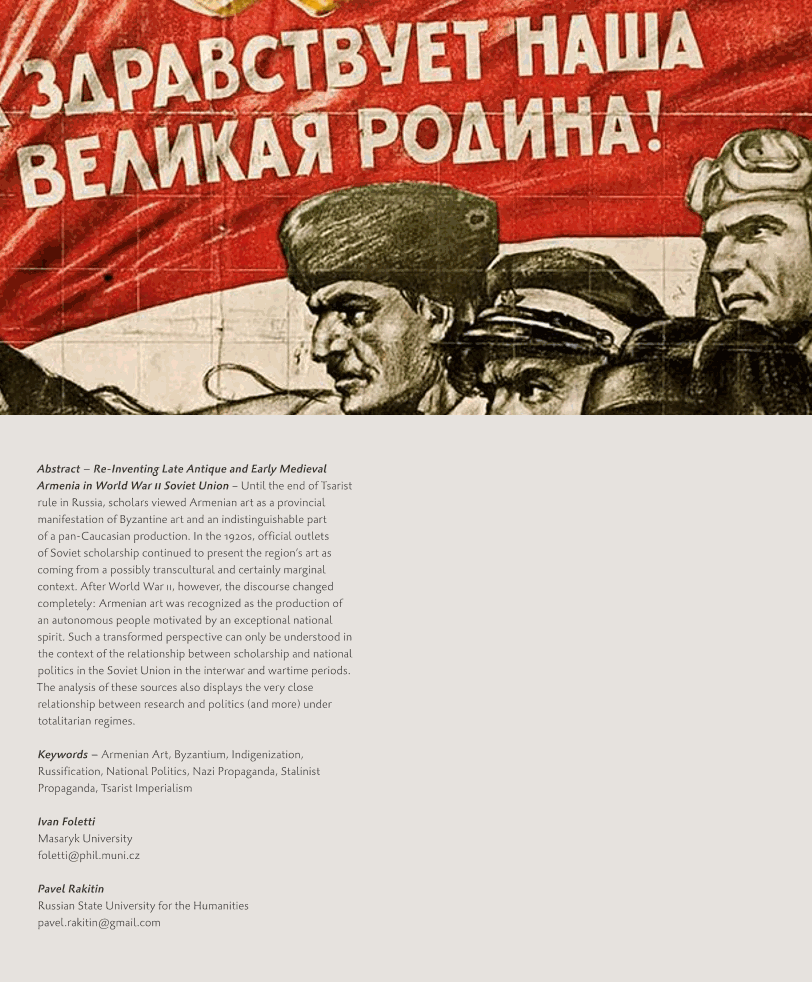
Until the end of Tsarist rule in Russia, scholars viewed Armenian art as a provincial manifestation of Byzantine art and an indistinguishable part of a pan-Caucasian production. In the 1920s, official outlets of Soviet scholarship continued to present the region’s art as coming from a possibly transcultural and certainly marginal context. After World War ii, however, the discourse changed completely: Armenian art was recognized as the production of an autonomous people motivated by an exceptional national spirit. Such a transformed perspective can only be understood in the context of the relationship between scholarship and national politics in the Soviet Union in the interwar and wartime periods. The analysis of these sources also displays the very close relationship between research and politics (and more) under totalitarian regimes.
Full text loading...