


oa The Authority of the Virgin. The Use of the Marian Cult in the Legitimization of Power in the Kingdom of Hungary before 1300

Access full text
Chapter
- By: Karen Stark1
-
View Affiliations Hide Affiliations1 received her PhD in Medieval Studies from Central European University and is currently a fellow with the Austrian Academy of Science’s Post-Doc-Track Program. Her research interests are medieval religious history, especially the cult of saints, pilgrimage, and the concept of ‘sacred space’, material culture, and Digital Humanities.
- Publication: The Cult of Saints and Legitimization of Elite Power in East Central and Northern Europe up to 1300 , pp 57-80
- Publisher: Brepols
- Publication Date: January 2024
- DOI: https://doi.org/10.1484/M.CPMH-EB.5.137531
Preview this chapter:


The Authority of the Virgin. The Use of the Marian Cult in the Legitimization of Power in the Kingdom of Hungary before 1300, Page 1 of 1
< Previous page | Next page > /docserver/preview/fulltext/10.1484/M.CPMH-EB.5.136923/M.CPMH-EB.5.137531-1.gif
Hardbound ISBN:
978-2-503-61108-2
E-book ISBN:
978-2-503-61109-9

Full text loading...
/deliver/fulltext/10.1484/M.CPMH-EB.5.136923/M.CPMH-EB.5.137531.html?itemId=/content/books/10.1484/M.CPMH-EB.5.137531&mimeType=html&fmt=ahah
The Authority of the Virgin. The Use of the Marian Cult in the Legitimization of Power in the Kingdom of Hungary before 1300
https://doi.org/10.1484/M.CPMH-EB.5.137531
/content/books/10.1484/M.CPMH-EB.5.137531
/content/books/10.1484/M.CPMH-EB.5.137531
View:
Figures
Figures
/content/figure/10.1484/M.CPMH-EB.5.137531.chp5_f2.1
Figure 2.1.
Porta Speciosa, Esztergom. Depicted in a painting commissioned by György Klimó, canon of Esztergom (1741–1751), and later bishop of Pécs. c. 1190.
Image courtesy of Képzőművészet Magyarországon.
10.1484/M.CPMH-EB.5.136923/CPMH-3011969-part01-chap01-f2.1_thmb.png
10.1484/M.CPMH-EB.5.136923/CPMH-3011969-part01-chap01-f2.1.png
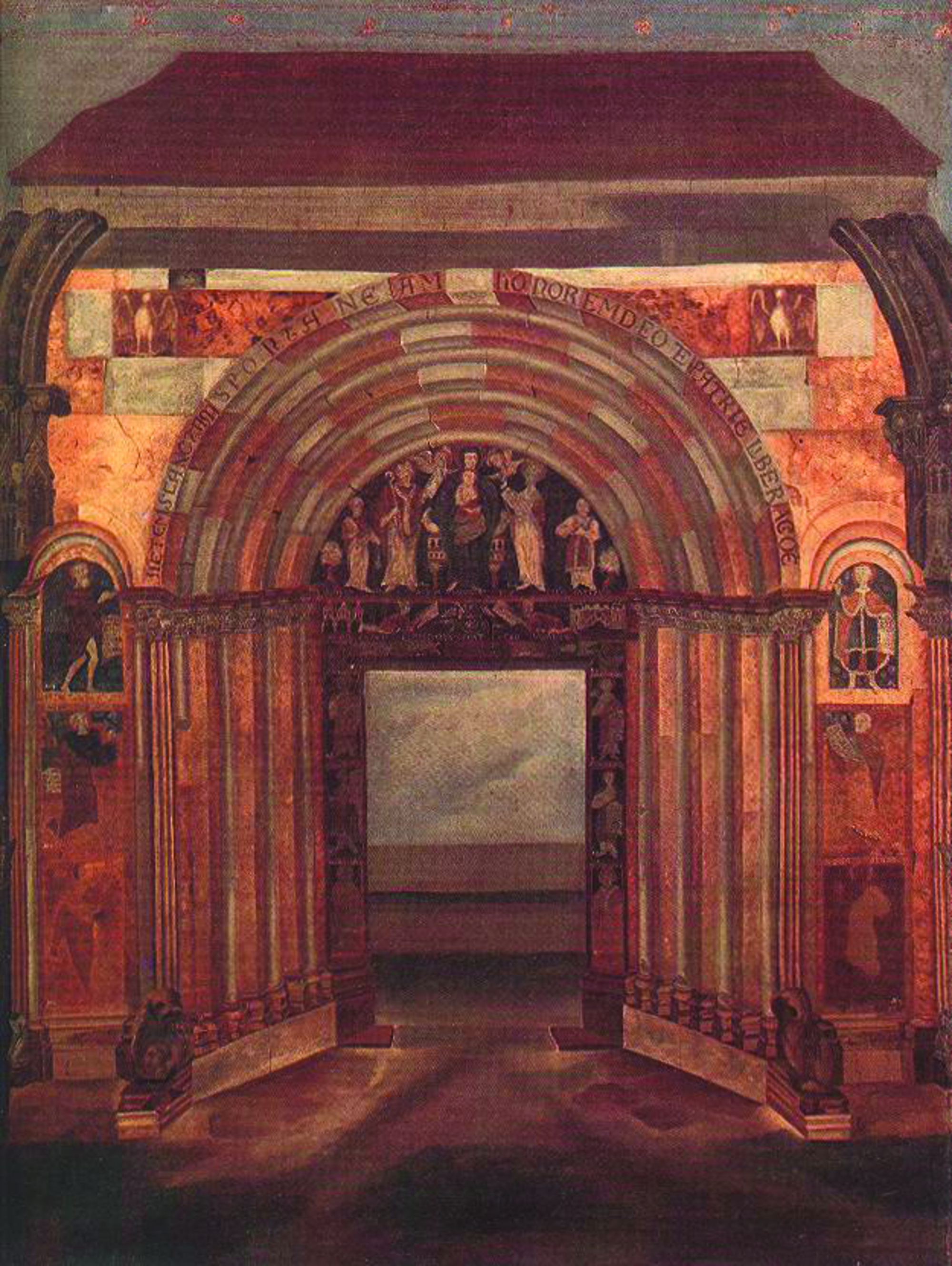
Figure 2.1.
Porta Speciosa, Esztergom. Depicted in a painting commissioned by György Klimó, canon of Esztergom (1741–1751), and later bishop of Pécs. c. 1190.
Image courtesy of Képzőművészet Magyarországon.
/content/figure/10.1484/M.CPMH-EB.5.137531.chp5_f2.2
Figure 2.2.
Reverse of the copper coin of King Béla III, type CNH. I. 98. c. 1172–1196.
Photo courtesy of Pannonhalmi Főapátsági Múzeum, Numismatic Collection.
10.1484/M.CPMH-EB.5.136923/CPMH-3011969-part01-chap01-f2.2_thmb.png
10.1484/M.CPMH-EB.5.136923/CPMH-3011969-part01-chap01-f2.2.png
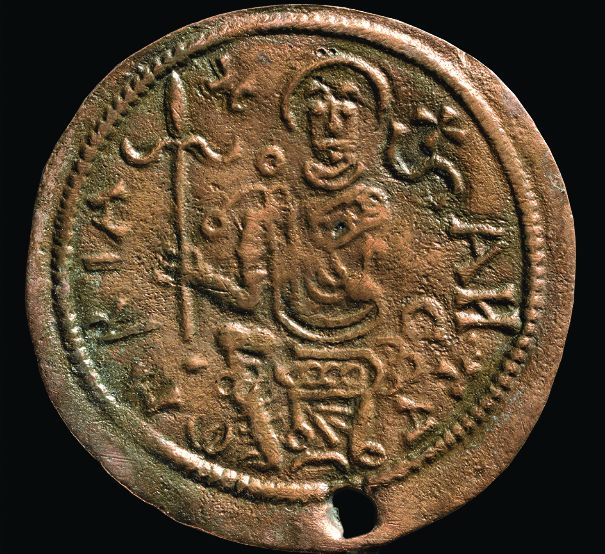
Figure 2.2.
Reverse of the copper coin of King Béla III, type CNH. I. 98. c. 1172–1196.
Photo courtesy of Pannonhalmi Főapátsági Múzeum, Numismatic Collection.
/content/figure/10.1484/M.CPMH-EB.5.137531.chp5_f2.3
Figure 2.3.
Obverse of silver pfennig produced in Aachen under Frederick Barbarossa, Vienna, Kunsthistorisches Museum Wien. c. 1152–1190.
Photo courtesy of KHM-Museumsverband.
10.1484/M.CPMH-EB.5.136923/CPMH-3011969-part01-chap01-f2.3_thmb.png
10.1484/M.CPMH-EB.5.136923/CPMH-3011969-part01-chap01-f2.3.png
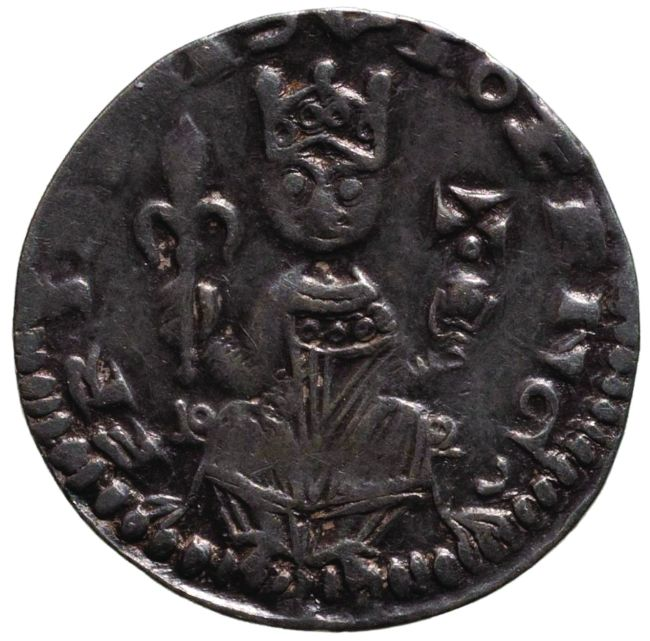
Figure 2.3.
Obverse of silver pfennig produced in Aachen under Frederick Barbarossa, Vienna, Kunsthistorisches Museum Wien. c. 1152–1190.
Photo courtesy of KHM-Museumsverband.
/content/figure/10.1484/M.CPMH-EB.5.137531.chp5_f2.4
Figure 2.4.
Obverse of silver bracteate produced in Frankfurt under Frederick Barbarossa, Vienna, Kunsthistorisches Museum Wien. c. 1151–1190.
Photo courtesy of KMH-Museumsverband.
10.1484/M.CPMH-EB.5.136923/CPMH-3011969-part01-chap01-f2.4_thmb.png
10.1484/M.CPMH-EB.5.136923/CPMH-3011969-part01-chap01-f2.4.png
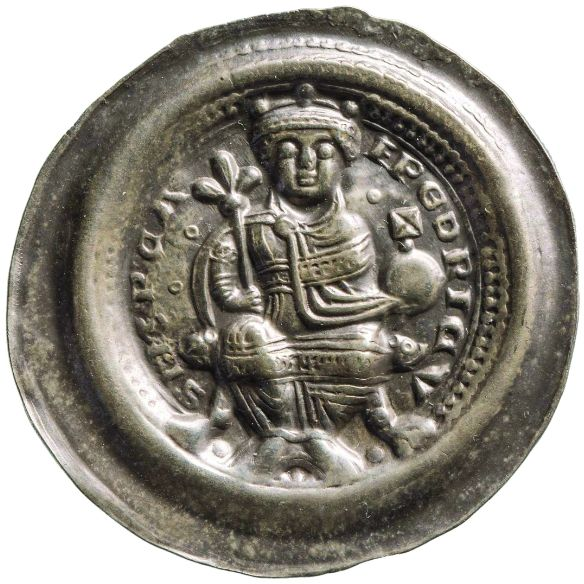
Figure 2.4.
Obverse of silver bracteate produced in Frankfurt under Frederick Barbarossa, Vienna, Kunsthistorisches Museum Wien. c. 1151–1190.
Photo courtesy of KMH-Museumsverband.
[Citing articles]
[Web of Science]
[Medline]
References
-
Manuscripts, Archival Sources, and Other Unedited MaterialBudapest, National Archives of Hungary, Magyar Országos Levéltár, MS 20827
-
Primary SourcesAnastasius Bibliothecarius, Preface to the Eighth Oecumenical Council, Sacrorum conciliorum nova et amplissima collectio, ed. by Gian Domenico Mansi, 16 (Venice: A. Zatta, 1771), pp. 1–12
-
Anonymous and Master Roger, Anonymi Bele regis notarii Gesta Hungarorum & Magistri Rogerii, Epistola in miserabile carmen super destructione Regni Hungarie per tartaros facta, ed. and trans. by Martyn Rady, László Veszprémy, and János M. Bak (Budapest: CEU Press, 2010)
-
Bak, János M. and László Veszprémy (eds and trans.), The Illuminated Chronicle: Chronicle of the Deeds of the Hungarians from the Fourteenth-Century Illuminated Codex (Budapest: CEU Press, 2018)
-
Békefi, Remig, A pásztói apátság története 1190–1702 (Budapest: [n. pub.], 1898)
-
Bruno of Querfurt, Epistola Brunonis ad Heinricum regem, ed. by Jadwiga Karwasińska, Monumenta Poloniae Historica. Series nova, 4.3 (Warsaw: Państwowe Wydawnictwa Naukowe, 1973), pp. 97–106
-
Fejér, Georgius, Codex diplomaticus Hungariae ecclesiasticus ac civilis, 3.1 (Buda: Typis Typogr. Regiae Universitatis Ungaricae, 1829)
-
Gombos, Albinus Franciscus (ed.), Catalogus Fontium Historiae Hungaricae, 3 (Budapest: Szent István Akadémia, 1938)
-
Györffy, György (ed.), Diplomata Hungariae Antiquissima, 1 (Budapest: Akadémiai Kiadó, 1992)
-
Hartvic, Life of King Stephen, trans. by Nora Berend, in Medieval Hagiography: An Anthology, ed. by Thomas Head (New York: Routledge, 2000), pp. 375–98
-
Iohannes VIII, Epistolae, ed. by Ericus Caspar, Monumenta Germaniae Historica: Epistolae Karolini aevi 5, 7 (Berlin: Weidmann, 1928), pp. 1–272
-
Legenda maior, ed. by Emma Bartoniek, in Scriptores rerum Hungaricarum tempore ducum regumque stirpis Arpadianae gestarum, ed. by Emericus Szentpétery, 2 (Budapest: Academia Litter. Hungarica atque Societatis Histor. Hungarica, 1938), pp. 377–92
-
Legenda S. Stephani regis ab Hartvico episcopo conscripta, ed. by Emma Bartoniek, in Scriptores rerum Hungaricarum tempore ducum regumque stirpis Arpadianae gestarum, ed. by Emericus Szentpétery, 2 (Budapest: Academia Litter. Hungarica atque Societatis Histor. Hungarica, 1938), pp. 401–40
-
Makkai, László and László Mezey (eds), Árpád-kori és Anjou-kori levelek XI–XIV. század (Budapest: Gondolat Kiadó, 1960)
-
Peter Damian, Life of St Romuald of Ravenna, trans. by Henrietta Leyser, in Medieval Hagiography: An Anthology, ed. by Thomas Head (New York: Routledge, 2000), pp. 295–316
-
Petrus Damiani, Vita Beati Romualdi, ed. by Giovanni Tabacco (Turin: Bottega d’Erasmo, 1982)
-
Secondary StudiesAradi, Csilla, ‘Some Aspects of Parish Organization in Medieval Hungary’, Beiträge zur Mittelalterarchäologie in Österreich, 21 (2005), 195–204
-
Barna, Bálint, ‘A középkori Szent Imre-kép’, Studia Caroliensia, 3–4 (2006), 91–110
-
Berend, Nora, József Laszlovszky, and Béla Zsolt Szakács, ‘The Kingdom of Hungary’, in Christianization and the Rise of Christian Monarchy: Scandinavia, Central Europe and Rus’ c. 900–1200, ed. by Nora Berend (Cambridge: Cambridge University Press, 2007), pp. 319–68
-
Berend, Nora, Przemysław Urbańczyk, and Przemysław Wiszewski, Central Europe in the High Middle Ages: Bohemia, Hungary and Poland c. 900–c. 1300 (Cambridge: Cambridge University Press, 2013)
-
Betti, Maddalena, ‘Una chiesa romana per la Moravia. Fonti e linguaggi di un progetto papale’, Bullettino dell’Istituto storico italiano per il Medio Evo, 115 (2014), 23–43
-
Betti, Maddalena, The Making of Christian Moravia (858–882): Papal Power and Political Reality (Leiden: Brill, 2014)
-
Boss, Sarah Jane, ‘The Development of the Virgin’s Cult in the High Middle Ages’, in Mary, the Complete Resource, ed. by Sarah Jane Boss (London: Continuum, 2007), pp. 149–72
-
Curta, Florin, Eastern Europe in the Middle Ages (500–1300), 1 (Leiden: Brill, 2019)
-
Czebe, Gyula, A veszprémvölgyi oklevél görög szövege (Budapest: Magyar Tudományos Akadémia, 1916)
-
Dümmerth, Dezső, ‘A Mária országa-eszme és Szent István’, in Doctor et apostol Szent István, ed. by József Török (Budapest: Gondolat Kiadó, 1994), pp. 171–97
-
Engel, Pál, The Realm of St Stephen: A History of Medieval Hungary, 895–1526 (London: Taurus, 2001)
-
Fałkowski, Wojciech, ‘The Letter of Bruno of Querfurt to King Henry II’, Frühmittelalterliche Studien, 43.1 (2009), 417–38
-
Figurski, Paweł and Grzegorz Pac, ‘Saints and Relics’, in The Routledge Handbook of East Central and Eastern Europe in the Middle Ages, 500–1300, ed. by Florin Curta (London: Routledge, 2022), pp. 338–53
-
Fülöp, András and András Koppány, ‘A veszprémvölgyi apácakolostor régészeti kutatása (1998–2002)’, Műemlékvédelmi Szemle, 12.1 (2002), 5–40
-
Gerics, József, ‘A Hartvik legenda mintáiról és forrásairól’, Magyar Könyvszemle, 97 (1981), 175–88
-
Gerics, József, ‘Politikai és jogi gondolkodás Magyarországon VII. Gergely korában’, in Egyház, állam és gondolkodás Magyarországon a középkorban, ed. by József Gerics (Budapest: METEM, 1995), pp. 144–64
-
Gyöngyössy, Márton, ‘Szentkultusz középkori pénzeinken Ikonográfiai adalék a magyar pénzverés történetéhez’, in Collectanea Sancti Martini: A Pannonhalmi Főapátság Gyűjteményeinek Értesítője 6, ed. by Tamás Dénesi (Pannonhalma: Pannonhalmi Főapátság Gyűjteményei, 2018), pp. 89–110
-
Hehl, Ernst-Dieter, ‘Maria und das ottonisch-salische Königtum. Urkunden, Liturgie, Bilder’, Historisches Jahrbuch, 117 (1997), 271–310
-
Hervay, Levente F., ‘A bencések és apátságaik története a középkori Magyarországon’, in Paradisum Plantavit. Bencés monostorok a középkori Magyarországon, ed. by Imre Takács (Pannonhalma: Pannonhalmi Bencés Főapátság, 2001), pp. 461–547
-
Horváth, Ernő, A pornói apátság története (Pécs: Dunántúl Egyetemi Nyomdája, 1930)
-
Istrate, Daniela Marcu, ‘Betrachtungen zur Entwicklungsgeschichte der Schwarzen Kirche in Kronstadt aufgrund neuer archäologischer Untersuchungen’, Zeitschrift für siebenbürgische Landeskunde, 42 (2019), 1–35
-
Ivandija, Antun, Stara zagrebačka katedrala. Historijsko-umjetnička rasprava, I dio: Arhitektura (Zagreb: [n. pub.], 1948)
-
Jamroziak, Emilia, The Cistercian Order in Medieval Europe, 1090–1500 (London: Routledge, 2013)
-
Jeszenszky, Géza, ‘Az első magyar rézpénzek’, Numizmatikai Közlöny, 34–35 (1935–1936), 34–47
-
Kádár, Tamás, ‘Egy régi keletű genealógiai talány a 12. század végéről: Miskolc nembeli Domonkos bán rokonsága a magyar királyi családdal’, Turul, 92.2 (2019), 49–58
-
Karácsonyi, János, A magyar nemzetségek a XIV. század közepéig, 1 (Budapest: A Magyar Tudományos Akadémia, 1900)
-
Kerny, Terézia (ed.), Szent Imre 1000 éve – Tanulmányok Szent Imre tiszteletére születésének ezredik évfordulója alkalmából (Székesfehérvár: Székesfehérvári Egyházmegyei Múzeum, 2007)
-
Klaniczay, Gábor, Holy Rulers and Blessed Princesses: Dynastic Cults in Medieval Central Europe (Cambridge: Cambridge University Press, 2002)
-
Klaniczay, Gábor, ‘Szent István legendái a középkorban’, in Szent István és kora, ed. by Ferenc Glatz and József Kardos (Budapest: MTA Történettudományi Intézete, 1988), pp. 185–96
-
Kristó, Gyula, ‘A nagyobbik és a Hartvik-féle István-legenda szövegkapcsolatához’, in Gyula Kristó, Írások Szent Istvánról és koráról (Szeged: Szegedi Középkorász Műhely, 2000), pp. 175–94
-
Laszlovszky, József, ‘Local Tradition or European Patterns? The Grave of Queen Gertrude in the Pilis Cistercian Abbey’, in Medieval East Central Europe in a Comparative Perspective: From Frontier Zones to Lands in Focus, ed. by Gerhard Jaritz and Katalin Szende (London: Routledge, 2016), pp. 81–98
-
Lionnet, Marie, ‘Mise en images des rapports entre culte de la Vierge et pouvoir royal en Hongrie à la fin du Moyen Âge: état de la question’, in Identités hongroises, identités européennes du Moyen Âge à nos jours, ed. by Piroska Nagy (Mont-Saint-Aignan: Universités de Rouen et du Havre, 2006), pp. 51–70
-
Lionnet, Marie, ‘Les peintures murales en Hongrie à la fin du Moyen âge (v. 1300–v. 1475): la transmission des traditions iconographiques et les formes originales de leur appropriation locale sur les deux thèmes majeurs: la Mère de Dieu et le Jugement dernier’ (doctoral dissertation, University Paris X Nanterre, 2004)
-
Majorossy, Judit (ed.), Egy történelmi gyilkosság margójára. Merániai Gertrúd emlékezete, 1213–2013 (Szentendre: Ferenczy Múzeum, 2014)
-
Marosi, Ernő, ‘Az esztergomi Porta speciosa’, in Ezer év Szent Adalbert oltalma alatt. Strigonium antiquum, iv, ed. by András Hegedüs and István Bárdos (Esztergom: Prímási Levéltár, 2000), pp. 155–63
-
McGuire, Brian Patrick, ‘Cistercian Nuns in Twelfth- and Thirteenth-Century Denmark and Sweden: Far from the Madding Crowd’, in Women in the Medieval Monastic World, ed. by Janet Burton and Karen Stöber, Medieval Monastic Studies, 1 (Turnhout: Brepols, 2015), pp. 167–84
-
Németh, Péter, ‘Civitas et suburbium (Adatok Sopron korai várostörténetéhez)’, Soproni Szemle, 35 (1981), 59–67
-
Pac, Grzegorz, ‘The Attire of the Virgin Mary and Female Rulers in Iconographical Sources of the Ninth to Eleventh Centuries: Analogues, Interpretations, Misinterpretations’, in Medieval Clothing and Textiles, ed. by Robin Netherton and Gale R. Owen-Crocker (Woodbridge: Boydell, 2016), pp. 1–26
-
Patlagean, Évelyne, ‘Une donation royale hongroise rédigée en grec: la charte de Veszprém’, in Europa barbarica, Europa Christiana. Studia mediaevalia Carolo Modzelewski dedicata, ed. by Roman Michałowski (Warsaw: DiG, 2008), pp. 127–34
-
Pentcheva, Bissera V., Icons and Power: The Mother of God in Byzantium (University Park: The Penn State University Press, 2006)
-
Petrovics, István, ‘Nemzetségi monostoraink problematikája’, Acta Universitatis Szegediensis: acta iuvenum: sectio historica, 1 (1978), 9–24
-
Rady, Martyn, Nobility, Land and Service in Medieval Hungary (London: Palgrave Macmillan, 2000)
-
Raffay, Endre, ‘Az esztergomi Szent Adalbert székesegyház és a magyarországi gótika kezdetei’, in Ars Perennis. Fiatal Művészettörténészek ii. Konferenciája, 2nd Conference of Young Art Historians, Budapest, 2009, ed. by Anna Tüskés (Budapest: CentrArt Egyesület, 2010), pp. 23–30
-
Röckelein, Hedwig, ‘Founders, Donors, and Saints: Patrons of Nuns’ Convents’, in Crown and Veil: Female Monasticism from the Fifth to the Fifteenth Centuries, ed. by Jeffrey F. Hamburger and Susan Marti (New York: Columbia University Press, 2008), pp. 207–24
-
Romhányi, Beatrix F., Kolostorok és társaskáptalanok a középkori Magyarországon (Budapest: Pytheas, 2000)
-
Romhányi, Beatrix F., ‘The Role of the Cistercians in Medieval Hungary: Political Activity or Internal Colonization?’, Annual of Medieval Studies at CEU, 1 (1994), 180–204
-
Rubin, Miri, Mother of God: A History of the Virgin Mary (London: Yale University Press, 2009)
-
Schulz, Karl, ‘Ein Fund mittelalterlicher ungarischer Kupfermünzen in Wien’, Numismatische Zeitschrift, 92 (1978), 17–19
-
Šimunić, Ivana and Marina Šimunić Buršić, ‘Svod sakristije zagrebaèke katedrale / Vault of the Sacristy of Zagreb Cathedral’, Prostor, 23.2 (2015), 345–52
-
Stark, Karen, ‘“The garden watered by the Virgin Mary”: The Marian Landscape of Medieval Hungary (1308–1437)’ (unpublished doctoral thesis, Central European University, 2022)
-
Starnawska, Maria, ‘Kult św. Piotra w Polsce średniowiecznej na tle europejskim’, Ecclesia. Studia z Dziejów Wielkopolski, 6 (2011), 25–35
-
Stojkovski, Boris, ‘The Greek Charter of the Hungarian King Stephen I’, Zbornik radova Vizantološkog instituta, 53 (2016), 127–40
-
Stroll, Mary, ‘Maria Regina: Papal Symbol’, in Queens and Queenship in Medieval Europe, ed. by Anne J. Duggan (Woodbridge: Boydell, 1997), pp. 301–15
-
Suchodolski, Stanislaw, ‘East or West? Concerning the Iconographic Patterns of the So-Called Byzantine Type’, in Emlékkönyv Bíró-Sey Katalin és Gedai István 65. születésnapjára, ed. by Krisztina Bertók and Melinda Torbágyi (Budapest: Magyar Numizmatikai Társulat, 1999), pp. 267–73
-
Szabó, János Győző, ‘Adatok a patai főesperesség korai történetéhez’, in Tanulmányok Gyöngyösről, ed. by Péter Havassy and Péter Kecskés (Gyöngyös: Gyöngyös Város Tanácsa, 1984), pp. 21–89
-
Szőcs, Péter Levente, ‘Private Monasteries of Medieval Hungary (Eleventh to Fourteenth Centuries): A Case Study of the Ákos Kindred and Its Monasteries’ (doctoral thesis, Central European University, 2014)
-
Tari, Edit, Pest megye középkori templomai, Studia Comitatensia, 27 (Szentendre: Museums of Pest County, 2000)
-
Thoroczkay, Gábor, ‘Szent István legendái’, in István, a szent király, ed. by Terézia Kerny and András Smohay (Székesfehérvár: Székesfehérvári Egyházmegyei Múzeum, 2013), pp. 28–35
-
Tóth, Csaba, ‘Minting, Financial Administration and Coin Circulation in Hungary in the Árpádian and Angevin Periods (1000–1387)’, in The Economy of Medieval Hungary, ed. by József Laszlovszky, Balázs Nagy, Péter Szabó, and András Vadas (Leiden: Brill, 2018), pp. 279–94
-
Ujszászi, Róbert, A XII. századi magyar rézpénzek (Budapest: Magyar Éremgyűjtők Egyesülete, 2010)
-
Varjú, Elemér, Legendae Sancti Regis Stephani. Szent István király legendái (Budapest: Singer & Wolfner, 1928)
-
Wehli, Tünde, ‘Bogyay Tamás és Johannes Aquila’, Ars Hungarica, 38.3 (2012), 341–57
-
Wit, Gysbertus W. de and Alexandra Spreu, Künker Auktion 130 – The De Wit Collection of Medieval Coins, 1000 Years of European Coinage, Part II: Germany, Switzerland, Austria, Bohemia, Moravia, Hungary, Silesia, Poland, Baltic States, Russia and the Golden Horde (Osnabrück: Numismatischer Verlag Künker, 2007)
[Citing articles]
[Web of Science]
[Medline]
References
-
Manuscripts, Archival Sources, and Other Unedited MaterialBudapest, National Archives of Hungary, Magyar Országos Levéltár, MS 20827
-
Primary SourcesAnastasius Bibliothecarius, Preface to the Eighth Oecumenical Council, Sacrorum conciliorum nova et amplissima collectio, ed. by Gian Domenico Mansi, 16 (Venice: A. Zatta, 1771), pp. 1–12
-
Anonymous and Master Roger, Anonymi Bele regis notarii Gesta Hungarorum & Magistri Rogerii, Epistola in miserabile carmen super destructione Regni Hungarie per tartaros facta, ed. and trans. by Martyn Rady, László Veszprémy, and János M. Bak (Budapest: CEU Press, 2010)
-
Bak, János M. and László Veszprémy (eds and trans.), The Illuminated Chronicle: Chronicle of the Deeds of the Hungarians from the Fourteenth-Century Illuminated Codex (Budapest: CEU Press, 2018)
-
Békefi, Remig, A pásztói apátság története 1190–1702 (Budapest: [n. pub.], 1898)
-
Bruno of Querfurt, Epistola Brunonis ad Heinricum regem, ed. by Jadwiga Karwasińska, Monumenta Poloniae Historica. Series nova, 4.3 (Warsaw: Państwowe Wydawnictwa Naukowe, 1973), pp. 97–106
-
Fejér, Georgius, Codex diplomaticus Hungariae ecclesiasticus ac civilis, 3.1 (Buda: Typis Typogr. Regiae Universitatis Ungaricae, 1829)
-
Gombos, Albinus Franciscus (ed.), Catalogus Fontium Historiae Hungaricae, 3 (Budapest: Szent István Akadémia, 1938)
-
Györffy, György (ed.), Diplomata Hungariae Antiquissima, 1 (Budapest: Akadémiai Kiadó, 1992)
-
Hartvic, Life of King Stephen, trans. by Nora Berend, in Medieval Hagiography: An Anthology, ed. by Thomas Head (New York: Routledge, 2000), pp. 375–98
-
Iohannes VIII, Epistolae, ed. by Ericus Caspar, Monumenta Germaniae Historica: Epistolae Karolini aevi 5, 7 (Berlin: Weidmann, 1928), pp. 1–272
-
Legenda maior, ed. by Emma Bartoniek, in Scriptores rerum Hungaricarum tempore ducum regumque stirpis Arpadianae gestarum, ed. by Emericus Szentpétery, 2 (Budapest: Academia Litter. Hungarica atque Societatis Histor. Hungarica, 1938), pp. 377–92
-
Legenda S. Stephani regis ab Hartvico episcopo conscripta, ed. by Emma Bartoniek, in Scriptores rerum Hungaricarum tempore ducum regumque stirpis Arpadianae gestarum, ed. by Emericus Szentpétery, 2 (Budapest: Academia Litter. Hungarica atque Societatis Histor. Hungarica, 1938), pp. 401–40
-
Makkai, László and László Mezey (eds), Árpád-kori és Anjou-kori levelek XI–XIV. század (Budapest: Gondolat Kiadó, 1960)
-
Peter Damian, Life of St Romuald of Ravenna, trans. by Henrietta Leyser, in Medieval Hagiography: An Anthology, ed. by Thomas Head (New York: Routledge, 2000), pp. 295–316
-
Petrus Damiani, Vita Beati Romualdi, ed. by Giovanni Tabacco (Turin: Bottega d’Erasmo, 1982)
-
Secondary StudiesAradi, Csilla, ‘Some Aspects of Parish Organization in Medieval Hungary’, Beiträge zur Mittelalterarchäologie in Österreich, 21 (2005), 195–204
-
Barna, Bálint, ‘A középkori Szent Imre-kép’, Studia Caroliensia, 3–4 (2006), 91–110
-
Berend, Nora, József Laszlovszky, and Béla Zsolt Szakács, ‘The Kingdom of Hungary’, in Christianization and the Rise of Christian Monarchy: Scandinavia, Central Europe and Rus’ c. 900–1200, ed. by Nora Berend (Cambridge: Cambridge University Press, 2007), pp. 319–68
-
Berend, Nora, Przemysław Urbańczyk, and Przemysław Wiszewski, Central Europe in the High Middle Ages: Bohemia, Hungary and Poland c. 900–c. 1300 (Cambridge: Cambridge University Press, 2013)
-
Betti, Maddalena, ‘Una chiesa romana per la Moravia. Fonti e linguaggi di un progetto papale’, Bullettino dell’Istituto storico italiano per il Medio Evo, 115 (2014), 23–43
-
Betti, Maddalena, The Making of Christian Moravia (858–882): Papal Power and Political Reality (Leiden: Brill, 2014)
-
Boss, Sarah Jane, ‘The Development of the Virgin’s Cult in the High Middle Ages’, in Mary, the Complete Resource, ed. by Sarah Jane Boss (London: Continuum, 2007), pp. 149–72
-
Curta, Florin, Eastern Europe in the Middle Ages (500–1300), 1 (Leiden: Brill, 2019)
-
Czebe, Gyula, A veszprémvölgyi oklevél görög szövege (Budapest: Magyar Tudományos Akadémia, 1916)
-
Dümmerth, Dezső, ‘A Mária országa-eszme és Szent István’, in Doctor et apostol Szent István, ed. by József Török (Budapest: Gondolat Kiadó, 1994), pp. 171–97
-
Engel, Pál, The Realm of St Stephen: A History of Medieval Hungary, 895–1526 (London: Taurus, 2001)
-
Fałkowski, Wojciech, ‘The Letter of Bruno of Querfurt to King Henry II’, Frühmittelalterliche Studien, 43.1 (2009), 417–38
-
Figurski, Paweł and Grzegorz Pac, ‘Saints and Relics’, in The Routledge Handbook of East Central and Eastern Europe in the Middle Ages, 500–1300, ed. by Florin Curta (London: Routledge, 2022), pp. 338–53
-
Fülöp, András and András Koppány, ‘A veszprémvölgyi apácakolostor régészeti kutatása (1998–2002)’, Műemlékvédelmi Szemle, 12.1 (2002), 5–40
-
Gerics, József, ‘A Hartvik legenda mintáiról és forrásairól’, Magyar Könyvszemle, 97 (1981), 175–88
-
Gerics, József, ‘Politikai és jogi gondolkodás Magyarországon VII. Gergely korában’, in Egyház, állam és gondolkodás Magyarországon a középkorban, ed. by József Gerics (Budapest: METEM, 1995), pp. 144–64
-
Gyöngyössy, Márton, ‘Szentkultusz középkori pénzeinken Ikonográfiai adalék a magyar pénzverés történetéhez’, in Collectanea Sancti Martini: A Pannonhalmi Főapátság Gyűjteményeinek Értesítője 6, ed. by Tamás Dénesi (Pannonhalma: Pannonhalmi Főapátság Gyűjteményei, 2018), pp. 89–110
-
Hehl, Ernst-Dieter, ‘Maria und das ottonisch-salische Königtum. Urkunden, Liturgie, Bilder’, Historisches Jahrbuch, 117 (1997), 271–310
-
Hervay, Levente F., ‘A bencések és apátságaik története a középkori Magyarországon’, in Paradisum Plantavit. Bencés monostorok a középkori Magyarországon, ed. by Imre Takács (Pannonhalma: Pannonhalmi Bencés Főapátság, 2001), pp. 461–547
-
Horváth, Ernő, A pornói apátság története (Pécs: Dunántúl Egyetemi Nyomdája, 1930)
-
Istrate, Daniela Marcu, ‘Betrachtungen zur Entwicklungsgeschichte der Schwarzen Kirche in Kronstadt aufgrund neuer archäologischer Untersuchungen’, Zeitschrift für siebenbürgische Landeskunde, 42 (2019), 1–35
-
Ivandija, Antun, Stara zagrebačka katedrala. Historijsko-umjetnička rasprava, I dio: Arhitektura (Zagreb: [n. pub.], 1948)
-
Jamroziak, Emilia, The Cistercian Order in Medieval Europe, 1090–1500 (London: Routledge, 2013)
-
Jeszenszky, Géza, ‘Az első magyar rézpénzek’, Numizmatikai Közlöny, 34–35 (1935–1936), 34–47
-
Kádár, Tamás, ‘Egy régi keletű genealógiai talány a 12. század végéről: Miskolc nembeli Domonkos bán rokonsága a magyar királyi családdal’, Turul, 92.2 (2019), 49–58
-
Karácsonyi, János, A magyar nemzetségek a XIV. század közepéig, 1 (Budapest: A Magyar Tudományos Akadémia, 1900)
-
Kerny, Terézia (ed.), Szent Imre 1000 éve – Tanulmányok Szent Imre tiszteletére születésének ezredik évfordulója alkalmából (Székesfehérvár: Székesfehérvári Egyházmegyei Múzeum, 2007)
-
Klaniczay, Gábor, Holy Rulers and Blessed Princesses: Dynastic Cults in Medieval Central Europe (Cambridge: Cambridge University Press, 2002)
-
Klaniczay, Gábor, ‘Szent István legendái a középkorban’, in Szent István és kora, ed. by Ferenc Glatz and József Kardos (Budapest: MTA Történettudományi Intézete, 1988), pp. 185–96
-
Kristó, Gyula, ‘A nagyobbik és a Hartvik-féle István-legenda szövegkapcsolatához’, in Gyula Kristó, Írások Szent Istvánról és koráról (Szeged: Szegedi Középkorász Műhely, 2000), pp. 175–94
-
Laszlovszky, József, ‘Local Tradition or European Patterns? The Grave of Queen Gertrude in the Pilis Cistercian Abbey’, in Medieval East Central Europe in a Comparative Perspective: From Frontier Zones to Lands in Focus, ed. by Gerhard Jaritz and Katalin Szende (London: Routledge, 2016), pp. 81–98
-
Lionnet, Marie, ‘Mise en images des rapports entre culte de la Vierge et pouvoir royal en Hongrie à la fin du Moyen Âge: état de la question’, in Identités hongroises, identités européennes du Moyen Âge à nos jours, ed. by Piroska Nagy (Mont-Saint-Aignan: Universités de Rouen et du Havre, 2006), pp. 51–70
-
Lionnet, Marie, ‘Les peintures murales en Hongrie à la fin du Moyen âge (v. 1300–v. 1475): la transmission des traditions iconographiques et les formes originales de leur appropriation locale sur les deux thèmes majeurs: la Mère de Dieu et le Jugement dernier’ (doctoral dissertation, University Paris X Nanterre, 2004)
-
Majorossy, Judit (ed.), Egy történelmi gyilkosság margójára. Merániai Gertrúd emlékezete, 1213–2013 (Szentendre: Ferenczy Múzeum, 2014)
-
Marosi, Ernő, ‘Az esztergomi Porta speciosa’, in Ezer év Szent Adalbert oltalma alatt. Strigonium antiquum, iv, ed. by András Hegedüs and István Bárdos (Esztergom: Prímási Levéltár, 2000), pp. 155–63
-
McGuire, Brian Patrick, ‘Cistercian Nuns in Twelfth- and Thirteenth-Century Denmark and Sweden: Far from the Madding Crowd’, in Women in the Medieval Monastic World, ed. by Janet Burton and Karen Stöber, Medieval Monastic Studies, 1 (Turnhout: Brepols, 2015), pp. 167–84
-
Németh, Péter, ‘Civitas et suburbium (Adatok Sopron korai várostörténetéhez)’, Soproni Szemle, 35 (1981), 59–67
-
Pac, Grzegorz, ‘The Attire of the Virgin Mary and Female Rulers in Iconographical Sources of the Ninth to Eleventh Centuries: Analogues, Interpretations, Misinterpretations’, in Medieval Clothing and Textiles, ed. by Robin Netherton and Gale R. Owen-Crocker (Woodbridge: Boydell, 2016), pp. 1–26
-
Patlagean, Évelyne, ‘Une donation royale hongroise rédigée en grec: la charte de Veszprém’, in Europa barbarica, Europa Christiana. Studia mediaevalia Carolo Modzelewski dedicata, ed. by Roman Michałowski (Warsaw: DiG, 2008), pp. 127–34
-
Pentcheva, Bissera V., Icons and Power: The Mother of God in Byzantium (University Park: The Penn State University Press, 2006)
-
Petrovics, István, ‘Nemzetségi monostoraink problematikája’, Acta Universitatis Szegediensis: acta iuvenum: sectio historica, 1 (1978), 9–24
-
Rady, Martyn, Nobility, Land and Service in Medieval Hungary (London: Palgrave Macmillan, 2000)
-
Raffay, Endre, ‘Az esztergomi Szent Adalbert székesegyház és a magyarországi gótika kezdetei’, in Ars Perennis. Fiatal Művészettörténészek ii. Konferenciája, 2nd Conference of Young Art Historians, Budapest, 2009, ed. by Anna Tüskés (Budapest: CentrArt Egyesület, 2010), pp. 23–30
-
Röckelein, Hedwig, ‘Founders, Donors, and Saints: Patrons of Nuns’ Convents’, in Crown and Veil: Female Monasticism from the Fifth to the Fifteenth Centuries, ed. by Jeffrey F. Hamburger and Susan Marti (New York: Columbia University Press, 2008), pp. 207–24
-
Romhányi, Beatrix F., Kolostorok és társaskáptalanok a középkori Magyarországon (Budapest: Pytheas, 2000)
-
Romhányi, Beatrix F., ‘The Role of the Cistercians in Medieval Hungary: Political Activity or Internal Colonization?’, Annual of Medieval Studies at CEU, 1 (1994), 180–204
-
Rubin, Miri, Mother of God: A History of the Virgin Mary (London: Yale University Press, 2009)
-
Schulz, Karl, ‘Ein Fund mittelalterlicher ungarischer Kupfermünzen in Wien’, Numismatische Zeitschrift, 92 (1978), 17–19
-
Šimunić, Ivana and Marina Šimunić Buršić, ‘Svod sakristije zagrebaèke katedrale / Vault of the Sacristy of Zagreb Cathedral’, Prostor, 23.2 (2015), 345–52
-
Stark, Karen, ‘“The garden watered by the Virgin Mary”: The Marian Landscape of Medieval Hungary (1308–1437)’ (unpublished doctoral thesis, Central European University, 2022)
-
Starnawska, Maria, ‘Kult św. Piotra w Polsce średniowiecznej na tle europejskim’, Ecclesia. Studia z Dziejów Wielkopolski, 6 (2011), 25–35
-
Stojkovski, Boris, ‘The Greek Charter of the Hungarian King Stephen I’, Zbornik radova Vizantološkog instituta, 53 (2016), 127–40
-
Stroll, Mary, ‘Maria Regina: Papal Symbol’, in Queens and Queenship in Medieval Europe, ed. by Anne J. Duggan (Woodbridge: Boydell, 1997), pp. 301–15
-
Suchodolski, Stanislaw, ‘East or West? Concerning the Iconographic Patterns of the So-Called Byzantine Type’, in Emlékkönyv Bíró-Sey Katalin és Gedai István 65. születésnapjára, ed. by Krisztina Bertók and Melinda Torbágyi (Budapest: Magyar Numizmatikai Társulat, 1999), pp. 267–73
-
Szabó, János Győző, ‘Adatok a patai főesperesség korai történetéhez’, in Tanulmányok Gyöngyösről, ed. by Péter Havassy and Péter Kecskés (Gyöngyös: Gyöngyös Város Tanácsa, 1984), pp. 21–89
-
Szőcs, Péter Levente, ‘Private Monasteries of Medieval Hungary (Eleventh to Fourteenth Centuries): A Case Study of the Ákos Kindred and Its Monasteries’ (doctoral thesis, Central European University, 2014)
-
Tari, Edit, Pest megye középkori templomai, Studia Comitatensia, 27 (Szentendre: Museums of Pest County, 2000)
-
Thoroczkay, Gábor, ‘Szent István legendái’, in István, a szent király, ed. by Terézia Kerny and András Smohay (Székesfehérvár: Székesfehérvári Egyházmegyei Múzeum, 2013), pp. 28–35
-
Tóth, Csaba, ‘Minting, Financial Administration and Coin Circulation in Hungary in the Árpádian and Angevin Periods (1000–1387)’, in The Economy of Medieval Hungary, ed. by József Laszlovszky, Balázs Nagy, Péter Szabó, and András Vadas (Leiden: Brill, 2018), pp. 279–94
-
Ujszászi, Róbert, A XII. századi magyar rézpénzek (Budapest: Magyar Éremgyűjtők Egyesülete, 2010)
-
Varjú, Elemér, Legendae Sancti Regis Stephani. Szent István király legendái (Budapest: Singer & Wolfner, 1928)
-
Wehli, Tünde, ‘Bogyay Tamás és Johannes Aquila’, Ars Hungarica, 38.3 (2012), 341–57
-
Wit, Gysbertus W. de and Alexandra Spreu, Künker Auktion 130 – The De Wit Collection of Medieval Coins, 1000 Years of European Coinage, Part II: Germany, Switzerland, Austria, Bohemia, Moravia, Hungary, Silesia, Poland, Baltic States, Russia and the Golden Horde (Osnabrück: Numismatischer Verlag Künker, 2007)
-
From This Site
/content/books/10.1484/M.CPMH-EB.5.137531dcterms_title,dcterms_subject,pub_serialIdent,pub_author,pub_keyword-contentType:Contributor -contentType:Concept -contentType:Institution105
/content/books/10.1484/M.CPMH-EB.5.137531
dcterms_title,dcterms_subject,pub_serialIdent,pub_author,pub_keyword
-contentType:Contributor -contentType:Concept -contentType:Institution
10
5