
Full text loading...





Vergil’s Tragic Epithalamium, Page 1 of 1
< Previous page | Next page > /docserver/preview/fulltext/10.1484/M.GIFBIB-EB.5.124622/M.GIFBIB-EB.5.126213-1.gif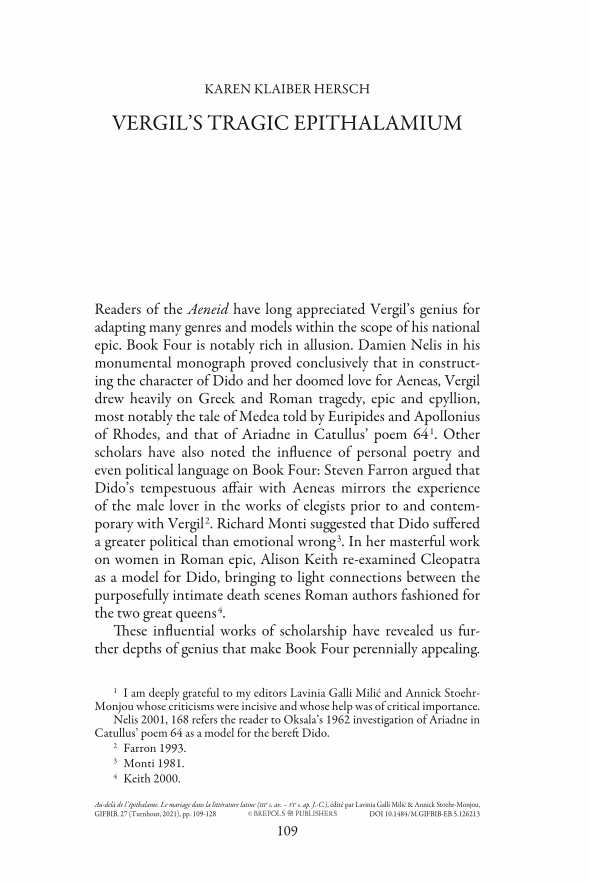
Even a small sampling of modern scholarship on the Aeneid reveals that consensus about whether Dido and Aeneas become husband and wife when they meet on a stormy night in a cave (Aen., 4.160-172) may never be reached. In this article, I argue that a focus on these specious nuptials has served to divert attention from the larger framework Vergil imposed on the book. For when we examine Book Four closely, it becomes apparent that the entirety of the book is cleverly constructed as an anti-epithalamium. From Anna’s praise of the groom and marriage in the opening lines of Book Four (l. 1-48), to the ghastly, suicidal wedding Dido prepares after Aeneas’ hasty departure (l. 450-705), to Dido’s curses representing a perfect reversal of the expected prayers for the unity of the couple and hopes for offspring (l. 590-629), Vergil includes all of the expected elements of an epithalamium, suitably transformed, to guide his readers through Dido’s doomed love affair. The framework and language of the epithalamium in Book Four announce a wedding, and at the same time, gloomy omens predict an inevitable tragedy.
Full text loading...