


Brepols
Brepols is an international academic publisher of works in the humanities, with a particular focus in history, archaeology, history of the arts, language and literature, and critical editions of source works.451 - 500 of 3194 results
-
-
Calling the Soul of the Dead
show More to view fulltext, buy and share links for:Calling the Soul of the Dead show Less to hide fulltext, buy and share links for: Calling the Soul of the DeadResearch of Mongolion folk-religion has been the subject of special attention in recent years. Editions and translations of extant texts have appeared, providing detailed descriptions of the rituals. This book examines a very special ritual of folk-religion, the ceremony of calling back the soul of the dead. Among the Mongols it was commonly believed that illness and death were caused by the absence of the soul, so a special ritual was required to call back the wandering soul. The research for this volume has been based on texts preserved in the Institute of Oriental Studies of the Russian Academy of Sciences in St. Petersburg. A background is given by observations of researchers who have visited the relevant areas and personal communications of Mongols. These rituals are still living and carried out by Mongolians and their neighbouring peoples. The very old ceremony, must have belonged to an early layer of folk-religion. It has now become a ritual of the Lamaist church. Influence of Tibetan Buddhism is found. A special chapter is devoted to evil spirits. The volume is richly illustrated.
-
-
-
Canon Law and Christian Societies between Christianity and Islam
An Arabic Canon Collection from al-Andalus and its Transcultural Contexts
show More to view fulltext, buy and share links for:Canon Law and Christian Societies between Christianity and Islam show Less to hide fulltext, buy and share links for: Canon Law and Christian Societies between Christianity and IslamThe unique Arabic version of the Iberian canon law code 'Collectio Hispana', preserved in a mid-eleventh-century manuscript of the Royal Library of El Escorial, has been deemed “the most distinguished and characteristic” work of medieval Andalusi Christian writing. It represents an exceptional source witness to the internal legal organisation of Christian communities in Muslim-dominated al-Andalus as well as to their acculturation to Islamicate environments. Yet, the Arabic collection has received only little scholarly attention so far. This volume presents the results of a recent interdisciplinary research project on the Arabic canon law manuscript, flanked by contributions from neigbouring fields of research that allow for a comparative assessment of the substantial new findings. The individual chapters in this volume address issues such as the origins of the Arabic law code and its sole transmitting manuscript, its language and translation strategies, its source value for both the persistence and transformation of ecclesiastical institutions after the Muslim conquest, or the law code's position in the judicial practice of al-Andalus. The volume brings together the scholarly expertise of distinguished specialists in a broad range of disciplines, e.g. history, Arabic and Latin philology, medieval palaeography and codicology, archaeology, coptology, theology and history of law.
-
-
-
Canterbury Glosses from the School of Theodore and Hadrian: The Leiden Glossary
show More to view fulltext, buy and share links for:Canterbury Glosses from the School of Theodore and Hadrian: The Leiden Glossary show Less to hide fulltext, buy and share links for: Canterbury Glosses from the School of Theodore and Hadrian: The Leiden GlossaryThe ‘Leiden Glossary’ provides a record of the understanding and interpretation of the patristic and grammatical texts studied at the Canterbury School of Theodore and Hadrian, regarded by Bede as the high point of Christian culture in early Anglo-Saxon England. Each entry in the ‘Leiden Glossary’ is provided with detailed commentary on the sources consulted by the two Canterbury masters (earlier glossaries; Isidore; Eucherius) and the later uses of the glossary by compilers of the Epinal-Erfurt and Corpus glossaries. The ‘Leiden Glossary’ is thus a key witness to one of the greatest schools of learning in the early Middle Ages.
-
-
-
Capital at Work in Antwerp’s Golden Age
show More to view fulltext, buy and share links for:Capital at Work in Antwerp’s Golden Age show Less to hide fulltext, buy and share links for: Capital at Work in Antwerp’s Golden AgeErasmus Schetz, Gaspar Ducci, and Gilbert van Schoonbeke. Contemporaries made it indisputably clear that these three moneymakers were exceptional, from different perspectives and for different reasons, but all commentators implicitly or explicitly referred to their unique economic achievements, and they were right to do so. The exceptional careers of the three protagonists shed light on the potential of the most dynamic economic centre of Europe - and the world - during early globalization. Precisely because their economic initiatives were far more ambitious than what other businessmen in Antwerp could or would consider or achieve, their careers are ideal vantage points for observing and analysing ‘capital at work’. They also provide an opportunity to examine how commercial capitalism changed and/or was transformed, and in what measure the three protagonists extended the frontiers of capitalism.
-
-
-
Cardinalis Julianus Ries, Pastor eruditissimus
show More to view fulltext, buy and share links for:Cardinalis Julianus Ries, Pastor eruditissimus show Less to hide fulltext, buy and share links for: Cardinalis Julianus Ries, Pastor eruditissimusLe présent volume dédié à la mémoire du Cardinal Julien Ries comporte deux parties : la première concerne la vie et l'oeuvre du prélat. Elle contient les contributions de plusieurs spécialistes de l'histoire des religions qui ont bien connu le Cardinal et ont eu le bonheur de travailler avec ce grand savant qu'il convient de ranger aux côtés de Franz Cumont, de Georges Dumézil ou encore de Mircéa Eliade. Sa réflexion sur l'Home Religiosus à la lumière des découvertes le plus récentes est essentielle. La bibliographie du Cardinal est impressionante et témoigne d'une activité débordante sur le plan universitaire; son enseignement tout comme ses recherches dans le cadre de l'Université catholique de Louvain, du Centre d'Histoire des religions qu'il y fonda, ou encore de l'Université du Sacré Coeur à Milan ont fait forte impression. Mais la personnalité universitaire du Cardinal J.Ries ne doit pas l'emporter sur l'homme d'Eglise. le « Pastor bonus » qu'il fut, le curé de campagne aimé et respecté.
La deuxième partie de l'ouvrage comporte la traduction actualisée et commentée de textes provenant de l'ancien Orient (monde anatolien, égyptien, iranien) et mettant en lumière la fonction sacerdotale dans l'Antiquité, à savoir le rôle et les devoirs du prêtre, la hiérarchie sacerdotale, son influence sur la société ainsi que son rôle politique et culturel.
-
-
-
Care and Custody of the Mentally Ill, Incompetent, and Disabled in Medieval England
show More to view fulltext, buy and share links for:Care and Custody of the Mentally Ill, Incompetent, and Disabled in Medieval England show Less to hide fulltext, buy and share links for: Care and Custody of the Mentally Ill, Incompetent, and Disabled in Medieval EnglandThis book is about the social understanding and treatment of the mentally ill, incompetent, and disabled in late medieval England. Drawing on archival, literary, medical, legal, and ecclesiastic sources and studies, the volume seeks to present a coherent picture of society’s treatment, protection, abuse, care, and custody of the incapacitated. Although many medieval stories stereotyped the mad (most often as sinners or innocents), for example, there is clear evidence that English society treated and cared for the impaired on a person-by-person basis. The mentally incapacitated were not lumped into one category and not ignored or sent away; on the contrary, both the English administration and the public had many categories and terms for mental conditions, cognitive abilities, and levels of physicality (violence) associated with impairment. English society also had safeguards and assistants (keepers, custodians, guardians) in place to help mentally impaired persons in life.
This study therefore eschews totalizing assumptions about a societal ‘core’ and its ‘margins’; instead, it instigates a new consideration of communities as holistic entities with an ebb and flow among the contributing and non-contributing elements as people live, grow, age, get sick, become well, have children, break bones, or live with mental or physical impairments.
-
-
-
Care for the Here and the Hereafter
Memoria, Art and Ritual in the Middle Ages
-
-
-
Careers and Opportunities at the Roman Curia, 1300–1500
A Socio-Economic History of Papal Administration
show More to view fulltext, buy and share links for:Careers and Opportunities at the Roman Curia, 1300–1500 show Less to hide fulltext, buy and share links for: Careers and Opportunities at the Roman Curia, 1300–1500Brigide Schwarz (1940–2019), a leading German historian of the Renaissance papacy, is presented here for the first time in a dossier of ten previously untranslated scholarly studies.
The volume brings the mechanisms of late medieval career building back to life. Success among churchmen was measured in access to ever more lucrative ecclesiastical endowments (or benefices). As the fifteenth century progressed, their treatment assumed highly monetized and abstract dimensions. Guided by Dr Schwarz, economic historians can discern many transactions that foreshadow the asset management of present-day Wall Street.
From the 1400s, administrative positions at the papal court (or Curia) were increasingly auctioned off. This created a marketplace for bidders expecting returns by way of ‘creative’ fee regulations or through the cornering of services in monopolies.
Only recently, scholarship has begun to question older depictions of the late medieval Church as one of decay and moral corruption. Dr Schwarz points to the ‘modernity’ of the fiscal arrangements which nation states like France soon copied as an efficient model of public financing.
-
-
-
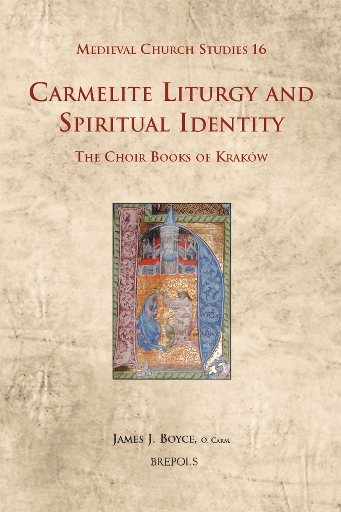
Carmelite Liturgy and Spiritual Identity
The Choir Books of Kraków
show More to view fulltext, buy and share links for:Carmelite Liturgy and Spiritual Identity show Less to hide fulltext, buy and share links for: Carmelite Liturgy and Spiritual IdentityThis book discusses the significance of the Carmelite liturgy as practised in the Kraków convent over a period of some four hundred years. Specifically, it examines the liturgical contents of five medieval Carmelite choir books from the Kraków convent and another choir book from this collection which is now in Wroclaw, and discusses their contents (especially their significant feasts), in terms of the Carmelite order's historical self-understanding and established liturgical tradition. Carmelite Liturgy and Spiritual Identity outlines the role of liturgy in the life of the Kraków convent and in relationship to the apostolic activity of these mendicant friars. It argues that the order's unique liturgical tradition, one which remained distinctive even after the Council of Trent, was crucial to their self-understanding. It also articulates how the liturgical practices of the Kraków Carmelites made a significant contribution to the spiritual life of the city and its people.
-
-
-
Carmen et prophéties à Rome
show More to view fulltext, buy and share links for:Carmen et prophéties à Rome show Less to hide fulltext, buy and share links for: Carmen et prophéties à RomeThe privileged form of expression of Roman prayer, before Christianism, was the carmen, a « religious formula » carefully scanned, with an aura often archaic and mysterious, if not magical. This book offers a systematic inquiry into the carmen. The author examines its technical aspects within the realm of archaic latin meter, then, based upon the latest research, pursues in-depth studies of the oldest manifestations of this type of prayer : the carmina of the ancient sodalities of Rome, the Salians and the Arval Brothers and the carmina of the corpus of Cato the Elder (the « Censor »), who provides us with precepts and prayers stemming from the earliest beliefs of the farmers of Latium. He adds a study of the carmen taken in another sense, although under foreign influence, that of « oracular formula », « prophetic discourse », a discourse which was assumed to come from the divinity itself. The most famous were the oracles of the Sibyl, entrusted to the strange Sibylline Books, which allowed divination, notably in times of crisis. The Romans also had recourse to the oracles of Etruscan divination, to the renowned « responses » of the haruspices. Charles Guittard thus analyses fundamental aspects and concepts of the Roman religion of the Pagan age, matters upon which Pagans and Christians will greatly debate in later periods.
Charles Guittard is professor of Latin language and literature at the University of Paris at Nanterre (Paris X). A recognized specialist in Roman religion, author of numerous books and articles, he has in particular edited Livy and translated Lucretius.
-
-
-
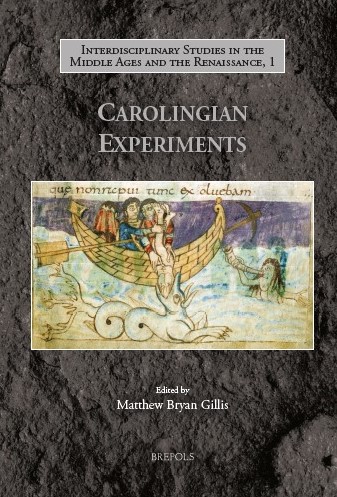
Carolingian Experiments
show More to view fulltext, buy and share links for:Carolingian Experiments show Less to hide fulltext, buy and share links for: Carolingian ExperimentsThis volume presents essays exploring how the Carolingians (ca. 700-ca. 900 CE) - a regime known especially for concerns over imperial power, order, and moral correction - fostered a remarkable era of experimentation in medieval Europe. The scholars featured here ask new questions and conduct their own methodological experiments to uncover some of the many ways that people innovated within the Carolingian world. To that end, numerous themes are covered in this volume: culture and society, family and politics, religion and spirituality, literature and historiography, law and hierarchy, epistemology and science. This array of scholarly experiments reveals some of the range and depth of Carolingian invention. Furthermore, the essays consider how Carolingian innovation can be found in places both more and less known today, employing novel approaches to unearth some unexpected, even uncanny phenomena. This volume consequently offers a defamiliarizing view of the Franks, unveiling them as a people whose seemingly straightforward imperialism and reform were effective precisely because they stimulated and nurtured potent, creative impulses. In fact, one might argue that the Carolingian world’s conservative, moralizing authorities - despite, or perhaps at times because of, their determination to instil correct thought and behaviour in their subjects - fostered many varieties of experimentation. Collectively, the authors of this volume seek to inspire new thinking about the Carolingians, while modelling alternative approaches and potential avenues for future research. Carolingian Experiments overall encourages readers to see that much remains unexplored, unknown and even unexpected about the Carolingians and their world.
-
-
-
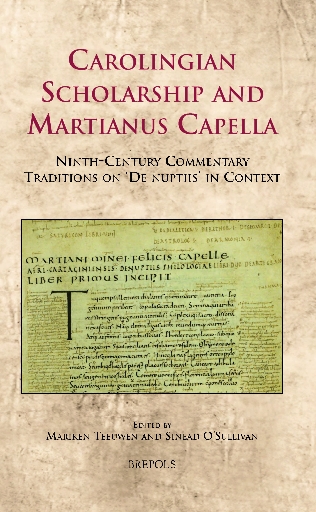
Carolingian Scholarship and Martianus Capella
Ninth-Century Commentary Traditions on 'De nuptiis' in Context
show More to view fulltext, buy and share links for:Carolingian Scholarship and Martianus Capella show Less to hide fulltext, buy and share links for: Carolingian Scholarship and Martianus CapellaIt is well known that the Carolingian royal family inspired and promoted a cultural revival of great consequence. The courts of Charlemagne and his successors welcomed lively gatherings of scholars who avidly pursued knowledge and learning, while education became a booming business in the great monastic centres, which were under the protection of the royal family. Scholarly emphasis was placed upon Latin language, religion, and liturgy, but the works of classical and late antique authors were collected, studied, and commented upon with similar zeal. A text that was read by ninth-century scholars with an almost unrivalled enthusiasm is Martianus Capella’s De nuptiis Philologiae et Mercurii, a late antique encyclopedia of the seven liberal arts embedded within a mythological framework of the marriage between Philology (learning) and Mercury (eloquence). Several ninth-century commentary traditions testify to the work’s popularity in the ninth century. Martianus’s text treats a wide range of secular subjects, including mythology, the movement of the heavens, numerical speculation, and the ancient tradition on each of the seven liberal arts. De nuptiis and its exceptionally rich commentary traditions provide the focus of this volume, which addresses both the textual material found in the margins of De nuptiis manuscripts, and the broader intellectual context of commentary traditions on ancient secular texts in the early medieval world.
-
-
-
Cartesius edoctus
Hommage à Giulia Belgioioso
show More to view fulltext, buy and share links for:Cartesius edoctus show Less to hide fulltext, buy and share links for: Cartesius edoctusLes études qui composent ce recueil ont été prononcées le 6 octobre 2017 au Monastero degli Olivetani de Lecce, en hommage à Giulia Belgioioso, au moment où la fondatrice du Centro Dipartimentale di studi su Descartes ‘Ettore Lojacono’ quittait à la fois son enseignement et la direction du centre qu’elle avait créé.
Le titre qui les réunit - Cartesius edoctus - suffit à dire l’essentiel pour un savant professeur qui a toujours su laisser la première place à celui qui a fait l’objet principal de ses recherches et de ses leçons : mais si elle a inlassablement enseigné Descartes et le cartésianisme, Giulia Belgioioso a aussi fait du Salente un « nouveau royaume » cartésien en y développant ses propres études, en y organisant des rencontres internationales et en établissant, pour parler comme Fénelon, « toutes les plus utiles maximes de gouvernement » pour les recherches des nombreux jeunes chercheurs qu’elle a formés et des équipes qui ont travaillé à l’oeuvre commun, en particulier à l’édition magistrale de Tutte le lettere et des Opere et Opere postume. La fondation du Centro, en 1998, très vite devenu l’alter ego du Centre d’études cartésiennes de la Sorbonne, a fourni le complément institutionnel des avancées méthodologiques évoquées plus haut.
Ce recueil d’articles est un hommage : loin cependant d’être purement formel, il entend se concentrer strictement sur les axes principaux de l’activité de recherche de Giulia Belgioioso. Ce faisant, il révèle en réalité un monde entier : on s’aperçoit en effet immédiatement, ne fût-ce qu’en feuilletant le volume, que les études qui y figurent envisagent les aspects les plus importants à la fois de la philosophie de Descartes et de l’histoire du cartésianisme, comprenant également des documents inédits. La démarche conduit donc de la deuxième Méditation (Igor Agostini) à Paolo Mattia Doria (Jean-Robert Armogathe) ; de la mathesis universalis (Frédéric de Buzon) à Christine de Suède (Carlo Borghero) ; des questions de méthode et de la visée apologétique (Vincent Carraud) à L’Homme (Dan Garber) ; du mythe du solipsisme (Denis Kambouchner) à saint Augustin et Montaigne (Jean-Luc Marion) ; d’un échantillon sur philosophie et médecine dans le XVIIe siècle français (Fabio Sulpizio) aux débats sur l’eucharistie à Port-Royal (Martine Pécharman) et à la condamnation d’un lockien italien (Marta Fattori). Une série de témoignages de collègues, élèves et amis complète l’ouvrage.
-
-
-
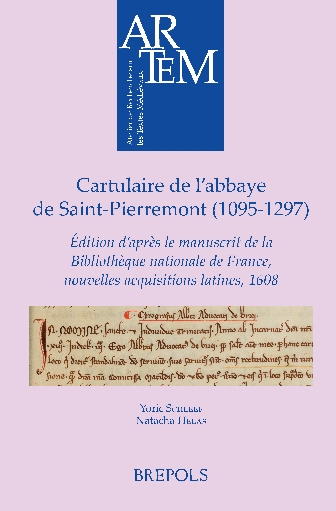
Cartulaire de l’abbaye de Saint-Pierremont (1095-1297)
Édition d’après le manuscrit de la Bibliothèque nationale de France, nouvelles acquisitions latines, 1608
show More to view fulltext, buy and share links for:Cartulaire de l’abbaye de Saint-Pierremont (1095-1297) show Less to hide fulltext, buy and share links for: Cartulaire de l’abbaye de Saint-Pierremont (1095-1297)L’abbaye de chanoines réguliers de Saint-Pierremont a été fondée en 1095 dans le nord de la Lorraine. Grâce aux nombreuses donations de l’aristocratie locale, elle étend rapidement son temporel à travers le Pays-Haut lorrain, jusqu’en Belgique, tout au long des XII e et XIII e siècles. Elle a laissé de nombreuses archives qui éclairent l’histoire de cette région au Moyen Âge. Le cartulaire édité ici est donc une source privilégiée pour la connaissance des possessions de cette abbaye et des structures foncières de cette région. Il complète utilement un livre foncier (auquel il est associé dans le manuscrit) qui a été édité en 2013 par Yoric Schleef.
-
-
-
Cartulaire du chapitre cathédral de Langres
show More to view fulltext, buy and share links for:Cartulaire du chapitre cathédral de Langres show Less to hide fulltext, buy and share links for: Cartulaire du chapitre cathédral de LangresEn 1231 et 1232 cinq scribes copient presque toutes les chartes reçues depuis la fin du XI e siècle par le chapitre cathédral de Langres. Ce cartulaire constitue une remarquable collection d'actes, qui éclaire l'histoire d'une grande seigneurie ecclésiastique, située aux confins de la Champagne, de la Bourgogne et de la Lorraine, du royaume de France et de l'Empire. Document sur la seigneurie et la féodalité, il éclaire aussi la gestion d'un patrimoine considérable, et en particulier l'usage de l'écrit en cette matière.
-
-
-
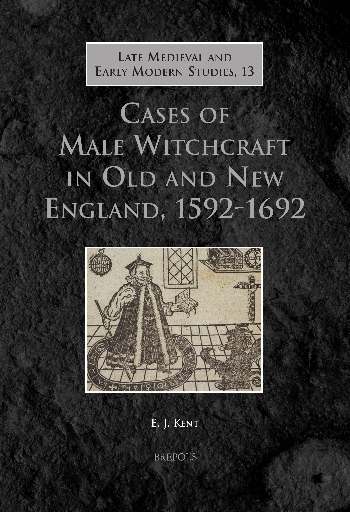
Cases of Male Witchcraft in Old and New England, 1592-1692
show More to view fulltext, buy and share links for:Cases of Male Witchcraft in Old and New England, 1592-1692 show Less to hide fulltext, buy and share links for: Cases of Male Witchcraft in Old and New England, 1592-1692This study explores cases in which men were accused of witchcraft in England and the British colonies of New England between 1592 and 1692. Using a series of case studies that begin in Elizabethan Norfolk and end with the Salem trials in Massachusetts, this book examines six individual male witches and argues they are best understood as masculine witches, not feminized men. Each case considers the social circumstances of the male witch as a gendered context for the accusations of witchcraft against him.
Instead of seeking to identify a single causal condition or overarching gendered circumstance whereby men were accused of witchcraft, this study examines the way that masculinity shaped the accusations of witchcraft made against each man. In each case, a range of masculine social and cultural roles became implicated in accusations of witchcraft, making it possible to explore how beliefs in witches interacted with early modern English gender cultures to support the religious, legal, and cultural logic of the male witch. The result is an approach to early modern English witchcraft prosecution that includes, rather than problematizes, the male witch.
-
-
-
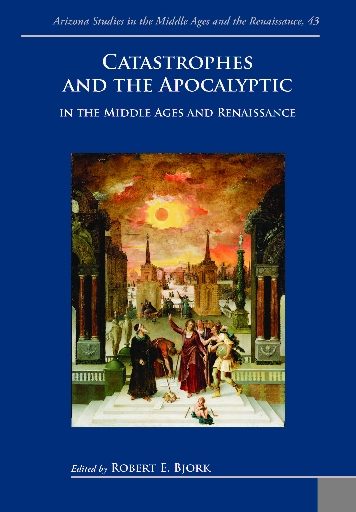
Catastrophes and the Apocalyptic in the Middle Ages and the Renaissance
show More to view fulltext, buy and share links for:Catastrophes and the Apocalyptic in the Middle Ages and the Renaissance show Less to hide fulltext, buy and share links for: Catastrophes and the Apocalyptic in the Middle Ages and the RenaissanceIn the twenty-first century, insurance companies still refer to 'acts of God' for any accident or event not influenced by human beings: hurricanes, floods, hail, tsunamis, wildfires, earthquakes, tornados, lightning strikes, even falling trees. The remote origin of this concept can be traced to the Hebrew Bible. During the Second Temple period of Judaism a new literary form developed called 'apocalyptic' as a mediated revelation of heavenly secrets to a human sage concerning messages that could be cosmological, speculative, historical, teleological, or moral. The best-known development of this type of literature, however, came to fruition in the New Testament and is, of course, the Book of Revelation, attributed to the apostle John, and which figures prominently in the Middle Ages and Renaissance.
This collection of essays, the result of the 2014 ACMRS Conference, treats the topic of catastrophes and their connection to apocalyptic mentalities and rhetoric in the Middle Ages and the Renaissance (with particular reference to reception of the Book of Revelation), both in Europe and in the Muslim world. The twelve authors contributing to this volume use terms that are simultaneously helpful and ambiguous for a whole range of phenomena and appraisal.
-
-
-
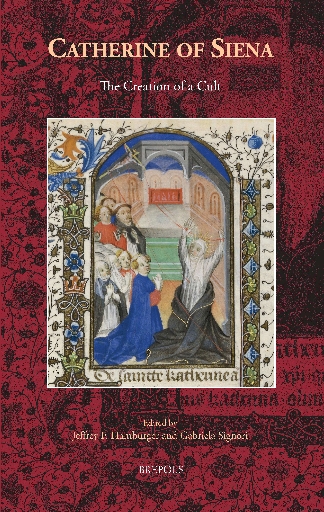
Catherine of Siena
The Creation of a Cult
show More to view fulltext, buy and share links for:Catherine of Siena show Less to hide fulltext, buy and share links for: Catherine of SienaHow does one construct a saint and promote a cult beyond the immediate community in which he or she lived? Italian mendicants had accumulated a good deal of experience in dealing with this politically explosive question. The posthumous description of the life of Francis of Assisi (d. 1226) written by the Master General of the order, Bonaventure (d. 1274), could be regarded as paradigmatic in this regard. A similarly massive intervention in the production and diffusion of a cult can be observed in the case of the Dominican tertiary, Catherine of Siena (d. 1380), who in many respects (e.g. the imitation of Christ and her stigmatization) ‘competed’ with Francis of Assisi. Raymund of Capua (d. 1399), the Master General of the order, established the foundation for the dissemination of the cult by writing the authoritative life, but it was only the following generation that succeeded in establishing and disseminating the cult on a broad basis by means of copies, adaptations, and translations. The question of how to make a cult, which stands at the centre of this volume, thus presents itself in terms of the challenge of rewriting a legend for different audiences. The various contributions consider the role, not only of texts in many dfferent vernaculars (Czech, English, French, German, and Italian), but also of images, whether separately or in connection with one another.
-
-
-
Catholicisme, culture et société aux Temps modernes
Mélanges offerts à Bernard Dompnier
show More to view fulltext, buy and share links for:Catholicisme, culture et société aux Temps modernes show Less to hide fulltext, buy and share links for: Catholicisme, culture et société aux Temps modernesDepuis plus de quarante ans, Bernard Dompnier scrute la complexité du catholicisme moderne, ouvrant de nombreux chantiers transversaux autour des réguliers, des missions, des dévotions mais aussi de la liturgie et de la musique d’église. La vingtaine de textes qui constitue ce livre, dont les auteurs sont des collègues et amis, historiens et musicologues, rend ainsi hommage à cette diversité d’approches pour un objet principal : le catholicisme pensé et vécu au coeur de la société d’Ancien Régime.
-
-
-

Celts, Gaels, and Britons
Studies in Language and Literature from Antiquity to the Middle Ages in Honour of Patrick Sims-Williams
show More to view fulltext, buy and share links for:Celts, Gaels, and Britons show Less to hide fulltext, buy and share links for: Celts, Gaels, and BritonsCelts, Gaels, and Britons offers a miscellany of essays exploring three closely connected areas within the fields of Celtic Studies in order to shed new light on the ancient and medieval Celtic languages and their literatures. Taking as its inspiration the scholarship of Professor Patrick Sims-Williams, to whom this volume is dedicated, the papers gathered together here explore the Continental Celtic languages, texts from the Irish Sea world, and the literature and linguistics of the British languages, among them Welsh and Cornish. With essays from eighteen leading scholars in the field, this in-depth volume serves not only as a monument to the rich and varied career of Sims-Williams, but also offers a wealth of commentary and information to present significant primary research and reconsiderations of existing scholarship.
-
-
-
Centaurus
Journal of the European Society for the History of Science
show More to view fulltext, buy and share links for:Centaurus show Less to hide fulltext, buy and share links for: CentaurusCentaurus. Journal of the European Society for the History of Science, is an international English language journal and the official journal of the European Society for the History of Science (ESHS). Centaurus publishes high quality academic content on the history of science in the broadest sense, including the history of mathematics, medicine, biomedical sciences, earth sciences, social sciences, humanities and technology, studied from different perspectives, including epistemic, social, cultural, material and technical aspects. We also invite contributions that build a bridge between history of science and other disciplines. There are several types of manuscripts, including original research articles and historiographical articles. The editorial board commissions experts to write book notices, book reviews and essay reviews of publications within the journal's scope. The Editor encourages suggestions for special issues, spotlight sections with short papers on topics of current interest, and articles suited to open peer commentary.
More information about this journal on Brepols.net
-
-
-
Centres and Peripheries in the History of Philosophical Thought / Centri e periferie nella storia del pensiero filosofico
Essays in Honour of Loris Sturlese
show More to view fulltext, buy and share links for:Centres and Peripheries in the History of Philosophical Thought / Centri e periferie nella storia del pensiero filosofico show Less to hide fulltext, buy and share links for: Centres and Peripheries in the History of Philosophical Thought / Centri e periferie nella storia del pensiero filosoficoThis volume is an homage to the great intellectual contribution made by Loris Sturlese to the field of history of medieval philosophy. Its point of departure lies in a methodological line, which Sturlese has maintained throughout his whole academic career: the importance in the historical and conceptual reconstruction of medieval philosophical thought of focusing not only on the classical, most famous centers of knowledge production and transmission, but also on the often-neglected peripheries, which during the Middle Ages were increasingly more relevant in propelling the circulation of texts and ideas. In this volume, the notions of ‘center’ and ‘periphery’ are not understood in a merely geographical sense, but also in conceptual, linguistic, historical and literary terms. The richness of this approach is demonstrated by the broad spectrum of the contributions, which range from Islamic philosophy to Italian Renaissance, including the reception of ancient philosophy and of Arabic scientific works in the Latin world, and up to eighteenth-century French geography. Special attention is devoted to the philosophical thought developed in the German area. The volume does not lack in giving space to important medieval figures, such as Dante, as well as to more general philosophical notions, such as the concept of rationality.
The volume explores connections, ruptures, relations and affinities through the analysis of paradigmatic figures, places and topics within the micro- and macro-histories of philosophy.
-
-
-
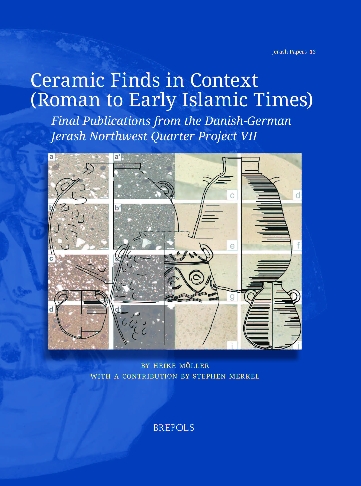
Ceramic Finds in Context (Roman to Early Islamic Times)
Final Publications from the Danish-German Jerash Northwest Quarter Project VII
show More to view fulltext, buy and share links for:Ceramic Finds in Context (Roman to Early Islamic Times) show Less to hide fulltext, buy and share links for: Ceramic Finds in Context (Roman to Early Islamic Times)The Decapolis city of Jerash has long attracted attention from travellers and scholars, due both to the longevity of the site and the remarkable finds uncovered during successive phases of excavation that have taken place from 1902 onwards. Between 2011 and 2016, a Danish-German team, led by the universities of Aarhus and Münster, focused their attention on the Northwest Quarter of Jerash — the highest point within the walled city — and this volume is the seventh in a series of books presenting the team’s final results.This volume provides an in-depth analysis into the ceramic materials found in Jerash’s Northwest Quarter, much of which comes from largely undisturbed contexts. The ceramic finds presented in this volume are typo-chronologically evaluated and contextually analysed. The authors then use this dataset as a starting point to explore the micro- and macro-networks that existed in ancient Gerasa from Roman to Early Islamic times more broadly, examining how finely meshed exchange could take place on a micro-regional level, and assessing what conditions were required in order for trade to occur.
-
-
-
Certitude et incertitude à la Renaissance
show More to view fulltext, buy and share links for:Certitude et incertitude à la Renaissance show Less to hide fulltext, buy and share links for: Certitude et incertitude à la RenaissanceLa Renaissance est marquée par un grand mouvement de rationalisation du savoir. La science sert de référence à l'art, qui par sa mathématisation, tente de s'approcher le plus possible de la certitude absolue dont elle fournit le modèle. Les sciences intermédiaires, disciplines d'application de la mathématique, telles que la mécanique, l'optique, l'abaque, se développent, permettant de nombrer le réel, parallèlement aux instruments de précision qui accroissent l'efficacité de la technique. D'autres disciplines, telles que le droit ou l'histoire, cherchent de même à élaborer les principes et la méthode de leur certitude propre. Il est toutefois des domaines, tels que la foi ou l'acte moral, où la certitude ne s'étalonne pas sur la vérité de la science, mais trouve en son coeur l'incertitude fondatrice de l'expérience humaine. En tentant, dans la recherche du bien et du mal, du beau et du laid, de conjurer la relativité et la précarité de la vie, l'intelligence humaine ne saurait fait l'économie du doute qui la distingue de la machine et fonde sa grandeur. C'est à cette tension jamais résolue, mise en évidence par l'humanisme de la Renaissance, que cet ensemble de contributions se propose de réfléchir.
-
-
-
Challenging the Boundaries of Medieval History
The Legacy of Timothy Reuter
show More to view fulltext, buy and share links for:Challenging the Boundaries of Medieval History show Less to hide fulltext, buy and share links for: Challenging the Boundaries of Medieval HistoryHow is the history of medieval Europe written? What national discourses shape the editing of medieval texts and their interpretation in historiography? And how can medieval historians confront these questions by reintegrating their fragmented field through the use of comparison and critiques across national boundaries? In his work, Timothy Reuter regularly posed these challenges to his colleagues, acting as a bridge between the historians of England and Germany, working on an edition of the letters of Wibald of Stavelot (whose own career took him to many of the power centres of medieval Europe), and positioning medieval Europe in the wider discourses of world history. The essays collected here provide a response to this challenge. Dedicated to Prof. Reuter’s memory and in some cases directly continuing his work, all are explicitly comparative in their approach. All of the authors take as their starting point the need to be conscious of the situation from which they themselves are writing and to be sensitive to the training traditions which have shaped their own interpretations. This book shows medieval historians at work, questioning and reflecting on their practice. As well as being of value to specialists in the field, the essays are written in an approachable style and will therefore be of value as a teaching tool to undergraduate and graduate students.
-
-
-
Chanter en polyphonie à Notre-Dame de Paris aux 12e et 13e siècles
show More to view fulltext, buy and share links for:Chanter en polyphonie à Notre-Dame de Paris aux 12e et 13e siècles show Less to hide fulltext, buy and share links for: Chanter en polyphonie à Notre-Dame de Paris aux 12e et 13e sièclesLa polyphonie chantée au chœur de la cathédrale Notre-Dame de Paris à la fin du XIIe siècle a profondément marqué son temps et la virtuosité dont ont fait preuve les chanteurs dans le maniement de leur art, l’audace des scribes qui ont consigné l’organum dans une notation mesurée alors totalement inédite et l’intérêt que les intellectuels y ont porté, accordent à la polyphonie parisienne une place remarquable dans l’histoire de la musique occidentale.
Cet ouvrage explique comment les chantres de la nouvelle église de Paris ont réussi à exécuter ces majestueuses fresques qui enflammèrent l’imagination des médiévaux par leur étonnante splendeur et qui suscitent toujours autant d’enthousiasme de nos jours.
La musique médiévale entretient d’étroites relations avec les sciences du langage, puisant en elles les éléments de son développement technique et reposant sur une mémoire sans cesse exercée. Cette étude concerne l’ars musica dans ses relations avec les arts du trivium et la mémoire et veut ancrer les compositions dans le contexte intellectuel et éducatif qui a permis leur éclosion et leur développement. Elle montre ainsi comment les clercs de Notre-Dame ont utilisé des procédés rhétoriques d’ornementation afin d’élaborer un discours musical complexe et vise à comprendre dans quelles circonstances, comment et à quelles fins, les chantres ont composé une très haute manifestation de la Parole chantée.
-
-
-

Chanter par le Si en France au xvii e siècle
Pionniers et prémisses du solfège moderne
show More to view fulltext, buy and share links for:Chanter par le Si en France au xvii e siècle show Less to hide fulltext, buy and share links for: Chanter par le Si en France au xvii e siècleEn 1666, la « Methode facile pour apprendre à chanter la musique » (Paris, Ballard), est le premier ouvrage imprimé en France à recommander l'utilisation du Si. Cette septième syllabe de solmisation permet de s’affranchir du solfège ancien, des hexacordes et des muances. La gamme du Si, ou gamme française, s'impose comme une nouvelle norme, parallèlement à une actualisation du discours sur les échelles musicales, prélude à l’énonciation des principes de la tonalité.
Pourtant, depuis la fin du XVIe siècle, des solmisations heptacordales essaiment ailleurs, de l’Italie au Danemark. La France semble à rebours du reste de l’Europe : elle tarde à réagir à ce nouveau modèle et s’avère finalement être le seul pays où le Si est intégré durablement. Quel fut le cheminement de ces idées et pratiques ? Que disent-elles des représentations de l’espace sonore qui coexistent et s’anamorphosent au XVIIe siècle, isthme entre Humanisme et Lumières ? Ces questions serpentent dans la littérature depuis que Brossard, Montéclair ou Rousseau s’en sont emparés.
L’étude de sources essentiellement manuscrites permet aujourd’hui de préciser les jalons de cette histoire en France, de mettre en lumière des pionniers autant que des détracteurs du Si. Leurs témoignages sont issus de l'entourage scientifique de Mersenne, des sphères huguenotes et mauristes, des chapelles musicales parisiennes et finalement des méthodes destinées aux amateurs. C’est en questionnant ces pionniers, leurs écrits et les contextes dans lesquels ils ont évolué que ce pan de l’histoire du solfège est ici mis en perspective et, d’une certaine manière, humanisé.
-
-
-
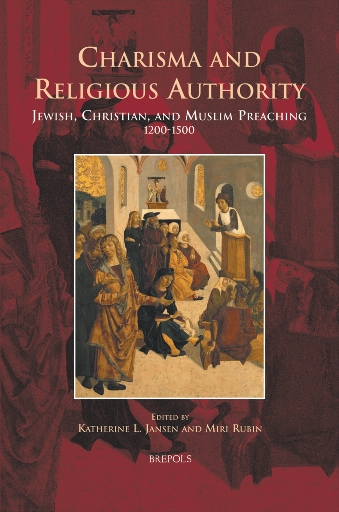
Charisma and Religious Authority
Jewish, Christian, and Muslim Preaching, 1200-1500
show More to view fulltext, buy and share links for:Charisma and Religious Authority show Less to hide fulltext, buy and share links for: Charisma and Religious AuthorityThis volume of essays concentrates on the effects of preaching in late medieval and early modern Europe, particularly through the concept of charisma, a term introduced into the discussion of religion and politics by Max Weber. Used by Weber, the term indicates the power of a person to move others to action, to animate and mobilize them. The late medieval and early modern periods witnessed the emergence of preachers who became powerful public figures central to the mobilization of populations towards religious reform or crusades. Such preachers were also enmeshed in civic life and the life of courts. Super-preachers like Bernardino of Siena and John of Capestrano shaped opinion on a wide range of issues: the ethics of business, marriage and gender relations, attitudes towards minorities, the poor and social responsibility, as well as the role of kings and other rulers in society. Preaching events were the mass media of the day, and in their wake could follow pogrom, lay revival, crusade, peace movement, or reconciliation within a faction-riven city. The power of these events was great and not merely confined to the Christian community. This volume introduces for the first time a comparative dimension which looks at the theme of charisma and religious authority in the Jewish, Christian, and Muslim preaching traditions.
-
-
-
Charlemagne : les temps, les espaces, les hommes
Construction et déconstruction d’un règne
show More to view fulltext, buy and share links for:Charlemagne : les temps, les espaces, les hommes show Less to hide fulltext, buy and share links for: Charlemagne : les temps, les espaces, les hommesCe volume comprend les actes du colloque qui a eu lieu en 2014 à Paris à l’occasion du 1200e anniversaire de la mort de Charlemagne. Les articles ne commémorent pas en Charlemagne le père de l’Europe ni le fondateur d’empire, mais ils situent le demi-siècle de son gouvernement dans un jeu d’échelle spatial et temporel qui fait la part des traditions et des innovations et qui donne une meilleure place aux périphéries et aux laboratoires qu’elles ont pu constituer. Il s’agit de se départir autant que possible du travers historiographique qui consiste, en privilégiant toujours les mêmes sources, à attribuer à l’homme et au règne des initiatives et des réalisations qui participent de temporalités et d’expériences diverses et qui ne naissent pas toutes entre Loire et Rhin. Par une relecture et une déconstruction des sources les plus variées, le règne, la période et les acteurs sont reconsidérés dans toute leur complexité chronologique et spatiale.
-
-
-
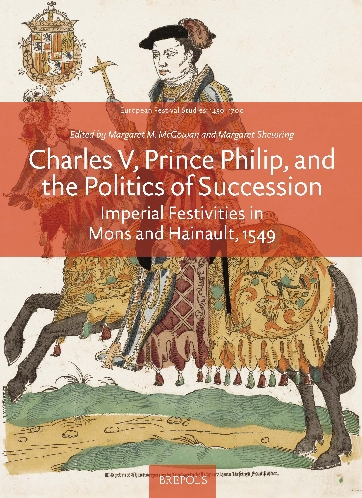
Charles V, Prince Philip, and the Politics of Succession
Imperial Festivities in Mons and Hainault, 1549
show More to view fulltext, buy and share links for:Charles V, Prince Philip, and the Politics of Succession show Less to hide fulltext, buy and share links for: Charles V, Prince Philip, and the Politics of SuccessionThis book is based on an international conference held in the capital of Hainault to celebrate the city of Mons as European Capital of Culture (2015). For the first time, through a range of interdisciplinary studies, the magnificent festivals created to honour Prince Philip of Spain as he journeyed across Europe to receive his sovereignty of the Low Countries are brought to life. The splendour of entries in the cities of Northern Italy (such as Genoa and Milan) was challenged by the civic allegories of triumph displayed throughout the Low Countries in Ghent, Antwerp, and Amsterdam. Outpacing all that magnificence were the entertainments prepared by Mary of Hungary at Binche: triumphal arches, martial feats of arms, balls, masquerades, and castle-stormings entertained Emperor Charles V and his son Prince Philip.The essays in this volume reconstitute the political and social context of these extraordinary celebrations and focus on the purpose and role of festival in the changing political strategies of Charles V. They are illustrated with a total of 36 b&w and 36 colour images.Contributors: Sydney Anglo, Francesca Bortoletti, Stijn Bussels, Tobias Capwell, José Eloy Hortal Muñoz, Félix Labrador Arroyo, Margaret M. McGowan, R. L. M. Morris, Jessie Park, Yves Pauwels, M. J. Rodríguez-Salgado, Margaret Shewring, Hugo Soly, Lisa Wiersma.
-
-
-
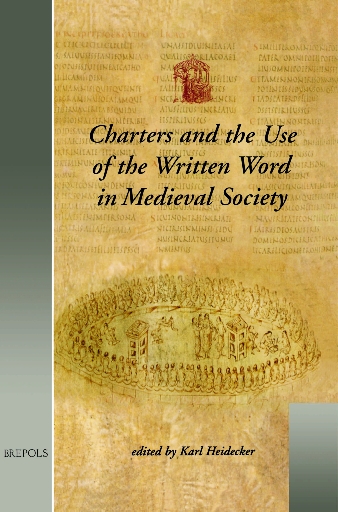
Charters and the Use of the Written Word in Medieval Society
show More to view fulltext, buy and share links for:Charters and the Use of the Written Word in Medieval Society show Less to hide fulltext, buy and share links for: Charters and the Use of the Written Word in Medieval SocietyThere have been periods of growth and of decrease in the quantity of writing produced in the medieval centuries. The present volume is concerned with qualitative developments, asking: which developments can be distinguished in the roles played by writing in medieval societies? In which fields was writing used, and by whom? Why did these changes take place? When attempting to answer these questions, the scholar confronts basic questions about the sources at one’s disposal. Why were documents written? Why were they preserved and in what form? The volume pays especial attention to charters, since these documents have been continuously present throughout the Middle Ages. They also had an impact on most layers of society.
-
-
-
Chartes de l'abbaye de Remiremont, des origines à 1231
show More to view fulltext, buy and share links for:Chartes de l'abbaye de Remiremont, des origines à 1231 show Less to hide fulltext, buy and share links for: Chartes de l'abbaye de Remiremont, des origines à 1231L'abbaye de Remiremont, fondée vers 620, était une des plus grandes abbayes lotharingiennes, et aussi la principale institution religieuse féminine de Lorraine. Son recrutement dans la noblesse lui a perrnis d' établir des relations économiques et spirituelles avec toute l'aristocratie, jusqu'aux souverains, ainsi qu'en témoigne le célèbre Liber memorialis. Ses archives ont beaucoup souffert, de sorte que c'est dans un très grand nombre de dépôts d'archives et de bibliothèques qu'il faut chercher les originaux et des copies, très diverses d'ailleurs quant à leur date et leur forme.
La richesse de l' abbaye et ses importantes relations l' ont amenée à recevoir de nombreuses chartes, et à en concéder à plusieurs autres abbayes. C'est l' ensemble de ces actes, au nombre de 171 jusqu' en 1231, que Jean Bridot édite ici. Son travail reprend, complète et affine une première publication, assez confidentielle, qu'il avait donnée en 1980.
A côté du Liber memorialis édité par E. Hlawitschka, des documents nécrologiques réunis par M.-0. Boulard et d'un remarquable ensemble de notices de tradition dont la publication est préparée par Michel Parisse, ce recueil de chartes constitue le quatrième grand volet des sources romarimontaines médiévales.
-
-
-
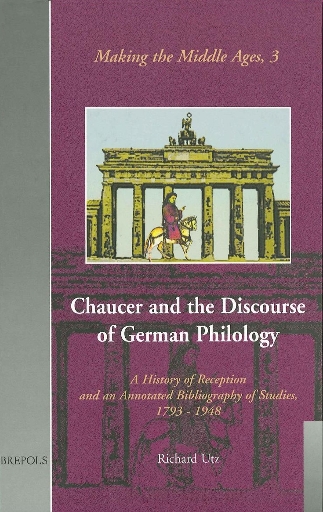
Chaucer and the Discourse of German Philology
A History of Reception and an Annotated Bibliography of Studies, 1793-1948
show More to view fulltext, buy and share links for:Chaucer and the Discourse of German Philology show Less to hide fulltext, buy and share links for: Chaucer and the Discourse of German PhilologyIn the nineteenth and early twentieth century, German-speaking scholars played a decisive role in founding and shaping the study of medieval and early modern English language and culture. During this process, aesthetic and literary enthusiasms were gradually replaced, first by broadly comparative and then by increasingly narrow scientistic practices, all confusingly subsumed under the term 'philology'. Towards 1871, German and Austrian Anglicists were successful at imposing-- for about 30 years -- many of their philological discoursive practices on their English-speaking counterparts by focusing on strict textual criticism, chronology, historical linguistics, prosody, and literary history. After World War I, these philological practices were rejected in the U.K. and the United States because they were 'Made in Germany', but have remained essential features of German medieval scholarship until the present day.
This book offers a case study of these foundational developments by investigating the reception of Geoffrey Chaucer by eminent scholars such as V.A. Huber, W. Hertzberg, B. ten Brink, J. Zupitza, E. Fluegel, and J. Koch. The narrative of their nationalist, scientist, and self-fashioning efforts is complemented by a comprehensive annotated bibliography of German Chaucer criticism between 1793 and 1948.
-
-
-
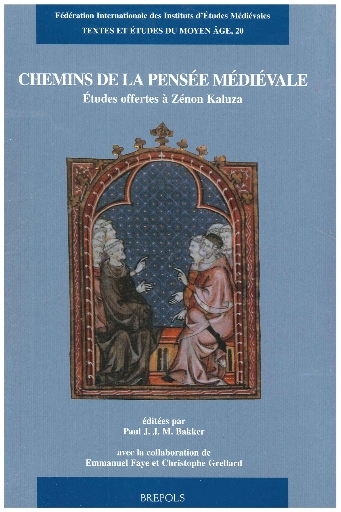
Chemins de la pensée médiévale
Etudes offertes à Zénon Kaluza
show More to view fulltext, buy and share links for:Chemins de la pensée médiévale show Less to hide fulltext, buy and share links for: Chemins de la pensée médiévaleHistorien de la philosophie et de la théologie du Moyen Âge tardif, spécialiste des xiv e et xv e siècles, Zénon Kaluza a profondément marqué les études médiévales des dernières décennies. Ses travaux portent sur plusieurs grands thèmes de l’histoire doctrinale du Moyen Âge, notamment le «platonisme» parisien et pragois, les méthodes et les langages de la philosophie et de la théologie, les contextes institutionnels du savoir et, enfin, la question du rapport entre l’Église et l’État. Pour rendre hommage à l’homme et à son œuvre, ses collègues et amis lui offrent ce recueil d’articles. Réunies sous le titre de Chemins de la pensée médiévale, ces études explorent différents aspects de l’histoire de la philosophie et de la théologie ainsi que, dans une perspective plus large, de l’histoire intellectuelle et sociale du Moyen Âge. Par l’ampleur de son orientation thématique, le présent volume offre une excellente présentation de l’état actuel de la recherche sur la pensée médiévale.
-
-
-
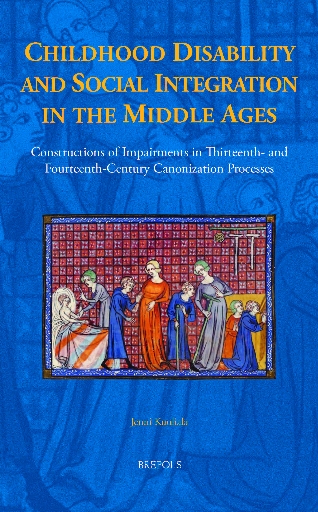
Childhood Disability and Social Integration in the Middle Ages
Constructions of Impairments in Thirteenth- and Fourteenth-Century Canonization Processes
show More to view fulltext, buy and share links for:Childhood Disability and Social Integration in the Middle Ages show Less to hide fulltext, buy and share links for: Childhood Disability and Social Integration in the Middle AgesThis volume offers new insights into medieval disability studies by analysing miracle testimonies from canonization processes as sources for the study of medieval attitudes to and understanding of childhood physical impairments: how they were defined, and the social consequences of childhood disability on the family, on the community, and on children themselves.
In these texts, laypeople from different social groups carefully described events leading to children’s miraculous cures of physical impairments, as well as the conditions themselves. They thus provide an exceptionally rich (yet hitherto unexplored) window into the ways in which medieval society defined, explained, and understood children’s impairments.
Besides simply describing disabilities and miraculous cures, these testimonies also reveal various aspects of everyday experiences and communal attitudes towards impaired children. The few testimonies by the children themselves offer fascinating insights into personal experiences of physical disability and how disability affected a child’s socialization and the formation of identity.
This study thus aims to tease apart the often-complex ways in which medieval society both viewed physical differences and how it chose to (re)construct these differences in the discourse of the miraculous, as well as in everyday life.
-
-
-
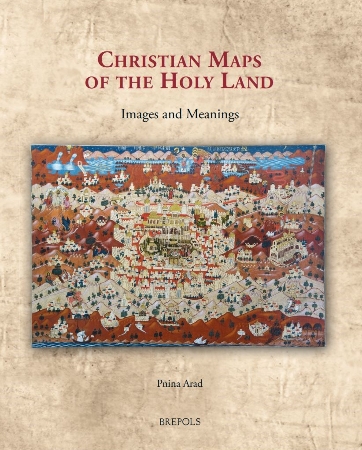
Christian Maps of the Holy Land
Images and Meanings
show More to view fulltext, buy and share links for:Christian Maps of the Holy Land show Less to hide fulltext, buy and share links for: Christian Maps of the Holy LandThis book offers a way of reading maps of the Holy Land as visual imagery with religious connotations. Through a corpus of representative examples created between the sixth and the nineteenth centuries, it studies the maps as iconic imagery of an iconic landscape and analyses their strategies to manifest the spiritual quality of the biblical topography, to support religious tenets, and to construct and preserve cultural memory.
Maps of the Holy Land have thus far been studied with methodologies such as cartography and historical geography, while the main question addressed was the reliability of the maps as cartographic documents. Through another perspective and using the methodology of visual studies, this book reveals that maps of the Holy Land constructed religious messages and were significant instruments through which different Christian cultures (Byzantine, Catholic, Protestant, and Greek Orthodox) shaped their religious identities. It does not seek to ascertain how the maps delivered geographical information, but rather how they utilized the geographical information in formulating religious and cultural values.
Through its examination of maps of the Holy Land, this book thus explores both Christian visual culture and Christian spirituality throughout the centuries.
-
-
-
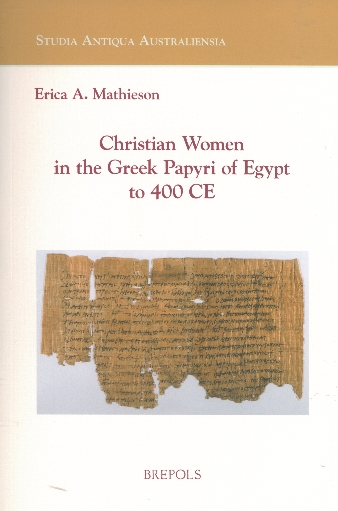
Christian Women in the Greek Papyri of Egypt to 400 CE
show More to view fulltext, buy and share links for:Christian Women in the Greek Papyri of Egypt to 400 CE show Less to hide fulltext, buy and share links for: Christian Women in the Greek Papyri of Egypt to 400 CEThe documentary papyri are an unparalleled source for the study of women in antiquity. Among them are numbers of female-authored texts which allow women’s voices to be heard. In the period to 400 CE twenty-six of these texts provide information on Christian women’s religious lives. This book analyses these papyri. They give insight into Christian women’s knowledge and use of biblical texts, their practice of prayer, their theological understanding of God, their lives and relationships. This book also examines texts written to Christian women or referring to Christian women among which are a valuable group referring to ascetic women. The perspectives of the papyri nuance what is known about women from other sources.
-
-
-
Christian readings of Aristotle from the Middle Ages to the Renaissance
show More to view fulltext, buy and share links for:Christian readings of Aristotle from the Middle Ages to the Renaissance show Less to hide fulltext, buy and share links for: Christian readings of Aristotle from the Middle Ages to the RenaissanceWidely recognized as one of the main characteristics of Latin Aristotelianism, the ‘Christianisation’ of Aristotle from the thirteenth to the seventeenth century has received as yet little attention. Aiming to answer the need for a more systematic investigation, the articles here collected approach Christian readings of the Stagirite’s works from different perspectives. Setting aside abstract discussions about ‘degrees of orthodoxy’, they address a few specific questions: which ‘images’ of Aristotle were offered by Medieval and Renaissance interpreters, and in particular how did some of them argue that — far from being a pagan or even an impious thinker — he did not contradict the truths revealed by Holy Scripture? Which strategies did they adopt to harmonize Aristotelian philosophy with Christian religion, or at least to avoid their clash? How did they conceive the task of expounding Aristotle’s thought? How did they understand and apply the distinctions, developed since the mid-thirteenth century, between the point of view of the philosophers and that of the believers, between what is true ‘speaking naturally’ and what is true ‘according to faith’? Were these distinctions — and other disclaimers or cautionary statements — effective in protecting masters that taught Aristotle’s texts from accusations of heresy? To what extent were ideas issuing from Christian theology integrated within the Peripatetic worldview, or even treated within Aristotelian commentaries?
Discussing these and related questions, the ten contributors to this volume examine relevant doctrines of outstanding thinkers – Roger Bacon (Chiara Crisciani), Siger of Brabant and Henry of Ghent (Pasquale Porro), Dante Alighieri (Gianfranco Fioravanti); offer a fine analysis of some commentaries on the Nicomachean Ethics (Iacopo Costa), the Politics (Stefano Simonetta) and the libri naturales (Amos Corbini); suggest innovative interpretations of the genesis of the Liber de bona fortuna (Valérie Cordonier) and of the condemnation of 1277 (Dragos Calma); inspect minor but significant figures of the Italian Renaissance such as Ludovico Beccadelli (Pietro Rossi) and Cesare Crivellati (Luca Bianchi).
-
-
-
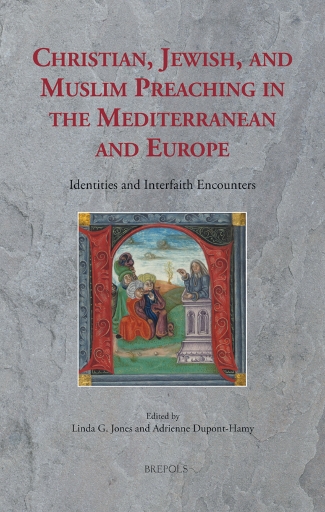
Christian, Jewish, and Muslim Preaching in the Mediterranean and Europe
Identities and Interfaith Encounters
show More to view fulltext, buy and share links for:Christian, Jewish, and Muslim Preaching in the Mediterranean and Europe show Less to hide fulltext, buy and share links for: Christian, Jewish, and Muslim Preaching in the Mediterranean and EuropeThis volume explores the sermons and activities of Christian, Jewish, and Muslim preachers who shaped ideas about religious and gendered identities and alterity throughout the Mediterranean and northern Europe. Preachers of all three traditions played a decisive role in defining the religious identities of their communities, often in response to negative images projected onto religious others. The studies cover a broad spectrum of premodern Europe and the Mediterranean and address the ways that preaching reflects transcultural contacts as well as social, intellectual, and hermeneutical encounters among diverse societies and religious communities.
The essays are divided into three themes. Part One, ‘Religious and Gendered Identities and Alterities,’ examines how religious identity is inflected by the presence or the ‘absent presence’ of religious others and interrogates how gender informs religious identity, piety, and alterity. The chapters in Part Two, ‘Hermeneutical Identities, Alterities, and Transcultural Relations in Christian and Jewish Preaching’, offer contrasting interpretations of the impact of anti-Judaism in Christian preaching and analyse Jewish responses to Christian polemic. Part Three, ‘Muslim and Christian Orators and Inter-faith Encounters,’ explores these encounters from the dual perspectives of Crusade and military conflict and interreligious dialogue, disputation, and proselytization. The volume positions itself at the intellectual crossroads between comparative medieval sermons studies and transcultural Mediterranean and European studies.
-
-
-
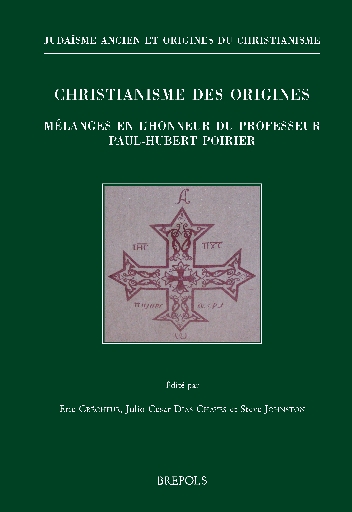
Christianisme des origines
Mélanges en l’honneur du Professeur Paul-Hubert Poirier
show More to view fulltext, buy and share links for:Christianisme des origines show Less to hide fulltext, buy and share links for: Christianisme des originesÀ l’occasion du départ à la retraite de Paul-Hubert Poirier de son poste de professeur en patrologie et en histoire de l’Église à la Faculté de théologie et de sciences religieuses de l’Université Laval, collègues, amis et anciens étudiants se sont réunis pour lui rendre hommage. Les vingt-sept contributions recueillies, qui s’illustrent par la variété des thèmes abordés et par leur grande qualité scientifique, témoignent de l’étendu des intérêts de Paul-Hubert Poirier pour les domaines touchant de près ou de loin le christianisme des premiers siècles, des quatre coins de la Méditerranée. Les articles rassemblés intéresseront tant les spécialistes de l’histoire et de la littérature des premiers siècles chrétiens, que ceux du christianisme syriaque, copto-égyptien et éthiopien, de la philosophie antique, du gnosticisme et du manichéisme.
-
-
-
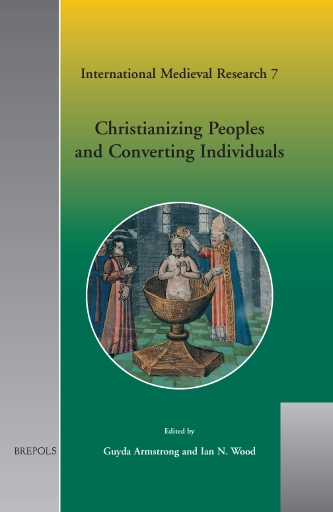
Christianizing Peoples and Converting Individuals
show More to view fulltext, buy and share links for:Christianizing Peoples and Converting Individuals show Less to hide fulltext, buy and share links for: Christianizing Peoples and Converting IndividualsThe anniversary of Augustine’s arrival in Kent in 597, and the subsequent christianization of England, made conversion an obvious theme for the 1997 International Medieval Congress. It was also a theme which attracted massive interest, and not just from early medievalists interested in the christianization of England and its near-contemporary parallels. This volume presents reworkings of 28 of these contributions.
The Early Middle Ages are represented in a number of papers concerned with Central and Eastern Europe and as far east as Georgia. Interest in the Baltic region took this aspect of the christianization of Europe well into the fourteenth century. Papers on these regions constitute a good proportion of the present volume, and they provide a very useful point of entry into work currently being done on christinization in areas which are less well known to most historians than is Western Europe not least because of the range of languages involved.
With respect to later periods of the Middle Ages two issues predominated: one was the interface between Christians and Muslims in Spain and in the Holy Land and also between Christians and Jews once again in Spain, but also in England, and more generally in Western Europe. The other was the rather more theological question of the nature of conversion, as discussed by Aquinas, and in Franciscan writings. This wide-ranging volume concentrates on historical approaches to the topic. The different types of questions posed and materials used are a fascinating indication of the different interpretations to be found among specialists in different fields.
Christianization, as a process affecting complete peoples, or at least large groups, attracts attention, as does conversion of the individual. By putting these varying approaches together, this collection indicates the range of current work on christianization and conversion history and the range itself, quite apart from the individual studies, is an eye-opener.
-
-
-
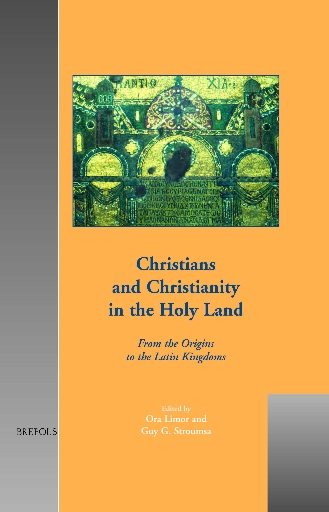
Christians and Christianity in the Holy Land
From the Origins to the Latin Kingdoms
show More to view fulltext, buy and share links for:Christians and Christianity in the Holy Land show Less to hide fulltext, buy and share links for: Christians and Christianity in the Holy LandThis volume fills a major desideratum in historical scholarship on the religious history of the Holy Land. It presents a synthesis of our knowledge of the history of Christianity and the various churches that coexisted there from the beginnings of Christianity to the fall of the Crusader Kingdoms. It also offers analytical studies of major topics and problems. While the first part is organized chronologically, the second follows a thematic plan, dealing with the major themes pertaining to the topic, from various points of view and covering several disciplinary fields: history, theology, archaeology, and art history. The volume represents the outcome of an international project initiated by Yad Izhak Ben-Zvi of Jerusalem, and the contributors are leading experts in their fields.
-
-
-
Chromatius of Aquileia and His Age
show More to view fulltext, buy and share links for:Chromatius of Aquileia and His Age show Less to hide fulltext, buy and share links for: Chromatius of Aquileia and His AgeThis volume presents the proceedings of the International Congress Chromatius of Aquileia and His Age which took place at Aquileia (Italy) from 22 to 24 May 2008 under the direction of Pier Franco Beatrice (University of Padova) and Alessio Peršič (Università Cattolica del Sacro Cuore, Milan) and was fostered by the National Commitee for the Sixteenth Centenary of the Death of Saint Chromatius Bishop of Aquileia headed by Dr. Mons. Duilio Corgnali, in common accord with the Dioceses of the Autonomous Region of Friuli Venezia Giulia and the adjacent Slovenian and Austrian Dioceses of Ljubljiana, Koper / Capodistria, and Gurk-Klagenfurt.
The Congress was part of a vast range of celebratory activites inspired by the desire to create a renewed Christian historical awareness of both the significance of Aquileia and its Fathers and of the strong vitality of evangelical spirituality directed at creating a synthesis between East and West, between Greco-Roman civilization, the revealed Hebrew epos, and the disruptive diversity of the new invading peoples. The Christian communities are heirs to the long tradition of the Patriarcate of Aquileia which lasted for over a thousand years and it was the passionate interest in their Christian origins which prompted the Congress. The Aquileian metropolis—patriarcal see until the eighteenth century and a crossroads where Romans and Illyrians, Germanic peoples and Slavs all met—was a cradle of monasticism and home to some of its greatest masters (Martin, Chromatius, Rufinus, and Jerome). These scholars have proven to be the beneficiaries of earlier exegetic skills (Victorinus, Fortunatianus) as well as intrepid and creative mediators of the highest and most controversial expressions of Greek spiritual and theological culture in the Roman world and of the rediscovered veritas hebraica of Old Testament sources. Lastly, Paulus Diaconus and the Patriarch Paulinus II distinguished themselves as inspiration for a modern European identity after its slow Christian and barbarian palingenesis.
The Congress brought together scholars from Europe and America who are experts on the work of Chromatius—only recently saved from the near obscurity into which it had fallen in manuscript tradition—for the purpose of providing original contributions on an international level to Aquileian literary historiography, Chromatius in particular, not always taken into account and given due merit.
-
-
-
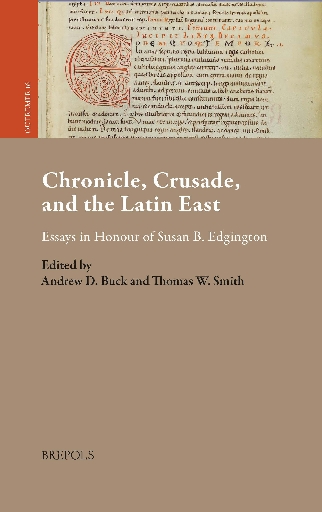
Chronicle, Crusade, and the Latin East
Essays in Honour of Susan B. Edgington
show More to view fulltext, buy and share links for:Chronicle, Crusade, and the Latin East show Less to hide fulltext, buy and share links for: Chronicle, Crusade, and the Latin EastChronicle, Crusade, and the Latin East offers a collection of essays exploring three closely connected thematic areas: the narrative traditions surrounding the early crusading movement, the influence of these textual traditions on wider processes of medieval historical writing and storytelling, and the history of crusading and the Latin East.
In recent years, the field of crusade studies has witnessed a significant groundswell of scholarly work, with particular emphasis on the narrative construction of crusading deeds in text and song, of the important role played by memory and memorialisation in transmitting crusading tales and promoting participation, and the nature of life in the Latin states of the East. This volume not only engages with, and offer fresh insights into, these topics, but also serves as a monument to the career of Susan B. Edgington, who has done so much to increase modern understanding of crusade narratives and the crusading past, and who has made a significant impact on the careers of many scholars. The collection of essays gathered here by established and early career historians, Edgington’s friends and students, thus furthers the study of both crusading as narrative and crusading as a lived experience.
-
-
-
Chronique d’Égypte
show More to view fulltext, buy and share links for:Chronique d’Égypte show Less to hide fulltext, buy and share links for: Chronique d’ÉgypteThe Chronique d’Égypte has been published annually every year since 1925 by the Association Égyptologique Reine Élisabeth (formerly the Fondation Égyptologique Reine Élisabeth) sponsored by the Ministry of Education and the Fondation Universitaire de Belgique. Originally published as a newsletter, it quickly evolved into an international scientific journal containing articles on various aspects of Egyptology, papyrology and coptology (including philology, history, archaeology, and history of art) as well as critical reviews of recently published books. The articles are written by experts of various nationalities.
More information about this journal on Brepols.net
-
-
-
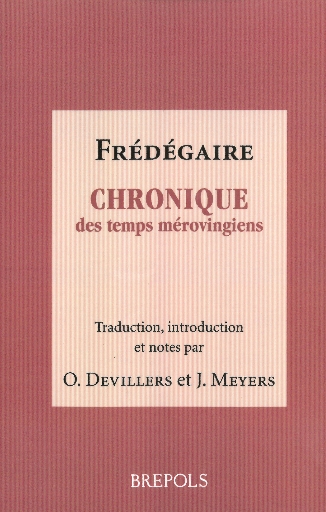
Chronique des temps mérovingiens (Livre IV et Continuations)
Texte latin selon l'édition de J.M. Wallace-Hadrill. Traduction, introduction et notes par O. Devillers et J. Meyers
show More to view fulltext, buy and share links for:Chronique des temps mérovingiens (Livre IV et Continuations) show Less to hide fulltext, buy and share links for: Chronique des temps mérovingiens (Livre IV et Continuations)La chronique de l'auteur connu sous le nom de Frédégaire est une source essentielle pour la connaissance des règnes mérovingiens. Le chroniqueur a pourtant été longtemps méprisé : sa langue était considérée comme barbare, et ses qualités d'historien étaient jugées de piètre valeur. Les recherches récentes ayant renouvelé l'étude de cette période, on a voulu tirer de l'oubli un auteur trop longtemps mal compris. Le lecteur trouvera donc ici, accompagnée du texte latin (selon l'édition de J.M. Wallace-Hadrill) et d'une abondante annotation, la traduction de la partie originale de la chronique et de ses continuations carolingiennes, qui poursuivent le récit jusqu'en 768. Une introduction substantielle défend l'hypothèse d'un chroniqueur unique écrivant vers 660, situe la chronique dans son contexte historique et l'appréhende à la fois comme une œuvre d'histoire et de littérature. Une étude spéciale est consacrée à la langue de l'auteur, témoin des mutations que connaît le latin au milieu du VIIe siècle. Olivier Devillers est un spécialiste d'historiographie romaine et Jean Meyers de langue et de littérature latines du Haut Moyen Âge. L'un et l'autre enseignent à l'Université Paul Valéry (Montpellier III).
-
