Brepols
Brepols is an international academic publisher of works in the humanities, with a particular focus in history, archaeology, history of the arts, language and literature, and critical editions of source works.551 - 600 of 3194 results
-
-
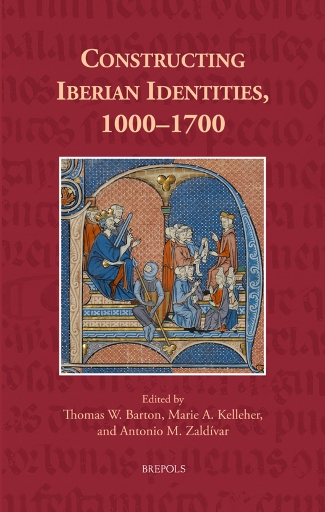
Constructing Iberian Identities, 1000–1700
show More to view fulltext, buy and share links for:Constructing Iberian Identities, 1000–1700 show Less to hide fulltext, buy and share links for: Constructing Iberian Identities, 1000–1700Over the past several decades, scholars of medieval and early modern Iberia have transformed the study of the region into one of the most vibrant areas of research today. This volume brings together twelve essays from a diverse group of international historians who explore the formation of the multiple and overlapping identities, both individual and collective, that made up the Iberian peninsula during the eleventh through seventeenth centuries. Individually, the contributions in this volume engage with the notion of identity in varied ways, including the formation of collective identities at the level of the late medieval city, the use of writing and political discourse to construct or promote common political or socio-cultural identities, the role of encounters with states and cultures beyond the peninsula in identity formation, and the ongoing debates surrounding the peninsula’s characteristic ethno-religious pluralism.Collectively, these essays challenge the traditional dividing line between the medieval and early modern periods, providing a broader framework for approaching Iberia’s fragmented yet interconnected internal dynamics while simultaneously reflecting on the implications of Iberia’s positioning within the broader Mediterranean and Atlantic worlds.
-
-
-
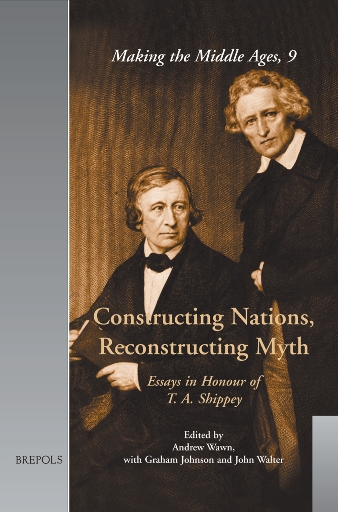
Constructing Nations, Reconstructing Myth
Essays in Honour of T. A. Shippey
show More to view fulltext, buy and share links for:Constructing Nations, Reconstructing Myth show Less to hide fulltext, buy and share links for: Constructing Nations, Reconstructing MythThis collection of essays examines the ‘Grimmian Revolution’, the paradigm shift in the humanities that came with the publication of Jacob Grimm’s Deutsche Grammatik. In doing so, it honours T. A. Shippey, who has been a leading figure in reconsidering the contributions of the Old Philology and its impact on the humanities, particularly the rediscovery of the ancient languages and literatures of Northern Europe; the role this has played in the creation of national and regional identities; the attempts to extend the methods of comparative philology to comparative mythology; and the collection of folktales, folk-ballads, and the development of folkloristics. The sixteen essays in this collection focus on the impact made by nineteenth- and early-twentieth-century philology in the fields of medieval studies and language studies, and in the construction of Northern European national identities, mythologies, and folklore.
-
-
-
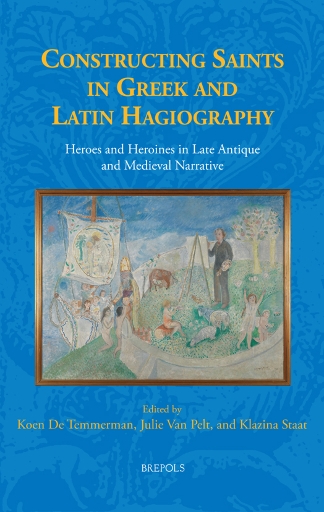
Constructing Saints in Greek and Latin Hagiography
Heroes and Heroines in Late Antique and Medieval Narrative
show More to view fulltext, buy and share links for:Constructing Saints in Greek and Latin Hagiography show Less to hide fulltext, buy and share links for: Constructing Saints in Greek and Latin HagiographyThis book explores representations of saints in a variety of Latin and Greek late antique hagiographical narratives, such as saints’ Lives, martyr acts, miracle collections, and edifying tales. The book examines techniques through which the saints featured in such texts are depicted as heroes and heroines, i.e., as extraordinary characters exhibiting both exemplary behaviour and a set of specific qualities that distinguish them from others. The book inscribes itself in a growing body of relatively recent scholarship that approaches hagiographical accounts not just as historical sources but also as narrative constructions. As such, it contributes to the development of a scholarly rationale which increasingly values imaginative and fictional aspects of hagiography in their own right, with the aim of answering broader questions about narrative creativity and ideology. For instance, individual chapters examine how hagiographical accounts mobilize and capitalize on earlier literary and rhetorical traditions or narrative models. These questions are specifically addressed to explore the narrative construction of characters. The chapters thereby encourage us to acknowledge that many hagiographers were more skilful than is often accepted.
-
-
-
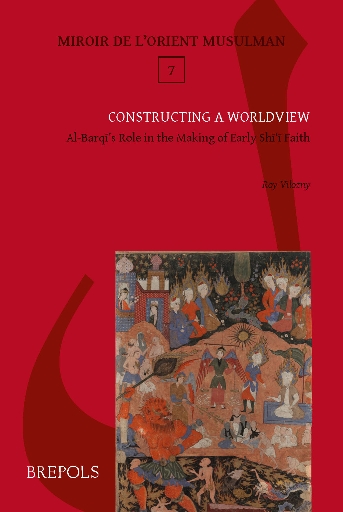
Constructing a Worldview
Al-Barqī's Role in the Making of Early Shīʽī Faith
show More to view fulltext, buy and share links for:Constructing a Worldview show Less to hide fulltext, buy and share links for: Constructing a WorldviewAbout a century before the four canonical books of the Shī‘a were composed, Aḥmad b. Muḥammad al-Barqī (d. 888 or 894 CE), a scholar from the city of Qum, compiled a large collection of Imāmī traditions embracing all aspects of religious life, from cosmogony and cosmology to the minutest details of daily life. This compilation, of which only ten percent has come down to us, forms one of the earliest Shī‘ī texts extant, and is the basis for Vilozny’s delineation of the Shī‘ī worldview in this formative, pre-Twelver era. Shī‘ī ideology, the author argues, did not grow in a vacuum but resulted from the fusion of Islamic Arab elements with pre-Islamic, mythic and gnostic traditions. The book discusses at length three fundamental notions which permeate every part of al-Barqī’s work: the Shī‘a are God’s elect; an eternal fierce battle is waged between good and evil on both the universal and individual levels; and the history of humankind, from before creation to the end of time, was predetermined by God. As shown by the author, the Shī‘ī attempt to accommodate all three ideas within its world perception often resulted in glaring contradictions to which only partial solutions could be provided at the time.
-
-
-
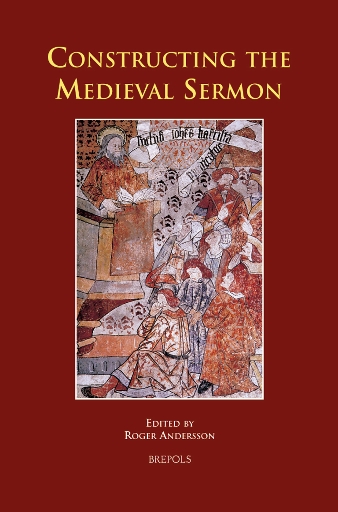
Constructing the Medieval Sermon
show More to view fulltext, buy and share links for:Constructing the Medieval Sermon show Less to hide fulltext, buy and share links for: Constructing the Medieval SermonIn considering the construction of medieval sermons, the term ‘construction’ has many meanings. Those studied here range from questions about sermon composition with the help of artes praedicandi or model collections to a more abstract investigation of the mental construction of the concepts of sermon and preacher. Sermons from a range of European countries, written both in Latin and vernaculars, are subjected to a broad variety of analyses. The approach demonstrates the vitality of this sub-discipline. Most of the essays are more occupied with literary and philological problems than with the religious content of the sermons. While many focus on vernacular sermons, the Latin cultural and literary background is always considered and shows how vernacular preaching was in part based on a more learned Latin culture. The collection testifies both to the increasing esteem of the study of vernacular sermons, and to a revival in the study of all those things contained in a preacher’s ‘workshop’, ranging from rhetorical invention, medieval library holdings and study-aids, through to factors that are crucial for the successful delivery of the sermon, such as the choice of language, mnemonic devices and addressing the audience. The interdisciplinary approach remains ever-present, not only in the diversity of the academic disciplines represented, but also within individual essays. The volume is based on a conference held in Stockholm, 7-9 October 2004.
-
-
-
Constructions of Gender in Late Antique Manichaean Cosmological Narrative
show More to view fulltext, buy and share links for:Constructions of Gender in Late Antique Manichaean Cosmological Narrative show Less to hide fulltext, buy and share links for: Constructions of Gender in Late Antique Manichaean Cosmological NarrativeManichaeism emerged from Sasanian Persia in the third century CE and flourished in Persia, the Roman Empire, Central Asia and beyond until succumbing to persecution from rival faiths in the eighth to ninth century. Its founder, Mani, claimed to be the final embodiment of a series of prophets sent over time to expound divine wisdom.
This monograph explores the constructions of gender embedded in Mani’s colourful dualist cosmological narrative, in which a series of gendered divinities are in conflict with the demonic beings of the Kingdom of Darkness. The Jewish and Gnostic roots of Mani’s literary constructions of gender are examined in parallel with Sasanian societal expectations. Reconstructions of gender in subsequent Manichaean literature reflect the changing circumstances of the Manichaean community.
As the first major study of gender in Manichaean literature, this monograph draws upon established approaches to the study of gender in late antique religious literature, to present a portrait of a historically maligned and persecuted religious community.
-
-
-
Construire une société seigneuriale
Itinéraire et ecclésiologie de l'abbé Odon de Cluny (fin du IXe-milieu du Xe siècle)
show More to view fulltext, buy and share links for:Construire une société seigneuriale show Less to hide fulltext, buy and share links for: Construire une société seigneurialeEntre la fin du IXe et le milieu du Xe siècle, de nouvelles formes de pouvoir émergent en Occident, au sein d’un monde encore carolingien : un bouleversement majeur qui marque la genèse de la société seigneuriale. C’est cette période charnière que permet d’appréhender la figure d’Odon, deuxième abbé de Cluny, grand aristocrate, réformateur acharné et intellectuel de haut niveau.
L’itinéraire d’Odon (né vers 879, mort en 942), acteur de premier plan et témoin privilégié de son temps, reflète en effet la profonde transformation des structures aristocratiques alors à l’œuvre, tandis que l’ecclésiologie originale élaborée par l’abbé réformateur, avec un bagage qui demeure celui du lettré carolingien, définit les conditions et les contours d’une société d’un type nouveau. L’objet de cet ouvrage est bien de cerner au plus près la recomposition des rapports de force et les ressorts idéologiques d’un monde où le champ des possibles est largement ouvert. À quelles stratégies, à la fois sociales et discursives, un puissant aristocrate entré au service de Dieu a-t-il recours pour fonder et asseoir son pouvoir ? À un moment où évoluent les cadres de la société et où se bâtissent de nouvelles légitimités, de quelle manière un réformateur justifie-t-il la domination des moines sur l’ensemble du corps social ? Il s’agit en d’autres termes d’analyser comment un abbé du Xe siècle construit, tant sur le plan des pratiques sociales que des représentations, une certaine société seigneuriale.
Isabelle Rosé, agrégée et docteur en histoire, a réalisé ce travail dans le cadre du Centre d’études Préhistoire, Antiquité, Moyen Âge, unité mixte de recherche de l’université de Nice-Sophia Antipolis et du CNRS. Elle est à présent maître de conférences à l’université de Haute-Bretagne - Rennes 2.
-
-
-
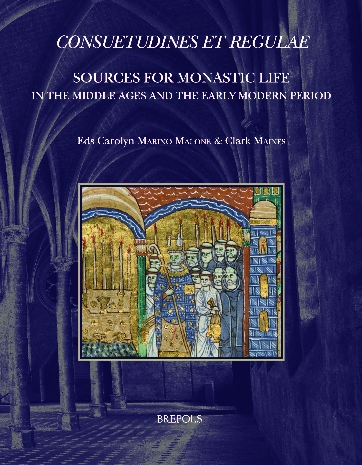
Consuetudines et Regulae
Sources for Monastic Life in the Middle Ages and the Early Modern Period
show More to view fulltext, buy and share links for:Consuetudines et Regulae show Less to hide fulltext, buy and share links for: Consuetudines et RegulaeThis volume addresses the nature and quality of the lives of monks and canons in Western Europe during the middle ages and the early modern period. Building on the collaborative spirit of recent work on medieval religion, it includes studies by historians of the religious orders, liturgy and ritual as well as archaeologists and architectural historians. Several studies combine the interpretation of texts, most particularly customaries and rules, with the analysis of architecture. The volume sheds new and exciting light on monastic daily life in all its dimensions from the liturgical and the quotidian to the spatial and architectural.
Carolyn Marino Malone is Professor of Art History at the University of Southern California in Los Angeles (USA). She specializes in French Romanesque and English Gothic architecture and sculpture. Her most recent book, is Saint-Bénigne de Dijon en l’an mil, “totius Galliae basilicis mirabiliorem”: Interprétation politique, liturgique et théologique, Disciplina monastica, 5 (Turnhout, 2009).
Clark Maines is Professor of Art History and Archaeology and Kenan Professor of the Humanities at Wesleyan University, in Middletown, Connecticut (USA). He specializes in the study of monasticism from architecture in its structural and ritual dimensions to technology and monastic domains. His most recent book, co-written with Sheila Bonde, is Saint-Jean-des-Vignes in Soissons, Approaches to its Architecture, Archaeology and History, Bibliotheca Victorina, XV (Turnhout, 2003).
-
-
-

Consumption, Ritual, Art, and Society
Interpretive Approaches and Recent Discoveries of Food and Drink in Etruria
show More to view fulltext, buy and share links for:Consumption, Ritual, Art, and Society show Less to hide fulltext, buy and share links for: Consumption, Ritual, Art, and SocietyFood determines who we are. We are what we eat, but also how we eat, with whom we eat, where we eat and, in some cases, even why we eat. Food production and consumption in the ancient world can express multiple dimensions of identity and negotiate belonging to, or exclusion from, cultural groups. It can bind through religious praxis, express wealth, manifest cultural identity, reveal differentiation in age or gender, and define status. As a prism through which to investigate the past, its utility is manifold. The chapters gathered together in this ground-breaking book explore the intersections between food, consumption, and ritual within Etruscan society through a purposeful cross-disciplinary approach. It offers a unique and innovative selection of up-to-date analysis from a variety of Etruscan food-related topics. From banqueting, feasting, fish rites, and symbolic consumption to bio-archaeological data, this volume explores a new and exciting field in ancient Italian archaeology.
-
-
-
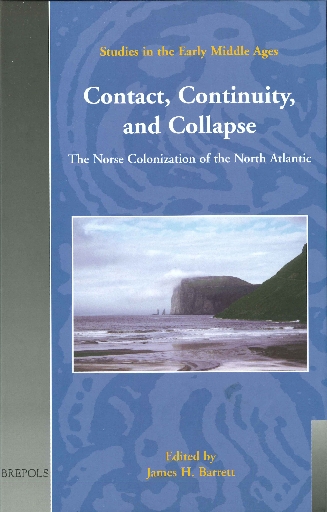
Contact, Continuity, and Collapse
The Norse Colonization of the North Atlantic
show More to view fulltext, buy and share links for:Contact, Continuity, and Collapse show Less to hide fulltext, buy and share links for: Contact, Continuity, and CollapseThis volume explores the Viking Age colonization and exploration of the North Atlantic, from Arctic Norway to Vinland in eastern North America. Its contributors, predominately archaeologists by training, bring new evidence and an interdisciplinary perspective to a subject often dominated by sources of variable historicity. They explore the creation and transformation of ethnicity in new lands - some occupied, others empty. They also address the historiography of Norse Landnám, unravelling the processes by which scholarly interpretations of the Viking Age have been created. The result illuminates the consequences of migration in the early Middle Ages and the interplay of local and large-scale socio-economic processes. In concluding, the volume assesses the relationship between Norse expansion and later European ‘rediscovery’ of the New World.
-
-
-
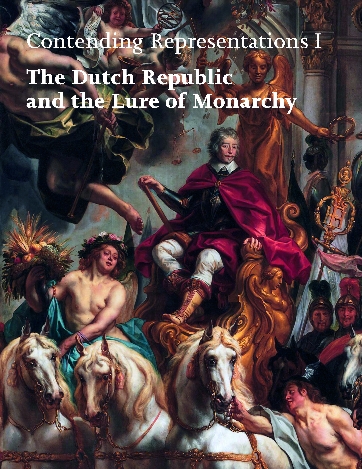
Contending Representations I: The Dutch Republic and the Lure of Monarchy
show More to view fulltext, buy and share links for:Contending Representations I: The Dutch Republic and the Lure of Monarchy show Less to hide fulltext, buy and share links for: Contending Representations I: The Dutch Republic and the Lure of MonarchyThis volume is the first book-length study to thematise the representation of power in the seventeenth-century Dutch Republic. Bringing together scholars from different backgrounds, the volume aims to stimulate a cross-disciplinary dialogue about representations in art, literature, ritual, and other media. Within the Dutch Republic, different state actors - the city, the provincial states, the States General, the stadtholders, and individual power-holders - vied for the supremacy of power. A vital aspect of this persistent struggle was its representative dimension. In making representative claims about their place in the balance of power, these institutions all faced the challenge of developing a republican language that was both distinctive enough and universally understood. In the cultural repertoires available to political figures, artists, and intellectuals, republican models contended with monarchical ones. In visual and literary depictions, public ritual, and diplomatic encounters alike, the temptation to stand up to the grandeur of powerful European monarchies by borrowing from their representative traditions was not always easy to resist.
-
-
-
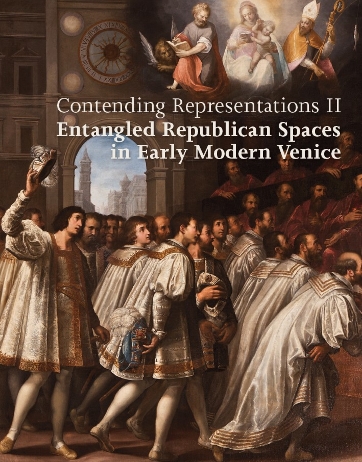
Contending Representations II: Entangled Republican Spaces in Early Modern Venice
show More to view fulltext, buy and share links for:Contending Representations II: Entangled Republican Spaces in Early Modern Venice show Less to hide fulltext, buy and share links for: Contending Representations II: Entangled Republican Spaces in Early Modern VeniceThis bookaddresses the issue of political celebration in early modern Venice. Dealing with processional orders and iconographic programs, historiographical narratives and urbanistic canons, stylistic features and diplomatic accounts, the interdisciplinary contributions gathered in these pages aim to question the performative effectiveness and the social consistency of the so called ‘myth’ of Venice: a system of symbols, beliefs and meanings offering a self-portrait of the ruling elite, the Venetian patriciate. In order to do so, the volume calls for a spatial turn in Venetian studies, blurring the boundaries between institutionalized and unofficial ceremonial spaces and considering their ongoing interaction in representing the rule of the Serenissima. The twelve chapters move from Ducal Palace to the Venetian streets and from the city of Venice to its dominions, thus widening considerably the range of social and political actors and audiences involved in the analysis. Such multifocal perspective allows us to challenge the very idea of a single ‘myth’ of Venice.
-
-
-
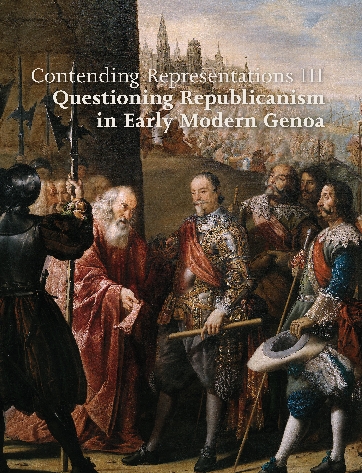
Contending Representations III: Questioning Republicanism in Early Modern Genoa
show More to view fulltext, buy and share links for:Contending Representations III: Questioning Republicanism in Early Modern Genoa show Less to hide fulltext, buy and share links for: Contending Representations III: Questioning Republicanism in Early Modern GenoaSeveral studies have been devoted to the flowering of the republic of Genoa during the so-called ‘siglo de los Genoveses’, when Genoa became the hub of European trade and an important center of artistic and literary production. Yet, little attention has been granted to the political and cultural crisis that followed, starting in 1559 and culminating in 1684, when the French bombed Genoa. Addressing this chronological gap, the volume explores how the image of the Genoese Republic was shaped, exploited, or contested in the long seventeenth century. How did Genoese politicians and men of letters represent their homeland? How was Genoa represented in Spain or in the Low Countries? How was its political system conceived by Italian and foreign political writers, and how did the prevailing absolutist model influence such ideas? In order to answer these questions, the volume gathers contributions from art historians, literary scholars, political and cultural historians, thus adopting a comparative, multidisciplinary approach.
-
-
-
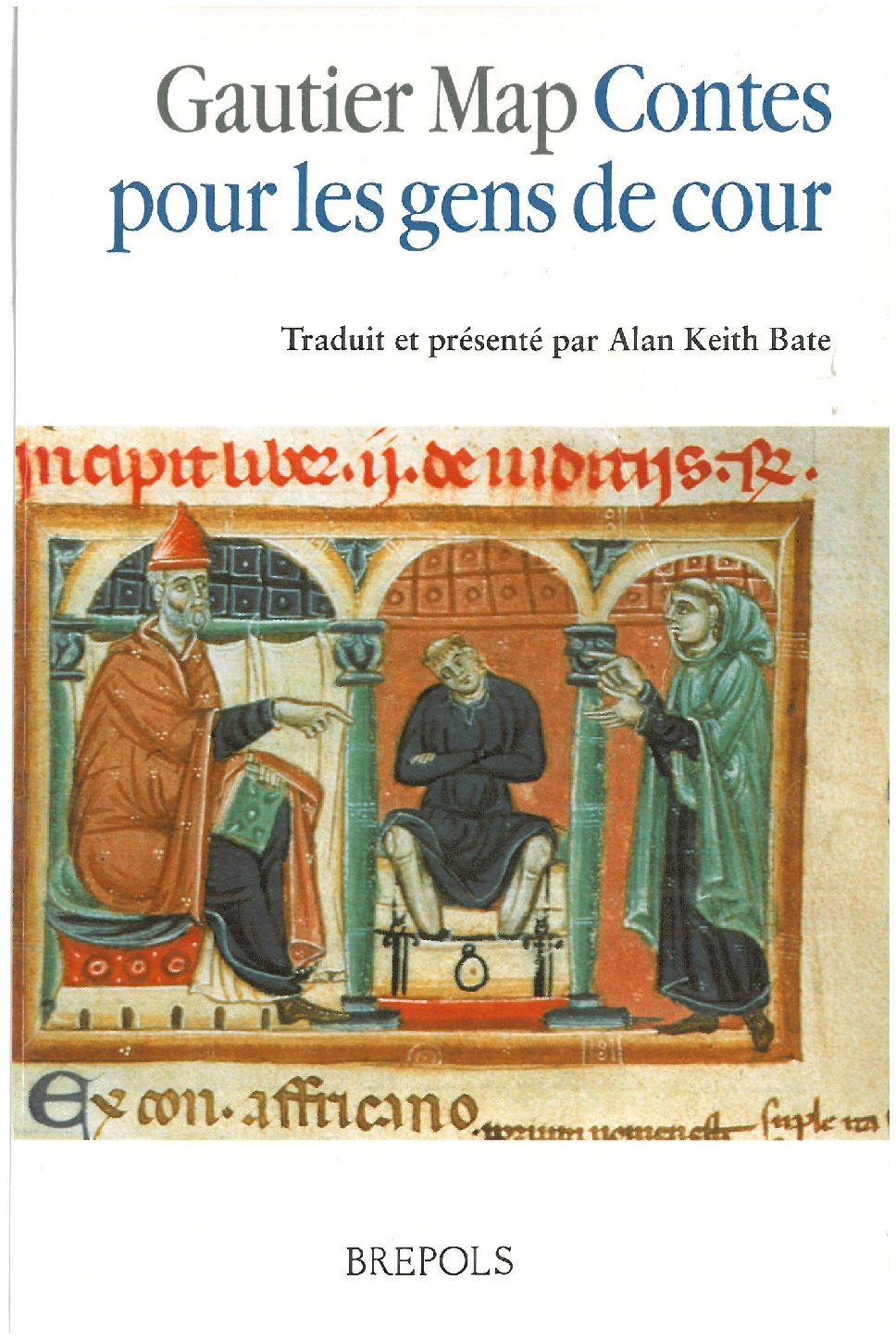
Contes pour les gens de cour
show More to view fulltext, buy and share links for:Contes pour les gens de cour show Less to hide fulltext, buy and share links for: Contes pour les gens de courQue peut faire un clerc de l'administration royale, à la fin du XIIe siècle, s'il est doté d'un humour féroce, d'une langue agile, d'une culture vaste et éclectique, d'un goût irrépressible pour les bonnes histoires colorées et corsées, face à la montée en force des nouvelles modes littéraires de la littérature en français et des romans courtois? Il prend une plume et rédige de "bonnes histoires pour les gens de cour", pour montrer qu'on peut s'amuser en latin, de façon moins ridicule à ses yeux que ceux qui pâlissent d'amour aux pieds des dames. Gautier Map, clerc anglais richement prébendé, grand conteur et amuseur des milieux de la cour de Henri II Plantagenêt, est à la fois attiré et agacé par les thèmes fantastiques, merveilleux et amoureux qui font les délices de la cour anglaise lorsque la reine Aliénor y séjourne. Il veut faire encore mieux: plus varié, plus subtil, plus savant, plus drôle et moins naïf. S'il méprise l'amour courtois, ce n'est pas par pudibonderie; s'il écrit dans la langue savante de son temps, ce n'est pas par timidité. Son oeuvre, que par nonchalance sans doute il garda dans ses papiers personnels, est fantaisiste, insolente, ironique; c'est pour les ethnologues un réservoir de renseignements sur des coutumes et des traditions que personne avant lui n'avait notées, pour les historiens de la littérature un témoignage d'une époque où rien n'était encore joué entre la langue vulgaire et le latin (qui pouvaient encore se donner la réplique), pour tous un moment privilégié de l'émergence dans la littérature européenne d'un art du récit qui aboutit de temps en temps, dans ce recueil jamais ennuyeux ni banal, à d'éblouissantes réussites.
-
-
-

Contest, Translation, and the Chaucerian Text
show More to view fulltext, buy and share links for:Contest, Translation, and the Chaucerian Text show Less to hide fulltext, buy and share links for: Contest, Translation, and the Chaucerian TextThis sophisticated volume sheds new light on the transmission of texts in the medieval period by drawing into dialogue a study of medieval translation between English and French with questions concerning the Chaucerian canon and its reception. The author takes as a focus point three Middle English translations of French-language works - The Romaunt of the Rose, the Belle Dame Sans Mercy, and An ABC to the Virgin - and assesses the way in which these works respond to and reconfigure their source material, while at the same time questioning how the connection of these translations with Chaucer has influenced our critical understanding of them. In this book, these three translations are therefore removed from their habitual place on the fringes of the English Chaucer canon, and are instead analysed in the context of late-medieval literary and cultural hybridity. The result is a fascinating reconceptualization of these works as creative, cross-channel participations in late- medieval debates, and simultaneously a call for the reappraisal of ‘the Chaucerian’ as a critical category.
-
-
-
Contexts of Property in Europe
The Social Embeddedness of Property Rights in Land in Historical Perspective
show More to view fulltext, buy and share links for:Contexts of Property in Europe show Less to hide fulltext, buy and share links for: Contexts of Property in EuropeThe essays in this book tap the potential of the historical analysis of social contexts in which property rights are embedded - social relations, power and agency, political institutions, culture - to understand how landed resources are actually appropriated. This exploratory approach seeks both to take advantage of the existing theory of property rights, as it is applied by the institutionalist outlook on economic history, and to go beyond it by explicitly incorporating social processes and factors in the analysis of property institutions. With this common aim in mind, the book covers a wide variety of historical cases throughout space and time, from the late Middle Ages in the Czech lands and in Tuscany to the very recent de collectivisation of the countryside in former socialist countries, which will contribute rich and grounded insights to the discussion of the topic and of its implications.
Rosa Congost is senior researcher at the Centre de Recerca d'Història Rural and teaches at Facultat de Lletres in Universitat de Girona. Her research interests cover the history of landed property and agrarian social relations.
Rui Santos is senior researcher at CESNOVA and teaches at Faculdade de Ciências Sociais e Humanas in Universidade Nova de Lisboa. His research interests cover historical and economic sociology and rural studies.
-
-
-
Contextualizing Conques. Imaginaries, Narratives & Geographies
show More to view fulltext, buy and share links for:Contextualizing Conques. Imaginaries, Narratives & Geographies show Less to hide fulltext, buy and share links for: Contextualizing Conques. Imaginaries, Narratives & GeographiesReapproaching Conques from new contexts is the basis of the present volume, a product of the international project “Conques in the Global World. Transferring Knowledge: from Material to Immaterial Heritage” (Marie Skłodowska-Curie Research and Innovation Staff Exchange H2020). Although it is an important location of cultural heritage and has been consequential historiographically and in the formation of art history, there has never been a comprehensive, interdisciplinary approach to this momentous site. Thus, this volume publishes the first results of the interdisciplinary and international project, which were initially presented at a conference and enriched by workshops held in New York City in the summer of 2022. The collected essays open with reflective and historiographic work on Conques in the nineteenth century. These segue into essays reconsidering specific integral elements of extant medieval materials at the site. Finally, the volume concludes with a series of essays devoted to placing Conques in a broader context. The entire volume aims to open to as yet unaddressed questions in scholarship on Conques, with the hope that this work will provide a foundation for future studies.
-
-
-
Contextualizing the Renaissance. Returns to History
Selected Proceedings from the 28th Annual CEMERS Conference
show More to view fulltext, buy and share links for:Contextualizing the Renaissance. Returns to History show Less to hide fulltext, buy and share links for: Contextualizing the Renaissance. Returns to HistoryThe twenty-eighth annual conference of CEMERS, held on 21-22 October 1994 at Binghamton University, featured thirty-three panel sessions and approximately 150 presentations. The ten essays in this volume consist of the five plenary speakers - leaders in their field - and five panel essays, each of which was reviewed for this volume. The volume comprises a body of work organised around a governing theme - modes of historicisation. Each of the essays demonstrates the practice of, or a commentary upon, a distinctive historicized criticism. By 'historicized' as contrasted with 'historical' criticism, it is meant that these essays problematicize, stretch or reconceive traditional historical practices. Challenging the notion that the production of paintings, dramatic texts or even conduct books can be read against a stable historical ground, they show that paintings, works of literature, and treatises not only participate in history but are exemplars of textual instability. The very content of these texts can be shown, in various editions, to change over time - and yet each bears a single, determinate title. In such ways the contributions gathered here all show that they have been affected by 'the new history'.
-
-
-
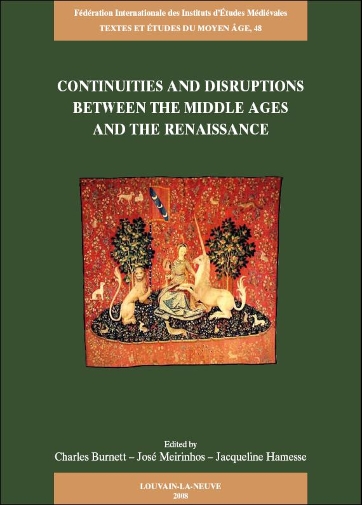
Continuities and Disruptions between the Middle Ages and the Renaissance
Proceedings of the colloquium held at the Warburg Institute, 15-16 June 2007, jointly organised by the Warburg Institute and the Gabinete de Filosofia Medieval
show More to view fulltext, buy and share links for:Continuities and Disruptions between the Middle Ages and the Renaissance show Less to hide fulltext, buy and share links for: Continuities and Disruptions between the Middle Ages and the RenaissanceThis volume explores the question of continuities and disruptions between the Middle Ages and the Renaissance. Rather than addressing the question in a general way, it brings together a number of case studies, dealing with the changing interest in, and knowledge of Stoicism, the variations in the manuscripts of medical texts, the changing emphases within the penitential genres of 'Mirrors', developments in the philosophy of love and in attitudes towards pagans, and the transformation of the art of disputation between the Middle Ages and Renaissance. One article considers the interpretation by a Renaissance scholar (Girolamo Cardano) of the ideas of a medieval scholar (Pietro d'Abano) concerning nature and demons, while another looks at the 16th-century School of Salamanca as a synthesis of the two periods. These papers were originally presented at the second colloquium of the Fédération Internationale des Instituts d'Études Médiévales with the same title, organised jointly by two institutes that embody between them Renaissance and Medieval Studies: the Warburg Institute of London, and the Gabinete de Filosofia Medieval of Porto.
The volume includes papers by J. Marenbon (Cambridge), G. Giglioni (London), J. Kraye (London), O. Merisalo (Jyväskylä), S. Orrego-Sánchez (Santiago de Chile), A. Passot-Mannooretonil (Paris), J. J. Vila-Chã (Braga) and O. Weijers (Den Haag).
-
-
-
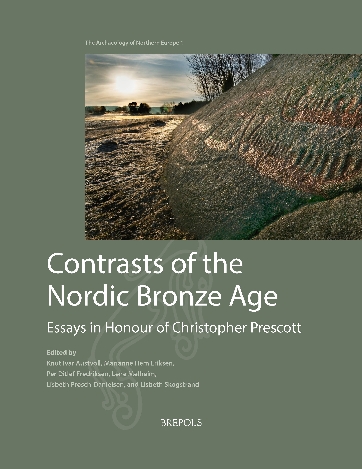
Contrasts of the Nordic Bronze Age
Essays in Honour of Christopher Prescott
show More to view fulltext, buy and share links for:Contrasts of the Nordic Bronze Age show Less to hide fulltext, buy and share links for: Contrasts of the Nordic Bronze AgeThe Bronze Age in Northern Europe was a place of diversity and contrast, an era that saw movements and changes not just of peoples, but of cultures, beliefs, and socio-political systems, and that led to the forging of ontological ideas materialized in landscapes, bodies, and technologies. Drawing on a range of materials and places, the innovative contributions gathered here in this volume explore the disparate facets of Bronze Age society across the Nordic region through the key themes of time and trajectory, rituals and everyday life, and encounters and identities. The contributions explore how and why society evolved over time, from the changing nature of sea travel to new technologies in house building, and from advances in lithic production to evolving burial practices and beliefs in the afterlife. This edited collection honours the ground-breaking research of Professor Christopher Prescott, an outstanding figure in the study of the Bronze Age north, and it takes as its inspiration the diversity, interdisciplinarity, and vitality of his own research in order to make a major new contribution to the field, and to shed new light on a Bronze Age full of contrasts and connections.
-
-
-
Contre les manichéens
show More to view fulltext, buy and share links for:Contre les manichéens show Less to hide fulltext, buy and share links for: Contre les manichéensRédigé en 363-364, le traité Contre les manichéens de Titus de Bostra est la plus importante réfutation chrétienne du manichéisme. Elle se distingue par sa composition en deux volets (réfutation rationnelle et réfutation scripturaire) et par la richesse de sa documentation (on y dénombre quelque 150 « citations manichéennes »). Préservé en grec aux deux-tiers et intégralement dans une version syriaque de la fin du IV e ou du début du V e siècle, cet ouvrage est d’une importance capitale pour l’histoire de la théologie chrétienne ancienne et du manichéisme.
Ce volume offre une double traduction française annotée du grec et du syriaque, la première dans une langue moderne, établie sur une base philologique sûre. L’édition critique gréco-syriaque et sa traduction française permettent désormais une nouvelle approche des sources manichéennes et de leur réfutation.Le texte qui a servi de base à cette traduction est celui qui a paru dans la Series Graeca du Corpus Christianorum (vol. 82, 2013). Il s’agissait de la première édition critique synoptique intégrale des textes grec et syriaque de cette oeuvre, accompagnée d’une édition critique des extraits préservés en grec dans les Sacra Parallela de Jean Damascène.
Agathe Roman est agrégée de lettres et docteur en littérature grecque (Montréal).
Thomas S. Schmidt est professeur de langue et littérature grecques à l'Université de Fribourg (Suisse).
Paul-Hubert Poirier, membre de l'Institut, est professeur d'histoire du christianisme ancien à l'Université Laval (Québec).
-
-
-
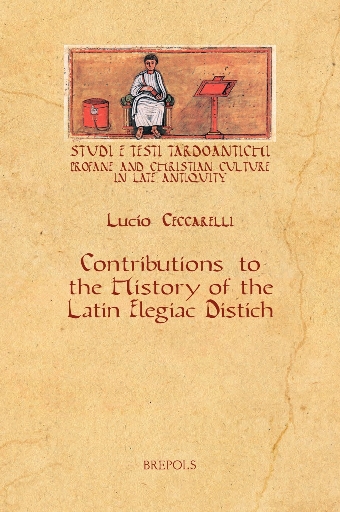
Contributions to the History of the Latin Elegiac Distich
show More to view fulltext, buy and share links for:Contributions to the History of the Latin Elegiac Distich show Less to hide fulltext, buy and share links for: Contributions to the History of the Latin Elegiac DistichThe elegiac distich was introduced in Rome by Quintus Ennius, in the first half of the 2nd century BC. It became the standard meter of epigram and elegy, its life extending over a very long period, from archaic Latinity to late antiquity (and beyond, to the Middle Ages and the early modern period). This volume provides scholars with a collection of (in good part previously unpublished) first-hand analyses of the elegiac distich, based on the scansion of nearly all Latin poetry in this meter, from Catullus to Venantius Fortunatus. As such, it reconstructs the evolution of the Latin elegiac distich in the first seven hundred years of its history, and it sheds new light on the metrical style of almost all Latin poets who composed verses in it during the period under consideration.
-
-
-
Contro gli Acefali
show More to view fulltext, buy and share links for:Contro gli Acefali show Less to hide fulltext, buy and share links for: Contro gli AcefaliIl Contro gli Acefali del diacono romano Rustico, composto fra il 553 e il 564, si inserisce nel contesto della controversia dei Tre Capitoli e si propone di confutare la cristologia monofisita ('acefali' era infatti il nome con cui all'epoca si indicavano, appunto, gli esponenti di questa fazione). L’opera si presenta come un dialogo, preceduto da un breve prologo, fra due interlocutori, un ortodosso (indicato con il nome dell’autore), portavoce di una cristologia strettamente calcedonese, ed un monofisita di stampo severiano, qualificato come ‘eretico’. Nel corso della discussione Rustico sviluppa una approfondita ed originale riflessione sui concetti di natura, persona, sostanza e sussistenza, nella quale si possono riconoscere significativi punti di contatto, sia nel metodo che nei contenuti, con i trattati teologici di Boezio; e proprio nel complesso rapporto con il modello boeziano, importantissimo punto di riferimento ma anche oggetto di critica, risiede il particolare interesse di un’opera purtroppo ancora poco conosciuta, ma che sta suscitando negli ultimi anni una rinnovata attenzione da parte degli studiosi.
Sara Petri si è laureata ed ha conseguito il dottorato di ricerca in Filologia e Letteratura Greca e Latina presso l'Università di Pisa, sotto la direzione del prof. C. Moreschini. Attualmente insegna materie letterarie presso il Liceo Classico di Grosseto. Si occupa di letteratura cristiana antica di lingua latina, in particolare delle controversie cristologiche fra V e VI secolo.
La versione latina originale del testo proposto in traduzione in questo volume è pubblicata nella collana Corpus Christianorum Series Latina con il titolo Rusticus Diaconus, Contra Acephalos (CCSL 100). I rimandi alle pagine corrispondenti dell’edizione sono forniti a margine di questa traduzione.
Sara Petri si è laureata ed ha conseguito il dottorato di ricerca in Filologia e Letteratura Greca e Sara Petri si è laureata ed ha conseguito il dottorato di ricerca in Filologia e Letteratura Greca e Latina presso l’Università di Pisa, sotto la direzione del prof. C. Moreschini. Attualmente insegna materie letterarie presso il Liceo Classico di Grosseto. Si occupa di letteratura cristiana antica di lingua latina, in particolare delle controversie cristologiche fra V e VILatina presso l’Università di Pisa, sotto la direzione del prof. C. Moreschini. Attualmente insegna materie letterarie presso il Liceo Classico di Grosseto. Si occupa di letteratura cristiana antica di lingua latina, in particolare delle controversie cristologiche fra V e VI
-
-
-
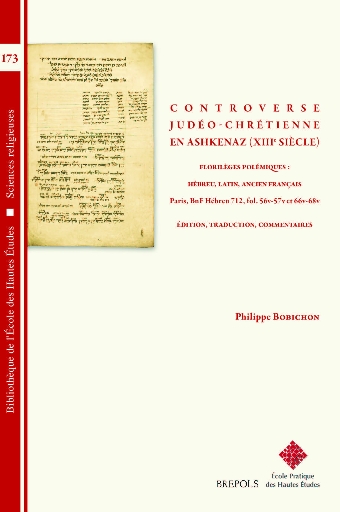
Controverse judéo-chrétienne en Ashkenaz (XIIIe siècle)
Florilèges polémiques : hébreu, latin, ancien français. Paris, Bnf Hébreu 712, Fol. 56v/57v - 66v/68v. Edition, traduction, commentaires
show More to view fulltext, buy and share links for:Controverse judéo-chrétienne en Ashkenaz (XIIIe siècle) show Less to hide fulltext, buy and share links for: Controverse judéo-chrétienne en Ashkenaz (XIIIe siècle)Ces documents inédits - et semble-t-il uniques - intéressent à la fois l’étude du latin médiéval et celle des relations entre juifs et chrétiens, en Ashkenaz, au XIIIe siècle. Ils offrent plusieurs pages de latin translittéré tout en se distinguant par leurs diverses caractéristiques des autres écrits destinés, dans la littérature hébraïque médiévale, à la controverse avec les chrétiens. L’argumentation se fonde exclusivement ici sur des emprunts à la tradition latine chrétienne invariablement restitués dans la langue originale (en caractères hébreux), généralement accompagnés d’une ébauche de traduction hébraïque et fréquemment précédés, en hébreu et en ancien français (caractères hébreux), d’indications relatives à leur utilisation polémique. Cette stratégie argumentative s’apparente à celle des chrétiens invoquant à la même époque, sur des questions analogues, la tradition rabbinique. Ces deux florilèges sont manifestement le fruit d’un travail collectif, encore inachevé, dont ils ne représentent que deux étapes distinctes et sans doute deux témoins parmi beaucoup d’autres. Ils attestent la réalité d’un débat judéo-chrétien qui n’était en aucune manière réservé à une élite, et l’imminence de ses enjeux. Ils sont la preuve d’une réaction concertée à l’entreprise chrétienne de conversion.
L’édition et la traduction s’accompagnent d’une analyse codicologique, paléographique, linguistique et textuelle. Les commentaires de la seconde partie situent le détail de l’argumentation dans l’ensemble des écrits de controverse judéo-chrétienne. Les conclusions, fondées sur la complémentarité des approches, s’achèvent par une mise en contexte prenant en compte les perspectives de recherche encore offertes par ces deux documents exceptionnels.
-
-
-
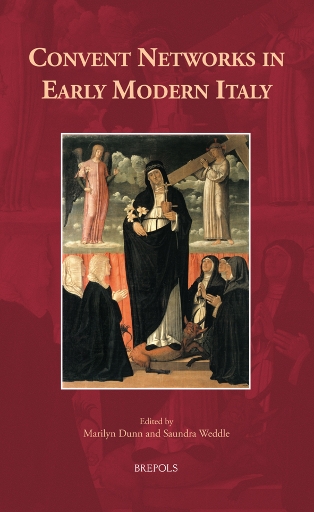
Convent Networks in Early Modern Italy
show More to view fulltext, buy and share links for:Convent Networks in Early Modern Italy show Less to hide fulltext, buy and share links for: Convent Networks in Early Modern ItalyThe walls of early modern convents suggested the existence of absolute conditions that seldom existed in reality. While the built enclosure communicated the convent’s isolation from the world outside, connections between women religious and individuals or groups outside their communities extended into and from these houses, with each constituency exploiting these associations to serve its own aims.Likewise, the walls conveyed the presence of a homogeneous and unified community where, often, differences in status, power, and other interests led to the development of internal alliances and factions.
Building on an upsurge of scholarly interest in convent networks that previously has not been focused in a single volume, this collection of interdisciplinary essays examines how and why such associations existed. The collection examines personal, spatial, and temporal networks that emerged in, among, and beyond convents in Italy during the early modern period. These ties were established, cultivated, or even rejected in a variety of ways that influenced nuns’ devotional lives, their relationships with patrons, and their cultural engagement and production.
These essays cover the time period before and after the Council of Trent, permitting an analysis of convents’ responses to changing power dynamics, both inside and outside the enclosure. The book also engages a broad geographical and cultural range, with chapters focusing on the centres of Florence, Venice, and Rome, the courts of Urbino, Ferrara, and Mantua, and smaller cities across Northern Italy, offering unprecedented insights into early modern Italian convent life and its varied forms and modes of expression.
-
-
-
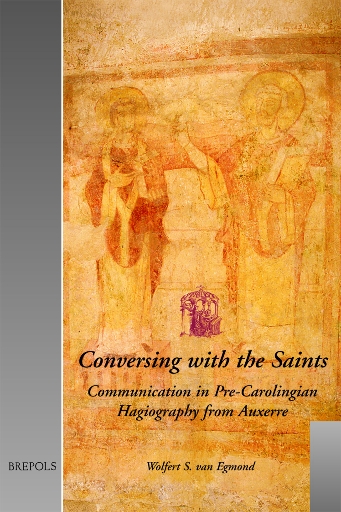
Conversing with the Saints
Communication in Pre-Carolingian Hagiography from Auxerre
show More to view fulltext, buy and share links for:Conversing with the Saints show Less to hide fulltext, buy and share links for: Conversing with the SaintsEarly medieval hagiographical texts abound with vivid descriptions of acts of communication. Such descriptions in the hagiography written in the diocese of Auxerre during the Merovingian period are studied here in an attempt to establish the status of the written word vis-à-vis other means of communication, such as the spoken word or rituals. For this purpose the dating of each source is reconsidered. The texts were written within the clerical community of Auxerre and most relate in some way to Germanus, the most renowned bishop of Auxerre (first half of the fifth century). Although the Vita Germani by Constantius was not written in Auxerre nor for an Auxerrois audience, it is included in the analysis, since it has exerted a profound influence on the later hagiographical narratives produced in the diocese. This study demonstrates that the authors of these texts were very much aware of the limitations of the written word as well as of the advantages and importance of non-written communication.
-
-
-
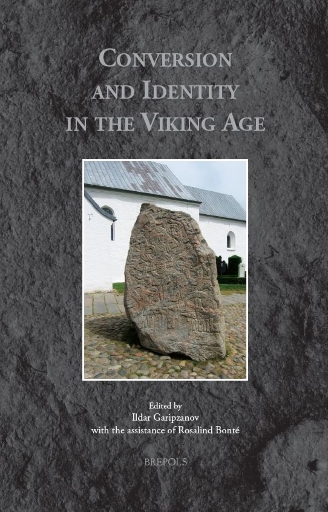
Conversion and Identity in the Viking Age
show More to view fulltext, buy and share links for:Conversion and Identity in the Viking Age show Less to hide fulltext, buy and share links for: Conversion and Identity in the Viking AgeThis volume presents a state-of-the-art collection of essays on the socio-cultural aspects of the conversion to Christianity in Viking-Age Scandinavia and the Scandinavian colonies of the North Atlantic. The nine scholars, drawn from the disciplines of history, archaeology, and literary studies, have been brought together to address the overarching topic of how conversion affected peoples’ identities - both as individuals, and as members of broader religious, political, and social groups - on either side of the ‘divide’ between paganism and Christianity. Central to this exploration is the question of how existing and changing identities shaped the progress of conversion as a process of societal, and more specifically cultural, change.
Each of the papers in this volume provides examples of the complicated patterns of interaction, influence, and identity-modification that were characteristic of the transition from paganism to Christianity in the Viking world. The authors look for new ways of understanding and describing this gradual intermingling between the two fuzzy-edged religious communities, and they provide a challenging redefinition of the nature of conversion in the Viking Age that will be of interest both to a wide variety of medievalists and to all those who work on conversion in its theoretical and historical aspects.
-
-
-

Convivium
Exchanges and Interactions in the Arts of the Premodern World - Seminarium Kondakovianum Series Nova
show More to view fulltext, buy and share links for:Convivium show Less to hide fulltext, buy and share links for: ConviviumConvivium, like the rising phoenix, brings back to life a defunct periodical, the Seminarium Kondakovianum. Like its predecessor, Convivium has its base in Czech lands, where Kondakov found refuge after fleeing Russia and built his career and reputation. Fittingly, the new journal, launched in 2014 by scholars from six countries, takes a widely expansive view and encompasses scholarship in many disciplines. Starting with art history, it extends into the allied fields of anthropology, archaeology, historiography, literature, liturgy, and history. Similarly, Convivium covers a period defined by the broadest possible interpretation of the Middle Ages, spanning from the third to the sixteenth century. The journal publishes two issues per year: the first is thematic, the second is a miscellany.
More information about this journal on Brepols.net
-
-
-
Coopétition
Rivaliser, coopérer dans les sociétés du haut Moyen Âge (500-1100)
show More to view fulltext, buy and share links for:Coopétition show Less to hide fulltext, buy and share links for: CoopétitionCe livre est centré sur la « coopétition », un concept qui désigne la capacité des acteurs à rivaliser et à coopérer simultanément. Certes, les sociétés du premier Moyen Âge sont des sociétés conflictuelles, qui développent souvent des formes de compétition agressive, mais le désir de paix est universel et la compétition ne détermine pas seulement un gagnant et un perdant. Les acteurs ont aussi eu intérêt à collaborer avec leurs rivaux, dans la perspective d’un gain réciproque (gagnant-gagnant) ou d’un profit futur, y compris dans l’au-delà. Pour comprendre les stratégies, le jeu qui se joue derrière les interactions compétitives et les bénéfices attendus, ce livre prend donc en compte les jeux d’échelle, les relations entre le centre et la périphérie, entre l’ici-bas et l’au-delà, mais aussi la capacité des autorités à développer le consensus et à susciter la confiance sans laquelle on ne peut prendre le risque de coopérer avec un rival. Il embrasse les différents espaces et le temps long, en se focalisant sur des périodes caractérisées par une alternance d’instabilité et de stabilité sur le plan politique. Il éclaire ainsi d’un jour nouveau le jeu de la compétition dans les sociétés du premier Moyen Âge.
-
-
-
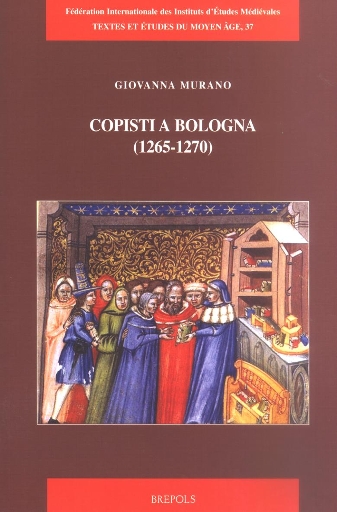
Copisti a Bologna (1265-1270)
show More to view fulltext, buy and share links for:Copisti a Bologna (1265-1270) show Less to hide fulltext, buy and share links for: Copisti a Bologna (1265-1270)The mystery of writing is that there is nothing mysterious about it. If Saramago is right, then it is obvious that palaeography has not yet found all the keys we need if we are to enter amongst the people who gave form to the thoughts and memories of the medieval world. In order to reveal their identity – the greatest mystery of all – it is sometimes necessary to pass over what has already been written, affirmed and maintained, and to return to the sources instead. The “Memoriali” conserved in the Archivio di Stato in Bologna reveal stories of men and women who created, with pen and quill veritable cathedrals of ink, indelible and sometimes of ineffable beauty. In this volume the names are collected, the commissions listed, where possible the careers and tribulations described of more than 270 copyists documented at Bologna between 1265 and 1270. In short, it is the documentary sources, not the works produced or such as have survived, on which the present book has been based.
-
-
-

Corona gratiarum
Miscellanea patristica, historica et liturgica Eligio Dekkers O.S.B. XII lustra complenti oblata
-
-
-

Corpo e anima, sensi interni e intelletto dai secoli XIII-XIV ai post-cartesiani e spinoziani
Atti del Convegno Internazionale, Firenze, Dipartimento di Scienze dell’Educazione e dei Processi Culturali e Formativi, 18-20 settembre 2003)
show More to view fulltext, buy and share links for:Corpo e anima, sensi interni e intelletto dai secoli XIII-XIV ai post-cartesiani e spinoziani show Less to hide fulltext, buy and share links for: Corpo e anima, sensi interni e intelletto dai secoli XIII-XIV ai post-cartesiani e spinozianiI contributi raccolti nel volume permettono di ricostruire alcuni nuclei storico- dottrinali sulla natura dei sensi interni e sulle complesse relazioni anima-corpo; tale problema attraversa l’intera storia della filosofia, dalla tarda antichità fino al radicale mutamento di prospettiva operato da Cartesio, Spinoza, Malebranche e dai grandi maestri del Seicento. Da queste ricerche emergono le differenze semantico-concettuali e le diverse valutazioni della phantasia, della imaginatio, intesa come cogitatio, o ragionamento estimativo e valutativo, e degli altri sensi interni — mutamenti e novità introdotti soprattutto grazie alla mediazione dei filosofi e degli scienziati arabi. Questi nuovi orizzonti del filosofare costituiscono, secondo modalità gnoseologiche e ontologiche variabili da un filosofo all’altro, il sostrato delle noetiche e delle metafisiche della tradizione aristotelica medievale e rinascimentale. Per quanto concerne la filosofia moderna, gli studi qui condotti mostrano come il nesso anima-corpo non si costituisca attraverso la zione della sensibilità interna o esterna intesa nei modi tradizionali delle correnti filosofiche tardo-antiche e medievali, ma si configuri piuttosto come problema dell’identità della persona psico-fisica e della sua stessa individualità. Tali ricerche evidenziano, quindi, da una parte quanto sia complesso l’orizzonte delle teorie delle funzioni mediane della psiche, tra intelletto e senso; dall’altra, come esse non siano riducibili agli stereotipi modelli interpretativi monisti o dualisti — fisicisti o spiritualisti — tanto della tradizione antica e medievale quanto di quella moderna.
-
-
-
Corps outragés, corps ravagés de l’Antiquité au Moyen Âge
show More to view fulltext, buy and share links for:Corps outragés, corps ravagés de l’Antiquité au Moyen Âge show Less to hide fulltext, buy and share links for: Corps outragés, corps ravagés de l’Antiquité au Moyen ÂgeLes ravages corporels et leurs représentations, signes d’outrage aux corps, forment un trait d’union trop souvent négligé entre l’Antiquité et le Moyen Âge. À avoir opposé des civilisations anciennes marquées par un certain « culte de corps » à des sociétés médiévales méprisant la chair, on en aurait presque oublié que le corps y voyage à travers les savoirs, de l'histoire à la littérature, de la science au droit, de la biologie à la théologie et la philosophie. Aussi les sources nous invitent-elles à regarder au-delà des frontières historiques et culturelles qui séparent l'Antiquité et le Moyen Âge. De la plus haute Antiquité au Moyen Âge tardif, chaque outrage au corps physique est lourd de sens: faisant écho dans le corps social, il renvoie aux normes et aux assises de l’ordre politique, affirmant une morale, des valeurs et des croyances qui cimentent les corps constitués dont l’individu n’est qu’une partie. La signification des outrages aux corps diverge suivant la personnalité ou la fonction de celui qui brutalise, comme de celui qui est maltraité. Elle est aussi tributaire du système de représentation du temps et du lieu, du contexte et de l'univers culturel dans lesquels ils s'inscrivent. L’objet de cet ouvrage collectif est de comprendre comment les sociétés antiques et médiévales représentent le modelage du corps humain, à la fois au plan social, mental, politique et religieux, dans l'intention de façonner des individus adaptés à des environnements propres. Il s'agit de saisir comment les outrages et les ravages infligés aux corps physiques et symboliques offrent des clés de compréhension générale de la société qui voit le corps vivre et mourir.
-
-
-
Corpus Christianorum 1953-2003: Xenium natalicium
show More to view fulltext, buy and share links for:Corpus Christianorum 1953-2003: Xenium natalicium show Less to hide fulltext, buy and share links for: Corpus Christianorum 1953-2003: Xenium nataliciumIn 1953 the first fascicle of the first volume of the Corpus Christianorum was published. Now, fifty years later, this series has established itself as one of the great scientific enterprises in the field of patristic and medieval studies. We offer this birthday-present to ourselves, our old and new collaborators and our friends as a celebration of what has been achieved, as a survey of where we currently stand and as an insight into our future.
The book opens with an essay on fifty years of the Corpus Christianorum. It tells the story of how the enterprise started as an ambitious yet limited project and how it developed into what it is today: a conglomerate of many different research projects located in different places all over the world.
The second part presents a florilegium of patristic and medieval texts, all of which have been edited in the series, some only recently, others long ago. The selection has been made by a group of scholars representing the variety of interests reflected in the subseries of the Corpus Christianorum.
At the end of the volume an Onomasticon has been added. It gives a complete survey of all the text-editions published to date. This “mini-clavis” will make it easier to find one’s way in the library of the Corpus Christianorum.
-
-
-
Corpus de prières grecques et romaines
show More to view fulltext, buy and share links for:Corpus de prières grecques et romaines show Less to hide fulltext, buy and share links for: Corpus de prières grecques et romainesIn the civilisations of the Ancient World, where the holy was omnipresent, any undertaking of importance was placed under the aegis of the gods, for no other course of action was conceivable. Humankind addressed the divinity in particular through prayer, a means of communication of which Greek and Latin texts furnish numerous examples. The goal of the present work is to reflect the diversity of these speech acts to the gods in presenting a corpus of Greek and Roman pagan prayer. The authors have selected some two hundred texts covering all of the ancient period and representing different sources and genres : formulaic prayers of rituel, literary prayers in verse and prose, private writings, mystical and magical texts, and so on. They have presented the documents in the original tongue with a new translation and a commentary.
This is the companion volume to the Analytic Bibliography of Greek and Roman Prayer (Bibliographie analytique de la prière grecque et romaine) which began the collection.
Frédéric Chapot and Bernard Laurot, specialists of ancient language and literature, are associate professors at Marc Bloch University of Strasbourg.
-
-
-
Correspondance de Pierre Simon Laplace (1749-1827)
Tome I : Années 1769-1802 - Tome II : Années 1803-1827 et lettres non datées
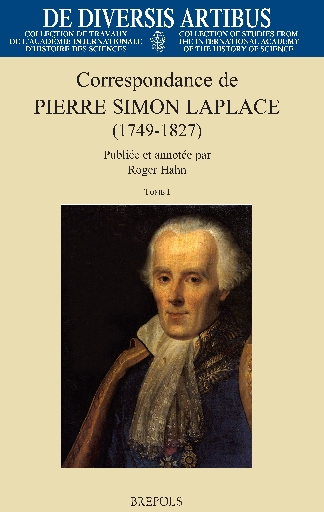
show More to view fulltext, buy and share links for:Correspondance de Pierre Simon Laplace (1749-1827) show Less to hide fulltext, buy and share links for: Correspondance de Pierre Simon Laplace (1749-1827)Ce nouveau volume de la Collection de travaux est à bien des égards exceptionnel. C’est l’œuvre d’une vie, car pendant cinquante ans, jusqu’à sa mort en 2011, Roger Hahn a patiemment rassemblé les lettres de Laplace éparses dans les collections publiques et privées. C’est aussi un document capital pour l’histoire du XVIIIe et du XIXe siècle, depuis l’Ancien Régime jusqu’à la Restauration, dans tous ses aspects. En effet, Laplace ne fut pas seulement un scientifique de premier ordre en mécanique céleste, en astronomie, en mathématique, il exerça d’importantes fonctions politiques et administratives sous les régimes successifs. Enfin, la correspondance apporte un témoignage de première main, souvent émouvant, sur la vie personnelle et sur l’évolution philosophique du « doyen des athées ».
-
-
-
Cosmogonie e cosmologie nel medioevo
Atti del convegno della Società Italiana per lo Studio del Pensiero Medievale (S.I.S.P.M.), Catania, 22-24 settembre 2006
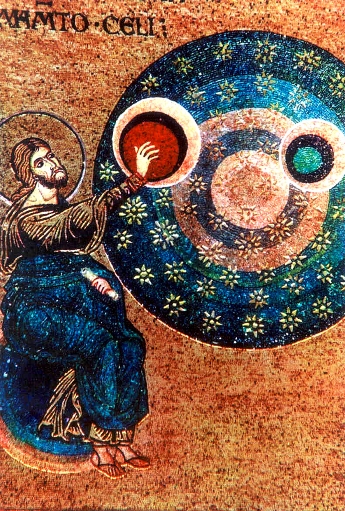
show More to view fulltext, buy and share links for:Cosmogonie e cosmologie nel medioevo show Less to hide fulltext, buy and share links for: Cosmogonie e cosmologie nel medioevoIl volume raccoglie 25 studi sulla cosmologia medievale, affrontata nelle sue diverse componenti in un arco di tempo che va da Calcidio al XIV secolo. Dieci contributi investigano questioni di cosmologia ebraica e islamica, in particolare le opere di Gersonide (R. Gatti), Maimonide (L. Pepi), Avicenna (C. Di Martino), Avicenna (O. Lizzini), Sohravardî (I. Panzeca), Qûnawî (P. Spallino), i Fratelli della Purità (C. Baffioni) e le interferenze fra medioevo islamico e latino: la grande questione delle cosmologie alchemiche (M. Pereira), testi tradotti come il De secretis naturae (P. Travaglia), la dottrina del grande anno in Thebit e Pietro d’Abano (F. Seller). All’influenza della Patristica greca sul pensiero occidentale dedicano ampio spazio i lavori di E. S. Mainoldi e R. Gambino. Ulteriori studi presentano lo sviluppo del pensiero cosmologico e scientifico latino a partire da Calcidio (C. Militello), attraverso Adelardo di Bath (P. Palmeri), Guglielmo di Conches (G. Pellegrino) e documenti diversi (A. Tarabochia Canavero) sino alla ripresa dell’aristotelismo fisico, in particolare nei commenti universitari ai Meteorologica (G. Fioravanti), De caelo (C. A. Musatti, A. Vella) e in Dante (M. Gallarino, P. Falzone). La letteratura scientifica in volgare è rappresentata da Restoro d’Arezzo (U. Villani-Lubelli) e Ramon Llull (J. Gayà). A questioni di metodo storiografico è dedicato il saggio di G. Alliney, mentre un magistrale contributo di Tullio Gregory su «Cosmogonia biblica e cosmologie cristiane» traccia idealmente le coordinate generali del complesso problematico affrontato nelle sue diverse sfaccettature dagli autori del volume.
-
-
-

Cosmogonies et religion
Aspects particuliers des astres dans les religions de l’Antiquité méditerranéenne
show More to view fulltext, buy and share links for:Cosmogonies et religion show Less to hide fulltext, buy and share links for: Cosmogonies et religionDans cet ouvrage sont rassemblées les contributions de spécialistes belges et français, présentées lors du colloque organisé à l’Université catholique de Louvain le 3 juin 2016 par le Centre d’Histoire des Religions Cardinal Julien Ries. La thématique de cette journée abordait des aspects particuliers des astres dans les religions de l’antiquité méditerranéenne et orientale (Iran). De tous temps, la lune, les astres et les phénomènes célestes ont fasciné l’être humain. Les religions de l’Antiquité ont interprété ces éléments de diverses manières. Les régions concernées par les articles de ce volume sont l’Iran, l’Anatolie (Hitittes), la Grêce, ainsi que la Chine (tokharien).
-
-
-
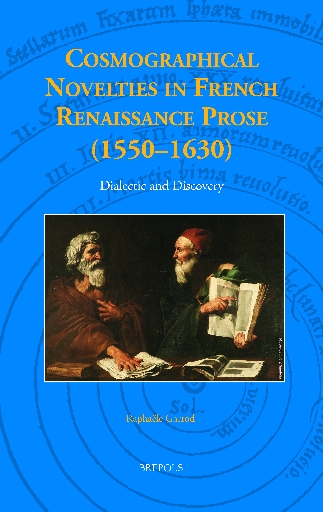
Cosmographical Novelties in French Renaissance Prose (1550–1630)
Dialectic and Discovery
show More to view fulltext, buy and share links for:Cosmographical Novelties in French Renaissance Prose (1550–1630) show Less to hide fulltext, buy and share links for: Cosmographical Novelties in French Renaissance Prose (1550–1630)Contemporary historiography holds that it was the practices and technologies underpinning both the Great Voyages and the ‘New Science’, as opposed to traditional book learning, which led to the major epistemic breakthroughs of early modernity. This study, however, returns to the importance of book-learning by exploring how cosmological and cosmographical ‘novelties’ were explained and presented in Renaissance texts, and discloses the ways in which the reports presented by sailors, astronomers, and scientists became not only credible but also deeply disturbing for scholars, preachers, and educated laymen in sixteenth- and seventeenth-century France.
It is argued here that dialectic - the art of argumentation and reasoning - played a crucial role in articulating and popularizing new learning about the cosmos by providing the argumentative toolkit needed to define, discard, and authorize novelties. The debates that shaped them were not confined to learned circles; rather, they reached a wider audience via early modern vernacular genres such as the essay.
Focusing both on major figures such as Montaigne or Descartes, as well as on now-forgotten popularizers such as Belleforest and Binet, this book describes the deployment of dialectic as a means of articulating and disseminating, but also of containing, the disturbance generated by cosmological and cosmographical novelties in Renaissance France, whether for the lay reader in Court or Parliament, for the parishioner at Church, or for the student in the classroom.
-
-
-
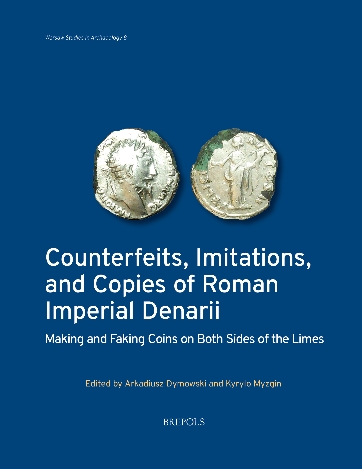
Counterfeits, Imitations, and Copies of Roman Imperial Denarii
Making and Faking Coins on Both Sides of the Limes
show More to view fulltext, buy and share links for:Counterfeits, Imitations, and Copies of Roman Imperial Denarii show Less to hide fulltext, buy and share links for: Counterfeits, Imitations, and Copies of Roman Imperial DenariiRoman Imperial denarii from the first–third centuries ad are, almost without exception, the most common ancient coinage to be found in Central, Northern, and Eastern Europe beyond the Roman limes. Perhaps surprisingly, however, a significant percentage of these coins are in fact counterfeit, comprised largely of denarii subaerati (plated denarii, fourrées) and denarii flati (base-metal cast copies). Moreover, these fake coins were not only manufactured by Romans themselves, but also by barbarian peoples in Eastern Europe, far from the Roman limes, in what should be considered a mass-scale phenomena.
This volume draws together archaeological, numismatic, and historical research in order to offer a new assessment of the production and use of counterfeit Roman Imperial denarii both within the European provinces of the Roman Empire and in European Barbaricum. Drawing on the results of the research project Barbarian Fakers. Manufacturing and Use of Counterfeit Roman Imperial Denarii in East-Central Europe in Antiquity, from the University of Warsaw, the papers gathered here explore the transfer of ideas, technology, and finished products that led to the transfer of counterfeit coinage across the Empire, and shed light on how, why, and when such coins were created and used.
-
-
-
Couples et conjugalité au haut Moyen Âge (vi e-xii e siècles)
show More to view fulltext, buy and share links for:Couples et conjugalité au haut Moyen Âge (vi e-xii e siècles) show Less to hide fulltext, buy and share links for: Couples et conjugalité au haut Moyen Âge (vi e-xii e siècles)Qu'est-ce qu'un couple dans le royaume des Francs du haut Moyen Âge ? Quelles en sont les différentes formes ? À quelle réalité sociale correspond-il ? Sur quelles bases s'organisent les relations entre les conjoints ? Comment le discours et les pratiques évoluent-elles entre le VIe et le XIIe siècle ? Pour y répondre, il a fallu croiser des sources de nature diversifiée (narratives, diplomatiques, législatives, morales, administratives, poétiques, épistolaires, iconographiques et archéologiques), analysées à la lumière des questionnements sociologiques, psychologiques, anthropologiques et philosophiques actuels. Il en ressort, même si la conjugalité constitue la norme dans tous les milieux sociaux, une grande diversité de situations et de parcours. Tous les couples n'étaient pas mariés, monogames, formant une communauté de résidence, d'affection et de solidarité hiérarchisée, comme pourrait le laisser supposer la documentation écrite, monopole d'une élite, le plus souvent ecclésiastique, qui tend à présenter comme des normes ce qui n'est qu'un idéal souhaité. Quatre chapitres le montrent en analysant successivement, la diversité des formes de conjugalité, les paramètres qui influent sur le couple et lui permettent ou non de se construire et de durer, sans jamais nier son identité, les éléments qui participent à la construction de la communauté conjugale et l’identifie comme telle, ainsi que la nature et les formes de relations entre les conjoints.
-
-
-

Court Culture in the Early Middle Ages
The Proceedings of the First Alcuin Conference
show More to view fulltext, buy and share links for:Court Culture in the Early Middle Ages show Less to hide fulltext, buy and share links for: Court Culture in the Early Middle AgesThe role of the court in early medieval polities has long been recognised as an essential force in the running of the kingdom. The court was not only an organ of central government but a sociological community with its own ideology and culture, and a place where royal power was both displayed and negotiated. The studies within this volume reflect the diversity of modern court studies, considering the court as a social body and considering its educative and ideological activities. The contributors to this volume bring together historical, archaeological, art historical and literary approaches to the topic as they consider aspects of court life in England, Francia, Rome and Byzantium from the eighth to the tenth centuries. The volume therefore looks at court life in the round, emphasizes and invites connections between early medieval courts, and opens new perspectives for the understanding of early medieval courts.
-
-
-

Court Festivals of the Holy Roman Empire, 1555–1619
Performing German Identity
show More to view fulltext, buy and share links for:Court Festivals of the Holy Roman Empire, 1555–1619 show Less to hide fulltext, buy and share links for: Court Festivals of the Holy Roman Empire, 1555–1619This study represents a new approach to the analysis of early modern court festivals, setting the question of identity at its heart. It explores identity as it was portrayed, constructed, and upheld through court festivals within the Holy Roman Empire of the German Nation in the period between the Peace of Augsburg in 1555 and the coronation of Friedrich V, Elector Palatine, as King of Bohemia in 1619. Structured thematically, this detailed analysis touches on core themes of early modern European history including state formation, princely courts, gender, religion, science and the natural world, and cultural encounters. In doing so, it draws on, and speaks to, scholarly literature not only from different historical sub-disciplines but also from sociology and anthropology. Ultimately, Morris argues that these court festivals provided a flexible, albeit contested, rhetoric of identity, grounded in the performance of humanist virtue. Through the performed, material, and literary rhetoric of court festivals, the concept of nobility through virtue was reworked, refined, and given a new vocabulary within the German context. This was inextricably linked with politics in light of the reforms made to the Holy Roman Empire at the end of the fifteenth century, the confessional divisions of the sixteenth century, and the mounting tensions of the early seventeenth century which were to culminate in the Thirty Years War.
-
-
-
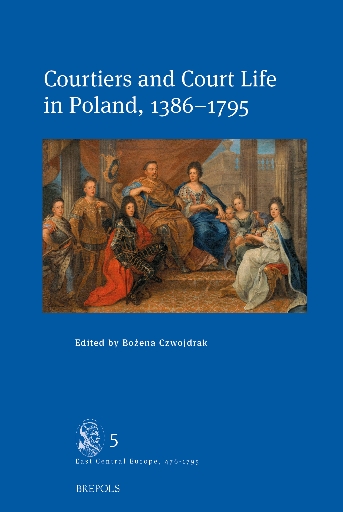
Courtiers and Court Life in Poland, 1386–1795
show More to view fulltext, buy and share links for:Courtiers and Court Life in Poland, 1386–1795 show Less to hide fulltext, buy and share links for: Courtiers and Court Life in Poland, 1386–1795This collection of studies explores the complexities of the royal courts of Poland from the late medieval period to the cusp of modernity. Drawing on pioneering research and primary sources, the volume authors dissect the multifaceted roles and dynamics of courtiers, positioning them within the broader socio-political and cultural paradigms of their time. From the distinct cultural imprints of the Jagiellon dynasty to the challenges faced by monarchs elected during the eighteenth century, each study within this collection provides a rigorous examination of courtly structures, influences, and transformations.
The volume examines the symbiotic relationships between courtiers and monarchs, the changing ideals of courtly service, and the impact of both domestic traditions and foreign influences on the Polish courts. It offers invaluable insights for scholars of court culture, bringing to the world stage evidence from the archives of Poland and seeking to understand the evolution of court life and its implications for the broader historical narratives of Poland throughout the entire existence of this composite monarchy.
-