


Brepols
Brepols is an international academic publisher of works in the humanities, with a particular focus in history, archaeology, history of the arts, language and literature, and critical editions of source works.2901 - 2920 of 3194 results
-
-
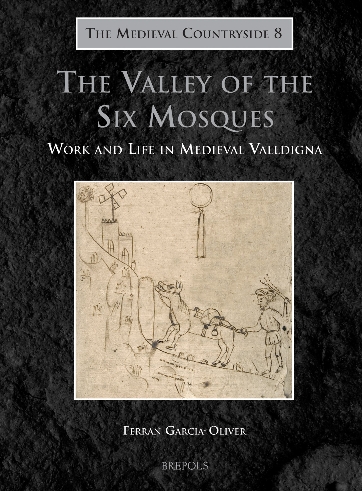
The Valley of the Six Mosques
Work and Life in Medieval Valldigna
show More to view fulltext, buy and share links for:The Valley of the Six Mosques show Less to hide fulltext, buy and share links for: The Valley of the Six MosquesThis is a detailed and fascinating account of a Muslim valley in Christian-ruled Spain at the end of the Middle Ages. Valldigna is located south of the city of Valencia and was part of a region conquered by the king of Aragon-Catalonia in the thirteenth century. Unlike much of Spain where the Muslim inhabitants were expelled or eventually departed after the Christian conquests, the Valencia countryside remained predominantly Muslim in the fourteenth and fifteenth centuries, the period on which this book is focused.
A bestseller in its Catalan edition, The Valley of the Six Mosques recreates in vivid and memorable terms the lives of the villagers, describing both what held them together (families, the agricultural economy) and what divided them (crime, violence). Garcia-Oliver shows the often tense relations between the peasants and their landlord (the monastery of Valldigna), but he is especially concerned to show the autonomy and inner life of the communities - the extent to which women held power within families, what the rhythms of everyday life were like, and how money, land, and labour inflected the struggle for survival. The result is a tour de force that evokes a particular place and time, but one that tells us about the complicated formation of modern European and Mediterranean cultures and societies.
-
-
-
The Viking Age as a Period of Religious Transformation
The Christianization of Norway from AD 560 to 1150/1200
show More to view fulltext, buy and share links for:The Viking Age as a Period of Religious Transformation show Less to hide fulltext, buy and share links for: The Viking Age as a Period of Religious TransformationThis volume is the first to delve into Norway’s history of Christianization since 1973 when Fridtjov Birkeli published his book on the topic. For the first time in over thirty years, Dr Nordeide illuminates the change from non-Christian to Christian rituals by analysing archaeological resources from c. AD 560 to c. 1150/1200. This book both asserts and challenges previous hypotheses of the chronology of Christianization, as well as offering fascinating new versions of the Norway’s eventual conversion. As well as asserting that local history leads Norway along chronological lines typical of its peripheral location, the author argues that in some ways, Norway’s history of Christianity is best located within the history of central European regions even more than has ever been suggested before.
-
-
-
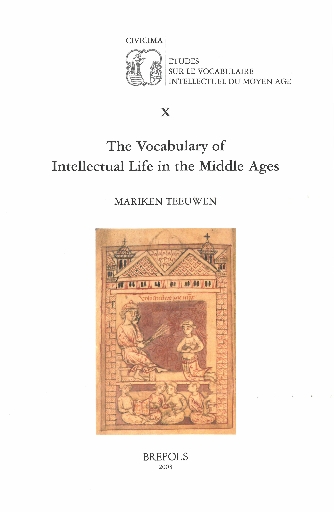
The Vocabulary of Intellectual Life in the Middle Ages
show More to view fulltext, buy and share links for:The Vocabulary of Intellectual Life in the Middle Ages show Less to hide fulltext, buy and share links for: The Vocabulary of Intellectual Life in the Middle AgesThe Latin vocabulary of intellectual life in the Middle Ages has been the focus of the CIVICIMA-series: nine volumes of conference-proceedings, monographs and collective works. The series has proved convincingly that analyses of the verbal expressions of medieval intellectual life and their precise meanings is a worthwhile and rewarding task, which sharpens and deepens our understanding of education and learning in the medieval world.
With this tenth volume the series has been brought to a conclusion. It serves as a handbook, a practical tool for finding information and material about a considerable number of key terms, which have been classified in four categories of “technical vocabulary” - terms that developed specialized meanings in the context of medieval education and learning. The first category consists of the vocabulary of schools and universities (for instance, schola, magister, universitas, etc.); the second the vocabulary of the book and book production (for instance, armarium, pecia, scriptorium, etc.); the third treats the vocabulary of teaching-methods, instruments and products of intellectual life (for instance, concordantia, disputatio, glossa, etc.); the fourth the names of the disciplines, their teachers and students (for instance, artes liberales, canonista, decretista, theologia, etc.).
Terms from these four categories are treated, either individually or in groups coherent with respect to content, in short and uniform articles. Their medieval meanings are described, together with their origins, their classical meanings, their semantic development, and the historical or regional differences in meaning.
-
-
-
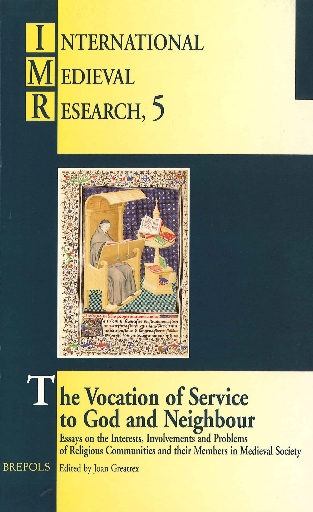
The Vocation of Service to God and Neighbour
Essays on the Interests, Involvements and Problems of Religious Communities and their Members in Medieval Society
show More to view fulltext, buy and share links for:The Vocation of Service to God and Neighbour show Less to hide fulltext, buy and share links for: The Vocation of Service to God and NeighbourThe impingement of monastery on marketplace provides the unifying theme for this collection of nine research papers. Separation from the world, for most members of religious orders in the Middle Ages, did not imply isolation from the rest of society but, rather, a new spirituality orientated relationship which took different forms in different times and circumstances. Three of the contributors are concerned with particular aspects of the intellectual activities of the religious orders in both university and cloister. Two others examine the traumatic effects of the enforced return to secular life of thousands of men and women religious in England when monastic life was brought to an abrupt end in 1540. An individual monk's pastoral role among the laity is explored and evaluated in one paper, while another reveals the extent to which a rural English nunnery was both rooted in the local community and dependent on foreign supervision. Problems encountered by the friars are discussed by two other contributors who, on the basis of their recent research, conclude that the hostility between Franciscans and Benedictines has been overstated and that some German Dominicans risked their reputations in their involvement with contemporary heterodox movements among the laity.
-
-
-
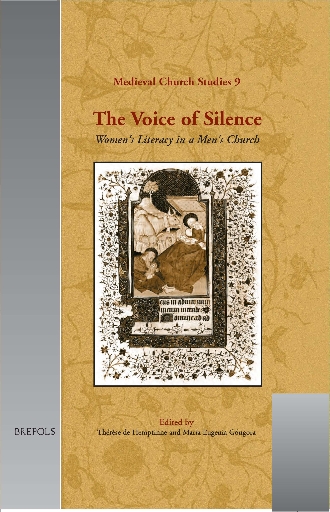
The Voice of Silence
Women’s Literacy in a Men’s Church
show More to view fulltext, buy and share links for:The Voice of Silence show Less to hide fulltext, buy and share links for: The Voice of SilenceThis book aims to collect and present the results of research done within the context of the project ‘The voice of silence / La voz del silencio: An interdisciplinary research project about literate women and women authors in the West-European late Middle Ages from a gender perspective (11th to 15th centuries)’. The project was a bilateral research project, with participants of the University of Chile in Santiago on the one hand and the Universities of Gent and Antwerpen on the other. Medieval scholars, literary historians and literary theorists joined forces. The angle from which the material was being studied, however, was always the same: gender being the central issue. The project focused on women as participants in late medieval society and culture of the Rhineland and the Low Countries. Indeed, all the researchers involved acquired their expertise in this field and/or the field of women’s literacy.
Several members of this Flemish-Chilean project have contributed an essay to this book, but supplemented by guest authors. The guests are internationally renowned scholars reflecting an expertise in gender studies or in an aspect not covered by the team members of the project. Their contributions complete the research results of the project.
The story told in this book is focused on literate women and gender. In the course of the twelfth and thirteenth centuries, the voices of women authors, many of them religious and mystics, resounded in a literate society dominated by clerics. Hildegard of Bingen and Hadewijch, two of the most famous representatives of this ‘female voice’ are highlighted in Part I. These women were the forerunners of a new reading culture among (semi-)religious and even lay women in which the use of the vernacular was a decisive factor (Part II). Yet, from the thirteenth century onwards, and with increasing intensity towards the end of the Middle Ages, men once more tried to get a grip on women’s reading and writing. Aspects of these attemps are illustrated in part III.
-
-
-
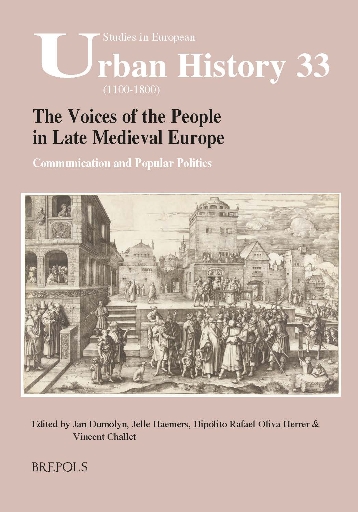
The Voices of the People in Late Medieval Europe
Communication and Popular Politics
show More to view fulltext, buy and share links for:The Voices of the People in Late Medieval Europe show Less to hide fulltext, buy and share links for: The Voices of the People in Late Medieval EuropeThroughout the medieval period, the popular classes were always reckoned as a potential force in society even though it was usually dangerous for them to articulate divergent social, political and religious opinions. Sources on medieval political and social life seem to show us a world of order, acquiescence and consent. Otherwise, they reveal a picture of bloodshed and violent strife. During times of intense conflict, however, the human tongue was always the most frequently used weapon, much more so than the sword or the dagger. The vox populi, though often difficultly retrievable in the sources, was a ubiquitous one within the realm of later medieval politics. The essays collected in this volume deal with such speech acts of political rebels, with political languages of the ‘popular classes’ in medieval society but also with the subversive twists to speech situations such as preaching, mockery and insults.
Jan Dumolyn is a senior lecturer in medieval history at Ghent University. He publishes on the socio-economic, political and cultural history of the urban world of the medieval Low Countries.
Jelle Haemers lectures medieval history at the University of Leuven. He has published widely on the social history of medieval politics and the urban history of the Low Countries.
Hipólito Rafael Oliva Herrer is professor of Medieval History in the University of Sevilla. He has published both on medieval peasantry and popular political culture, including the making of popular ideologies and forms of popular protest.
Vincent Challet is a senior lecturer at the University of Montpellier-III, and works on the political conscience of communities. He is also the scientific coordinator of the ANR “Thalamus” project which aims to produce a scientific edition of the chronicle and urban statutes of Montpellier in the Middle Ages.
-
-
-
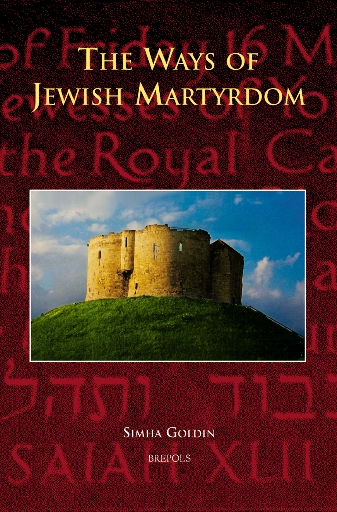
The Ways of Jewish Martyrdom
show More to view fulltext, buy and share links for:The Ways of Jewish Martyrdom show Less to hide fulltext, buy and share links for: The Ways of Jewish MartyrdomJewish martyrdom in the Middle Ages is a most intriguing social, cultural, and religious phenomenon. It was stimulated by ancient Jewish myths, and at the same time it was influenced by the Christian environment in which the Jews lived and operated. The result was a unique and unprecedented event in which the Jews did not simply refuse to convert to Christianity; they were ready to kill themselves and their children so they would not be forced to convert. The Ways of Jewish Martyrdom discusses the phenomenon of Jewish Martyrdom in medieval Germany, northern France, and England from the time of the First Crusade (1096) until the mid-fourteenth century (that is, the time of the ‘Black Death’), in light of modern research and with ample use of hitherto-neglected primary sources. In order to understand the unique phenomenon of Jewish martyrdom, the various Jewish and Christian antecedents that might have influenced the notion of Jewish martyrdom in the Middle Ages need analysis. The texts on which the analysis is based are various, ranging from chronicles through memorial books to liturgical materials and Piyyut. The last part of the book reviews the development of this phenomenon after the fourteenth century and delineates the essential changes and transformations therein at the dawn of the early modern period and beyond.
-
-
-
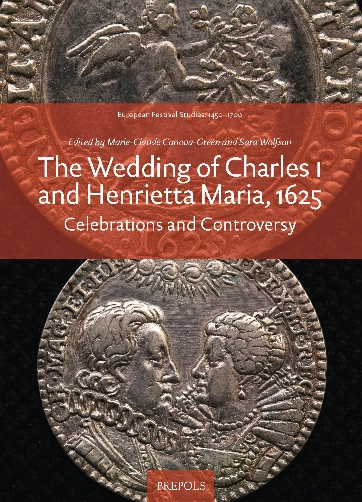
The Wedding of Charles I and Henrietta Maria, 1625
Celebrations and Controversy
show More to view fulltext, buy and share links for:The Wedding of Charles I and Henrietta Maria, 1625 show Less to hide fulltext, buy and share links for: The Wedding of Charles I and Henrietta Maria, 1625On 11 May 1625 Charles I married Henrietta Maria, the youngest sister of Louis XIII of France. The match signalled Britain’s firm alignment with France against Habsburg Spain and promised well for future relations between the two countries. However, the union between a Protestant king and a Catholic princess was controversial from the start and the marriage celebrations were fraught with tensions. They were further disrupted by the sudden death of James I and an outbreak of the plague, which prevented large-scale public celebrations in London. The British weather also played its part. In fact, unlike other state occasions, the celebrations exposed weaknesses in the display of royal grandeur and national superiority. To a large extent they also failed to hide the tensions in the Stuart-Bourbon alliance. Instead they revealed the conflicting expectations of the two countries, each convinced of its own superiority and intent on furthering its own national interests. Less than two years later Britain was effectively in a state of war against France.
In this volume, leading scholars from a variety of disciplines explore for the first time the marriage celebrations of 1625, with a view to uncovering the differences and misunderstandings beneath the outward celebration of union and concord. By taking into account the ceremonial, political, religious and international dimensions of the event, the collection paints a rounded portrait of a union that would become personally successful, but complicated by the various tensions played out in the marriage celebrations and discussed here.
Contributors: R. Malcolm Smuts, Lucinda H. S. Dean, J. R. (Ronnie) Mulryne, Karen Britland, Marie-Claude Canova-Green, Erin Griffey, Margaret Shewring, Sara J. Wolfson, Sara Trevisan, Kevin Laam, Sydney Anglo, Margaret M. McGowan, John Peacock, Gordon Higgott, Ella Hawkins .
-
-
-
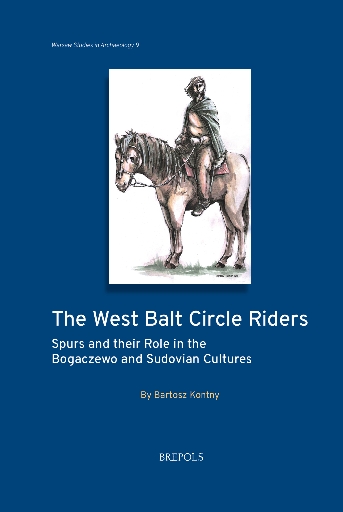
The West Balt Circle Riders
Spurs and their Role in the Bogaczewo and Sudovian Cultures
show More to view fulltext, buy and share links for:The West Balt Circle Riders show Less to hide fulltext, buy and share links for: The West Balt Circle RidersThe spurs of horse riders have long been acknowledged as an important item of grave furniture in the Late Roman and Migration period burials of Poland, a reflection of the high social position held by the deceased. Yet while spurs have been studied at a general level, and typo-chronological studies have been conducted on spurs found in southern and central Poland, no such research has so far been conducted on finds from the West Balt Circle, in north-eastern Poland. This volume is an attempt to rectify the situation by offering a thorough examination of finds attributed to the Bogaczewo and Sudovian Cultures. The author here offers a comprehensive assessment of surviving materials from the period, many of which are scattered through museums across Europe, together with an in-depth analysis of archival sources (included among them the private inventories of archaeologists working in the pre-war period) in order to reconstruct our understanding of the furnishings and data relating to spurs. This detailed research, carefully contextualized against our wider understanding of Barbarian Europe, offers an important new reference for our understanding both of the West Balt Circle and its inter-cultural relations with surrounding regions, as well as of the symbolic meaning of spurs and their significance in burial rites.
-
-
-
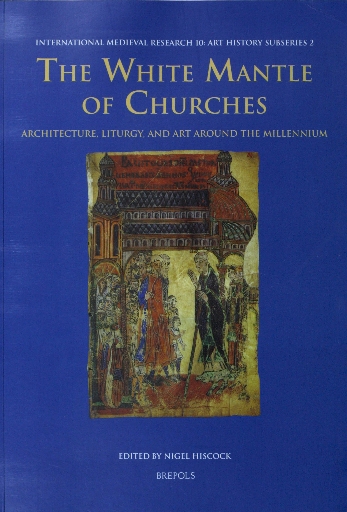
The White Mantle of Churches
show More to view fulltext, buy and share links for:The White Mantle of Churches show Less to hide fulltext, buy and share links for: The White Mantle of ChurchesWhen a monk living at the beginning of the last millennium described Europe ‘cladding itself everywhere in a white mantle of churches’, he precipitated several questions for historians to answer. Was there a surge in church-building at the time? If so, what were the causes of this, and what were the purposes? Does it help to explain our understanding of Romanesque architecture and art? Was there a connection between the ‘white mantle of churches’ and the millennium? Did people believe the world was coming to an end?
The supposition of apocalyptic expectations at the time was until recently dismissed as romantic myth, but the arrival of our new millennium has brought a revival in interest in the dawn of the second millennium, and new evidence of millennial fears. Yet millennial studies and architectural history largely continue to follow separate, parallel paths. This book therefore aims to add the architectural evidence to the millennial debate, and to examine this formative period in relation to the evolution of Romanesque architecture and art. As our own millennium gets under way with continuing hesitancy between European aspiration and national identity, it is also of interest to compare our time with the Europe of a thousand years ago.
-
-
-
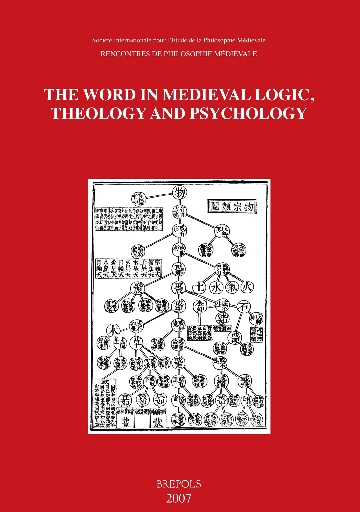
The Word in Medieval Logic, Theology and Psychology
Acts of the XIIIth International Colloquium of the Société Internationale pour l’Étude de la Philosophie Médiévale, Kyoto, 27 September-1 October 2005
show More to view fulltext, buy and share links for:The Word in Medieval Logic, Theology and Psychology show Less to hide fulltext, buy and share links for: The Word in Medieval Logic, Theology and PsychologyThe holding of the 2005 annual colloquium of the SIEPM in Kyoto, Japan, presented the opportunity to explore the very foundations of communication: the word in all its aspects. Whether mental concepts, as Aristotle had claimed, were the same for all people, whether from the East or the West; how these mental concepts were transformed into words; how words affected the concepts (e.g. in regard to the colour spectrum); how angels communicated with one another, and whether any words were appropriate for talking about God; whether words for things arise merely from convention, or have an essential relationship to what they describe; what exactly do the words for individuals, species and genera describe; why words can have powerful effects; what is the relationship between the inner word and the spoken word. The essays in this volume explore these questions largely from the texts of medieval Western philosophers and theologians from Boethius to Meister Eckhart, but some Hebrew and Arabic texts are also taken into consideration. The contexts range from the lively debates in the Parisian schools of the early twelfth century, through the subtle arguments of thirteenth and fourteenth century scholars, to mystical writings of the fifteenth century. Running as a thread through the essays are the translations and commentaries of Boethius on the Vetus logica of Aristotle, and the divine word of the Bible. The combination of contributions of Japanese scholars with both younger and more established scholars from the Western tradition ensures a rich and varied approach to this subject.
-
-
-
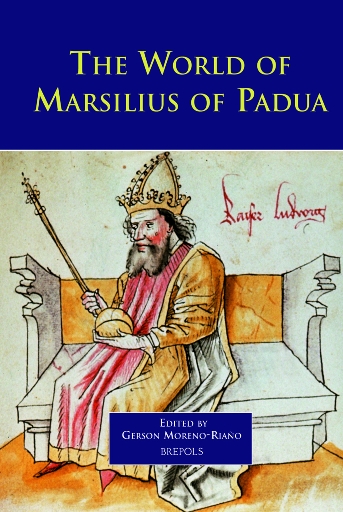
The World of Marsilius of Padua
show More to view fulltext, buy and share links for:The World of Marsilius of Padua show Less to hide fulltext, buy and share links for: The World of Marsilius of PaduaPerhaps no author of the Latin Middle Ages has been the subject of so much controversy and even vitriol than Marsilius of Padua (c. 1275-1342/43). As author of the notorious heretical tract, the Defensor Pacis, Marsilius became an infamous figure throughout the intellectual and political centres of Europe during his own lifetime. His magnum opus, a sharply pointed dissection of the damage done to earthly political life by the incursions of the papacy and a plea for conciliar ecclesiology, was repeatedly condemned during the fourteenth century and in later years. Yet the treatise continued to be disseminated and received translation into several vernacular languages. During the Reformation, Marsilius and his Defensor Pacis enjoyed another round of acclamation and denunciation, depending upon one’s confession. In July 2003, a group comprising many of the world’s most renowned scholars of medieval political thought gathered for a ‘Marsilius of Padua World Congress’. The contents of the present volume represent a compendium of innovative scholarly contributions to the understanding of Marsilius, his life and times, and his lasting impact on Western thought. Included are chapters that reflect a range of recent, ground-breaking research by both senior scholars and the future leaders in the field. After a general survey of the current state of scholarship on Marsilius, the volume divides into three thematically organized sections, covering a variety of historical, textual, methodological, theological, and theoretical questions. In all of the essays, readers will discover the wealth and complexity of Marsilius’s thought as well as the startling range of approaches and methods of interpretation taken in the study of his work. The volume’s selection of authors is international in scope and represents the first interdisciplinary scholarly collaboration in the field of Marsilian studies to occur in the twenty-first century.
-
-
-
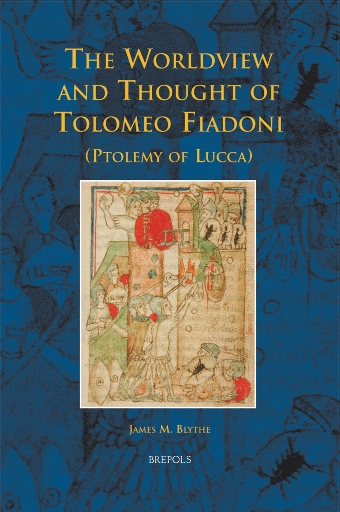
The Worldview and Thought of Tolomeo Fiadoni (Ptolemy of Lucca)
show More to view fulltext, buy and share links for:The Worldview and Thought of Tolomeo Fiadoni (Ptolemy of Lucca) show Less to hide fulltext, buy and share links for: The Worldview and Thought of Tolomeo Fiadoni (Ptolemy of Lucca)Tolomeo Fiadoni (1236-1327) was one of the most important political theorists and historians of the Middle Ages. He was central to developing a theory for the practices of Northern Italian republicanism and was hostile to kingship, portraying it as despotic and inappropriate for virtuous and freedom-loving people. He was the first writer to compare Aristotle’s examples of Greek mixed constitutions - Sparta, Crete, and Carthage - with the Roman Republic, the ancient Hebrew polity, the Church, and medieval communes, yet he remained a staunch defender of the absolute secular and spiritual monarchy of the pope.
Blythe explores various tensions in Tolomeo’s work that are often overlooked in scholarly treatments of him, and which derive from cultural preconceptions and the diverse influences on him: Aristotle, Augustine, apologists for papal power, his life in the Dominican Order, his educational experience with Thomas Aquinas, and his social position as a member of Northern Italy’s ruling class. These factors exerted contradictory influences on Tolomeo and led him to a sometimes unsuccessful intellectual struggle for consistency. This book is the first full-length study of Tolomeo’s thought and it gives full consideration not only to the political writings for which he is most known, but also to his historical and exegetical works. It is the companion to The Life and Works of Tolomeo Fiadoni (Ptolemy of Lucca).
-
-
-
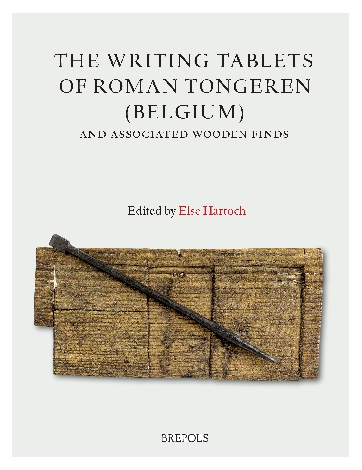
The Writing Tablets of Roman Tongeren (Belgium)
And Associated Wooden Finds
show More to view fulltext, buy and share links for:The Writing Tablets of Roman Tongeren (Belgium) show Less to hide fulltext, buy and share links for: The Writing Tablets of Roman Tongeren (Belgium)Roman wooden writing tablets, known in Latin as tabulae ceratae, have been found by archaeologists in various locations around the former capital of the civitas/municipium Tungrorum or Roman Tongeren (now the Belgian city of Tongeren-Borgloon). These rare and delicate finds are remarkable not only due to the excellent state of their preservation, but also because they are inscribed with the remnants of texts, once etched into an overlying wax layer, that can, to the discerning eye, still be deciphered. The tablets not only provide concrete information about religious, judicial and administrative practices, but they also enhance our understanding of the complex processes of Romanisation and Latinisation in the northwestern civitates and municipia of the Roman Empire.
Unearthed in the first half of the twentieth century, with a second group discovered in 2013, the Roman tablets housed in the Gallo-Roman Museum of Tongeren-Borgloon and in the city’s municipal heritage depository, became the object of an in-depth study by an international team of specialists piloted by the Gallo-Roman Museum. It is the results of this project that are presented here in this volume for the first time. The painstaking process of deciphering and interpreting the script marks and text fragments is explored via analysis of palaeography, philology and onomastics, along with key scientific techniques such as wax analysis, wood species identification, and script visualisation by Multi-Light Reflectance Imaging. Rich detail is also provided about other associated wooden finds that shed light on how and where the tablets were produced.
The result is a beautifully illustrated and insightful volume that introduces the lost world of Roman Tongeren and its writing tablets to professionals and the general public alike.
-
-
-
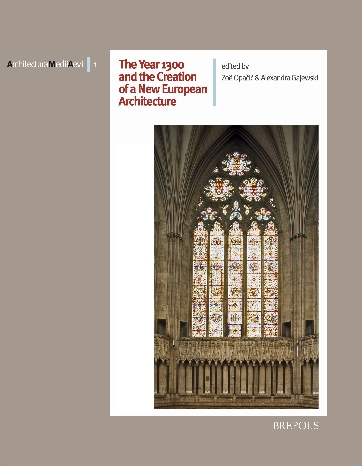
The Year 1300 and the Creation of a new European Architecture
show More to view fulltext, buy and share links for:The Year 1300 and the Creation of a new European Architecture show Less to hide fulltext, buy and share links for: The Year 1300 and the Creation of a new European ArchitectureThe theme of the book is the origin of Late Gothic architecture in Europe around the year 1300. It was then that Gothic ecclesiastical architecture graduated from a largely French into a wholly European phenomenon with new centres of art production (Cologne, Florence, York, Prague, Kraków) and newly-empowered institutions: kings, the higher nobility, towns and friars. Profound changes in spiritual and devotional life had a lasting effect on the relationship between architecture and liturgy. In short, architecture around 1300 became at once more cosmopolitan and more heterogeneous.
The book addresses these radical changes on their own terms-as an international phenomenon. By bringing together specialists in art, architecture and liturgy from many parts of Europe and from the USA it aims to employ their separate expertise, and to integrate each into a broader European perspective.
Dr Zoë Opačić is lecturer in the history and theory of architecture at Birkbeck College, University of London. She specialises in the field of late medieval architecture and art, particularly in Central Europe.
Dr Alexandra Gajewski is a Visiting Assistant Professor at the University of Michigan, Ann Arbor and a Fellow of the Society of Antiquaries, London. She works on Burgundian Gothic architecture and on Cistercian art in medieval France and the Empire.
-
-
-
The Yuezhi. Origin, Migration and the Conquest of Northern Bactria
show More to view fulltext, buy and share links for:The Yuezhi. Origin, Migration and the Conquest of Northern Bactria show Less to hide fulltext, buy and share links for: The Yuezhi. Origin, Migration and the Conquest of Northern BactriaThis book provides a detailed narrative history of the dynasty and confederation of the Yuezhi, whose migration from western China to the northern border of present-day Afghanistan resulted ultimately in the creation of the Kushan Empire. Although the Yuezhi have long been recognised as the probable ancestors of the Kushans, they have generally only been considered as a prelude to the principal subject of Kushan history, rather than as a significant and influential people in their own right. The evidence seemed limited and ambiguous, but is actually surprisingly extensive and detailed and certainly sufficient to compile a comprehensive chronological political history of the Yuezhi during the first millennium BCE. The book analyses textual, numismatic and archaeological evidence in an attempt to explain the probable origin of the Yuezhi, their relationship with several Chinese dynasties, their eventual military defeat and expulsion from the Gansu by the Xiongnu, their migration through the Ili Valley, Ferghana and Sogdia to northern Bactria, and their role in the conquest of the former Greco-Bactria state. All of these events were bound up with broader cultural and political developments in ancient Central Asia and show the extraordinary interconnectedness of the Eurasian historical processes. The domino-effect of the migration of the Yuezhi led to significant changes in the broader Eurasian polity.
-
-
-
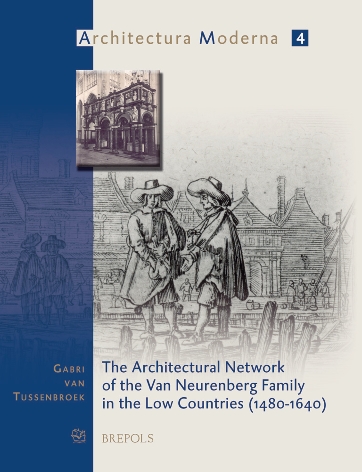
The architectural network of the Van Neurenberg family in the Low Countries (1480-1640)
show More to view fulltext, buy and share links for:The architectural network of the Van Neurenberg family in the Low Countries (1480-1640) show Less to hide fulltext, buy and share links for: The architectural network of the Van Neurenberg family in the Low Countries (1480-1640)Stone traders initially based in the Meuse valley, the Van Neurenberg family expanded northwards to Nijmegen and Dordrecht from 1530 on, becoming an international trading company in the process. Their subsequent activities reflect the huge changes the Dutch building sector underwent during the 17th century. They cooperated with the most famous artists of their time, such as Hendrick de Keyser in Amsterdam, and were involved in the most modern building projects of the Dutch Golden Age, such as Frederik Hendrik of Orange's Honselaarsdijk Palace. This study offers new insights into a relatively neglected aspect of Netherlandish building history in the 16th and 17th century.
-
-
-
The development of leasehold in northwestern Europe, c. 1200 – 1600
show More to view fulltext, buy and share links for:The development of leasehold in northwestern Europe, c. 1200 – 1600 show Less to hide fulltext, buy and share links for: The development of leasehold in northwestern Europe, c. 1200 – 1600In the twelfth to sixteenth centuries, the exploitation of landownership underwent drastic changes in various parts of Northwestern Europe. In these changes, the emergence of the lease plays a pivotal role. At the end of the Middle Ages, in a number of areas within the North Sea area, the greater part of available land was held at lease for relatively short terms. The competitive and contractual nature of such leasing has caused many to associate it with the emergence of capitalism in the countryside, seeing its rise as a key element in the transformation of the rural economy and society in the last millennium. In view of this, it is surprising that the emergence of leasing has received little systematic attention, particularly where its roots, its early development, its exact arrangements and the social and economic context of its emergence are concerned, let alone the regional and chronological differences in these elements. This volume aims to make a first step in exploring these issues.
-
-
-
The legal status of ḏimmī-s in the Islamic West (second/eighth-ninth/fifteenth centuries)
show More to view fulltext, buy and share links for:The legal status of ḏimmī-s in the Islamic West (second/eighth-ninth/fifteenth centuries) show Less to hide fulltext, buy and share links for: The legal status of ḏimmī-s in the Islamic West (second/eighth-ninth/fifteenth centuries)The studies brought together in this volume provide an important contribution to the history of ḏimmī-s in the medieval dār al-islām, and more generally to the legal history of religious minorities in medieval societies. The central question addressed is the legal status accorded to ḏimmī-s (Jews and Christians) in the Muslim law in the medieval Muslim west (the Maghreb and Muslim Spain). The scholars whose work is brought together in these pages have dealt with a rich and complex variety of legal sources. Many of the texts are from the Mālikī legal tradition; they include fiqh, fatwā-s, ḥisba manuals. These texts function as the building blocks of the legal framework in which jurists and rulers of Maghrebi and Peninsular societies worked. The very richness and complexity of these texts, as well as the variety of responses that they solicited, refute the textbook idea of a monolithic ḏimmī system, supposedly based on the Pact of ‘Umar, applied throughout the Muslim world. In fact when one looks closely at the early legal texts or chronicles from both the Mashreq and the Maghreb, there is little evidence for a standard, uniform ḏimmī system, but rather a wide variety of local adaptations. The articles in this volume provide numerous examples of the richness and complexity of interreligious relations in Medieval Islam and the reactions of jurists to those relations.
-
-
-
The management of common land in north west Europe, c. 1500-1850
show More to view fulltext, buy and share links for:The management of common land in north west Europe, c. 1500-1850 show Less to hide fulltext, buy and share links for: The management of common land in north west Europe, c. 1500-1850Until the 19th century very large areas of Western Europe were subject to some degree to common rights, where individual users collectively managed resources such as pasture and wood which were central to the agrarian economy. Much scholarship has focused on the dissolution of these rights and the effects of the enclosure of common land on society and agricultural productivity. In contrast, this volume seeks to assess in a comparative framework the long-term management of the common lands and the relative success of strategies in providing the resources sought by the rural population. Chapters covering northern and southern England, France, the Netherlands, Flanders, Sweden and northern and southern Germany examine the institutional and legal framework of commoning, the resources available and their value, the sustainability of practices, and policies of inclusion and exclusion among the group of commoners. Building on the theoretical insights of recent works on commonly managed resources, this volume, the result of an international collaboration in the CORN network, provides a series of detailed historical studies and is the first major work to address this central aspect of the agrarian economy in a comparative European context.
-