


Brepols
Brepols is an international academic publisher of works in the humanities, with a particular focus in history, archaeology, history of the arts, language and literature, and critical editions of source works.2941 - 2960 of 3194 results
-
-
To See into the Life of Things: The Contemplation of Nature in Maximus the Confessor and his Predecessors
show More to view fulltext, buy and share links for:To See into the Life of Things: The Contemplation of Nature in Maximus the Confessor and his Predecessors show Less to hide fulltext, buy and share links for: To See into the Life of Things: The Contemplation of Nature in Maximus the Confessor and his PredecessorsMaximus the Confessor (580-662) is one of the great minds of the Christian tradition and his Ambigua to John are a collection of texts uniquely expressive of the speculative contours of his thought. They have not, however, received a synthetic treatment until now. This work provides such a synthetic treatment and argues that Maximus’ central concern in the Ambigua to John is to articulate the nature of philosophy and, more precisely, the scope of the contemplation of nature (θεωρία φυσική) within the philosophical life, where "philosophy," the love of wisdom, is nothing less than the love of the Divine. Part I of this study provides a thorough background in Greek philosophical and patristic philosophies of nature, showing how Maximus’ predecessors understood knowledge of the world in relation to philosophical life, discourse, and praxis. Part II studies the contemplation of nature in the Ambigua and analyzes Maximus’ account of human affectivity in the world, his account of the coherence of philosophical life (praxis and contemplation) as a response to this affectivity, his understanding of the relation between God and the world, and his reconciliation of these various aspects of philosophy in the Christian economy of salvation, which he understands as the renewal of nature and its contemplation.
-
-
-
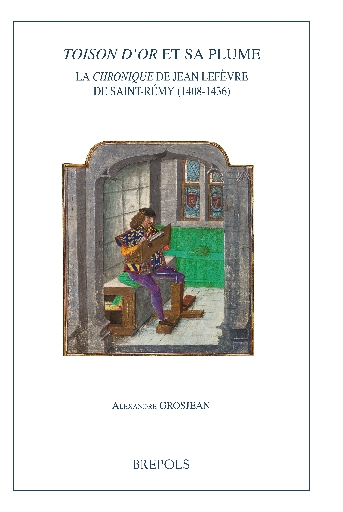
Toison d'or et sa plume, la "chronique" de Jean Lefèvre de Saint-Rémy (1408-1436)
show More to view fulltext, buy and share links for:Toison d'or et sa plume, la "chronique" de Jean Lefèvre de Saint-Rémy (1408-1436) show Less to hide fulltext, buy and share links for: Toison d'or et sa plume, la "chronique" de Jean Lefèvre de Saint-Rémy (1408-1436)Jean Lefèvre de Saint-Rémy (1396-1468) fut poursuivant d’armes dans les rangs anglais à la bataille d’Azincourt, héraut Charolais puis roi d’armes de l’ordre de la Toison d’or fondé par Philippe le Bon en 1430. L’œuvre historiographique qu’il rédige à la fin de sa vie s’inspire de la prestigieuse chronique d’Enguerrand de Monstrelet et mêle souvenirs personnels et interpolations de sources diverses, brossant un tableau voulu idéal de la cour de Bourgogne entre 1408 et 1436 et particulièrement du principat de Philippe le Bon, maître auquel ce serviteur doit tout. Les particularités de son récit posent le problème du héraut d’armes écrivant l’histoire, phénomène exceptionnel qui fut favorisé par l’émulation existante à la cour des ducs de Bourgogne, reconnue comme l’un des foyers les plus prolifiques en la matière au XV e siècle.
-
-
-
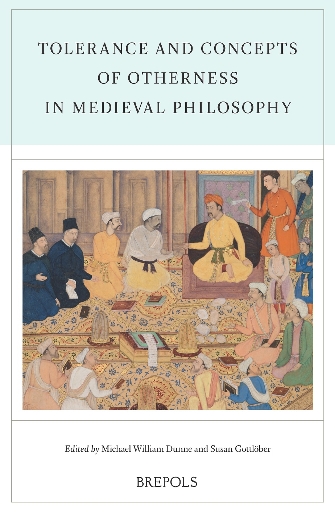
Tolerance and Concepts of Otherness in Medieval Philosophy
Acts of the XXI Annual Colloquium of the Société Internationale pour l’Étude de la Philosophie Médiévale, Maynooth, 9–12 September 2015
show More to view fulltext, buy and share links for:Tolerance and Concepts of Otherness in Medieval Philosophy show Less to hide fulltext, buy and share links for: Tolerance and Concepts of Otherness in Medieval PhilosophyThe proceedings of the S.I.E.P.M. Colloquium at Maynooth published in this volume shed new light on the development of the perception of the other within the different philosophical, religious, and cultural traditions in the late Middle Ages as well as the early modern era in both Christian and Islamic thought. The contributions consider not only the theological background but also the philosophical presuppositions of the concepts which were used to develop various apologetic writings and theological treatises that dealt with questions of cultural and religious difference. The rich and diverse medieval and early modern tradition of engaging with the other and the arguments for or against toleration on topics that are equally diverse are discussed with reference to both the Western and Eastern Christian tradition, to the contributions of Islamic Thinkers on the topic, and to the flourishing tradition of a constructed interreligious dialogue such as that between Christians and Jews. Finally, this book includes a number of important investigations exploring the relationship between toleration and rights not only within Europe but also in the lands of the so-called new world and its indigenous peoples where arguments of exclusion were grounded intheories such as grace-based dominium.
-
-
-
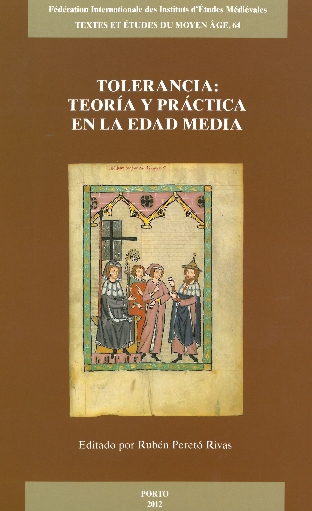
Tolerancia: teoría y práctica en la Edad Media
Actas del Coloquio de Mendoza (15-18 de junio de 2011)
show More to view fulltext, buy and share links for:Tolerancia: teoría y práctica en la Edad Media show Less to hide fulltext, buy and share links for: Tolerancia: teoría y práctica en la Edad MediaEl concepto de tolerancia no es simple y admite una multiplicidad de comprensiones y matices que se han ido desarrollando y perfeccionando a lo largo de los siglos. No se trata, por eso mismo, de un término totalmente unívoco que haya mantenido la integridad de sus notas esenciales de un modo inalterado a través del tiempo sino que ha sido justamente el tiempo, el pensamiento y la práctica de las sociedades humanas los que han modelado un valor que, en la actualidad, es indiscutido. Es precisamente por este motivo que cada época histórica ha conocido diversas conceptualizaciones y prácticas de la tolerancia.
El Coloquio Anual de la FIDEM 2011, realizado en la Universidad Nacional de Cuyo (Mendoza) discutió acerca de la teoría y la práctica de la tolerancia durante la Edad Media, y son sus resultados los que se exponen en este volumen. Esta temática puede ser abordada desde dos ángulos diversos. Por un lado, la teoría del concepto, y es por eso que varios capítulos del libro se aplican a analizarla desde el punto de vista filosófico a través de las obras de una serie de importantes autores que abarcan varios siglos de pensamiento, desde la Patrística hasta la Edad Media tardía, incluyendo también a los representantes de la denominada “escolástica colonial”. Por otro lado, la práctica de la tolerancia durante el largo periodo medieval es también tenida en cuenta a través de diversas disciplinas interesadas en el medioevo, tales como la historia y la literatura.
-
-
-

Touring Belgium
A Nation’s Patrimony in Print (1830–1920)
show More to view fulltext, buy and share links for:Touring Belgium show Less to hide fulltext, buy and share links for: Touring BelgiumTouring Belgium presents a wide range of printed media – from travel guides and collected letters to albums, from picture postcards to bibliographies and war-time propaganda – to explore how the print culture developing in the wake of travel and tourism helped to establish a national architectural heritage. Covering material from the period of Belgian independence through the aftermath of World War I, eight historians of art and architecture each situate one main publication against a dazzling background of nineteenth and early twentieth-century cultural discourses, revolutions in image reproduction, and emerging heritage management.
Reproductions in the middle part of the book present the core publications as material objects. These printed artifacts bring into view a nascent heritage that ranges from gothic town halls and dead cities to modern factories and railroad infrastructure; often there is little distinction between what threatens or enshrines the national patrimony. Writers like Schnaase and Hugo, museum conservators like Schayes and Kervyn de Lettenhove, symbolist painters like Hannotiau, innovative lithographers like Simonau, and publishers like Géruzet or the Touring-club de Belgique all bring their concerns to bear on what they see as Belgian heritage. Their preoccupations with patrimony help to craft Belgium as a nation with a history at the crossroads of Europe – historic architecture becomes a reality embedded in the territory as much as an imagery fabricated in print.
-
-
-
Toward a Historical Sociolinguistic Poetics of Medieval Greek
show More to view fulltext, buy and share links for:Toward a Historical Sociolinguistic Poetics of Medieval Greek show Less to hide fulltext, buy and share links for: Toward a Historical Sociolinguistic Poetics of Medieval GreekHow can historical sociolinguistic analyses of Medieval Greek aid in the interpretation of Medieval Greek texts? This is the main question addressed by the papers collected in this volume. Historical sociolinguistics (HSL) is a discipline that combines linguistic, social, historical, and philological sciences, and suggests that a language cannot be studied apart from its social dimension. Similarly, the study of a language in its social dimension is nothing else than the study of communication between members of a given speech community by the means of written texts, the shared “signs” used by authors to communicate with their audiences.
This volume is divided into two parts. In the first, Cuomo’s and Bentein’s papers aim to offer an overview of the discipline and examples of applied HSL. Valente’s, Bianconi’s, and Pérez-Martín’s papers show how the context of production and reception of Byzantine texts should be studied. These are followed by Horrocks’ study on some features of Atticized Medieval Greek. In the second part, the contributions by Telelis, Odorico, and Manolova focus on the context of reception of texts by Georgios Pachymeres, Theodoros Pediasimos, and Nikephoros Gregoras respectively.
-
-
-
Towards the Authority of Vesalius
Studies on Medicine and the Human Body from Antiquity to the Renaissance and beyond
show More to view fulltext, buy and share links for:Towards the Authority of Vesalius show Less to hide fulltext, buy and share links for: Towards the Authority of VesaliusThe authority of Andreas Vesalius (1514-1564) in reviving human anatomy is without any doubt a landmark in the history of science. Yet his breakthrough was inconceivable without his predecessors’ works. Moreover, later on, his own legacy would not remain untouched or undisputed. The question of scientific authority is not new; however it has hardly been tackled in a multidisciplinary and diachronic way. This volume brings together contributions from international scholars working in the field of theology, art history, philosophy, history of science and historical linguistics. Its goal is to contextualize and analyse the complex interaction between dogma and authority on the one hand and empirical progress on the other, both in the development of anatomy and the views on the human body, mainly before Vesalius’s time. Indeed, it is not the volume’s aim to focus exclusively on the role of Vesalius nor to assess the concept of medical and anatomical authority in a comprehensive way. Avoiding to repeat insights from the history of science as such, it intends to put old views to the test, and to bring up new questions and answers from diverse perspectives concerning the work of Vesalius and his predecessors and successors, by presenting different case studies from Antiquity to the Early Modern Times.
-
-
-
Town and Country in Medieval North Western Europe
Dynamic Interactions
show More to view fulltext, buy and share links for:Town and Country in Medieval North Western Europe show Less to hide fulltext, buy and share links for: Town and Country in Medieval North Western EuropeThis volume explores the relationships and interactions between medieval urban populations and their rural counterparts across north western Europe from the seventh to sixteenth centuries. This theme has become increasingly fragmented in recent decades, resulting in scholars being largely unaware of developments outside their own areas. The present volume brings together historians and archaeologists in order to highlight the varied ways in which town–country interactions can be considered, from perspectives that include economy, politics, natural environment, material culture, and settlement hierarchy. As a whole, the papers offer innovative interdisciplinary perspectives on the topic that create a new platform from which to understand more fully the complex, bilateral relationships in which both urban and rural spheres were able to influence and challenge each other. Contributions are wide-ranging, from the activities of elite, aristocratic groups in and around individual towns, to large-scale surveys covering wide areas. With coverage from the North Sea to the western Baltic, the book will be relevant to a range of disciplines including archaeology, history, and geography, and is aimed towards both advanced students and established scholars.
-
-
-
Town and Countryside in the Age of the Black Death
Essays in Honour of John Hatcher
show More to view fulltext, buy and share links for:Town and Countryside in the Age of the Black Death show Less to hide fulltext, buy and share links for: Town and Countryside in the Age of the Black DeathThe arrival of the Black Death in England, which killed around a half of the national population, marks the beginning of one of the most fascinating, controversial and important periods of English social and economic history. This collection of essays on English society and economy in the later Middle Ages provides a worthy tribute to the pioneering work of John Hatcher in this field. With contributions from many of the most eminent historians of the English economy in the later Middle Ages, the volume includes discussions of population, agriculture, the manor, village society, trade, and industry. The book’s chapters offer original reassessments of key topics such as the impact of the Black Death on population and its effects on agricultural productivity and estate management. A number of its studies open up new areas of research, including the demography of coastal communities and the role of fairs in the late medieval economy, whilst others explore the problems of evidence for mortality rates or for change within the village community. Bringing together broad surveys of change and local case studies based on detailed archival research, the chapters offer an assessment of previous work in the field and suggest a number of new directions for scholarship in this area.
-
-
-
Tractatio Scripturarum. Philological, Exegetical, Rhetorical, and Theological Studies on Augustine's Sermons
Ministerium Sermonis II
show More to view fulltext, buy and share links for:Tractatio Scripturarum. Philological, Exegetical, Rhetorical, and Theological Studies on Augustine's Sermons show Less to hide fulltext, buy and share links for: Tractatio Scripturarum. Philological, Exegetical, Rhetorical, and Theological Studies on Augustine's SermonsThe contributions collected in this volume of Instrumenta Patristica et Mediaevalia share a common focus on Saint Augustine's sermons on the New Testament and address a wide range of topics within this extended field of research. Several contributions deal with the transmission of these homilies, while others tackle questions concerning exegesis, rhetoric and theology. The foundation for this compilation was laid during the conference 'Ministerium sermonis. An International Colloquium on Saint Augustine's Sermons on the New Testament and their Reception' (September 15-17, 2011), hosted by the Academia Belgica in Rome (Italy).
The present volume may be considered a sequel to the book Ministerium sermonis. Philological, Historical and Theological Studies on Augustine's Sermones ad populum, which was published in 2009 as volume 53 of the series Instrumenta Patristica et Mediaevalia and bundled the contributions to the first Ministerium sermonis colloquium of May 2008 (Leuven - Turnhout).
List of contributors: Andrea Bizzozero, Isabelle Bochet, Pierre-Maurice Bogaert, Shari Boodts, François Dolbeau, Hubertus R. Drobner, Anthony Dupont, Alicia Eelen, Wim François, Uta Heil, Pierre-Marie Hombert, Paul Mattei, Gert Partoens, Stanley P. Rosenberg, Paul van Geest, Joost van Neer, Clemens Weidmann, Jonathan Yates
-
-
-
Tractatuli, excerpta et fragmenta de musica s. XI et XII
show More to view fulltext, buy and share links for:Tractatuli, excerpta et fragmenta de musica s. XI et XII show Less to hide fulltext, buy and share links for: Tractatuli, excerpta et fragmenta de musica s. XI et XIICet ouvrage est le fruit d’un travail entrepris au début de l’année 2007, soutenu par l’idée de mettre à la disposition des chercheurs un ensemble de petits traités et extraits sur la musique conservés dans les sources manuscrites des XIe et XIIe siècles susceptible de préciser l’histoire des théories de la musique au cours de ces deux siècles et leurs implications pour la pratique du chant liturgique. A ce titre, tous ces textes sont indissociables des “grands” traités de musique de l’ère carolingienne jusqu’au XIIe siècle - la Musica enchiriadis, le Dialogus de musica, les écrits de Guy d’Arezzo, la préface à l’antiphonaire de Bernon ou encore la Musica de Jean d’Afflighem - dont la diffusion fut considérable et qui ont largement contribué à façonner la théorie du chant liturgique du Moyen Age.L’établissement des textes a été réalisé en étroite collaboration entre les deux éditeurs de ce volume et les leçons retenues ont souvent fait l’objet de longues discussions. Cet ensemble composite de textes doit être lu et restitué dans la perspective des événements majeurs qui s’opèrent au tournant des XIe et XIIe siècle et qui affectent la codification et la normalisation des répertoires du chant liturgique. Pour l’histoire du chant liturgique, l’événement majeur fut incontestablement celui du mouvement de réforme qui se déploie dans l’église depuis le milieu du XIe siècle. Pour l’histoire du répertoire, cet événement est indissociable de la diffusion progressive de la technique de notation sur lignes qui soumet désormais la codification des mélodies à l’échelle des sons hérité de l’enseignement du De institutione musica de Boèce. La rencontre de ces événements explique en grande partie l’ampleur des discussions théoriques autour des questions de la modalité dont bon nombre de ces textes se font l’écho.
-
-
-
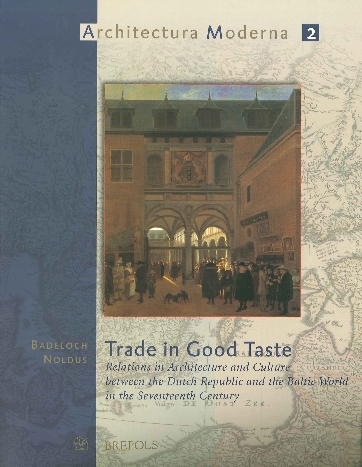
Trade in Good Taste
Relations in Architecture and Culture between the Dutch Republic and the Baltic World in the Seventeenth Century
show More to view fulltext, buy and share links for:Trade in Good Taste show Less to hide fulltext, buy and share links for: Trade in Good TasteDuring the seventeenth century Dutch influence on the Baltic region, both economic and aesthetic, was unrivaled. In the wake of the Dutch monopoly on Baltic trade, cultural contacts between the Dutch Republic and the Baltic world flourished. The Dutch Republic was even to fulfil an exemplary function in the Baltic world (particularly in the Swedish Empire, the dominating power in the region), not solely limited to the commerce of commodities but extending to the domain of architecture and art as well.
In this intensive cultural traffic, an important role was set aside for Dutch immigrants, architects, artists, and their agents. Apart from their regular activities as diplomats or news correspondents, agents mediated in cultural affairs for patrons in the North. As such, they occupied a key role in the relations between the Baltic world and the Dutch Republic. The pivotal element in these networks, they negotiated between Baltic commissioners and Dutch architects, artists, and suppliers of luxury items, including sculptures, tapestries, paintings, as well as a wide range of books and prints - all of which were available on the Amsterdam market. These extensive networks mark the Dutch Republic as a major centre of architecture, art, and information, crucial to the cultural development of northern Europe.
The history of this lively trade in good taste is told on the basis of rich archival material, including drawings, book and art collection inventories, correspondence, travel journals, and diaries.
Badeloch Noldus is a Senior Researcher at Frederiksborg Castle, the Danish Museum of National History. Her interests cover art, agency and art trade in early modern Northern Europe. Recent publications include Your Humble Servant. Agents in Early Modern Europe (2006).
-
-
-
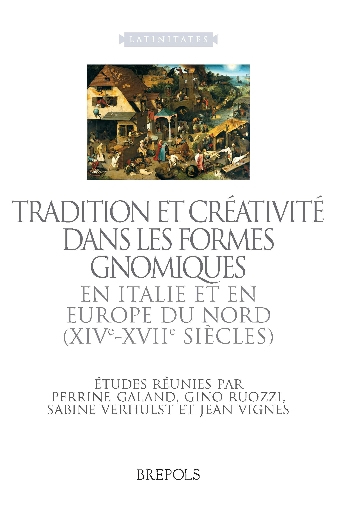
Tradition et créativité dans les formes gnomiques en Italie et en Europe du Nord (XIVe-XVIIe siècles)
Etudes réunies
show More to view fulltext, buy and share links for:Tradition et créativité dans les formes gnomiques en Italie et en Europe du Nord (XIVe-XVIIe siècles) show Less to hide fulltext, buy and share links for: Tradition et créativité dans les formes gnomiques en Italie et en Europe du Nord (XIVe-XVIIe siècles)De l’Antiquité à l’Âge classique, des textes toujours plus nombreux et variés se constituent par juxtaposition de brefs énoncés plus ou moins discontinus et supposés dignes de mémoire : adages, proverbes, sentences, aphorismes, apophtegmes, apologues…, les uns issus, dit-on, d’une tradition populaire immémoriale (« la sagesse des Nations »), les autres attribués avec plus ou moins de certitude et d’exactitude à des auteurs anciens ou modernes. Le « genre », si tant est qu’il faille parler d’un genre, est particulièrement prisé et fécond à la Renaissance. Le projet de ce volume part d’un constat simple quoique troublant : l’immensité du corpus gnomique rassemblé ou composé en Europe entre les XIVe et XVIIIe siècles contraste avec la place minime voire inexistante que lui réservent les travaux d’histoire et de théorie littéraires. Les textes majeurs du genre n’ont que rarement connu des éditions modernes satisfaisantes. Les études spécifiques consacrées à ce champ sont demeurées peu nombreuses, dispersées et fragmentaires : on n’a guère tenté de baliser cette production, d’en esquisser une typologie, d’en dégager les fonctions et l’esthétique, d’identifier les filiations dont elle procède, enfin d’en discerner les évolutions majeures entre le Moyen Âge et l’Âge classique. Notre objectif n’était sans doute pas de parachever une tâche aussi immense – Herculei labores ! – mais, sinon d’en jeter les bases, du moins d’en montrer l’utilité scientifique (et pourquoi pas l’agrément ?) : il s’agissait de susciter du moins un regain d’intérêt pour ce corpus à part et de donner un aperçu des principales problématiques littéraires, rhétoriques et anthropologiques qui permettent de l’explorer.
Les auteurs : Giovanni Baffetti, Bénédicte Boudou, Paola Cifarelli, Fabio Della Schiava, Walther Ludwig, Anna Maranini, John Nassichuk, Emilio Pasquini, Loris Petris, Sandra Provini, Paolo Rondinelli, Gino Ruozzi, Alessia Vallarsa, Sabine Verhulst, Jean Vignes
-
-
-
Traité de la division des royaumes. Introduction à une histoire universelle
show More to view fulltext, buy and share links for:Traité de la division des royaumes. Introduction à une histoire universelle show Less to hide fulltext, buy and share links for: Traité de la division des royaumes. Introduction à une histoire universelleDans les premières années du XIVe siècle, Jean de Saint-Victor entreprend la rédaction d'une chronique qu'il fait précéder d'une courte description des régions et des royaumes. Conduit à réviser ce travail et à lui donner l'envergure d'une histoire universelle depuis la Création, désormais intitulée Memoriale historiarum, il développe l'introduction initiale en un véritable traité, fruit d'une réflexion longuement mûrie au contact des sources sollicitées pour l'élaboration de son premier texte. Il y expose, à l'aide de tous les exemples historiques qu'il a pu rassembler, ce qui lui apparaît commun l'une des lois fondamentales de l'histoire, la divisio regnorum : tels des organismes naturels, les royaumes, mais aussi les empires, naissent, vivent et meurent. Ainsi fait-il place à la pensée aristotélicienne dans une lecture traditionnellement augustinienne de l'Histoire sainte.
-
-
-
Traité de la musique
show More to view fulltext, buy and share links for:Traité de la musique show Less to hide fulltext, buy and share links for: Traité de la musiqueLe De institutione musica a été rédigé vers 510 d'après des auteurs grecs, dont Nicomaque et Ptolémée. L'intention de Boèce était de fournir un texte de référence pour l'enseignement de la musique dans le cadre des études quadriviales. L'ouvrage se présente sous la forme de cinq livres dont le premier pose les fondements philosophiques de la théorie pythagoricienne de la musique. Le second et le troisième exposent les principes mathématiques de la construction de l'échelle heptatonique. La présentation du "grand système parfait", sa réalisation sur le monocorde et l'examen des tons de transposition occupent l'essentiel du quatrième livre. Le dernier est une traduction paraphrasée du premier livre des Harmoniques de Ptolémée qui développe une approche critique de la doctrine pythagoricienne exposée dans les livres précédents.
Redécouvert à l'époque carolingienne - malheureusement à l'état de fragment, puisque les derniers chapitres du cinquième livre sont perdus -, le traité de Boèce devait constituer tout au long du Moyen Age le texte de référence pour l'enseignement de la musique. Plus de 150 manuscrits copiés entre le IXe et le XVe siècle, deux éditions imprimées (1491/2 et 1546) ainsi qu'un volumineux corpus de gloses souvent recopiées en même temps que le texte lui-même, témoignent de la fortune de l'ouvrage de Boèce jusqu'à la Renaissance. L'unique édition scientifique, publiée en 1867 par Gottfried Friedlein et reproduite dans ce volume, a servi de support à la présente traduction.
-
-
-

Traité sur la prédication de la croisade
show More to view fulltext, buy and share links for:Traité sur la prédication de la croisade show Less to hide fulltext, buy and share links for: Traité sur la prédication de la croisadeLe traité De predicatione crucis, composé vers 1266-1268 par Humbert de Romans, le cinquième maître général de l’ordre dominicain, est sans doute l’instruction la plus détaillée pour les prédicateurs de la croix dont nous disposons. L’auteur donne ses commentaires sur les questions qu’il croit d’être les plus essentielles pour prêcher la croisade, sans pourtant donner des sermons prêts à être prononcés: le prédicateur est censé composer le sermon lui-même en utilisant le traité comme manuel. Il procure aussi des extraits de la Bible et des textes non-bibliques pour le même but.
Le texte latin, dont on trouvera ici la traduction, a été édité dans Humbertus de Romanis, De predicatione crucis (Corpus Christianorum. Continuatio Mediaeualis 279). Des renvois aux pages correspondantes de l'édition sont fournis dans les marges de cette publication.
-
-
-

Trans-mission. Création et hybridation dans le domaine d’oc
Nouvelles perspectives de la recherche en domaine occitan
show More to view fulltext, buy and share links for:Trans-mission. Création et hybridation dans le domaine d’oc show Less to hide fulltext, buy and share links for: Trans-mission. Création et hybridation dans le domaine d’ocCe volume est le fruit des échanges et de la collaboration entre de jeunes chercheurs de tous horizons qui consacrent leurs études à la langue, la littérature et la culture occitanes dans une optique diachronique et multidisciplinaire. Le récueil comprend 22 travaux conçus dans le cadre de projets étudiants de master, de thèses doctorales en cours ou récemment achevées, ainsi que d’études post-doctorales. Les contributions sont menées avec une approche scientifique rigoureuse et innovatrice et une méthode visant à l’interdisciplinarité. Elles portent sur des sujets nombreux et fort variés : des analyses géolinguistiques et sociolinguistiques, réalisées dans une perspective diachronique ou synchronique, sur les parlers occitans et sur des variétés intimement liés à ceux-ci, comme le catalano-valencien et les dialectes du nord-ouest de l’Italie ; les politiques et la sauvegarde de la langue occitane ; des relectures critiques de textes médiévaux ou modernes ; des études sur l’évolution de la culture occitane en France et en Europe. Afin d’organiser les travaux dans cet ouvrage collectif, ils ont été répartis en trois blocs, en fonction de la période concernée : Moyen Âge ; Réception du Moyen Âge et études savantes ; Époques moderne et contemporaine. Le but principal du recueil est d’offrir une vue d’ensemble sur les travaux les plus récents qui s’inscrivent ou touchent au domaine occitan et d’attirer l’attention sur les nouvelles tendances d’une recherce qui a enfin franchi les confins, chronologiques et thématiques, traditionnellement imposés par les sujets et les secteurs disciplinaires. En même temps, la publication veut mettre l’accent sur la vitalité, la richesse et la fertilité des études en langue d’oc, qui continuent à se développer et à se diffuser au niveau international, malgré les difficultés du monde de la recherche à l’heure actuelle.
-
-
-

Transcultural Approaches to the Bible
Exegesis and Historical Writing across Medieval Worlds
show More to view fulltext, buy and share links for:Transcultural Approaches to the Bible show Less to hide fulltext, buy and share links for: Transcultural Approaches to the BibleThis volume, the first in the new series Transcultural Medieval Studies, draws together scholars from around the world to offer new insights into the importance and role of the Bible across the varied cultures of medieval Europe. The papers gathered here take a comparative and multidisciplinary approach to the subject, focusing on the biblical background of perceptions of the religious and cultural ‘Self ’ and ‘Other’ in the Mediterranean, in Latin Europe, and in the Baltic. In doing so, the contributions identify commonalities and differences of the ‘uses of the Bible’ in these various worlds, combining and contrasting studies on Bible manuscripts, their exegesis, and their use for historical writing.
-
-
-

Transferts culturels franco-italiens au Moyen Âge – Trasferimenti culturali italo francesi
show More to view fulltext, buy and share links for:Transferts culturels franco-italiens au Moyen Âge – Trasferimenti culturali italo francesi show Less to hide fulltext, buy and share links for: Transferts culturels franco-italiens au Moyen Âge – Trasferimenti culturali italo francesiLa Società italiana di Filologia romanza, la Société de langues et littératures médiévales d’oc et d’oïl et la Société de Linguistique romane ont décidé d’organiser conjointement un colloque consacré au thème des « transferts culturels franco-italiens au Moyen Âge ». Le thème des transferts culturels, choisi par les trois sociétés, est apparu comme le meilleur moyen d’étudier ce qui à la fois rapproche et sépare ces deux espaces centraux de la Romania.
Le colloque a permis de contribuer au renouvellement des études comparatistes dans le domaine des lettres médiévales, favorisant une meilleure communication entre les spécialistes de la civilisation littéraire du Moyen Âge. La structuration des trois journées en cinq séances principales et deux tables rondes a également permis de réfléchir à ce sujet selon cinq approches complémentaires qui entendent tenir compte de l’ensemble des mouvements qui mettent en relation et en tension les lettres gallo-romanes et le volgare tout au long du Moyen Âge vernaculaire.
-
-
-
Transformed by Emigration. Welcoming Russian Intellectuals, Scientists and Artists (1917–1945)
show More to view fulltext, buy and share links for:Transformed by Emigration. Welcoming Russian Intellectuals, Scientists and Artists (1917–1945) show Less to hide fulltext, buy and share links for: Transformed by Emigration. Welcoming Russian Intellectuals, Scientists and Artists (1917–1945)The thematic framework of this special issue is an examination of the impact Russian émigrés had on the humanities and art. From art history to philosophy, artistic creation to ecumenical dialogue, the volume is dedicated to figures who, through their emigration from Russia, transformed their places of arrival and relevant fields. The articles in the volume assess these topics from an interdisciplinary point of view, extending the usual horizons of Convivium to other fields as well. The volume was published as the proceedings of the conference Transformed by Emigration. Welcoming Russian Intellectuals, Scientists, and Artists 1917-1945 held at the Hans Belting Library in February 2019.
-