


Brepols
Brepols is an international academic publisher of works in the humanities, with a particular focus in history, archaeology, history of the arts, language and literature, and critical editions of source works.3001 - 3020 of 3194 results
-
-
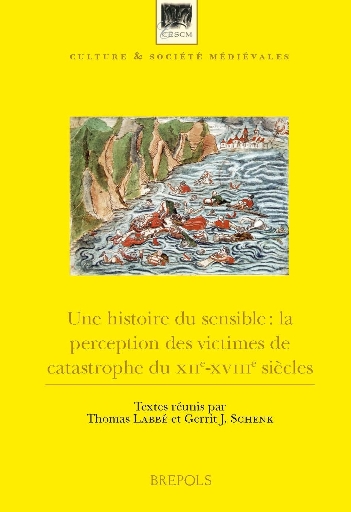
Une histoire du sensible : la perception des victimes de catastrophe du xii e au xviii e siècle
Actes du colloque international tenu à Lorsch (Allemagne, Hesse) du 11 au 14 décembre 2014
show More to view fulltext, buy and share links for:Une histoire du sensible : la perception des victimes de catastrophe du xii e au xviii e siècle show Less to hide fulltext, buy and share links for: Une histoire du sensible : la perception des victimes de catastrophe du xii e au xviii e siècleCet ouvrage se propose de réfléchir à la construction historique de la condition de victime, en relation avec les événements traumatiques dans l'Europe médiévale et moderne. Dans le contexte contemporain, le discours et la gestion des situations de catastrophe ou de mort de masse s'organisent en priorité autour de la place des victimes dans la fabrique événementielle. Cette attitude de la société contemporaine face à la dévastation, qualifiée tantôt de « compassionnelle », tantôt « d'humanitaire », ou bien encore de « tragique », reflète une forme de sensibilité qui définit en premier lieu la réalité catastrophique comme un drame.
Une telle approche de la souffrance possède-t-elle cependant une histoire ou constitue-t-elle une constante anthropologique de la société occidentale ? Quel regard les sociétés médiévales et modernes ont-elles posé sur cet aspect autant éthique que social du réel ? Les essais réunis dans ce volume proposent d'offrir quelques pistes de réflexion. À la lecture ambiguë de la victime au Moyen Âge, entre souffrance et responsabilité, la Renaissance semble commencer à proposer une vision plus « tragique » des individus souffrants. Les victimes peuvent dès lors entrer progressivement dans une politique des émotions qui triomphe au xviii e siècle.
-
-
-
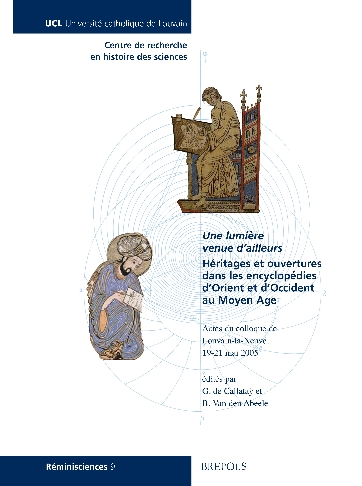
Une lumière venue d’ailleurs. Héritages et ouvertures dans les encyclopédies d’Orient et d’Occident au Moyen Age
Actes du colloque de Louvain-la-Neuve, 19-21 mai 2005
show More to view fulltext, buy and share links for:Une lumière venue d’ailleurs. Héritages et ouvertures dans les encyclopédies d’Orient et d’Occident au Moyen Age show Less to hide fulltext, buy and share links for: Une lumière venue d’ailleurs. Héritages et ouvertures dans les encyclopédies d’Orient et d’Occident au Moyen AgeL’encyclopédisme médiéval a fait l’objet de divers colloques ces dernières années, apportant des éclairages complémentaires. Un biais peu exploré encore est celui des relations entre œuvres encyclopédiques orientales et occidentales.
Le colloque de Louvain-la-Neuve «Une lumière venue d’ailleurs» s’est donné pour objectif général de mettre en parallèle les deux traditions, sur base d’études philologiques et historiques. Les onze articles publiés abordent les traditions arabe (C. Baffioni, G. de Callataÿ), persane (Ž. Vesel), juive (M. Zonta), la réception d’auteurs arabes par le Moyen Age latin (A. Galonnier, M.-C. Duchenne et M. Paulmier), la diffusion des textes latins (J. Loncke, B. Van den Abeele) et les avatars tardifs de l’encyclopédisme en Occident (C. Boucher, B. Roling, I. Ventura). Par le croisement de ces éclairages, le volume souhaite faire mieux comprendre les influences que l’Occident chrétien, l’Islam et le monde hébraïque exercèrent réciproquement à cette époque-charnière de leur histoire.
-
-
-
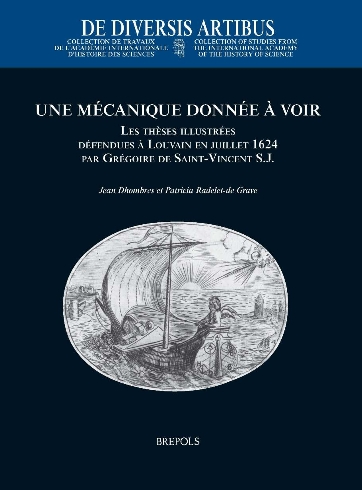
Une mécanique donnée à voir
Les thèses illustrées défendues à Louvain en juillet 1624 par Grégoire de Saint-Vincent S.J.
show More to view fulltext, buy and share links for:Une mécanique donnée à voir show Less to hide fulltext, buy and share links for: Une mécanique donnée à voirEn 1624, quelques mois après l’accession d’Urbain VIII au trône de Saint Pierre, plusieurs espéraient un infléchissement de la condamnation venue interdire en 1616 l’enseignement du mouvement de la Terre autour du Soleil alors défendue publiquement par Galilée. Etait de ceux-là l’inspirateur des thèses, le jésuite Grégoire de Saint-Vincent, né à Bruges une quarantaine d’années auparavant : il avait activement participé à la séance du Collège Romain lorsque Galilée en 1611 commentait ses observations au télescope de planètes comme Saturne ou Vénus, ce qui faisait « murmurer les philosophes ». Ainsi le raconte Grégoire lui-même. Les thèses de 1624 montrent une extraordinaire représentation de Saturne. Voilà un exemple parmi bien d’autres des surprises de ces thèses.
Onze chapitres, suivis d’une bibliographie, organisent l’enquête sur les thèses, cellesci étant traduites au chapitre IX. Le document est d’abord présenté avec les problèmes qu’il pose à l’historien. Puis le moment même des thèses, l’imaginaire des hommes de cette période, et les positions épistémologiques d’alors sont discutés, tant avec le texte qu’avec les images. Cette conjonction d’analyses est essentielle à l’enquête qui se poursuit sur les acteurs des thèses, avec trois récits possibles, le récit historique de la journée des thèses, le récit scientifique du contenu mais aussi le récit iconologique. A ce point, on peut entrer d’une part dans la tradition des thèses universitaires, d’autre part dans la tradition du livre illustré. Ce qui, à partir des travaux des historiens de la mécanique, permet d’aboutir à une discussion sur la place de ces thèses dans une histoire qui a tant servi à constituer les diverses philosophies des sciences, dont le positivisme, le constructivisme, etc. Après la traduction proposée, il convient de revenir à titre de justification sur le détail de chaque théorème et de chaque vignette, et de terminer par le vocabulaire latin des thèses. Cette démarche est tout le contraire de la démarche dogmatique si naturelle à l’histoire des sciences, discipline dont il faut se rappeler qu’elle doit beaucoup au positivisme.
Si l’enquête sur les textes et les images s’avère beaucoup plus longue que les courtes thèses, le plaisir n’est-il pas au final de retrouver la cohérence d’un des mondes du baroque à l’aube de la science moderne ? L’intérêt est en particulier de surprendre la façon dont un intellectuel issu d’un ordre religieux connu pour son obéissance disciplinaire, parvient malgré la rigoureuse orthodoxie récemment mise en place, à raisonnablement donner sa place à une nouvelle imagination, sans entrer en dissidence mais sans céder, cherchant sans aucun doute à libérer la pensée religieuse de la pensée scientifique, et s’aidant alors de la pensée toute profane d’un peintre d’emblèmes.
-
-
-
Une piété de la raison, philosophie et religion dans le stoïcisme impérial
Des Lettres à Lucilius de Sénèque aux Pensées de Marc-Aurèle
show More to view fulltext, buy and share links for:Une piété de la raison, philosophie et religion dans le stoïcisme impérial show Less to hide fulltext, buy and share links for: Une piété de la raison, philosophie et religion dans le stoïcisme impérialHow can the stoics reconcile the research of rational piety based on moral perfection with the legitimization of the ritualism and traditional representation of pagan gods? After studying the constant oscillation between the legitimization and condemnation of traditional rites in ancient stoicism, we demonstrate that the roman stoics, Seneca, Cornutus, Persius, Epictectus and Marcus Aurelius, address the same question, but with two essential specifics: adapting it to the political-religious context of Imperial Rome and paying particular attention to their readers as to the pedagogic strategist to grant their moral conversion.
-
-
-
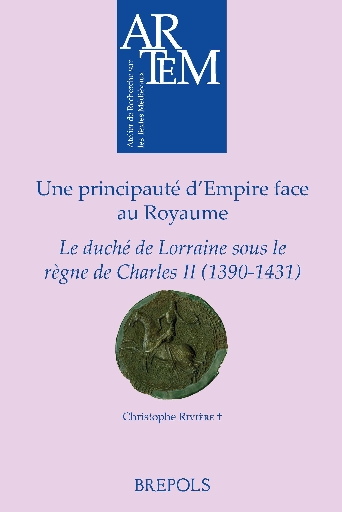
Une principauté d’Empire face au Royaume : le duché de Lorraine sous le règne de Charles II (1390-1431)
show More to view fulltext, buy and share links for:Une principauté d’Empire face au Royaume : le duché de Lorraine sous le règne de Charles II (1390-1431) show Less to hide fulltext, buy and share links for: Une principauté d’Empire face au Royaume : le duché de Lorraine sous le règne de Charles II (1390-1431)Précédant de peu Jeanne d’Arc et le duc René II, figures emblématiques d’un Moyen Âge lorrain flamboyant, Charles II apparaît comme un prince de second rang. Son règne (1390-1431) est associé, non sans raison, aux temps les plus sombres de l’histoire de la Lorraine, devenue l’épicentre douloureux d’une Europe qu’embrasait par le jeu des alliances le conflit franco-anglais de la Guerre de Cent Ans. Pourtant, s’en tenir là serait oublier que Charles II fut l’instigateur de la réunion des duchés de Lorraine et de Bar et qu’il posa les bases de l’État princier en Lorraine.
Rassemblant patiemment une documentation dispersée au gré des aléas de l’histoire, délaissant les impasses d’une historiographie longtemps préoccupée par la question de l’État-nation et prisonnière de l’antagonisme exacerbé entre la France et l’Allemagne, Christophe Rivière réévalue ici un règne trop longtemps méconnu et trop facilement renvoyé à ses archaïsmes. Son enquête prosopographique livre les contours d’une société politique originale ; il analyse le dialogue qu’elle entretient avec le prince dans un espace politiquement morcelé, au sein duquel se rencontrent et s’affrontent les influences venues du royaume de France et de l’Empire ; empruntant aux ethnologues les concepts d’ « acculturation » et de « métissage », il éclaire les valeurs qui cimentent cette société nobiliaire, valeurs par lesquelles elle se rapproche ou se distingue tour à tour des principautés voisines pour faire progressivement place à l’affirmation de la souveraineté ducale.
-
-
-
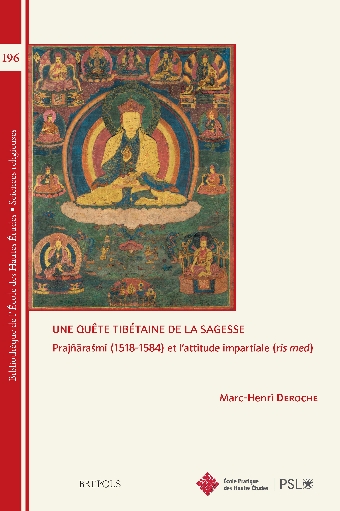
Une quête tibétaine de la sagesse
Prajñāraśmi (1518-1584) et l’attitude impartiale (ris med)
show More to view fulltext, buy and share links for:Une quête tibétaine de la sagesse show Less to hide fulltext, buy and share links for: Une quête tibétaine de la sagessePrajñāraśmi (1518-1584), ou « Lumière de Sagesse », est le nom de plume sanskrit d’un auteur tibétain qui vécut durant une période de crise politico-religieuse située entre la pleine assimilation du bouddhisme indien par les Tibétains et l’instauration du régime des Dalaï-Lamas. Dans ce contexte d’instabilité, Prajñāraśmi se distingua par une formation éclectique exceptionnelle et un enseignement qui, centré sur l’idée de sagesse – ou gnose –, chercha à montrer l’unité des différentes traditions du bouddhisme au Tibet.
Ses grands textes sont présentés et traduits dans cet ouvrage, notamment l’Ambroisie de l’étude, de la réflexion et de la méditation, et la Lampe qui illumine les deux vérités, qui traite de la philosophie de la voie du milieu (Madhyamaka). Sa biographie, ainsi que l’étude de son oeuvre et de son héritage, révèlent une filiation entre les renouveaux de l’école des Anciens (Rnying ma pa) durant la réunification du Tibet sous le Ve Dalaï-Lama (xvii e s.), la nouvelle révélation de ’Jigs med gling pa (xviii e s.), et la floraison du mouvement « impartial » (ris med, xix e siècle) avec la collection transsectaire du Trésor des instructions spirituelles.
Il se dessine ici une quête tibétaine de la sagesse qui, conjuguant l’histoire des traditions, le discours philosophique, le yoga et la contemplation, visait à une liberté intérieure conçue au-delà de tout parti pris, « intention unique » de tous les enseignements du Bouddha, ou, selon sa propre lignée de la Grande Perfection (Rdzogs chen), « sphère de la libération ».
-
-
-
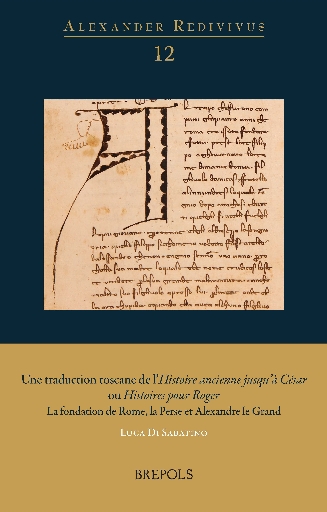
Une traduction toscane de l’Histoire ancienne jusqu’à César ou Histoires pour Roger
La fondation de Rome, la Perse et Alexandre le Grand
show More to view fulltext, buy and share links for:Une traduction toscane de l’Histoire ancienne jusqu’à César ou Histoires pour Roger show Less to hide fulltext, buy and share links for: Une traduction toscane de l’Histoire ancienne jusqu’à César ou Histoires pour RogerL’Histoire ancienne jusqu’à César, première histoire universelle écrite en prose française au début du XIIIe siècle, a joui d’une grande fortune en Italie, comme le montrent les manuscrits copiés dans les ateliers transalpins, les traductions, les citations et les réemplois jusqu’à la première moitié du XIVe siècle. Les traductions italiennes, ou volgarizzamenti, se divisent en deux groupes : les versions toscanes et les vénitiennes. Parmi les traductions toscanes, nous trouvons celle contenue dans trois manuscrits du Trecento, rédigée probablement entre la fin du XIIIe siècle et le début du XIVe. Le plus récent de ces codices, le manuscrit II I 146 de la Biblioteca Nazionale Centrale de Florence, est le seul témoin de l’Histoire ancienne en italien qui présente la section alexandrine ; il est utilisé comme base pour l’édition proposée ici, qui offre le récit sur Rome (depuis la fondation jusqu’aux guerres contre les Samnites), la Perse, Philippe II de Macédoine, Alexandre le Grand et les guerres des diadoques. Cette traduction toscane représente probablement l’une des plus anciennes versions italiennes de l’histoire d’Alexandre.
-
-
-
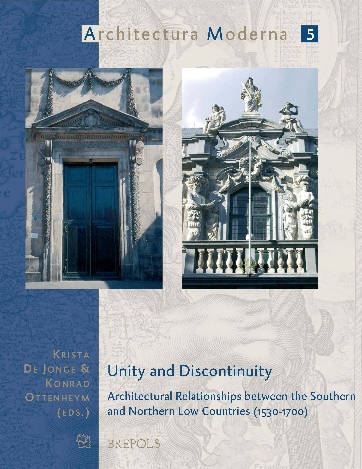
Unity and Discontinuity
Architectural Relationships between the Southern and Northern Low Countries (1530-1700)
show More to view fulltext, buy and share links for:Unity and Discontinuity show Less to hide fulltext, buy and share links for: Unity and DiscontinuityThis study focuses on change and continuity within the architecture of the Southern and Northern Low Countries from 1530 to 1700. Instead of looking at both regions separately and stressing the stylistic differences between the classicist North and the baroque South, the book establishes a new, common history of architecture for both parts of the Low Countries during the seventeenth century. Their reception of Antiquity in the guise of the Italian Renaissance, first introduced in Court circles in the early sixteenth century, constituted the common heritage on which they built after the political separation. The book also reassesses the position of Netherlandish architecture in the international debate on the Renaissance north of the Alps.
Krista De Jonge is professor of history of architecture at the Catholic University of Leuven.
Konrad Ottenheym is professor of history of architecture at Utrecht University.
-
-
-
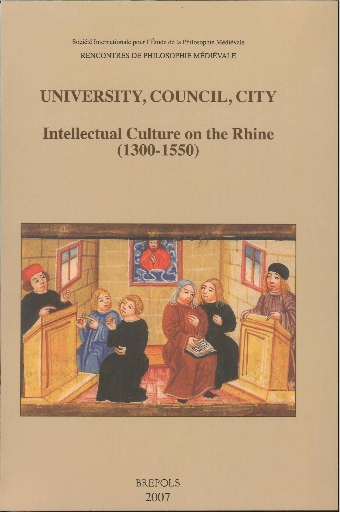
University, Council, City. Intellectual Culture on the Rhine (1300-1550)
Acts of the XIIth International Colloquium of the Société Internationale pour l’Étude de la Philosophie Médiévale, Freiburg im Breisgau, 27-29 October 2004
show More to view fulltext, buy and share links for:University, Council, City. Intellectual Culture on the Rhine (1300-1550) show Less to hide fulltext, buy and share links for: University, Council, City. Intellectual Culture on the Rhine (1300-1550)Stretching from Basel to Cologne, the Rhine formed the geographical axis of a broad cultural realm in the late Middle Ages, lending vitality not only to its cities and universities but also to the two great Councils to which it played host. Already in the fourteenth century, the lives of such famous German mystics as Meister Eckhart, Heinrich Seuse and Johannes Tauler testify to the presence of an advanced intellectual culture in the cities of the upper and lower Rhine. In the fifteenth century, the most famous Councils of the late Middle Ages took place along the Rhine, namely the Councils of Constance and Basel, which formed loci of intellectual exchange and which became seedbeds of philosophical ideas that engaged and influenced such participants as Heymericus de Campo and Nicholas of Cusa. With the establishment of the Universities of Cologne (1388), Freiburg (1457), Basel (1459) and Mainz (1476), the intellectual culture of this region took an institutional form that continues to exist to this day, and symbolizes the stability of the intellectual culture of the Rhineland. The main purpose of this volume is to explore the intellectual richness and vitality of the Rhineland in its various facets and on its different levels.
-
-
-
Uno gentile et subtile ingenio
Studies in Renaissance Music in Honour of Bonnie J. Blackburn
-
-
-
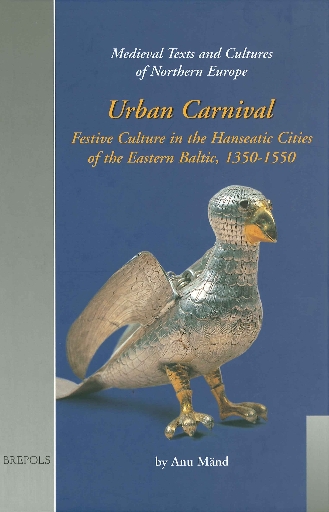
Urban Carnival
Festive Culture in the Hanseatic Cities of the Eastern Baltic, 1350-1550
show More to view fulltext, buy and share links for:Urban Carnival show Less to hide fulltext, buy and share links for: Urban CarnivalThis is a significant new study of the festival culture of northern Europe in the later Middle Ages: more specifically of the German-speaking communities of the great cities of the eastern Baltic littoral in what was then called Livonia. While subject to a degree of Scandinavian influence, the festival culture of Livonian cities such as Riga, Reval (Tallinn), and Dorpat (Tartu), all members of the Hanseatic League, substantially overlapped with that of other German-speaking areas, not least the Hanseatic cities of northern Germany.
The major part of the book is devoted to the main annual festivals of the merchants' guilds: Christmas, Carnival, the popinjay shoot, and the May Count celebrations. There follows an analysis of specific aspects of the festivals: spatial contexts, finances, food and drink, entertainments (dances, jousts, games), customs and rituals. There is also a concluding glance at changes in festival culture after the Reformation. The study combines close scrutiny of local customs (made possible by the almost miraculous survival of uniquely detailed documentation), contextualization within the wider comparative context of festival culture in late-medieval Europe, and an alterness to significant recent scholarship in both English and German.
-
-
-
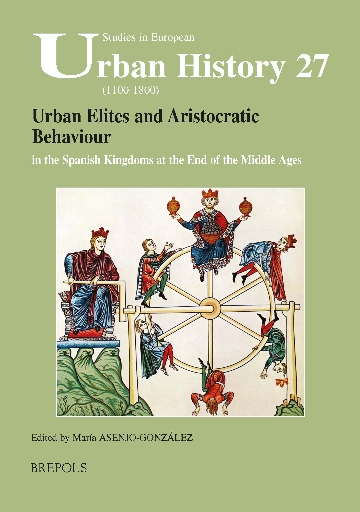
Urban Elites and Aristocratic Behaviour in the Spanish Kingdoms at the End of the Middle Ages
show More to view fulltext, buy and share links for:Urban Elites and Aristocratic Behaviour in the Spanish Kingdoms at the End of the Middle Ages show Less to hide fulltext, buy and share links for: Urban Elites and Aristocratic Behaviour in the Spanish Kingdoms at the End of the Middle AgesThis collection of studies presents the results of research to discover the scope of aristocratic ambitions of the urban elites in the Hispanic kingdoms in the Late Middle Ages. The goal is to gain a greater knowledge of the urban elites in order to discover the social and political motivations of the privileged, those who were able to profit from the mechanisms of social ascension. Aristocratisation is also related to the adoption of values which determined the behavior and mentality under the mark of the dominant feudal culture. The strategies, the resources to move up the social ladder and the ambition of the urban social elite and the occasions used to ensure successful promotion and the results obtained should be brought to light. The variety in the urban elites within the Iberian Peninsula offers comparative possibilities and supposes an important advancement in the knowledge of aspects related to social promotion.
María Asenjo-González, is professor of Medieval History at the Complutense University of Madrid. Her research interest covers Castilian cities from 1250 to 1520 in social, political, economic and cultural aspects.
-
-
-
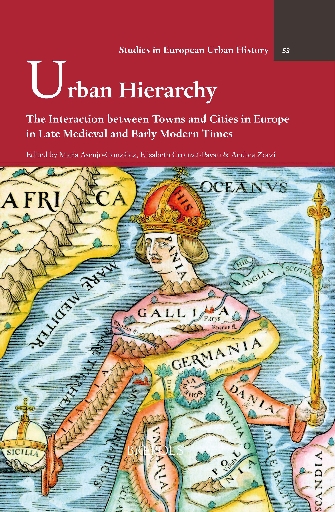
Urban Hierarchy
The Interaction between Towns and Cities in Europe in Late Medieval and Early Modern Times
show More to view fulltext, buy and share links for:Urban Hierarchy show Less to hide fulltext, buy and share links for: Urban HierarchyUrban hierarchy means a new study approach that focuses on the reciprocal concurrence of relationships between urban centers, their complementarity, opposition, support and ongoing collaboration. The goal is to go beyond the single analysis of a city and focus on the interaction between towns and cities and to distinguish their dynamics and the degree of specialization within a political framework. The final objective is to provide a comprehensive historical analysis as urban history requires, open to the advantages of interdisciplinarity and the contributions of the international researchers that will take part in the session. The processes of urban hierarchization are not only vital for observing the dynamics of cities, but also for studying in depth the response capabilities of the urban systems in the face of new challenges and stimuli. These aspects of the historical analysis of cities are still quite unexplored and, therefore, they will receive a great deal of attention in the book. The initial regional frameworks will not exclude small towns and rural centers since, even though they may look less potentially relevant, they might display greater specific development. Thanks to a renewed methodology and special attention to the empirical basis, it is possible to improve our knowledge of the urban systems of European regions at the end of the Middle Ages and the beginning of the Early Modern Era, shedding light on some aspects of the medieval past that will also influence other scientific areas of humanities.
-
-
-
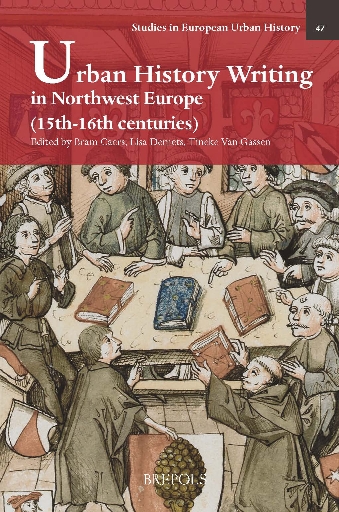
Urban History Writing in North-Western Europe (15th–16th centuries)
show More to view fulltext, buy and share links for:Urban History Writing in North-Western Europe (15th–16th centuries) show Less to hide fulltext, buy and share links for: Urban History Writing in North-Western Europe (15th–16th centuries)This volume aims at taking the first steps towards a revaluation of urban historiography in Northwest Europe, including rather than excluding texts that do not fit common definitions. It confronts examples from the Low Countries to well-studied cases abroad, in order to develop new approaches to urban historiography in general. In the authors' view, there are no fixed textual formats, social or political categories, or material forms that exclusively define ‘the urban chronicle’. Urban historiography in pre-modern Western Europe came in many guises, from the dry and modest historical notes in a guild register, to the elaborate heraldic images in a luxury manuscript made on commission for a patrician family, to the legally founded political narrative of a professional scribe in an official town chronicle. The contributions in this volume attest to the diversity of the ‘genre’ and look more closely at these texts from a broader, comparative perspective, unrestrained by typologies and genre definitions. It is mainly because of these hybrid guises, that many examples of urban historiography from the Low Countries for instance succeeded in going unnoticed for a considerable amount of time.
-
-
-
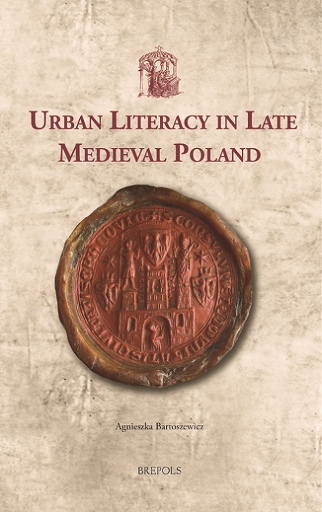
Urban Literacy in Late Medieval Poland
show More to view fulltext, buy and share links for:Urban Literacy in Late Medieval Poland show Less to hide fulltext, buy and share links for: Urban Literacy in Late Medieval PolandFrom the end of the thirteenth century onwards, European towns exhibited a significant increase in the use of writing as a tool for administrative and economic purposes, as well as for social communication. The medieval towns of Poland are no exception to this pattern.
This book surveys the development of the literacy of Polish burghers in the fourteenth and fifteenth centuries, revealing socio-economic and cultural processes that changed the life of Polish urban society. Polish urban literacy is examined according to the reception of Western European urban culture more generally. Town networks in medieval Poland are explained, and the literacy skills of the producers and users of the written word are discussed. Literacy skills differed greatly from one social group to another, it is shown, due to the variety of town dwellers (clerics and lay people, professionals of the written word, occasional users of writing, and illiterates). Other issues that are discussed include the cooperation between agents of lay and church literacy, the relationship between literacy and orality, and the difference between developing literacies in Latin and in the vernacular languages.
-
-
-
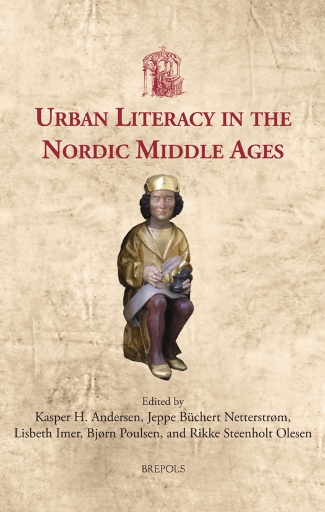
Urban Literacy in the Nordic Middle Ages
show More to view fulltext, buy and share links for:Urban Literacy in the Nordic Middle Ages show Less to hide fulltext, buy and share links for: Urban Literacy in the Nordic Middle AgesThis volume is about literacy in the medieval towns of Denmark, Norway, Sweden, and Finland, and aims to understand to what extent these medieval urban societies constituted a driving force in the development of literacy in Nordic societies generally.
As in other parts of Europe, two languages - Latin and the vernacular - were in use. However, the Nordic area is also characterised by its use of the runic alphabet, and thus two writing systems were also in use. Another characteristic of the North is its comparatively weak urbanization, especially in Finland, Sweden, and Norway.
Literacy and the uses of writing in medieval towns of the North is approached from various angles of research, including history, archaeology, philology, and runology. The contributions cover topics related to urban literacy that include both case studies and general surveys of the dissemination of writing, all from a Northern perspective. The thematic chapters all present new sources and approaches that offer a new dimension both to the study of medieval urban literacy and also to Scandinavian studies.
-
-
-
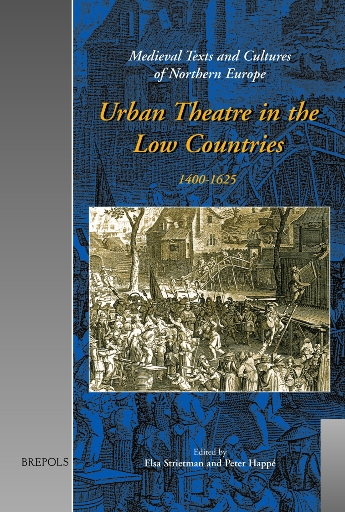
Urban Theatre in the Low Countries
1400-1625
show More to view fulltext, buy and share links for:Urban Theatre in the Low Countries show Less to hide fulltext, buy and share links for: Urban Theatre in the Low CountriesThis collection of essays by international scholars focuses on the vernacular urban culture of the Chambers of Rhetoric in the Low Countries of the fifteenth and sixteenth centuries. Reflecting social, religious, and economic realities at a time of fundamental change, the Rhetoricians’ plays also reveal a range of poetic and theatrical conventions that make them an important source of information both on practical stagecraft and on the role of theatre in the urban community, as seen in their involvement in civic processions or the organization of drama competitions. The volume sets the Rhetoricians’ drama in the cultural life of the provinces of the Low Countries during a period dominated by ruling foreign dynasties: the Burgundian dukes and then the Habsburg dynasty, most prominently the Emperor Charles V and his son King Philip II of Spain. It was a time of intense religious controversy which gave rise to debates both on and off stage. These debates, far from damaging Rhetorician culture, actually stimulated its activities and development to such an extent that Rhetoricians became representative voices for their time. The admixture of entertainment and education offered by the Chambers to their own members - and to a wider public - was one which, though originating in a medieval context, soon became linked with humanist and Renaissance thinking. This volume illustrates how, as a consequence, the Chambers of Rhetoric contributed to the development in the Low Countries of an increasingly articulate society.
-
-
-
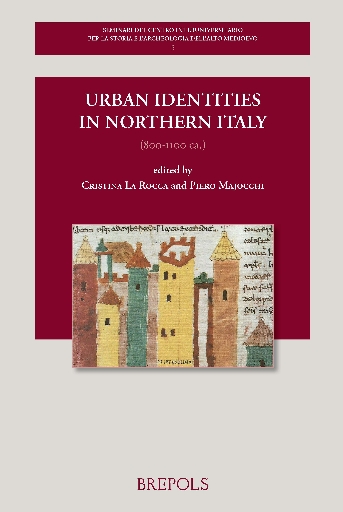
Urban identities in Northern Italy, 800-1100 ca.
show More to view fulltext, buy and share links for:Urban identities in Northern Italy, 800-1100 ca. show Less to hide fulltext, buy and share links for: Urban identities in Northern Italy, 800-1100 ca.The book aims to reflect on the characteristics of urban centers of the kingdom of Italy between the ninth and the eleventh centuries, filling a noticeable historiographical gap. The cities in Northern Italy in this period have not yet been analysed with a multidisciplinary approach, able to outline their specific and distinctive characteristics and to pose this ages in relation to the post-Roman past and also to the following 'Communal' phase. Urban identities are examined from different points of view: from a political perspective, in relation to the dialectic between center and periphery and to the border areas of the kingdom; from an institutional and territorial standing point, analyzing the structures of local power and public territorializations; according to social and military history approaches, highlighting the continuities and transformations in comparison with former and following centuries. The issue of urban identities is also archaeologically investigated in relation to urban development and to topographic transformations, and culturally explored, examining mutual exchanges between the cities of the kingdom. Another aspect rarely addressed by previous literature is ultimately to compare the results of this research on the Italic kingdom with studies on the Transalpine Carolingian and post-Carolingian empire and kingdoms, outlining common trends, but also specific peculiarities.
-
-
-
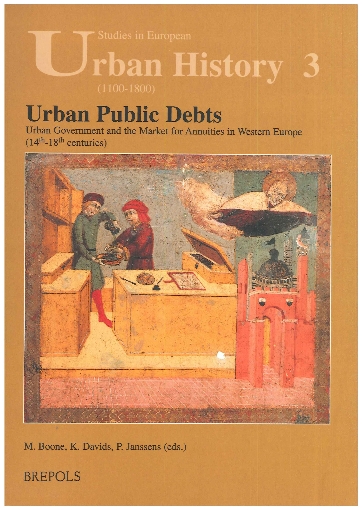
Urban public debts, urban government and the market for annuities in Western Europe (14th-18th centuries)
show More to view fulltext, buy and share links for:Urban public debts, urban government and the market for annuities in Western Europe (14th-18th centuries) show Less to hide fulltext, buy and share links for: Urban public debts, urban government and the market for annuities in Western Europe (14th-18th centuries)The essays in this volume offer a state-of-the-art analysis of a heretofore somewhat neglected part of financial history: the way in which urban governments in Western Europe during the Late Middle Ages and Early Modern Times handled the public debts their cities were confronted with. The technical aspects of the sale of annuities (renten, rentes) may have already been abundantly studied, but the links with social and political history still needed to be tackled. Who bought these annuities and thus participated in sharing the burden and profits which were likely to arise from them? What were their motives? How did the obvious links with urban elites work? And, perhaps most significantly, how did these occasional sales evolve into a structural way of linking financially important private persons with public finances, in the context both of cities and of growing states, since often the cities needed the money on a short-term basis in order to accomplish their own financial obligations toward ‘the state’. Participants in the colloquium where a large number of the essays were first presented represent in the first place the urban strongholds of Europe in the period under scrutiny: the Low Countries and Northern and Central Italy, but the Swiss cities, the cities of Aragon, London and papal Rome are also considered.
-
-
-
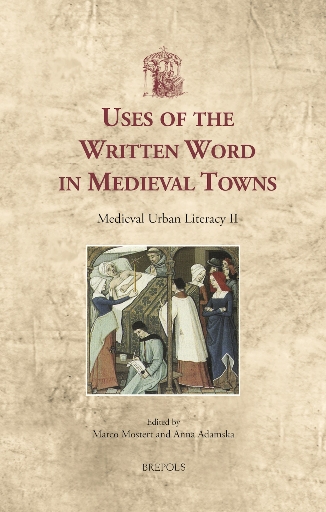
Uses of the Written Word in Medieval Towns
Medieval Urban Literacy II
show More to view fulltext, buy and share links for:Uses of the Written Word in Medieval Towns show Less to hide fulltext, buy and share links for: Uses of the Written Word in Medieval TownsIn medieval towns, examples of personal writing appear more prevalent than in non-urban spaces. Certain urban milieus participating in written culture, however, have been the focus of more scholarship than others. Considering the variety among town dwellers, we may assume that literacy skills differed from one social group to another. This raises several questions: Did attitudes towards the written word result from an experience of the urban educational system? On which levels, and in which registers, did different groups of people have access to writing? The need and the usefulness of written texts may not have been the same for communities and for individuals. In this volume we will concentrate on the town dwellers’ personal documents. These documents include practical uses of writing by individuals for their own professional and religious ends, including testaments and correspondence. Besides written records belonging to the domain of ‘pragmatic literacy’, other kinds of texts were also produced in town. Was there any connection between practical literacy, literary (and historical) creativity and book production?
-