


Brepols
Brepols is an international academic publisher of works in the humanities, with a particular focus in history, archaeology, history of the arts, language and literature, and critical editions of source works.321 - 340 of 3194 results
-
-
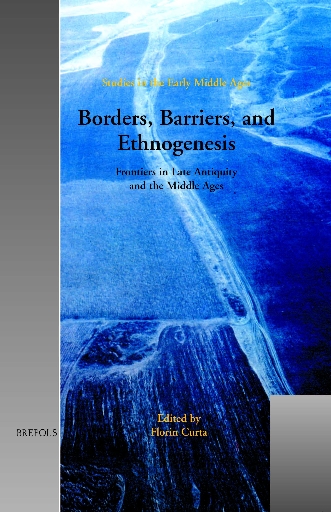
Borders, Barriers, and Ethnogenesis
Frontiers in Late Antiquity and the Middle Ages
show More to view fulltext, buy and share links for:Borders, Barriers, and Ethnogenesis show Less to hide fulltext, buy and share links for: Borders, Barriers, and EthnogenesisThis collection addresses an audience of early medievalists with an interest in material culture and its use in building ethnic boundaries. The traditional concept of frontier is a subject of current debate by historians and archaeologists alike, but sometimes without reference to each other. For instance, the social and cultural construction of (political) frontiers remains outside the current focus of post-processualist archaeology, despite the significance of borders for the representation of power, one of the most popular topics with archaeologists interested in symbols and ideology. Similarly, historians of the early Middle Ages have only recently developed an interest in the political manipulation of cultural difference across state frontiers. Perhaps the most interesting aspect of this new direction of research is the emphasis on political frontiers as crucial for the creation, rather than separation, of ethnic configurations. Recent work on the relation between monastic communities and political frontiers has shown the potential for a study of frontier symbolism. The idea of the present volume grew out of the realization that there was a great deal of new work being done in this direction which deserved a wider audience. This was true both of studies of late antique frontiers and of more recent research on medieval frontier societies. In addition, several authors address the issue of religious identities and their relations with ethnicity and state ideology. In that respect, the book is directed to a large audience, particularly because of its wide geographical range, from Iberia and the Balkans to Cilicia and Iran.
-
-
-
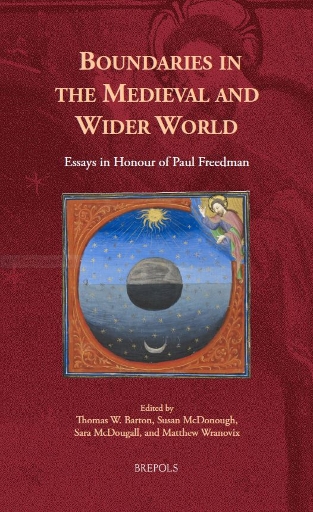
Boundaries in the Medieval and Wider World
Essays in Honour of Paul Freedman
show More to view fulltext, buy and share links for:Boundaries in the Medieval and Wider World show Less to hide fulltext, buy and share links for: Boundaries in the Medieval and Wider WorldThroughout his distinguished career at Vanderbilt and Yale, Paul H. Freedman has established a reputation for pushing against and crossing perceived boundaries within history and within the historical discipline. His numerous works have consistently ventured into uncharted waters: from studies uncovering the hidden workings of papal bureaucracy and elite understandings of subaltern peasants, to changing perceptions of exotic products and the world beyond Europe, to the role modern American restaurants have played in taking cuisine in exciting new directions.
The fifteen essays collected in this volume have been written by Paul Freedman’s former students and closest colleagues to both honour his extraordinary achievements and to explore some of their implications for medieval and post-medieval European society and historical study. Together, these studies assess and explore a range of different boundaries, both tangible and theoretical: boundaries relating to law, religion, peasants, historiography, and food, medicine, and the exotic. While drawing important conclusions about their subjects, the collected essays identify historical quandaries and possibilities to guide future research and study.
-
-
-
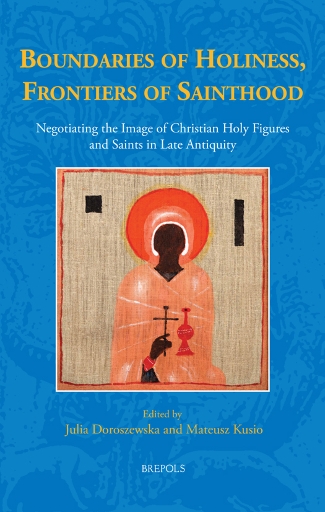
Boundaries of Holiness, Frontiers of Sainthood
Negotiating the Image of Christian Holy Figures and Saints in Late Antiquity
show More to view fulltext, buy and share links for:Boundaries of Holiness, Frontiers of Sainthood show Less to hide fulltext, buy and share links for: Boundaries of Holiness, Frontiers of SainthoodMany excellent studies have been published on the phenomenon of holy (wo)men and saints. As a rule, however, they focus on successful candidates for holiness who played the roles of charismatic leaders and patrons of social and religious life.
This volume offers a new perspective on ancient and medieval holiness — its main focus is holiness as defined by its peripheries, and not by its conceptual centre. The contributors explore stories of men and women whose way to sainthood did not follow typical ‘models’, but who engaged with it from its outskirts. Several essays examine the strategies employed by hagiographical authors to tailor the images of candidates for holiness whose lives provided less obvious examples of moral and/or religious ideals. These include attempts to make saints out of emperors, heretics, and other unlikely or obscure figures. Other case studies focus on concerns with false holiness, or unusual cases of holiness being ascribed prior to a saint’s death. Another concept explored in the volume is space. The spatial boundaries of holiness are discussed in relation to the transmission of relics, to the opposition between urban and rural spaces, holy sites, and even imagined space.
Holiness and sainthood have been crucial concepts for Christianity from its inception. By exploring their ‘marginal’ and ‘peripheral’ aspects, the essays in this book offer vital new perspectives on the religious world of Late Antiquity.
-
