Brepols
Brepols is an international academic publisher of works in the humanities, with a particular focus in history, archaeology, history of the arts, language and literature, and critical editions of source works.51 - 100 of 3194 results
-
-
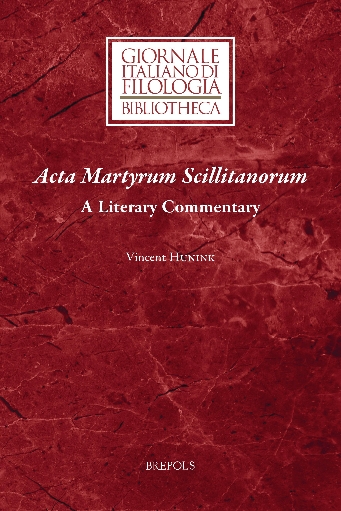
Acta Martyrum Scillitanorum
A Literary Commentary
show More to view fulltext, buy and share links for:Acta Martyrum Scillitanorum show Less to hide fulltext, buy and share links for: Acta Martyrum ScillitanorumThe Acta Martyrum Scillitanorum is the first martyr text in Latin, and one of the earliest documents in Christian Latin. This short text presents a group of young Christians facing trial in Carthage before a Roman judge on July 17th, 180 A.D. This is the first full commentary on this important text in English. It studies the fiery altercation between the defendants and the Roman proconsul, highlighting the rhetorical and narrative aspects of the original Latin (and the Greek translation from late antiquity). Throughout the book, much attention is paid to the communication, or miscommunication, between antagonists. For this dramatic and narrative approach to the text, the Acta Martyrum Scillitanorum may be taken as it is: a coherent body of text, describing an altercation that either took place exactly like that, or was deemed by the author to be probable and natural, that is, a plausible and convincing dialogue between contrasting characters in a Roman judicial context.
-
-
-
Actes de l'apôtre André
show More to view fulltext, buy and share links for:Actes de l'apôtre André show Less to hide fulltext, buy and share links for: Actes de l'apôtre AndréLes Actes d'André, du IIe siècle, comptent parmi les Actes apocryphes d'apôtres les plus anciens. Leur lieu d'origine reste incertain. Jean-Marc Prieur traduit et commente dans ce volume tous les documents qui, en grec, en latin ou en copte, permettent encore d'accéder au texte primitif ou peuvent servir à sa reconstruction. Nous pouvons suivre les pérégrinations, les miracles et la prédication de l'apôtre André de l'Asie mineure jusqu'en Grèce où, à Patras, il convertit la femme du proconsul; par conséquent, celle-ci se refuse à son mari. Il en résulte le martyre de l'apôtre: arrêté, André est crucifié (on connaît la "croix de saint André" ...), tandis que son persécuteur, abandonné par sa femme, finit par se suicider.
Comme dans les autres Actes apocryphes, l'apôtre apparaît ici d'après le modèle de l'"homme divin", que le christianisme a repris des religions hellénistiques (et que l'apôtre Paul avait refusé...): c'est le prédicateur qui dans sa parole et ses prodiges révèle la puissance du dieu qu'il annonce. Les discours missionnaires d'André occupent une place importante et véhiculent une lecture particulière du plan mis en oeuvre par Dieu en faveur du salut des humains, et de la manière dont ceux-ci y adhèrent; cette lecture peut nous paraître singulière, mais elle témoigne d'une théologie qui a dû caractériser un milieu ecclésial donné.
Jean-Marc Prieur, professeur de théologie pratique à la Faculté de théologie protestante de Montpellier, est docteur en théologie de l'Université de Genève. Spécialiste des origines chrétiennes et de la littérature apocryphe en particulier, il est l'auteur d'une édition critique des Actes d'André accompagnée d'un large commentaire, qui a paru dans le Corpus Christianorum, Series Apocryphorum.
-
-
-
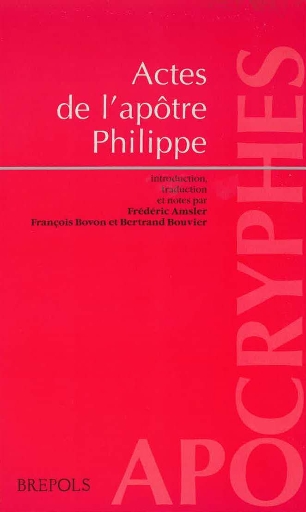
Actes de l'apôtre Philippe
show More to view fulltext, buy and share links for:Actes de l'apôtre Philippe show Less to hide fulltext, buy and share links for: Actes de l'apôtre PhilippeConsacré à un apôtre méconnu et négligés par les spécialistes, les Actes de Philippe avaient peu d'atouts pour devenir un succès de librairie. Mais la découverte récente d'un manuscrit dans un monastère du Mont Athos en Grèce bouleverse notre connaissance et notre appréciation de cet apocryphe. Ce témoin encore inédit, dont on trouvera ici la traduction intégrale, présente un texte nettement plus long que celui connu jusqu'alors.
En décrivant l'activité missionnaire haute en couleurs de l'apôtre, les Actes de Philippe polémiquent tour à tour contre les adversaires de la pureté, contre les chrétiens qui ne comprennent rien à la grâce de la contemplation du Christ et contre les païens qui se vautrent dans l'abomination du culte de la vipère à Hiérapolis en Phrygie. En dépit de leur caractère romanesque, les Actes de Philippe paraissent issus de cercles hétérodoxes d'Asie mineure des IVe et Ve siècles, épris d'ascèse et de mystique qui nourriront la spiritualité des moines de l'Orient chrétien.
François Bovon est professeur du Nouveau Testament et des origines chrétiennes et des origines chrétiennes à l'Université de Harvard et professeur honoraire de l'Université de Genève. Il est l'un des fondateurs de l'AELAC, dont il a exercé la présidence de 1981 à 1987.
Bertrand Bouvier est professeur de langue et littérature grecques modernes à l'Université de Genève.
Frédéric Amsler est maître d'enseignement et de recherche à la Faculté de théologie de l'Université de Genève et bénéficie d'un subside de recherche du Fonds national suisse de la recherche scientifique.
-
-
-
Acts of John
show More to view fulltext, buy and share links for:Acts of John show Less to hide fulltext, buy and share links for: Acts of JohnThe Acts of John is a second- or third-century work of unknown authorship combining elements of the apocryphal acts and pious romance genres. It was labeled heretical by both Eusebius and Augustine, and condemned at the Second Council of Nicea (787). Scholars debate the influence of Gnosticism and docetism upon the work. This narrative presents the lifelong ministry of the apostle John preaching and performing miracles in Ephesus, Smyrna, and elsewhere. At different turns in the exciting account, John resurrects the dead, reunites families, heals the sick, confronts pagan opponents, commands bedbugs, and divulges mysteries about his travels with Jesus. The present edition offers the celebrated Greek text of Junod and Kaestli (Corpus Christianorum, Series Apocryphorum, 1-2, 1983) alongside a new English translation on the facing pages, complete with hundreds of cross-references and other helpful notes for the reader.
-
-
-
Ad notitiam ignoti
L’ 'Organon' dans la 'translatio studiorum' à l’époque d’Albert le Grand
show More to view fulltext, buy and share links for:Ad notitiam ignoti show Less to hide fulltext, buy and share links for: Ad notitiam ignotiSituée au milieu du XIIIe siècle, la paraphrase d’Albert le Grand à l’Isagogè de Porphyre constitue un point de départ pour le présent volume. Son premier livre, un traité indépendant intitulé « Préalable à la logique », fournit un cadre de lecture qui s’étend bien au-delà des sources grécolatines habituelles à l’époque, et contribue à la fixation d’un questionnaire nouveau, engageant une véritable philosophie de la logique. Il porte sur l’essence de la logique, ses fonctions comme logique de la découverte (inventio) et logique de la justification (iudicium), son statut - art, science, instrument -, sa valeur de méthode enseignant comment « passer de l’inconnu au connu » (ad notitiam ignoti) à toute partie de la philosophie, de manière immanente, comme logica utens, ou réflexive, comme logica docens. L’étude des diverses traditions de l’Organon en domaines grec, syriaque, arabe, et latin montre que la mise en ordre des matériaux aristotéliciens fixée par l’édition d’Andronicos de Rhodes (Ier s. av. J-C.) a sans cesse été renégociée, tandis que le corpus logique a connu divers formats. Ce livre collectif explore les interactions qui s’opèrent entre les différentes définitions de la logique et les métamorphoses successives du corpus aristotélicien, dans un cadre ancien et médiéval où l’histoire de la logique est indissociable d’une histoire de l’Organon.
-
-
-
Adgar, Le Gracial
Miracles de la Vierge
show More to view fulltext, buy and share links for:Adgar, Le Gracial show Less to hide fulltext, buy and share links for: Adgar, Le GracialLe Gracial d’Adgar est le premier recueil de miracles de Notre-Dame en langue vernaculaire, en l’occurrence en anglo-normand. Il a été rédigé par un moine de Londres vers 1165. Il comporte 49 miracles internationaux ou locaux dont le plus important est le célèbre miracle de Théophile prototype du récit du pacte avec le Diable, appelé à un grand succès ultérieur. Pour la première fois le texte est intégralement traduit en français moderne et en anglais pour le miracle de Théophile. Une courte introduction présente ces récits qui se veulent historiques et qui cherchent à rivaliser avec la littérature profane courtoise en plein essor. Un fort contenu didactique se marie avec un merveilleux chrétien édifiant. Ce chef d’œuvre littéraire est à rapprocher des chefs d’œuvre de l’art gothique consacrés souvent à exalter l’amour de Notre-Dame.
-
-
-
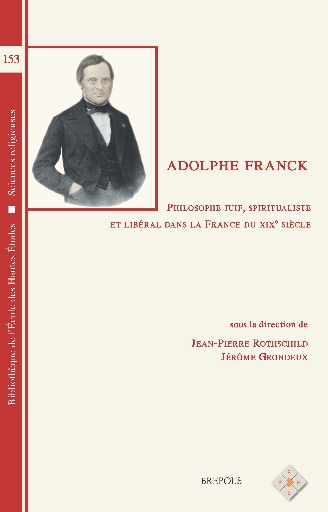
Adolphe Franck, philosophe juif, spiritualiste et libéral dans la France du XIXe siècle
Actes du colloque tenu à l'Institut de France le 31 mai 2010
show More to view fulltext, buy and share links for:Adolphe Franck, philosophe juif, spiritualiste et libéral dans la France du XIXe siècle show Less to hide fulltext, buy and share links for: Adolphe Franck, philosophe juif, spiritualiste et libéral dans la France du XIXe siècleAdolphe Franck (1810-1893) est une figure importante et jusqu’ici négligée de la philosophie spiritualiste, du libéralisme politique et du judaïsme français. Né dans un village de Lorraine, il fut le premier israélite agrégé de philosophie, entra à l’Académie des sciences morales et politiques à trente-trois ans - par la volonté de Victor Cousin mais non sans titres personnels - enseigna le droit au Collège de France, fut membre du Conseil supérieur de l’Instruction publique, collabora au Journal des débats, appartint aux dirigeants du Consistoire israélite comme aux familiers de l’impératrice Eugénie. Dans une oeuvre bien diverse, il fut durablement à l’origine (non sans méprises) de l’étude scientifique de la Kabbale ; il devint le maître d’oeuvre du grand Dictionnaire des sciences philosophiques, monument du zèle des savants, des illusions généreuses de la pensée libérale et des présupposés philosophiques et méthodologiques de son temps ; il se singularisa par un intérêt pour la question spiritualiste poussé jusqu’à son terme logique, la prise au sérieux des écrits et des théories ésotériques du passé et du présent.
Une introduction et onze contributions, procédant d’un colloque tenu à l’Institut de France en 2010, considèrent Adolphe Franck sous quatre aspects : en tant que juif, en tant que philosophe, dans son rapport au religieux et dans son rapport au politique.
Jean-Pierre Rothschild, directeur de recherches au CNRS et directeur d’études à l’École pratique des hautes études, est spécialiste d’histoire des textes et des doctrines du moyen âge.
Jérôme Grondeux, maître de conférences à l’université Paris IV et à l’Institut d’études politiques de Paris, est spécialiste d’histoire de la pensée politique et religieuse dans la France du XIXe siècle.
-
-
-
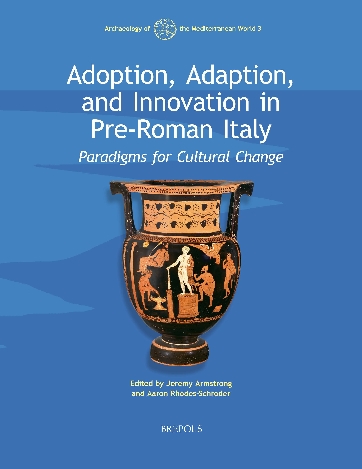
Adoption, Adaption, and Innovation in Pre-Roman Italy
Paradigms for Cultural Change
show More to view fulltext, buy and share links for:Adoption, Adaption, and Innovation in Pre-Roman Italy show Less to hide fulltext, buy and share links for: Adoption, Adaption, and Innovation in Pre-Roman ItalyThe ancient Mediterranean basin was once thought to be populated by large, monolithic, cultural-political entities. In this conception, ‘the Greeks’, ‘the Romans’, and other stable and homogenous cultures interacted and vied for supremacy like early modern states or empires. Today, however, thanks largely to an ever-increasing archaeological record, critical and sensitive approaches to the literary evidence, and the impact and application of new theoretical approaches, the ancient Mediterranean region is instead argued to be full of dynamic microcultures organized in a fl uid set of overlapping networks. While this atomization of culture has resulted in more interesting and accurate micro-histories, it has also challenged how we understand cultural interaction and change.
This volume draws on this new understanding of cultural identity and contact to address the themes of adoption, adaption, and innovation in Pre-Roman Italy from the 9th-3rd centuries BCE. The contributors to this volume build upon recent paradigm shifts in research that challenge traditional Hellenocentric models and work to establish a new set of frameworks for approaching the tangled question of how ‘indigenous’ and ’foreign’ features relate to one another in the material record. Using focused case-studies, ranging from the role played by mobile populations in transferring ideas and technologies to the different ways in which ‘foreign’ artistic elements were used by Italian peoples, the volume explores what the - now commonly accepted - connectedness of a wider Mediterranean world meant for the people of Italy in practical terms, and offers new models for how concepts and ideas were transmitted, reinterpreted, repurposed, and re-appropriated in early Italy to fit within their local context.
-
-
-
Adorare caelestia, gubernare terrena. Atti del Colloquio Internazionale in onore di Paolo Lucentini (Napoli, 6-7 Novembre 2007), Arfé, Caiazzo, Sannino
show More to view fulltext, buy and share links for:Adorare caelestia, gubernare terrena. Atti del Colloquio Internazionale in onore di Paolo Lucentini (Napoli, 6-7 Novembre 2007), Arfé, Caiazzo, Sannino show Less to hide fulltext, buy and share links for: Adorare caelestia, gubernare terrena. Atti del Colloquio Internazionale in onore di Paolo Lucentini (Napoli, 6-7 Novembre 2007), Arfé, Caiazzo, SanninoAdorare caelestia, gubernare terrena indica una pericope dell’Asclepius che declina la natura essenziale e corporea dell’uomo in relazione alla duplice funzione del suo essere: «ammirare e adorare le realtà celesti, custodire e governare le realtà terrene» (Ascl. 8). Sotto questa epigrafe sono raccolti i contributi di venticinque studiosi che hanno inteso rendere omaggio a Paolo Lucentini (1937-2011), medievista di rilievo internazionale, fondatore e direttore di Hermes Latinus, il programma di ricerca per lo studio e per l’edizione dei testi ermetici, pubblicato nella collana del Corpus Christianorum. Continuatio Mediaeualis (Brepols, Turnhout). I saggi contenuti nel volume coprono un ampio arco cronologico, dalla tarda antichità all’epoca moderna, e sostanzialmente afferiscono ai tre filoni tematici perseguiti da Lucentini nella sua carriera scientifica: platonismo, ermetismo e eresia. Di filosofie dissidenti si sono occupate Alessandra Beccarisi e Antonella Straface. Allo studio della tradizione ermetica si sono dedicati Charles Burnett, Stefano Caroti, Chiara Crisciani, Peter Dronke, Michele Fatica, Françoise Hudry, Ilaria Parri e Pinella Travaglia; alle filosofie e alle tradizioni scientifiche medievali: Paul Kunitzsch, Fabrizio Lelli, Alfonso Maierù, Vittoria Perrone Compagni, Gregorio Piaia, Antonella Sannino, Valeria Sorge; agli influssi del platonismo: Pasquale Arfé, Carmela Baffioni, Irene Caiazzo, Luigi Catalani, Giulio d’Onofrio, Mark Delp, Michela Pereira e Pasquale Porro.
-
-
-
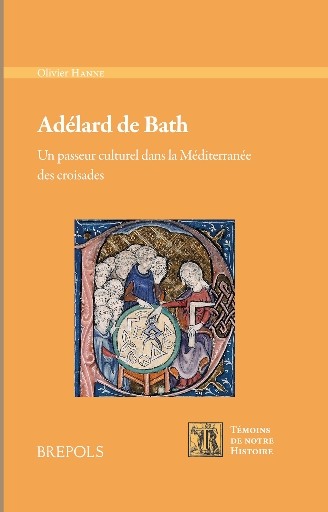
Adélard de Bath
Un passeur culturel dans la Méditerranée des croisades
show More to view fulltext, buy and share links for:Adélard de Bath show Less to hide fulltext, buy and share links for: Adélard de BathNé dans le dernier quart du XIe siècle, Adélard de Bath est de ces lettrés anglais formés aux arts libéraux en France. Dans ses premiers textes de philosophie naturelle et de cosmologie, il remet en cause le legs de ses maîtres, puis décide de poursuivre sa formation en Italie du Sud. Grâce aux réseaux des rois normands d’Angleterre, il part soudainement pour la Syrie peu après la première croisade et s’initie plusieurs années sur place à la langue arabe. À son retour, il traduit des sources venues du monde musulman d’une grande complexité, à la fois en astronomie et en mathématique, il en domine les enjeux scientifiques, et va jusqu’à se passionner pour l’astrologie et la magie. Il devient ainsi l’un des initiateurs du grand mouvement de traduction des textes scientifiques depuis l’arabe vers le latin, se faisant le défenseur d’une méthode de critique comparée entre univers culturels, tandis que d’autres choisissent l’affrontement armé.
-
-
-
Adémar de Chabannes, Chronique
show More to view fulltext, buy and share links for:Adémar de Chabannes, Chronique show Less to hide fulltext, buy and share links for: Adémar de Chabannes, ChroniqueAdémar de Chabannes, un des historiens les plus connus du XIe siècle, a laissé à Saint-Martial de Limoges, avant de partir pour Jérusalem où il est mort en 1034, un remarquable dossier de textes divers. Ils permettent de reconstituer sa formation, sa carrière monastique à Saint-Cybard d'Angoulême, et ses ncroyables efforts pour promouvoir saint Martial au rang des apôtres qui l'ont conduit à produire une extraordinaire collection de faux. La Chronique, composée entre 1025 et 1028, n'est-elle qu'une œuvre de faussaire? Ses deux premiers livres y rassemblent des ouvrages historiques antérieurs, des origines troyennes des Francs à Charlemagne, "compilation" sans doute mais dont le grand mérite est de nous faire pénétrer dans le scriptorium d'un historien de l'an Mil et de nous permettre d'appréhender l'état des connaissances historiques à cette époque. La partie "originale" de la Chronique (Livre III, 16-70) s'appuie sur des annales locales, sur la mémoire cléricale et monastique et surtout sur l'inlassable curiosité d'un moine à l'écoute des bruits qui lui viennent non seulement de son pays - le Limousin, l'Angoumois, le duché d'Aquitaine - au temps de Guillaume le Grand, des conciles de paix et des guerres châtelaines, mais encore de toute la Chrétienté et des terres d'Islam. Aux yeux d'un historien critique, Adémar commet bien trop d'erreurs et d'inventions. Il n'en reste pas moins qu'il a su parfaitement nous transmettre les violences, les craintes et les espoirs de son temps.
-
-
-
Aelius Aristide et la rhétorique de l'hymne en prose
show More to view fulltext, buy and share links for:Aelius Aristide et la rhétorique de l'hymne en prose show Less to hide fulltext, buy and share links for: Aelius Aristide et la rhétorique de l'hymne en proseThis book focuses on Aelius Aristides’ prose hymns (or. XXXVII-XLVI). These texts constitute the richest corpus of rhetorical eulogies of gods which we possess. The special status that these discourses had in the orator’s life and career are being analyzed for the very first time, along with the poetics they put to work, the ways in which they are deeply anchored in Greco-Roman society and the religiosity they display. Presented with a translation, each text is preceded by a note that relates the circumstances of its composition and pronunciation, comments on its structure, general spirit and main features. These notes also help clarify the historical, institutional and civic context of the oratory performance. Based on the 1898 Keil’s Berlin edition, the Greek text has been revised and freed from irrelevant conjectures.
Johann Goeken, specialist of Greek language and literature, is associate professor at the University of Strasbourg.
-
-
-
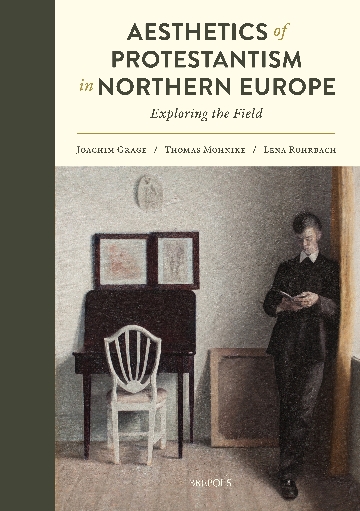
Aesthetics of Protestantism in Northern Europe
Exploring the field
show More to view fulltext, buy and share links for:Aesthetics of Protestantism in Northern Europe show Less to hide fulltext, buy and share links for: Aesthetics of Protestantism in Northern EuropeThis book explores the aesthetic consequences of Protestantism in Scandinavia. Fourteen case studies from the sixteenth to the twenty-first century discuss five abstract and trans-historical principles that characterize Scandinavian aesthetics and that arguably derive from Protestant thinking and practice, namely: simplicity, logocentrism, tension between pronounced individualism and collectivism, relatedness to the world, and ethics. The contributions address the peculiar aesthetics of Scandinavian print, literature, architecture, film, and opera and reflect on the influence of Protestant traditions on the establishment of genres and writing practices. This volume is the first in a new series that will focus on the aesthetics of Protestantism in Scandinavia, both theoretically and through exemplary individual analyses.
-
-
-
Aevum inter utrumque
Mélanges offerts à Gabriel Sanders, professeur émérite à l'Université de Gand
-
-
-
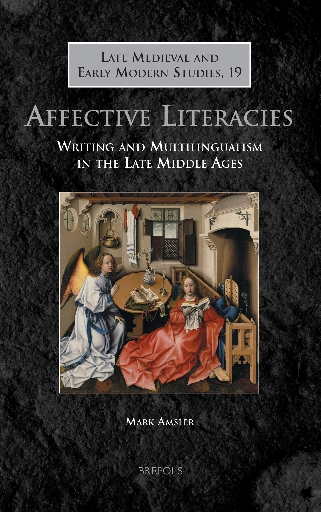
Affective Literacies
Writing and Multilingualism in the Late Middle Ages
show More to view fulltext, buy and share links for:Affective Literacies show Less to hide fulltext, buy and share links for: Affective LiteraciesNew Literacy Studies, close reading, and historical sociolinguistics inform Amsler's analyses of late medieval writing and textual cultures. Amsler argues that medieval reading and writing make sense not as individual expressions with discrete texts but as multilingual, sociocultural, and intertextual practices that 'make people up' and that sustain or challenge dominant ideologies and reading formations. Rather than a single Literacy, we find socially situated literacies within manuscript matrices. Bringing new historical dimensions to literacy studies, Amsler explores the intertextualities, affective relations, and social contests in these multilingual formations. Individual chapters examine literacies as cultural practice in schooling and in elite and popular texts by Chaucer, Christine de Pizan, Dante, Margery Kempe, devotional writers, Erasmus, and the Jewish convert Hermann von Sheda, along with grammatical writing, mythography, charms, drama, and educational texts. This volume illustrates the diversity of late medieval multilingual writings,textual performances, and embodied readings.
-
-
-
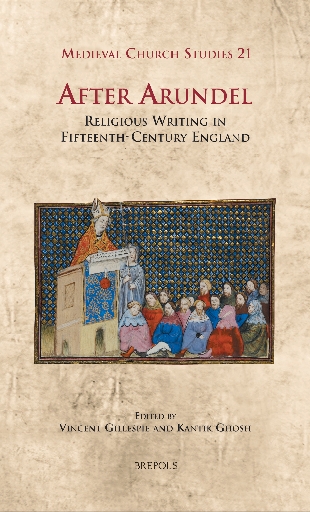
After Arundel
Religious Writing in Fifteenth-Century England
show More to view fulltext, buy and share links for:After Arundel show Less to hide fulltext, buy and share links for: After ArundelEngland’s religious life in the fifteenth century is worthy of sustained, nuanced, and meticulous analysis. This book offers a portrait of late medieval English religious theory and praxis that complicates any attempt to present the period as either quivering in the post-traumatic stress of Lollardy, or basking in the autumn sunshine of an uncritical and self-satisfied hierarchy’s failure to engage with undoubted European and domestic crises in ecclesiology, pastoral theology, anti-clericalism, and lay spiritual emancipation. After Arundel means not just because of or despite Archbishop Arundel (and the repressive legislation associated with him), for it also asks what models and taxonomies will be needed to move beyond Arundel as a fixed star in the firmament of (especially literary) scholarship in the period. It aims to supply the next phase of scholarly exploration of this still often dark continent of religious attitudes and writing with new tools and technical vocabularies, as well as to suggest new directions of travel.
-
-
-
After Ovid
Aspects of the Reception of Ovid in Literature and Iconography
show More to view fulltext, buy and share links for:After Ovid show Less to hide fulltext, buy and share links for: After OvidThe 2000th anniversary of Ovid’s death, in 2017-2018, led to an upsurge in conferences and publications dedicated to the author’s work and afterlife. One of these is the present volume, resulting from the conference Dopo Ovidio. Aspetti della ricezione ovidiana fra letteratura e iconografia, which was held on 7-8 May 2019 at the Department of Human Sciences (DSU) of the University of L’Aquila, and which looked at various aspects of Ovid’s fortune, from a diachronic and interdisciplinary perspective. The contributions cover a period of about fourteen centuries, from late antiquity until the end of the eighteenth century, and range from late Latin to medieval literature, from humanistic production to modern English and Italian literature, and from linguistics to the figurative arts. All these studies contribute to a collective appraisal of the multifarious impact of Ovid’s works, and especially of the Metamorphoses, the latter’s treatment of myth having been a starting point for integrations, developments, (re)interpretations and representations, in isolation or included in an iconographic program.
-
-
-
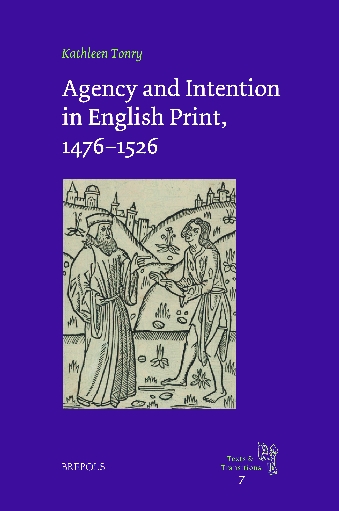
Agency and Intention in English Print, 1476–1526
show More to view fulltext, buy and share links for:Agency and Intention in English Print, 1476–1526 show Less to hide fulltext, buy and share links for: Agency and Intention in English Print, 1476–1526This volume offers a new intellectual framework for early print that bridges divisions between the study of print and the study of literature, between manuscripts and printed books, and between pre- and post-1500 textual cultures. Through an extensive focus on medieval texts and ideas, it is demonstrated here that in the half-century before the Reformation, English print was part of a highly energetic tradition of late medieval textual production. Central to this tradition was the expression of ethical agency, or moral ‘entente’, through the creation of texts and books. This insight reveals how the first English printed books expressed the deliberate moral and cultural commitments of individual printers.
By following early print across a range of genres (history writing, religious instruction, hagiography, law books, and translation), this study also sheds light on the contexts within which the agencies of early printers mattered, including mercantile politics, civic and statute law, and theological economics.
The volume, which treats the pre-Reformation press as a whole, is based in particular on the bibliographical evidence provided in editions by William Caxton, Wynkyn de Worde, Richard Pynson, John Rastell, and Thomas Berthelet, as well as on close readings of texts and contextual materials. The questions raised here, however, are about more than old books and early printers: ultimately, this study argues that the history of the material book is an intellectual history of agency and textual production.
-
-
-
Agents in Liturgy, Charity and Communication
The Tasks of Female Deacons in The Apostolic Constitutions
show More to view fulltext, buy and share links for:Agents in Liturgy, Charity and Communication show Less to hide fulltext, buy and share links for: Agents in Liturgy, Charity and CommunicationWhat did women deacons do in the early church? This study is a contribution to resolving this topical question through evaluating the tasks of female deacons in the Apostolic Constitutions. This fourth-century document is the largest among the so-called ancient church orders. Pylvänäinen divides the tasks of female deacons into three categories: liturgical, charitable and communicative. She analyses the individual concepts and verses within their contexts, paying special attention to the context of the document as a whole within the sphere of Jewish Christian interaction and from the viewpoint of the sources the compiler has used in remoulding the document.
-
-
-

Agir en commun durant le haut Moyen Âge
show More to view fulltext, buy and share links for:Agir en commun durant le haut Moyen Âge show Less to hide fulltext, buy and share links for: Agir en commun durant le haut Moyen ÂgeAu-delà des communautés stables et durables qu'on peut saisir autour des lieux ou dans un cadre institutionne, les petites communautés locales du haut Moyen Âge n’avaient habituellement pas de statut formalisé : en l’absence de cadres institutionnels, nous ne pouvons souvent saisir leurs caractères qu’à travers les récits de leurs actions, ou à travers d’autres traces, laissées par leurs actes dans la documentation, écrite ou archéologique. Mais encore faut-il se poser la question de savoir comment agissaient les communautés au haut Moyen Âge, dans quels contextes et dans quels buts ? L'action commune, surtout si elle est récurrente, fortifie-t-telle ou forme-t-elle la communauté ? Le présent ouvrage vise à décrypter les différentes manières "d'agir en commun" dans les sociétés du haut Moyen Âge, en posant les questions de l'initiative de l'action, des différents modes d'action et de leur influence sur la structure de la communauté, des types et des formes d'action communautaire.
-
-
-
Agire da donna
Modelli e pratiche di rappresentazione (secoli VI-X). Atti del convegno (Padova, 18-19 febbraio 2005)
show More to view fulltext, buy and share links for:Agire da donna show Less to hide fulltext, buy and share links for: Agire da donnaL’evidenza scritta e materiale sulle donne dell’alto medioevo presenta una importante caratteristica di fondo: la descrizione delle azioni femminili non è normalmente il prodotto della percezione delle donne, né appare organizzata e prodotta per fornire una rappresentazione diretta dell’operato, delle capacità e delle caratteristiche femminili in termini reali. Piuttosto, sia sotto il profilo materiale, sia sotto il profilo scritto, le donne sono utilizzate - dal loro gruppo parentale, dagli avversari oppure dai sostenitori dei loro congiunti - come paradigmi simbolicamente efficaci per far apprezzare le possibilità economiche e di prestigio dei gruppi famigliari, i meriti e gli errori dei loro uomini, il clima politico di un regno. Si rafforza quindi, nella società altomedievale, il tema retorico dell’ “influenza femminile” per spiegare, in modo diretto e persuasivo, la consonanza o la dissonanza con il clima politico complessivo. Come tali, dunque, i modelli di rappresentazione femminile, di volta in volta utilizzati, non sono semplici ripetizioni. Essi variano nel corso del tempo, precisamente in rapporto con la trasformazione dei valori condivisi dalle società altomedievali, e con le reali possibilità femminili che sono progressivamente accettate oppure disapprovate, misconosciute oppure valorizzate. Le immagini della regina buona che converte il proprio marito al cristianesimo e della regina perfida che lo tradisce, così come i ricchi corredi funerari e le iscrizioni femminili rappresentano lo specchio attraverso cui la società altomedievale valutava sé stessa, le proprie tensioni e le proprie certezze.
-
-
-
Agrarian Change and Imperfect Property
Emphyteusis in Europe (16th to 19th centuries)
show More to view fulltext, buy and share links for:Agrarian Change and Imperfect Property show Less to hide fulltext, buy and share links for: Agrarian Change and Imperfect PropertyThis book is situated at the crossroads of two recurring themes in rural history: agrarian contracts and property rights. Emphyteusis is at the heart of agrarian history in that it brings together agricultural history and the nature of social relations in traditional societies. Despite this, many such contracts have been blithely ignored, or unjustly dismissed, either because they are hard to identify, given the many variants that existed, or because, as a form of divided property, they are generally perceived in a negative light.
Nevertheless, emphyteusis is to be found everywhere, even in regions which deny its existence, and it is far from being obsolete. Rather, it is flourishing, prospering and long-lived, particularly in urban areas. Emphyteusis has a long history and has played a central role, sometimes misleading, but always crucial, in the process of agricultural development. It has held sway as a substitute when access to property has been impossible, and as a source of conflicts has often revealed the nature of power relations between property owners on the one hand, whether seigneurial or not, and cultivators, short-term and long-term tenants on the other. The different chapters in this volume illuminate these multiple facets and forms of this type of contract and imperfect property rights. Though the focus is on Mediterranean societies, the questions raised have relevance far beyond this specific area.
-
-
-
Agrarian Technology in the Medieval Landscape
Agrartechnik in mittelalterlichen Landschaften. Technologie agraire dans le paysage médiéval. 9th - 15th September 2013 Smolenice, Slovakia
show More to view fulltext, buy and share links for:Agrarian Technology in the Medieval Landscape show Less to hide fulltext, buy and share links for: Agrarian Technology in the Medieval LandscapeRuralia X includes 27 papers dealing with agrarian technologies in the medieval landscape as seen in different European countries. The subject areas include cultivation, livestock husbandry, gardening, viticulture and woodland management – interpreting the concept of agrarian production in a broad sense – studied mainly on the basis of archaeology, but also using iconography, documentary evidence and archaeo-environmental approaches.
Ruralia X, marks an important step on the way towards interpreting innovation, as well as understanding the varieties of agrarian activity from a Europe-wide perspective.
Authors from 14 countries provide a broad overview of the current issues, complemented by extensive bibliographies. Ruralia X represents one of the current fields of European archaeological research and offers a solid foundation for further comparative studies.
-
-
-
Agricultural Landscapes of Al-Andalus, and the Aftermath of the Feudal Conquest
show More to view fulltext, buy and share links for:Agricultural Landscapes of Al-Andalus, and the Aftermath of the Feudal Conquest show Less to hide fulltext, buy and share links for: Agricultural Landscapes of Al-Andalus, and the Aftermath of the Feudal ConquestThis volume presents recent archaeological research on the agriculture and society of al-Andalus during the Middle Ages, especially from the perspective of ‘hydraulic archaeology’ - an avenue of research developed by Spanish researchers which focuses on the analysis of irrigation systems created by Islamic colonists from the eighth century onwards. More recently, this research perspective has incorporated the analysis of other agricultural systems, such as dryland agriculture and pasturelands. All of these agricultural regimes are complementary in peasant-led subsistence agricultural systems. From a methodological perspective, this archaeological approach is highly innovative, and uses a wide range of techniques (aerial photography, cartographical analysis, field survey, archival research, and archaeological excavation) in order to outline the size and boundaries of cultivation and grazing areas, to define specific plots of land and the related road networks, and to identify other associated facilities, such as watermills.
In connection with these topics, several issues are discussed: the earmarking of rural or urban farming areas for irrigation, draining, or dryland agriculture; the process of construction and the subsequent evolution of these farming areas; the transformations undergone by these areas after the feudal conquest; and, finally, the identification of pasturelands and the analysis of the evidence concerning their management.
-
-
-
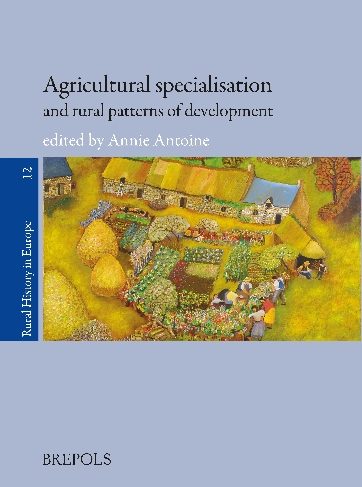
Agricultural specialisation and rural patterns of development
show More to view fulltext, buy and share links for:Agricultural specialisation and rural patterns of development show Less to hide fulltext, buy and share links for: Agricultural specialisation and rural patterns of developmentIn agricultural history, specialisation is usually considered as progress, turning peasants into market-orientated farmers and allowing them to escape from self-sufficiency. Recent developments in the field of productivist agriculture and the recent rise of alternative agriculture cast doubt on this conventional concept of agricultural specialisation. Several questions arise: Did specialisation necessarily mean that farms concentrated on a single product? Was it always a great step forward? Did it occur in the same form in earlier centuries as in contemporary economies?
The chapters of this book draw attention to several factors relevant to processes of specialisation, such as markets, transport, and the natural environment. The contributions deal with regions in 10 countries of Europe, from Sweden to Spain and from England to Bulgaria, and with periods between the seventeenth and the twentieth centuries. They suggest several conclusions. Specialisation can take place in various forms, ranging from focussing on a single major cash crop to giving preference to a combination of products. This is true both at the level of an individual farm as at a regional level. Specialisation did not always improve the farmers’ standard of living. And it was neither a linear nor an irreversible process. This can be observed in periods of war, but also in recent developments in post-communist countries.
Annie Antoine, professor of modern history at Rennes 2 University (Brittany, France), specialises in the history of rural societies and farming practices. Her latest book is a history of the rural landscape in Western France.
-
-
-
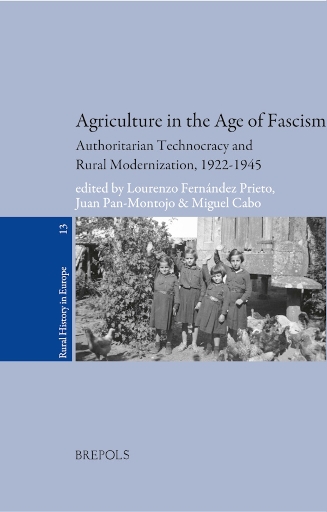
Agriculture in the Age of Fascism
Authoritarian Technocracy and rural modernization, 1922-1945
show More to view fulltext, buy and share links for:Agriculture in the Age of Fascism show Less to hide fulltext, buy and share links for: Agriculture in the Age of FascismThe agrarian policies of fascism have never before been studied from a comparative perspective. This volume offers an up-to-date overview, as well as new insights drawn from eight case-studies on Italy, Portugal, Hungary, Germany, Austria, Spain, Japan and Vichy France. The consensus that emerges from them is that the agricultural and rural policies of fascist regimes tended towards modernization and that many of them resembled initiatives pursued in the post-war decades and the Green Revolution, When viewed in this perspective, the fascist era appears less as an aberration and more as an integral part in the global process of agrarian “modernization”, a process whose merits are now being called into question.
-
-
-

Agrosystems and Labour Relations in European Rural Societies
(Middle Ages-Twentieth Century)
show More to view fulltext, buy and share links for:Agrosystems and Labour Relations in European Rural Societies show Less to hide fulltext, buy and share links for: Agrosystems and Labour Relations in European Rural SocietiesIt goes without saying that agriculture is a form of colonisation of nature by society. In the course of history the articulation of natural and societal features gave rise to a wide variety of agrosystems within the boundaries of Europe which were embedded in supra-regional political and economic contexts at least from the High Middle Ages onwards. By following an integrative approach, this volume defines agrosystems as production systems based on the ecological and socioeconomic relations involved in the reproduction of rural societies at multiple levels. The authors explore the articulation of natural and societal factors through the prism of labour relations. The structural and practical organization of labour is seen as the crucial link between rural production and reproduction. Accordingly, the contributions focus on the rural household as the basic unit of production and reproduction in different temporal and spatial contexts. Therefore, the question arises if the changes in ecosystems and social systems have so fundamentally altered European agriculture up to now that peasant family farming will disappear (if it is no longer sustained by state intervention).
-
-
-
Agôn. La compétition, Ve-XIIe siècle
show More to view fulltext, buy and share links for:Agôn. La compétition, Ve-XIIe siècle show Less to hide fulltext, buy and share links for: Agôn. La compétition, Ve-XIIe siècleAlors que le monde antique vit au rythme de la compétition individuelle et collective, celle-ci paraît perdre beaucoup de son importance dans l’Occident du haut Moyen Âge. Entre les dernières manifestations des jeux du cirque dans l’Occident latin au VIe siècle et la naissance des tournois chevaleresques à la fi n du XIe siècle, la dimension compétitive s’y efface, sauf exception comme l’Irlande, alors qu’elle garde une importance notable dans le monde byzantin et dans l’Islam. Les concours étaient depuis longtemps en butte aux critiques des penseurs chrétiens, en ce qu’ils ressortissent de la catégorie honnie des spectacles. À partir du milieu du Ve siècle, le coût économique de telles entreprises devint diffi cilement supportable, à un moment où la dépense somptuaire prenait d’autres cibles et où les systèmes de valeurs des royaumes barbares se détournaient des jeux au profi t de l’émulation entre pairs et de l’entraînement. Cependant, la compétition reste largement présente dans d’autres domaines. Les jeux de société intègrent cette dimension. La tradition de la joute oratoire se poursuit, d’Ennode aux tensos et aux jeux partis en passant par les rivalités poétiques de la cour carolingienne. Le vocabulaire de l’agôn est réinvesti par les auteurs chrétiens, sur la base de l’héritage patristique, spécialement à l’époque carolingienne ; avec des hauts et des bas, il s’adapte au martyre et plus généralement au combat de la vie chrétienne. La recherche des femmes, la quête de la gloire aux frontières peuvent aussi être lues au filtre de la compétition. Ces divers aspects sont traités dans le présent volume, qui inaugure une série dédiée à « la compétition dans les sociétés du haut Moyen Âge ».
-
-
-
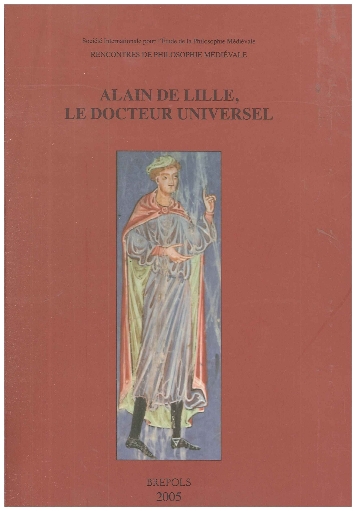
Alain de Lille, le docteur universel
Philosophie, théologie et littérature au XIIe siècle
show More to view fulltext, buy and share links for:Alain de Lille, le docteur universel show Less to hide fulltext, buy and share links for: Alain de Lille, le docteur universelNé aux alentours de 1120, surnommé le «Docteur universel», Alain de Lille doit ce titre à ses talents de philosophe, de théologien, de prédicateur et de poète, ainsi qu’à l’étendue de ses connaissances. Celui dont l’épitaphe dit qu’«il a su tout ce que l’homme pouvait savoir» est à lui seul un résumé des intérêts multiples de son temps. Sa pensée est le point de rencontre des grands courants philosophico-théologiques du XIIe siècle; au fait des dernières avancées techniques dans les arts libéraux, il demeure en même temps un parfait témoin de l’humanisme littéraire. A l’occasion du huitième centenaire de sa mort, il était nécessaire de réexplorer la synthèse qu’a opérée Alain des savoirs de cette époque charnière, et de rappeler les pistes et les problématiques qu’il a ouvertes, peu avant le grand essor universitaire du XIIIe siècle.
-
-
-
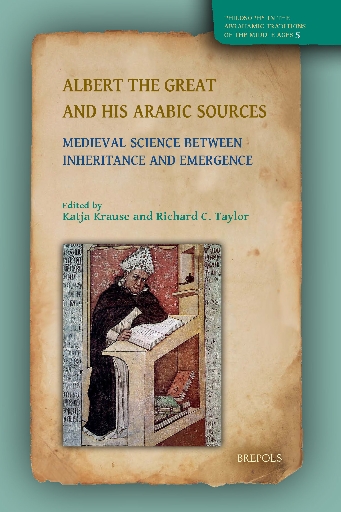
Albert the Great and his Arabic Sources
Medieval Science between Inheritance and Emergence
show More to view fulltext, buy and share links for:Albert the Great and his Arabic Sources show Less to hide fulltext, buy and share links for: Albert the Great and his Arabic SourcesAlbert the Great created a new programme of science in the thirteenth-century Latin world by extensively commenting upon Aristotle’s philosophical corpus and supplementing that corpus with works of his own wherever he saw gaps. What were the preconditions for the emergence of such a comprehensively new scientific agenda and its centuries of success at the University of Paris and Dominican study houses across Europe? One answer is found in the rich Arabic sources that Albert had at his disposal in Latin translation, including Alfarabi, Avicenna, and Averroes, as well as Isaac Israeli, Maimonides, and more.
Never before in the history of Albert scholarship has there been a collected volume that examines this inheritance from the Arabic-speaking lands in its role as a major condition for the emergence of Albert’s scientific programme. In the present volume, twelve leading scholars in the field offer studies that range from Albert’s early theological works to his late philosophical writings. The volume focuses on the teachings that Albert actively inherited from the Arabic sources, the ways in which he creatively implemented those teachings into his scientific corpus, and the effects that these implementations had on his own programmatic take on scientia.
-
-
-
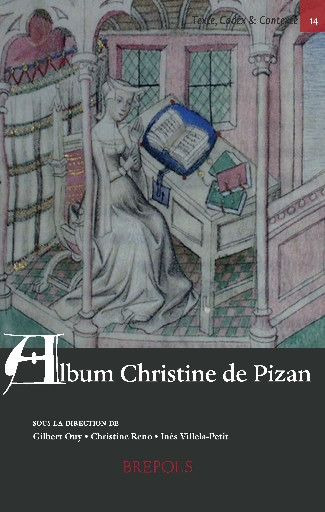
Album Christine de Pizan
show More to view fulltext, buy and share links for:Album Christine de Pizan show Less to hide fulltext, buy and share links for: Album Christine de PizanDe tous les écrivains du Moyen Âge, Christine de Pizan est celui dont le plus grand nombre de manuscrits originaux sont conservés, certains autographes, les autres réalisés sous sa direction. Ces cinquante-deux manuscrits forment donc un ensemble inestimable et représentent un objet d’étude d’une exceptionnelle richesse d’enseignements, tant pour les historiens du livre et les codicologues que pour les historiens de l’art ou de la littérature.
-
-
-
Alchemy, Chemistry and Pharmacy
Proceedings of the XXth International Congress of History of Science (Liège, 20-26 July 1997) Vol. XVIII
show More to view fulltext, buy and share links for:Alchemy, Chemistry and Pharmacy show Less to hide fulltext, buy and share links for: Alchemy, Chemistry and PharmacyThis volume consists of two parts. The first deals with alchemy and prelavoisian chemistry with papers on Democritus, Christine of Pizan, van Helmont, de Clave, Matte La Faveur, Marie Meurdrac and Galvani. The second part includes papers on chemistry in the 20th century in its political, academic and industrial context.
-
-
-

Alchemy, Medicine, and Commercial Book Production
A Codicological and Linguistic Study of the Voigts-Sloane Manuscript Group
show More to view fulltext, buy and share links for:Alchemy, Medicine, and Commercial Book Production show Less to hide fulltext, buy and share links for: Alchemy, Medicine, and Commercial Book ProductionThe Voigts-Sloane group of Middle English manuscripts, first described by Professor Emerita Linda Voigts in 1990, has attracted much curiosity and scholarly attention. The manuscripts exhibit a degree of uniformity that may originate from systematic copying of medical and alchemical manuscripts (possibly for speculative sale) in London or its metropolitan area in 1450s and 1460s — only decades before William Caxton established his printing press in Westminster. Some of the manuscripts share a strikingly similar mise-en-page, others present a standard anthology of medical treatises in a standard order.
This book provides a thorough re-examination of these manuscripts through a combination of codicological and linguistic methodologies. It examines different procedures which may have facilitated the production of the manuscripts, including speculative production and copying of separate booklets. The study also addresses the dialect of the manuscripts, and code-switching between Latin and Middle English. By showing that the manuscripts sharing a similar layout are also written in the same dialect, the book thus provides important new information on the dialects of medical writing, and shows that dialect is a further defining feature for this manuscript group. The book also highlights late medieval concerns over alchemy and medicine, explaining the apparent contradiction of the inclusion of alchemy (which was illegal) in commercially copied manuscripts.
This study thus provides both a comprehensive new description of these manuscripts, and sheds new light on the commercial and cultural contexts of book production in late medieval England.
-
-
-
Aldhelm of Malmesbury and the Ending of Late Antiquity
show More to view fulltext, buy and share links for:Aldhelm of Malmesbury and the Ending of Late Antiquity show Less to hide fulltext, buy and share links for: Aldhelm of Malmesbury and the Ending of Late AntiquityThis book is a study of Aldhelm (c.639-709) and his complementary roles as a spiritual theorist in a nascent Christian society and as an ecclesiastical administrator. In both, he is shown as innovative and purposeful. His own theology responded to an experiential knowledge of the realities of power in his society. Born into West Saxon royal kin, he spoke directly to the concerns and needs of his aristocratic society, transforming the patristic norms of Christian behavior into the heroic concepts intuitively meaningful to his Germanic society. For Aldhelm, the dedicated virgin was as heroic as a warrior serving his lord.
Despite the extensive work on the long-neglected Aldhelm by this last generation of Anglo-Saxonists, which has succeeded in restoring him as a major subject of Anglo-Saxon studies, there has not been a book-length treatment of Aldhelm’s career as a whole in over a century. Thus, the present book seeks to move beyond the somewhat parochial concerns of Anglo-Saxon history to bring Aldhelm into the mainstream of Late Antique studies, a figure as fully at home with the cultural trappings of Rome as he is with Christian patristic literature. Aldhelm was unique, among his fellow Anglo-Saxon notables of his period, in being a high ecclesiastic also engaged in innovative scholarship, though, in this, he stood very much in the mainstream of the great figures of Christian Late Antiquity, East and West, uniformly bishops and scholarly theologians. In many ways, Aldhelm was the last significant figure of Late Antiquity in the West.
George Dempsey is a Research Associate at the University of California at Davis. He has studied Aldhelm for some four decades, publishing many specialized articles. This book represents his summation of that effort to understand Aldhelm and his innovative adaptation of the theological certitudes of Christianity to the concerns and values of his society and, thus, Aldhelm’s place in Western intellectual history.
-
-
-
Alexander of Aphrodisias in the Middle Ages and the Renaissance
show More to view fulltext, buy and share links for:Alexander of Aphrodisias in the Middle Ages and the Renaissance show Less to hide fulltext, buy and share links for: Alexander of Aphrodisias in the Middle Ages and the RenaissanceThe greatest ancient interpreter of Aristotle, Alexander of Aphrodisias (fl. 200 AD) exerted a profound and enduring influence upon philosophy from Boethius until the modern era. Alexander’s interpretations laid the foundation for multiple philosophical views which were promoted as quintessentially Aristotelian by both Islamic and Latin thinkers throughout the Middle Ages. In the Renaissance, the University of Padua, a leading center of philosophical education and thought, established a scholarly tradition named “Alexandrinism” after him.
Paolo Accattino (1950-2015), a distinguished scholar of Alexander, made many noteworthy advancements to the field. With the aim of honoring Accattino’s memory, lifelong colleagues and associates P. Donini and L. Bertelli discuss his contributions. They are joined by a cohort of scholars (A. Bertolacci, M. Di Giovanni, J. Biard, A. Corbini, E. Rubino, L. Silvano, B. Bartocci, P.D. Omodeo, F. Iurlaro) who explore various key elements of Alexander’s legacy from Ibn Sīnā to Hugo de Groot. The volume presents new understandings concerning the reception of Alexander, offers new lines of inquiry, and opens potential avenues of research regarding his medieval and Renaissance afterlife.
-
-
-
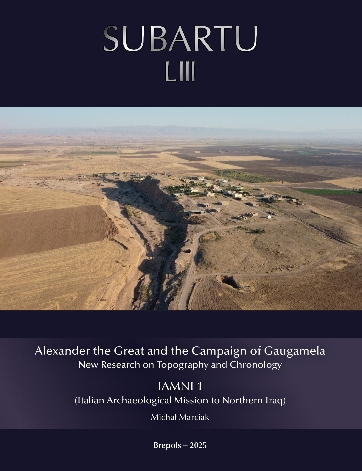
Alexander the Great and the Campaign of Gaugamela
New Research on Topography and Chronology IAMNI 1 (Italian Archaeological Mission to Northern Iraq)
show More to view fulltext, buy and share links for:Alexander the Great and the Campaign of Gaugamela show Less to hide fulltext, buy and share links for: Alexander the Great and the Campaign of GaugamelaThe Battle of Gaugamela, in which Alexander the Great’s army faced the Persian army of King Darius III in 331 bce, remains a famous date in history, the last battle that led to Alexander’s conquest of the Achaemenid Empire. However, the topography and chronology of the campaign have, up to now, remained little studied. Taking these two elements as its starting point, this volume draws both on the latest archaeological research in the region and on recent advances in science (in particular GIS) to offer a completely new reconstruction of the Gaugamela campaign, arguing for a much shorter campaign than has hitherto been understood. By turning the spotlight for the first time onto the geographical and topographical context of the campaign, the author here also provides a new understanding of both the scale of Alexander’s military achievement and the long-term effects of the military reforms introduced by his father, Philip II.
-
-
-
Alfonsine Astronomy
The Written Record
show More to view fulltext, buy and share links for:Alfonsine Astronomy show Less to hide fulltext, buy and share links for: Alfonsine AstronomyCompiled between 1262 and 1272 in Toledo under the patronage of Alfonso X, the Castilian Alfonsine Tables were recast in Paris in the 1320s, resulting in what we now call the Parisian Alfonsine Tables. These materials circulated widely and fostered astronomical activities throughout Europe. This resulted in a significant number of new works, of which there are a few hundred, extant in more than 600 manuscript codices and dozens of printed editions. These manuscripts and imprints, broadly contemporary to the works they witness, comprise the written record of Alfonsine astronomy and provide the focus of this volume.
A first series of essays examines individual manuscripts containing Alfonsine works. The authors seek to reconstruct, from the manuscript evidence, the cultural, astronomical and mathematical worlds in which the manuscripts were initially copied, compiled, used and collected. A second series of essays turns from the particular codex to the individual work or author. These contributions ask how particular works have been transmitted in surviving manuscript witnesses and how broader manuscript cultures shaped the diffusion, over two centuries, of Alfonsine astronomy across Europe. A final essay reflects on the challenges and opportunities offered by digital humanities approaches in such collective studies of a large manuscript corpus.
-
-
-
Alfred Loisy. La crise de la foi dans le temps présent
(Essais d'histoire et de philosophie religieuses)
show More to view fulltext, buy and share links for:Alfred Loisy. La crise de la foi dans le temps présent show Less to hide fulltext, buy and share links for: Alfred Loisy. La crise de la foi dans le temps présentLa crise de la foi dans le temps présent : étrange manuscrit, sitôt écrit, sitôt mis de côté par son auteur, Alfred Loisy, qui l’utilise pourtant rapidement afi n d'y puiser la matière des chapitres centraux de L’Evangile et l’Eglise (1902), par quoi commence véritablement la crise moderniste. Manuscrit qu’il envisage, après l’orage, tout à la fois d’éditer et de détruire et qu’il lègue avec ses papiers à la Bibliothèque nationale de France… et à la postérité.
Un grand siècle plus tard, le temps est enfin venu de le lire dans son intégralité. Document impressionnant par sa dimension (il occupe presque les deux tiers de cet ouvrage) et par l’ampleur de ses vues (il embrasse une histoire croyante qu’il fait commencer avec l’Ancien Testament et qu’il amène jusqu’à l’actualité la plus brûlante), cet essai fut écrit en deux temps : une esquisse, au second semestre 1897, puis un texte définitif, rédigé sur une année pleine à partir de juillet 1898. Il porte un double titre, La crise de la foi dans le temps présent. Essais d’histoire et de philosophie religieuses, parce qu’il vise un double but, selon Loisy, commentateur de lui-même : faire « l’apologie du christianisme catholique » et proposer une « réforme du régime intellectuel dans le catholicisme romain ». Alfred Loisy, né en 1857, a 40 ans en 1897. Ecarté de l’Institut catholique en 1893 pour avoir voulu faire sérieusement le dangereux métier d’exégète, il exerce à Neuilly la fonction d’aumônier d’un pensionnat pour jeunes filles, où il prend à coeur sa modeste tâche tout en continuant ses publications savantes et en nouant des amitiés fécondes. Le premier exégète catholique de grand renom, depuis Richard Simon, écrit ici les réflexions d’un prêtre qui tente de déployer l’histoire du Salut en des termes qu’il veut à la fois exacts (rigueur exégétique) et actuels (relecture des dogmes).
L’entreprise collective qui a permis cette édition a vu le jour à l’initiative de François Laplanche, qui présente le texte de Loisy et en assure l’édition, et qui rappelle le contexte intellectuel et surtout exégétique des décennies précédentes. Deux autres spécialistes du Modernisme se sont mis, avec lui, au service de ce grand texte. Rosanna Ciappa scrute le temps d’une écriture d’immédiat réemploi et met en évidence la radicalisation des perspectives exégétiques de Loisy. Christoph Theobald restitue sa visée apologétique dans un xixe siècle fécond, de l’école de Tübingen à Newman, et dans un xxe siècle ponctué par le Concile de Vatican II. Claude Langlois esquisse, dans son avant-propos, les enjeux de la fin d’un siècle dont Loisy voulait aussi, à sa manière, être le contemporain.
François Laplanche✝, ancien directeur de recherches au CNRS, grand spécialiste de l’histoire de la Bible.
Rosanna Ciappa, professeur d’histoire du christianisme et de l’Eglise à l’Université Frédéric II de Naples.
Christoph Theobald, professeur de théologie fondamentale et dogmatique aux Facultés jésuites de Paris (Centre Sèvres), rédacteur en chef des Recherches de science religieuse.
Claude Langlois, directeur d’Etudes émérite à l’EPHE, ancien président de la Section des Sciences religieuses.
-
-
-
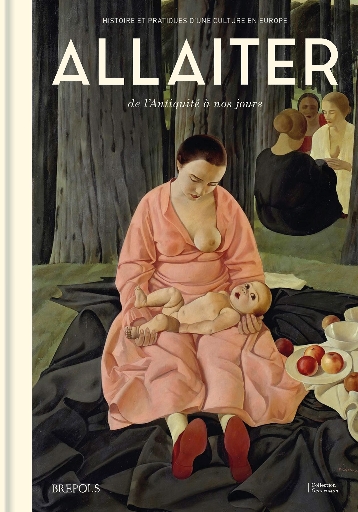
Allaiter de l’Antiquité à nos jours
Histoire et pratiques d’une culture en Europe
show More to view fulltext, buy and share links for:Allaiter de l’Antiquité à nos jours show Less to hide fulltext, buy and share links for: Allaiter de l’Antiquité à nos joursAujourd’hui, l’allaitement est au centre des préoccupations des organismes internationaux, en ce qui concerne les soins destinés aux nouveau-nés et la santé des femmes. Ces questions occupent une place importante dans les débats autour de la maternité et du travail féminin. Mais les pratiques et les représentations de l’allaitement sont traversées par des tensions politiques, économiques et religieuses. Pouvons-nous éclairer les controverses par une mise en perspective historique large de leurs enjeux socio-culturels ? Faire l’histoire de l’allaitement en Europe est une manière de contribuer à une approche globale de la question de la reproduction. Emboîtant le pas aux recherches récentes sur la maternité, les quatre sections de cet ouvrage proposent les résultats d’une vaste enquête collective pluridisciplinaire et ouvrent des pistes pour une réflexion critique sur les enjeux actuels de la parentalité et de la reproduction. Les chapitres de ce volume associent les investigations historiques, anthropologiques et archéologiques à l’histoire de l’art et aux études littéraires. L’ouvrage présente également une riche documentation visuelle et des focus conçus comme outils pour la recherche, la divulgation scientifique et la didactique.
-
-
-
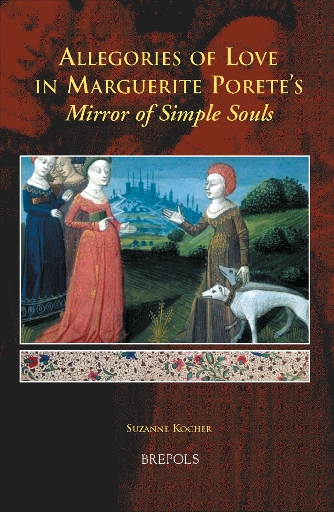
Allegories of Love in Marguerite Porete's 'Mirror of Simple Souls'
show More to view fulltext, buy and share links for:Allegories of Love in Marguerite Porete's 'Mirror of Simple Souls' show Less to hide fulltext, buy and share links for: Allegories of Love in Marguerite Porete's 'Mirror of Simple Souls'Marguerite Porete’s Mirror of Simple Souls, dating probably to the 1290s, is the oldest known mystical work written in French, and the only surviving medieval text by a woman writer executed as a heretic. This volume analyses its use of interconnected allegories that describe the soul’s approach toward God in terms of human social relationships. These include romantic love between lovers in same-sex and mixed-sex pairs, relations among people of differing social rank such as servants and nobles, and rich and poor engaged in economic transactions such as taxation and gift-giving. Gender, rank, and exchange serve as remarkably versatile allegories for spiritual states. Porete uses comparison as an organizing principle that underlies her supple and creative use of allegory, personification, parables, metaphors, similes, proverbs, and glosses. The theologian invites her audience to cross boundaries among literal and figurative registers of meaning, in ways that are emblematic of the soul’s ultimate leap toward the divine. Porete’s social allegories, the author contends, can provide us with valuable evidence of a medieval thinker’s conceptions of God, gender, language, and human capacity for change.
-