Brepols
Brepols is an international academic publisher of works in the humanities, with a particular focus in history, archaeology, history of the arts, language and literature, and critical editions of source works.2501 - 2550 of 3194 results
-
-
Shaping Authority
How Did a Person Become an Authority in Antiquity, the Middle Ages and the Renaissance?
show More to view fulltext, buy and share links for:Shaping Authority show Less to hide fulltext, buy and share links for: Shaping AuthorityThe cultural and religious history from Antiquity through the Renaissance may be read through the lens of the rise and demise of auctoritates. Throughout this long period of about two millennia, many historical persons have been considered as exceptionally authoritative. Obviously, this authority derived from their personal achievements. But one does not become an authority on one’s own. In many cases, the way an authority’s achievements were received and disseminated by their contemporaries and later generations, was the determining factor in the construction of their authority. This volume focuses on the latter aspect: what are the mechanisms and strategies by which participants in intellectual life at large have shaped the authority of historical persons? On what basis, why and how were some persons singled out above their peers as exceptional auctoritates and by which processes did this continue (or discontinue) over time? What imposed geographical or other limits on the development and expansion of a person’s auctoritas? Which circumstances led to the disintegration of the authority of persons previously considered to be authoritative? The case-studies in this volume reflect the dazzling variety of trajectories, concerns, actors and factors that contributed over a time span of two millennia to the fashioning of the postmortem and lasting authority of historical persons.
-
-
-
Shaping Stability
The Normation and Formation of Religious Life in the Middle Ages
show More to view fulltext, buy and share links for:Shaping Stability show Less to hide fulltext, buy and share links for: Shaping StabilityThis volume examines the efforts of medieval religious communities and orders to bring stability to the dynamic complexity of organized religious life. By focusing on legislative structures and normative documents (rules, customaries, constitutions), the authors address not only such matters as the meaning of these texts and the motivations behind them, but also the evolving conditions of their production and use, the internal politics of institutional change, and the reality of “precept not practice.” These papers thus present spiritual principles and social practices in their historical and functional contexts, confront normative programs with formative processes, and explain distinctive modes and models of life within the broader landscape of medieval organized religion..
-
-
-
Shepherds of the Lord
Priests and Episcopal Statutes in the Carolingian Period
show More to view fulltext, buy and share links for:Shepherds of the Lord show Less to hide fulltext, buy and share links for: Shepherds of the LordThis book is the first study of the rural priesthood, its significance, and the statutes written for them in the time of the Carolingians. It seeks to trace and explain the rise and emergence in the Carolingian period of both local priests and episcopal statutes that aimed at steering their behaviour. It was in the context of Carolingian ideals of reform, formulated in court-centred circles from the late eighth century onwards, that local priests increasingly came to be seen as those that held the key to turning the local Frankish population into ideal Christians by their word and living example. First of all, however, these educators needed to be educated themselves, hence the emergence of the Episcopal statutes, a new tool to direct the local diocesan clergy into becoming the ideal 'Shepherds of the Lord' that they needed to be. Smooth as this process of empire-wide reform theoretically was, however, obstacles lurked, both from a top-down (episcopal) and a grass-roots (local) perspective on the status, role, and function of priests. Nevertheless, the ninth century saw the emergence of the priesthood and the development of their role as an important group that connected bishops with the lay inhabitants of their dioceses and, from a higher-up perspective, those who opened up the vast Carolingian country-side to the implementation of the ideal society in the minds of contemporary reformers.
-
-
-
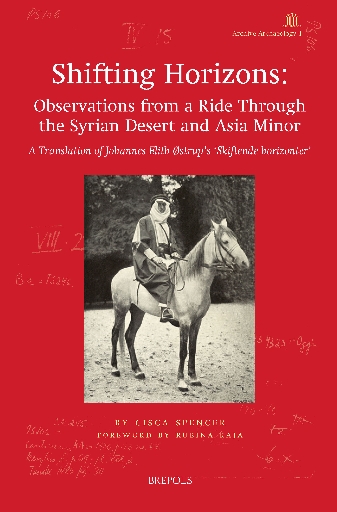
Shifting Horizons
Observations from a Ride through the Syrian Desert and Asia Minor
show More to view fulltext, buy and share links for:Shifting Horizons show Less to hide fulltext, buy and share links for: Shifting HorizonsJohannes Elith Østrup (1867-1938), son of a Danish farmer, philologist of Turkish and Semitic languages, and later Vice Chancellor of Copenhagen University, spent 1891-1893 travelling by horse around Syria, Lebanon, and Anatolia. Unlike most European travellers, his language skills allowed him to chat with locals in cafés, stay in people’s homes, and travel with the Bedouin. A curious young man, Østrup travelled with eyes, ears, and mind open to the unknown, and recorded his journey in this lively travelogue, Skiftende horizonter (1894). His writing offers a vivid account of his time in the region, and dwells with equal interest on both the region’s broader political, ethnic, and religious struggles, and the day-to-day concerns of those who lived there.
Now, for the first time, this text is available to English-speaking readers thanks to this translation by Cisca Spencer, Østrup’s great granddaughter and a former Australian diplomat. With a foreword by Rubina Raja, Professor of Classical Archaeology at Aarhus University, together with Østrup’s own photographs and new maps, this volume captures all the charm and enthusiasm of the original in bringing this nineteenth-century travelogue to a modern readership.
-
-
-
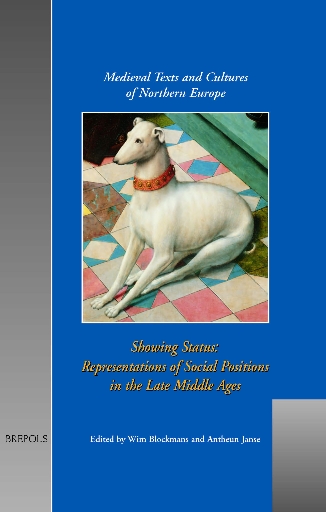
Showing Status
Representation of Social Positions in the Late Middle Ages
show More to view fulltext, buy and share links for:Showing Status show Less to hide fulltext, buy and share links for: Showing StatusHow did people in the late medieval period perceive and express social status? This volume brings together multi-disciplinary perspectives on representations of social difference in the Low Countries during a time of dynamic social change. The premise of the volume is that medieval social change may only be fully understood if hierarchies of wealth and power are examined alongside literary and artistic sources. Medieval texts and material culture expressed social standing and gave meaning to the experience of social change. The aim of the study is to recognise and translate the language of symbols used to encode and display status in the late Middle Ages.
-
-
-
Sicut dicit: Editing Ancient and Medieval Commentaries on Authoritative Texts
show More to view fulltext, buy and share links for:Sicut dicit: Editing Ancient and Medieval Commentaries on Authoritative Texts show Less to hide fulltext, buy and share links for: Sicut dicit: Editing Ancient and Medieval Commentaries on Authoritative TextsCommentaries on authoritative texts from Antiquity and the Middle Ages are increasingly being recognized as witnesses to a rich tradition of cultural reception and intellectual engagement. This renewed interest goes hand-in-hand with an increased demand for critical editions of the texts in question. However, the genre of the commentary presents a number of specific challenges to the editor, challenges related to the textual dynamic, the presentation on the page, and the intertwined transmission history of the commentary and the authoritative text that forms its subject. This volume brings together twelve case studies on texts written in Greek and Latin, which range from Antiquity to the Late Middle Ages. Touching upon a variety of fields, including literature, theology, philosophy, medicine, and law, these case studies offer an interdisciplinary perspective on commentaries on authoritative texts and the editors’ challenging work to accurately reconstruct and present them.
-
-
-
Sidonio Apollinare, Epitalamio per Ruricio e Iberia
Edizione, traduzione e commento a cura di Stefania Filosini
show More to view fulltext, buy and share links for:Sidonio Apollinare, Epitalamio per Ruricio e Iberia show Less to hide fulltext, buy and share links for: Sidonio Apollinare, Epitalamio per Ruricio e IberiaAbout the mid-Fifties of 5th century AD, the Gallo-Roman aristocrat and gifted poet Sidonius Apollinaris composed an epithalamium to celebrate the marriage of his noble friends Ruricius and Hiberia. Sidonius did not know that in less than two decades he would become the bishop of Clermont-Ferrand, nor could Ruricius imagine that he would die the bishop of Limoges. Clinging to their profane models mostly represented by the epithalamia written by Statius and Claudian, the poem (carm. 11) and its preface (carm. 10) depict a world where the overwhelming presence of myth helps to keep reality aside and the skilled devices of a sophisticated poetry try to revive the formal perfection of Roman classics and their values.
This volume provides a general introduction, a critical text with Italian translation, a punctual commentary (in fact the first one) to the epithalamium and its preface, and a summary in English; it shows the original contribution of Sidonius to the literary tradition of late Latin Epithalamia; it illustrates the techniques of the poet; it deals with the many exegetic problems presented by both poems and it proposes new solutions for some of them.
-
-
-
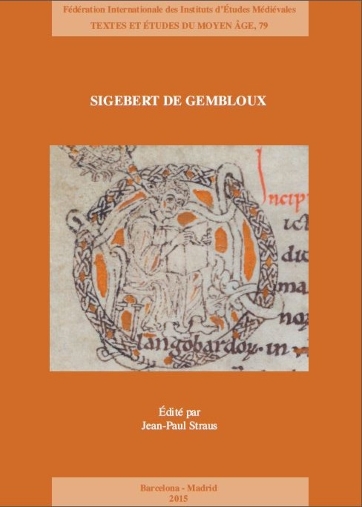
Sigebert de Gembloux
show More to view fulltext, buy and share links for:Sigebert de Gembloux show Less to hide fulltext, buy and share links for: Sigebert de GemblouxSigebert de Gembloux (1028 env. - 5 octobre 1112) s'est illustré en des genres littéraires très divers, le point culminant de son œuvre étant sans conteste sa Chronique qui constitue, comme l'écrit très justement M. Chazan, « un des sommets de l'historiographie médiévale ».
La recherche à son sujet ne cesse d'évoluer, et l’ouvrage qu’on présente ici en est sans conteste un précieux jalon. Il est la conclusion d’une rencontre qui se tint à Bruxelles et à Gembloux les 5 et 6 octobre 2012. Point de départ plus qu’aboutissement, cette rencontre a ouvert des perspectives neuves autant que variées. S'y croisent les points de vue de l'historien, de l'archéologue et du philologue qui se penchent sur le personnage, l'oeuvre et son terreau, l'abbaye de Gembloux. Ce recueil ne prétend pas à l’exhaustivité - l’est-on jamais en aussi riche matière où de plus l’enquête ne cesse d’évoluer ? On reconnaîtra en filigrane les traces d’autres recherches en cours sur le même sujet, auxquelles d’ailleurs les textes font de fréquentes références. Il y a donc deux cohérences, celle de l’ensemble des articles présentés ici, qui couvrent un large éventail dont les sujets s’enchaînent et se répondent, et celle qui englobe d’autres écrits importants tenant au même objet. Ainsi, le présent ouvrage contribue sans aucun doute à l’avancement des études sigebertiennes.
Les contributions sont dues à M. Chazan (U. Lorraine), M. De Waha (ULB), J. Meyers (U. Montpellier), Ph. Mignot (Dir° arch. Wall.), P. Tombeur (UCL), W. Verbaal (UGent), M. Verweij (KBR Bruxelles)
-
-
-
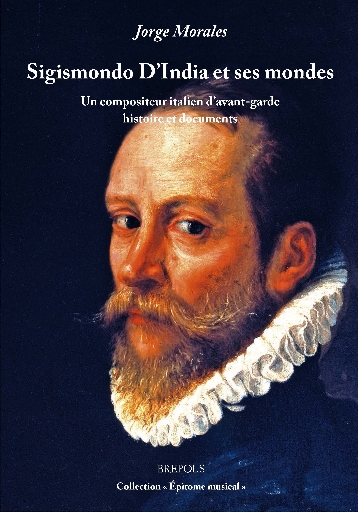
Sigismondo D’India et ses mondes
Un compositeur italien d’avant-garde, histoire et documents
show More to view fulltext, buy and share links for:Sigismondo D’India et ses mondes show Less to hide fulltext, buy and share links for: Sigismondo D’India et ses mondesCet ouvrage analyse le parcours artistique et présente une traduction analytique de toutes les traces écrites connues portant sur l’œuvre et la carrière musicale d’un compositeur majeur de l’époque de Monteverdi, Sigismondo D’India (c.1582-c.1629), depuis l’Italie méridionale de ses origines jusqu’à son séjour à Rome et à Modène, où le musicien acheva son existence. En étudiant les villes, les cours, les princes protecteurs, les dédicataires et les lieux destinés à la musique, chacun des chapitres suit une étape de la carrière de D’India et redonne vie aux mondes de ce compositeur italien d’avant-garde. Apparaissent alors les thématiques du voyage, de l’identité nobiliaire et du croisement, lesquelles permettent de penser l’histoire de la musique comme une histoire à la fois des pratiques culturelles et de l’expérience musicale.
-
-
-
Signa Iudicii
Orígenes, fuentes y tradición hispánica
show More to view fulltext, buy and share links for:Signa Iudicii show Less to hide fulltext, buy and share links for: Signa IudiciiSurgida en la remota Antigüedad, la leyenda de los signa iudicii ha permeado tradiciones y pueblos, culturas y religiones diversas, durante siglos. En todo ese tiempo, esta relación de signos que precederán al fin del mundo ha sufrido variada suerte, desde la gran productividad que presentó durante los albores de la apocalíptica, con un primitivo catálogo de siete señales ampliado paulatinamente, pasando por un uso pragmático y proselitista durante el período medieval, hasta su eclipse con la llegada del racionalismo epistemológico. Se trata de un repertorio de señales escatológicas de amplia naturaleza (atmosférica, legendaria, geológica, espiritual) que buscaba impactar en el imaginario social y colectivo a través de lo que hemos denominado factor miedo. La materia tuvo inmensa repercusión en las tradiciones gaélica, anglosajona o latina, y la recogen desde autores como Lactancio, Orígenes o Comodiano, hasta el mismo Agustín de Hipona. Posteriormente, su difusión fue dilatada, primero a través de varios teóricos y exégetas del cristianismo durante los siglos X, XI y XII, y más tarde de mano de los autores en lenguas vernáculas occidentales. A partir del siglo XIII se introduce en la Península Ibérica, inaugurándose con un texto que Gonzalo de Berceo dedicó a los muy grandes signos ante [...] del Judicio cabdal. Paralelamente a las versiones cristianas, destaca la incidencia que la materia tuvo entre varios autores musulmanes peninsulares a lo largo de los siglos.
-
-
-
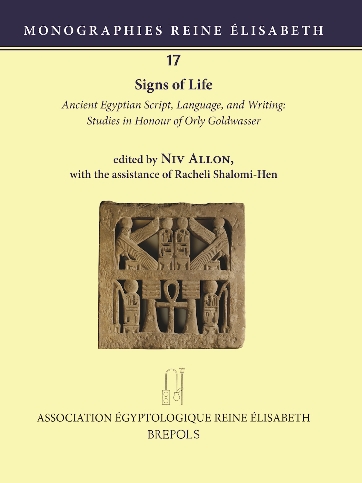
Signs of Life
Ancient Egyptian Script, Language, and Writing Studies in Honour of Orly Goldwasser
show More to view fulltext, buy and share links for:Signs of Life show Less to hide fulltext, buy and share links for: Signs of LifeIn recent decades, the Ancient Egyptian realm of pictorial script and meta-textuality has been the focus of many research projects. Foremost among them is the innovative and ground-breaking sub-field that was helmed by Prof. Orly Goldwasser, exploring the study of classifiers and the ways in which Ancient Egyptian Hieroglyphs mirror the Ancient Egyptian mind. Taking Goldwasser’s pioneering work as its inspiration, this volume draws together contributions from some of the leading voices in Egyptology and neighbouring fields to illuminate different aspects of the use of Ancient Egyptian Hieroglyphs, their semiotic value, and of the language that they record, as well as looking more broadly at the use of signs, pictorial systems, script, learning processes, and classifications. Together, these chapters offer a unique and multi-layered picture of the ways in which Ancient Egyptian language and Hieroglyphs emerged within Ancient Egyptian culture, and the means by which they interacted with other script systems and languages.
-
-
-
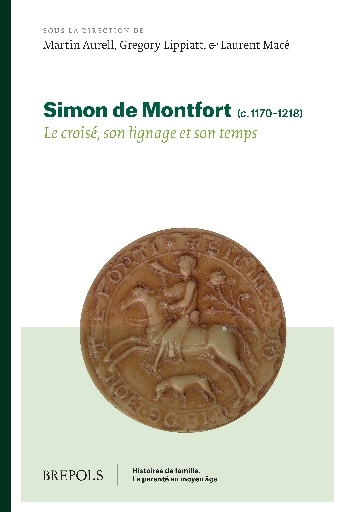
Simon de Montfort (c. 1170-1218)
Le croisé, son lignage et son temps
show More to view fulltext, buy and share links for:Simon de Montfort (c. 1170-1218) show Less to hide fulltext, buy and share links for: Simon de Montfort (c. 1170-1218)La carrière de Simon de Montfort - seigneur français, earl anglais, croisé en Terre sainte et dans le Midi de la France - n’a pas cessé de marquer ses contemporains et sa postérité. Bien de ses compagnons d’armes ont vu en lui le plus pieux et le plus courageux des héros, le modèle du chevalier du Christ (miles Christi). Cette image prestigieuse a cours de son vivant et après son prétendu martyre au service du combat contre la dépravation hérétique. Cependant, dans les contrées occitanophones et dans la péninsule Ibérique, sa réputation devient aussi celle d’un brigand, d’un barbare, d’un intrus étranger, cupide et sans scrupules. Les actes du colloque tenu à Poitiers en 2018 reviennent sur sa vie et sur son lignage afin de comprendre l’homme dans toutes ses contradictions : le croisé incorruptible en Terre sainte, mutilant toute une garnison en Languedoc, le vainqueur du roi d’Aragon, soumettant toutes ses conquêtes au roi de France, le spoliateur des seigneurs légitimes du Midi, protégeant les veuves et le clergé local, le membre d’un puissant lignage franco-normand dont son héritage se perpétue dans toute l’Europe. Simon est à la fois le produit de son temps et l’agent de son devenir, un conquérant et un perdant. Caractère sombre et puissant, il semble être à l’image de son emblème héraldique: un lion à la queue fourchée.
-
-
-
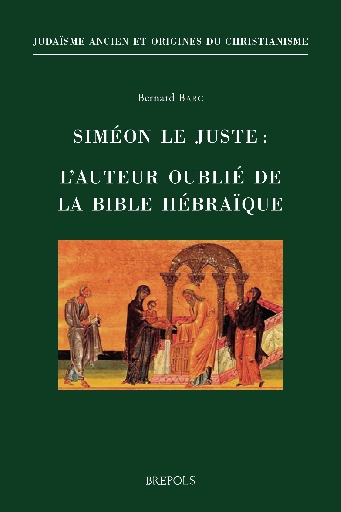
Siméon le Juste: L’auteur oublié de la Bible hébraïque
show More to view fulltext, buy and share links for:Siméon le Juste: L’auteur oublié de la Bible hébraïque show Less to hide fulltext, buy and share links for: Siméon le Juste: L’auteur oublié de la Bible hébraïqueLes Evangélistes se souvenaient d’un vieillard nommé Siméon, qui était juste et qui devait attendre, aussi longtemps qu’il le faudrait, la venue du Sauveur annoncé par les Écritures. Lorsqu’il vit Jésus, il sut que cette attente interminable prenait fin, attesta que Jésus était bien ce Sauveur et demanda au Seigneur de le rappeler enfin à lui. Les Juifs se souvenaient également d’un personnage nommé Siméon le Juste. Pendant la première partie de sa vie il avait fait partie de la Grande Assemblée où siégeaient les derniers prophètes et avait parlé d’une seule voix avec eux, puis il s’était laissé séduire par les beautés de l’hellénisme, ce qui lui avait valu de mourir à la moitié de ses jours. Par des biais différents, Juifs et Chrétiens s’accordaient à faire de ce Siméon de légende le symbole d’un passé révolu. Derrière la légende se cache l’histoire d’un grand prêtre de la période hellénistique, Siméon fils d’Onias. Sa famille, originaire d’Egypte, avait obtenu des rois grecs d’Alexandrie la charge héréditaire de grand prêtre du Temple de Jérusalem, une charge que Siméon occupa de 220 à 195 avant notre ère. Pour Jésus ben Sira, son contemporain, il avait été, avant tout, celui qui «avait fondé la double hauteur», ce qui signifiait qu’il avait doublé le sens superficiel de la Bible hébraïque d’un sens allégorique caché sous les lettres même de l’Écriture. Aussi improbable que puisse nous paraître une telle thèse, elle méritait d’être vérifiée. Et effectivement, ce monument «à double hauteur» enfoui sous les alluvions de plus de vingt siècles d’histoire de l’interprétation du texte biblique est demeuré intact.
Maître de conférences d’hébreu biblique et de littérature intertestamentaire à l’Université Nancy II de 1970 à 1978, puis de 1981 à 2005 à l’Université Jean Moulin de Lyon, Bernard Barc a été aussi professeur invité à l’Université Laval à Quebec de 1978 à 1980, dans le cadre de l’Edition des textes de la Bibliothèque Copte de Nag Hammadi (BCNH). Il est l’auteur de plusieurs volumes de la Bibliothèque Copte ainsi que de publications relatives à l’histoire de l’herméneutique juive ancienne.
-
-
-
Sins of the Tongue in the Medieval West
Sinful, Unethical, and Criminal Words in Middle Dutch (1300-1550)
show More to view fulltext, buy and share links for:Sins of the Tongue in the Medieval West show Less to hide fulltext, buy and share links for: Sins of the Tongue in the Medieval WestAs modern medievalists have repeatedly established, harmful speech conduct (‘sins of the tongue’) aroused considerable interest among medieval authors. Lying, boasting, flattering, railing, backbiting, grumbling, false swearing, and garrulous and incendiary speech were but a few of the speech acts that provoked moral condemnation all over Western Europe from the thirteenth century onward.
This study examines medieval notions of harmful speech conduct as reflected in Middle Dutch ecclesiastical, secular-ethical, and legal textual sources. According to these texts, the tongue was able to ‘break bones’ and inflict considerable damage on the speaker, on listeners, and on other relevant participants in speech situations.
The book utilises two novel approaches. First, the subject is systematically explored in terms of three different types of behaviour in order to discover an overarching discourse: harmful speech as a sin, as moral misbehaviour, and as a crime. Second, ideas from modern language theory are used to analyse the textual sources. By adopting these two approaches, the book asserts that an overarching discourse of harmful speech can be found in the Middle Dutch ecclesiastical, secular-ethical, and legal domains, a discourse coined in this study as ‘the discourse of the untamed tongue’.
-
-
-

Sixteenth-century Antwerp and its Rural Surroundings
Social and Economic Changes in the Hinterland of a Commercial Metropolis (ca. 1450 – ca. 1570)
show More to view fulltext, buy and share links for:Sixteenth-century Antwerp and its Rural Surroundings show Less to hide fulltext, buy and share links for: Sixteenth-century Antwerp and its Rural SurroundingsThis study of sixteenth-century Antwerp and its surroundings is an attempt to combine commercial explanation models concerning the impact of great towns on their surrounding countryside with an approach in which institutional factors, and especially property relations, play the major role. It focuses on four types of influence of Antwerp on its surroundings:
- the demographic impact
- the increasing urban demand for agrarian products
-the impact of the urban economy on non-agrarian types of labour in the countryside and
- the purchases of land and other investments made by Antwerp citizens and their impact on the property relations in the surrounding countryside
Within the framework of these four fields of interaction between town and countryside, three essential questions have to be answered: First, how can we characterize the urban influence in each of these fields? Can it be considered a stimulus for the rural economy or rather an obstacle? Second, what was the economic response of the rural economy to the urban impact? Did it respond by specializing, according to the model presented by J. de Vries, and others, or were there obstacles that obstructed specialization? Third, what role did the medieval legacies play in the interaction between the ‘capitalist’ metropolis and the 'feudal' countryside?
Michael Limberger teaches at the Catholic University Brussels (KUB) and at Ghent University. His research covers late medieval and early modern economic and social history, especially of the Low Countries.
-
-
-
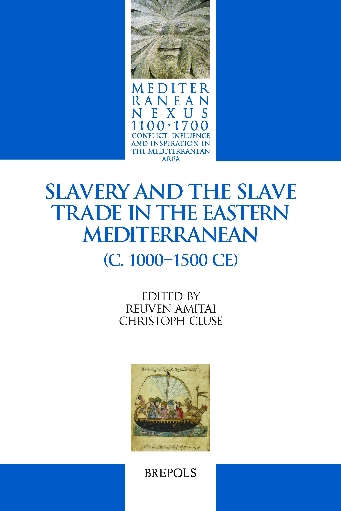
Slavery and the Slave Trade in the Eastern Mediterranean (c. 1000-1500 ce)
show More to view fulltext, buy and share links for:Slavery and the Slave Trade in the Eastern Mediterranean (c. 1000-1500 ce) show Less to hide fulltext, buy and share links for: Slavery and the Slave Trade in the Eastern Mediterranean (c. 1000-1500 ce)Slavery has played a significant role in the history of human society, not the least in the greater Mediterranean region, since ancient times. Long neglected by mainstream historians, the medieval history of slavery has received an increasing amount of attention by scholars, since the pioneering work of Charles Verlinden (1907–1996). Today historians have generally laid to rest the nineteenth-century preoccupation with whether slavery was a significant ‘mode of production’ in the post-classical period, to concentrate on the changing face of the institution over time by looking at legal norms, linguistic representations and social practice. This volume presents a multi-faceted and interdisciplinary approach to slavery and the slave trade in the Eastern Mediterranean region in the pre-modern period, placing these into a larger historical and cultural context. It surveys the significance of slavery in the three monotheistic traditions, the involvement of Eastern and Western merchants and other agents in the slave trade, and offers new interpretations concerning the nature of this commerce.
-
-
-
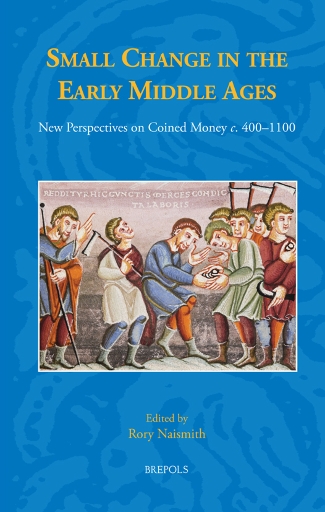
Small Change in the Early Middle Ages
New Perspectives on Coined Money, c. 400–1100
show More to view fulltext, buy and share links for:Small Change in the Early Middle Ages show Less to hide fulltext, buy and share links for: Small Change in the Early Middle AgesCoined money is a familiar part of day-to-day life, and has been for millennia in many societies. In the early Middle Ages, however, it worked rather differently. People across the former Roman Empire and beyond continued to think in terms of monetary units of account, but the supply and use of actual coin became highly uneven. Access to low-value coinage, small change, was particularly attenuated in western Europe, where gold and silver pieces predominated. This volume explores how people and societies dealt with changes to monetary systems. It looks at the experiences of different groups in society, from those who struggled with regimes that used only high value coins, to the elites who tended to benefit from those same conditions. The ten contributions to this volume consider diverse geographical areas from Byzantine Egypt to Italy, Francia, and Britain, identifying parallels and divergences among them. The chapters draw on cutting-edge archaeological and historical research to give a panorama of the latest thinking on early medieval money and coinage.
-
-
-
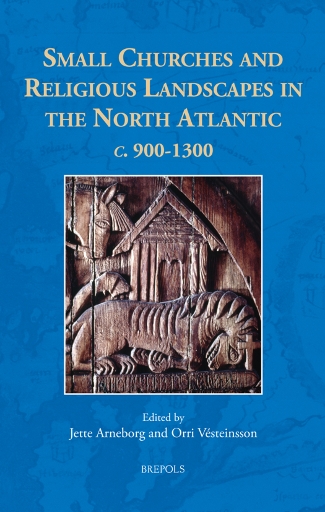
Small Churches and Religious Landscapes in the North Atlantic c. 900–1300
show More to view fulltext, buy and share links for:Small Churches and Religious Landscapes in the North Atlantic c. 900–1300 show Less to hide fulltext, buy and share links for: Small Churches and Religious Landscapes in the North Atlantic c. 900–1300In recent years, archaeologists working at Norse sites across the North Atlantic have excavated a number of very small churches with cemeteries, often associated with individual farms. Such sites seem to be a characteristic feature of early ecclesiastical establishments in Norse settlements around the North Atlantic, and they stand in marked contrast to church sites elsewhere in Europe. But what was the reason behind this phenomenon?
From Greenland to Denmark, and from Ireland to the Hebrides, Iceland, and Norway, this volume presents a much-needed overview of small church studies from around the North Atlantic. The chapters gathered here discuss the different types of evidence for small churches and early ecclesiastical landscapes, review existing debates, and develop a synthesis that places the small churches in a broader context. Ultimately, despite the varied types of data at play, the contributions to this volume combine to offer a more coherent picture of the small church phenomenon, pointing to a church that was able to answer the needs of a newly converted population despite the lack of an established infrastructure, and throwing new light on how people lived and worshipped in an environment of dispersed settlements.
-
-
-
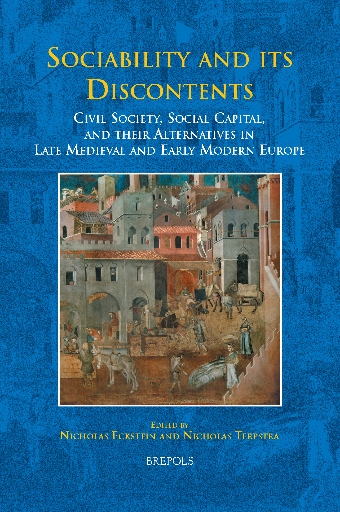
Sociability and its Discontents
Civil Society, Social Capital, and their Alternatives in Late Medieval and Early Modern Europe
show More to view fulltext, buy and share links for:Sociability and its Discontents show Less to hide fulltext, buy and share links for: Sociability and its DiscontentsThis volume advances our knowledge of continuing trends over the longue durée of European history. It also exposes many differences separating contemporaries from their medieval and early modern ancestors. In putting the concept of social capital to the test, the authors also expose the strengths, weaknesses, and limits of the ‘Putnam thesis’. The essays address fourteenth-century English fears of old-age neglect; childhood, friendship, scandal, and rivalry in Renaissance Florence; rebellion in an Italian village; social capital and signorial power in southern and north-central Italy; guild violence in Calvinist Ghent; civil society in early modern Bologna, Naples, and the Papal State; gender in High Renaissance Rome; and critical analyses of the transition from religious to secular sensibilities that scholars (following Jürgen Habermas) have identified in eighteenth-century Europe. In each case, the topic is considered in relation to recent theories of ‘social capital’: the informal, intangible bonds of trust upon which, social scientist Robert Putnam argues, every human community depends. The result is a series of highly original case-studies which reveal the workings of late medieval and early modern European society from new and often unexpected angles.
-
-
-
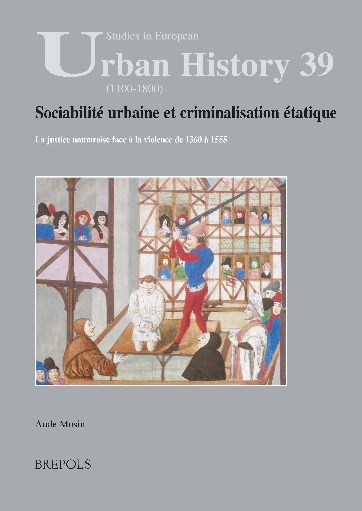
Sociabilité urbaine et criminalisation étatique
La justice namuroise face à la violence de 1360 à 1555
show More to view fulltext, buy and share links for:Sociabilité urbaine et criminalisation étatique show Less to hide fulltext, buy and share links for: Sociabilité urbaine et criminalisation étatiqueThe study of violence under its different forms and its regulation in a town of the Low Countries, namely Namur, between the second half of the 14th century and the first half of the 16th century provides a renewed perspective on the problematic of the transition between “urban sociability” and “state criminalisation”. Urban communities developed institutions and original methods of regulation to control aggressiveness. Violent behaviours and the safeguard of peace between their members were the main focus of these communities. Later on, central authorities, in the framework of a developing State, brought their own means of framing violence. Violence gradually became the monopoly of authorities. This “legitimate” violence of the State became a way to discriminate the violence of populations. The violence in the town and its framing is a privileged field to address the construction of the Modern State, one of the main supports of which is justice.
-
-
-
Social Inequality in Early Medieval Europe: Local Societies and Beyond
show More to view fulltext, buy and share links for:Social Inequality in Early Medieval Europe: Local Societies and Beyond show Less to hide fulltext, buy and share links for: Social Inequality in Early Medieval Europe: Local Societies and BeyondThe goal of this book is to discuss the theoretical challenges posed by the study of social and political inequality of local societies in Western Europe during the Early Middle Ages. Traditional approaches have defi ned rural communities as passive bodies, poor and unstable in the framework of a self-suffi cient economy. In the last few decades, social approaches both in medieval history and archaeology have neglected the opportunity to re-evaluate the role of peasantry and other subaltern groups, even where new written and material evidence has challenged traditional assumptions. Conversely, scholars focussing on elites and aristocracies have promoted powerful research agenda.
As a consequence of the 2007-2008 recession, the social sciences began to be interested in social and economic inequality, opening up new avenues for a reassessment of social history. The early medieval period has been identifi ed by numerous scholars as a key arena for the analysis of political complexity and social inequality in long-term perspective.
The study of local societies has become one of the most fruitful areas for innovative research in medieval archaeology and history, using approaches related to micro-history. This book, dedicated to Chris Wickham, is formed of fourteen papers centred on early medieval local communities drawing on both written and material records, which identify complex frameworks of social inequality at the lo
-
-
-
Social Networks, Political Institutions, and Rural Societies
show More to view fulltext, buy and share links for:Social Networks, Political Institutions, and Rural Societies show Less to hide fulltext, buy and share links for: Social Networks, Political Institutions, and Rural SocietiesThis book is a collection of essays on social networks, social capital, and kinship in historical and contemporary rural societies. They span a wide range of European countries and historical situations, from early modern Flanders and Italy to present-day Austria and Armenia. All the essays describe in detail how people on the countryside connected with one another in formal or informal relations. In doing so, the authors use and critically discuss methods of historical interpretation, social network analysis, and econometrics. The book analyses these topics in three steps. First, the authors address whether social relations can be of economic use. Secondly, they examine the institutional conditions for such a conversion of social into economic capital, reconstructing the often unexpected ways in which the economic and social spheres were connected both in ‘pre-modern’ and in ‘modern’ settings. Thirdly, they show how political institutions were constructed out of social networks.
Georg Fertig is professor of economic and social history at Halle University in Germany. He has worked extensively on 18th and 19th-century historical demography and agrarian history.
-
-
-
Social Relations: Property and Power
show More to view fulltext, buy and share links for:Social Relations: Property and Power show Less to hide fulltext, buy and share links for: Social Relations: Property and PowerThe organization of society formed a crucial element in the remarkable development of the countryside in the North Sea area in the last 1500 years. Vital questions are: who owned the land? Who gained the profits from its exploitation? How was the use of rural resources controlled and changed? These questions have no simple answers, because the land has been subjected to competing claims, varying from region to region. In early times peasants mostly possessed and worked their holdings, but lords took much of the produce, and had the ultimate control over the land. In more recent times the occupiers and cultivators gained stronger rights over their farms. Neither lords nor peasants were free agents because communities governed the use of common lands. In the highly urbanized North Sea region towns and townspeople had considerable and increasing influence over the countryside. Change came from within society, for example from the tension and negotiation between lords and peasants, and the growing importance of the state and its policies. This volume also looks at the interaction between society and external changes, such as the rise and fall of the market, trends in population, and European integration.
Bas J.P. van Bavel is professor of Economic and Social History of the Middle Ages at Utrecht University, the Netherlands
Richard W. Hoyle is professor of Rural History at the University of Reading, United Kingdom
-
-
-
Society and Culture in Medieval Rouen, 911-1300
show More to view fulltext, buy and share links for:Society and Culture in Medieval Rouen, 911-1300 show Less to hide fulltext, buy and share links for: Society and Culture in Medieval Rouen, 911-1300Rouen, one of the leading cities of medieval Western Europe, has long awaited detailed consideration in English by modern scholars. This book presents exciting new research on the society and culture of medieval Rouen by British and Continental historians. Divided into three sections, addressing space and representation, religious culture, and social networks, the volume is both wide-ranging and tightly focused. The key themes include Rouen’s relationship with its environs, image and identity, social and political relationships, and Rouen’s status as the ‘capital’ of Normandy. The essays discuss topics ranging from urban development and charity, the city’s aristocratic and ecclesiastical elites, the Jewish community, and the relationship of the Angevin kings with Rouen. Comparisons and contextualization, as well as detailed maps, make the book valuable not only to readers interested in Rouen and Normandy, but also to those who wish to learn more about medieval cities, culture, and society.
-
-
-
Solitudes et solidarités en ville. Montpellier, mi XIIIe-fin XVe siècles
show More to view fulltext, buy and share links for:Solitudes et solidarités en ville. Montpellier, mi XIIIe-fin XVe siècles show Less to hide fulltext, buy and share links for: Solitudes et solidarités en ville. Montpellier, mi XIIIe-fin XVe sièclesLa solitude en milieu urbain est un champ de recherche contemporain, porté en particulier par la sociologie. Les sociétés urbaines médiévales comptaient aussi leur lot de solitaires : enfants orphelins et abandonnés, immigrants à la recherche d’une vie meilleure, veufs et veuves, personnes âgées isolées. Le contexte de la deuxième moitié du XIV e siècle, avec ses épidémies de peste récurrentes et les ravages causés par la guerre de Cent Ans aggrave le phénomène. Étudiée dans le cadre de la ville de Montpellier, des années 1250 à la fin du XV e siècle, à partir d’archives consulaires, fiscales et testamentaires, la solitude se révèle comme un phénomène fréquent : nombreuses sont les personnes seules dans l’espace urbain. La solitude apparaît sous de multiples formes et se manifeste tout au long du cours de la vie des individus, entrecoupant les cycles de développement familiaux. Or, entre la vie en solitaire et l’isolement social existe toute une palette de situations personnelles, dont on ne peut saisir la complexité que par l’étude des solidarités, recherchées par les personnes seules ou spontanément offertes par des parents, des amis, qui viennent pallier la solitude.
-
-
-
Solus homo nudus, solum animal sapiens
Théories humanistes du nu (xv e-xvi e siècles)
show More to view fulltext, buy and share links for:Solus homo nudus, solum animal sapiens show Less to hide fulltext, buy and share links for: Solus homo nudus, solum animal sapiensLa définition du nu comme genre artistique pose problème depuis qu’a été critiquée la distinction posée par Kenneth Clark entre Nu et nudité (The Nude , 1956). Si les Anciens n’ont pas laissé de théorie du nu, les humanistes ont fourni une abondance de préceptes lui reconnaissant la validité d’un concept esthétique. Cet ouvrage présente une première synthèse des théories du nu dans les traités d’art de la Renaissance et montre comment artistes et théoriciens ont inventé le nu à partir de trois sciences - les mathématiques, la médecine et la philosophie morale - en renouvelant les doctrines antiques de la symétrie, de l’anatomie et de la physiognomonie.
-
-
-
Some Earlier Parisian Tracts on Distinctiones sophismatum
I Tractatus vaticanus de multiplicitatibus circa orationes accidentibus, II Tractatus florianus de solutionibus sophismatum, III Tractatus vaticanus de communibus distinctionibus
-
-
-
Sound Studies Review
show More to view fulltext, buy and share links for:Sound Studies Review show Less to hide fulltext, buy and share links for: Sound Studies ReviewHoused in the Department of Music and Theater at Manhattan College and managed by faculty and students in the Sound Studies program, Sound Studies Review (SSR) is an international, peer-reviewed music journal, published semiannually by Brepols. The journal seeks to present multiple perspectives on the science and cultural reception of sound in our everyday listening environment. The purpose of the journal is to diversify the audience of sound studies by offering a wide range of differing topics that converge at the intersection between musicology, audio technology, acoustical research, media studies, and the environment.
More information about this journal on Brepols.net
-
-
-
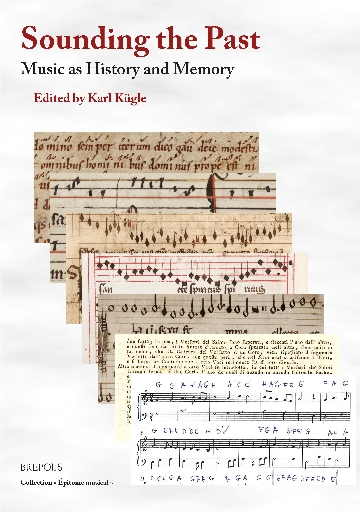
Sounding the Past
Music as History and Memory
show More to view fulltext, buy and share links for:Sounding the Past show Less to hide fulltext, buy and share links for: Sounding the PastThis volume offers the first systematic exploration of the past as manifested in music of the later Middle Ages and the early modern period. It takes the reader on a journey of discovery across the continent, from the genesis of a new sense of a musical past in early thirteenth-century Paris to the complex and diverse roles and pedigrees given music of the past in sources, media, genres, communities, and regions in the Age of Reformations. Particular attention is given to the use of older styles and musical traditions in changing constructions of religious and political identity, laying the groundwork for a revised narrative of European music history that accommodates within its framework the full plurality of styles and regions found in the sources. The volume concludes with reflections on the conflicting appropriations and effects of the musical past today in composition, performance, musicological discourse, and tourism.
-
-
-
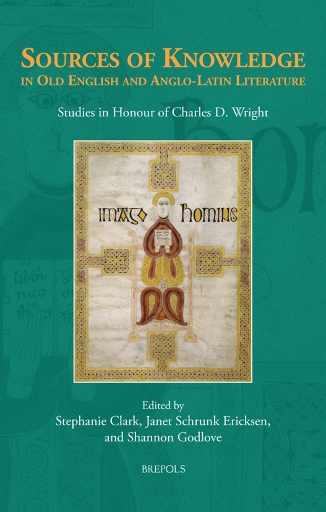
Sources of Knowledge in Old English and Anglo-Latin Literature
Studies in Honour of Charles D. Wright
show More to view fulltext, buy and share links for:Sources of Knowledge in Old English and Anglo-Latin Literature show Less to hide fulltext, buy and share links for: Sources of Knowledge in Old English and Anglo-Latin LiteratureThis volume positions source scholarship as integral to an understanding of the transmission of knowledge across intellectual, social, and material networks in early medieval England. Essays in this collection situate source studies in Old English and Anglo-Latin literature within a range of theoretical and methodological approaches as varied as disability studies, feminist theory, history of science, and network analysis, tracing how ideas move across cultures and showing how studying sources enables us to represent the diversity of medieval voices embedded in any given text.
The essays in this volume extend the work of Charles D. Wright, who mentored a generation of scholars in methodologies of source study. The essays are organized into three sections. The first demonstrates how source studies facilitate tracing ideas across space and time. The second explores what happens to texts and ideas when they are transmitted from one culture, language, or historical moment to another. The third shows how sources illuminate wider cultural discourses. The volume attests to the flexibility of source work for early medieval English literature and argues for increased access to the tools that make such work possible.
-
-
-

Sparks and Seeds
Medieval Literature and its Afterlife. Essays in Honor of John Freccero
show More to view fulltext, buy and share links for:Sparks and Seeds show Less to hide fulltext, buy and share links for: Sparks and SeedsJohn Freccero is internationally renowned for his scholarship on Dante, Petrarch, Machiavelli, and other authors. Currently Professor of Italian and Comparative Literature at New York University, he has also taught at Yale, Stanford, Cornell, and Johns Hopkins. His numerous honors include Fulbright and Guggenheim fellowships and awards from the city of Florence and the Republic of Italy.
Despite the diverse expertise of their authors (fairly evenly divided between Italianists and scholars of English and Comparative Literature), all of the articles included in the volume appertain to Italian literature - from a literary analysis of Bonaventure’s Itinerarium to tracing the State of Maryland’s medieval Italian motto back through its English Renaissance sources. Many of the pieces are concerned with Dante directly, and several others dealing with medieval and Renaissance Italian subjects do so indirectly. Two articles are concerned with pre-modern cultural and literary implications of the history of science; the remainder trace the afterlife of medieval or Renaissance Italian motifs in modern culture. Despite the fact that the articles range from medieval scholasticism to twentieth-century cinema, this volume addresses applications of medieval and Renaissance Italian literature, influenced, above all, by the teaching and scholarship of John Freccero.
-
-
-
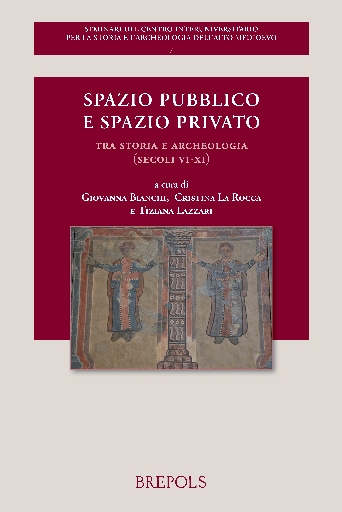
Spazio pubblico e spazio privato
Tra storia e archeologia (secoli VI-XI)
show More to view fulltext, buy and share links for:Spazio pubblico e spazio privato show Less to hide fulltext, buy and share links for: Spazio pubblico e spazio privatoI contributi contenuti nel volume affrontano il tema degli spazi materiali e simbolici, di ambito pubblico e privato, tra Tarda Antichità e Alto Medioevo, attraverso ricerche condotte su fonti scritte e materiali.
Il volume è suddiviso in tre sezioni. La prima, Una nuova dimensione del pubblico e del privato, raccoglie lavori che offrono quadri di insieme ampi, ciascuno su un problema di lunga tradizione storiografica. La seconda sezione, I luoghi del potere e gli spazi privati, accosta ricerche basate sia su fonti scritte sia su fonti archeologiche, per meglio definire gli spazi destinati all’esercizio del potere e quelli relativi alla sfera domestica. Nella terza sezione, Gestione e controllo delle risorse, sono contenuti contributi che, attraverso i dati offerti dalle fonti materiali, riflettono sui sistemi economici in relazione ai regimi proprietari e di sfruttamento delle risorse, alla creazione di riserve, alle forme di produzione destinate sia a una circolazione ristretta sia a una distribuzione di controllo pubblico.
La scelta di tematiche ad ampio raggio ha inteso offrire una riflessione articolata sull’utilità - e sulla possibilità stessa - di applicare la contrapposizione pubblico/privato allo studio degli spazi fisici e simbolici tardo antichi e altomedievali. Il volume, raccogliendo l’insieme delle prospettive di indagine che sul rapporto pubblico/privato si sono sviluppate negli ultimi anni, intende contribuire con nuovi spunti e strumenti di analisi alle future ricerche sul tema.
-
-
-
Spectacle benefaction and the politics of appreciation
Case studies from Italy, Gallia Narbonensis and Africa Proconsularis
show More to view fulltext, buy and share links for:Spectacle benefaction and the politics of appreciation show Less to hide fulltext, buy and share links for: Spectacle benefaction and the politics of appreciationIn the remotest corners of the Roman Empire, large crowds were as beguiled by spectacles as their Roman counterparts. Provincial spectacles however, did not share the technical wonders of flying machines, elephant dressage and synchronised swimming seen at imperial extravaganzas. Is it this lack of the sensational that accounts for the relative paucity of scholarly attention paid to regional spectacles and in particular, their sponsors?
When spectacles are viewed purely as entertainment, the messy realities of institutionalized social, economic and political power that regulated them are obscured. A clearer understanding of the spectacle can therefore be achieved by contextualizing it in the big picture of regional and provincial life against the backdrop of Roman power and control. The spectacle itself was highly political in its aims and intent. Access to sponsorship of a spectacle similarly relied on hierarchies of political power and privilege, and consequently required strategic negotiation of candidacy, promises, expenditure and recognition. Rivalry, competition and emulation was endemic.
This epigraphic analysis, focusing on the western Roman Empire (Italy, Gaul and North Africa) during the Imperial period, identifies the milieux of provincial sponsors, their strategies and quest for public honours.
-
-
-
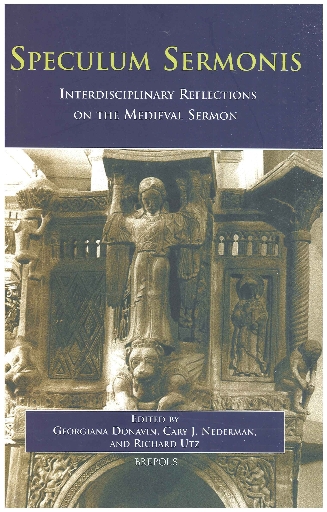
Speculum Sermonis
Interdisciplinary Reflections on the Medieval Sermon
show More to view fulltext, buy and share links for:Speculum Sermonis show Less to hide fulltext, buy and share links for: Speculum SermonisThe medieval sermon provides the focus for the first volume of Disputatio because it often expresses the concerns of various intellectual milieux, such as the university, Church or court, and attempts to convey those concerns to other parts of medieval society.
Speculum Sermonis is an anthology of essays about medieval sermons in the Christian East and West. It aims to reveal precisely how sermons inform different disciplines (for instance, social and Church history, literature, musicology) and how the methodologies of different disciplines inform sermons. Sermons can, for instance, provide evidence for a reconstruction of medieval liturgy; reciprocally, the field of liturgiology investigates sermons as one aspect of Church performance. The volume’s title image of the mirror and the reference to medieval specula convey the idea of multiple reflections: the sermons’ on culture and the disciplines’ on sermons. Because the contributors to Speculum Sermonis come from a variety of fields, the essays here collectively provide a rich historical and contemporary academic context for reading the medieval sermon.
In addition to essays from across the fields, a number of which establish conclusions transcending disciplinary boundaries, Speculum Sermonis includes an introduction defending interdisciplinary study of sermons and an authoritative bibliography covering both primary and secondary resources for medieval sermons. A unique feature of the volume is the inclusion of response papers to the essays in each of the sections, in the spirit of the book series title Disputatio.
-
-
-
Spes Italiae
Il regno di Pipino, i Carolingi e l’Italia (781–810)
show More to view fulltext, buy and share links for:Spes Italiae show Less to hide fulltext, buy and share links for: Spes ItaliaeIl regno di Pipino, figlio di Carlo Magno, è stato a lungo trascurato dalla ricerca storica, nonstante la sua importanza per l’Italia, le regioni transalpine e il mondo carolingio nel suo insieme. I contributi qui raccolti, esito di due convegni tenutisi a Trento e a Vienna, mettono in luce con approcci diversi e innovativi i molteplici aspetti della cultura del suo regno, la sua azione politica e militare e la rappresentazione che ne diedero i contemporanei. Questo volume, pertanto, offre un sguardo inedito su Pipino; nuove prospettive di ricerca su un sovrano dimenticato.
-
-
-
Spinoza en Angleterre
Sciences et réflexions sur les sciences
show More to view fulltext, buy and share links for:Spinoza en Angleterre show Less to hide fulltext, buy and share links for: Spinoza en AngleterreLe volume s’interroge sur la place de Spinoza dans les milieux intellectuels, philosophiques et scientifiques de l’Angleterre et de l’Europe du xvii e siècle, et il analyse les contextes scientifiques privilégiés qui ont fourni à Spinoza plusieurs motifs de réflexion et qui ont compté ensuite parmi ses principaux lieux de réception. Le rapport entre Spinoza et le débat philosophique en Angleterre a retenu l’attention des historiens depuis longtemps. Il s’agit d’un terrain historiographique complexe où questions de sources, réception des idées et enjeux polémiques se mêlent souvent. La première partie du volume a une approche plus thématique : on se focalise sur un thème de la philosophie de Spinoza pour y voir, comme dans un prisme, le reflet des débats croisés entre Pays-Bas et Angleterre. La deuxième partie du volume est consacrée principalement à Spinoza et à la considération du rapport avec la physique hobbesienne. La troisième partie du volume porte sur les polémiques autour des œuvres de Spinoza qui furent lues durant le dix-huitième siècle en Angleterre et sur le continent, les spéculations philosophiques d’un cartésien athée et les œuvres d’un impie. Le parcours intellectuel du livre, qui rassemble les contributions de A. Di Nardo, R. Evangelista, G. Giglioni, E. Guillemeau, M. Laerke, F. Mignini, A. Sangiacomo, C. Santinelli, M. Sanna, C. Secretan, L. Simonutti, T. Verbeek, s’achève par la postface de Pierre-François Moreau.
-
-
-
Spiritual Formation and Mystical Symbolism
A Selection of Works of Hugh and Richard of St Victor, and of Thomas Gallus
show More to view fulltext, buy and share links for:Spiritual Formation and Mystical Symbolism show Less to hide fulltext, buy and share links for: Spiritual Formation and Mystical SymbolismBiblical interpretation, writings on the contemplative/mystical life and a continuing deep reflection on the nature and meaning of symbols come together in powerful ways in Victorine writers, particularly Hugh and Richard, as well as the lesser-known writer Thomas Gallus (Thomas of Vercelli), a Victorine canon who became the abbot of a house of regular canons in Vercelli, Italy. This volume contains: (1) Hugh’s On the Ark of Noah and A Short Treatise on the Form of the Ark, treatises that unfold Hugh’s teaching on stages and fruition of the mystical quest in relation to a complex drawing that incorporates a figure of Christ seated in majesty, embracing a map of the world on which is superimposed a diagram of Noah’s Ark, representing the 12 stages of the contemplative quest; (2) Richard’s On the Ark of Moses, a work that uses the symbolic (allegorical and tropological) interpretation of the Ark of the Covenant and the figures of the Cherubim that accompany the Ark in the Jerusalem Temple to convey Richard’s vivid and compelling teaching on the varieties of contemplative experience as he understood them in twelfth-century Paris; and (3) Thomas Gallus’ Commentary on the Song of Songs, which offers a window into a formative period of transition in the western Christian spiritual tradition, with Gallus’s commentary on the Song of Songs giving voice to a more “affective” (versus “speculative”) understanding of the mystical quest and experience, drawing upon and extending earlier Victorine explorations of the interrelationship of love and knowing in the experience of contemplation. For those interested in the dynamics of the spiritual quest and symbolic understanding in the twelfth and early thirteenth centuries, as well as insights that can inform the modern quest for knowledge and love of God, these are essential works for any library.
-
-
-
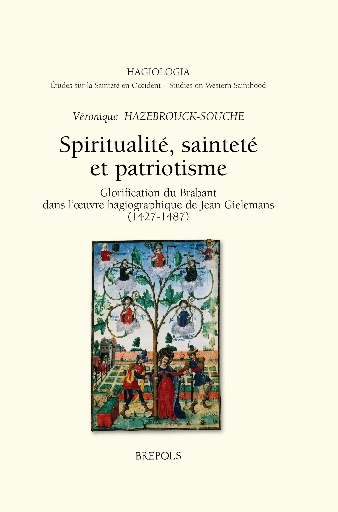
Spiritualité, sainteté et patriotisme
Glorification du Brabant dans l'oeuvre hagiographique de Jean Gielemans (1427-1487)
show More to view fulltext, buy and share links for:Spiritualité, sainteté et patriotisme show Less to hide fulltext, buy and share links for: Spiritualité, sainteté et patriotismeL’hagiographie a souvent été décriée jusqu’au vingtième siècle. C’est ainsi que la plus vaste compilation hagiographique du Moyen Age occidental était restée dans l’oubli presque total. à travers quatre volumineux manuscrits en latin (Sanctilogium, Agyologus Brabantinorum, Novale Sanctorum et Hystoriologus Brabantinorum), Jean Gielemans (1427-1487), chanoine régulier de saint Augustin à Rouge-Cloître en Brabant, avait pourtant réalisé entre 1471 et 1487 une véritable encyclopédie hagiographique, et plus encore, laissé un trésor inestimable pour l’histoire religieuse, culturelle et politique.
Issu d’une thèse de doctorat, ce livre met en évidence un genre patriotique inédit où l’hagiographe exalte le Brabant à travers une histoire sacrée tout en reflétant deux idéaux de sainteté, masculine et féminine, entre mystique et Dévotion moderne.
Véronique Hazebrouck-Souche, docteur en histoire médiévale, a enseigné principalement à l’université de Paris X et participé à des projets de recherche en France, Belgique, Italie, Angleterre, Allemagne et aux Pays-Bas.
-
-
-
Splendor Reginae: Passions, genre et famille
Mélanges en l'honneur de Régine Le Jan
show More to view fulltext, buy and share links for:Splendor Reginae: Passions, genre et famille show Less to hide fulltext, buy and share links for: Splendor Reginae: Passions, genre et familleRégine Le Jan a marqué de son empreinte l’histoire du haut Moyen Âge. Son oeuvre a accompagné l’évolution de la discipline historique depuis plus de quarante ans. Au gré de ses publications, de colloques, de programmes de recherche, de son enseignement, elle a donné à l’histoire du haut Moyen Âge des orientations inédites. Pour lui rendre hommage, ses collègues, amis et élèves se sont inspirés de quelques-uns de ses thèmes de recherche privilégiés au fil de trente articles rassemblés ici. Dans ce volume est d’abord envisagée l’importance de la famille et des liens de parenté dans les relations de pouvoir au haut Moyen Âge, rappelant l’ouvrage fondateur que fut sa thèse Famille et Pouvoir dans le monde franc (Publications de la Sorbonne, 1995). Sont ensuite évoquées celles dont elle a si bien montré le rôle essentiel par l’évocation de figures de femmes médiévales, tout en rappelant comment a continué à peser sur elles tout le poids d’une discrimination qui se poursuit pendant toute la période. Enfin, les auteurs reviennent sur l’usage des émotions et du vocabulaire de la haine et de l’amitié, dont la place ne cesse de croître à la fois dans les domaines social et politique au fil du haut Moyen Âge.
-
-
-
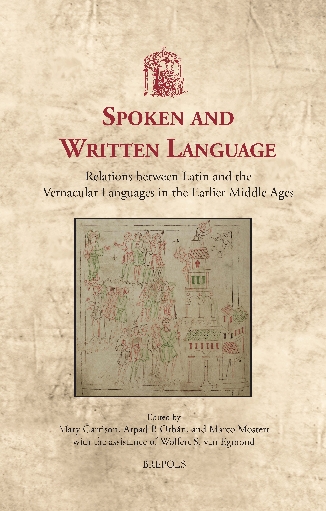
Spoken and Written Language
Relations between Latin and the Vernacular Languages in the Earlier Middle Ages
show More to view fulltext, buy and share links for:Spoken and Written Language show Less to hide fulltext, buy and share links for: Spoken and Written LanguageThe linguistic situation of medieval Europe has sometimes been characterized as one of diglossia: one learned language, Latin, was used for religion, law, and documents, while the various vernaculars were used in other linguistic registers. Informing the relationship between Latin and the vernaculars was the choice of Latin as the language of the Western Roman Empire and the Roman Church. This choice entailed the possibility of a shared literary culture and heritage across Europe, but also had consequences for access to that heritage. Scholarship on the Romance languages has contested the relevance of the term diglossia, and the divergence between written or spoken Latin and Romance is a subject of energetic debate. In other linguistic areas, too, questions have been voiced. How can one characterize the interaction between Latin and the various vernaculars, and between the various vernaculars themselves? To what extent could speakers from separate linguistic worlds communicate? These questions are fundamental for anyone concerned with communication, the transmission of learning, literary history, and cultural interaction in the Middle Ages. This volume contains contributions by historians, cultural historians, and students of texts, language, and linguistics, addressing the subject from their various perspectives but at the same time trying to overcome familiar disciplinary divisions.
-
-
-
Spoliation as Translation
Medieval Worlds of the Eastern Mediterranean
show More to view fulltext, buy and share links for:Spoliation as Translation show Less to hide fulltext, buy and share links for: Spoliation as TranslationThe articles gathered in this special issue of Convivium offer a variety of perspectives - history of medieval art, architecture, literary studies - that explore the relations between spoliation and translation, with a particular focus on the interconnections and similarities between material/artistic and textual/literary cultures. Building on current research in spolia and translation studies, these contributions respond to the increasing interest in and popularity of these two topics in recent scholarship. A conceptual point of departure is that reuse and translation represent two crucial processes facilitating cultural dialogues and exchanges across time and space. Material and textual spolia fascinate us, because they provide various means and levels of engagement with the past with a tangible form, sometimes of an ambivalent nature. Objects, artefacts, buildings, and texts have been subject to constant reworkings, through which they have been interpreted and translated: old stories gain new significance in new contexts, just as old objects gain new meanings in new settings. The aim of this collection is to foster a better understanding of such processes and, at the same time, of the history of the medieval worlds of the Eastern Mediterranean, which is marked by constant cross-cultural encounters and interactions.
-
-
-
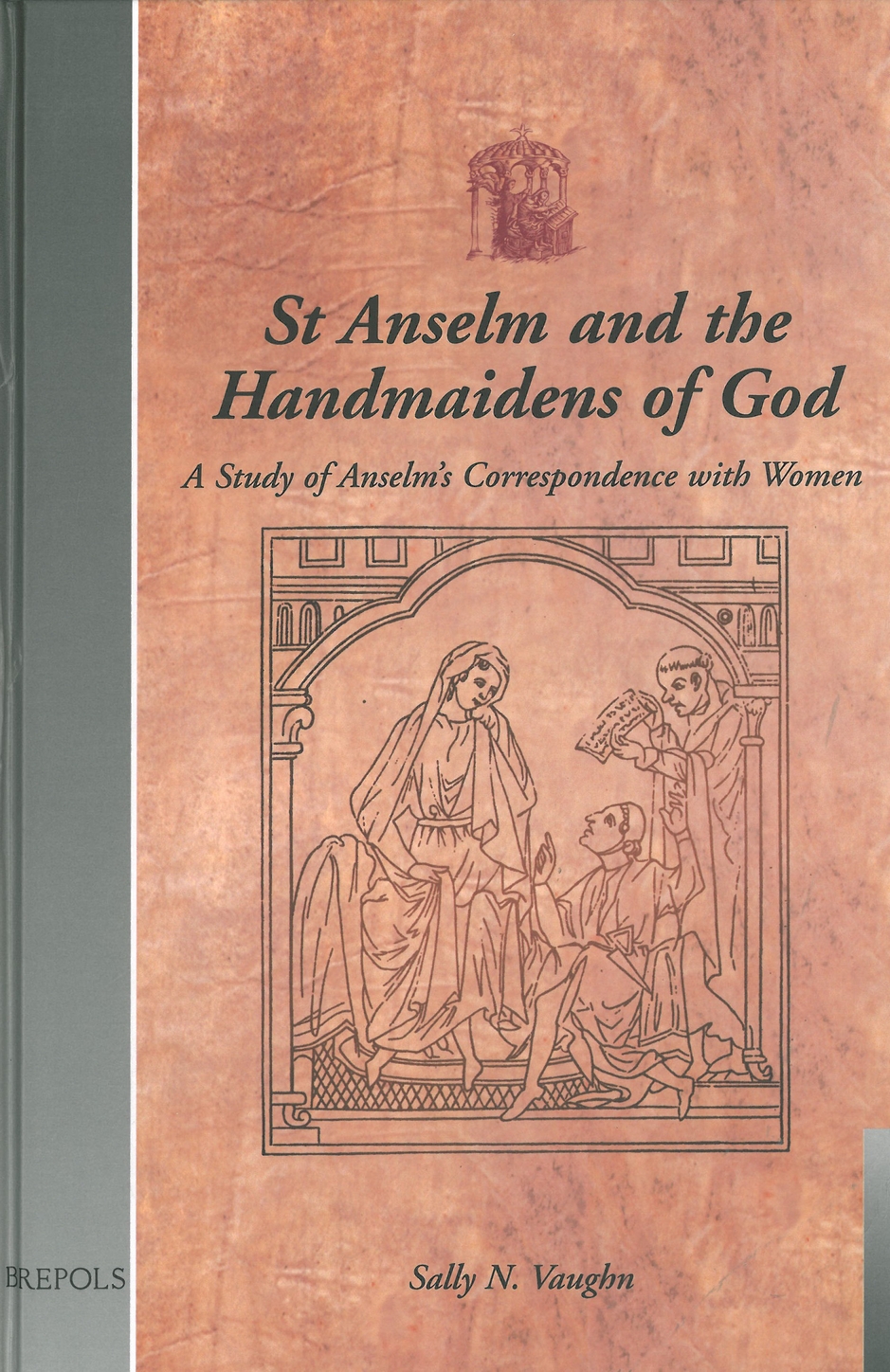
St Anselm and the Handmaidens of God
A Study of Anselm's Correspondence with Women
show More to view fulltext, buy and share links for:St Anselm and the Handmaidens of God show Less to hide fulltext, buy and share links for: St Anselm and the Handmaidens of GodAs abbot of Bec and archbishop of Canterbury, the renowned theologian St. Anselm spent most of his career working ‘in the world’, primarily with laypersons, not in the cloister. His correspondence contains surprisingly many letters to laywomen, only a few perfunctory letters to nuns and abbesses. Anselm wrote to all estates of noble laywomen: young girls, mothers, mature wives or widows, countesses and queens. Vaughn argues that Anselm collected and edited his own letters, which addressed real women and situations, but also represented particular ideals of women, marriage, parents and children, students and teachers; that the correspondence, an artful construct, was almost an autobiography, teaching by word, deed, and his own example; and a lens through which to discern Anselm’s views of men and women in Anselm’s ideal society. Anselm accords women surprising equality and power, seeing queens as equal to both kings and archbishops, all three primarily as nurturers and teachers, and ideal married couples writ large - social views modelled on past ideals (primarily St. Gregory), but ironically leaping toward new Twelfth Century attitudes of introspection, self-analysis, individualism, and logic and reason in theology, social issues, politics and law. Mothers and teachers emerge as the ultimate Handmaidens of God.
-
-
-
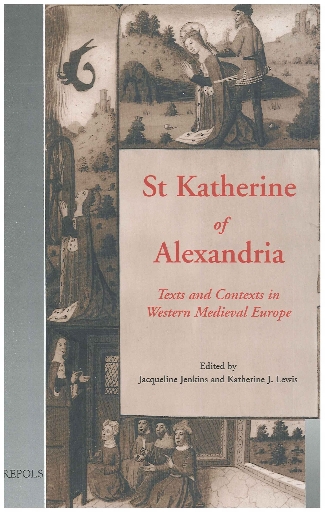
St Katherine of Alexandria
Texts and Contexts in Western Medieval Europe
show More to view fulltext, buy and share links for:St Katherine of Alexandria show Less to hide fulltext, buy and share links for: St Katherine of AlexandriaSt Katherine of Alexandria was one of the most popular saints in medieval Europe. This book constitutes the first interdisciplinary collection of essays to explore her cult and the range of meanings which St Katherine embodied for her devotees. The essays between them consider a wide range of evidence, from visual representations (wall paintings, manuscript illuminations, stained glass, and seals), to literary texts (lives of the saint, prayers, hymns, devotional manuscripts, and breviaries) as well as documentary evidence (wills, chronicles, ecclesiastical records and antiquarian writings) and the physical remains of churches and chapels dedicated to St Katherine. These sources are interpreted as part of wider manifestations of devotion to the saint in England, France, Italy, Spain, Sweden, and Wales. The authors approach the cult from varying disciplinary and methodological perspectives, but all seek to uncover the various religious, social and cultural messages contained within the different versions of St Katherine which these particular texts and contexts offer. The volume as a whole therefore sheds light not only on devotion to St Katherine, but also on a much wider range of issues and ideologies governing the lives of her devotees and the societies in which they lived.
-
-
-
Stadtgesellschaft und Memoria
Die Ausrichtung auf das Jenseits und ihre sozialen Implikationen
show More to view fulltext, buy and share links for:Stadtgesellschaft und Memoria show Less to hide fulltext, buy and share links for: Stadtgesellschaft und MemoriaDie Beschäftigung mit der Memoria, dem mittelalterlichen Totengedenken, zieht sich leitmotivisch durch die Forschungstätigkeit von Thomas Schilp 19. Oktober 1953 – 28. September 2019). Angeregt durch die Arbeiten von Otto Gerhard Oexle zur mittelalterlichen Erinnerungskultur erschloss er mit seiner ihn auszeichnenden Sorgfalt im historischen Sehen und Denken sowie in der präzisen und gleichzeitig interdisziplinären Analyse der uellen immer weitere Dimensionen dieses alle sozialen Schichten und alle Bereiche des täglichen Lebens umfassenden Phänomens. Dabei war für ihn von zentraler Bedeutung – wie auch in diesem Band – die Art und Weise, wie die Konstituierung unterschiedlichster gesellschaftlicher Gruppen zur Gewährleistung des Totengedenkens erfolgte. Seine Forschungen verdeutlichen auf verschiedenen, sich durchdringenden Ebenen eine von heutigen Denkformen unterschiedene Auffassung gesellschaftlichen Lebens. Dabei rücken die neue Leseart von Bildern, die Interpretation von Tönen und Klängen (wie beispielsweise Schlag und Geläute von Glocken) als akustische Zeichen sowie ephemere Erscheinungen wie etwa die mittelalterlichen Lichtinszenierungen in Kirchen immer stärker in den Blickpunkt seiner Ausführungen. Thomas Schilps früher Tod ermöglichte es ihm nicht mehr, die begonnene umfassende Monographie zum Thema Stadt und Memoria fertig zu stellen. Dieser Band vereint eine Auswahl von Aufsätzen, welche die Dimensionen seiner intensiven Beschäftigung mit Formen mittelalterlichen Denkens und Handelns reflektieren.
-
-
-
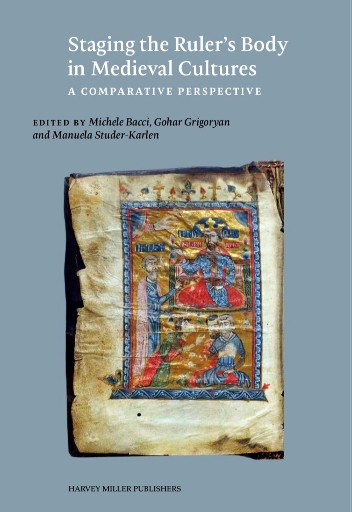
Staging the Ruler’s Body in Medieval Cultures: A Comparative Perspective
show More to view fulltext, buy and share links for:Staging the Ruler’s Body in Medieval Cultures: A Comparative Perspective show Less to hide fulltext, buy and share links for: Staging the Ruler’s Body in Medieval Cultures: A Comparative PerspectiveThis book explores the viewing and sensorial contexts in which the bodies of kings and queens were involved in the premodern societies of Europe, Asia, and Africa, relying on a methodology that aims to overcoming the traditional boundaries between material studies, art history, political theory, and Repräsentationsgeschichte. More specifically, it investigates the multiple ways in which the ruler’s physical appearance was apprehended and invested with visual, metaphorical, and emotional associations, as well as the dynamics whereby such mise-en-scène devices either were inspired by or worked as sources of inspiration for textual and pictorial representations of royalty. The outcome is a multifaced analysis of the multiple, imaginative, and terribly ambiguous ways in which, in past societies, the notion of a God-driven, eternal, and transpersonal royal power came to be associated with the material bodies of kings and queens, and of the impressive efforts made, in different cultures, to elude the conundrum of the latter’s weakness, transitoriness, and individual distinctiveness.
-
-
-
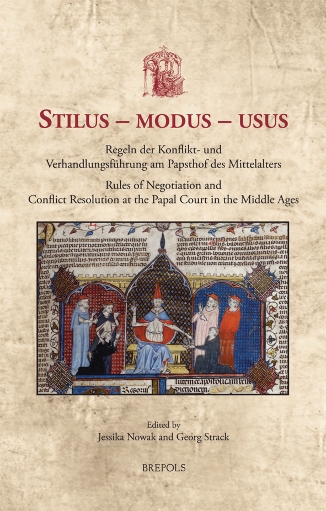
Stilus - modus - usus
Regeln der Konflikt- und Verhandlungsführung am Papsthof des Mittelalters / Rules of Negotiation and Conflict Resolution at the Papal Court in the Middle Ages
show More to view fulltext, buy and share links for:Stilus - modus - usus show Less to hide fulltext, buy and share links for: Stilus - modus - ususBy exploring communication and social practices employed during negotiations at the papal court, this volume sheds light on a wide range of sources for studying the high and late medieval papacy. Analyzing the terminology and practice of the ‘stilus curiae’ in documents from all parts of Europe, this volume puts forward a new understanding of negotiation and conflict resolution at the papal court in the Middle Ages. ‘Stilus curiae’ usually refers to the language and style of curial documents, and it is often used to describe the customary application of legal procedure in court practice. The authors of this volume, however, argue for a broader understanding of ‘stilus curiae’ as an umbrella term that encompasses all forms of communication and social practices used during negotiations at the papal court. This volume (the first of two) publishes the results of a research network funded by the German Research Foundation (DFG). Through analysis of the concept(s) of the ‘stilus curiae’, the chapters throw new light on a wide range of sources from the High and Late Middle Ages, including chronicles, biographic and polemic texts, as well as administrative sources, such as letters of petitioners and proctors, speeches, and financial records of ambassadors. Thus, the volume offers a new approach towards the papacy between 1100 and 1500.
-