


Brepols
Brepols is an international academic publisher of works in the humanities, with a particular focus in history, archaeology, history of the arts, language and literature, and critical editions of source works.2551 - 2600 of 3194 results
-
-
Stocks, seasons and sales
Food supply, storage and markets in Europe and the New World, c. 1600-2000
show More to view fulltext, buy and share links for:Stocks, seasons and sales show Less to hide fulltext, buy and share links for: Stocks, seasons and salesThis book presents ten case-studies by eminent scholars dealing with food supply, storage and markets from c. 1600 to c. 2000. Together they present a long-term history of the tools to regulate the rhythms and seasonal patterns of the food production and distribution process. How were the vast flows of staple food needed for metropolitan areas organised? What practical difficulties had to be overcome to preserve this food safely? Did people respond to price patterns in search for profit? Were governments successful in imposing regulation? In dealing with these issues, the contributing authors adopt different approaches and investigate cases from England, Belgium, Germany, Austria, Italy, France and Mexico. The focus on the stocks and flows of grains and other foodstuffs raises new questions combining economic, social, political, and environmental issues in the study of agricultural markets and food policies.
-
-
-
Stoic Presocratics – Presocratic Stoics
Studies in the Stoic Reception of Early Greek Philosophy
show More to view fulltext, buy and share links for:Stoic Presocratics – Presocratic Stoics show Less to hide fulltext, buy and share links for: Stoic Presocratics – Presocratic StoicsThe volume provides for the first time in scholarship a comprehensive and in-depth analysis of the relationship between Stoicism and early Greek philosophy, from Orphism to the Monists and the Pluralists. Going beyond the common assumption that the Stoics refer exclusively to Heraclitus, it is shown that almost the entire Presocratic tradition (sometimes mediated decisively by Plato and Aristotle) has made a fundamental contribution to the construction of Stoic thought, especially in the field of physics (i.e. cosmology, ontology, and theology).
-
-
-
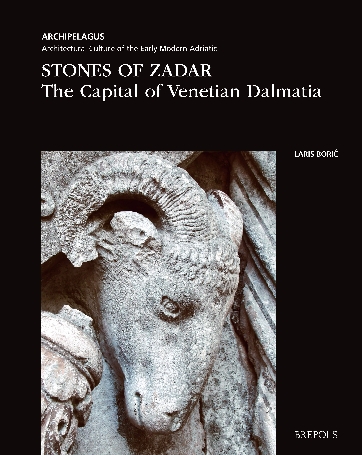
Stones of Zadar
The Capital of Venetian Dalmatia
show More to view fulltext, buy and share links for:Stones of Zadar show Less to hide fulltext, buy and share links for: Stones of ZadarThe book investigates the transformation of the architectural and visual language in Zadar, eastern Adriatic town, at the dawn of the early modern era, when the mighty mediaeval commune was being transformed by the emerging governmental structures of the Republic of Venice. These events coincided with the Ottoman Empire's takeover of the hinterland of Dalmatian cities, transforming Zadar into a city on the brink of two worlds.
A highly autonomous mediaeval commune was a lively trans-Adriatic artistic centre, a network of builders, painters, and sculptors from Dalmatia, Venice, Marche and Lombardy, so with the early adoption of humanist concepts by the local elite, this practice continued. However, the transformations the governmental structure and economic policies steadily limited its community autonomy and commercial sources. The crisis worsened in the 16th century, when the local elites lost a large portion of their revenue from the fertile hinterland captured by the Ottoman Empire.
This launched an ongoing militarisation of social structures and fortifying the town. These events were reflected in the fields of architecture and art. The process of adopting a new architectural and artistic language began in the second half of the 15th century, as demonstrated by motifs in architectural decoration and sculpture with impulses from important Dalmatian sculptural and stonemasons’ circles, as well as Venetian models from the circles of Pietro Lombardo and Mauro Codussi. When the new classical language of architecture began spreading in the middle of the 16th century, it expressed mostly in the renovation of administrative structures, with occasional departures from the stylistic canons of artistic centres.
-
-
-
Storyworlds and Worldbuilding in Old Norse‑Icelandic Literature
show More to view fulltext, buy and share links for:Storyworlds and Worldbuilding in Old Norse‑Icelandic Literature show Less to hide fulltext, buy and share links for: Storyworlds and Worldbuilding in Old Norse‑Icelandic LiteratureThe storyworlds of Old Norse-Icelandic literature are multifaceted and variable, ranging from the worlds of heroic poetry and popular romance to the recognizable narrative universe built by the Sagas of Icelanders. Despite this, they have rarely been explored, and narratological theories of storyworlds or fantasy scholarship have had little impact on the field. Yet given that every story creates its own storyworld, it can be assumed that Old Norse-Icelandic literary texts, too, build worlds — and these worlds are diverse and complex, as shown by the contributors in this volume: they constantly engage with one another, exploring, shaping, and expanding, while also entering into a dialogue with the primary world from which they draw.
This volume brings together scholars from different areas of Old Norse-Icelandic studies to explore questions related to not only the storyworlds of medieval Icelandic literature, but also those of legal and learned texts, and to the way that they are built. Together they inquire into the nature of these worlds, into their preservation and transmission in manuscripts, their transmediality, transnarrativity, and reception. In doing so, these inquiries showcase the breadth of new perspectives on medieval Icelandic literature made possible by the application of narratological theory in its study.
-
-
-
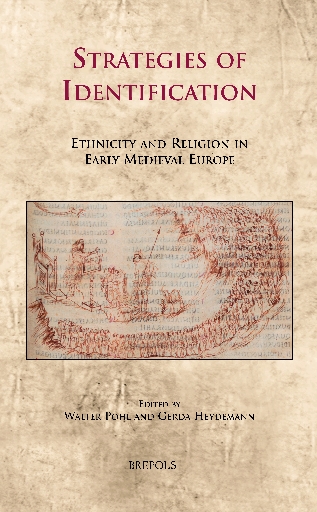
Strategies of Identification
Ethnicity and Religion in Early Medieval Europe
show More to view fulltext, buy and share links for:Strategies of Identification show Less to hide fulltext, buy and share links for: Strategies of IdentificationHow were identities created in the early Middle Ages and when did they matter? This book explores different types of sources to understand the ways in which they contributed to making ethnic and religious communities meaningful: historiography and hagiography, biblical exegesis and works of theology, sermons and letters. Thus, it sets out to widen the horizon of current debates on ethnicity and identity. The Christianization and dissolution of the Roman Empire had provoked a crisis of traditional identities and opened new spaces for identification. What were the textual resources on which new communities could rely, however precariously? Biblical models and Christian discourses could be used for a variety of aims and identifications, and the volume provides some exemplary analyses of these distinct voices. Barbarian polities developed in a rich and varied framework of textual ‘strategies of identification’. The contributions reconstruct some of this discursive matrix and its development from the age of Augustine to the Carolingians. In the course of this process, ethnicity and religion were amalgamated in a new way that became fundamental for European history, and acquired an important political role in the post-Roman kingdoms. The extensive introduction not only draws together the individual studies, but also addresses fundamental issues of the definition of ethnicity, and of the relationship between discourses and practices of identity. It offers a methodological basis that is valid for studies of identity in general.
-
-
-
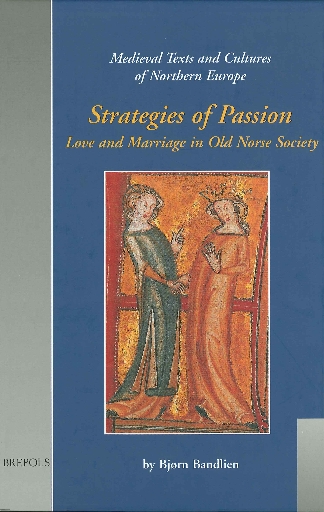
Strategies of Passion
Love and Marriage in Medieval Iceland and Norway
show More to view fulltext, buy and share links for:Strategies of Passion show Less to hide fulltext, buy and share links for: Strategies of PassionThis book is concerned with the social and gendered meanings of love in medieval Norway and Iceland. In the Viking Age, to love would most often imply a submissive social position, while being loved by a woman could elevate a man above the status of her family. Women were supposed to love upwards in the social hierarchy, but could also use their desire to negotiate the social position of men. A close reading of the skaldic poetry shows the dilemma men faced when longing for women’s love and approval. These ideas of love relations shaped Norse interpretations of courtly love and marriage formation by consent in the twelfth and thirteenth centuries. However, new ideas of sexuality, gender and society affected the understanding of love and marital affection in the later Middle Ages. Men became the loving subject, but in a way that did not challenge the social order. For women, ideal love was attached to humility and submission to parents and husband. But even though the new ideology of love and marriage to some extent neutralized the tensions between consent and parental control, the sources show that both men and women could use the new conceptions of love to serve their own marital and social strategies.
-
-
-
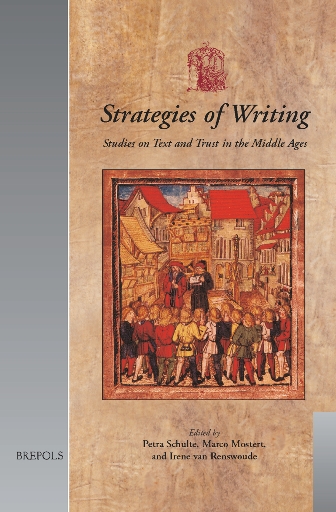
Strategies of Writing
Studies on Text and Trust in the Middle Ages: Papers from “Trust in Writing in the Middle Ages” (Utrecht, 28-29 November 2002)
show More to view fulltext, buy and share links for:Strategies of Writing show Less to hide fulltext, buy and share links for: Strategies of WritingTrust is the basis of all social relations. It presupposes the concordance of word and deed. Trust is not created spontaneously, but requires a process of observation and socialization, and thus is culturally determined and subject to change. Writing may engender trust, and trust may be placed in written texts.
The contributions to this volume address the complex relationships between ‘trust’ and ‘writing’ in the Middle Ages. They deal with charters, historiography, letters, political communication, and the possibilities of trust in writing. Some of the questions addressed are: Does writing as a medium engender trust irrespective of the contents of the written text? Was trust in writing dependent on trust in an authority? Was the written form of the text meant to confer trust on its contents? Did rituals take place that were meant to enhance the text’s trustworthiness? Can changes be observed in the strategies of engendering trust? Was trust considered food for reflection in written texts? What was considered to constitute a breach of trust? The volume is dedicated to Michael Clanchy, whose work inspired much of its contents.
-
-
-
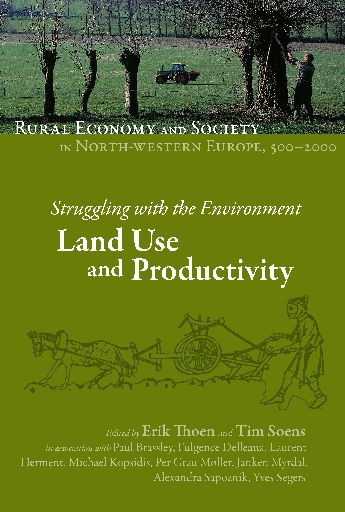
Struggling with the Environment: Land Use and Productivity
show More to view fulltext, buy and share links for:Struggling with the Environment: Land Use and Productivity show Less to hide fulltext, buy and share links for: Struggling with the Environment: Land Use and ProductivityAgriculture is always a struggle with the environment since agricultural production is in fact applied ecology. However, in the past the struggle with the environment was to a large extent determined by the social organisation which was regionally very diverse. The aim of this volume is to find out how, when and within which structural boundaries, land was made useful for agriculture. In the first part of each chapter, this is studied in general, focusing on the evolution of land use: how and why was land reclaimed and by whom? How intensively was this land used? Which actors played a part in this process? What were the environmental and social limits? In the second part the production techniques and production systems are scrutinized: crop choices, crop rotations, the importance of fallow and cattle, crop yields etc. All this is examined in light of different farming strategies and social conditions. The comparative approach of this volume in the Rural Economy and Society Series also enables a new and innovating perspective on the occurrence and impact of ‘agricultural’ and ‘green’ revolutions in the past.
-
-
-
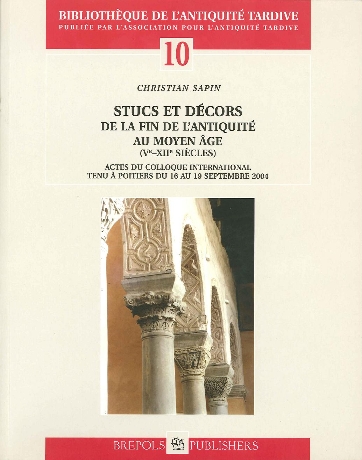
Stucs et décors de la fin de l’Antiquité au Moyen Âge (Ve-XIIe siècle)
Actes du colloque international tenu à Poitiers du 16 au 19 septembre 2004
show More to view fulltext, buy and share links for:Stucs et décors de la fin de l’Antiquité au Moyen Âge (Ve-XIIe siècle) show Less to hide fulltext, buy and share links for: Stucs et décors de la fin de l’Antiquité au Moyen Âge (Ve-XIIe siècle)Le stuc, un art à part entière
L’importance du stuc comme matériau et processus de décor a longtemps été ignorée. Les diverses contributions à ce colloque permettent, pour la première fois, d’en saisir la portée sur une longue durée. Avec ses origines antiques ou moyen-orientales, ses croisements avec la peinture ou la sculpture, sa diversité dans une grande partie de l’Europe, sa présence est désormais perçue comme permanente entre le iv e et le xii e siècle. Une meilleure connaissance de sa fabrication grâce à de nombreuses analyses en laboratoire, une relecture d’ensembles jusque-là peu étudiés comme Disentis, ou découverts par l’archéologie comme Vouneuil-sous-Biard, Bordeaux ou Arles-sur-Tech, illustrent mieux aujourd’hui cette conception particulière de l’art du relief transmise et sans cesse renouvelée depuis l’Antiquité tardive.
-
-
-
Studia Orientalia Christiana - Collectanea
show More to view fulltext, buy and share links for:Studia Orientalia Christiana - Collectanea show Less to hide fulltext, buy and share links for: Studia Orientalia Christiana - CollectaneaStudia Orientalia Christiana.Collectanea is a journal that publishes annual studies about Christian oriental Churches, Arab Christianity, and the presence of the Franciscans in the Middle East. The journal is published by scholars of the Franciscan Center of Christian Oriental Studies, founded in Cairo by the Custody of the Holy Land in 1954 at the monastery of Mousky, the first Franciscan establishment in Egypt. The Centre aims to promote research in two main areas: the development of the Eastern sciences among Middle East Christian communities and the documentation and recording in chronicles of the lives and history of the Franciscans in the Middle East.
-
-
-
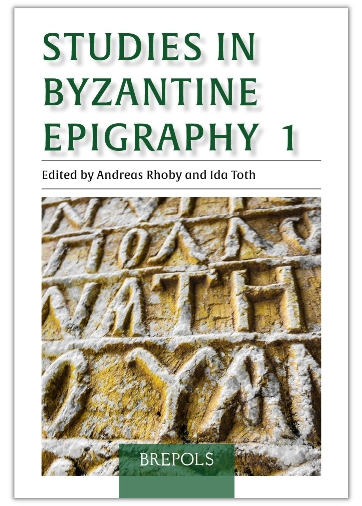
Studies in Byzantine Epigraphy 1
show More to view fulltext, buy and share links for:Studies in Byzantine Epigraphy 1 show Less to hide fulltext, buy and share links for: Studies in Byzantine Epigraphy 1The Studies in Byzantine Epigraphy series testifies to an ever-greater focus on inscriptions within Byzantine Studies. The present, inaugural volume includes selected papers from the two panels dedicated to Byzantine Epigraphy held at the XXIII International Congress of Byzantine Studies in Belgrade, August 2016, and the XV International Congress of Greek and Latin Epigraphy in Vienna, August/September 2017. The papers, as indeed the events for which they were initially produced, celebrate both the progress and the promise of epigraphic research within medieval and early modern scholarship as a whole.
-
-
-
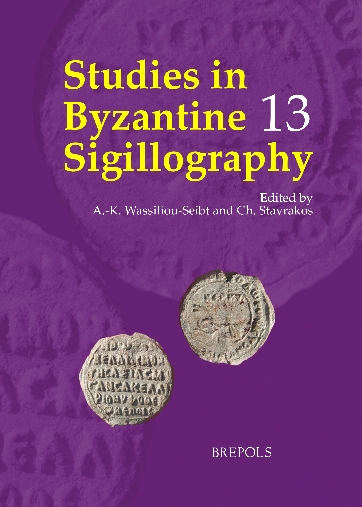
Studies in Byzantine Sigillography
Volume 13
show More to view fulltext, buy and share links for:Studies in Byzantine Sigillography show Less to hide fulltext, buy and share links for: Studies in Byzantine SigillographyThis volume contains primarily papers of the 11th International Symposium held in Istanbul (May 2014) and of the last Congres of Byzantine Studies in Belgrade (August 2016). There are papers about the seals as historical source and archaeological finding presenting their role in the Byzantine Prosopography, Byzantine Administration, Historical Geography and Byzantine Art History.
-
-
-
Studies in Byzantine Sigillography
Volume 14
show More to view fulltext, buy and share links for:Studies in Byzantine Sigillography show Less to hide fulltext, buy and share links for: Studies in Byzantine SigillographyThe present volume contains the papers from the 12th International Symposium of Byzantine Sigillography, held at the State Ermitage Museum in St. Petersburg, May 27-30, 2019. The papers discuss seals as historical sources and archaeological findings, presenting their role in the Byzantine prosopography, administration, historical geography and art history.
-
-
-
Studies in Carthusian Monasticism in the Late Middle Ages
show More to view fulltext, buy and share links for:Studies in Carthusian Monasticism in the Late Middle Ages show Less to hide fulltext, buy and share links for: Studies in Carthusian Monasticism in the Late Middle AgesThis volume focuses on aspects of Carthusian history and culture of the later Middle Ages, a period of growth and vitality within the order. There is a primary but not exclusive focus on the English Province, which to date has received at best unbalanced attention. While the fundamental ambitions and ideals of Carthusianism formulated, articulated, and lived by the disciples of St Bruno between the late eleventh and the thirteenth centuries changed very little, the fourteenth to sixteenth centuries witnessed developments stimulated by and often commensurate with the progress of external culture. In such areas as devotional practice, literature, art and architecture, patronage, and monastic-lay relations generally, the houses of the order grew increasingly sophisticated: in some cultural spheres Carthusians were in the vanguard. The late Middle Ages thus offer rich opportunities for assessment of how a religious organization defined and justified by essentially reactionary conventions responded to constant forinsec evolution.
The volume’s approach is multi-disciplinary, involving both senior and younger Carthusian scholars in investigation of the main facets of Carthusian life for which significant data survives. This permits a thorough analysis of the order’s character, one that reflects concern with synoptic understanding of medieval Carthusianism rather than partial assessment through a specifically devotional, literary, or more narrowly historical approach. Subject areas covered include the historical growth of individual Charterhouses, patronage of Carthusians by secular agents, Carthusian architecture and manuscript decoration, devotional practice, and textual culture.
-
-
-
Studies in History of Mathematics Dedicated to A.P. Youschkevitch
Proceedings of the XXth International Congress of History of Science (Liège, 20-26 July 1997) Vol. XIII
show More to view fulltext, buy and share links for:Studies in History of Mathematics Dedicated to A.P. Youschkevitch show Less to hide fulltext, buy and share links for: Studies in History of Mathematics Dedicated to A.P. YouschkevitchIn the framework of the 20th International Congress of History of Science (Liège 1997), a symposium was devoted to the historical work of Adolph P. Youschkevitch (1906-1993). The present volume includes the papers read during the symposium as well as contributions on current issues in the history of mathematics : mathematics as a cultural strength, mathematics from antiquity to the classical period, probability theory and its applications, mathematics in the 19th and 20th centuries.
-
-
-

Studies in Maximus the Confessor’s Opuscula Theologica et Polemica
Papers Collected on the Occasion of the Belgrade Colloquium on Saint Maximus, 3–4 February 2020
show More to view fulltext, buy and share links for:Studies in Maximus the Confessor’s Opuscula Theologica et Polemica show Less to hide fulltext, buy and share links for: Studies in Maximus the Confessor’s Opuscula Theologica et PolemicaOpuscula theologica et polemica is a collection of minor works of Maximus the Confessor that has not received much scholarly attention so far. Nevertheless, it offers a unique insight in the Christological and personological universe of the Christian thinker. The present volume is the first attempt to bring together scholars of different traditions and to apply different approaches - theological, philosophical, philological and historical - to this seminal work.
-
-
-
Studies in Theodore Anagnostes
show More to view fulltext, buy and share links for:Studies in Theodore Anagnostes show Less to hide fulltext, buy and share links for: Studies in Theodore AnagnostesIn spite of its importance, Theodore Anagnostes’ Church History has attracted only little scholarly attention so far. To a large extent, we still rely on the assertions of philologists and historians from around the turn of the 19th to the 20th centuries, and the authoritative edition of the text is still the one published by C. G. Hansen in 1971, which for the most part remained unchanged in its 1995 reissue. The studies collected in this volume aim to fill this gap in the literature and to answer three main questions: (1) How can Theodore’s working method and the aim of his work be reconstructed? (2) To what extent can the Church History be considered a reliable historical source? And (3) which impact did the work have on contemporary and later historiography? In close connection with the bilingual (Greek-English) edition of the Church History that was recently published, the present volume thus aims to provide a closer and more differentiated appraisal of Theodore Anagnostes and his historiographical project.
-
-
-
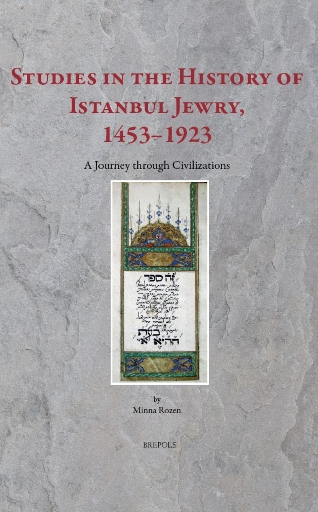
Studies in the History of Istanbul Jewry, 1453-1923
A Journey through Civilizations
show More to view fulltext, buy and share links for:Studies in the History of Istanbul Jewry, 1453-1923 show Less to hide fulltext, buy and share links for: Studies in the History of Istanbul Jewry, 1453-1923This book presents ten chapters on the history of the Jewish community of Istanbul from the Ottoman conquest of Constantinople (1453) to the establishment of the Turkish Republic (1923). While delving into specific subjects such as the Romaniot presence in the city, the Karaite society, family life throughout the generations, material culture and its meaning, social life, urban history, economic life, and relations with the Ottoman regime, a common thread binds all of them. Each of the chapters, individually and together, constitutes a journey between different cultures and religions. The history of Istanbul’s Jews carries the imprint of Greek Orthodoxy and Catholicism, as well as Islam. It moves in cycles between the Byzantine and Ottoman realms, between Catholic Europe and the Muslim Ottoman Empire, and finally, between the Ottoman Jewish culture and a modern Europe in the throes of secularization. Over fifty images are included to illustrate the multi-cultural aspect of the history presented here.
The essays in this volume present high quality scholarship, but equally they provide a fascinating insight to general readers with an interest in Constantinople-Istanbul-Qosta, as well as readers interested in Jewish urban history, the transmission of culture, and multiculturalism.
-
-
-
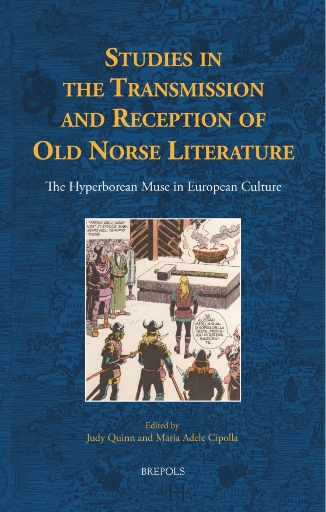
Studies in the Transmission and Reception of Old Norse Literature
The Hyperborean Muse in European Culture
show More to view fulltext, buy and share links for:Studies in the Transmission and Reception of Old Norse Literature show Less to hide fulltext, buy and share links for: Studies in the Transmission and Reception of Old Norse LiteratureThe compelling world of the Vikings and their descendants, preserved in the sagas, poetry, and mythology of medieval Iceland, has been an important source of inspiration to artists and writers across Europe, as well as to scholars devoted to editing and interpreting the manuscript texts. A variety of creative ventures have been born of the processes of imagining this distant ‘hyperborean’ world. The essays in this volume, by scholars from Italy, Sweden, Denmark, Norway, Germany, and the UK, examine the scholarly and artistic reception of a variety of Old Norse texts from the beginnings of the manuscript tradition in twelfth-century Iceland to contemporary poetry, crime fiction, and graphic novels produced in Britain, Ireland, Italy, and Iceland. The influence of Old Norse literature is further explored in the context of Shakespeare’s plays, eighteenth-century Italian opera, the Romantic movement in Sweden and Denmark, and the so-called ‘nordic renaissance’ of the late nineteenth century (including the works of August Strindberg and William Morris), as well as in some of the political movements of twentieth-century northern Europe. Interest in Old Norse literature is charted as it spread beyond intellectual centres in Europe and out to a wider reading and viewing public. The influence of the ‘hyperborean muse’ is evident throughout this book, as the idea of early Nordic culture has been refashioned to reflect contemporary notions and ideals.
-
-
-
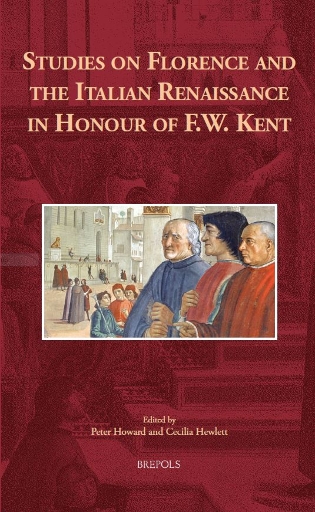
Studies on Florence and the Italian Renaissance in Honour of F.W. Kent
show More to view fulltext, buy and share links for:Studies on Florence and the Italian Renaissance in Honour of F.W. Kent show Less to hide fulltext, buy and share links for: Studies on Florence and the Italian Renaissance in Honour of F.W. KentThis volume honours F. W. (Bill) Kent (1942–2010), internationally renowned scholar of Renaissance Florence and founding editor of the Europa Sacra series. Kent belonged to an energetic generation of Australians who, in the late 1960s, tackled the Florentine archives and engaged key issues confronting historians of that ever-fascinating city.
With his meticulous archival findings and contextual interpretations spanning a scholarly career of more than forty years, Kent engaged with, indeed drove, the scholarly response to many of the issues that have shaped not just our current and emerging understanding of Florence and other urban centres of Italy, but along with that, a more nuanced view of the role of frontier towns and the countryside.
Interdisciplinary in scope and grounded in visual, literary, and archival materials, the essays presented here explore a variety of facets of the society of Renaissance Italy, confronting and extending themes that have been emerging in recent decades and exemplified by Kent’s work. These themes include the role of kinship and networks, power and agency in Laurentian Florence, gender, ritual, representation, patronage, spirituality, and the generation and consumption of material culture.
-
-
-
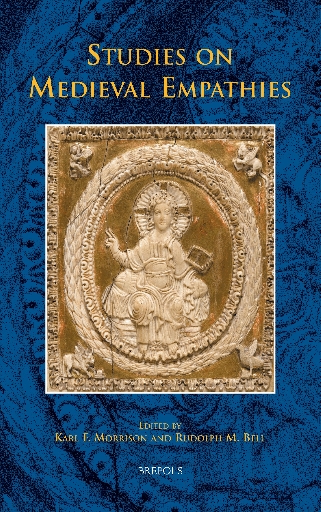
Studies on Medieval Empathies
show More to view fulltext, buy and share links for:Studies on Medieval Empathies show Less to hide fulltext, buy and share links for: Studies on Medieval EmpathiesEmpathy is a deep feeling or intuition for kinship transcending self-preoccupied individuality. This book is about empathy in the Middle Ages, before it had a name.The authors begin by tracing the origins of empathy in pre-Christian Antiquity and early Christianity, especially in mysteries of divine justice, by which the good often suffered and the wicked prospered and, as with surgical healing, compassion was manifested by inflicting pain. The authors also explore many facets of empathy’s development in the Latin West, criss-crossing the artificial borders of academic departments to reveal interlocking connections that give emotional power to images, whether verbal, pictorial, or performative. In a powerful multi-disciplinary collaboration, they identify conditions and limits of empathy, and areas in which the dynamic between insiders and outsiders forced subversive explorations of what it meant to be human.
The doctrine of Christ as mediator of divine love dominated medieval thought about empathy as a human instinct. Taken together, like magnetic poles, two pictures in this book represent that mediation in action. The cover illustration, a mid-ninth-century ivory plaque from Carolingian Gaul, depicts Christ, the Divine Word, Love incarnate, glorified, enthroned, and adored by angels as creator, judge, and teacher. The second, Plate 1, from the same period and region, represents the act that sealed the mediation of divine love to humanity: Christ the man, tortured and dying for love.
-
-
-
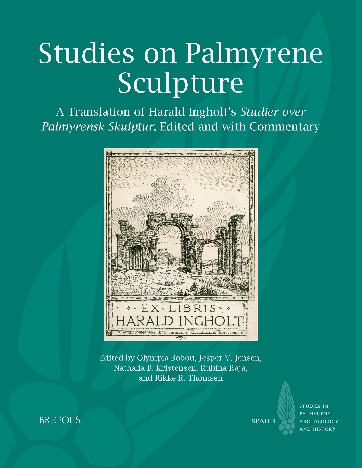
Studies on Palmyrene Sculpture
A Translation of Harald Ingholt’s Studier over Palmyrensk Skulptur, Edited and with Commentary
show More to view fulltext, buy and share links for:Studies on Palmyrene Sculpture show Less to hide fulltext, buy and share links for: Studies on Palmyrene SculptureThis volume presents the first English translation of Harald Ingholt’s seminal work Studier over Palmyrensk Skulptur, together with a number of studies that contextualize this important volume in the light of current research. Almost a century after its publication in 1928, Ingholt’s ground-breaking Danish-language monograph remains essential reading for all scholars of Palmyrene archaeology and iconography, setting out observations on the typology and style of securely dated Palmyrene portraits, and establishing a stylistic and chronological sequence that remains in use today. Included alongside the translation of Ingholt’s writings are contributions by leading scholars in the field who seek to introduce Harald Ingholt and explore the impact of his work in Palmyra, as well as presenting a survey of all the portraits from Palmyra that can be securely dated by inscription. The translation and commentary have been realized as part of the Palmyra Portrait Project, directed by Prof. Rubina Raja.
-
-
-
Studies on Texts of Early Irish Latin Gospels (A.D. 600-1200)
show More to view fulltext, buy and share links for:Studies on Texts of Early Irish Latin Gospels (A.D. 600-1200) show Less to hide fulltext, buy and share links for: Studies on Texts of Early Irish Latin Gospels (A.D. 600-1200)The interest of the Latin texts of the Gospels from Ireland lies in the light they may shed on the transmission of the Gospel texts in a particular area of the Latin Church. The essays published in this book will give an idea of the extent of the material to be studied, as well as an indication of its importance.
-
