


Brepols
Brepols is an international academic publisher of works in the humanities, with a particular focus in history, archaeology, history of the arts, language and literature, and critical editions of source works.401 - 450 of 3194 results
-
-
Britons, Saxons, and Scandinavians
The Historical Geography of Glanville R. J. Jones
show More to view fulltext, buy and share links for:Britons, Saxons, and Scandinavians show Less to hide fulltext, buy and share links for: Britons, Saxons, and ScandinaviansThis volume contains a selection of the collected papers of the late Professor Glanville R. J. Jones. Following a brief assessment of the man and his work, by J. Beverley Smith, an extensive introductory essay by the editors sets Jones’s work in a wide historiographical context. This material provides an overview of his ‘multiple estate’ model and concludes with an assessment of its continuing relevance in the twenty-first century. The selection of his published papers then begins with Welsh roots and the work from which his ideas grew, while the remaining items show how the questions he asked led him towards explorations of ‘early’ medieval estate structures in England, their links with rural settlement evolution, and the pragmatic, tenurial, and fiscal arrangements which bound individual rural settlements into broader spatial structures. Jones’s ideas are often cited — usually, but not invariably, with praise — and this corpus is intended to allow today’s scholars to reach a mature assessment of what he achieved. Right or wrong, he presented important challenges to the various disciplines working on the archaeology, history, and historical geography of the periods before and after the Norman Conquest of 1066.
-
-
-
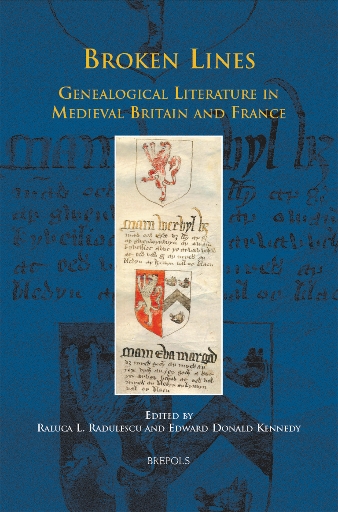
Broken Lines
Genealogical Literature in Medieval Britain and France
show More to view fulltext, buy and share links for:Broken Lines show Less to hide fulltext, buy and share links for: Broken LinesThe essays in this important and fascinating collection explore the genealogical literature of late-medieval Britain and France in relation to issues of identity, the transmission of power, and cultural, socio-political, and economic developments. By analyzing the mechanics of cultural and political inheritance and the processes of shaping a sense of identity and descent, the essays in this volume direct the reader towards a complex understanding of genealogical literature and its relationships with other genres, one which will further debate and research in these areas. The present collection presents an interdisciplinary approach to the genealogical literature of the late-medieval period, and brings together specialists in the fields of history, cultural history and literature to raise questions of gender, genre, and theoretical approaches. Broken Lines is also the first book-length study of genealogical literature to date, an exciting intervention into this emerging field of interest.
-
-
-

Bruno the Carthusian and his Mortuary Roll
Studies, Text, and Translations
show More to view fulltext, buy and share links for:Bruno the Carthusian and his Mortuary Roll show Less to hide fulltext, buy and share links for: Bruno the Carthusian and his Mortuary RollAs founder of the Carthusian order, Saint Bruno of Cologne († 1101) is known as a leading figure in the twelfth-century religious renewal. As recent research has emphasized, he was also one of the first proponents of a new intellectual culture of the French schools as a teacher at Reims before his conversion and retreat to the Italian hermitage of La Torre.
Various contrary aspects of his life are commemorated in his mortuary roll, a unique document that was sent around churches and monasteries of Europe upon his death by his fledgling hermit community. Over 150 entries by individuals and monastic or clerical communities in Italy, France, and England, mostly in verse, survive in an early sixteenth-century text witness.
In celebrating Bruno’s life and saintly death, the many-voiced entries comment upon intellectual and religious ideals, illustrating literary practices and intellectual and spiritual values as well as the pragmatic workings of memoria. The present edition includes all materials accompanying the sole surviving sixteenth-century print of the roll. It offers complete translations into English and into German, and includes five studies by experts debating the most important aspects and contexts of this singular and multi-faceted medieval text.
-
-
-
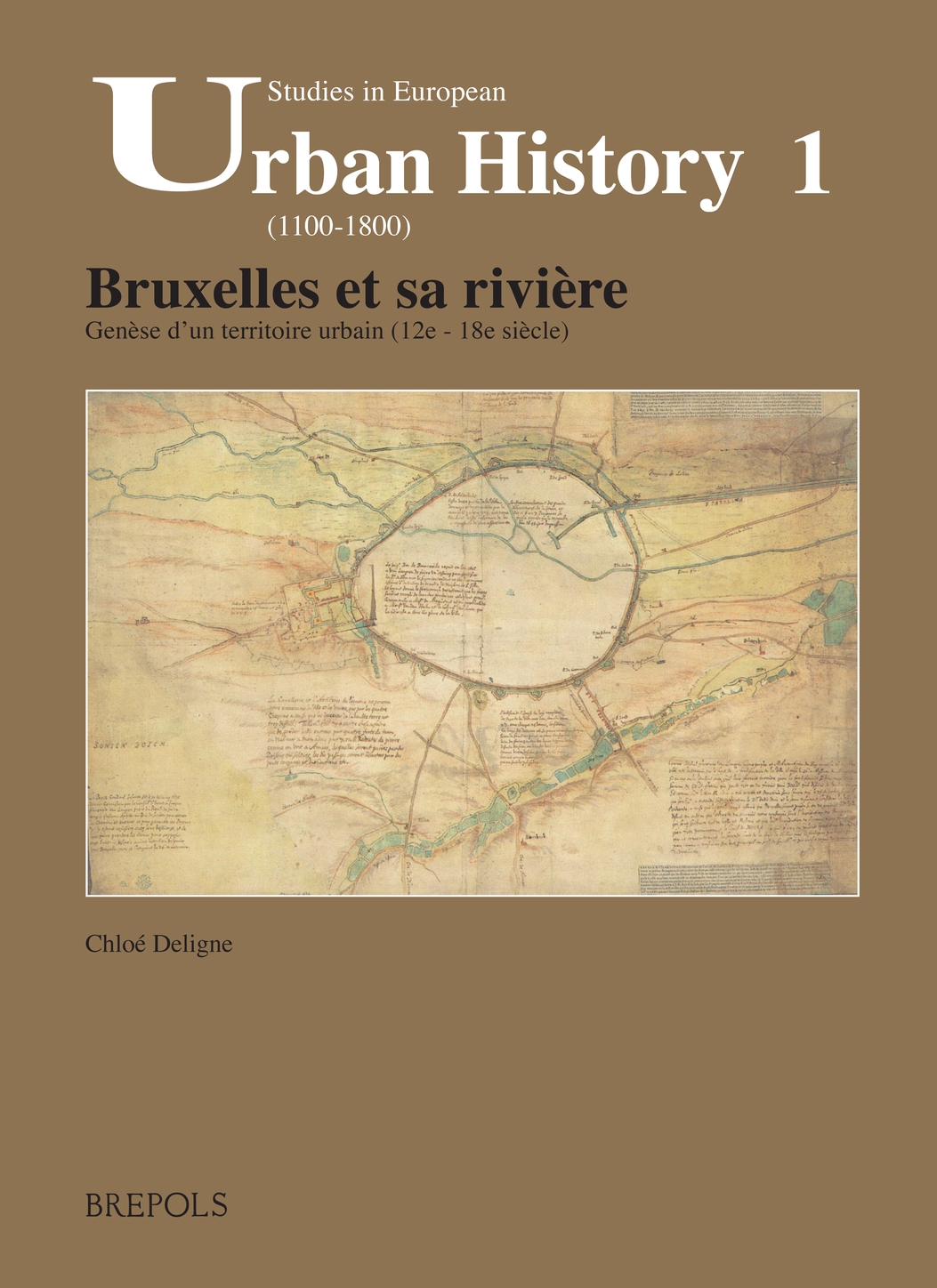
Bruxelles et sa rivière
Genèse d'un territoire urbain (12e - 18e siècle)
show More to view fulltext, buy and share links for:Bruxelles et sa rivière show Less to hide fulltext, buy and share links for: Bruxelles et sa rivièreLe contrôle et le partage de l'eau sont d'importants outils du pouvoir, qu'il s'agisse d'orienter le développement d'une ville, de maîtriser certaines activités ou de soutenir la stabilisation des populations. L'étude de la gestion de l'eau, trop souvent oubliée des grandes synthèses historiques, mérite un regard approfondi, tant elle éclaire d'un jour nouveau l'histoire de nos villes. Cet ouvrage, dans lequel la Senne, rivière de Bruxelles, sert de fil conducteur à un périple historique renouvelé, entraîne le lecteur depuis le bassin des fontaines jusqu'à la roue des nombreux moulins de la région et montre que, quelles que soient l'époque et l'échelle spatiale concernées, la maîtrise de l'eau a été au cœur de logiques territoriales dont nous sommes encore les héritiers.
A l'échelle du Brabant, le prince veilla dès le 12e siècle à maximiser le potentiel économique de la Senne. Il cadenassa la rivière à l'amont de Bruxelles et établit plusieurs moulins en son cœur. A l'échelle de l'hinterland bruxellois, les capitaux urbains valorisèrent les moindres affluents durant tout le Moyen Age par l'établissement de longs chapelets d'étangs de pisciculture et d'innombrables moulins, tandis qu'au 16e siècle, le creusement du canal de Willebroek consacra l'emprise de la cité bien au-delà de ses murs. Enfin, à l'intérieur de la ville, la géographie de la distribution de l'eau quotidienne traduisait bien l'emprise des différents pouvoirs urbains. Les grandes familles bruxelloises contrôlaient les premiers points d'eau dispersés dans les quartiers urbanisés, les autorités communales étalaient la magnificience de la ville dans un réseau de fontaines d'apparat érigées aux points névralgiques de la cité, tandis qu'au 17e siècle, la Cour développait son propre réseau au départ de la machine hydraulique de Saint-Josse.
Ces aménagements hydrauliques provoquaient bien souvent des réactions imprévues dans le milieu. Inondations, tarissements, ensablement, etc. venaient régulièrement contrecarrer les désirs des gestionnaires, entraînés malgré eux dans de nouveaux cycles d'interventions. Ce livre, richement illustré, montre que les dynamiques environnementales participent pleinement à la construction des rapports socio-économiques, souvent conflictuels, qui se nouent autour de la gestion de l'eau.
-
-
-
Building and Economic Growth in Southern Europe (1050–1300)
show More to view fulltext, buy and share links for:Building and Economic Growth in Southern Europe (1050–1300) show Less to hide fulltext, buy and share links for: Building and Economic Growth in Southern Europe (1050–1300)The four-volume sub-series ‘Petrifying Wealth’ explores the sudden ubiquity of masonry construction between 1050 and 1300 in Southern Europe and its profound effect on the European landscape. New questions about wealth, society, and medieval building are explored, which highlight the link between construction in durable materials and the shaping of individual, collective, and territorial identities: the birth of a new, long-lasting panorama, epitomising the way we see the space and territory of Europe nowadays.
Volume 2 of the ‘Petrifying Wealth’ series focuses on economic growth in Southern Europe between 1050 and 1300, discussing investments on buildings connected with production and trade. It examines buildings that served a primarily economic purpose, in various aspects: agricultural activity and the conservation and processing of its products, crafts, and exchanges and their material infrastructures. The growth in this period resulted in a multiplication of material structures closely linked with economic activity, such as mills, barns, canals, workshops, and arsenals. Focusing on the dynamics connected with these buildings thus offers a vantage point to better understand the contexts and characteristics of the ‘economic take-off’ in Southern Europe in this period.
-
-
-
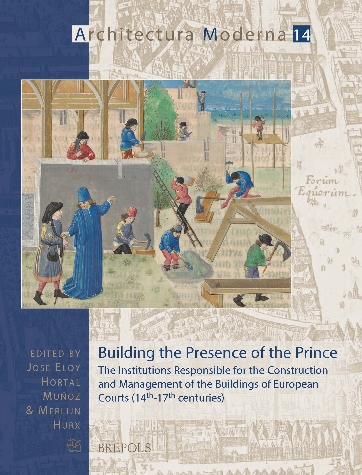
Building the Presence of the Prince
The Institutions Responsible for the Construction and Management of the Buildings of European Courts (14th-17th centuries)
show More to view fulltext, buy and share links for:Building the Presence of the Prince show Less to hide fulltext, buy and share links for: Building the Presence of the PrinceBy the late Middle Ages, architecture became an increasingly important means of representation of princely rule and institutions. In addition to their symbolic significance, the ruler’s buildings served a host of practical purposes. Obviously, castles and fortresses defended the territory, while urban and rural residences served the itinerant court during its proceedings, but their possessions also comprised a wider network of estates that included infrastructure and agricultural, commercial, industrial, and administrative buildings. Together, these networks of sites became a significant means of consolidating the sovereigns’ power and served as key instruments for promoting their rule. To tighten the control over their possessions and to ensure their upkeep, rulers set up Offices of Works, permanent administrative bodies entrusted with their management.
These building administrations have not yet been systematically studied, and it remains unclear to what extent such centralised institutions developed autonomously, responding to local conditions and requirements, or were part of international developments facilitated by the close networks of the European courts.
This volume, with contributions from architectural historians, administrative historians, and court historians, represents a first attempt to compare these institutions on a pan-European scale from the late Middle Ages up to the end of the seventeenth century. It aims to explore the relationships between the local specificities of these organisations and their shared characteristics. From a multidisciplinary perspective, it addresses questions concerning the nature of such administrations, their purpose, organisational structure, and judicial powers, as well as their role in the formation of the state.
-
-
-
Bullarium Hellenicum
Pope Honorius III's Letters to Frankish Greece and Constantinople
show More to view fulltext, buy and share links for:Bullarium Hellenicum show Less to hide fulltext, buy and share links for: Bullarium HellenicumThis volume gathers together 277 letters of Pope Honorius III (1216-1227) concerning Frankish Greece and Constantinople. These letters constitute an indispensable source for the early history of the territories conquered during and just after the Fourth Crusade of 1204, for which almost no local archival material survives. The Latin texts of many of the letters are published here for the first time, and almost all the letters have been reedited from the manuscripts, primarily the papal registers in the Vatican Archives. In addition, the volume makes the letters available to non-specialists through exhaustive English summaries of all the letters and complete translations of the most significant ones. A lengthy historical introduction uses these letters to portray the dynamic world of the Latin Empire of Constantinople, the Kingdom of Thessaloniki, and the other states that replaced Byzantium, as the precarious condition of the Latin states compelled the ecclesiastical authorities in Rome to temper their ambitions of transcultural religious unity with pragmatic measures. It explores how this mixture of cultural idealism, practical necessity, and divergent class structures manifested themselves in Honorius' policy towards the lower Greek clergy and Greek and Latin religious orders. Maps, tables, indices, and a guide to papal letters make the volume a useful tool for future studies of this fascinating and controversial phase in the history of Greece and the papacy.
-
-
-
Bulletin de Philosophie Médiévale
show More to view fulltext, buy and share links for:Bulletin de Philosophie Médiévale show Less to hide fulltext, buy and share links for: Bulletin de Philosophie MédiévaleThe Bulletin de Philosophie Médiévale is the annual journal of the Société Internationale pour l’Étude de la Philosophie Médiévale (SIEPM). This journal acts as an irreplaceable reference work for all those who wish to keep themselves informed about research, projects, and conferences in the field of medieval philosophy. The Bulletin mainly focuses on studies and critical editions of unpublished medieval philosophical texts.
More information about this journal on Brepols.net
-
-
-
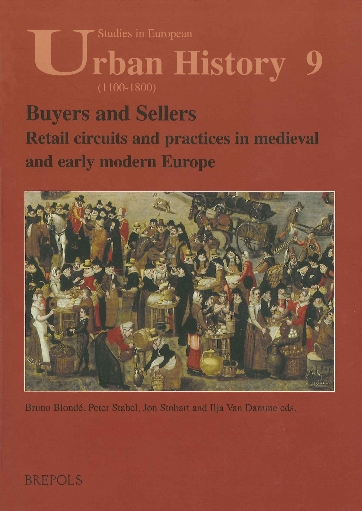
Buyers and Sellers
Retail circuits and practices in medieval and early modern Europe
show More to view fulltext, buy and share links for:Buyers and Sellers show Less to hide fulltext, buy and share links for: Buyers and SellersConsumption is now a critical issue in late medieval and early modern historical and cultural studies. While we know increasingly about regulatory systems, we know much less about the daily practice of buying and selling. This book brings together contributions from urban historians, social historians and art historians to explore the issues of exchange, shopping behavior, social interactions, gender and physical space. Contributions deal with Italy, the Low Countries and England.In the articles in this volume lines of continuity between the medieval and early modern period have been stressed. In addition, some critical questions have been raised. Were markets necessarily less "modern" compared to "fixed shops"? How did changing consumers and consumer patterns interact with the retailer? The essays published here also emphasize the need to study different commercial circuits in their context. These circuits often overlapped and could not artificially be isolated from one another.
-
-
-
Byzantine Hagiography: Texts, Themes & Projects
show More to view fulltext, buy and share links for:Byzantine Hagiography: Texts, Themes & Projects show Less to hide fulltext, buy and share links for: Byzantine Hagiography: Texts, Themes & ProjectsIn recent years Byzantine hagiography has attracted renewed interest of the international community of Byzantine scholars and not only thanks to studies dedicated to this subject and critical editions of individual texts, but also because hagiography has been the main focus of numerous major research projects: databases, new repertories, a new version of the Bibliotheca Hagiographica Graeca and some very useful handbooks dedicated to this literary genre during the Byzantine Empire. These researches have analysed Byzantine hagiography in relation to the hagiographic writings composed in neighbouring areas, the West, the Syriac and Arabic Middle East, the Southern Slavs, etc. but also the relations between the hagiographical texts and other literary genres.
This volume introduces the current developments of hagiographical studies and on-going projects on the subject, and investigates a variety of texts and authors from the Patristic period to the end of Byzantium.
-
-
-
Byzantine Liturgical Books
An Introduction
show More to view fulltext, buy and share links for:Byzantine Liturgical Books show Less to hide fulltext, buy and share links for: Byzantine Liturgical BooksThe world of Byzantine liturgical book types is fascinating but also confusing. While they are central to the study and celebration of Byzantine Liturgy, no one work offers an overview of their history, contents, and structure. This volume offers for the first time an introduction to the major types of Byzantine liturgical books, their taxonomy, origins, development, and contents.
-
-
-
Byzantine Theology and its Philosophical Background
show More to view fulltext, buy and share links for:Byzantine Theology and its Philosophical Background show Less to hide fulltext, buy and share links for: Byzantine Theology and its Philosophical BackgroundSince Byzantium never saw a consistent and definitive attempt at determining the status of philosophy and theology the way Western scholasticism did, the relationship between them in the Greek-speaking medieval world has always been regarded as a problematic issue. The essays contained in this volume work from the assumption that philosophy in Byzantium was not a monolithic doctrinal tradition, but related to a manifold set of intellectual phenomena, institutional frameworks, doctrines, and text traditions that influenced the theological literature in different ways according to the different manifestations and facets of philosophy itself.
Antonio Rigo is Professor of Byzantine Philology and Christianity at the University of Venice Ca' Foscari. His research focuses on religious life in Byzantium, with special emphasis on ascetical and mystical literature, heresiology, and theology during the Paleologan period.
-
-
-
Byzanz in Europa. Europas östliches Erbe
Akten des Kolloquiums 'Byzanz in Europa' vom 11. bis 15. Dezember 2007 in Greifswald
show More to view fulltext, buy and share links for:Byzanz in Europa. Europas östliches Erbe show Less to hide fulltext, buy and share links for: Byzanz in Europa. Europas östliches ErbeThe role of Byzantium in the Middle Ages is comparable to that of a modern political superpower such as the United States. The latter has a pervasive cultural impact on Europe and Asia, and similar cross-cultural relationships between East and West were also evident in medieval Europe, when Byzantine literature, music, art, and ritual were not only known but also studied and appropriated throughout the West. Scholarship on Byzantium and its relationship with Western Europe has yet to explore the full dynamics of this relationship or the extent to which the West was influenced by Byzantine culture. The papers presented in this volume offer a wide interdisciplinary perspective on the crucial importance of Byzantium for Western Europe, featuring articles on art and architectural history, social and religious history, musicology, literature, historiography, gender studies. The essays originate from an interdisciplinary conference, held in the Wissenschaftskolleg Greifswald in December 2007, which brought together an international group of scholars. The proceedings of this gathering give a new and compelling testimony to the exceptionally high status of Byzantine culture in Western Europe and invite further studies on the exceptional and unique role of the Byzantine Empire, positioned at the crux between Europe and Asia.
Michael Altripp received his PhD in Early Christian Archaeology and Byzantine Art from the University of Mainz, and currently holds an Associate Professorship at the University of Greifswald. His main fi elds of interests are at the crossroads of art and architecture with theology, and address in particular issues of exegesis, iconography and liturgy, as well as the dynamics of cross-cultural exchange between East and West.
-
-
-
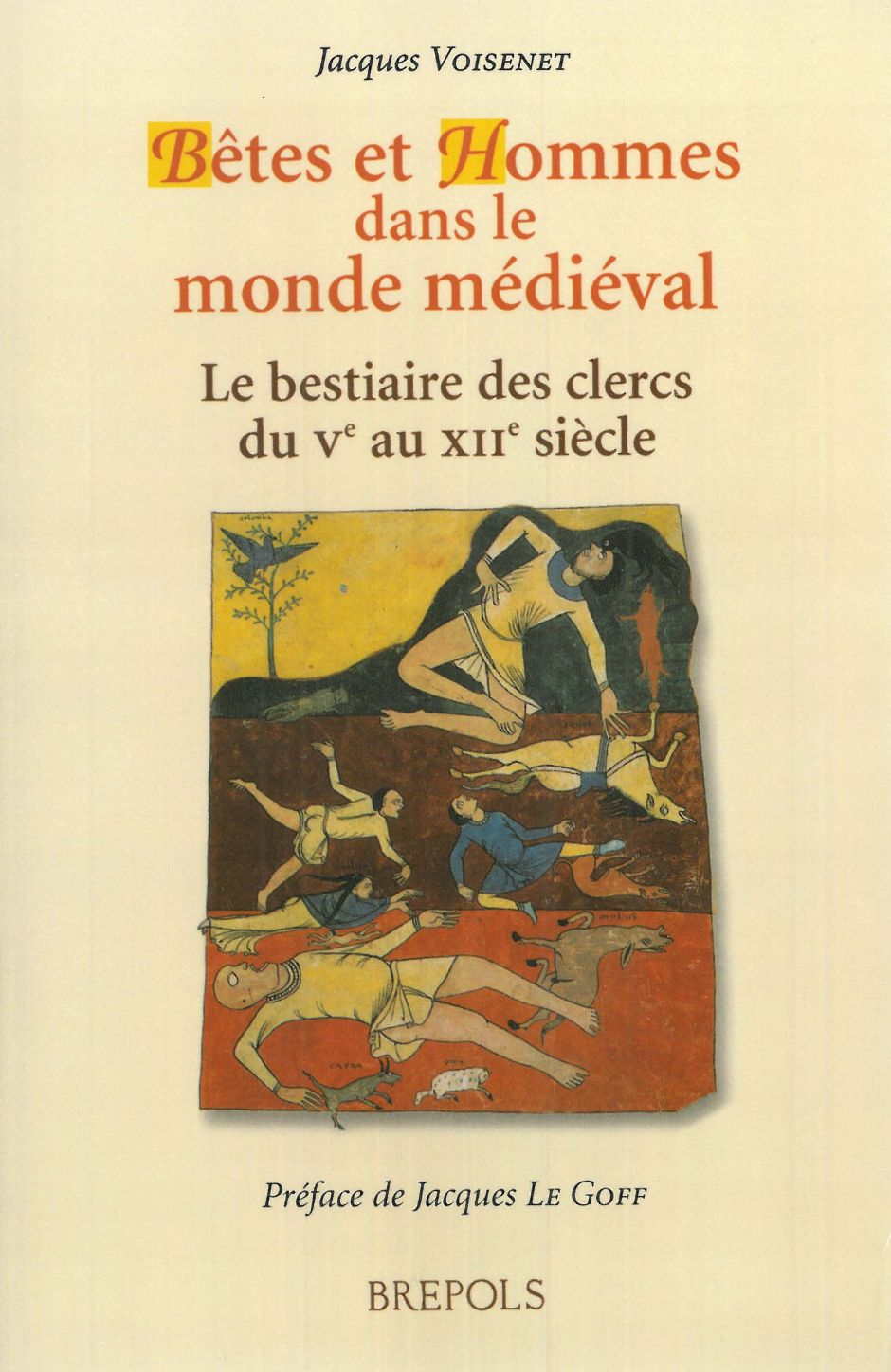
Bêtes et hommes dans le monde médiéval
Le bestiaire des clercs du Ve au XIIe siècle
show More to view fulltext, buy and share links for:Bêtes et hommes dans le monde médiéval show Less to hide fulltext, buy and share links for: Bêtes et hommes dans le monde médiévalBêtes et hommes dans le monde médiéval cherche «à définir la nature des relations entre l'homme et l'animal, la (ou les) fonction(s) que l'homme du Moyen Âge assigne à l'animal. C'est un repoussoir, un miroir, un ennemi et un allié. C'est un instrument capital dans la quête de soi-même de l'homme, une pièce essentielle de l'humanisme médiéval. En s'efforçant (avec succès) de répondre à ces questions, Jacques Voisenet va au fond et aux limites de la vision du monde, de la société, de la conception de la religion et de la morale. Dieu, la Création, le bien et le mal, la damnation et le salut, la peur et l'espoir, l'horreur et le plaisir (souvent proches l'un de l'autre) sont au bout de cette enquête totale. Selon les méthodes de l'histoire-problème, Jacques Voisenet a défini et traité un de ces objets globalisants qui répondent au désir des historiens novateurs du XXe siècle de tenter une histoire totale et globale, qui reste rigoureuse et critique. De plus le livre considère absolument tous les animaux dans tout l'Occident médiéval pendant un Haut Moyen Âge de longue durée, du Ve au XIIe siècle. (…) Cette étude ne s'intéresse qu'aux idées et à la symbolique animalière, non aux réalités de l'existence des animaux dans l'Occident. (…) Le livre de Jacques Voisenet va être un guide indispensable à la compréhension de l'humanité, de la société et de la civilisation médiévales. Et quand on l'aura lu on ne pourra plus concevoir le Moyen Âge (ce serait se refuser de le comprendre en extension et en profondeur) sans les animaux et sans qu'à côté d'Adam et Eve un autre couple essentiel apparaisse: l'homme et l'animal».
-
