Brepols Online Books Medieval Miscellanea Collection 2011 - bob2011mime

Collection Contents
1 - 20 of 51 results
-
-

Poverty and Prosperity in the Middle Ages and Renaissance
show More to view fulltext, buy and share links for:Poverty and Prosperity in the Middle Ages and Renaissance show Less to hide fulltext, buy and share links for: Poverty and Prosperity in the Middle Ages and RenaissanceIn this interdisciplinary and cross-cultural volume edited by Dr. Cynthia Kosso and Dr. Anne Scott, medieval and Early Modern historians and literary scholars unearth, define, and re-define the nature of poverty and prosperity. Through the exploration of texts, religious and spiritual behavior, statistics, class and gender issues, philosophical concepts, and figurative language, the authors investigate poverty and wealth in Middle Ages and Early Modern era. As the introduction to the volume states, “It stands to reason that the multitude of ways in which we represent and have discussed wealth or its absence; the myriad conditions that make us either rich or poor, prosperous or impoverished; and the ways in which we have maintained the better condition or have ameliorated the worse have captured our imaginations and intellect, as they continue to do today.” These essays provide a nuanced examination of the conceptualization and material representation of two terms that help define and shape our very existence today. Drs. Kosso and Scott are the editors of Fear and its Representations in the Middle Ages and Renaissance (2002) and The Nature and Function of Water, Baths, Bathing, and Hygiene from Antiquity through the Renaissance (2009).
-
-
-
Architecture, Liturgy and Identity
show More to view fulltext, buy and share links for:Architecture, Liturgy and Identity show Less to hide fulltext, buy and share links for: Architecture, Liturgy and IdentityThis collection of essays, written in honour of the eminent architectural historian Paul Crossley, brings together some of the most distinguished scholars of medieval art and architecture from the United States and many parts of Europe. Covering a broad spectrum of topics and approaches including recent discoveries, new interpretations and critical debates, this book and its counterpart Image, Memory and Devotion (also published in the Studies in Gothic Art series) offer a fitting tribute to the exceptional range of Professor Crossley’s intellectual interests, while providing invaluable insights into the present study of the Middle Ages.
-
-
-
Arts du langage et théologie aux confins des XIe et XIIe siècles
show More to view fulltext, buy and share links for:Arts du langage et théologie aux confins des XIe et XIIe siècles show Less to hide fulltext, buy and share links for: Arts du langage et théologie aux confins des XIe et XIIe sièclesComment sont nées les écoles parisiennes au début du XIIe siècle? Quels ont été les maîtres et les institutions qui ont compté dans ce processus? Quelles sont les caractéristiques particulières de la production savante à cette époque charnière? Quels ont été les enjeux des débats de l’époque et étaient-ils en rupture ou en continuité avec celles qui les précèdent? Un tel questionnement ne pouvait être tenté que dans une perspective pluridisciplinaire, en associant historiens, spécialistes de théologie, de philosophie, des théories du langage (grammaire, logique et rhétorique), des textes manuscrits. Le travail mené en commun a permis de formuler de nouvelles hypothèses sur cette période qui est celle de l’émergence de Paris comme centre de savoir et sur les doctrines produites à l’époque, qui allaient marquer durablement tout le Moyen Âge. Le premier ensemble de contributions brosse un bilan, synthétique et critique, sur l’état de la recherche dans les différents domaines concernés: la vie et les écrits de Guillaume de Champeaux; les disciplines (grammaire, logique, rhétorique, théologie); les questions méthodologiques que pose l’étude de textes inédits, le plus souvent anonymes et non datés. Le second propose des contributions originales sur des thèmes, des auteurs, des doctrines. Le troisième présente deux dossiers de discussions: l’une autour du commentaire sur Priscien attribué à Jean Scot Erigène, l’autre sur cette question controversée qu’est l’apparition et la nature du «vocalisme». Sortent éclairés sous un jour nouveau des personnages connus, comme Anselme de Laon, Abélard, Hugues de Saint-Victor, d’autres connus mais dont la production était difficile à identifier, tels Manegold, Roscelin, Guillaume de Champeaux ou Josselin de Soissons, et également des textes obstinément anonymes, telles les influentes Glosulae super Priscianum. C’est ainsi le milieu intellectuel parisien du tournant des XIe / XIIe siècles qui se voit mieux compris, dans toute sa complexité, à partir d’études qui croisent de manière complémentaire les approches historiques, littéraires et doctrinales.
-
-
-
Britons, Saxons, and Scandinavians
show More to view fulltext, buy and share links for:Britons, Saxons, and Scandinavians show Less to hide fulltext, buy and share links for: Britons, Saxons, and ScandinaviansThis volume contains a selection of the collected papers of the late Professor Glanville R. J. Jones. Following a brief assessment of the man and his work, by J. Beverley Smith, an extensive introductory essay by the editors sets Jones’s work in a wide historiographical context. This material provides an overview of his ‘multiple estate’ model and concludes with an assessment of its continuing relevance in the twenty-first century. The selection of his published papers then begins with Welsh roots and the work from which his ideas grew, while the remaining items show how the questions he asked led him towards explorations of ‘early’ medieval estate structures in England, their links with rural settlement evolution, and the pragmatic, tenurial, and fiscal arrangements which bound individual rural settlements into broader spatial structures. Jones’s ideas are often cited — usually, but not invariably, with praise — and this corpus is intended to allow today’s scholars to reach a mature assessment of what he achieved. Right or wrong, he presented important challenges to the various disciplines working on the archaeology, history, and historical geography of the periods before and after the Norman Conquest of 1066.
-
-
-
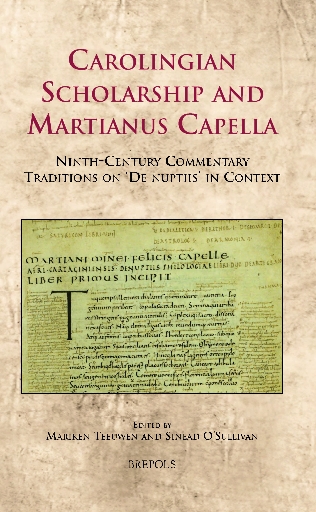
Carolingian Scholarship and Martianus Capella
show More to view fulltext, buy and share links for:Carolingian Scholarship and Martianus Capella show Less to hide fulltext, buy and share links for: Carolingian Scholarship and Martianus CapellaIt is well known that the Carolingian royal family inspired and promoted a cultural revival of great consequence. The courts of Charlemagne and his successors welcomed lively gatherings of scholars who avidly pursued knowledge and learning, while education became a booming business in the great monastic centres, which were under the protection of the royal family. Scholarly emphasis was placed upon Latin language, religion, and liturgy, but the works of classical and late antique authors were collected, studied, and commented upon with similar zeal. A text that was read by ninth-century scholars with an almost unrivalled enthusiasm is Martianus Capella’s De nuptiis Philologiae et Mercurii, a late antique encyclopedia of the seven liberal arts embedded within a mythological framework of the marriage between Philology (learning) and Mercury (eloquence). Several ninth-century commentary traditions testify to the work’s popularity in the ninth century. Martianus’s text treats a wide range of secular subjects, including mythology, the movement of the heavens, numerical speculation, and the ancient tradition on each of the seven liberal arts. De nuptiis and its exceptionally rich commentary traditions provide the focus of this volume, which addresses both the textual material found in the margins of De nuptiis manuscripts, and the broader intellectual context of commentary traditions on ancient secular texts in the early medieval world.
-
-
-
Chromatius of Aquileia and His Age
show More to view fulltext, buy and share links for:Chromatius of Aquileia and His Age show Less to hide fulltext, buy and share links for: Chromatius of Aquileia and His AgeThis volume presents the proceedings of the International Congress Chromatius of Aquileia and His Age which took place at Aquileia (Italy) from 22 to 24 May 2008 under the direction of Pier Franco Beatrice (University of Padova) and Alessio Peršič (Università Cattolica del Sacro Cuore, Milan) and was fostered by the National Commitee for the Sixteenth Centenary of the Death of Saint Chromatius Bishop of Aquileia headed by Dr. Mons. Duilio Corgnali, in common accord with the Dioceses of the Autonomous Region of Friuli Venezia Giulia and the adjacent Slovenian and Austrian Dioceses of Ljubljiana, Koper / Capodistria, and Gurk-Klagenfurt.
The Congress was part of a vast range of celebratory activites inspired by the desire to create a renewed Christian historical awareness of both the significance of Aquileia and its Fathers and of the strong vitality of evangelical spirituality directed at creating a synthesis between East and West, between Greco-Roman civilization, the revealed Hebrew epos, and the disruptive diversity of the new invading peoples. The Christian communities are heirs to the long tradition of the Patriarcate of Aquileia which lasted for over a thousand years and it was the passionate interest in their Christian origins which prompted the Congress. The Aquileian metropolis—patriarcal see until the eighteenth century and a crossroads where Romans and Illyrians, Germanic peoples and Slavs all met—was a cradle of monasticism and home to some of its greatest masters (Martin, Chromatius, Rufinus, and Jerome). These scholars have proven to be the beneficiaries of earlier exegetic skills (Victorinus, Fortunatianus) as well as intrepid and creative mediators of the highest and most controversial expressions of Greek spiritual and theological culture in the Roman world and of the rediscovered veritas hebraica of Old Testament sources. Lastly, Paulus Diaconus and the Patriarch Paulinus II distinguished themselves as inspiration for a modern European identity after its slow Christian and barbarian palingenesis.
The Congress brought together scholars from Europe and America who are experts on the work of Chromatius—only recently saved from the near obscurity into which it had fallen in manuscript tradition—for the purpose of providing original contributions on an international level to Aquileian literary historiography, Chromatius in particular, not always taken into account and given due merit.
-
-
-
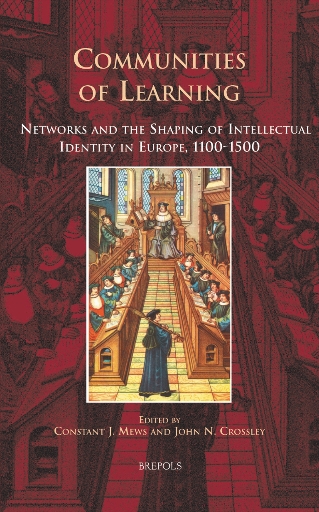
Communities of Learning
show More to view fulltext, buy and share links for:Communities of Learning show Less to hide fulltext, buy and share links for: Communities of LearningCommunities of Learning: Networks and the Shaping of Intellectual Identity in Europe, 1100-1500 explores the fundamental insight that all new ideas are developed in the context of a community, whether academic, religious, or simply as a network of friends. The essays in this volume consider this notion in a variety of contexts and locations within Europe, from the pioneering age of translation activity in twelfth-century Toledo, when Jewish, Christian, and Muslim scholars came together to discuss Aristotle, to the origins of the University of Paris in the thirteenth century, and up to the period of great cultural renewal in France, Germany, and Italy in the fourteenth and fifteenth centuries. The collected essays bring together disciplinary approaches that are often discussed quite separately, namely that of the history of ideas, and the sociologies of both intellectual and religious life, with a view to exploring the multiplicity of communities in which ideas are pursued. Underpinning these various essays is an awareness of the delicate relationship between education and the diversity of religious practice and expression within Europe from 1100 to 1500. The collection emphasizes the fundamental continuity of intellectual concerns, which were shaped by both classical thought and monotheist religious tradition, but interpreted in a variety of ways.
-
-
-
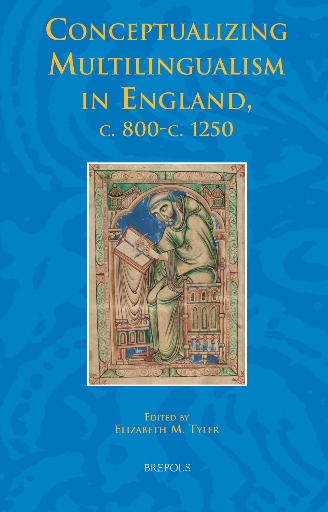
Conceptualizing Multilingualism in England, c.800-c.1250
show More to view fulltext, buy and share links for:Conceptualizing Multilingualism in England, c.800-c.1250 show Less to hide fulltext, buy and share links for: Conceptualizing Multilingualism in England, c.800-c.1250Throughout the period 800–1250, English culture was marked by linguistic contestation and pluralism: the consequence of migrations and conquests and of the establishment and flourishing of the Christian religion centred on Rome. In 855 the Danes ‘over-wintered’ for the first time, re-initiating centuries of linguistic pluralism; by 1250 English had, overwhelmingly, become the first language of England. Norse and French, the Celtic languages of the borderlands, and Latin competed with dialects of English for cultural precedence. Moreover, the diverse relations of each of these languages to the written word complicated textual practices of government, poetics, the recording of history, and liturgy. Geographical or societal micro-languages interacted daily with the ‘official’ languages of the Church, the State, and the Court. English and English speakers also played key roles in the linguistic history of medieval Europe. At the start of the period of inquiry, Alcuin led the reform of Latin in the Carolingian Empire, while in the period after the Conquest, the long-established use of English as a written language encouraged the flourishing of French as a written language. This interdisciplinary volume brings the complex and dynamic multilingualism of medieval England into focus and opens up new areas for collaborative research.
-
-
-
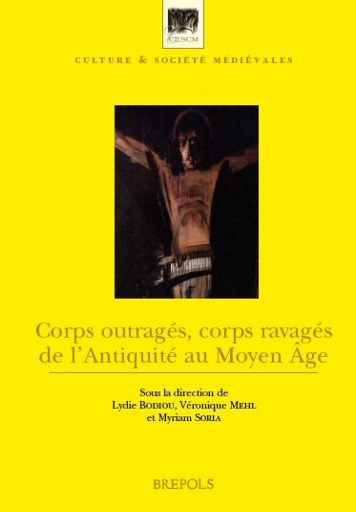
Corps outragés, corps ravagés de l’Antiquité au Moyen Âge
show More to view fulltext, buy and share links for:Corps outragés, corps ravagés de l’Antiquité au Moyen Âge show Less to hide fulltext, buy and share links for: Corps outragés, corps ravagés de l’Antiquité au Moyen ÂgeLes ravages corporels et leurs représentations, signes d’outrage aux corps, forment un trait d’union trop souvent négligé entre l’Antiquité et le Moyen Âge. À avoir opposé des civilisations anciennes marquées par un certain « culte de corps » à des sociétés médiévales méprisant la chair, on en aurait presque oublié que le corps y voyage à travers les savoirs, de l'histoire à la littérature, de la science au droit, de la biologie à la théologie et la philosophie. Aussi les sources nous invitent-elles à regarder au-delà des frontières historiques et culturelles qui séparent l'Antiquité et le Moyen Âge. De la plus haute Antiquité au Moyen Âge tardif, chaque outrage au corps physique est lourd de sens: faisant écho dans le corps social, il renvoie aux normes et aux assises de l’ordre politique, affirmant une morale, des valeurs et des croyances qui cimentent les corps constitués dont l’individu n’est qu’une partie. La signification des outrages aux corps diverge suivant la personnalité ou la fonction de celui qui brutalise, comme de celui qui est maltraité. Elle est aussi tributaire du système de représentation du temps et du lieu, du contexte et de l'univers culturel dans lesquels ils s'inscrivent. L’objet de cet ouvrage collectif est de comprendre comment les sociétés antiques et médiévales représentent le modelage du corps humain, à la fois au plan social, mental, politique et religieux, dans l'intention de façonner des individus adaptés à des environnements propres. Il s'agit de saisir comment les outrages et les ravages infligés aux corps physiques et symboliques offrent des clés de compréhension générale de la société qui voit le corps vivre et mourir.
-
-
-
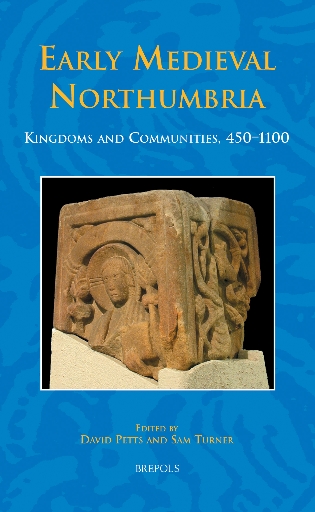
Early Medieval Northumbria
show More to view fulltext, buy and share links for:Early Medieval Northumbria show Less to hide fulltext, buy and share links for: Early Medieval NorthumbriaResponding to renewed interest in the powerful early medieval kingdom of Northumbria, this volume uses evidence drawn from archaeology, documentary history, place-names, and artistic works to produce an unashamedly cross-disciplinary body of scholarship that addresses all aspects of Northumbria’s past. Northumbria at its peak stretched from the River Humber to the Scottish highlands and westwards to the Irish Sea, producing saints, kings, and scholars with contacts across Europe, from Scandinavia, Ireland, and Francia to Rome itself. This volume unites papers on all aspects of this major European power of its day, from its origins in the fifth and sixth centuries from British and Anglo-Saxon chiefdoms, through its ‘Golden Age’ as eighth-century Europe’s intellectual powerhouse, to its role as a key element of an international Viking kingdom. Where traditional scholarship has centred on the ecclesiastical high culture of the age of Bede, this work examines the kingdom’s social and economic life and its origins and decline as well. There is a stress on approaching established bodies of material from new perspectives and engaging with wider debates in the field, including monumentality, the development of kingships, and the evolution of the early Church. Areas investigated include the kingdom’s political history, its economy and society, and its wider place within Europe. Its unique artistic legacy, in the form of illuminated manuscripts and a rich sculptural tradition, is also explored.
-
-
-
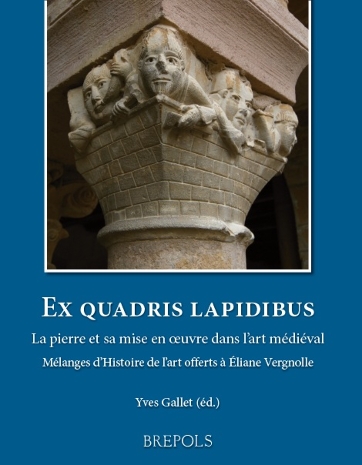
Ex quadris lapidibus. La pierre et sa mise en oeuvre dans l'art médiéval
show More to view fulltext, buy and share links for:Ex quadris lapidibus. La pierre et sa mise en oeuvre dans l'art médiéval show Less to hide fulltext, buy and share links for: Ex quadris lapidibus. La pierre et sa mise en oeuvre dans l'art médiévalLa pierre et sa mise en oeuvre dans l’art du Moyen Age: autour de ce thème, plus de quarante spécialistes français et étrangers, historiens de l’art, archéologues, conservateurs ou architectes, se sont associés pour rendre hommage à Éliane Vergnolle, dont les travaux sur l’art et l’architecture de la période romane font aujourd’hui autorité. Le domaine de recherche d’Éliane Vergnolle et ses études sur les techniques de taille de la pierre ont dicté les thèmes explorés dans ce volume, qui couvre un large champ. De nombreuses contributions abordent la question du travail de la pierre dans la sculpture et dans l’architecture romane ou gothique, ainsi que dans la création artistique des périodes plus récentes. Plusieurs études sont consacrées aux rapports entre la pierre et les arts de la couleur (enluminure, peinture, vitrail), aux questions de méthode d’analyse, à l’archéologie du bâti, à la pratique du réemploi, aux comptabilités des chantiers, aux modes de transmission des formes et des connaissances, aux tailleurs de pierre eux-mêmes, ainsi qu’à la pierre « rêvée », celle des représentations et de l’imaginaire médiéval. Au total, cet ouvrage offre, sous un angle original, un panorama complet des principales orientations de la recherche actuelle autour des arts monumentaux à l’époque médiévale.
-
-
-
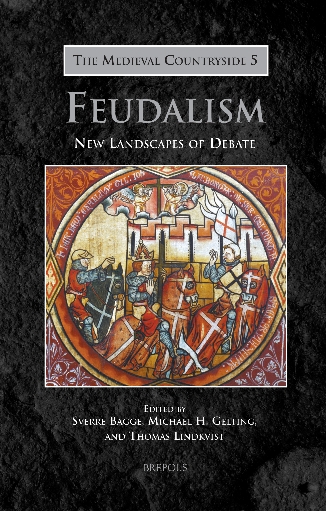
Feudalism
show More to view fulltext, buy and share links for:Feudalism show Less to hide fulltext, buy and share links for: FeudalismThis up-to-date discussion takes as its starting point the challenge to the traditional notion of feudalism in the twenty-five years since the publication of Jean-Pierre Poly and Eric Bournazel’s work on the ‘mutation féodale’ and Susan Reynolds’s attack on the very idea of a feudal society in the Middle Ages. While these challenges have presented a new picture of Western Europe in the so-called feudal age, one more focused than the traditional model of feudalism was, no new scholarly consensus has yet emerged.
The volume has two objectives. Firstly, it discusses the present state of research, bringing together leading representatives of the various interpretations of feudalism. It examines the character of medieval society, including questions of landholding, government, and the relationship between king and aristocracy. Secondly, it provides a new geographic perspective on the subject by considering countries little discussed from a feudal perspective. In addition to discussing countries that have been prominent in previous studies of feudalism such as England and France, the book also includes contributions on Germany, Spain, Scandinavia, Hungary, and Romania, thus supplying a truly European perspective and a comparative view of social structure in different regions of Europe.
-
-
-
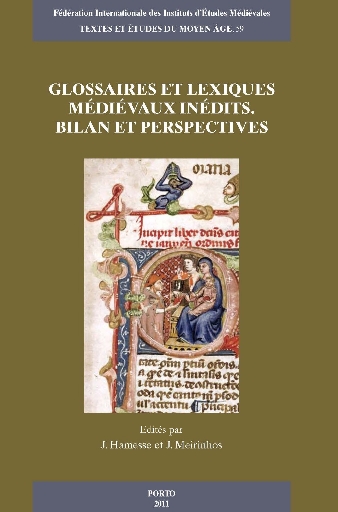
Glossaires et lexiques médiévaux inédits. Bilan et perspectives
show More to view fulltext, buy and share links for:Glossaires et lexiques médiévaux inédits. Bilan et perspectives show Less to hide fulltext, buy and share links for: Glossaires et lexiques médiévaux inédits. Bilan et perspectivesLa publication des actes d’un colloque organisé à Erice en 1994 sur le thème Les manuscrits des lexiques et glossaires de l’Antiquité tardive à la fin du moyen âge, a donné une impulsion nouvelle aux études consacrées à ces recueils inédits. Une documentation très intéressante avait été rassemblée et a déjà donné lieu à des éditions critiques de textes qui n’étaient pas encore publiés à cette époque. Mais tous les secteurs n’avaient pas été abordés pendant cette rencontre, étant donné l’ampleur du sujet. A la demande de plusieurs chercheurs, il a donc semblé intéressant de faire le point, quinze ans après, pour évaluer l’état d’avancement des recherches, mais aussi pour couvrir des domaines qui n’avaient pas encore été envisagés.
Beaucoup de progrès ont été faits depuis, surtout dans le domaine des lexiques bilingues et trilingues ainsi que pour certains recueils systématiques consacrés à diverses branches du savoir, comme la médecine, les sciences, la grammaire ou la philosophie, par exemple. Plusieurs équipes nationales et internationales travaillent d’ailleurs désormais dans ces secteurs.
Le but de ce volume, qui rassemble les actes du colloque organisé en 2010, est donc de faire un nouvel état de la question et de dresser une liste de priorités pour les glossaires et lexiques encore inédits. Le volume présente des études sur des recueils qui datent du IXe au XVe siècle. Certains d’entre eux illustrent d’ailleurs la progression des langues vernaculaires dans ce domaine. Le volume constitue donc non seulement un complément à l’ouvrage publié en 1996, mais donne aussi un aperçu des recueils qui mériteraient d’être édités rapidement.
Les articles sont l’oeuvre de F. Cinato (Paris), A. Cizek (Münster), O. Collet (Genève), E. Guadagnini et G. Vaccaro (Firenze), A. García González (Valladolid), A. Gómes Rabal (Barcelona), L. Holtz (Paris), A. I. Martín Ferreira (Valladolid), B. Merrilees (Toronto), E. Montero Cartelle (Valladolid), J. Olszowy-Schlanger (Paris), A. Rollo (Napoli), S. Toniato (Chambéry), G. Ucciardello (Messina).
-
-
-
Gottes Schau und Weltbetrachtung. Interpretationen zum »Liber contemplationis« des Raimundus Lullus
show More to view fulltext, buy and share links for:Gottes Schau und Weltbetrachtung. Interpretationen zum »Liber contemplationis« des Raimundus Lullus show Less to hide fulltext, buy and share links for: Gottes Schau und Weltbetrachtung. Interpretationen zum »Liber contemplationis« des Raimundus Lullus[In the year 2007, the Raimundus-Lullus-Institut at the University of Freiburg celebrated its 50th anniversary. To mark this occasion, an international congress was held on 25–28 November 2007, titled Vision of God and Contemplation of the World. Interpretations of Ramon Lull’s »Liber contemplationis«. The congress papers assembled in the present volume offer an informative survey of the Liber contemplationis in Deum (Catalan: Llibre de contemplació en Déu), the most comprehensive and probably most significant work of Lull’s. The Liber contemplationis comprises 366 chapters: one chapter for each day of the year, including one for the additional day of the leap year. The contents of the work have often been described as ‘encyclopaedic’. Its aim, however, is not to offer a comprehensive account of all that is known about reality, but rather to recognise and describe reality in the context of contemplating God, knowing the articles of faith as well as attaining a virtuous life agreeable to God.
The volume contains introductory studies of the Latin tradition of the text as well as detailed commentaries on individual chapters.
,Im Jahr 2007 konnte das Raimundus-Lullus-Institut der Universität Freiburg sein 50-jähriges Bestehen feiern. Aus diesem Anlass fand vom 25.–28. November 2007 ein internationaler wissenschaftlicher Kongress unter dem Titel Gottes Schau und Weltbetrachtung. Interpretationen zum »Liber contemplationis« des Raimundus Lullus statt. Die 20 Referentinnen und Referenten wurden bewusst nicht nur aus dem Kreis namhafter Lull-Spezialisten gewählt, sondern repräsentieren ein breites Spektrum internationaler mediävistischer Forschung. Mit ihren Tagungsbeiträgen, die in diesem Band gesammelt vorliegen, bieten sie eine informative Tour d’Horizon durch Ramon Lulls umfangreichstes und wohl bedeutendstes Werk, den Liber contemplationis in Deum (katalanisch: Llibre de contemplació en Déu).
Der Liber contemplationis umfasst 366 Kapitel: ein Kapitel für jeden Tag des Jahres und eines für den zusätzlichen Tag im Schaltjahr. Der Inhalt des Werkes ist oft als ‚enzyklopädisch‘ bezeichnet worden. Sein Ziel besteht jedoch nicht in einer umfassenden Darstellung des Wissens über die gesamte Wirklichkeit, sondern in der Bestimmung und Beschreibung der Wirklichkeit in Bezug auf die Betrachtung Gottes, die Erkenntnis der Glaubensartikel sowie die Erlangung eines tugendhaften, gottgefälligen Lebens.
Der vorliegende Band umfasst neben einführenden Untersuchungen zur lateinischen Textüberlieferung und zur Struktur des Werkes sowohl detaillierte Kommentare zu ausgewählten Kapiteln als auch Diskussionen von Einzelfragen vor dem Hintergrund von Lulls Gesamtwerk in seinem historischen Kontext.
]
-
-
-

Historical Narratives and Christian Identity on a European Periphery
show More to view fulltext, buy and share links for:Historical Narratives and Christian Identity on a European Periphery show Less to hide fulltext, buy and share links for: Historical Narratives and Christian Identity on a European PeripheryThis volume presents the first comprehensive overview of the major early historical narratives created in Northern, East-Central, and Eastern Europe between c. 1070 and c. 1200, with each chapter providing a short introduction to the narrative in question. Most chapters are written by established experts in their fields, who have published critical editions of the discussed narratives, their English translations, or analytical works dealing with early history writing in corresponding regions. However, the volume is more than just a summary of various narratives. Despite being written in such different languages as Latin, Old Norse, and Old Church Slavonic, these narratives played similar roles for their reading audiences, in that they were crucial in the construction of Christian identity in the lands recently converted to Christianity. The thirteen authors contemplate the extent to which this identity formation affected the nature of narrativity in these early historical works. The authors ask how the pagan past and Christian present were incorporated in the texture of the narratives, and address the relative importance of classical and biblical models for their composition and structure. By addressing such questions, the volume offers medievalists a coherent comparative study of early history writing in the peripheral regions of medieval Europe in the first centuries after conversion.
-
-
-
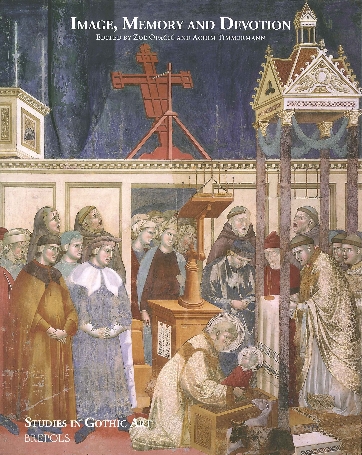
Image, Memory and Devotion
show More to view fulltext, buy and share links for:Image, Memory and Devotion show Less to hide fulltext, buy and share links for: Image, Memory and DevotionThis collection of essays, written in honour of the eminent architectural historian Paul Crossley, brings together some of the most distinguished scholars of medieval art and architecture from the United States and many parts of Europe. Covering a broad spectrum of topics and approaches including recent discoveries, new interpretations and critical debates, this book and its counterpart Architecture, Liturgy and Identity (also published in the Studies in Gothic Art series) offer a fitting tribute to the exceptional range of Professor Crossley’s intellectual interests, while providing invaluable insights into the present study of the Middle Ages.
-
-
-
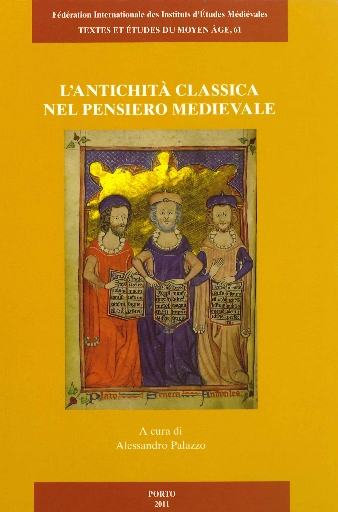
L'Antichità classica nel pensiero medievale
show More to view fulltext, buy and share links for:L'Antichità classica nel pensiero medievale show Less to hide fulltext, buy and share links for: L'Antichità classica nel pensiero medievaleIl patrimonio della cultura classica, nei suoi molteplici aspetti (dalla filosofia agli auctores letterari, dal diritto alla mitologia, ecc.), ha alimentato, tra «continuità» e «rinascite», in forme varie e differenziate a seconda dei luoghi e dei tempi, delle discipline e degli autori, l’universo intellettuale del Medioevo, al punto che ricostruire le fortune dell’«Antichità classica nel pensiero medievale» significa di fatto tracciare le vicende del sapere medievale. Questo è stato l’argomento del XIX convegno della Società Italiana per lo Studio del Pensiero Medievale (SISPM) i cui atti vengono pubblicati in questo volume.
La raccolta di saggi offre uno spaccato della sopravvivenza della cultura classica nel Medioevo, esaminando una grande varietà di questioni, di autori, di fonti e di generi letterari, toccando ambiti storico-culturali differenti, adottando numerose prospettive metodologiche e proposte teoriche. Seppur prevalenti, filosofia e teologia non sono le uniche discipline rappresentate nel volume, che ha anzi tra i suoi caratteri distintivi l’apertura multidisciplinare: accanto a contributi di contenuto filosofico e teologico, infatti, ve ne sono altri nei quali viene indagata la ricezione di componenti del patrimonio culturale classico quali la mitologia, la poesia e il diritto romano, nei quali i protagonisti del confronto con l’Antichità classica non sono i filosofi o i teologi, bensì i letterati e i giuristi medievali.
Contributi di N. Bray, G. Briguglia, G. Fioravanti, F. Forte, G. Gambale, G. C. Garfagnini, M. Meliadò, S. Negri, A. Palazzo, C. Panti, L. Parisoli, G. Piaia, D. Quaglioni, T. Ricklin, A. Rodolfi, F. Siri, C. Steel, M. Trizio. L. Tromboni, L. Valente.
-
-
-
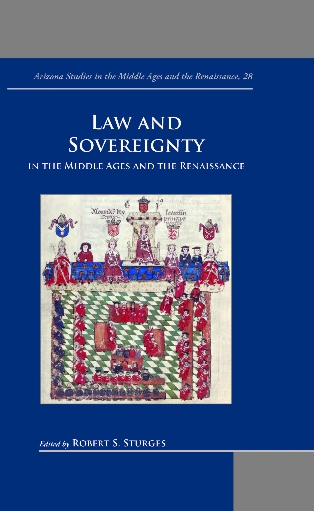
Law and Sovereignty in the Middle Ages and the Renaissance
show More to view fulltext, buy and share links for:Law and Sovereignty in the Middle Ages and the Renaissance show Less to hide fulltext, buy and share links for: Law and Sovereignty in the Middle Ages and the RenaissanceSovereignty, law, and the relationship between them are now among the most compelling topics in history, philosophy, literature and art. Some argue that the state’s power over the individual has never been more complete, while for others, such factors as globalization and the internet are subverting traditional political forms. This book exposes the roots of these arguments in the Middle Ages and Renaissance. The thirteen contributions investigate theories, fictions, contestations, and applications of sovereignty and law from the Anglo-Saxon period to the seventeenth century, and from England across western Europe to Germany, France, Italy, and Spain. Particular topics include: Habsburg sovereignty, Romance traditions in Arthurian literature, the duomo in Milan, the political theories of Juan de Mariana and of Richard Hooker, Geoffrey Chaucer’s legal problems, the accession of James I, medieval Jewish women, Elizabethan diplomacy, Anglo-Saxon political subjectivity, and medieval French farce. Together these contributions constitute a valuable overview of the history of medieval and Renaissance law and sovereignty in several disciplines. They will appeal not only to political historians, but also to all those interested in the histories of art, literature, religion, and culture.
-
-
-

Lieu de pouvoir, lieu de gestion
show More to view fulltext, buy and share links for:Lieu de pouvoir, lieu de gestion show Less to hide fulltext, buy and share links for: Lieu de pouvoir, lieu de gestionLa société seigneuriale du bas moyen âge repose sur un ensemble de droits et d’obligations associant étroitement maîtres des lieux, sols et paysans. Les travaux et les jours y sont rythmés par l’exercice de pouvoirs et le poids de contraintes, mais aussi par des repères communs. La demeure seigneuriale, le château est de ceux-là.
«Résidence fortifiée d’un puissant» (Michel Bur): un type architectural est ici étroitement lié à une position de commandement politique et militaire, mais aussi économique et social. Il procure une domination sur une vaste région peut-être, mais aussi et d’abord sur un domaine et ceux qui le peuplent. Ces «manants», «villains», ou tout simplement «hommes», ainsi que les dénomment les sources, s’acquittent en rapport avec le château de prestations de garde, de guet, de charroi, de travaux d’aménagement. Pareilles tâches s’intègrent dans l’ensemble plus vaste de tout ce qui fait le «régime seigneurial».
Le seigneur est en outre, par la force des choses, gestionnaire. Des documents d’exploitation, tels comptes ou livres fonciers, peuvent aider l’historien à mieux cerner sa demeure et ses biens.
-