Brepols Online Books Medieval Miscellanea Collection 2011 - bob2011mime

Collection Contents
1 - 50 of 51 results
-
-

Poverty and Prosperity in the Middle Ages and Renaissance
show More to view fulltext, buy and share links for:Poverty and Prosperity in the Middle Ages and Renaissance show Less to hide fulltext, buy and share links for: Poverty and Prosperity in the Middle Ages and RenaissanceIn this interdisciplinary and cross-cultural volume edited by Dr. Cynthia Kosso and Dr. Anne Scott, medieval and Early Modern historians and literary scholars unearth, define, and re-define the nature of poverty and prosperity. Through the exploration of texts, religious and spiritual behavior, statistics, class and gender issues, philosophical concepts, and figurative language, the authors investigate poverty and wealth in Middle Ages and Early Modern era. As the introduction to the volume states, “It stands to reason that the multitude of ways in which we represent and have discussed wealth or its absence; the myriad conditions that make us either rich or poor, prosperous or impoverished; and the ways in which we have maintained the better condition or have ameliorated the worse have captured our imaginations and intellect, as they continue to do today.” These essays provide a nuanced examination of the conceptualization and material representation of two terms that help define and shape our very existence today. Drs. Kosso and Scott are the editors of Fear and its Representations in the Middle Ages and Renaissance (2002) and The Nature and Function of Water, Baths, Bathing, and Hygiene from Antiquity through the Renaissance (2009).
-
-
-
Architecture, Liturgy and Identity
show More to view fulltext, buy and share links for:Architecture, Liturgy and Identity show Less to hide fulltext, buy and share links for: Architecture, Liturgy and IdentityThis collection of essays, written in honour of the eminent architectural historian Paul Crossley, brings together some of the most distinguished scholars of medieval art and architecture from the United States and many parts of Europe. Covering a broad spectrum of topics and approaches including recent discoveries, new interpretations and critical debates, this book and its counterpart Image, Memory and Devotion (also published in the Studies in Gothic Art series) offer a fitting tribute to the exceptional range of Professor Crossley’s intellectual interests, while providing invaluable insights into the present study of the Middle Ages.
-
-
-
Arts du langage et théologie aux confins des XIe et XIIe siècles
show More to view fulltext, buy and share links for:Arts du langage et théologie aux confins des XIe et XIIe siècles show Less to hide fulltext, buy and share links for: Arts du langage et théologie aux confins des XIe et XIIe sièclesComment sont nées les écoles parisiennes au début du XIIe siècle? Quels ont été les maîtres et les institutions qui ont compté dans ce processus? Quelles sont les caractéristiques particulières de la production savante à cette époque charnière? Quels ont été les enjeux des débats de l’époque et étaient-ils en rupture ou en continuité avec celles qui les précèdent? Un tel questionnement ne pouvait être tenté que dans une perspective pluridisciplinaire, en associant historiens, spécialistes de théologie, de philosophie, des théories du langage (grammaire, logique et rhétorique), des textes manuscrits. Le travail mené en commun a permis de formuler de nouvelles hypothèses sur cette période qui est celle de l’émergence de Paris comme centre de savoir et sur les doctrines produites à l’époque, qui allaient marquer durablement tout le Moyen Âge. Le premier ensemble de contributions brosse un bilan, synthétique et critique, sur l’état de la recherche dans les différents domaines concernés: la vie et les écrits de Guillaume de Champeaux; les disciplines (grammaire, logique, rhétorique, théologie); les questions méthodologiques que pose l’étude de textes inédits, le plus souvent anonymes et non datés. Le second propose des contributions originales sur des thèmes, des auteurs, des doctrines. Le troisième présente deux dossiers de discussions: l’une autour du commentaire sur Priscien attribué à Jean Scot Erigène, l’autre sur cette question controversée qu’est l’apparition et la nature du «vocalisme». Sortent éclairés sous un jour nouveau des personnages connus, comme Anselme de Laon, Abélard, Hugues de Saint-Victor, d’autres connus mais dont la production était difficile à identifier, tels Manegold, Roscelin, Guillaume de Champeaux ou Josselin de Soissons, et également des textes obstinément anonymes, telles les influentes Glosulae super Priscianum. C’est ainsi le milieu intellectuel parisien du tournant des XIe / XIIe siècles qui se voit mieux compris, dans toute sa complexité, à partir d’études qui croisent de manière complémentaire les approches historiques, littéraires et doctrinales.
-
-
-
Britons, Saxons, and Scandinavians
show More to view fulltext, buy and share links for:Britons, Saxons, and Scandinavians show Less to hide fulltext, buy and share links for: Britons, Saxons, and ScandinaviansThis volume contains a selection of the collected papers of the late Professor Glanville R. J. Jones. Following a brief assessment of the man and his work, by J. Beverley Smith, an extensive introductory essay by the editors sets Jones’s work in a wide historiographical context. This material provides an overview of his ‘multiple estate’ model and concludes with an assessment of its continuing relevance in the twenty-first century. The selection of his published papers then begins with Welsh roots and the work from which his ideas grew, while the remaining items show how the questions he asked led him towards explorations of ‘early’ medieval estate structures in England, their links with rural settlement evolution, and the pragmatic, tenurial, and fiscal arrangements which bound individual rural settlements into broader spatial structures. Jones’s ideas are often cited — usually, but not invariably, with praise — and this corpus is intended to allow today’s scholars to reach a mature assessment of what he achieved. Right or wrong, he presented important challenges to the various disciplines working on the archaeology, history, and historical geography of the periods before and after the Norman Conquest of 1066.
-
-
-
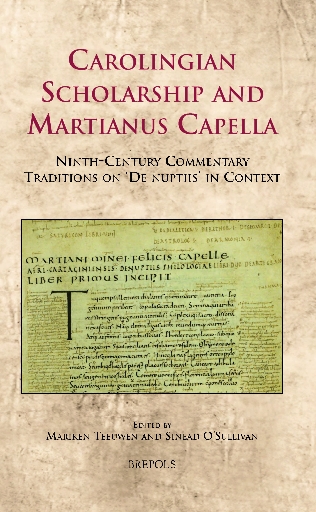
Carolingian Scholarship and Martianus Capella
show More to view fulltext, buy and share links for:Carolingian Scholarship and Martianus Capella show Less to hide fulltext, buy and share links for: Carolingian Scholarship and Martianus CapellaIt is well known that the Carolingian royal family inspired and promoted a cultural revival of great consequence. The courts of Charlemagne and his successors welcomed lively gatherings of scholars who avidly pursued knowledge and learning, while education became a booming business in the great monastic centres, which were under the protection of the royal family. Scholarly emphasis was placed upon Latin language, religion, and liturgy, but the works of classical and late antique authors were collected, studied, and commented upon with similar zeal. A text that was read by ninth-century scholars with an almost unrivalled enthusiasm is Martianus Capella’s De nuptiis Philologiae et Mercurii, a late antique encyclopedia of the seven liberal arts embedded within a mythological framework of the marriage between Philology (learning) and Mercury (eloquence). Several ninth-century commentary traditions testify to the work’s popularity in the ninth century. Martianus’s text treats a wide range of secular subjects, including mythology, the movement of the heavens, numerical speculation, and the ancient tradition on each of the seven liberal arts. De nuptiis and its exceptionally rich commentary traditions provide the focus of this volume, which addresses both the textual material found in the margins of De nuptiis manuscripts, and the broader intellectual context of commentary traditions on ancient secular texts in the early medieval world.
-
-
-
Chromatius of Aquileia and His Age
show More to view fulltext, buy and share links for:Chromatius of Aquileia and His Age show Less to hide fulltext, buy and share links for: Chromatius of Aquileia and His AgeThis volume presents the proceedings of the International Congress Chromatius of Aquileia and His Age which took place at Aquileia (Italy) from 22 to 24 May 2008 under the direction of Pier Franco Beatrice (University of Padova) and Alessio Peršič (Università Cattolica del Sacro Cuore, Milan) and was fostered by the National Commitee for the Sixteenth Centenary of the Death of Saint Chromatius Bishop of Aquileia headed by Dr. Mons. Duilio Corgnali, in common accord with the Dioceses of the Autonomous Region of Friuli Venezia Giulia and the adjacent Slovenian and Austrian Dioceses of Ljubljiana, Koper / Capodistria, and Gurk-Klagenfurt.
The Congress was part of a vast range of celebratory activites inspired by the desire to create a renewed Christian historical awareness of both the significance of Aquileia and its Fathers and of the strong vitality of evangelical spirituality directed at creating a synthesis between East and West, between Greco-Roman civilization, the revealed Hebrew epos, and the disruptive diversity of the new invading peoples. The Christian communities are heirs to the long tradition of the Patriarcate of Aquileia which lasted for over a thousand years and it was the passionate interest in their Christian origins which prompted the Congress. The Aquileian metropolis—patriarcal see until the eighteenth century and a crossroads where Romans and Illyrians, Germanic peoples and Slavs all met—was a cradle of monasticism and home to some of its greatest masters (Martin, Chromatius, Rufinus, and Jerome). These scholars have proven to be the beneficiaries of earlier exegetic skills (Victorinus, Fortunatianus) as well as intrepid and creative mediators of the highest and most controversial expressions of Greek spiritual and theological culture in the Roman world and of the rediscovered veritas hebraica of Old Testament sources. Lastly, Paulus Diaconus and the Patriarch Paulinus II distinguished themselves as inspiration for a modern European identity after its slow Christian and barbarian palingenesis.
The Congress brought together scholars from Europe and America who are experts on the work of Chromatius—only recently saved from the near obscurity into which it had fallen in manuscript tradition—for the purpose of providing original contributions on an international level to Aquileian literary historiography, Chromatius in particular, not always taken into account and given due merit.
-
-
-
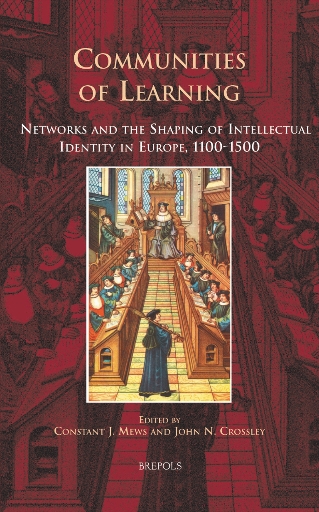
Communities of Learning
show More to view fulltext, buy and share links for:Communities of Learning show Less to hide fulltext, buy and share links for: Communities of LearningCommunities of Learning: Networks and the Shaping of Intellectual Identity in Europe, 1100-1500 explores the fundamental insight that all new ideas are developed in the context of a community, whether academic, religious, or simply as a network of friends. The essays in this volume consider this notion in a variety of contexts and locations within Europe, from the pioneering age of translation activity in twelfth-century Toledo, when Jewish, Christian, and Muslim scholars came together to discuss Aristotle, to the origins of the University of Paris in the thirteenth century, and up to the period of great cultural renewal in France, Germany, and Italy in the fourteenth and fifteenth centuries. The collected essays bring together disciplinary approaches that are often discussed quite separately, namely that of the history of ideas, and the sociologies of both intellectual and religious life, with a view to exploring the multiplicity of communities in which ideas are pursued. Underpinning these various essays is an awareness of the delicate relationship between education and the diversity of religious practice and expression within Europe from 1100 to 1500. The collection emphasizes the fundamental continuity of intellectual concerns, which were shaped by both classical thought and monotheist religious tradition, but interpreted in a variety of ways.
-
-
-
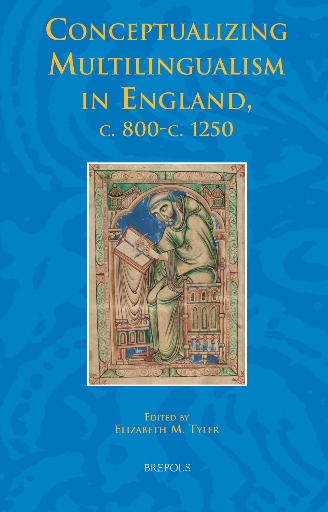
Conceptualizing Multilingualism in England, c.800-c.1250
show More to view fulltext, buy and share links for:Conceptualizing Multilingualism in England, c.800-c.1250 show Less to hide fulltext, buy and share links for: Conceptualizing Multilingualism in England, c.800-c.1250Throughout the period 800–1250, English culture was marked by linguistic contestation and pluralism: the consequence of migrations and conquests and of the establishment and flourishing of the Christian religion centred on Rome. In 855 the Danes ‘over-wintered’ for the first time, re-initiating centuries of linguistic pluralism; by 1250 English had, overwhelmingly, become the first language of England. Norse and French, the Celtic languages of the borderlands, and Latin competed with dialects of English for cultural precedence. Moreover, the diverse relations of each of these languages to the written word complicated textual practices of government, poetics, the recording of history, and liturgy. Geographical or societal micro-languages interacted daily with the ‘official’ languages of the Church, the State, and the Court. English and English speakers also played key roles in the linguistic history of medieval Europe. At the start of the period of inquiry, Alcuin led the reform of Latin in the Carolingian Empire, while in the period after the Conquest, the long-established use of English as a written language encouraged the flourishing of French as a written language. This interdisciplinary volume brings the complex and dynamic multilingualism of medieval England into focus and opens up new areas for collaborative research.
-
-
-
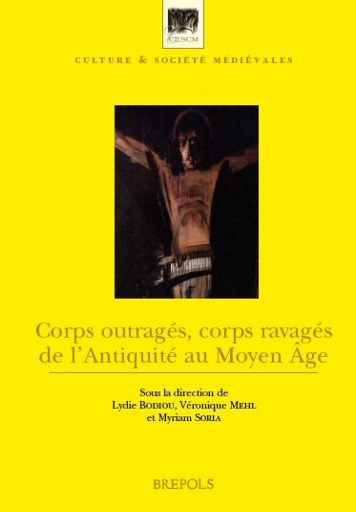
Corps outragés, corps ravagés de l’Antiquité au Moyen Âge
show More to view fulltext, buy and share links for:Corps outragés, corps ravagés de l’Antiquité au Moyen Âge show Less to hide fulltext, buy and share links for: Corps outragés, corps ravagés de l’Antiquité au Moyen ÂgeLes ravages corporels et leurs représentations, signes d’outrage aux corps, forment un trait d’union trop souvent négligé entre l’Antiquité et le Moyen Âge. À avoir opposé des civilisations anciennes marquées par un certain « culte de corps » à des sociétés médiévales méprisant la chair, on en aurait presque oublié que le corps y voyage à travers les savoirs, de l'histoire à la littérature, de la science au droit, de la biologie à la théologie et la philosophie. Aussi les sources nous invitent-elles à regarder au-delà des frontières historiques et culturelles qui séparent l'Antiquité et le Moyen Âge. De la plus haute Antiquité au Moyen Âge tardif, chaque outrage au corps physique est lourd de sens: faisant écho dans le corps social, il renvoie aux normes et aux assises de l’ordre politique, affirmant une morale, des valeurs et des croyances qui cimentent les corps constitués dont l’individu n’est qu’une partie. La signification des outrages aux corps diverge suivant la personnalité ou la fonction de celui qui brutalise, comme de celui qui est maltraité. Elle est aussi tributaire du système de représentation du temps et du lieu, du contexte et de l'univers culturel dans lesquels ils s'inscrivent. L’objet de cet ouvrage collectif est de comprendre comment les sociétés antiques et médiévales représentent le modelage du corps humain, à la fois au plan social, mental, politique et religieux, dans l'intention de façonner des individus adaptés à des environnements propres. Il s'agit de saisir comment les outrages et les ravages infligés aux corps physiques et symboliques offrent des clés de compréhension générale de la société qui voit le corps vivre et mourir.
-
-
-
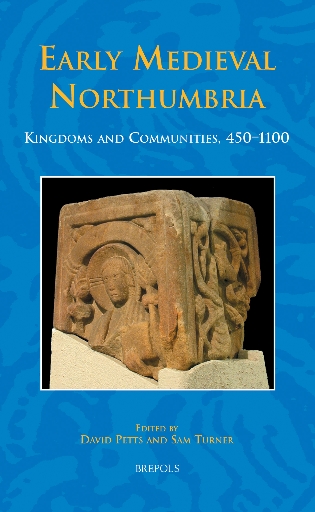
Early Medieval Northumbria
show More to view fulltext, buy and share links for:Early Medieval Northumbria show Less to hide fulltext, buy and share links for: Early Medieval NorthumbriaResponding to renewed interest in the powerful early medieval kingdom of Northumbria, this volume uses evidence drawn from archaeology, documentary history, place-names, and artistic works to produce an unashamedly cross-disciplinary body of scholarship that addresses all aspects of Northumbria’s past. Northumbria at its peak stretched from the River Humber to the Scottish highlands and westwards to the Irish Sea, producing saints, kings, and scholars with contacts across Europe, from Scandinavia, Ireland, and Francia to Rome itself. This volume unites papers on all aspects of this major European power of its day, from its origins in the fifth and sixth centuries from British and Anglo-Saxon chiefdoms, through its ‘Golden Age’ as eighth-century Europe’s intellectual powerhouse, to its role as a key element of an international Viking kingdom. Where traditional scholarship has centred on the ecclesiastical high culture of the age of Bede, this work examines the kingdom’s social and economic life and its origins and decline as well. There is a stress on approaching established bodies of material from new perspectives and engaging with wider debates in the field, including monumentality, the development of kingships, and the evolution of the early Church. Areas investigated include the kingdom’s political history, its economy and society, and its wider place within Europe. Its unique artistic legacy, in the form of illuminated manuscripts and a rich sculptural tradition, is also explored.
-
-
-
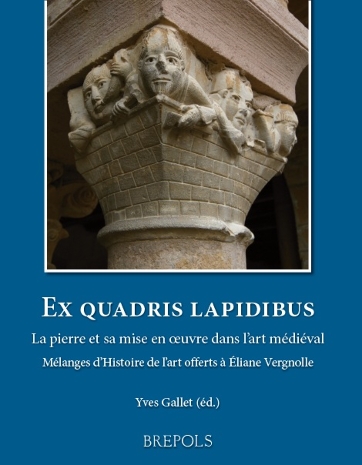
Ex quadris lapidibus. La pierre et sa mise en oeuvre dans l'art médiéval
show More to view fulltext, buy and share links for:Ex quadris lapidibus. La pierre et sa mise en oeuvre dans l'art médiéval show Less to hide fulltext, buy and share links for: Ex quadris lapidibus. La pierre et sa mise en oeuvre dans l'art médiévalLa pierre et sa mise en oeuvre dans l’art du Moyen Age: autour de ce thème, plus de quarante spécialistes français et étrangers, historiens de l’art, archéologues, conservateurs ou architectes, se sont associés pour rendre hommage à Éliane Vergnolle, dont les travaux sur l’art et l’architecture de la période romane font aujourd’hui autorité. Le domaine de recherche d’Éliane Vergnolle et ses études sur les techniques de taille de la pierre ont dicté les thèmes explorés dans ce volume, qui couvre un large champ. De nombreuses contributions abordent la question du travail de la pierre dans la sculpture et dans l’architecture romane ou gothique, ainsi que dans la création artistique des périodes plus récentes. Plusieurs études sont consacrées aux rapports entre la pierre et les arts de la couleur (enluminure, peinture, vitrail), aux questions de méthode d’analyse, à l’archéologie du bâti, à la pratique du réemploi, aux comptabilités des chantiers, aux modes de transmission des formes et des connaissances, aux tailleurs de pierre eux-mêmes, ainsi qu’à la pierre « rêvée », celle des représentations et de l’imaginaire médiéval. Au total, cet ouvrage offre, sous un angle original, un panorama complet des principales orientations de la recherche actuelle autour des arts monumentaux à l’époque médiévale.
-
-
-
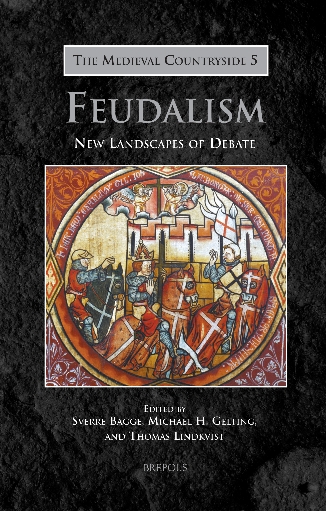
Feudalism
show More to view fulltext, buy and share links for:Feudalism show Less to hide fulltext, buy and share links for: FeudalismThis up-to-date discussion takes as its starting point the challenge to the traditional notion of feudalism in the twenty-five years since the publication of Jean-Pierre Poly and Eric Bournazel’s work on the ‘mutation féodale’ and Susan Reynolds’s attack on the very idea of a feudal society in the Middle Ages. While these challenges have presented a new picture of Western Europe in the so-called feudal age, one more focused than the traditional model of feudalism was, no new scholarly consensus has yet emerged.
The volume has two objectives. Firstly, it discusses the present state of research, bringing together leading representatives of the various interpretations of feudalism. It examines the character of medieval society, including questions of landholding, government, and the relationship between king and aristocracy. Secondly, it provides a new geographic perspective on the subject by considering countries little discussed from a feudal perspective. In addition to discussing countries that have been prominent in previous studies of feudalism such as England and France, the book also includes contributions on Germany, Spain, Scandinavia, Hungary, and Romania, thus supplying a truly European perspective and a comparative view of social structure in different regions of Europe.
-
-
-
Glossaires et lexiques médiévaux inédits. Bilan et perspectives
show More to view fulltext, buy and share links for:Glossaires et lexiques médiévaux inédits. Bilan et perspectives show Less to hide fulltext, buy and share links for: Glossaires et lexiques médiévaux inédits. Bilan et perspectivesLa publication des actes d’un colloque organisé à Erice en 1994 sur le thème Les manuscrits des lexiques et glossaires de l’Antiquité tardive à la fin du moyen âge, a donné une impulsion nouvelle aux études consacrées à ces recueils inédits. Une documentation très intéressante avait été rassemblée et a déjà donné lieu à des éditions critiques de textes qui n’étaient pas encore publiés à cette époque. Mais tous les secteurs n’avaient pas été abordés pendant cette rencontre, étant donné l’ampleur du sujet. A la demande de plusieurs chercheurs, il a donc semblé intéressant de faire le point, quinze ans après, pour évaluer l’état d’avancement des recherches, mais aussi pour couvrir des domaines qui n’avaient pas encore été envisagés.
Beaucoup de progrès ont été faits depuis, surtout dans le domaine des lexiques bilingues et trilingues ainsi que pour certains recueils systématiques consacrés à diverses branches du savoir, comme la médecine, les sciences, la grammaire ou la philosophie, par exemple. Plusieurs équipes nationales et internationales travaillent d’ailleurs désormais dans ces secteurs.
Le but de ce volume, qui rassemble les actes du colloque organisé en 2010, est donc de faire un nouvel état de la question et de dresser une liste de priorités pour les glossaires et lexiques encore inédits. Le volume présente des études sur des recueils qui datent du IXe au XVe siècle. Certains d’entre eux illustrent d’ailleurs la progression des langues vernaculaires dans ce domaine. Le volume constitue donc non seulement un complément à l’ouvrage publié en 1996, mais donne aussi un aperçu des recueils qui mériteraient d’être édités rapidement.
Les articles sont l’oeuvre de F. Cinato (Paris), A. Cizek (Münster), O. Collet (Genève), E. Guadagnini et G. Vaccaro (Firenze), A. García González (Valladolid), A. Gómes Rabal (Barcelona), L. Holtz (Paris), A. I. Martín Ferreira (Valladolid), B. Merrilees (Toronto), E. Montero Cartelle (Valladolid), J. Olszowy-Schlanger (Paris), A. Rollo (Napoli), S. Toniato (Chambéry), G. Ucciardello (Messina).
-
-
-
Gottes Schau und Weltbetrachtung. Interpretationen zum »Liber contemplationis« des Raimundus Lullus
show More to view fulltext, buy and share links for:Gottes Schau und Weltbetrachtung. Interpretationen zum »Liber contemplationis« des Raimundus Lullus show Less to hide fulltext, buy and share links for: Gottes Schau und Weltbetrachtung. Interpretationen zum »Liber contemplationis« des Raimundus Lullus[In the year 2007, the Raimundus-Lullus-Institut at the University of Freiburg celebrated its 50th anniversary. To mark this occasion, an international congress was held on 25–28 November 2007, titled Vision of God and Contemplation of the World. Interpretations of Ramon Lull’s »Liber contemplationis«. The congress papers assembled in the present volume offer an informative survey of the Liber contemplationis in Deum (Catalan: Llibre de contemplació en Déu), the most comprehensive and probably most significant work of Lull’s. The Liber contemplationis comprises 366 chapters: one chapter for each day of the year, including one for the additional day of the leap year. The contents of the work have often been described as ‘encyclopaedic’. Its aim, however, is not to offer a comprehensive account of all that is known about reality, but rather to recognise and describe reality in the context of contemplating God, knowing the articles of faith as well as attaining a virtuous life agreeable to God.
The volume contains introductory studies of the Latin tradition of the text as well as detailed commentaries on individual chapters.
,Im Jahr 2007 konnte das Raimundus-Lullus-Institut der Universität Freiburg sein 50-jähriges Bestehen feiern. Aus diesem Anlass fand vom 25.–28. November 2007 ein internationaler wissenschaftlicher Kongress unter dem Titel Gottes Schau und Weltbetrachtung. Interpretationen zum »Liber contemplationis« des Raimundus Lullus statt. Die 20 Referentinnen und Referenten wurden bewusst nicht nur aus dem Kreis namhafter Lull-Spezialisten gewählt, sondern repräsentieren ein breites Spektrum internationaler mediävistischer Forschung. Mit ihren Tagungsbeiträgen, die in diesem Band gesammelt vorliegen, bieten sie eine informative Tour d’Horizon durch Ramon Lulls umfangreichstes und wohl bedeutendstes Werk, den Liber contemplationis in Deum (katalanisch: Llibre de contemplació en Déu).
Der Liber contemplationis umfasst 366 Kapitel: ein Kapitel für jeden Tag des Jahres und eines für den zusätzlichen Tag im Schaltjahr. Der Inhalt des Werkes ist oft als ‚enzyklopädisch‘ bezeichnet worden. Sein Ziel besteht jedoch nicht in einer umfassenden Darstellung des Wissens über die gesamte Wirklichkeit, sondern in der Bestimmung und Beschreibung der Wirklichkeit in Bezug auf die Betrachtung Gottes, die Erkenntnis der Glaubensartikel sowie die Erlangung eines tugendhaften, gottgefälligen Lebens.
Der vorliegende Band umfasst neben einführenden Untersuchungen zur lateinischen Textüberlieferung und zur Struktur des Werkes sowohl detaillierte Kommentare zu ausgewählten Kapiteln als auch Diskussionen von Einzelfragen vor dem Hintergrund von Lulls Gesamtwerk in seinem historischen Kontext.
]
-
-
-

Historical Narratives and Christian Identity on a European Periphery
show More to view fulltext, buy and share links for:Historical Narratives and Christian Identity on a European Periphery show Less to hide fulltext, buy and share links for: Historical Narratives and Christian Identity on a European PeripheryThis volume presents the first comprehensive overview of the major early historical narratives created in Northern, East-Central, and Eastern Europe between c. 1070 and c. 1200, with each chapter providing a short introduction to the narrative in question. Most chapters are written by established experts in their fields, who have published critical editions of the discussed narratives, their English translations, or analytical works dealing with early history writing in corresponding regions. However, the volume is more than just a summary of various narratives. Despite being written in such different languages as Latin, Old Norse, and Old Church Slavonic, these narratives played similar roles for their reading audiences, in that they were crucial in the construction of Christian identity in the lands recently converted to Christianity. The thirteen authors contemplate the extent to which this identity formation affected the nature of narrativity in these early historical works. The authors ask how the pagan past and Christian present were incorporated in the texture of the narratives, and address the relative importance of classical and biblical models for their composition and structure. By addressing such questions, the volume offers medievalists a coherent comparative study of early history writing in the peripheral regions of medieval Europe in the first centuries after conversion.
-
-
-
Image, Memory and Devotion
show More to view fulltext, buy and share links for:Image, Memory and Devotion show Less to hide fulltext, buy and share links for: Image, Memory and DevotionThis collection of essays, written in honour of the eminent architectural historian Paul Crossley, brings together some of the most distinguished scholars of medieval art and architecture from the United States and many parts of Europe. Covering a broad spectrum of topics and approaches including recent discoveries, new interpretations and critical debates, this book and its counterpart Architecture, Liturgy and Identity (also published in the Studies in Gothic Art series) offer a fitting tribute to the exceptional range of Professor Crossley’s intellectual interests, while providing invaluable insights into the present study of the Middle Ages.
-
-
-
L'Antichità classica nel pensiero medievale
show More to view fulltext, buy and share links for:L'Antichità classica nel pensiero medievale show Less to hide fulltext, buy and share links for: L'Antichità classica nel pensiero medievaleIl patrimonio della cultura classica, nei suoi molteplici aspetti (dalla filosofia agli auctores letterari, dal diritto alla mitologia, ecc.), ha alimentato, tra «continuità» e «rinascite», in forme varie e differenziate a seconda dei luoghi e dei tempi, delle discipline e degli autori, l’universo intellettuale del Medioevo, al punto che ricostruire le fortune dell’«Antichità classica nel pensiero medievale» significa di fatto tracciare le vicende del sapere medievale. Questo è stato l’argomento del XIX convegno della Società Italiana per lo Studio del Pensiero Medievale (SISPM) i cui atti vengono pubblicati in questo volume.
La raccolta di saggi offre uno spaccato della sopravvivenza della cultura classica nel Medioevo, esaminando una grande varietà di questioni, di autori, di fonti e di generi letterari, toccando ambiti storico-culturali differenti, adottando numerose prospettive metodologiche e proposte teoriche. Seppur prevalenti, filosofia e teologia non sono le uniche discipline rappresentate nel volume, che ha anzi tra i suoi caratteri distintivi l’apertura multidisciplinare: accanto a contributi di contenuto filosofico e teologico, infatti, ve ne sono altri nei quali viene indagata la ricezione di componenti del patrimonio culturale classico quali la mitologia, la poesia e il diritto romano, nei quali i protagonisti del confronto con l’Antichità classica non sono i filosofi o i teologi, bensì i letterati e i giuristi medievali.
Contributi di N. Bray, G. Briguglia, G. Fioravanti, F. Forte, G. Gambale, G. C. Garfagnini, M. Meliadò, S. Negri, A. Palazzo, C. Panti, L. Parisoli, G. Piaia, D. Quaglioni, T. Ricklin, A. Rodolfi, F. Siri, C. Steel, M. Trizio. L. Tromboni, L. Valente.
-
-
-
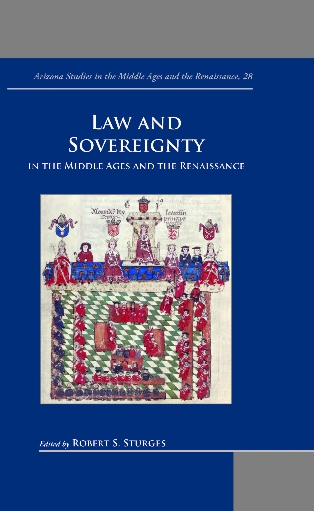
Law and Sovereignty in the Middle Ages and the Renaissance
show More to view fulltext, buy and share links for:Law and Sovereignty in the Middle Ages and the Renaissance show Less to hide fulltext, buy and share links for: Law and Sovereignty in the Middle Ages and the RenaissanceSovereignty, law, and the relationship between them are now among the most compelling topics in history, philosophy, literature and art. Some argue that the state’s power over the individual has never been more complete, while for others, such factors as globalization and the internet are subverting traditional political forms. This book exposes the roots of these arguments in the Middle Ages and Renaissance. The thirteen contributions investigate theories, fictions, contestations, and applications of sovereignty and law from the Anglo-Saxon period to the seventeenth century, and from England across western Europe to Germany, France, Italy, and Spain. Particular topics include: Habsburg sovereignty, Romance traditions in Arthurian literature, the duomo in Milan, the political theories of Juan de Mariana and of Richard Hooker, Geoffrey Chaucer’s legal problems, the accession of James I, medieval Jewish women, Elizabethan diplomacy, Anglo-Saxon political subjectivity, and medieval French farce. Together these contributions constitute a valuable overview of the history of medieval and Renaissance law and sovereignty in several disciplines. They will appeal not only to political historians, but also to all those interested in the histories of art, literature, religion, and culture.
-
-
-

Lieu de pouvoir, lieu de gestion
show More to view fulltext, buy and share links for:Lieu de pouvoir, lieu de gestion show Less to hide fulltext, buy and share links for: Lieu de pouvoir, lieu de gestionLa société seigneuriale du bas moyen âge repose sur un ensemble de droits et d’obligations associant étroitement maîtres des lieux, sols et paysans. Les travaux et les jours y sont rythmés par l’exercice de pouvoirs et le poids de contraintes, mais aussi par des repères communs. La demeure seigneuriale, le château est de ceux-là.
«Résidence fortifiée d’un puissant» (Michel Bur): un type architectural est ici étroitement lié à une position de commandement politique et militaire, mais aussi économique et social. Il procure une domination sur une vaste région peut-être, mais aussi et d’abord sur un domaine et ceux qui le peuplent. Ces «manants», «villains», ou tout simplement «hommes», ainsi que les dénomment les sources, s’acquittent en rapport avec le château de prestations de garde, de guet, de charroi, de travaux d’aménagement. Pareilles tâches s’intègrent dans l’ensemble plus vaste de tout ce qui fait le «régime seigneurial».
Le seigneur est en outre, par la force des choses, gestionnaire. Des documents d’exploitation, tels comptes ou livres fonciers, peuvent aider l’historien à mieux cerner sa demeure et ses biens.
-
-
-
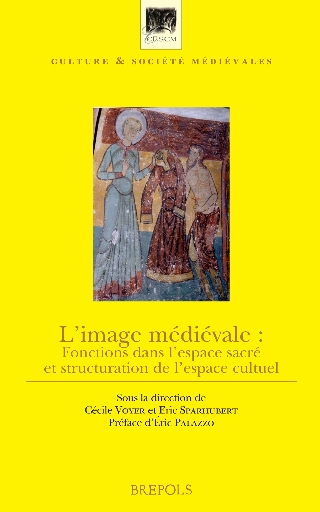
L’image médiévale: fonctions dans l’espace sacré et structuration de l’espace cultuel
show More to view fulltext, buy and share links for:L’image médiévale: fonctions dans l’espace sacré et structuration de l’espace cultuel show Less to hide fulltext, buy and share links for: L’image médiévale: fonctions dans l’espace sacré et structuration de l’espace cultuelCet ouvrage rassemble les travaux de chercheurs réunis autour du groupe IMAGO sur L’image médiévale: fonctions dans l’espace sacré et structuration de l’espace cultuel (CÉSCM). L’approche de l’image médiévale s’est considérablement enrichie ces dernières décennies suscitant de nouveaux enjeux méthodologiques. Les travaux qui lui ont été consacrés ont, en effet, montré que l’image médiévale était un objet complexe, polysémique, nouant des liens étroits avec son lieu d’inscription. S’interroger sur la définition et le fonctionnement du lieu cultuel revient à poser les bases et les cadres de l’analyse des images. La réflexion sur l’espace ecclésial permet de cerner la dialectique entre le monument – construit – et le lieu – institué symboliquement – pour mieux en comprendre l’organisation. En appréhendant l’image dans son contexte, il est alors possible de saisir les usages et les pratiques qui lui sont associés. Au-delà de l’approche iconographique, l’attention portée à la construction de l’image, à sa composition et à sa structure permet d’ouvrir de multiples champs d’investigations. Les contributions réunies dans ce recueil sont autant de regards croisés qui illustrent la diversité des approches et la richesse des problématiques liées à l’image. Ces réflexions s’inscrivent dans le cadre des activités du groupe IMAGO (CÉSCM, Poitiers) qui, depuis 1999, rassemblent dans une dynamique commune étudiants, jeunes chercheurs et chercheurs dont les recherches sont consacrées aux images médiévales.
-
-
-
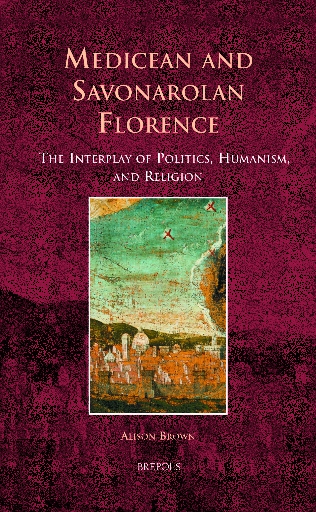
Medicean and Savonarolan Florence
show More to view fulltext, buy and share links for:Medicean and Savonarolan Florence show Less to hide fulltext, buy and share links for: Medicean and Savonarolan FlorenceThis volume examines Florentine society at crucial moments of change that are often treated separately in historical narratives: the later years of Medici government under the aegis of Lorenzo the Magnificent, the four tumultuous years of Savonarola’s religious regime from 1494 to 1498, and the unsettled early decades of the sixteenth century. Drawing upon original research conducted during the past decade, it provides important insights into the politics and conflicting ideologies in the city as experienced by different levels of society, not only by the politicians, preachers, and intellectuals whose voices are more familiar to us, but also by women and lower-class citizens. Since no single paradigm is adequate to describe these years of flux, this volume attempts to reassess the period by uncovering the debate underlying nearly all the topics it discusses. In this way, it offers a new and multifocused approach to the study of this important and influential period in Florentine history.
-
-
-
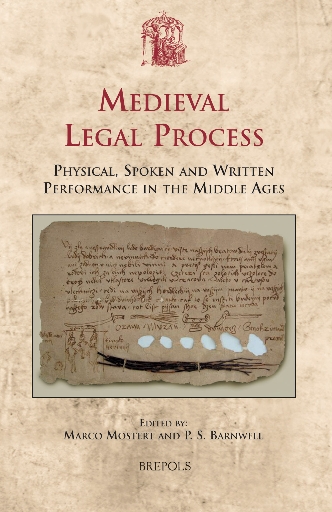
Medieval Legal Process
show More to view fulltext, buy and share links for:Medieval Legal Process show Less to hide fulltext, buy and share links for: Medieval Legal ProcessIn medieval legal transactions the use of the written word was only one of many ways of conducting business. Important roles were played by the spoken word and by the ‘action’ of ritual. The relationship between ‘rituals’ and literacy has been the focus of much recent research. Medieval societies which made extensive use of written instruments in legal transactions have been shown to employ rituals as well. This has led to investigation of the respective functions of written instruments and legal rituals. What is the nature of legal rituals? If they included oral verbalization, how did the spoken words relate to those of the written instruments that played a role in the same legal transactions? Usually, we only have the written documents to answer these questions, and they are often silent about the rituals and oral elements of the transactions they document. Furthermore, the importance attached to written instruments and rituals may not have been the same at all levels of a society, differing, for example, between princely and local courts. The contributors to this volume discuss fifteen cases, ranging from the early Middle Ages to the eighteenth century, and from England to Galician Rus’.
-
-
-
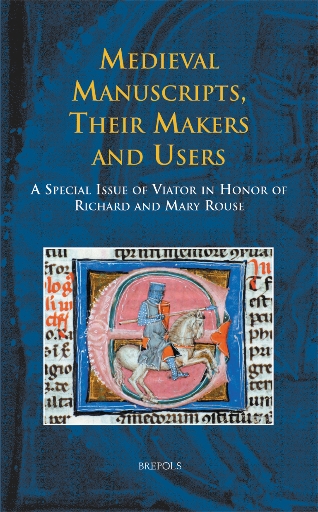
Medieval Manuscripts, Their Makers and Users
show More to view fulltext, buy and share links for:Medieval Manuscripts, Their Makers and Users show Less to hide fulltext, buy and share links for: Medieval Manuscripts, Their Makers and UsersThe essays in this collection pertain to art history, medieval Latin culture both ecclesiastic and legal, the history of vernacular literatures, and the devotional practices of the laity. They reflect the patronage of authors and manuscript painters, from the royal through the monastic to the urban middle class, and they trace the sometimes astonishing afterlife of manuscripts. The subject matter of these studies ranges chronologically from late antiquity to the later Middle Ages, adding the emergent medievalism of the eighteenth and nineteenth centuries. Its geographic breadth extends through the major Western cultures and literatures, from England to Italy, Germany, and France. Its wide range in time and space reflects the lifetime of manuscript research, teaching, and collecting by its honorees, Richard and Mary Rouse.
A particular emphasis distinguishes this volume from other such collections: its stress on the use, and usefulness, of medieval manuscripts in the teaching of most historical disciplines in Western culture, from the broad undergraduate survey (of art, literature, history) to the specialized graduate seminar. In the last half century, public colleges and universities have increasingly appreciated the pedagogical opportunities inherent in building, through gift and purchase, collections of medieval manuscripts, formerly thought to be the province only of wealthy private schools. No similar collection of manuscript studies exhibits so clearly the role of medieval manuscripts in teaching.
The specialist authors represented in this volume have displayed, over the whole of their careers, an ability to combine the highest caliber of research with an eagerness to make their subject accessible to others through teaching and writing and public lectures. The essays offer the results of new and sometimes technical research, set forth in a manner intelligible not only to the expert but to the interested amateur.
-
-
-
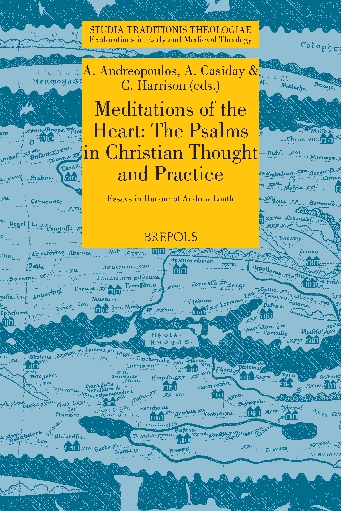
Meditations of the Heart: The Psalms in Early Christian Thought and Practice
show More to view fulltext, buy and share links for:Meditations of the Heart: The Psalms in Early Christian Thought and Practice show Less to hide fulltext, buy and share links for: Meditations of the Heart: The Psalms in Early Christian Thought and PracticeThe Psalms are one of the most important biblical texts in Patristic exegesis, commentary, preaching, liturgical practice and theological reflection. Their language and imagery is all-pervasive; they were not only interpreted by the fathers but a good deal of Patristic exegetical practice actually evolved from engagement with them; they directly informed Christological and Ecclesiological reflection; were central to early monasticism; inspired early Christian poetry and provided material for liturgical chant, prayers, hymns and penitential or doxological expression. This volume of essays on the Psalms in Early Christian Thought and Practice is offered with profound gratitude, admiration and respect by colleagues and friends of Professor Andrew Louth FBA, to honour his long and immensely distinguished career as priest, teacher and prolific author in almost every aspect of Greek and Latin Patristics.
-
-
-
Mots médiévaux offerts à Ruedi Imbach
show More to view fulltext, buy and share links for:Mots médiévaux offerts à Ruedi Imbach show Less to hide fulltext, buy and share links for: Mots médiévaux offerts à Ruedi ImbachCes Mots médiévaux offerts à Ruedi Imbach rendent un hommage dans les formes du lexique historique et historiographique. Plutôt que de brosser le portrait d' un professeur et d' un chercheur, ils présentent une image de son monde intellectuel et des intérêts des spécialistes qui travaillent le même champ disciplinaire que lui, la philosophie et l' histoire de la philosophie médiévale en particulier. Le lecteur circule librement à travers soixante-dix études courtes consacrées à des notions négligées, marginales ou encore mal définies de la culture médiévale; il accomplit aussi quelques excursions de l' Antiquité à la Modernité, à travers les aléas de l 'histoire de la transmission des doctrines philosophiques.
Le volume comprend des contributions de: Jan A. Aertsen, Etienne Anheim, Henryk Anzulewicz, Iñigo Atucha, Alessandra Beccarisi, Luca Bianchi, Joël Biard, Magdalena Bieniak, Serge-Thomas Bonino, Bruno-Marie Borde, Jean-Baptiste Brenet, Olivier Boulnois, Alain Boureau, Charles Burnett, Philippe Büttgen, Dragos Calma, Monica Calma, Stefano Caroti, Delphine Carron, Julie Casteigt, Laurent Cesalli, Stephen Chung, Emanuele Coccia, Valérie Cordonier, Iacopo Costa, Fernando Domínquez Reboiras, Gianfranco Fioravanti, Kurt Flasch, Frédéric Gabriel, Christophe Grellard, Barbara Hallensleben, Maarten J.F.M. Hoenen, Tobias Hoffmann, mary E. Ingham, Isabel Iribarren, Zénon Kaluza, Theo Kobusch, Catherine König-Pralong, Alfonso Maierù, John Marenbon, Jean-Luc Marion, Burkhart Mojsisch, Adriano Oliva, Dominic O' Meara, Gianfranco Pellegrino, Dominik Perler, Sylvain Piron, Dominique Poirel, Olaf Pluta, Pasquale Porro, François-Xavier Putallaz, Francis Python, Fiorella Retucci, Thomas Ricklin, Aurélien Robert, Andrea Robiglio, Anne-Sophie Robin, Irène Rosier-Catach, Jacob Schmutz, Peter Schulthess, Philibert Secrétan, Andreas Speer, Loris Sturlese, Tiziana Suarez-Nani, Christian Trottmann, Luisa Valente, Anca Vasiliu, Guido Vergauwen, Ubaldo Villani-Lubelli, Peter von Moos, Olga Weijers, Irene Zavattero.
-
-
-

Normandy and its Neighbours, 900—1250
show More to view fulltext, buy and share links for:Normandy and its Neighbours, 900—1250 show Less to hide fulltext, buy and share links for: Normandy and its Neighbours, 900—1250One of the most important aspects of David Bates’s distinguished career has been his readiness to engage — as few of his predecessors did — with the world of modern French scholarship. The outcome of this engagement and of his familiarity with French archives has been the reshaping of our understanding of the Anglo-Norman realm founded by William the Conqueror. The Norman Conquest has always been seen as a defining event in medieval English history, and David’s work has enabled us to place it in its broader European context. He has also welcomed insights from other disciplines, including archaeology, architectural history, and numismatics. His impact as a scholar has been profound. His writings have made academic debate accessible to the general public and the scholar alike, and he has conveyed his enthusiasm and commitment to both. He has brought together a generation of academics of various nationalities and from a broad range of disciplines to forge a new understanding of the relationship of England and Normandy in the central Middle Ages. This collection — offered in recognition of his contribution — acknowledges the many strands of his scholarship. It brings together specialist studies of Anglo-French culture, law, gender, and historiography.
-
-
-
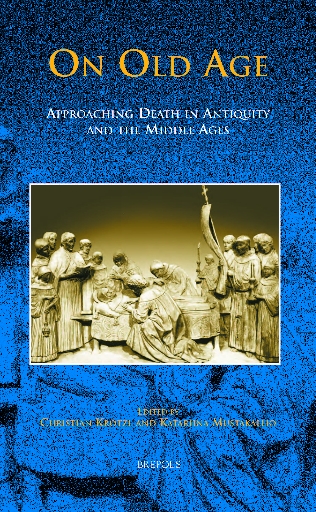
On Old Age
show More to view fulltext, buy and share links for:On Old Age show Less to hide fulltext, buy and share links for: On Old AgeRecent research into old age and dying in the premodern world has examined not only the demographic aspects of ageing populations but also the social role of aged people. Nonetheless, there has usually been a neglect of the end of life and attitudes towards death and memory. These topics have seldom been discussed in the same volume. The end of life evokes questions. What does it mean to grow old? What happens when one dies? How does one cope with old age and death? These questions were as relevant for individuals and societies in earlier periods as they are in the present. The aim of this collection of articles is to cross the boundaries that have traditionally isolated different time periods and scholarly disciplines from each other. The volume focuses on aging, old age, and death from Classical Antiquity to the Middle Ages. The purpose of this book is to approach these themes from an interdisciplinary point of view in the longue durée. Instead of concentrating solely on demographic issues it takes a much broader view, considering attitudes towards ageing, dying, death, and memory. The volume, with its diverse topics, cuts across traditional scholarly barriers and will provide valuable analytical tools for further studies on the subject.
-
-
-
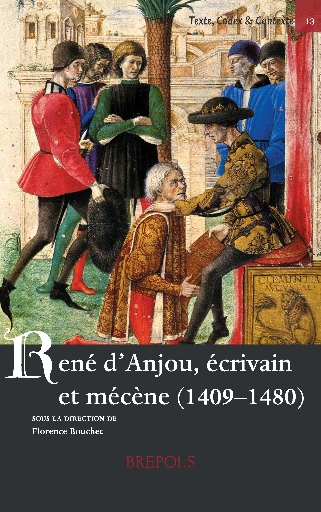
René d’Anjou, écrivain et mécène (1409-1480)
show More to view fulltext, buy and share links for:René d’Anjou, écrivain et mécène (1409-1480) show Less to hide fulltext, buy and share links for: René d’Anjou, écrivain et mécène (1409-1480)À l’occasion du 6e centenaire de la naissance de René, duc d’Anjou et comte de Provence, ce volume pluridisciplinaire propose des perspectives nouvelles sur l’action d’un prince qui, malgré ses déboires politiques, fut un écrivain subtil et un mécène curieux de tous les arts. Sont abordés l’œuvre littéraire de René d’Anjou (Livre du Cœur d’amour épris, Mortifiement de vaine plaisance, Traité et devis de la forme d’un tournoi), mais aussi sa bibliothèque, sa politique culturelle, les écrivains et artistes à son service, les spectacles curiaux, reflet de goûts littéraires et de l’imaginaire de la fin du Moyen Âge. La personnalité du prince apparaît particulièrement riche de sens, en ce qu’il se situe au carrefour de la féodalité (dont il fut l’un des derniers grands représentants, à une époque où s’affirmait le pouvoir royal) et de l’humanisme (dont René eut un avant-goût par les liens qui l’attachaient à l’Italie).
-
-
-
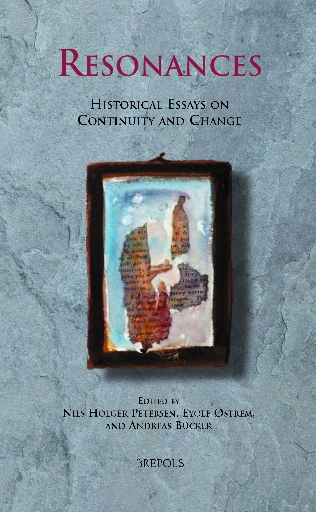
Resonances
show More to view fulltext, buy and share links for:Resonances show Less to hide fulltext, buy and share links for: ResonancesContinuity and change enclose a problem field that is fundamental to the interpretation of historical material. On the one hand the notions that are necessary to perceive the historical account as a narrative: continuity, tradition, constancy, consistency, identity; on the other those that provide an impetus or drive to that account: change, innovation, rupture, or discontinuity.
Resonances: Historical Essays on Continuity and Change explores the historiographical question of the modes of interrelation between these motifs in historical narratives. The essays in the collection attempt to realize theoretical consciousness through historical narrative ‘in practice’, by discussing selected historical topics from Western cultural history, within the disciplines of history, literature, visual arts, musicology, archaeology, philosophy, and theology.
The title Resonances indicates the overall perspective of the book: how connotations of past meanings may resonate through time, in new contexts, assuming new meanings without surrendering the old.
-
-
-

Scale and Scale Change in the Early Middle Ages
show More to view fulltext, buy and share links for:Scale and Scale Change in the Early Middle Ages show Less to hide fulltext, buy and share links for: Scale and Scale Change in the Early Middle AgesKings, aristocrats, peasants, and the Church are among the shared features of most early medieval societies. However, these also varied dramatically in time and space. Can petty regional kings, for instance, be compared to those in charge of a whole empire? Scale is a crucial factor in modelling, explaining, and conceptualizing the past. Furthermore, many issues that historians and archaeologists treat independently can be theorized together as processes of scale decrease or increase: the appearance of complex societies, the rise and collapse of empires, changing world-systems, and globalization. While a subject of much discussion in fields such as ecology, geography, and sociology, scale is rarely theorized by archaeologists and historians. This book highlights the potential of the concepts of scale and scale change for comparing and explaining medieval socio-spatial processes. It integrates regional and temporal variations in the fragmentation of the Roman world and the emergence of medieval polities, which are often handled separately by late antique and early medieval specialists. The result of a three-year research project, the nine case studies in this volume offer fresh insights into early medieval rural society while combining their individual subjects to generate a wider explanatory framework.
-
-
-
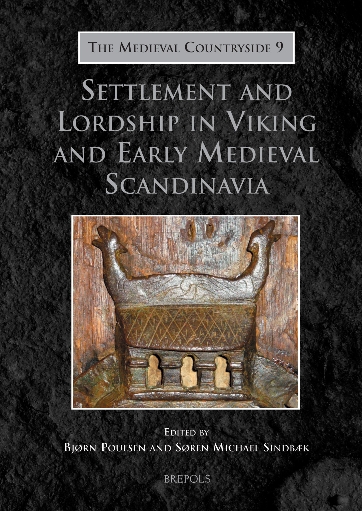
Settlement and Lordship in Viking and Early Medieval Scandinavia
show More to view fulltext, buy and share links for:Settlement and Lordship in Viking and Early Medieval Scandinavia show Less to hide fulltext, buy and share links for: Settlement and Lordship in Viking and Early Medieval ScandinaviaThis volume aims to define the changing nature of lordship in Viking and early medieval Scandinavia. Advances in settlement archaeology and cultural geography have revealed new aspects of social power in Viking Age and early medieval Scandinavia. The organization of settlement is increasingly well understood and gives evidence of strong social differentiation in rural settlement. Historical research, however, increasingly portrays these societies as characterized by elementary social networks at a personal level rather than at the level of formal institutions. Can these representations be reconciled? When did the possession of land, in the form of manors or large demesne farms, become an important source of power and authority? This question has generated intense debate internationally in recent years, but there is no comprehensive overview for Scandinavia. New sources and approaches allow us to question the traditional view that Scandinavian aristocrats developed from Viking raiders into Christian landlords. Seventeen thematic chapters by leading scholars survey and assess the state of research and provide a new baseline for interdisciplinary discussions. How were social ties structured? How did lordship and dependency materialize in modes of agriculture, settlement, landscape, and monuments? The book traces the power of tributary relations, forged through personal ties, gifts, duties, and feasting in great halls, and their gradual transformation into the feudal bonds of levies and land-rent.
-
-
-
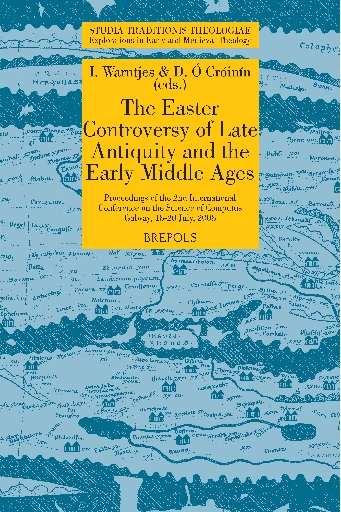
The Easter Controversy of Late Antiquity and the Early Middle Ages. Its Manuscripts, Texts, and Tables
show More to view fulltext, buy and share links for:The Easter Controversy of Late Antiquity and the Early Middle Ages. Its Manuscripts, Texts, and Tables show Less to hide fulltext, buy and share links for: The Easter Controversy of Late Antiquity and the Early Middle Ages. Its Manuscripts, Texts, and Tables2010 saw the publication of the Proceedings of the 1st International Conference on the Science of Computus in Ireland and Europe, which took place in Galway, 14–16 July, 2006. That first collection, which had the sub-title Computus and its Cultural Context in the Latin West, AD 300–1200, brought together papers by ten of the leading scholars in the field, on subjects ranging from the origins of the Annus Domini to the study of computus in Ireland c. 1100. All those who participated in the Conference were unanimous that a second, follow-up event should be organized, and that duly took place (also in Galway), 18–20 July, 2008. The proceedings of that Conference are published in this current volume. The topics covered in the 2nd Galway Conference ranged from the general – but vitally important – vocabulary of computus (i.e., the technical terminology developed by computists to describe what they were doing) to the origins of the different systems used to calculate the date of Easter in Antiquity and the Early Middle Ages. In addition, there was discussion also of the great debates about Easter, epitomized by the famous Synod of Whitby in AD 664, and the role of well-known individuals in the evolution of computistical knowledge (e.g., Anatolius of Laodicea, the African Augustalis, Sulpicius Severus, Victorius of Aquitaine, Cassiodorus, Dionysius Exiguus, Willibrord, the ninth-century Irish scholar-exile, Dicuil, as well as the late-tenth century Abbo of Fleury). Immo Warntjes is lecturer in Medieval History at the University of Greifswald (Germany). Besides computistics, his main areas of research include the use of languages in Early Medieval Europe, succession to high offices, high and late medieval burial practices, and German, English, and Irish political history and culture. Dáibhí Ó Cróinín lectures in history at NUI, Galway, where he is the Director of The Foundations of Irish Culture project. His research interests are Ireland, Britain and Europe during the Early Middle Ages, computistics, Medieval Latin Palaeography and Irish traditional music and song.
-
-
-
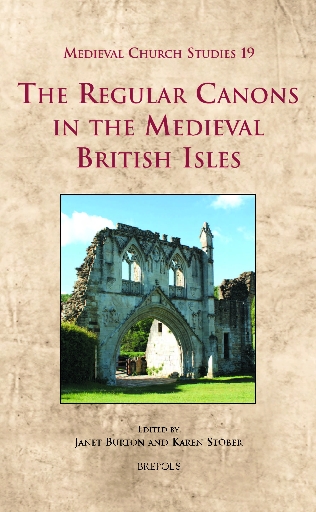
The Regular Canons in the Medieval British Isles
show More to view fulltext, buy and share links for:The Regular Canons in the Medieval British Isles show Less to hide fulltext, buy and share links for: The Regular Canons in the Medieval British IslesOf all the new monastic and religious groups to settle in the British Isles in the course of the twelfth century the regular canons were the most prolific. At the heart of their existence was the vita apostolica, but even more than other such groups the regular canons became involved in active spiritual care of their communities. Perhaps as a result of this feature they also enjoyed sustained support from founders, patrons, and benefactors, and new foundations continued to be made long after the main force of the expansion of the monastic orders had declined. This interdisciplinary volume brings together scholars from Scotland, Ireland, Wales, and England who work on aspects of the history, culture, art history, and archaeology of the regular canons in the medieval British Isles. Between them, the chapters of this book consider the regular canons in their wider historical and historiographical context, assessing their role in the religious, social, cultural, economic, and political world of the medieval British Isles, and introducing new and recent research on this important religious group.
Medieval Church Studies is a series of monographs and, sometimes, collections devoted to the history of the Western Church from, approximately, the Carolingian reform to the Council of Trent. It builds on Brepols’ longstanding interest in editions of texts and primary sources, and presents studies that are founded on a traditional close analysis of primary sources but which confront current research issues and adopt contemporary methodological approaches.
-
-
-
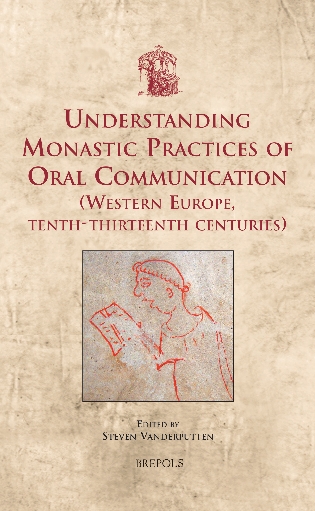
Understanding Monastic Practices of Oral Communication
show More to view fulltext, buy and share links for:Understanding Monastic Practices of Oral Communication show Less to hide fulltext, buy and share links for: Understanding Monastic Practices of Oral CommunicationAlthough traditionally defined as a literate environment, Western monastic culture depended on a range of communicative practices which was just as large, and in some ways more sophisticated in its diversity, than that of other groups of society. Monks and nuns exchanged considerable amounts of information for which no written media were deemed necessary or which did not make a complete or immediate transition into written sources. Grouped in five thematic chapters, the papers in this volume aim to provide inroads into a useable interpretation of the various contexts in which monks and nuns in the central Middle Ages considered the spoken word as a vital complementary medium to other forms of communication.
-
-
-

Vernacularity in England and Wales, c. 1300-1550
show More to view fulltext, buy and share links for:Vernacularity in England and Wales, c. 1300-1550 show Less to hide fulltext, buy and share links for: Vernacularity in England and Wales, c. 1300-1550Studies of the vernacular in the period 1300-1550 have tended to focus exclusively upon language, to the exception of the wider vernacular culture within which this was located. In a period when the status of English and ideas of Englishness were transforming in response to a variety of social, political, cultural and economic factors, the changing nature and perception of the vernacular deserves to be explored comprehensively and in detail. Vernacularity in England and Wales examines the vernacular in and across literature, art, and architecture to reach a more inclusive understanding of the nature of late medieval vernacularity.
The essays in this collection draw upon a wide range of source material, including buildings, devotional and educational literature, and parliamentary and civic records, in order to expand and elaborate our idea of the vernacular. Each contributor addresses central ideas about the nature and identity of the vernacular and how we appraise it, involving questions about nationhood, popularity, the commonalty, and the conflict and conjunction of the vernacular with the non-vernacular. These notions of vernacularity are situated within studies of reading practices, heresy, translation, gentry identity, seditious speech, and language politics. By considering the nature of vernacularity, these essays explore whether it is possible to perceive a common theory of vernacular use and practice at this time.
-
-
-
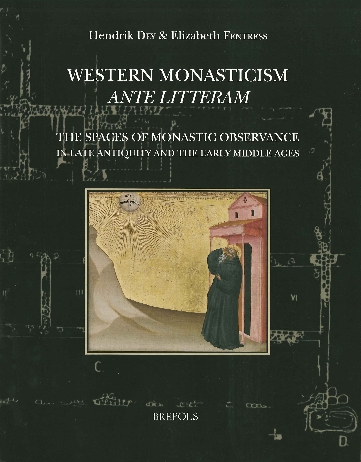
Western Monasticism ante litteram
show More to view fulltext, buy and share links for:Western Monasticism ante litteram show Less to hide fulltext, buy and share links for: Western Monasticism ante litteramSpace has always played a crucial part in defining the place that monks and nuns occupy in the world. Even during the first centuries of the monastic phenomenon, when the possible varieties of monastic practice were nearly infinite, there was a common thread in the need to differentiate the monk from the rest: whatever else they were supposed to be, monks were beings apart, unique, in some sense separate from the mainstream. The physical contours of monastic topographies, natural and constructed, are thus fundamental to an understanding of how early monks went about defining the parameters of their everyday lives, their modes of religious observance, and their interactions with the larger world around them. The group of eminent historians and archaeologists present at the American Academy in Rome in March, 2007 for the conference ‘Western monasticism ante litteram. The spaces of early monastic observance’, whose contributions comprise the bulk of this volume, have sought to reconsider the theory, the practice and above all the spaces of early monasticism in the West, in the hope of creating a more complete picture of that seminal period, from the fourth century until the ninth, when notions of what it meant to be a monk were as numerous as they were varied and (often) conflicting.
-
-
-
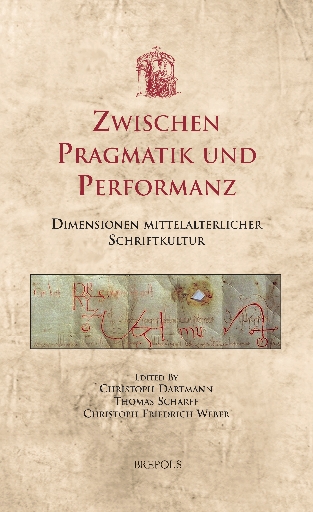
Zwischen Pragmatik und Performanz
show More to view fulltext, buy and share links for:Zwischen Pragmatik und Performanz show Less to hide fulltext, buy and share links for: Zwischen Pragmatik und PerformanzResearch on the practices and impacts of literacy has revolutionized the study of medieval history and culture. After initially having focused on investigating the modernising aspects of the development of literacy during the Middle Ages, the discussion now involves a large variety of topics, such as the performance of writing and reading, the use of the written word in political ritual and, on a general level, the ‘otherness’ of medieval communication. The volume presents essays dealing with a wide range of social and political uses of the written word during the Middle Ages, from the Carolingian era to late medieval Italy, Switzerland, Germany and Burgundy. It presents a panorama of the current state of the research and also offers new insights into the current conceptual debates about the history of communication in premodern Europe.
-
-
-
Échanges, communications et réseaux dans le Haut Moyen Âge
show More to view fulltext, buy and share links for:Échanges, communications et réseaux dans le Haut Moyen Âge show Less to hide fulltext, buy and share links for: Échanges, communications et réseaux dans le Haut Moyen ÂgeStéphane Lebecq a pris sa retraite en juin 2009. Pour lui rendre hommage, ses amis et collègues ont voulu faire écho à ses travaux sur le haut Moyen Âge en s’inspirant de ses domaines de recherche. Si la majorité des seize contributions de ce volume se situe dans l’Europe du Nord-Ouest, aire géographique d’élection de son travail scientifique, plusieurs étendent ses questionnements à des parties méridionales de l’Occident, voire à l’Orient byzantin. On peut répartir l’ensemble en deux grands volets qui rejoignent les thèmes de prédilection de Stéphane Lebecq. Le premier est la mer, envisagée comme un milieu de vie ou comme le cadre d’échanges à travers la navigation, singulièrement la navigation commerciale. Le second s’attache aux personnes qui animent ces échanges et entretiennent ainsi des réseaux fondant leur pouvoir : puissants de tous ordres, ambassadeurs, missionnaires.
-
-
-

Agrosystems and Labour Relations in European Rural Societies
show More to view fulltext, buy and share links for:Agrosystems and Labour Relations in European Rural Societies show Less to hide fulltext, buy and share links for: Agrosystems and Labour Relations in European Rural SocietiesIt goes without saying that agriculture is a form of colonisation of nature by society. In the course of history the articulation of natural and societal features gave rise to a wide variety of agrosystems within the boundaries of Europe which were embedded in supra-regional political and economic contexts at least from the High Middle Ages onwards. By following an integrative approach, this volume defines agrosystems as production systems based on the ecological and socioeconomic relations involved in the reproduction of rural societies at multiple levels. The authors explore the articulation of natural and societal factors through the prism of labour relations. The structural and practical organization of labour is seen as the crucial link between rural production and reproduction. Accordingly, the contributions focus on the rural household as the basic unit of production and reproduction in different temporal and spatial contexts. Therefore, the question arises if the changes in ecosystems and social systems have so fundamentally altered European agriculture up to now that peasant family farming will disappear (if it is no longer sustained by state intervention).
-
-
-
Behaving like Fools
show More to view fulltext, buy and share links for:Behaving like Fools show Less to hide fulltext, buy and share links for: Behaving like FoolsThe period from 1200 to 1600 was the golden age of fools. From representations of irreverent acts to full-blown insanity, fools appeared on the misericords of gothic churches and in the plots of Arthurian narratives, before achieving a wider prominence in literature and iconography in the decades around 1500. But how are we to read these figures appropriately? Is it possible to reconstruct the fascination that fools exerted on the medieval and early modern mind? While modern theories give us the analytical tools to explore this subject, we are faced with the paradox that by striving to understand fools and foolishness we no longer accept their ways but impose rational categories on them. Together these essays propose one way out of this dilemma. Instead of attempting to define the fool or trying to find the common denominator behind his many masks, this volume focuses on the qualities, acts, and gestures that signify foolishness. By investigating different manifestations of foolery rather than the figure of the fool himself, we can begin to understand the proliferation of fools and foolish behaviour in the texts and illustrations of manuscripts and early books.
-
-
-
Current Directions in Eleventh- and Twelfth-Century Sculpture Studies
show More to view fulltext, buy and share links for:Current Directions in Eleventh- and Twelfth-Century Sculpture Studies show Less to hide fulltext, buy and share links for: Current Directions in Eleventh- and Twelfth-Century Sculpture Studies
-
-
-
Les innovations du vocabulaire latin à la fin du moyen âge: autour du Glossaire du latin philosophique
show More to view fulltext, buy and share links for:Les innovations du vocabulaire latin à la fin du moyen âge: autour du Glossaire du latin philosophique show Less to hide fulltext, buy and share links for: Les innovations du vocabulaire latin à la fin du moyen âge: autour du Glossaire du latin philosophiqueLe Glossaire du latin philosophique est un fichier d’environ 230.000 à 260.000 fiches consacré au vocabulaire philosophique du moyen âge. Une équipe du CNRS, au départ sous la direction de Pierre Michaud-Quantin, y a travaillé durant de nombreuses années. Récemment, il a été transporté de la Sorbonne à l’Institut de Recherche et d’Histoire des Textes, où il est désormais consultable à la Section latine.
A l’occasion de l’arrivée du Glossaire du latin philosophique à l’Institut de Recherche et d’Histoire des Textes et pour marquer un nouveau départ, une journée d’étude consacrée à ce fichier a eu lieu à l’IRHT, le jeudi 15 mai 2008, sous le titre «Les innovations du vocabulaire latin à la fin du moyen âge: autour du Glossaire du latin philosophique (philosophie, théologie, sciences)». L’accent était mis sur la fin du moyen âge (XIIIe-XVe s.) parce que le vocabulaire philosophique de cette période n’est représenté que très partiellement dans les dictionnaires du latin médiéval et que nombre d’éditions récentes concernent cette période.
Les articles réunis ici sont le reflet de cette journée, qui fut introduite et présidée par Louis Holtz. Ils sont de la main de Charles Burnett, Monica Calma, Ana Gómez Rabal, Jacqueline Hamesse, Ruedi Imbach, Alfonso Maierù et Jean-Pierre Rothschild. Ils sont suivis de deux Annexes: 1. Liste des différentes parties du fichier, 2. Quelques exemples tirés des différentes parties du fichier.
-
-
-
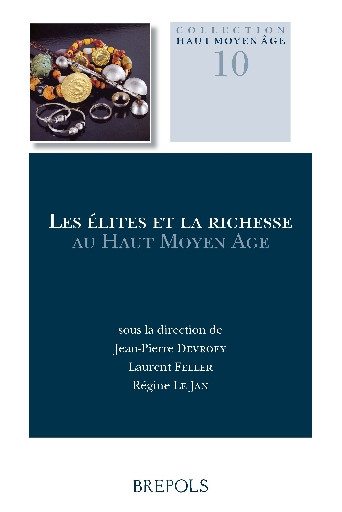
Les élites et la richesse au Haut Moyen Âge
show More to view fulltext, buy and share links for:Les élites et la richesse au Haut Moyen Âge show Less to hide fulltext, buy and share links for: Les élites et la richesse au Haut Moyen ÂgeCe volume recueille les actes d’un colloque tenu à Bruxelles dans le cadre du programme international «Les élites au haut Moyen Âge» et se propose d’étudier la richesse comme critère d’appartenance à l’élite sociale, politique ou religieuse et les usages faits de leurs biens matériels par les membres de ces groupes.
La possession de biens matériels, qu’il s’agisse de terres, de demeures, de bijoux, d’armes, de biens de production ou de biens de prestige, fait partie des éléments permettant à des groupes sociaux ou à des individus d’exercer leur domination sur les autres. À côté du prestige qu’assure la culture ou de la situation à la tête de réseaux complexes dans une société où les hiérarchies sont essentielles, la richesse classe et contribue à l’établissement du rang d’un individu ou d’un groupe dans l’ordre social.
Être riche entraîne un certain nombre de comportements et contraint à la satisfaction d’obligation de tous ordres: il existe un usage chrétien de la richesse et donc tout un discours sur sa signification et sa destination. La composition des fortunes, leur évolution, leur gestion et leur transmission sont de véritables problèmes auxquels le colloque «Les élites et la richesse durant le haut Moyen Âge» s’est efforcé de répondre, en axant ses interrogations sur les rationalités à l’œuvre dans les comportements des grands agents économiques de la période, qu’il s’agisse d’abbés, d’évêques ou de membres de l’aristocratie laïque.
Pour cette raison, les vingt contributions de l’ouvrage sont distribuées en trois parties, «Discourir sur la richesse», «Être riche» et «Obtenir et utiliser les richesses» qui marquent toutes trois un point de vue sur les interactions entre la richesse et la domination sociale telle qu’elle apparaît à travers les sources à notre disposition.
-
-
-
L’imaginaire de la parenté dans les romans arthuriens (XIIe-XIVe siècles)
show More to view fulltext, buy and share links for:L’imaginaire de la parenté dans les romans arthuriens (XIIe-XIVe siècles) show Less to hide fulltext, buy and share links for: L’imaginaire de la parenté dans les romans arthuriens (XIIe-XIVe siècles)Quoique éclipsée par la figure proéminente d’un héros, la parenté est au cœur de la matière de Bretagne. Or, nous n’insistons peut-être pas assez sur son rôle primordial aussi bien pour l’économie narrative que pour une meilleure compréhension, par le biais de l’imaginaire, d’aspects essentiels de la société médiévale. Les romans arthuriens mettent en scène toutes sortes de familles, touffues comme celle de Lancelot, ou bien restreintes comme celles des vavasseurs ou petits nobles qui font des apparitions fulgurantes. Il y a aussi des lignées sanctifiées comme celle des gardiens du Graal, ou damnées comme la descendance de Modred. C’est pourquoi les structures de parenté forment un cadre privilégié pour la prédestination et l’évolution des personnages. Parfois elles fonctionnent selon de pratiques réelles. Dans certains cas, elles les influencent, ou bien elles s’en écartent entièrement.
Les alliances matrimoniales souvent problématiques des romans arthuriens, leurs généalogies complexes, leurs conflits et loyautés d’ordre familial parviennent-ils à nous renseigner mieux sur la société médiévale, la légitimité, la violence, la vie privée, la femme? Ont-ils juste une valeur littéraire? Et quelle est la place du mythe païen ou de la pratique chrétienne dans le fonctionnement de la parenté? Enfin, l’héraldique occupe une place centrale dans l’imaginaire arthurien. Les armoiries, généralement signes d’appartenance à une parentèle, acquièrent des significations multiples et subissent des distorsions. Elles ont une valeur symbolique, marquant des étapes dans le devenir d’un personnage. Leur rôle politique de propagande n’est pas non plus négligeable. L’héraldique sert à la fois de marqueur d’identité ou de masque: elle rattache l’individu à son lignage ou souligne, au contraire, sa spécificité. Les textes, leur contexte ou l’iconographie, pris séparément ou mis en vis-à-vis, peuvent répondre à toutes ces questions, voire en susciter d’autres.
-
-
-
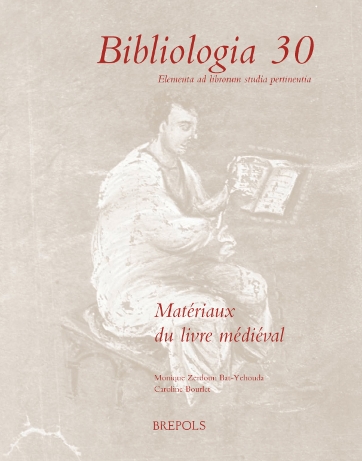
Matériaux du livre médiéval
show More to view fulltext, buy and share links for:Matériaux du livre médiéval show Less to hide fulltext, buy and share links for: Matériaux du livre médiévalCet ouvrage présente les résultats des travaux effectués dans le cadre d’un Groupement de recherche (GDR) initié par le CNRS en 2003 pour une durée de quatre ans et portant sur les matériaux du livre médiéval.
Ce groupement de recherche avait pour but de fédérer, dans un travail collectif interdisciplinaire et pluridisciplinaire, des équipes de recherche en sciences humaines, des laboratoires de sciences dites «dures», autrement dit des historiens, des paléographes, des archivistes-paléographes, des chimistes, des physiciens, des conservateurs de bibliothèques, d’archives, de musées, mais également des enseignants, des artisans-papetiers et formaires (les formaires étant des fabricants de formes à faire le papier à la main); participaient aussi au projet parcheminiers, enlumineurs, calligraphes, relieurs, etc., ainsi qu’un cinéaste documentariste. L’objectif était de faire progresser la connaissance des matériaux du livre médiéval sur le plan livresque, historique, expérimental ou analytique, en mettant en synergie et en fédérant les approches et les compétences spécifiques des personnels et des laboratoires participant au GDR. Connaissance indispensable pour son apport à l’histoire du livre et capitale pour gérer au mieux les problèmes de la conservation et de la sauvegarde de tout patrimoine.
L’originalité de ce GDR fut d’associer des recherches à la fois très différentes et très complémentaires qui pourraient, pour citer T. Delcourt, être regroupées en trois grandes catégories: «les recherches techniques sur les supports matériels de l’écrit que sont le papier, le parchemin, les encres; les recherches sur les différentes étapes intervenant dans la fabrication du livre autour de la reliure, mais aussi des ateliers de parcheminiers ou des moulins à papier; enfin des recherches sur le vocabulaire du livre et de l’écrit au Moyen Age si l’on veut comprendre avec un peu de certitude les textes, les inventaires ou les recettes qui traitent de la fabrication du livre au Moyen Age.»
Ces travaux ont été exposés au cours d’un colloque qui s’est tenu à Paris en novembre 2007.
-
-
-
Medicina y Filología. Estudios de léxico médico latino en la Edad Media
show More to view fulltext, buy and share links for:Medicina y Filología. Estudios de léxico médico latino en la Edad Media show Less to hide fulltext, buy and share links for: Medicina y Filología. Estudios de léxico médico latino en la Edad MediaEl Grupo de investigación de la Universidad de Valladolid Speculum medicinae, compuesto por una docena de filólogos clásicos, en el que colaboran también un historiador de la medicina y una arabista, lleva trabajando muchos años en la elaboración del que se ha llamado Diccionario latino de andrología y ginecología (DILAG). En este momento se encuentra ya en fase de revisión.
El DILAG es un diccionario técnico especializado que recoge, en las fuentes médicas más significativas de la Antigüedad, la Edad Media y el Renacimiento, términos médicos latinos encuadrados en las especialidades de la andrología, la ginecología y la embriología. En la redacción del DILAG sus colaboradores han encontrado diferentes aspectos de la medicina medieval dignos de estudio, que abarcan los campos de la anatomía, la fisiología, la patología y la terapéutica o problemas relacionados con ellos, como la sexualidad o la deformación de términos técnicos mal interpretados. Con sus trabajos pretenden mostrar las múltiples aplicaciones, tanto médicas como filológicas o históricas, que los estudiosos pueden llevar a cabo con el material de dicho diccionario y apreciar las posibilidades investigadoras que brinda. Algunas de estas aportaciones de carácter parcial se presentaron en el IVe Congrès européen d´études médiévales, organizado por la FIDEM e la Officina di Studi Medievali en Palermo el año 2009, y otras han sido elaboradas expresamente para este libro.
Se reúnen en esta monografía, a modo de capítulos autónomos, los trabajos mencionados, con el fin de contribuir al conocimiento e investigación de un tipo de léxico que cada vez atrae más la atención de los estudiosos.
-
-
-
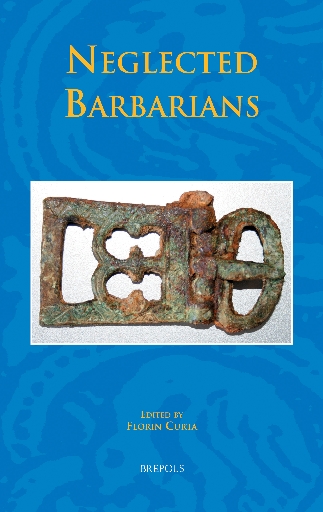
Neglected Barbarians
show More to view fulltext, buy and share links for:Neglected Barbarians show Less to hide fulltext, buy and share links for: Neglected BarbariansAlthough barbarians in history is a topic of perennial interest, most studies have addressed a small number of groups for which continuous narratives can be constructed, such as the Franks, Goths, and Anglo-Saxons. This volume examines groups less accessible in the literary and archaeological evidence. Scholars from thirteen countries examine the history and archaeology of groups for whom literary evidence is too scant to contribute to current theoretical debates about ethnicity. Ranging from the Baltic and northern Caucasus to Spain and North Africa and over a time period from 300 to 900, the essays address three main themes. Why is a given barbarian group neglected? How much can we know about a group and in what ways can we bring up this information? What sorts of future research are necessary to extend or fill out our understanding? Some papers treat these questions organically. Others use case studies to establish what we know and how we can advance. Drawing on those separate lines of research, the conclusion proposes an alternative reading of Late Antiquity and the early Middle Ages, viewed not from the ‘centre’ of the privileged but from the ‘periphery’ of the neglected groups. Neglected Barbarians covers a longer time span than similar studies of this kind, while its frequent use of the newest archaeological evidence has no parallel in any book so far published in any language.
-
-
-
The Legacy of Bernard de Montfaucon: Three Hunderd Years of Studies on Greek Handwriting
show More to view fulltext, buy and share links for:The Legacy of Bernard de Montfaucon: Three Hunderd Years of Studies on Greek Handwriting show Less to hide fulltext, buy and share links for: The Legacy of Bernard de Montfaucon: Three Hunderd Years of Studies on Greek HandwritingIn September 2008, the seventh edition of the International Colloquium of Greek Palaeography (Madrid-Salamanca, 15-20 September 2008) celebrated the 300th anniversary of the Palaeographia Graeca, the pioneer work of the Benedictine Bernard de Montfaucon that established the fundamentals of the discipline. Papers by renowned specialists in the field contributed to the methodology of study and to our knowledge of Greek manuscripts, and opened new perspectives for the study of the Greek manuscripts preserved mostly in European libraries, taking into account new methodological approaches, the possibilities of online resources and the results of ongoing research projects.
The Proceedings published here include contributions by specialists from over ten different countries, dealing with palaeographical issues such as ancient capital and lower-case lettering, writing and books in the Macedonian, Comnenian and Palaeologan periods, and Greek scribes and ateliers in the Renaissance (especially in manuscripts from the Iberian Peninsula). Many contributors also take a codicological approach and consider the material aspects of the codex, as well as other new research techniques. Finally, some papers deal with the book as object and how this relates to its content, as well as with the history of texts.
The International Colloquia of Greek Palaeography are organized by the International Committee of Greek Palaeography, presided by Prof. Dieter Harlfinger. The seventh edition payed tribute to the memory of the late Jean Irigoin, who died in 2006.
-
-
-

The Playful Middle Ages
show More to view fulltext, buy and share links for:The Playful Middle Ages show Less to hide fulltext, buy and share links for: The Playful Middle AgesLove play or playing dead, wordplay or playing games - the notion of play inhabits all spheres of human activity. This collection of essays brings together international scholars from a range of disciplines to explore aspects of playfulness in the later European Middle Ages. From manuscript to performance and from the domestic to the doctrinal, the exuberance and ambiguity of verbal and visual play is interrogated in order to decode layers of meaning in texts and artefacts. These twelve papers celebrate the work of Elaine C. Block, whose dedicated study of misericords has, through countless articles and books, made the riches of this dizzying iconographic resource easily available to scholars for the first time. Her monumental Corpus on Medieval Misericords volumes will no doubt inform medieval scholars for generations to come, and those included in the present collection are both proud and grateful to be of the first generation to benefit from her work on this body of carvings which challengingly - and playfully - straddles thesometimes invisible line between the sacred and profane.
-