


Brepols Online Books Medieval Monographs Collection 2012 - bob2012mome

Collection Contents
3 results
-
-
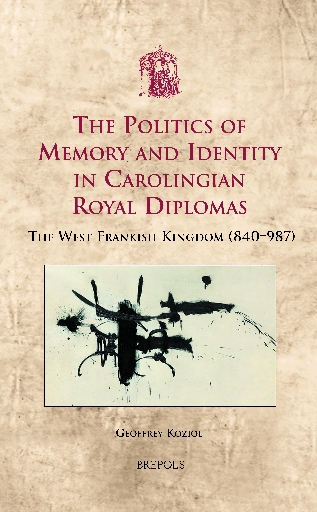
The Politics of Memory and Identity in Carolingian Royal Diplomas
show More to view fulltext, buy and share links for:The Politics of Memory and Identity in Carolingian Royal Diplomas show Less to hide fulltext, buy and share links for: The Politics of Memory and Identity in Carolingian Royal DiplomasBased upon a ‘performative’ interpretation of royal charters, The Politics of Memory and Identity offers a new and surprising narrative of West Frankish history from the death of Louis the Pious in 840 to the demise of the Carolingian dynasty in 987. The key is a carefully contextualised analysis of the circumstances in which kings issued charters and an alert examination of the charters’ verbal and visual semiotics. For which monasteries and cathedrals did kings issue diplomas and under what conditions? Who were the patrons who interceded for the recipients of diplomas and what titles were they given? Which kings were named as predecessors and which were omitted? Such clues allow us to recover the meaning of events whose significance was concealed by chroniclers, and to find unsuspected continuities in 150 years of West Frankish politics. They allow us to see a ruthless exercise of power in the use of forgeries and a commitment to political reform in the reform of monasteries. They reveal the long shadow cast by the reign of Charles the Bald in West Frankish history and the importance of a handful of monasteries as ‘sites of memory’. Above all, an intertextual reading of diplomas shows that political leaders in the kingdom made decisions based on policy, where the policy was articulated in terms of lessons drawn from their understanding of the past, and diplomas were the records that conveyed the lessons.
-
-
-
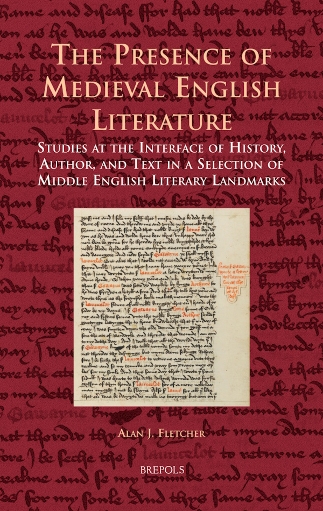
The Presence of Medieval English Literature
show More to view fulltext, buy and share links for:The Presence of Medieval English Literature show Less to hide fulltext, buy and share links for: The Presence of Medieval English LiteratureThe modern period has read its own contingent values into Middle English literature, and a modern canon of vernacular medieval literary texts has evolved as a result. While this book works with a selection of texts that have achieved such canonical status, it brings to light some of the ways in which they nevertheless resist the flattening domestications and expectations of modern taste. It illustrates how they formerly existed as constituents of a past world richer, stranger, and less familiar than much modern opinion has supposed. Thus the book aims to recuperate lost senses in which the age in which these texts were conceived and written was present within them, as well as ways in which they may have been present to their age. This twin idea of ‘presence’ is the thread that binds a series of chapters on English verse and prose written between the thirteenth and fifteenth centuries together. While they may be read as discrete studies of individual literary land- marks, the chapters also entail an implicit and ramifying demonstration of the short- comings of some modern views of what makes certain currently prized Middle English texts worth reading, and of how the vernacular literature of medieval England is retrospectively to be defined and periodized.
-
-
-
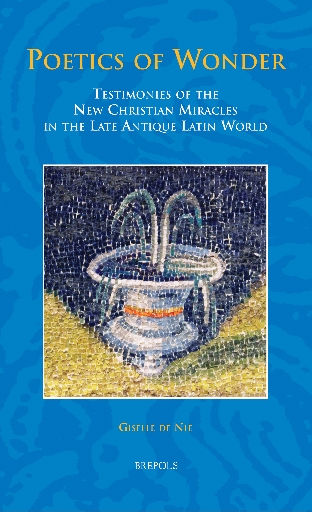
Poetics of Wonder
show More to view fulltext, buy and share links for:Poetics of Wonder show Less to hide fulltext, buy and share links for: Poetics of WonderThe unexpected return of contemporary public Christian miracles in the late antique Latin west, after a centuries-long assumption that these had ceased after apostolic times, helped to create a religious mentality there that would continue to characterize the western European Middle Ages. While the social and political functions of the new miracles have been gaining greater scholarly attention, this study is the first in-depth treatment of their experiential dimension. It examines this dimension in the first reactions to the new phenomenon - enthusiasm, puzzlement, deep suspicion, and outright rejection - as they are reflected and, especially, imagined in the earliest contemporary narrative and poetic sources that describe them. And it traces how the new imaginative representations transformed, for many, the up to then precept-centered way of thinking about religion into one that immersed itself in the supralogical dynamics of symbolic images. The tendency of these image-clusters to precipitate transformations, not only in perception but also in physical condition, is examined for the period from 386, when a first public miracle caught everyone’s attention in the ostensibly flourishing Christian Roman Empire, to c. 460, when this empire was crumbling under the onslaught of Germanic tribes.
-