


Brepols Online Books Other Monographs Collection 2012 - bob2012moot

Collection Contents
2 results
-
-
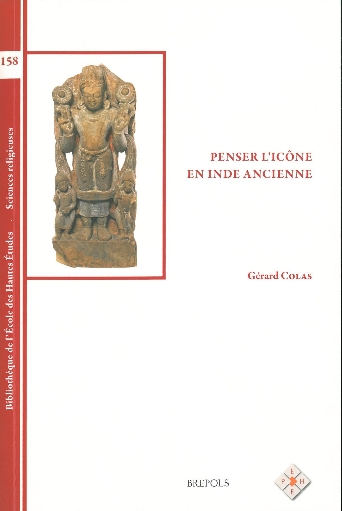
Penser l'icône en Inde ancienne
show More to view fulltext, buy and share links for:Penser l'icône en Inde ancienne show Less to hide fulltext, buy and share links for: Penser l'icône en Inde ancienneL'icône prit une importance croissante dans les religions indiennes dès avant l'ère chrétienne, qu'il s'agisse du védisme tardif, de l'hindouisme, du bouddhisme ou du jaïnisme. Si les spéculations philosophiques l'ignorèrent largement jusqu'au XIIe siècle de notre ère environ, 1'icône fut depuis une époque ancienne l'objet de débats dans une civilisation qui était encline aux discussions critiques.
La société harappéenne (vallée de l’Indus, vers 2500-1800 av. J.-C.) connaissait un iconisme qui est aujourd’hui d’une interprétation difficile. Le védisme ancien, qui lui succéda, associe les dieux non à des représentations plastiques, mais à leur révélation par la parole du Veda, conçue comme une véritable substance . Les milieux qui se réclament du védisme pourraient avoir connu une sorte de crise de conscience iconologique du IVe au IIe siècle avant notre ère environ. L’icône matérielle devint progressivement l’objet d’un consensus social, en dépit des réserves, du scepticisme, voire des critiques que l’on émit à son égard dans certains cercles.
Cet ouvrage, qui ne traite pas d’histoire de l’art, examine la pensée fragmentaire de l’icône en Inde ancienne jusqu’au XIIe siècle : parfois conçue comme étant un être vivant ou un sujet juridique, parfois suscitant des résistances théoriques (notamment dans le bouddhisme ancien, en comparaison avec la relique), inscrite dans le réseau des signes divinatoires favorables, emplie de conscience divine au moyen du rite, l’icône est restée - jusqu’à nos jours d'ailleurs - une composante majeure de la société indienne.
-
-
-
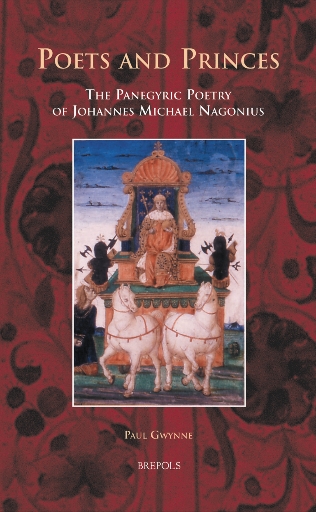
Poets and Princes
show More to view fulltext, buy and share links for:Poets and Princes show Less to hide fulltext, buy and share links for: Poets and PrincesPoets and Princes offers a richly textured interdisciplinary survey of late medieval and early Renaissance court cultures across Europe as they are reflected in the neo-Latin verse of the itinerant poet, Johannes Michael Nagonius. In 1496 the poet laureate Nagonius presented Henry VII with a manuscript of Latin panegyric poetry. This elaborate diplomatic gift from Pope Alexander VI solicited the King’s support against Charles VIII of France. The verse emphasized the mutual benefit of an alliance: if Henry supported him the Pope would acknowledge disputed Tudor claims to England’s throne. For Henry, the gift represented a literary and political coup. With all the rhetorical skill of a learned poet, Nagonius presented the King as a classical hero on an epic scale in the latest Italian style. The work thus acknowledged Henry’s international significance. Other recipients of Nagonius’s panegyric verse include Holy Roman Emperor Maximilian I, Vladislav II of Bohemia, Louis XII of France, Doge Leonardo Loredan, the condottieri Niccolò Orsini and Gian Giacomo Trivulzio, Giovanni Bentivoglio, lord of Bologna, and Duke Ercole d’Este of Ferrara. The presentation of a deluxe manuscript to Julius II, celebrating the pontiff ’s campaign in the Romagna, marked the climax of the poet’s career.
This analysis of the life and works of Nagonius thus provides a fascinating insight into the world of late medieval and early Renaissance court cultures. It contributes to the growing field of neo-Latin scholarship, examining the manuscripts and para-texts, studying the relationship between volume and dedicatee, placing these manuscripts within the wider literary and artistic cultures of the courts where they were presented, and investigating the role of neo-Latin verse within court cultures.
-