


Brepols Online Books Other Miscellanea Collection 2013 - bob2013miot

Collection Contents
2 results
-
-
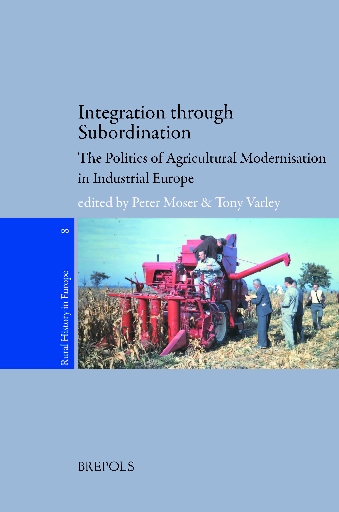
Integration through Subordination
show More to view fulltext, buy and share links for:Integration through Subordination show Less to hide fulltext, buy and share links for: Integration through SubordinationStarting from the hypothesis that states were crucial as agents of modernisation, this book explores why, how and with what results European states have striven to transform their agricultural sectors in the nineteenth and twentieth centuries. Modernising agriculture has increasingly meant emulating the new organisational models of manufacturing industry. But since agriculture continues to rely heavily on living resources (plants and animals), the results of modernising farming have often differed significantly from the manufacturing sector. Modernised agriculture, in other words, is something quite different than simply industrialised agriculture.
Ranging from the Iberian Peninsula to Hungary and from Greece to England, the chapters of this book deal with four principal questions: Why have state elites, and their civil society allies chosen to modernise agriculture? What have they understood by agricultural modernisation? What sort of power resources have they taken as necessary for effective modernisation? And what were the consequences of the pursuit of modernising policies for the farming population and for agriculture?
Peter Moser is director of the Archives of Rural History in Bern. His research interests centre on the interaction of industrial societies with their agricultural sectors.
Tony Varley lectures in political science and sociology at the National University of Ireland, Galway. His research interests centre mainly on agrarian politics and rural social movements.
-
-
-

Islam: identité et altérité
show More to view fulltext, buy and share links for:Islam: identité et altérité show Less to hide fulltext, buy and share links for: Islam: identité et altéritéDétenteur de la chaire d’Exégèse coranique, de 1980 à 1994, à la Section des sciences religieuses de l’École pratique des hautes études à la Sorbonne, le Père Guy Monnot a renouvelé cette discipline majeure de l’islamologie classique en la considérant à juste titre comme le centre de gravité de plusieurs autres champs d’investigation scientifique : la pensée théologique, la spiritualité, la littérature, l’hérésiologie ou encore l’histoire comparée des religions. C’est la raison pour laquelle un certain nombre parmi ses amis, collègues, anciens élèves et étudiants se sont réunis ici afin de lui rendre hommage ainsi qu’à son œuvre par des contributions portant sur ses principaux domaines de recherche : étude du Coran et exégèse coranique, relations entre l’islam et les autres religions, Shahrastānī et ismaélisme, religions iraniennes et littératures persane et indo-persane. Les auteurs ont ainsi voulu témoigner leur amitié à l’égard de Guy Monnot ainsi que leur admiration pour la richesse, le rayonnement et la fécondité de son œuvre.
-