


Brepols Online Books Other Miscellanea Collection 2013 - bob2013miot

Collection Contents
25 results
-
-
Aristoteles Romanus
show More to view fulltext, buy and share links for:Aristoteles Romanus show Less to hide fulltext, buy and share links for: Aristoteles RomanusThe scholarly contributions which form this volume aim at a better understanding of one of the key stages in the transmission of Aristotle’s philosophical message from antiquity to modernity. It’s an established fact that Aristotelianism, because of an encyclopedic vocation for exploring all of the real, is perfectly in accordance with the cognitive universalism of the Greco-Roman Empire. Indeed Aristotle had classified the whole knowledge in a series of well-ordered disciplines, beginning with logic regarded as an essential instrument for learning and based on the philosophy of first principles that is metaphysics. But his investigations had also led him to renew physics, meteorology, grammar, poetics, rhetoric, politics, ethics, and above all to create the life sciences. This research and study wide-ranging program has without fail subsequently first aroused deep interest among the Roman encyclopedists, then among the Greek commentators, anxious to restore the original prestige of Aristotelian philosophy.
The result of a colloquium organized by the Universities of Strasbourg and Naples, Aristoteles Romanus. The survival of Aristotelian science in the Greco-Roman Empire is an ordered, if not complete, approach originating from a varied investigation of the permanence of a phenomenon into modern times.
-
-
-
Bible, histoire et société
show More to view fulltext, buy and share links for:Bible, histoire et société show Less to hide fulltext, buy and share links for: Bible, histoire et sociétéDepuis plus de quarante ans, les travaux de Bernard Roussel fécondent la recherche sur le monde réformé à l’époque moderne : en saisissant la Bible, son exégèse et son herméneutique, mais aussi les confessions de foi, les textes doctrinaux et les disciplines dans leur dimension sociale et anthropologique, Bernard Roussel a renouvelé l’approche traditionnelle des études sur les XVIe et XVIIe siècles. Il a mis en évidence la spécificité de l’exégèse des commentateurs rhénans (Martin Bucer, Wolfgang Capiton, Jean Œcolampade…) en les situant par rapport aux enjeux théologico-politiques de leur temps et en examinant les méthodes propres de leur approche de la Bible, notamment l’importance qu’ils accordent au texte hébraïque et aux commentateurs juifs du Moyen Âge. Ses travaux sur les réformés font référence ; ses recherches portent actuellement sur les synodes réformés français du XVIe siècle. Son approche anthropologique des sacrements a totalement renouvelé notre regard sur le sujet. Bernard Roussel a également édité les œuvres de Calvin.
-
-
-
Certitude et incertitude à la Renaissance
show More to view fulltext, buy and share links for:Certitude et incertitude à la Renaissance show Less to hide fulltext, buy and share links for: Certitude et incertitude à la RenaissanceLa Renaissance est marquée par un grand mouvement de rationalisation du savoir. La science sert de référence à l'art, qui par sa mathématisation, tente de s'approcher le plus possible de la certitude absolue dont elle fournit le modèle. Les sciences intermédiaires, disciplines d'application de la mathématique, telles que la mécanique, l'optique, l'abaque, se développent, permettant de nombrer le réel, parallèlement aux instruments de précision qui accroissent l'efficacité de la technique. D'autres disciplines, telles que le droit ou l'histoire, cherchent de même à élaborer les principes et la méthode de leur certitude propre. Il est toutefois des domaines, tels que la foi ou l'acte moral, où la certitude ne s'étalonne pas sur la vérité de la science, mais trouve en son coeur l'incertitude fondatrice de l'expérience humaine. En tentant, dans la recherche du bien et du mal, du beau et du laid, de conjurer la relativité et la précarité de la vie, l'intelligence humaine ne saurait fait l'économie du doute qui la distingue de la machine et fonde sa grandeur. C'est à cette tension jamais résolue, mise en évidence par l'humanisme de la Renaissance, que cet ensemble de contributions se propose de réfléchir.
-
-
-
Die Erforschung des Tocharischen und die alttürkische Maitrisimit
show More to view fulltext, buy and share links for:Die Erforschung des Tocharischen und die alttürkische Maitrisimit show Less to hide fulltext, buy and share links for: Die Erforschung des Tocharischen und die alttürkische MaitrisimitThis volume contains the proceedings of a small conference held by the Turfan Study Group (Turfanforschung) of the Berlin Brandenburg Academy of Sciences and Humanities, Berlin, in April 2008 on the 100th anniversary of E. Sieg and W. Siegling's article 'Tocharisch, die Sprache der Indoskythen. Vorläufige Bemerkungen über eine bisher unbekannte indogermanische Literatursprache' which marks the beginning of the new subject 'Tocharian studies'. This forgotten Indo-European language was just re-emerging in texts gathered by the various scientific expeditions to Eastern Central Asia at the beginning of the 20th century. On the basis of a colophon in the Old Turkish text Maitrisimit, F. W. K. Müller had already in 1907 suggested the name 'Tocharian' which, despite misgivings, continues to be used today for texts in two distinct but closely related varieties, 'A' and 'B'. The volume is in part devoted to aspects of the history of the study of Tocharian and to details of the languages themselves but also to palaeography and cataloguing the Tocharian fragments in Berlin. The colophon to the Old Turkish Maitrisimit is the starting point for the second theme of the volume: The interaction between Tocharian and Old Turkish Buddhist texts, a currently much discussed phenomenon. The contributions here range from a description of newly found Old Turkish fragments, to a discussion of parallel Tocharian and Old Turkish passages, aspects of the cult of Maitreya, the question of Buddhist doctrinal schools in Central Asia, the possible connection of Buddhist dramatical texts with the Chinese bianwen literature, the Old Turkish 'New Day' and other aspects of this and similar narrative religious texts. The book includes an extensive documentation of Tocharian and Old Turkish fragments in the Berlin Turfan Collection to illustrate the Tocharian fragments for which a C14-dating is now available and Tocharian palaeography as well as fragments containing passages of text common to the Tochrian A Maitreyasamitinataka and the Old Turkish Maitrisimit.
-
-
-
Integration through Subordination
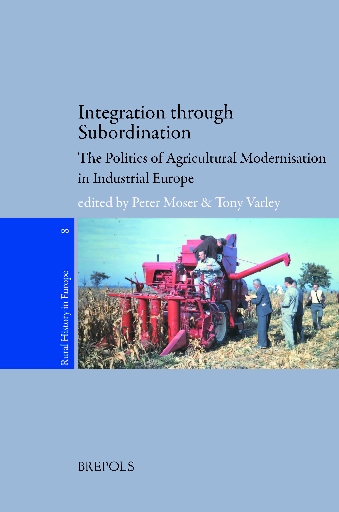
show More to view fulltext, buy and share links for:Integration through Subordination show Less to hide fulltext, buy and share links for: Integration through SubordinationStarting from the hypothesis that states were crucial as agents of modernisation, this book explores why, how and with what results European states have striven to transform their agricultural sectors in the nineteenth and twentieth centuries. Modernising agriculture has increasingly meant emulating the new organisational models of manufacturing industry. But since agriculture continues to rely heavily on living resources (plants and animals), the results of modernising farming have often differed significantly from the manufacturing sector. Modernised agriculture, in other words, is something quite different than simply industrialised agriculture.
Ranging from the Iberian Peninsula to Hungary and from Greece to England, the chapters of this book deal with four principal questions: Why have state elites, and their civil society allies chosen to modernise agriculture? What have they understood by agricultural modernisation? What sort of power resources have they taken as necessary for effective modernisation? And what were the consequences of the pursuit of modernising policies for the farming population and for agriculture?
Peter Moser is director of the Archives of Rural History in Bern. His research interests centre on the interaction of industrial societies with their agricultural sectors.
Tony Varley lectures in political science and sociology at the National University of Ireland, Galway. His research interests centre mainly on agrarian politics and rural social movements.
-
-
-

Islam: identité et altérité
show More to view fulltext, buy and share links for:Islam: identité et altérité show Less to hide fulltext, buy and share links for: Islam: identité et altéritéDétenteur de la chaire d’Exégèse coranique, de 1980 à 1994, à la Section des sciences religieuses de l’École pratique des hautes études à la Sorbonne, le Père Guy Monnot a renouvelé cette discipline majeure de l’islamologie classique en la considérant à juste titre comme le centre de gravité de plusieurs autres champs d’investigation scientifique : la pensée théologique, la spiritualité, la littérature, l’hérésiologie ou encore l’histoire comparée des religions. C’est la raison pour laquelle un certain nombre parmi ses amis, collègues, anciens élèves et étudiants se sont réunis ici afin de lui rendre hommage ainsi qu’à son œuvre par des contributions portant sur ses principaux domaines de recherche : étude du Coran et exégèse coranique, relations entre l’islam et les autres religions, Shahrastānī et ismaélisme, religions iraniennes et littératures persane et indo-persane. Les auteurs ont ainsi voulu témoigner leur amitié à l’égard de Guy Monnot ainsi que leur admiration pour la richesse, le rayonnement et la fécondité de son œuvre.
-
-
-
La silve
show More to view fulltext, buy and share links for:La silve show Less to hide fulltext, buy and share links for: La silveStace (c. 40-96) a conçu avec ses Silvae (« poèmes-forêts ») un genre d’écriture nouveau, qui doit beaucoup à Horace. Mais la perspective n’est pas celle du moraliste. Dégagées de la fureur platonicienne, soumises à une inspiration affective, étayées par une culture profonde et multiple, les Silves se jouent des tabous génériques. L’écriture désormais ne connaît plus d’autre convenance que celle qu’imposent les mille facettes de la vie et de l’humeur de l’écrivain. L’exemple de Stace infl uencera profondément la latinité tardive, dont maints auteurs comme Ausone, Ambroise, Prudence, Claudien ou Sidoine Apollinaire reproduisent cet engouement pour une écriture « biographique », éthiquement et scientifi quement cautionnée par sa spontanéité, liée à la varietas. Le Moyen Âge n’a pas ou guère connu les Silves de Stace, mais il a connu ses imitateurs, notamment Sidoine Apollinaire. Parallèlement, le « dit », héritier indirect de la silva, représente au Moyen Âge une forme d’écriture libérée. À la Renaissance, bien après la redécouverte des Silves par Poggio Bracciolini en 1417, l’humaniste fl orentin Ange Politien (1454-1494), relance la mode de l’écriture « silvaine ». Après lui, l’Italie puis l’Europe entière vont produire en abondance des oeuvres variées sous le titre de silves, ou sous d’autres titres connotant une écriture de la variété mêlée, de l’apparente spontanéité fondée sur une singulière érudition. Ces oeuvres, la plupart du temps inclassables dans les genres canoniques, touchent à tous les domaines intellectuels : poésie lyrique de circonstance, poésie épicohéroïque, poésie didactique, miscellanées encyclopédiques, traités philosophiques et scientifi ques, arts plastiques, musique. L’écriture de la silve dépasse la chronologie traditionnellement attribuée la Renaissance pour fl eurir aux XVIIe et au XVIIIe siècles. Les auteurs de silves tendent généralement à souligner le caractère hors-norme, voire anti-normatif, de leur écriture, sa profonde individualité - une manière d’essai -, son plaisir spécifi que : un rapport particulier au matériau traité, une dégustation vertigineuse du détail savant ou esthétique, que souligne d’ordinaire un style souvent paratactique simulant une certaine oralité. Le présent volume essaie de rendre compte, dans la diachronie, de ce phénomène protéiforme, commun à toute l’Europe du début des temps modernes.
LES AUTEURS / G. Abbamonte, W. Adam, R. Cacho Casal, F. Consolino, F. De Bruyn, C. Deutsch, P. Ford, P. Galand, B. Goldlust, F. González Vega, A. Lamy, S. Laigneau, V. Leroux, C. Lévy, E. Malaspina, A. Maranini, F. Mora, J. Nassichuk, C. Pézeret, S. Provini, F. Rouillé, G. Sauron, L. Scarparo Coutier, E. Séris, G. H. Tucker, H.-J. van Dam, G. Vogt-Spira, V. Zarini
-
-
-
Lessico, argomentazioni e strutture retoriche nella polemica di età cristiana (III-V sec.)
show More to view fulltext, buy and share links for:Lessico, argomentazioni e strutture retoriche nella polemica di età cristiana (III-V sec.) show Less to hide fulltext, buy and share links for: Lessico, argomentazioni e strutture retoriche nella polemica di età cristiana (III-V sec.)The present volume gathers the proceedings of the international colloquium “Lessico, argomentazioni e strutture retoriche nella polemica di età cristiana (III-V sec.)”, held in Lecce (Italy) 9-10 April 2010. The contributions are distributed into three sections: I. Temi e aspetti della polemica religiosa; II. Lessico e strutture retoriche del discorso polemico; III Religione e retorica: sviluppi successivi. The first one brings together papers which examine the contents of polemics in the patristic age; the second privileges the rhetorical and lexical approach to polemical texts; the third broadens the scope of inquiry. All the studies aim to examine the themes and the forms of polemics and therefore to highlight the features related to sapientia and eloquentia, in the words of Augustine, features which play a leading role in the intra- and extra-ecclesial polemical debates with pagans and Jews.
-
-
-
L’homme au risque de l’infini
show More to view fulltext, buy and share links for:L’homme au risque de l’infini show Less to hide fulltext, buy and share links for: L’homme au risque de l’infiniHistorien et philosophe de la science classique, homme d’action et gestionnaire de la recherche, Michel Blay célèbre en 2013 son soixante cinquième anniversaire.
Sous l’égide de l’Académie Internationale d’Histoire des Sciences, ses confrères, ses collègues, ses amis ont décidé de lui offrir un recueil d’études qui s’inscrivent dans les différents champs de sa polymathie : science classique ; science, littérature et art ; science, philosophie et politique.
On trouvera ici des contributions de :
Frédérique Aït-Touati, Anastasios Brenner, Pierre Caye, Philippe Büttgen, Maurice Clavelin, Pierre Crépel, Suzanne Débarbat, Claude Debru, Jean Eisenstaedt, Danielle Fauque, Robert Fox, Francesco Furlan, Michèle Gally, Chantal Grell, Niccolò Guicciardini, Denis Guthleben, Robert Halleux, Giorgio Israel, Bernard Joly, Vincent Jullien, Eberhard Knobloch, Charles Larmore, Véronique Le Ru, Jean-Marc Lévy-Leblond, Michela Malpangotto, Simone Mazauric, Sébastien Maronne, Efthymios Nicolaidis, Marco Panza, Pascal Pirot, Sabine Rommevaux, François Roudaut, Claire Salomon-Bayet, Jean Seidengart.
-
-
-
Noms barbares I
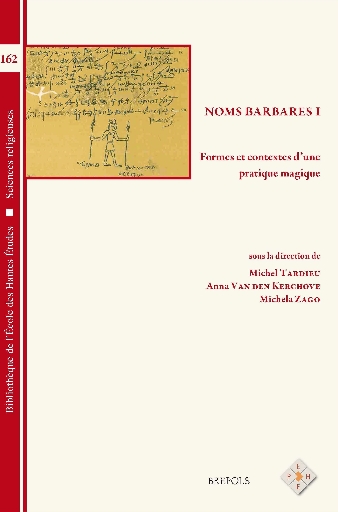
show More to view fulltext, buy and share links for:Noms barbares I show Less to hide fulltext, buy and share links for: Noms barbares IQui veut comprendre la magie antique, les sociétés et cultures qui s’y rattachent, qui veut aller au-delà des apparences et des clichés, rencontre nécessairement les noms « barbares », dits aussi noms mystiques ou inintelligibles. Leur finalité première est d’opérer des prodiges par l’efficacité attribuée aux énoncés de noms divins. Peu de gens ont vu les prodiges, mais tout le monde connaît au moins quelqu’un qui les a vus : qu’il s’agisse d’apparitions de divinités, d’animaux qui parlent ou encore d’humains entrant dans la vie de l’univers. Aucune de ces opérations ne s’effectue sans noms barbares.
Pour la première fois, un ouvrage tente de comprendre le rôle et les mécanismes des noms barbares comme magie de nommer. Ils sont l’objet magique par excellence, fait de jeux de signes et de phonèmes, de transferts d’un panthéon à l’autre et de fusions des dynasties divines. Invoquer ses propres dieux dans un langage étrange, par des raccourcis phonétiques ou bien en utilisant les noms et épithètes des dieux des autres est le trait distinctif de la magie et de ses professionnels, de l’Orient gréco-sémitique à l’Occident latin.
Cet ouvrage, issu des séminaires de Michel Tardieu au Collège de France, est lié au projet de « Corpus des énoncés de noms barbares » (CENOB), dirigé par Jean-Daniel Dubois (EPHE). Il rassemble les contributions de spécialistes des sociétés et cultures utilisant dans leurs pratiques magiques respectives les noms barbares : Mésopotamie, Égypte, monde sémitique, littérature grecque orphique et classique, gnose, hermétisme, papyrus et intailles, tablettes de défixion.
Michel Tardieu est professeur honoraire au Collège de France, où il a occupé la chaire « Histoire des syncrétismes » de 1991 à 2008. Principaux ouvrages : Trois mythes gnostiques (1974), Le Manichéisme (19811, 19972, éd. américaine 2008), Le Codex de Berlin (1984), Les Paysages reliques (1990), Recherches sur l’Apocalypse de Zostrien et les sources de Marius Victorinus (1996).
Anna Van den Kerchove (École pratique des hautes études, Institut européen en sciences des religions, Laboratoire d’études sur les monothéismes) est chercheur en histoire des religions (gnose, hermétisme, manichéisme). Elle est secrétaire scientifique du projet ANR (Agence nationale de la recherche) pour le « Corpus des énoncés de noms barbares » (CENOB). Elle a notamment publié La Voie d’Hermès (Leyde, 2012).
Michela Zago est chercheur en histoire des religions à l’Université de Padoue. Elle a été attachée temporaire d’enseignement et de recherche au Collège de France (chaire « Histoire des syncrétismes ») pendant les années 2005-2006. Parmi ses publications : La Ricetta di immortalità (Milan, 2010), Tebe magica e alchemica. L’idea di biblioteca nell’Egitto romano: la Collezione Anastasi (Padoue, 2010).
Ont contribué à cet ouvrage collectif : Nicolas Corre, Jean-Daniel Dubois, Maria Gorea, Michaël Guichard, Yvan Koenig, Amina Kropp, Alice Mouton, Amaury Pétigny, Silvia Pieri, Flavia Ruani, Lucia Saudelli, Luciana Gabriela Soares Santoprete, Paolo Scarpi, Michel Tardieu, Anna Van den Kerchove, Jean Yoyotte (†2009), Michela Zago.
-
-
-
Paul Vignaux, citoyen et philosophe (1904-1987), suivi de Paul Vignaux, La philosophie franciscaine et autres documents inédits
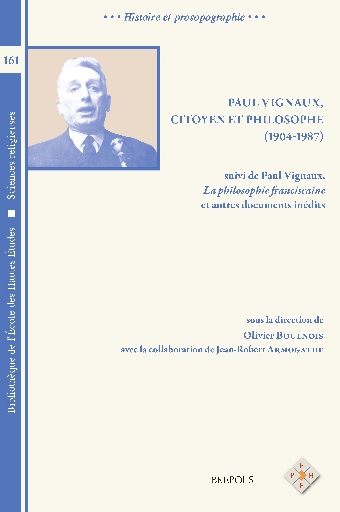
show More to view fulltext, buy and share links for:Paul Vignaux, citoyen et philosophe (1904-1987), suivi de Paul Vignaux, La philosophie franciscaine et autres documents inédits show Less to hide fulltext, buy and share links for: Paul Vignaux, citoyen et philosophe (1904-1987), suivi de Paul Vignaux, La philosophie franciscaine et autres documents inéditsQui se cache derrière l’œuvre de Paul Vignaux, une œuvre dense, discrète, austère, de haute érudition ? En tant que philosophe, normalien, agrégé, élève d’Étienne Gilson, il a renouvelé l’approche de la philosophie médiévale, sensible à ce qu’il nommait sa « diversité rebelle », attentif à l’écart entre philosophie et théologie, mais interprète fécond de leur dialogue. D’une direction d’études en 1933 à la présidence de la Section des sciences religieuses, sa présence a illustré l’École pratique des hautes études.
Mais qui connaît le rôle historique de Paul Vignaux ? -Militant à la CFTC, il participe à la création d’un syndicat universitaire au sein de la confédération chrétienne. Celui-ci devenu le SGEN, il le dirigera de 1949 à 1972. Lucide face à la montée du fascisme, il consacre un livre à la guerre d’Espagne, et échappe au régime de Vichy par l’exil. Il enseigne alors à New York dans ce qu’on appelait l’École libre des hautes études. De retour en France, il défend la laïcité au sein du syndicalisme, fondant le groupe « Reconstruction » qui est à l’origine de la déconfessionnalisation syndicale, et donc de la scission menant de la CFTC à la CFDT.
Ce volume ne rend pas seulement un hommage justifié à une grande figure de l’École Pratique. Il prend aussi en compte l’unité et la « diversité rebelle » du penseur, du citoyen, du militant syndical, laïc et chrétien qu’il était tout à la fois.
On y trouvera un ouvrage inédit, Sur la philosophie franciscaine, confisqué par la Gestapo, le recueil de ses « Comptes rendus de conférences » à l’EPHE, ainsi qu'une bibliographie complète des écrits de Paul et Georgette Vignaux.
Ce volume contribue à notre connaissance du médiévisme et de la philosophie française, des évolutions du catholicisme moderne et de notre histoire politique et sociale.
Sous la direction d’Olivier Boulnois, directeur d’études à l’École pratique des hautes études, directeur du Laboratoire d’études sur les monothéismes. Principales publications : Duns Scot, La rigueur de la charité, Paris, Le Cerf, 1998 ; Être et Représentation, Paris, PUF, 1999 ; Au-delà de l’image, Paris, Le Seuil, 2008.
Avec la collaboration de Jean-Robert Armogathe, directeur d’études émérite à l’École pratique des hautes études. Dernière publication : Histoire des idées religieuses et scientifiques dans l’Europe moderne, Turnhout, Brepols, 2012 (BEHE-SR 150).
Des contributions de : Tullio Gregory, professeur émérite à l’université de Rome, La Sapienza ; Joseph Pinard, professeur agrégé d’histoire, ancien député du Doubs ; Jean Jolivet, directeur d’études émérite à l’École pratique des hautes études ; Jean Lecuir, ancien maître de conférences à l’université Paris X-Nanterre ; Alain de Libera, directeur d’études à l’École pratique des hautes études ; Ruedi Imbach, professeur à l’université Paris IV-Sorbonne ; Olivier Boulnois, directeur d’études à l’École pratique des hautes études ; Zénon Kaluza, ancien directeur de recherche au CNRS ; Joël Biard, professeur à l’université de Tours ; Jean-François Genest, ingénieur de recherche au CNRS ; Philippe Büttgen, professeur à l’université Paris I-Panthéon-Sorbonne.
-
-
-
Pluralisme religieux : une comparaison franco-vietnamienne
show More to view fulltext, buy and share links for:Pluralisme religieux : une comparaison franco-vietnamienne show Less to hide fulltext, buy and share links for: Pluralisme religieux : une comparaison franco-vietnamienneLes notions de pluralité, de pluralisation, de pluralisme, sont l’objet de débats récurrents. Elles n’en sont pas moins clairement identifiées et inscrites dans le vocabulaire scientifique. En prolongeant un dialogue instauré dans le domaine des sciences religieuses depuis de longues années, la rencontre franco-vietnamienne qui s’est tenue à Hanoi en octobre 2007 a permis à un groupe de chercheurs de l’École pratique des hautes études et du Groupe Sociétés, Religions, Laïcités (GSRL) d’une part, à leurs homologues de l’Institut de Recherches sur les Religions et d’autres instances vietnamiennes d’autre part, d’échanger sur diverses formes du pluralisme, sur la pertinence de ses définitions, sur les défis et les nécessités d’une homogénéisation du lexique religieux. Elle a surtout livré - et les présents actes nous les donnent à lire - des descriptions et des études de cas spécifiques visant à analyser, en vue de les comparer, les situations, les processus et les modes de régulation du religieux en France et au Viêt Nam.
Si le passé colonial et ses legs tendent à expliquer la relation particulière que ces deux pays entretiennent, ce fait ne peut expliquer à lui seul une telle mise en miroir. Héritière d’une histoire religieuse complexe, la France continue aujourd’hui de se diversifier et de se transformer sous les effets d’une laïcité plus que centenaire et de son intégration au sein de l’Union européenne. De son côté - et peut-être plus que tout autre pays de la région - le Viêt Nam a synthétisé les enjeux contemporains du XXe siècle en Asie et il soulève aujourd’hui les questionnements fondamentaux en matière de politique et d’épistémologie du religieux.
Religions du monde et courants minoritaires, constructions étatiques et nationales, laïcités au regard des sciences politiques et juridiques, structurent un dialogue sur le pluralisme religieux qui se veut porteur à la fois d’une meilleure connaissance mutuelle et d’une réflexion plus globale sur ce qu’est, en ce début de XXIe siècle, la modernité religieuse.
Pascal Bourdeaux, historien des religions de l’Asie du Sud-Est, est maître de conférences à l’EPHE et membre du GSRL (EPHE-CNRS).
Philippe Hoffmann, directeur d’études à l’EPHE, est ancien doyen de la Section des sciences religieuses et actuel directeur du Labex Hastec.
Nguyễn Hồng Dương, spécialiste du catholicisme vietnamien, est ancien directeur de l’Institut de Recherches sur les Religions (Académie des Sciences sociales du Viêt Nam, Hanoi).
-
-
-
Poésie latine à haute voix (1500-1700)
show More to view fulltext, buy and share links for:Poésie latine à haute voix (1500-1700) show Less to hide fulltext, buy and share links for: Poésie latine à haute voix (1500-1700)L’ouvrage, qui rassemble huit contributions de néo-latinistes mais aussi de musicologues, se donne pour ambition d’explorer les différents types d’interprétation à haute voix de la poésie latine dans l’Europe des temps modernes, qu’il s’agisse de lecture, de récitation, de jeu théâtral ou de chant. A travers trois sections cohérentes consacrées à l’école, à la musique et aux cénacles romains, ce recueil d’études inédites et novatrices contribue à mettre en évidence la dimension sonore et collective que pouvait revêtir jadis la poésie latine, et à ouvrir des pistes de réflexion sur ce que cette double dimension impliquait pour les différents acteurs en jeu : auteur, compositeur, interprète, public.
les auteurs / S. Benedetti, T. Denecker, J. Duron, G. Ems, M. Ferrand, Ch. Georis, L. Isebaert, F. Lucioli, A.-C. Magniez, D. Sacré, A. Smeesters
-
-
-

Princely Citizen
show More to view fulltext, buy and share links for:Princely Citizen show Less to hide fulltext, buy and share links for: Princely CitizenLorenzo de’ Medici (1449-92) was in his own time one of the most renowned of Renaissance figures. His myth has continued to fascinate both scholars and the many tourists who are drawn by it to explore what remains of the Medicean presence in Florence. Lorenzo’s first English biographer, William Roscoe, described him as the most remarkable man who had ever lived in ancient or modern times. This collection of essays explores Lorenzo’s apprenticeship as the de facto ruler of Florence and the means by which he exerted control over friends and clients to ensure the ascendancy of the Medici dynasty. The essays place the religious and artistic patronage of Lorenzo in the context of his political career and explore other important aspects of his emergence as the princely citizen of a still proud republic.
Francis W. Kent (1942-2010) established his reputation as a cultural and social historian of Renaissance Florence with his first monograph, Household and Lineage in Renaissance Florence. He turned his attention to Lorenzo de’ Medici in the late 1980s, producing a steady stream of essays, collected here for the first time, and a major study of Lorenzo’s art patronage, Lorenzo de’ Medici and the Art of Magnificence. After the death of Nicolai Rubinstein in 2002, the first general editor of the multi-volume critical edition of Lorenzo de’ Medici’s letters, Kent took charge of the ongoing project and oversaw the publication of several more volumes. His forthcoming biographical study of Lorenzo’s early career will be published by Harvard University Press.
-
-
-
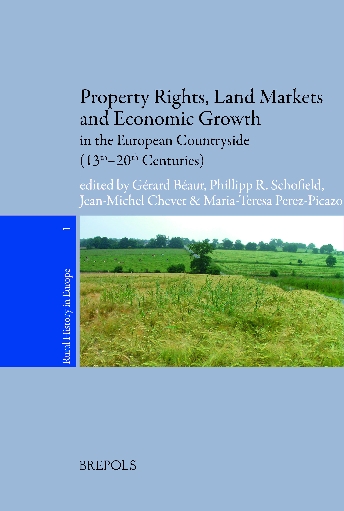
Property Rights, Land Markets and Economic Growth in the European Countryside (13th-20th Centuries)
show More to view fulltext, buy and share links for:Property Rights, Land Markets and Economic Growth in the European Countryside (13th-20th Centuries) show Less to hide fulltext, buy and share links for: Property Rights, Land Markets and Economic Growth in the European Countryside (13th-20th Centuries)By exploring the fundamental issues of property rights and markets in land, this book will offer important insights into long-term economic change in Europe. The essays gathered here provide a major consideration of the institutional constraints which can be employed by historians and other commentators in order to explain both the slowness or even absence of growth in certain areas of the European economy between the thirteenth and nineteenth centuries, as well as the discrete experiences of countries within Europe in this broad period.
This is an issue of current interest not least because discussion of 'institutional determinism' has become a standard of explanations of historical and economic change; that said, those promoting such approach have sometimes been criticised for generalising from an 'institutional' perspective rather than taking full account of the variety of potential causative explanations within particular historical contexts.
The present collection of essays will therefore explore the conditions which permitted the progress of agriculture in Europe and the emergence of capitalism in the countryside. The research presented in this volume helps to demonstrate that changes in the market (demand, relative prices...) encouraged changes in property rights but certainly did not do so in ways that were consistent or that led inexorably towards individual and exclusive rights of the kind described by the nineteenth-century liberal paradigm.
Specialist of rural and economic history, Gérard Béaur is Directeur de Recherches at CNRS and Directeur d’Etudes at EHESS (Paris, France). He was Chair of the COST Action A35 Progressore and he is currently director of the GDRI (International Research Network, CNRS) CRICEC (Crises and Changes in the European Countryside).
Phillipp Schofield is Professor of Medieval History and Head of the Department of History and Welsh History, Aberystwyth University. His research interests focus on rural society in England in the high and late Middle Ages.
Jean-Michel Chevet is a French researcher in the Institut National de la Recherche Agronomique, ADESS-UMR-5185. He is a specialist in the economic history of the countryside, particularly of the development of the English and French growth and of the history of vine growing.
Maria-Teresa Pérez-Picazo was Professor of Economic History at the University of Murcie (Spain). Her principal work was on agrarian history and she focused particularly on the subject of water management in the modern period.
-
-
-
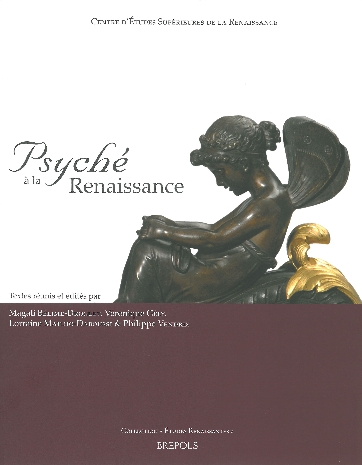
Psyché à la Renaissance
show More to view fulltext, buy and share links for:Psyché à la Renaissance show Less to hide fulltext, buy and share links for: Psyché à la RenaissanceEntre la redécouverte au XIVe siècle du texte des Métamorphoses d'Apulée par Zanobi da Strada et Boccace puis la publication des Amours de Psyché et Cupidon de La Fontaine en 1669, suivis de la tragédie-ballet de Molière, Corneille et Quinault en 1671, la fable de Psyché investit tous les domaines de la littérature, de la philosophie, des arts scéniques et décoratifs, et triomphe dans la société de cour.
Plusieurs publications récentes ont été consacrées à la postérité d'Apulée et à celle de ce récit, les unes dans le domaine de l'histoire de l'art, les autres dans celui de la littérature. La présentation au château d'Azay-le-Rideau, en 2009, d'une exposition originale centrée sur les interprétations de la fable de Psyché dans l'art français à partir de la Renaissance a été l'occasion de confronter ces travaux et d'offrir à la recherche des perspectives nouvelles.
Ce volume, tout en ouvrant sur le devenir du thème jusqu'à l'époque contemporaine, se consacre donc à l'étude d'un processus exemplaire de l'humanisme renaissant : celui par lequel les temps modernes s'approprient un texte antique mal connu pendant le Moyen Âge. La fable de Psyché, contemporaine de la christianisation de l'Empire Romain et tôt christianisée elle-même, offrait à la Renaissance une métaphysique platonicienne, une éducation sentimentale, une mise en scène de la curiosité, et une forme narrative propres à nourrir les réflexions nouvelles sur la notion de sujet et sur les pouvoirs de la fiction.
-
-
-
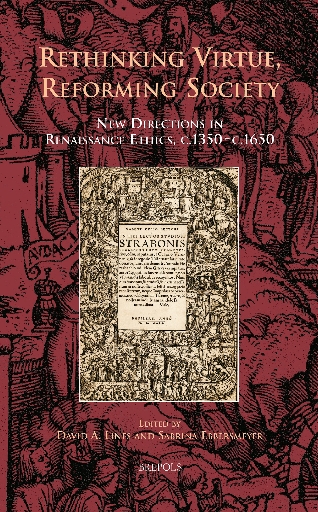
Rethinking Virtue, Reforming Society
show More to view fulltext, buy and share links for:Rethinking Virtue, Reforming Society show Less to hide fulltext, buy and share links for: Rethinking Virtue, Reforming SocietyMoral philosophy, and particularly ethics, was among the most contested disciplines in the Renaissance, as philosophers, theologians, and literary scholars all laid claim to it, while an expanding canon of sources made the ground shift under their feet. In this volume, eleven specialists drawn from literature, intellectual history, philosophy, and religious studies examine the configuration of ethics and how it changed in the period from Petrarch to Descartes. They show that the contexts in which ethics was explored, the approaches taken to it, and the conclusions it reached make Renaissance ethics something worthy of exploration in its own right, in distinction to both medieval and early modern ethics. Particular attention is given to the development of new audiences, settings, genres (essays, dialogues, commonplace books, biographies, short fiction), and mediums (especially the vernacular) in ethical discussions, as well as the continuities with the formal exploration of ethics through commentaries. Renaissance ethics emerges as a highly eclectic product, which combined Christian insights with the Aristotelian and Platonic traditions while increasingly incorporating elements from Stoicism and Epicureanism. This volume will be of particular interest to students and researchers who wish to gain an overall view of how ethics developed throughout Europe in response to the cultural, historical, and religious changes between 1350 and 1650.
-
-
-
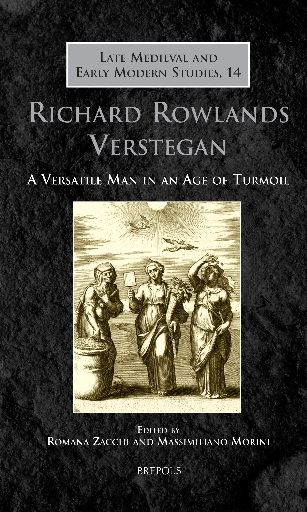
Richard Rowlands Verstegan
show More to view fulltext, buy and share links for:Richard Rowlands Verstegan show Less to hide fulltext, buy and share links for: Richard Rowlands VersteganEmploying a blend of historical, philological, literary, and linguistic methods, Richard Rowlands Verstegan: A Versatile Man in an Age of Turmoil paints a full-bodied portrait of Richard Rowlands Verstegan (or Verstegen, 1550?-1640) - a man whose multiple and variously spelled name reflects a multifaceted public personality. English by birth and upbringing, Dutch by fatherly descent, Verstegan spent most of his life on the Continent, employed intermittently as a Catholic spy, poet, religious translator, polemicist, and philologist. While this many-sidedness is typical of the Renaissance period, some of Verstegan’s interests and positions were innovative or extravagant - witness his familiarization of the epigram in the Netherlands (1617), or his description of Teutonic England in the Restitution of Decayed Intelligence (1605). In this collection of essays, Verstegan’s life and works are both explored in themselves and as mirrors of his times. As each contributor investigates one or more aspects of Verstegan’s careers, a wider perspective is created of English and Dutch religious politics, of the prevailing literary modes and fashions of the period, and of the picture that Europe was beginning to paint for itself. Conversely, this all-encompassing view demonstrates the centrality of a figure who has long been relegated to the margins of English, Dutch, and European history.
-
-
-
Rural societies and environments at risk
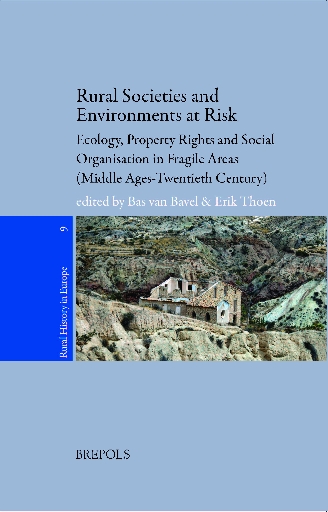
show More to view fulltext, buy and share links for:Rural societies and environments at risk show Less to hide fulltext, buy and share links for: Rural societies and environments at riskThis book discusses the relationship between ecology and rural society in fragile environments of the past. Rural land use in these areas entailed an inherent vulnerability, for instance because of their poor soils, aridity or their location in mountain areas, near the sea or in severe climatic conditions. The various chapters analyse how societies coped with this vulnerability by way of the organization of property rights to land. These rights formed the framework which shaped the use of the land and were a main constituent of the relationship between mankind and ecology in these fragile areas. To a large extent, therefore, they determined - and still determine - the success or failure of rural societies to cope with the challenges posed by their environment. In their turn, however, these property rights were shaped within a wider social and political context, in which political and ideological considerations, and special interests, also played their part. As a result, the organization of these rights was not always geared towards sustainability, as demonstrated in these chapters, which discuss and analyse long-term developments in several parts of Northwestern, Central and Southern Europe.
Bas van Bavel is professor of economic and social history of the Middle Ages, head of the section of Economic and Social History, and coordinator of the knowledge centre Institutions of the Open Society at Utrecht University (the Netherlands).
Erik Thoen is ordinary professor at Ghent University (Belgium) specialised in rural and environmental history. He is co-ordinator of the CORN history network (Comparative Rural History of the North Sea Area).
-
-
-
Sacrifices humains. Dossiers, discours, comparaisons
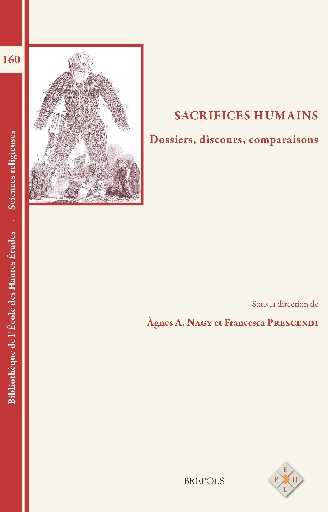
show More to view fulltext, buy and share links for:Sacrifices humains. Dossiers, discours, comparaisons show Less to hide fulltext, buy and share links for: Sacrifices humains. Dossiers, discours, comparaisonsLes auteurs de ce volume, historiens des religions, anthropologues et archéologues, étudient des rituels traditionnellement appelés « sacrifices humains », choisis dans leurs domaines respectifs de recherche - des tombeaux royaux d’Ur aux rites anthropoctoniques égyptiens, grecs, romains ou indiens, et des mises à mort rituelles des Gaulois et anciens Mochica aux crimes d’honneur des rapports onusiens. Leur questionnement tourne autour de problèmes méthodologiques fondamentaux pour l’histoire des religions : quand et pourquoi ces rites ont-ils été décrits comme des « sacrifices humains » ? Est-il possible, souhaitable, voire nécessaire d’interpréter autrement de telles mises à mort ? Au fil des diverses interventions, on se rendra compte combien ces « sacrifices barbares » hantent notre imaginaire scientifique, aujourd’hui comme par le passé. Il s’agit en fait d’un concept opératoire, hérité de l’Antiquité classique et consolidé par la culture judéo-chrétienne, qui sert indifféremment de grille de lecture pour expliquer les rites les plus variés.
-
-
-
Writing Royal Entries in Early Modern Europe
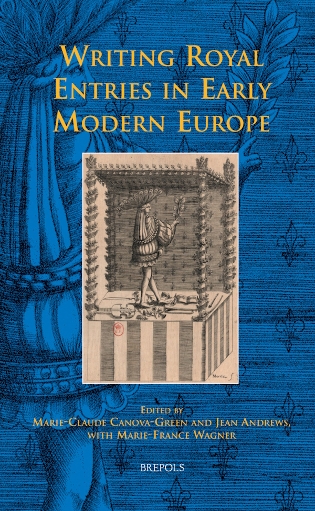
show More to view fulltext, buy and share links for:Writing Royal Entries in Early Modern Europe show Less to hide fulltext, buy and share links for: Writing Royal Entries in Early Modern EuropeRoyal and ducal entries into major cities were an important aspect of political life in Renaissance and early modern Europe and the New World. The festivities provided an opportunity for the municipal authorities to show off their wealth, learning, political nous, and aspiration while allowing writers, painters, sculptors, architects, set-designers, scene-painters, dancers, musicians, choreographers, and others an unparalleled opportunity to showcase their wares. The essays in this volume cover a range of royal and ducal entries, some well documented and well known, others less so, some barely documented at all. Each essay tackles an aspect of the business of putting together an entry festivity, discusses a particular difficulty posed for the contemporary scholar by the extant documentation, or offers a consideration of issues central to the development of this type of festivity or the literature associated with it. The entries and royal progresses of members of the Habsburg, Medici, Valois, Bourbon, and Tudor dynasties are examined, as are the festivities commissioned and mounted by powerful and strategically important cities such as Berlin, Antwerp, Paris, Florence, London, and Mexico City to welcome these great personages or their marginally less great ducal representatives.
-
-
-
Anthropologie de l’Antiquité. Anciens objets, nouvelles approches
show More to view fulltext, buy and share links for:Anthropologie de l’Antiquité. Anciens objets, nouvelles approches show Less to hide fulltext, buy and share links for: Anthropologie de l’Antiquité. Anciens objets, nouvelles approchesLes contributions réunies dans ce livre sont nées d’une collaboration et d’une proximité intellectuelle entre deux institutions de recherche : l’équipe PLH-ERASME qui travaille, à Toulouse, dans les domaines de la réception de l’Antiquité et de l’anthropologie historique, et le centre ANHIMA (Anthropologie et Histoire des mondes antiques), qui réunit, à Paris, des chercheurs engagés dans tous les domaines et toutes les périodes de l’Antiquité. Ce rapprochement s’est traduit par l’organisation de deux journées d’étude internationales à Toulouse, en mars 2010, et par la création d’une nouvelle collection : « Antiquité et sciences humaines. La traversée des frontières », accueillie par les éditions Brepols.
Ces initiatives témoignent de la vitalité et du renouvellement des perspectives anthropologiques : redéfi nir les concepts les mieux connus (comme le don, le commerce), s’attacher à un champ d’études laissé à l’écart (l’archéologie gallo-romaine), prendre en compte des déplacements de catégories entre hommes et femmes, masculin et féminin dans les études de genre, explorer des domaines nouveaux (les émotions, la perception des couleurs).
La prise en compte des différences qui nous sépare nt des hommes de l’Antiquité, l’attention portée aux spécifi cités qui marquent l’ensemble de leurs représentations et de leurs comportements dans tous les champs de la vie sociale, politique, religieuse, culturelle, la conscience des mutations qui se sont opérées sur la longue durée, c’est ce que chacun des auteurs de ce volume, dans le domaine qui lui est propre, a tenté de mettre en oeuvre.
Liste des contributeurs : Vincent Azoulay, Maurizio Bettini, Corinne Bonnet, Violaine Sebillotte-Cuchet, Ton Derks, Adeline Grand-Clément, Pascal Payen, Nicholas Purcell, Évelyne Scheid-Tissinier, Pauline Schmitt Pantel, Emmanuelle Valette, Andreas Wittenburg.
-
-
-
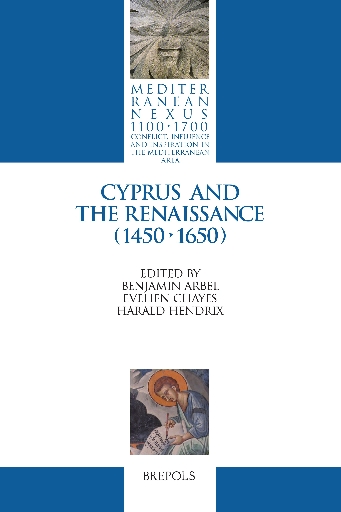
Cyprus and the Renaissance (1450-1650)
show More to view fulltext, buy and share links for:Cyprus and the Renaissance (1450-1650) show Less to hide fulltext, buy and share links for: Cyprus and the Renaissance (1450-1650)These twelve essays by leading scholars in the field are products of an international research project on early modern Cyprus and its relation to cultural developments in the West, started in November 2009.
Cyprus, an independent ‘Frankish’ kingdom from 1191 to 1473, became a Venetian protectorate, then, in 1489, a Venetian colony until its conquest by the Ottomans in 1570. Its population was diverse and rich in religious experience - preponderantly followers of the Greek rite, but also Latins, Eastern Christians and Jews.
Its heritage from Antiquity, as well as from the Byzantine and Frankish periods, its monasteries (which received, reproduced and produced manuscripts) and its geopolitically pivotal site on East-West trade routes attracted numerous Westerners. The cultural magnet drew deeper interests than those of pilgrimage and tourism.
The continuous to and fro of Europeans, many of them Venetian, the island’s importance to economic and military strategies, and the allure conferred by a mythological past stimulated and fostered a generous descriptive and allusive literature.
The present collection is the first of its kind, centered on written culture and exchanges during the Renaissance period, deepening their source-based documentary study, as well as our knowledge of the island’s culture and heritage in relation to cultural developments in Western countries.
-
-
-
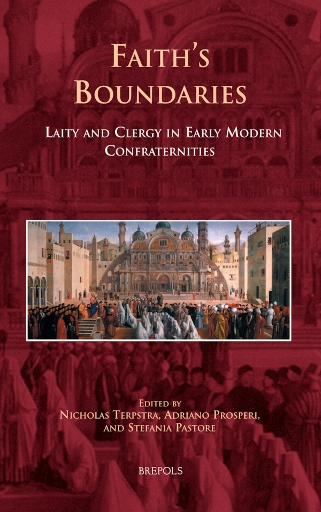
Faith’s Boundaries
show More to view fulltext, buy and share links for:Faith’s Boundaries show Less to hide fulltext, buy and share links for: Faith’s BoundariesWho owns the spaces of religion? Does the question matter, or even make sense? Modern distinctions between sacred and secular spheres tend to assume that clergy dominate the former, and lay people the latter. A man or woman living in the early modern period might not have been so sure. They would have thought more immediately of things of heaven and things of earth, and would have seen each as the concern of clergy and laity alike. Faith’s boundaries, while real, were very porous. This collection offers the first sustained comparative examination of lay-clerical relations in confraternities through the late medieval and early modern periods. It shows how laity and clergy debated, accommodated, resolved, or deflected the key issues of gender, race, politics, class, and power. The sixteen essays are organized into six sections that consider different aspects of the function of confraternities as social spaces where laity and clergy met, mediated, and sometimes competed and fought. They cover a period historically when kinship was a dominant metaphor in religious life and when kinship groups like confraternities were dominant models in religious institutions. They deal with Catholic, Jewish, and Islamic confraternities, and range geographically from Europe to the Middle East, Central and South Asia, and Latin America.
-
-
-
Tractatio Scripturarum. Philological, Exegetical, Rhetorical, and Theological Studies on Augustine's Sermons
show More to view fulltext, buy and share links for:Tractatio Scripturarum. Philological, Exegetical, Rhetorical, and Theological Studies on Augustine's Sermons show Less to hide fulltext, buy and share links for: Tractatio Scripturarum. Philological, Exegetical, Rhetorical, and Theological Studies on Augustine's SermonsThe contributions collected in this volume of Instrumenta Patristica et Mediaevalia share a common focus on Saint Augustine's sermons on the New Testament and address a wide range of topics within this extended field of research. Several contributions deal with the transmission of these homilies, while others tackle questions concerning exegesis, rhetoric and theology. The foundation for this compilation was laid during the conference 'Ministerium sermonis. An International Colloquium on Saint Augustine's Sermons on the New Testament and their Reception' (September 15-17, 2011), hosted by the Academia Belgica in Rome (Italy).
The present volume may be considered a sequel to the book Ministerium sermonis. Philological, Historical and Theological Studies on Augustine's Sermones ad populum, which was published in 2009 as volume 53 of the series Instrumenta Patristica et Mediaevalia and bundled the contributions to the first Ministerium sermonis colloquium of May 2008 (Leuven - Turnhout).
List of contributors: Andrea Bizzozero, Isabelle Bochet, Pierre-Maurice Bogaert, Shari Boodts, François Dolbeau, Hubertus R. Drobner, Anthony Dupont, Alicia Eelen, Wim François, Uta Heil, Pierre-Marie Hombert, Paul Mattei, Gert Partoens, Stanley P. Rosenberg, Paul van Geest, Joost van Neer, Clemens Weidmann, Jonathan Yates
-