


Brepols Online Books Medieval Monographs Collection 2013 - bob2013mome

Collection Contents
3 results
-
-
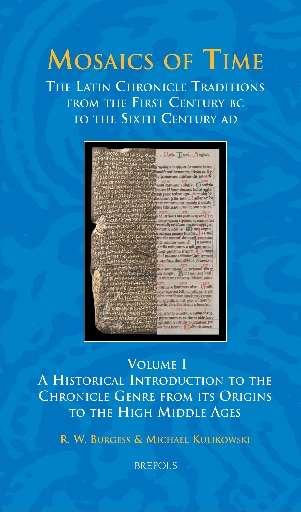
Mosaics of Time, The Latin Chronicle Traditions from the First Century BC to the Sixth Century AD
show More to view fulltext, buy and share links for:Mosaics of Time, The Latin Chronicle Traditions from the First Century BC to the Sixth Century AD show Less to hide fulltext, buy and share links for: Mosaics of Time, The Latin Chronicle Traditions from the First Century BC to the Sixth Century ADThe multivolume series Mosaics of Time offers for the first time an in-depth analysis of the Roman Latin chronicle traditions from their beginnings in the first century BC to their end in the sixth century AD. For each chronicle it presents a comprehensive introduction, edition, translation, and historical and historiographical commentary.
Chronicles seem to be everywhere in ancient and medieval history. Now for the first time, R. W. Burgess and Michael Kulikowski present a diachronic study of chronicles, annals, and consularia from the twenty-fifth century BC to the twelfth century AD, demonstrating the origins and interlinked traditions of the oldest and longest continuing genre of historical writing in the Western world. This introductory volume of Mosaics of Time provides both the detailed context for the study of the Latin chronicle traditions that occupies the remaining three volumes of this series as well as a general study of chronicles across three millennia from the ancient Egyptian Palermo Stone to the medieval European chronicle of Sigebert of Gembloux and beyond. The work is an essential companion to ancient and medieval history, historiography, and literary studies.
-
-
-
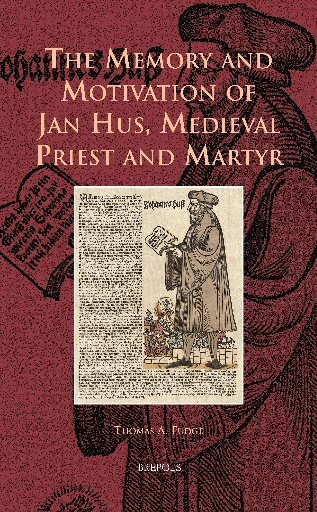
The Memory and Motivation of Jan Hus, Medieval Priest and Martyr
show More to view fulltext, buy and share links for:The Memory and Motivation of Jan Hus, Medieval Priest and Martyr show Less to hide fulltext, buy and share links for: The Memory and Motivation of Jan Hus, Medieval Priest and MartyrJan Hus (1371-1415) gave his name to a social and religious revolution which captured the attention of Europe. The central figure in a late medieval reform movement, he died a condemned heretic. Martyrdom made him famous but his essential identity has remained a point of controversy. Who was Jan Hus?
This work explores the driving forces in the life and work of this medieval priest as he moved from obscurity to the vulnerability of a publicly accused heretic and the disgraceful prelude to martyrdom. It also focuses on the construction and facilitation of the memory of Jan Hus. Historical “facts” are often compelling but these postulations cannot be approached apart from the manner and process in which those events are remembered.This book illuminates the life and work of the medieval priest and martyr who rose from humble origins to national hero and popular saint on the platform of a unique and renewed practice of the Christian faith. So profound were his challenges to the church and so bellicose were the reactions to his untimely demise, that the name Jan Hus was destined never to fade into oblivion.
-
-
-

The Middle English Life of Christ
show More to view fulltext, buy and share links for:The Middle English Life of Christ show Less to hide fulltext, buy and share links for: The Middle English Life of ChristHow much did Latin academic theoretical discourse inform mainstream late medieval English literature? Rather than asking this question of secular poetic fiction (Chaucer, Gower), this book investigates a more central genre, lives of Christ. Any adequate understanding of vernacular textuality, in an age when most literature was translation of some sort, cannot escape the question of the influence of theory on transactions and ideology of mainstream literary culture in negotiating authority. Where better to test this than the life of Christ?
Derived from the Gospels, this genre provided the set text for human existence. Too often, however, it has been regarded by modern scholarship as an infantilizing clerical sop to a laity deprived of Scripture and intellectual or contemplative ambition. Inquiry into the translating and the spirituality of Middle English lives of Christ yields, however, eloquent examples not of antagonism and rupture between Latin and vernacular but of productive compatibility. This challenges the common modern supposition that vernacular texts and vernacular theology are at odds with Latinate clerical culture, and restores the genre’s historic value. Like their dissenting counterparts, lives of Christ, as well as being of interest in their own right, invested in learned literary and theological norms in their textual transactions. Such reliance demands modern (re)consideration.
-