


Brepols Online Books Medieval Monographs Collection 2013 - bob2013mome

Collection Contents
21 - 30 of 30 results
-
-

The Indies and the Medieval West
show More to view fulltext, buy and share links for:The Indies and the Medieval West show Less to hide fulltext, buy and share links for: The Indies and the Medieval WestWinner of The European Society for the Study of English - Book Award 2014 (Cultural Studies in English - Junior scholars)
This volume offers a wide-ranging and interdisciplinary treatment of European representations of the Indies between the twelfth and the fifteenth centuries. Drawing on encyclopaedias, cosmographies and cartography, romance, hagiography, and legend, it traces the influence of classical, late antique, and early medieval ideas on the later medieval geographical imagination, including the imagined and experienced Indies of European travellers. Addressing the evidence of Latin and vernacular manuscripts, the book explores readers’ encounters with the most widely read travellers’ accounts, in particular, those of Marco Polo, Odorico da Pordenone, and Niccolò Conti. Chapters on The Book of Sir John Mandeville, medieval Europe’s most idiosyncratic yet popular work of geography, alongside world maps produced across Europe, point to the ways in which representations of the Indies were inflected by temporal concerns, specifically, their relationship to Latin Christendom’s past, present, and future. The Indies relates the texts, documents, maps, and manuscripts it discusses closely to the changing ideological concerns of their times, notably those of mission and conversion, crusade, conquest, and economics. Nonetheless, the relationships that the work delineates between spatial representations and notions of dominance, whether religious, political, economic, or epistemic, have implications for the post-medieval world.
-
-
-
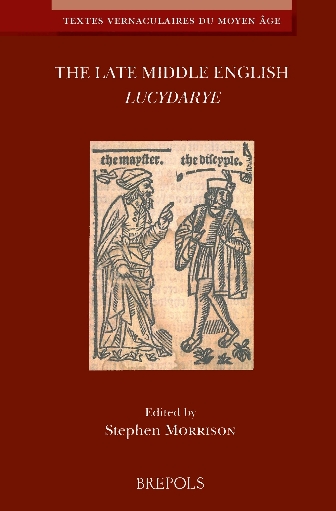
The Late Middle English 'Lucydarye'
show More to view fulltext, buy and share links for:The Late Middle English 'Lucydarye' show Less to hide fulltext, buy and share links for: The Late Middle English 'Lucydarye'The Lucydarye is a late Middle English manual of popular instruction, largely religious in its orientation, though including lengthy discussions of witchcraft, demonology, and meteorological phenomena. There is a strong interest in pastoral instruction. Set in the form of a dialogue between a magister and his discipulus, it is an over-literal translation of a fourteenth-century French text known as the Second Lucidaire, itself a free adaptation of the Latin Elucidarium, traditionally attributed to Honorius Augustodunensis (Honorius of Autun). The translation is the work of one Andrew Chertsey. The Middle English text, edited here for the first time (from a Wynkyn de Worde print), bears striking similarities to other, popular works of an encyclopaedic nature, notably Sydrak and Bokkus and the Pricke of Conscience. Equally, there are many points in common with the sermon literature of the time. The Lucydarye is printed alongside the French source so as to allow the reader both to appreciate points of obscurity in the text and to observe Chertsey's translation technique. A discussion of the relationship between the Lucydarye and the various versions of the Second Lucidaire throws some light on the complicated textual tradition of the French prints.
-
-
-
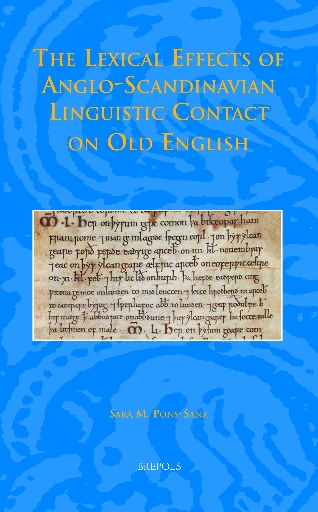
The Lexical Effects of Anglo-Scandinavian Linguistic Contact on Old English
show More to view fulltext, buy and share links for:The Lexical Effects of Anglo-Scandinavian Linguistic Contact on Old English show Less to hide fulltext, buy and share links for: The Lexical Effects of Anglo-Scandinavian Linguistic Contact on Old EnglishAnglo-Saxon England experienced a process of multicultural assimilation similar to that of contemporary England. At the end of the ninth century, speakers of Old Norse from present-day Denmark, Norway, and Sweden started to settle down in the so-called Danelaw amongst the Anglo-Saxon inhabitants, and brought with them cultural traditions and linguistic elements that are still a very significant part of the English speaking world in the twenty-first century.
This book analyses the first Norse terms to be recorded in English. After revising the list of terms recorded in Old English texts which can be considered to have derived from Norse, the author explores their dialectal and chronological distribution, as well as the semantic and stylistic relationships which the Norse-derived terms established with their native equivalents (when they existed). This approach helps to clarify questions such as these: Why were the terms borrowed? At what point did the terms stop being identified as ‘foreign’? Why is a particular term used in a particular context? What can the terms tell us about the Anglo-Scandinavian sociolinguistic relations?
-
-
-
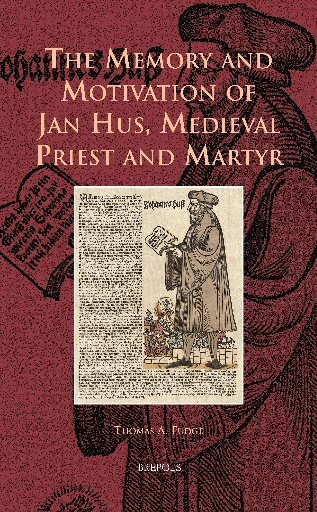
The Memory and Motivation of Jan Hus, Medieval Priest and Martyr
show More to view fulltext, buy and share links for:The Memory and Motivation of Jan Hus, Medieval Priest and Martyr show Less to hide fulltext, buy and share links for: The Memory and Motivation of Jan Hus, Medieval Priest and MartyrJan Hus (1371-1415) gave his name to a social and religious revolution which captured the attention of Europe. The central figure in a late medieval reform movement, he died a condemned heretic. Martyrdom made him famous but his essential identity has remained a point of controversy. Who was Jan Hus?
This work explores the driving forces in the life and work of this medieval priest as he moved from obscurity to the vulnerability of a publicly accused heretic and the disgraceful prelude to martyrdom. It also focuses on the construction and facilitation of the memory of Jan Hus. Historical “facts” are often compelling but these postulations cannot be approached apart from the manner and process in which those events are remembered.This book illuminates the life and work of the medieval priest and martyr who rose from humble origins to national hero and popular saint on the platform of a unique and renewed practice of the Christian faith. So profound were his challenges to the church and so bellicose were the reactions to his untimely demise, that the name Jan Hus was destined never to fade into oblivion.
-
-
-

The Middle English Life of Christ
show More to view fulltext, buy and share links for:The Middle English Life of Christ show Less to hide fulltext, buy and share links for: The Middle English Life of ChristHow much did Latin academic theoretical discourse inform mainstream late medieval English literature? Rather than asking this question of secular poetic fiction (Chaucer, Gower), this book investigates a more central genre, lives of Christ. Any adequate understanding of vernacular textuality, in an age when most literature was translation of some sort, cannot escape the question of the influence of theory on transactions and ideology of mainstream literary culture in negotiating authority. Where better to test this than the life of Christ?
Derived from the Gospels, this genre provided the set text for human existence. Too often, however, it has been regarded by modern scholarship as an infantilizing clerical sop to a laity deprived of Scripture and intellectual or contemplative ambition. Inquiry into the translating and the spirituality of Middle English lives of Christ yields, however, eloquent examples not of antagonism and rupture between Latin and vernacular but of productive compatibility. This challenges the common modern supposition that vernacular texts and vernacular theology are at odds with Latinate clerical culture, and restores the genre’s historic value. Like their dissenting counterparts, lives of Christ, as well as being of interest in their own right, invested in learned literary and theological norms in their textual transactions. Such reliance demands modern (re)consideration.
-
-
-
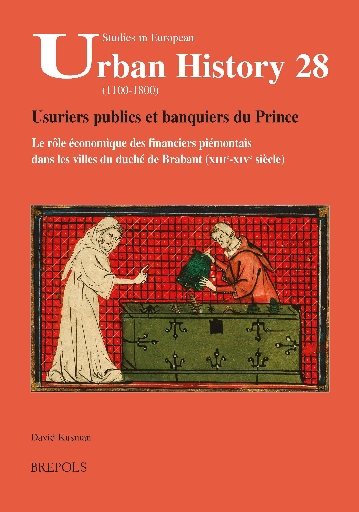
Usuriers publics et banquiers du Prince
show More to view fulltext, buy and share links for:Usuriers publics et banquiers du Prince show Less to hide fulltext, buy and share links for: Usuriers publics et banquiers du PrinceEntre le dernier quart du XIIIe siècle et le premier tiers du XIVe siècle, les banquiers piémontais installés dans le duché de Brabant constituèrent la communauté la plus importante des Lombards actifs dans les anciens Pays-Bas. Banquiers du Prince, ils prêtaient également aux élites urbaines et à la noblesse. Cette étude s’attache à reconstituer les stratégies commerciales et les réseaux sociaux des financiers piémontais grâce auxquels ceux-ci jouèrent un rôle de premier plan dans l’économie et la politique du duché de Brabant. En s’interrogeant sur les modalités d’intégration des Piémontais dans les villes brabançonnes, l’étude a finalement pour ambition de dépasser l’image caricaturale du Lombard, souvent identifié à un usurier public.
David Kusman , docteur en histoire médiévale de l’Université Libre de Bruxelles, est chercheur associé à l’Unité de Recherche en histoire rurale et urbaine (U.L.B.) et au PAI VII/26 "City and Society in the Low Countries (1200-1850)
-
-
-
Writings on the Spiritual Life
show More to view fulltext, buy and share links for:Writings on the Spiritual Life show Less to hide fulltext, buy and share links for: Writings on the Spiritual LifeThe Canons following the Rule of St Augustine at St Victor in Paris were some of the most influential religious writers of the Middle Ages. They combined exegesis and spiritual teaching in a theology that was deeply rooted in tradition but also attuned to current developments in the schools of Paris. This selection of their writings on the spiritual life is divided into three sections. The first presents three works by Achard and Richard which treat the development of Christian life from the beginnings of conversion to the perfection of love and contemplation. Prayer, meditation and the gifts of the Holy Spirit are the subjects of the works by Hugh and Richard included in the second section. The final section presents poetical, exegetical and homiletic works honoring Mary by Hugh, Adam, Richard and Godfrey. This rich and representative sampling of Victorine works is a clear window into a world that still has much to offer modern readers interested in spirituality, medieval or modern.
The editor of this volume is Christopher P. Evans (PhD, St Louis University; Department of Theology, University of St. Thomas, Houston, TX), the editor of Hildegard of Bingen’s Explanatio symboli sancti Athanasii (2007), Vita sancti Disibodi, Vita sancti Ruperti and the Triginta octo questionum solutiones (forthcoming; Corpus Christianorum, Continuatio Mediaevalis) and Radulphus Ardens: The Questions on the Sacraments (2010).
-
-
-
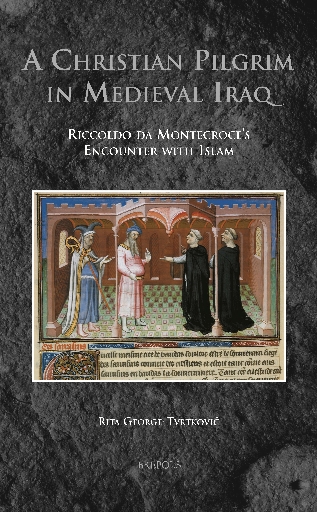
A Christian Pilgrim in Medieval Iraq
show More to view fulltext, buy and share links for:A Christian Pilgrim in Medieval Iraq show Less to hide fulltext, buy and share links for: A Christian Pilgrim in Medieval IraqThis book analyses the events of a decade long encounter between an Italian Dominican, Riccoldo da Montecroce (c. 1243–1320), and the Muslims of Baghdad, as recounted by the friar himself. While many of Riccoldo’s views of the Muslims are consonant with those of his medieval confrères, the author examines the much more ambivalent sections of his writings, such as his praise-filled descriptions of Muslim praxis, his obvious love of Qur’anic Arabic, his frequent references to personal encounters with Muslims, and his candid descriptions of the wonder and doubt which these confrontations often elicited. The author argues that the tensions and inconsistencies inherent in Riccoldo’s account of Islam should not be viewed as defects. Rather, she contends, their presence illustrates the complex nature of interreligious encounter itself. In addition to a critical discussion, this volume provides — for the first time — English translations of two remarkable Riccoldian texts: The Book of Pilgrimage (Liber peregrinationis) and Letters to the Church Triumphant (Epistolae ad ecclesiam triumphantem).
-
-
-
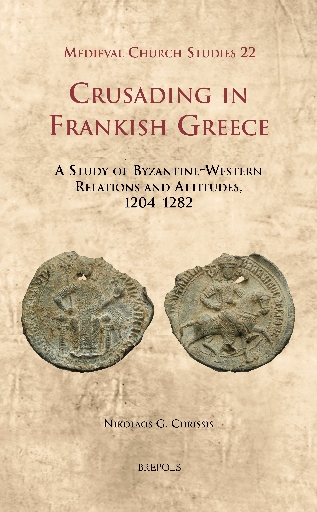
Crusading in Frankish Greece
show More to view fulltext, buy and share links for:Crusading in Frankish Greece show Less to hide fulltext, buy and share links for: Crusading in Frankish GreeceAfter becoming a major aspect of the contact between East and West during the twelfth century, the Crusades were even more widely deployed in the thirteenth century at the frontiers of Latin Christendom (in the Holy Land, the Iberian peninsula, and the Baltic), as well as within western Europe. Another such front was opened up after the conquest of Constantinople by the army of the Fourth Crusade in 1204, where the opponents were the Christian but ‘schismatic’ Greeks. A series of crusades were proclaimed for the defence of the Frankish states which were set up in the formerly Byzantine territories.
This development defined the policy of the papacy, of the Latin powers, and of the Greek states in the area, and had a profound impact on Greco-Latin relations in the thirteenth century. At the same time, it constituted an important stage in the expansion of crusading at large, and was an integral part of the process of Latin Christendom’s self-definition against the various ‘others’ it came in contact with: Muslims, pagans, as well as Eastern Christians. Yet, despite their importance, these expeditions have not been systematically examined before.
This book addresses this omission. Drawing from both Byzantine and crusade historiography and making use of a wealth of unexploited sources, it investigates the evolution of crusading in Frankish Greece and places it in the context of Byzantine-western interaction, of political circumstances across Europe, and of developments in the theory and practice of Holy War.
-
-
-
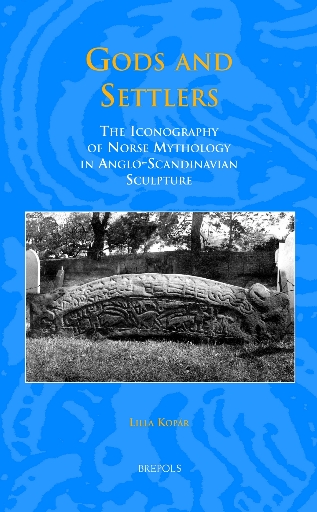
Gods and Settlers
show More to view fulltext, buy and share links for:Gods and Settlers show Less to hide fulltext, buy and share links for: Gods and SettlersStone sculpture constitutes the richest surviving corpus of Viking-Age artefacts from the British Isles. In northern England, the geographical focus of the present study, sculptural production in the Viking period increased dramatically compared to the previous centuries, and stone monuments underwent changes in style and iconography, as well as in function and patronage. Consequently, stone sculpture provides rare visual evidence for the cultural changes that took place in the Scandinavian settlement areas and bears witness to intellectual and social processes that have otherwise left few traces in either the textual or material records.
Gods and Settlers is an interdisciplinary study that brings together iconography, literature, history, and religious studies to investigate a unique subset of this sculptural corpus: stone monuments with mythological and heroic iconography of Scandinavian origins. These carvings are particularly interesting because of the ecclesiastical roots of stone sculpture as a mode of artistic expression in England and the undoubtedly Christian context of the majority of the surviving monuments. The first half of the book is a detailed survey of the relevant carvings from northern England and a wide range of textual and visual parallels, together with an investigation of the sources and use of individual heroic and mythological characters and motifs. The second half focuses on the intellectual framework and social context of the artefacts, and presents a new view of these sculptures as cultural documents of the conversion of the Scandinavian settlers of northern England.
-