


Brepols Online Books Medieval Miscellanea Collection 2014 - bob2014mime

Collection Contents
47 results
-
-
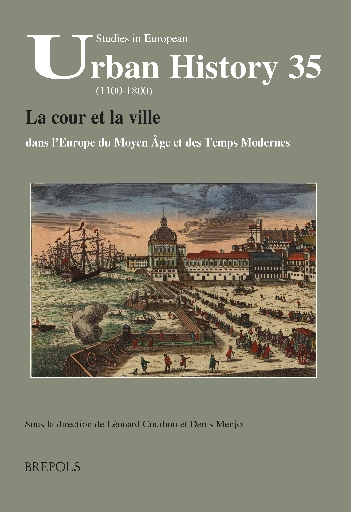
La cour et la ville dans l’Europe du Moyen Âge et des Temps Modernes
show More to view fulltext, buy and share links for:La cour et la ville dans l’Europe du Moyen Âge et des Temps Modernes show Less to hide fulltext, buy and share links for: La cour et la ville dans l’Europe du Moyen Âge et des Temps ModernesLe présent ouvrage rassemble quinze textes issus en majorité de la session principale « La cour et les villes dans l’Europe du Moyen Âge et des Temps Modernes», organisée à l’occasion de la XIe Conférence de l’Association Européenne d’Histoire Urbaine, qui s’est tenue à Prague du 29 août au 1er septembre 2012. Ces travaux visent à appréhender les relations toujours plus étroites et complexes que tissent les cours européennes, engagées durant ces siècles dans de nouvelles pratiques de mobilités et donc de nouveaux rapports à l’espace, et les villes qui, fortes de leur croissance démographique et de leur dynamisme économique et culturel, deviennent des interlocuteurs privilégiés des pouvoirs princiers et monarchiques. Si les sources littéraires brossent un tableau plutôt sombre de la cohabitation de deux sociétés curiale et urbaine que tout semble opposer, l’analyse d’une documentation plus riche et beaucoup plus variée permet d’envisager cette construction littéraire comme l’écho des profondes recompositions sociales, spatiales, culturelles et politiques en milieu urbain, sous l’effet de la rencontre et de la coexistence de ces deux sociétés. Cette réflexion collective souligne la fécondité d’une histoire des réseaux, des circulations, de la communication et de la gouvernementalité pour le renouvellement des études curiales et urbaines.
Léonard Courbon, professeur agrégé est doctorant à l’Université de Lyon 2.
Denis Menjot est professeur d’histoire du Moyen Âge à l’Université de Lyon 2.
Ils appartiennent tous les deux à l’Unité Mixte de Recherche 5648:CIHAM.
-
-
-

Bruno the Carthusian and his Mortuary Roll
show More to view fulltext, buy and share links for:Bruno the Carthusian and his Mortuary Roll show Less to hide fulltext, buy and share links for: Bruno the Carthusian and his Mortuary RollAs founder of the Carthusian order, Saint Bruno of Cologne († 1101) is known as a leading figure in the twelfth-century religious renewal. As recent research has emphasized, he was also one of the first proponents of a new intellectual culture of the French schools as a teacher at Reims before his conversion and retreat to the Italian hermitage of La Torre.
Various contrary aspects of his life are commemorated in his mortuary roll, a unique document that was sent around churches and monasteries of Europe upon his death by his fledgling hermit community. Over 150 entries by individuals and monastic or clerical communities in Italy, France, and England, mostly in verse, survive in an early sixteenth-century text witness.
In celebrating Bruno’s life and saintly death, the many-voiced entries comment upon intellectual and religious ideals, illustrating literary practices and intellectual and spiritual values as well as the pragmatic workings of memoria. The present edition includes all materials accompanying the sole surviving sixteenth-century print of the roll. It offers complete translations into English and into German, and includes five studies by experts debating the most important aspects and contexts of this singular and multi-faceted medieval text.
-
-
-
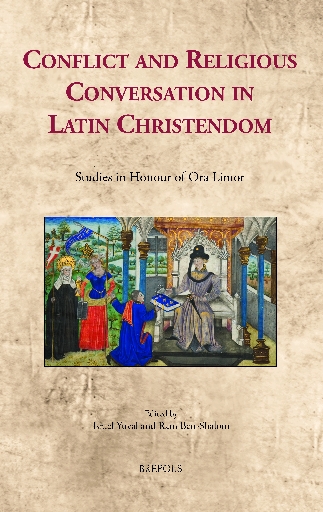
Conflict and Religious Conversation in Latin Christendom
show More to view fulltext, buy and share links for:Conflict and Religious Conversation in Latin Christendom show Less to hide fulltext, buy and share links for: Conflict and Religious Conversation in Latin ChristendomThe literature against the Jews (contra Iudeos) was crucially influential in the shaping of Christianity during the centuries following the crucifixion, particularly during the period when Christianity remained outside official Roman toleration. And yet, this phenomenon did not decline in the Middle Ages when Christianity emerged as the supreme power in the western world and Judaism could no longer threaten it in any way. The Jewish response to this literary practice did not arise for some time, yet from the twelfth century onwards the effort to counter Christian ideological attacks became a central intellectual activity and a pressing concern on the part of Jewish scholars in the West. Although both Latin and Hebrew polemics were often intended, first and foremost, for local audiences in order to satisfy local needs and intellectual demands, they also engaged each other, and raised urgent theological and cultural questions in doing so. This cultural discourse did not just find expression in polemical literature (Nizahon and Adversus Iudaeos) but also in a variety of other representations and daily practices. This collection of studies is devoted to an examination of the significance of this phenomenon as a longue durée process, and pursues its concerns from a variety of innovative perspectives that join together authoritative scholars from the field of Jewish-Christian relations.
-
-
-
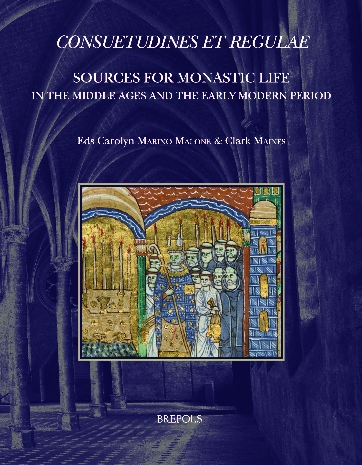
Consuetudines et Regulae
show More to view fulltext, buy and share links for:Consuetudines et Regulae show Less to hide fulltext, buy and share links for: Consuetudines et RegulaeThis volume addresses the nature and quality of the lives of monks and canons in Western Europe during the middle ages and the early modern period. Building on the collaborative spirit of recent work on medieval religion, it includes studies by historians of the religious orders, liturgy and ritual as well as archaeologists and architectural historians. Several studies combine the interpretation of texts, most particularly customaries and rules, with the analysis of architecture. The volume sheds new and exciting light on monastic daily life in all its dimensions from the liturgical and the quotidian to the spatial and architectural.
Carolyn Marino Malone is Professor of Art History at the University of Southern California in Los Angeles (USA). She specializes in French Romanesque and English Gothic architecture and sculpture. Her most recent book, is Saint-Bénigne de Dijon en l’an mil, “totius Galliae basilicis mirabiliorem”: Interprétation politique, liturgique et théologique, Disciplina monastica, 5 (Turnhout, 2009).
Clark Maines is Professor of Art History and Archaeology and Kenan Professor of the Humanities at Wesleyan University, in Middletown, Connecticut (USA). He specializes in the study of monasticism from architecture in its structural and ritual dimensions to technology and monastic domains. His most recent book, co-written with Sheila Bonde, is Saint-Jean-des-Vignes in Soissons, Approaches to its Architecture, Archaeology and History, Bibliotheca Victorina, XV (Turnhout, 2003).
-
-
-
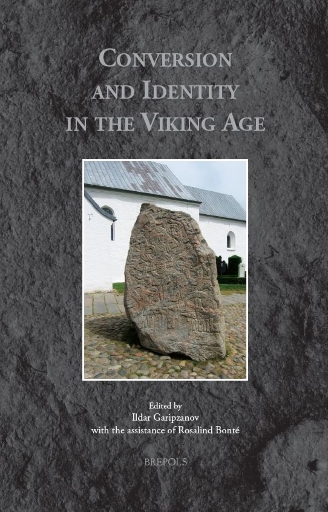
Conversion and Identity in the Viking Age
show More to view fulltext, buy and share links for:Conversion and Identity in the Viking Age show Less to hide fulltext, buy and share links for: Conversion and Identity in the Viking AgeThis volume presents a state-of-the-art collection of essays on the socio-cultural aspects of the conversion to Christianity in Viking-Age Scandinavia and the Scandinavian colonies of the North Atlantic. The nine scholars, drawn from the disciplines of history, archaeology, and literary studies, have been brought together to address the overarching topic of how conversion affected peoples’ identities - both as individuals, and as members of broader religious, political, and social groups - on either side of the ‘divide’ between paganism and Christianity. Central to this exploration is the question of how existing and changing identities shaped the progress of conversion as a process of societal, and more specifically cultural, change.
Each of the papers in this volume provides examples of the complicated patterns of interaction, influence, and identity-modification that were characteristic of the transition from paganism to Christianity in the Viking world. The authors look for new ways of understanding and describing this gradual intermingling between the two fuzzy-edged religious communities, and they provide a challenging redefinition of the nature of conversion in the Viking Age that will be of interest both to a wide variety of medievalists and to all those who work on conversion in its theoretical and historical aspects.
-
-
-
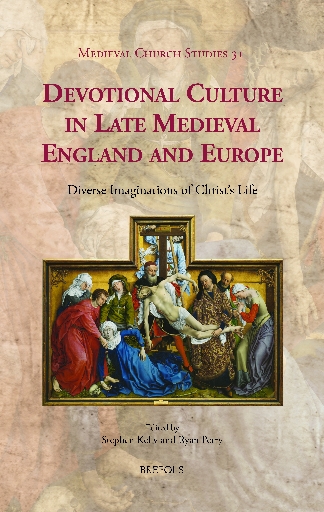
Devotional Culture in Late Medieval England and Europe
show More to view fulltext, buy and share links for:Devotional Culture in Late Medieval England and Europe show Less to hide fulltext, buy and share links for: Devotional Culture in Late Medieval England and EuropeChrist’s life, as related through the Gospel narratives and early Apocrypha, was subject to a riot of literary-devotional adaptation in the medieval period. This collection provides a series of groundbreaking studies centring on the devotional and cultural significance of Christianity’s pivotal story during the Middle Ages.
The collection represents an important milestone in terms of mapping the meditative modes of piety that characterize a number of Christological traditions, including the Meditationes vitae Christi and the numerous versions it spawned in both Latin and the vernacular. A number of chapters in the volume track how and why meditative piety grew in popularity to become a mode of spiritual activity advised not only to recluses and cenobites as in the writings of Aelred of Rievaulx, but also reached out to diverse lay audiences through the pastoral regimens prescribed by devotional authors such as the Carthusian prior Nicholas Love in England and the Parisian theologian and chancellor of the University of Paris, Jean Gerson.
Through exploring these texts from a variety of perspectives - theoretical, codicological, theological - and through tracing their complex lines of dissemination in ideological and material terms, this collection promises to be invaluable to students and scholars of medieval religious and literary culture.
-
-
-

D’Orient en Occident
show More to view fulltext, buy and share links for:D’Orient en Occident show Less to hide fulltext, buy and share links for: D’Orient en OccidentDes Mille et une Nuits aux Canterbury Tales, du Panchatantra au Décaméron, en passant par Artamène ou le Grand Cyrus, un vaste réseau de textes témoigne de la richesse et de l’originalité du ‘récit à tiroirs’ hérité de la tradition orientale. Le nombre impressionnant des récits concernés, de même que l’extraordinaire diffusion qu’ils ont connue en Orient comme en Occident, au Moyen Âge comme à l’époque moderne, illustrent l’urgence qu’il y a à repenser l’étude de ces textes dont plusieurs comptent parmi les fleurons les plus illustres de la littérature universelle.
Les travaux ici réunis se concentrent sur quatre recueils, le Calila et Dimna (ou Panchatantra), la légende de Barlaam et Josaphat, le Roman des Sept Sages (ou Livre de Sindibad), et la Disciplina clericalis de Pierre Alphonse, dont les trois premiers ont marqué, bien avant leur apparition en Occident, toute l’histoire de la littérature orientale. Quant au quatrième, il constitue l’un des recueils les plus importants que le Moyen Âge nous a transmis, comme en témoigne son immense diffusion du Roman de Renart au Décaméron de Boccace. C’est à partir du XIIe siècle que ces récits-recueils font connaître les traditions narratives du Levant dans l’Europe médiévale. Leur influence se fait sentir jusqu’à l’époque moderne dans le domaine occidental, à travers des réécritures et des adaptations. En réunissant les travaux de plus d’une vingtaine de spécialistes des domaines et des littératures concernés par cette transmission, le présent volume entend suivre le parcours des quatre textes de l’Antiquité tardive et du Moyen Âge à l’aube des Lumières.
-
-
-

England and Rome in the Early Middle Ages
show More to view fulltext, buy and share links for:England and Rome in the Early Middle Ages show Less to hide fulltext, buy and share links for: England and Rome in the Early Middle AgesThis volume explores the special connection that linked England and Rome between the seventh and the eleventh centuries, a topic which in spite of its relevance and attraction has never before been dealt with in a publication of this scale and depth. By bringing together scholars from different countries and disciplines and by relying on important recent archaeological findings that have led to a firmer knowledge of early medieval Rome, the volume provides a detailed and integrated investigation of the ways in which contacts between England and the Eternal City developed across the early Middle Ages. With special attention to major themes such as pilgrimage, artistic exchange, and ecclesiastical politics, the essays in this volume show the continuity of the Anglo-Saxons’ relations with Rome as well as the ways in which, over time, these adapted to different circumstances. They also show that Anglo-Saxon England should not be thought of as just a passive recipient of influential cultural trends, but rather as an important player in the multi-faceted world of early medieval Europe in which Rome, by now the city of the popes, kept its centrality as a source of spiritual and political power.
-
-
-
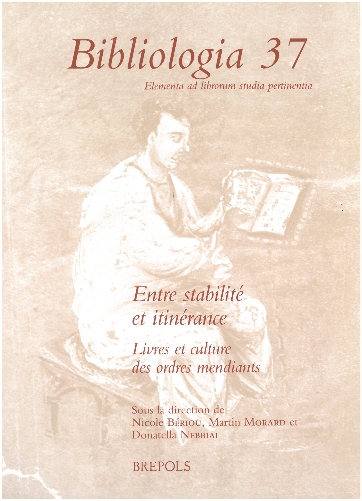
Entre stabilité et itinérance
show More to view fulltext, buy and share links for:Entre stabilité et itinérance show Less to hide fulltext, buy and share links for: Entre stabilité et itinéranceLes travaux de ces dernières années confirment que les livres tiennent une place centrale dans l’organisation des couvents mendiants et dans leurs pratiques économiques. Au quotidien, les livres font partie intégrante de la vie des couvents, comme vecteur de connaissances, support d’édification et outil de communication. Les frères les acquièrent pour étudier, pour transmettre les savoirs et pour discipliner la société. Les sœurs sont aussi, souvent, familières de la culture écrite, qui peut représenter un lieu de rencontre et de complémentarité entre les communautés masculines et féminines. Les contributions réunies dans ce volume s’attachent à considérer les différentes formes sous lesquelles les uns et les autres ont exprimé leur adhésion à la culture livresque, ou leurs éventuelles réserves, et reconnaissent dans la tension entre stabilité et itinérance l’un des points essentiels de l’identité culturelle des ordres mendiants. Parmi les aspects étudiés, figurent, en particulier, les réseaux institutionnels et interpersonnels, où les échanges de livres ont eu une très grande ampleur à l’humanisme, ainsi que les conditions historiques qui marquent le passage du manuscrit à l’imprimé.
-
-
-
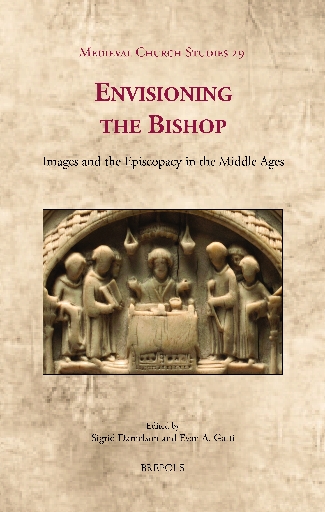
Envisioning the Bishop
show More to view fulltext, buy and share links for:Envisioning the Bishop show Less to hide fulltext, buy and share links for: Envisioning the BishopThe bishop wielded significant authority in religious, intellectual, and political spheres during the Middle Ages, but how was this influence articulated, and once articulated, how was it received? The essays in this volume represent a variety of disciplinary perspectives, each tuned to the production of images made by, for, and about the medieval episcopacy. They present the bishop as a model of piety and intellectual life as well as political and religious action.
Considering material from Late Antiquity through the thirteenth century, the essays offer a series of case-studies demonstrating that crafting episcopal imagery was a complicated endeavour employing pictorial, historical, literary, and historiographic devices. Never a static institution, the episcopacy was formed and reformed making it visible to the bishop, to those with whom he interacted, and to broader communities. These efforts at making present the power and authorities of the office asserted the duties, expectations, and ideals of the bishop in ways often specific to time and place.
The diverse perspectives on the episcopal image assembled here reveal the office, not as a singular contour, but as a succession of marks and erasures. Shaped by supporters and detractors alike, medieval images of the bishop engaged with historical models, responded to present realities, and considered the eschatological future.
-
-
-
Eriugena and Creation
show More to view fulltext, buy and share links for:Eriugena and Creation show Less to hide fulltext, buy and share links for: Eriugena and CreationUnjustly ignored as a result of a thirteenth-century condemnation, the thought of Johannes Scottus Eriugena (ca. 810-877) has only been subject to critical study in the twentieth century. Now, with the completion of the critical edition of Eriugena’s masterwork - the Periphyseon - the time has come to explore what is arguably the most intriguing and vital theme in his work: creation and nature.
In honor of Edouard Jeauneau - Institute Professor at the Pontifical Institute of Mediaeval Studies, University of Toronto and Honorary Research Director at the C.N.R.S. in Paris - to whom the field of Eriugenian studies is enormously indebted, this volume seeks to undertake a serious examination of the centrality of Eriugena’s thought within the Carolingian context, taking into account his Irish heritage, his absorption of Greek thought and his place in Carolingian culture; of Eriugena as a medieval thinker, both his intellectual influences and his impact on later medieval thinkers; and of Eriugena’s reception by modern philosophy, from considerations of philosophical idealism to technology.
-
-
-
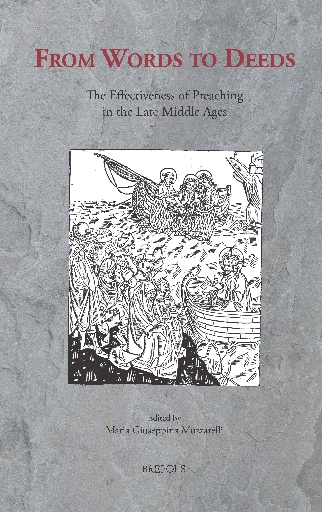
From Words to Deeds
show More to view fulltext, buy and share links for:From Words to Deeds show Less to hide fulltext, buy and share links for: From Words to DeedsPreaching is a method of exhorting the practice of virtues and the performance of one’s duties. If people are not moved to act, preachers become obsolete. Because of this, preachers in the Middle Ages understood the importance of ensuring that their words were heeded and disseminated.
The focus of this volume is the relationship, whether direct or indirect, between what was preached and what was achieved. The articles in this collection present a range of studies, from the thirteenth to the sixteenth century and, while focused on Italy, also give a broad European perspective.
The volume investigates both the tools employed by preachers and the pragmatic aims and outcomes of their sermons. It does this by exploring the various oratorical and gesticular techniques employed by preachers, as well as their methods of preparing themselves to deliver their message and preparing their audiences to receive it. Furthermore, the volume considers both hypothetical and concrete relationships between preachers’ words and civic policies and the behaviours of groups or individual citizens, as well as the question of how and when words were translated into actions.
-
-
-
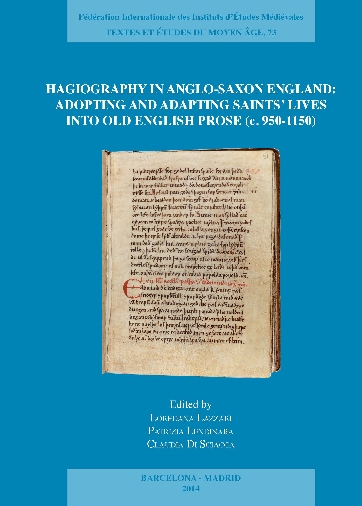
Hagiography in Anglo-Saxon England: Adopting and Adapting Saints' Lives into Old English Prose (c. 950-1150)
show More to view fulltext, buy and share links for:Hagiography in Anglo-Saxon England: Adopting and Adapting Saints' Lives into Old English Prose (c. 950-1150) show Less to hide fulltext, buy and share links for: Hagiography in Anglo-Saxon England: Adopting and Adapting Saints' Lives into Old English Prose (c. 950-1150)This volume gathers fourteen new essays devoted to Old English prose saints’ lives from the late Anglo-Saxon period. Moving from diverse methodological approaches and building on the most recent developments in primary and secondary scholarship, the contributions comprehensively consider the texts and contexts of the vernacular hagiographic output both by Ælfric, the major hagiographer of his day, and by anonymous authors. By means of a comprehensive scrutiny of the Latin source-texts, including the often neglected Vitas Patrum, as well as of both the historical and manuscript context, this collection contributes to outline the late Anglo-Saxon sanctorale and to advance our knowledge of the literary culture and intellectual history of pre-Conquest England and beyond.
Contributors:Roberta Bassi, Rolf H. Bremmer Jr., Claudio Cataldi, Catherine Cubitt, Giuseppe D. De Bonis, Maria Caterina De Bonis, Claudia Di Sciacca, Concetta Giliberto, Joyce Hill, Susan Irvine, Loredana Lazzari, Patrizia Lendinara, Rosalind Love, Winfried Rudolf.
-
-
-
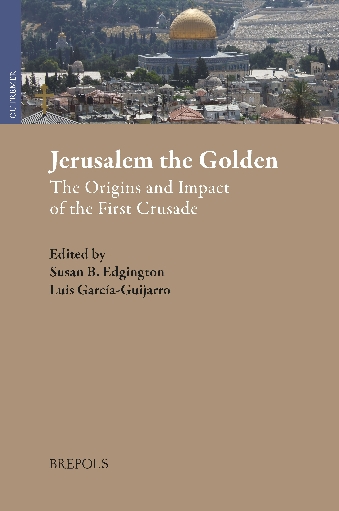
Jerusalem the Golden
show More to view fulltext, buy and share links for:Jerusalem the Golden show Less to hide fulltext, buy and share links for: Jerusalem the GoldenThis collection brings together new work by an international cast of distinguished scholars, who explore areas as diverse as the military and ecclesiastical aspects of the First Crusade; its representation in contemporary sculpture; and the way it has been portrayed in modern fiction and film. Further contributions analyse and compare primary sources and historiography, and yet others consider the crusade in its Mediterranean context, which is sometimes overlooked. These definitive studies of established areas of research are augmented by the ground-breaking work of a number of early-career academics who are working in relatively new areas: the ‘emotional language’ used in the narrative sources; the memorialization of the crusades; and the use of literary sources for crusade studies: notably there are complementary papers on the heroes and villains depicted in the Old French poetic accounts of the First Crusade. In these twenty-one essays every historian and interested reader of medieval history will find illumination and food for thought.
Susan B. Edgington is a teaching and research fellow at Queen Mary University of London. She is an authority on the sources for the First Crusade and the early history of the kingdom of Jerusalem.
Luis García-Guijarro is reader in Medieval History at the University of Zaragoza. His many books and articles deal with crusades, military orders, church history, socio-economic history, and Iberia in the central Middle Ages.
-
-
-
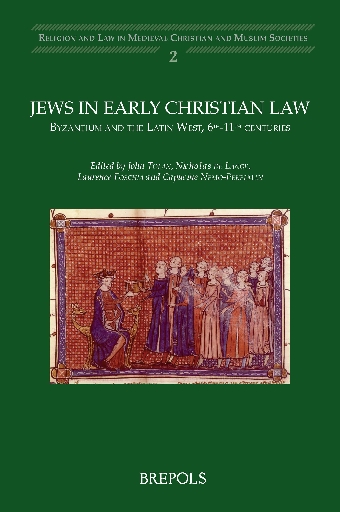
Jews in Early Christian Law
show More to view fulltext, buy and share links for:Jews in Early Christian Law show Less to hide fulltext, buy and share links for: Jews in Early Christian LawThe sixth to eleventh centuries are a crucial formative period for Jewish communities in Byzantium and Latin Europe: this is also a period for which sources are scarce and about which historians have often had to speculate on the basis of scant evidence. The legal sources studied in this volume provide a relative wealth of textual material concerning Jews, and for certain areas and periods are the principal sources. While this makes them particularly valuable, it also makes their interpretation difficult, given the lack of corroborative sources.
The scholars whose work has been brought together in this volume shed light on this key period of the history of Jews and of Jewish-Christian relations, focusing on key sources of the period: Byzantine imperial law, the canons of church councils, papal bulls, royal legislation from the Visigoths or Carolingians, inscriptions, and narrative sources in Hebrew, Greek and Latin. The picture that emerges from these studies is variegated. Some scholars, following Bernhard Blumenkranz, have depicted this period as one of relative tolerance towards Jews and Judaism; others have stressed the intolerance shown at key intervals by ecclesiastical authors, church councils and monarchs.
Yet perhaps more than revealing general tendencies towards “tolerance” or “intolerance”, these studies bring to light the ways in which law in medieval societies serves a variety of purposes: from providing a theologically-based rationale for social tolerance, to attempting to regulate and restrict inter-religious contact, to using anti-Jewish rhetoric to assert the authority or legitimacy of one party of the Christian elite over and against another. This volume makes an important contribution not only to the history of medieval Jewish-Christian relations, but also to research on the uses and functions of law in medieval societies.
-
-
-
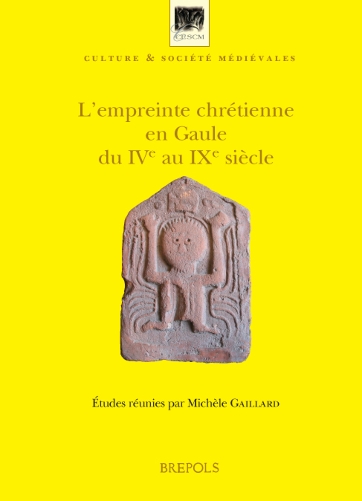
L'empreinte chrétienne en Gaule, du IVe au IXe siècle
show More to view fulltext, buy and share links for:L'empreinte chrétienne en Gaule, du IVe au IXe siècle show Less to hide fulltext, buy and share links for: L'empreinte chrétienne en Gaule, du IVe au IXe siècleCe volume contient les textes de la plupart des communications effectuées lors de trois journées d’étude tenues à l’Université de Lille 3, à l’automne 2010. Ces journées avaient pour but de présenter les recherches en cours sur la topographie religieuse des villes épiscopales, de mieux faire connaître les espaces ruraux, objets de nombreux et récents travaux archéologiques et historiques, tout en étudiant les changements intervenus au cours de ces six siècles dans le domaine des normes et comportements sociaux. Les vingt contributions ici offertes entraînent le lecteur de la législation constantinienne à la normalisation carolingienne, des premiers signes archéologiques de la présence du christianisme aux prémices de la paroisse médiévale, des premiers monastères aux communautés cénobitiques strictement encadrées par les réformes carolingiennes, des plus hauts lieux du christianisme gaulois ou gallo-franc à des sites moins illustres mais tout autant chargés d’histoire. Les auteurs ont inscrit leurs réflexions dans les grandes problématiques qui animent aujourd’hui l’archéologie et l’historiographie des débuts du christianisme en Occident, ce qui permet d’apprécier, à chaque étape de ce long itinéraire, l’empreinte du christianisme en Gaule aux premiers siècles de son histoire.
-
-
-
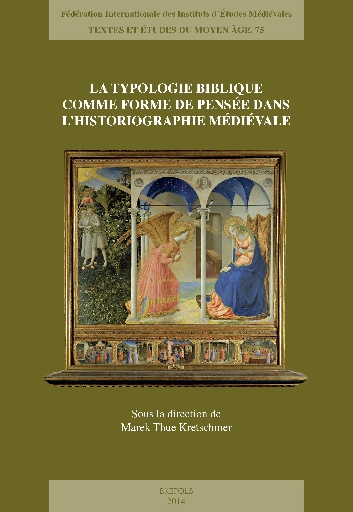
La Typologie biblique comme forme de pensée dans l'historiographie médiévale
show More to view fulltext, buy and share links for:La Typologie biblique comme forme de pensée dans l'historiographie médiévale show Less to hide fulltext, buy and share links for: La Typologie biblique comme forme de pensée dans l'historiographie médiévaleLe présent volume se propose, à travers des approches comparatives appliquées à un corpus de textes d’histoire appartenant à des périodes et des milieux différents, d’aboutir à une compréhension plus approfondie de l’infl uence de la typologie et des images bibliques sur l’historiographie du Moyen Âge: historiae, chronica, gesta, annales, vitae, epistolae, etc. Il s’agit, en effet, d’un aspect souvent négligé de l’historiographie médiévale, en raison, probablement, des controverses théoriques qui entourent le domaine. Cette publication devrait fournir de nouveaux outils de travail qui seront des apports précieux pour tous ceux qui s’intéressent à l’historiographie à l’époque médiévale.
-
-
-
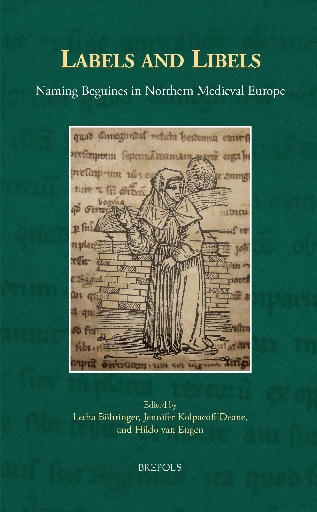
Labels and Libels
show More to view fulltext, buy and share links for:Labels and Libels show Less to hide fulltext, buy and share links for: Labels and LibelsThis volume investigates the diverse meanings assigned to and adopted by lay religious women in northern Europe between the thirteenth and sixteenth centuries. While many outstanding studies have unearthed the local or regional significance of such women, little comparative or transregional scholarship exists to date. Moreover, traditional emphasis on medieval ecclesiastical condemnation of beguines has obscured the extent to which their communities were intertwined with supportive local social structures.
Exploring the multiplicity of contemporary perspectives in the Belgian, Dutch, French, and German contexts over time, the volume traces not only the women’s relationships to various authorities and institutions, but also the specific terms used to represent and respond to ‘beguines’. Illuminating the kaleidoscopic ways in which medieval people categorized, described, and engaged with such women, the collected essays also underscore the extent to which simple dualities of ‘clerical’ and ‘lay’, ‘elite’ and ‘popular’, and ‘orthodox’ and ‘heretical’ are insufficient constructs with which to map intersections of medieval gender, lay religiosity, and society. In doing so, they propose new avenues and coordinates for exploring the sociospiritual topography of medieval Europe.
-
-
-
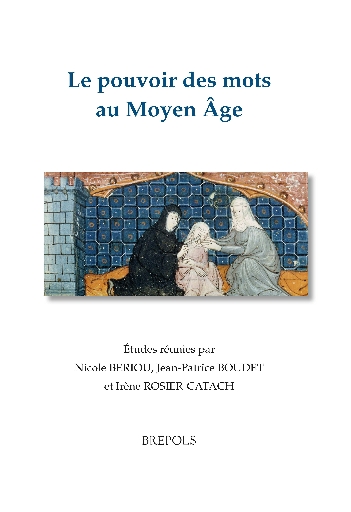
Le pouvoir des mots au Moyen Âge
show More to view fulltext, buy and share links for:Le pouvoir des mots au Moyen Âge show Less to hide fulltext, buy and share links for: Le pouvoir des mots au Moyen ÂgeL’idée d’un pouvoir ou d’une efficacité des paroles émerge de la lecture de sources fort différentes au Moyen Âge, qu’il s’agisse de textes doctrinaux ou d’ouvrages à vocation pratique. Ce livre se veut une confrontation la plus large possible, sur ce thème, dans une perspective d’histoire intellectuelle et anthropologique. En effet, dans les différents cas, relevant de différents domaines, de nombreuses questions transversales se posaient, au sujet des éléments qui étaient décrits comme déterminant l’efficacité de la parole (les paroles elles-mêmes, le rituel, les protagonistes). Cette efficacité faisait-elle l’objet d’un discours normatif ? Donnait-elle lieu à un discours réflexif, de la part des philosophes ou des théologiens ? L’engagement du locuteur, sa croyance, son intention, étaient-elles, comme le consentement ou la collaboration de l’auditeur, des facteurs déterminants ? Existait-il dans les paroles un pouvoir intrinsèque, ou n’étaient-elles que le vecteur d’un pouvoir venu d’ailleurs, surnaturel notamment ? Des matériaux et analyses présentés surgissent des questions qui pourront intéresser la philosophie du langage comme l’histoire ou l’anthropologie.
-
-
-
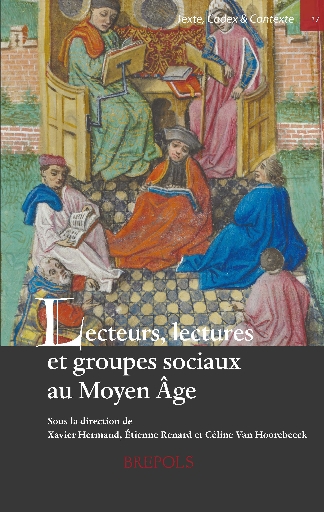
Lecteurs, lectures et groupes sociaux au Moyen Âge
show More to view fulltext, buy and share links for:Lecteurs, lectures et groupes sociaux au Moyen Âge show Less to hide fulltext, buy and share links for: Lecteurs, lectures et groupes sociaux au Moyen ÂgeDepuis quelques années, la réflexion sur la place et les usages du livre dans la société médiévale s’est considérablement renouvelée, dans ses méthodes comme dans ses objectifs. L’étude des pratiques de lecture au sein de lectorats socialement déterminés s’impose désormais comme l’un des courants les plus dynamiques dans l’historiographie relative aux livres et aux bibliothèques médiévales. Les dix contributions rassemblées dans ce volume s’inscrivent dans ce champ de la recherche. Historiens et philologues y abordent cette thématique de manière plurielle mais complémentaire. Sont tantôt privilégiés les rapports au livre et à la lecture, que ce soit dans le monde monastique, au sein des circuits humanistes ou en milieu curial ; tantôt l’identification du lectorat et des usages de tel ou tel texte ou ensemble de textes : chansons de geste, bibles portatives, recueils d’exempla…
Xavier Hermand est professeur d’histoire médiévale à l’Université de Namur.
Étienne Renard est chargé de cours en histoire médiévale à l’Université de Namur.
Céline Van Hoorebeeck est conservatrice à la Bibliothèque universitaire Moretus Plantin de l’Université de Namur.
-
-
-
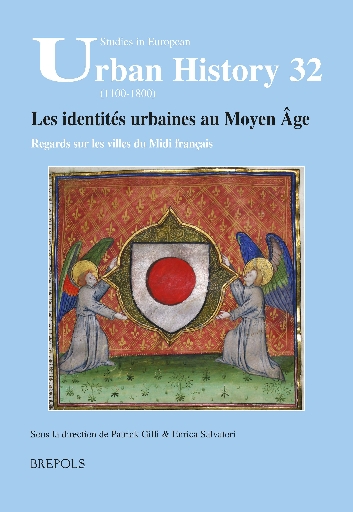
Les identités urbaines au Moyen Âge. Regards sur les villes du Midi français
show More to view fulltext, buy and share links for:Les identités urbaines au Moyen Âge. Regards sur les villes du Midi français show Less to hide fulltext, buy and share links for: Les identités urbaines au Moyen Âge. Regards sur les villes du Midi françaisLa singularité urbaine des villes du Midi français a souvent été négligée. Coincées entre le modèle communal italien triomphant et le puissant mouvement urbain des villes flamandes ou rhénanes, elles apparaissent comme faiblement typées ; leur intégration dans l’espace capétien aurait également limité leur capacité d’autogouvernement et de discussions avec les autorités centrales. Pourtant, le dynamisme de ces cités méridionales est avéré, aussi bien dans leur élan démographique que dans la force des échanges économiques. Que dire également de leur place dans le développement des mouvements religieux contestaires et de leur rayonnement intellectuel facilité par la présence de grandes universités au recrutement international ! À la lumière des nombreux et récents travaux sur le sujet, le colloque offre la première approche comparative sur ces villes méridionales, en insistant sur les traits identitaires qui définissent leurs contours originaux, en particulier dans l’organisation politique.
Patrick Gilli est professeur d’histoire médiévale à l’université Montpellier 3, directeur du CEMM (centre d’études médiévales de Montpellier, EA 4583).
Enrica Salvatori est professeur d’histoire médiévale à l’université de Pise.
-
-
-
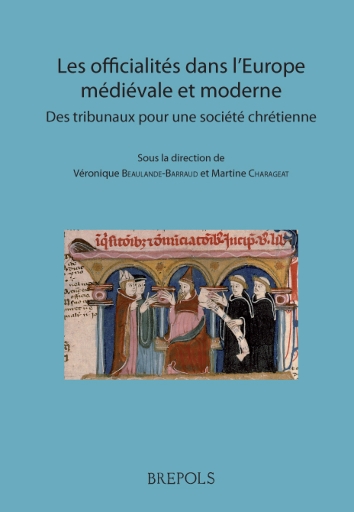
Les officialités dans l'Europe médiévale et moderne
show More to view fulltext, buy and share links for:Les officialités dans l'Europe médiévale et moderne show Less to hide fulltext, buy and share links for: Les officialités dans l'Europe médiévale et moderneLes justices ecclésiastiques suscitent un intérêt historiographique renouvelé ces dernières années, tant comme juridictions temporelles spécifiques que dans les manifestations d’une justice compétente en matière «spirituelle». C’est spécifiquement sur les «cours d’Église», les officialités, que s’est tenu ce colloque réunissant historiens et juristes, médiévistes et modernistes, pour un bilan en forme d’invitation à poursuivre les investigations.
L’histoire des officialités a ainsi été éclairée dans sa diversité et dans son évolution, dans une perspective comparatiste. Leur compétence et la manière dont elles exercent leur juridiction, gracieuse, contentieuse, criminelle, a été mise en valeur, attestant de leur rôle quotidien auprès des populations. Enfin, l’étude de leur activité permet une approche de l’histoire des femmes et du couple qui, à son tour, met en valeur la richesse des sources des officialités, organes de “disciplinement des mœurs” encore en partie méconnus.
-
-
-
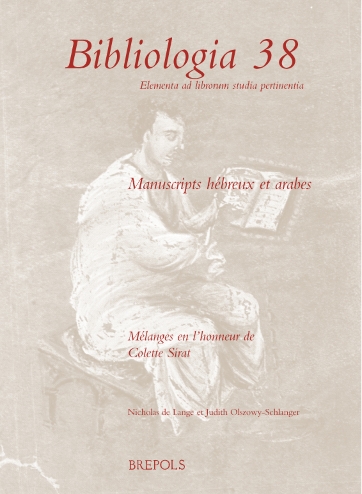
Manuscrits hébreux et arabes
show More to view fulltext, buy and share links for:Manuscrits hébreux et arabes show Less to hide fulltext, buy and share links for: Manuscrits hébreux et arabesL'étude des manuscrits hébreux est à juste titre considérée comme le fondement de la recherche en histoire intellectuelle des juifs. C'est sous la plume de Colette Sirat, dont les travaux ont profondement marqué aussi bien les études sur la pensée juive et que sur l'histoire de l'écriture, que la paléographie hébraïque a acquis une méthodologie rigoureuse, un ancrage institutionnel et une série d'ouvrages de référence.
Manuscrits hébreux et arabes est un recueil de mélanges dédiés à Colette Sirat par ses collègues, amis et disciples. Les articles portant sur des manuscrits provenant de lieux et périodes différents montrent l'envergure des travaux en paléographie et codicologie hébraïque aujourd'hui.
-
-
-
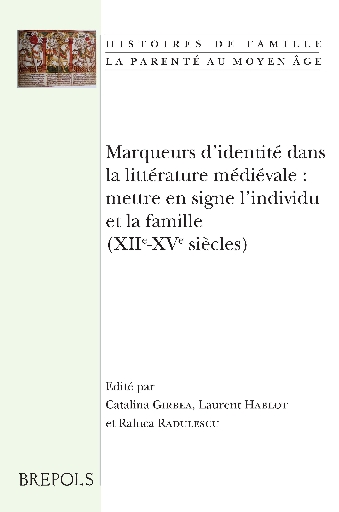
Marqueurs d’identité dans la littérature médiévale : mettre en signe l’individu et la famille (XIIe-XVe siècles)
show More to view fulltext, buy and share links for:Marqueurs d’identité dans la littérature médiévale : mettre en signe l’individu et la famille (XIIe-XVe siècles) show Less to hide fulltext, buy and share links for: Marqueurs d’identité dans la littérature médiévale : mettre en signe l’individu et la famille (XIIe-XVe siècles)Le XIIe siècle marque une fracture épistémologique dont les symptômes les plus visibles sont l’apparition des questionnements identitaires, qu’il s’agisse d’une meilleure définition de l’individu, des familles ou des groupes. Ils se laissent entrevoir avec une force sans précédent sur le fond d’une double mutation, sociale et culturelle. L’éclosion de la littérature vernaculaire, l’effondrement progressif durant tout le XIIe siècle de la suprématie du latin écrit, provoque un bouleversement épistémique. Les marqueurs de l’identité comme les signes héraldiques commencent à préoccuper l’homme médiéval. Les contributions de ce volume se proposent de suivre le développement et la rationalisation de ces marqueurs qui définissent les rapports entre les individus et leurs groupes jusqu’à la fin du Moyen Âge. Cette enquête est menée à travers la fiction vernaculaire, le lieu par excellence où les problématiques identitaires trouvent une voie d’expression à la fois transparente et complexe.
-
-
-
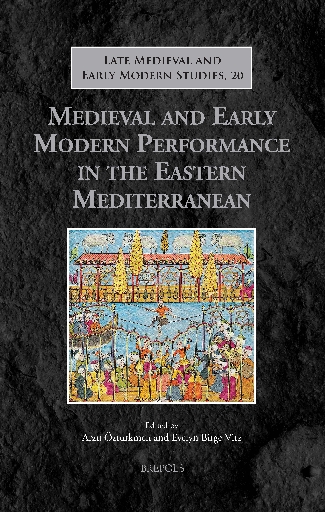
Medieval and Early Modern Performance in the Eastern Mediterranean
show More to view fulltext, buy and share links for:Medieval and Early Modern Performance in the Eastern Mediterranean show Less to hide fulltext, buy and share links for: Medieval and Early Modern Performance in the Eastern MediterraneanThis book brings to life an impressively broad array of performances in the Eastern Mediterranean. It covers many traditional types of performance, including singers, dancers, storytellers, street performers, clowns, preachers, shadow-puppeteers, fireworks displays, and semi-theatrical performances in folk and other celebrations. It explores performance of the secular as well as of the sacred in its many forms, including Sunni, Shiite, Sufi, and Alevi Muslims; Sephardic Jews and those in the Holy Land; and Armenian, Greek, and European Catholic Christians. The book focuses on the Medieval and Early Modern periods, including the Early Ottoman. Some papers reach backward into Late Antiquity, while others demonstrate continuity with the modern Eastern Mediterranean world.
The articles discuss evidence for performers and performance coming from archival sources, architectural and manuscript images, musical notation, historical and ethnographic accounts, literary works, and oral tradition. Across the broad range of issues, chronology, and geography, certain fundamental topics are central: concepts of drama and theatricality; varied definitions of ‘performance’ and related terms; the sacred and the profane, and their frequent intersection; and complex relations between oral and written traditions.
-
-
-
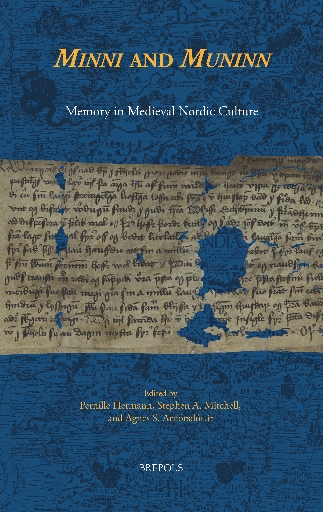
Minni and Muninn
show More to view fulltext, buy and share links for:Minni and Muninn show Less to hide fulltext, buy and share links for: Minni and MuninnIn recent years, various branches of memory studies have provided useful tools of analysis that offer new ways of understanding medieval cultures. The articles in this collection draw on these new theoretical tools for studying - and conceptualizing - memory, in order to reassess the function of memory in medieval Nordic culture. Despite its interdisciplinary and comparative basis, the volume remains very much an empirical study of memory and memory-dependent issues as these took form in the Nordic world.
In addition, the articles deal with a variety of theoretical concepts and areas of investigation which are of relevance when dealing with memory studies in general, such as transmission and media, preservation and storage, forgetting and erasure, and authenticity and falsity. The articles cover a wide range of medieval texts, such as saga, myth, poetry, law, historiography, learned literature, and other forms of verbal expression, such as runic inscriptions.
-
-
-
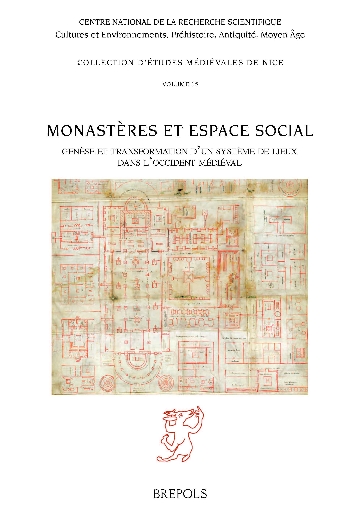
Monastères et espace social
show More to view fulltext, buy and share links for:Monastères et espace social show Less to hide fulltext, buy and share links for: Monastères et espace socialCet ouvrage présente les résultats d’une enquête, menée par des archéologues et des historiens, sur l’organisation spatiale du monachisme au Moyen Âge. Il propose tout à la fois des synthèses inédites sur plusieurs complexes ou cités monastiques et une réflexion sur les processus d’articulation et de hiérarchisation des lieux de vie, de culte et de production constitutifs des monastères occidentaux. Il s’intéresse entre autres aux différentes formes de circulation - déplacements pragmatiques, déambulations liturgiques, parcours mentaux - qui ont favorisé la structuration et la monumentalisation de ces ensembles religieux.
La mise en place et le développement des monastères sont ici appréhendés au travers des usages de l’espace, par l’étude des monuments, des textes et des images qui en portent la trace. Les auteurs de ce volume mettent ainsi en évidence la genèse et la transformation d’un système de lieux singulier qui fut, dans l’Occident médiéval, l’un des principaux laboratoires des représentations et des pratiques de l’espace social.
-
-
-
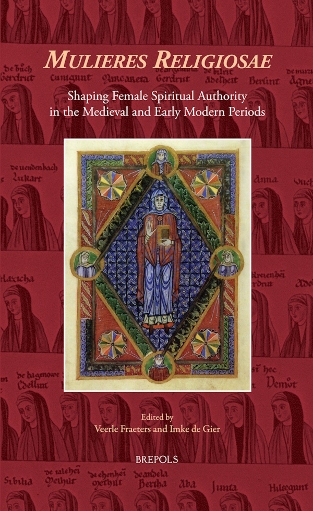
Mulieres Religiosae
show More to view fulltext, buy and share links for:Mulieres Religiosae show Less to hide fulltext, buy and share links for: Mulieres ReligiosaeTraditionally women were denied access to positions of official religious authority within Christianity and were therefore compelled to explore other avenues to acquire and express spiritual leadership. Through twelve case studies covering different regions in Europe, this volume considers the nuances of what constituted female spiritual authority, how it was acquired and manifested by religious women, and how it evolved from the high Middle Ages to the Early Modern period. Whilst current scholarship often emphasizes binaries within the fields of gender and religious authority, this volume examines the manifestation of female religious authority in its multiple facets. It looks both at individuals displaying exceptional forms of agency such as prophesying, as well as more commonplace, communal activities such as letter-writing and music-making. By taking into account the pervasiveness of spirituality in society as a whole in the Pre-Modern era, this collection of essays renegotiates the relationship between the spiritual and the social domain. Through the chronological organization of the contributions insight is gained into the changes in the means and forms female religious authority could take between 1150 and 1750. The narrative is clearly impacted by late medieval enclosure policies and by changing modes of spirituality. Whereas women in the earlier period tended to represent themselves as a door through which God could advance towards mankind, later on they functioned more frequently as a portal through which others could advance towards God.
-
-
-

Nicole Oresme philosophe
show More to view fulltext, buy and share links for:Nicole Oresme philosophe show Less to hide fulltext, buy and share links for: Nicole Oresme philosopheNicole Oresme est sans doute un des philosophes médiévaux les mieux connus. L’intérêt qu’il a suscité depuis longtemps dépasse le cercle étroit des spécialistes du fait de l’exceptionnelle variété de son œuvre, aujourd’hui presque complètement éditée. Cet intérêt a largement contribué à modifier l’image du Moyen Âge conçu traditionnellement comme une période obscure, mais a aussi, malheureusement, conduit à la production d’un nombre considérable de contre-sens, voire de fables.
C’est à l’occasion de la parution de son dernier texte important encore inédit, ses Questions sur la Physique, qu’à l’initiative de Christophe Grellard, nous avons organisé à la Sorbonne les 16 et 17 novembre 2012 deux journées d’études sur son activité philosophique, qui ont pu bénéficier des dernières avancées de la critique.
Ce livre est issu des communications produites à cette occasion, mais, à la lumière des discussions qui ont suivi elles ont été modifiées, puis révisées pour assurer la cohérence de l’ensemble. L’objectif était de réaliser un ouvrage qui ferait le point sur nos connaissances de l’œuvre d’Oresme en philosophie de la nature et en philosophie de la connaissance, et sur les débats dans lesquels elle s’inscrivait.
-
-
-

Normes et hagiographie dans l'Occident latin (VIe-XVIe siècle)
show More to view fulltext, buy and share links for:Normes et hagiographie dans l'Occident latin (VIe-XVIe siècle) show Less to hide fulltext, buy and share links for: Normes et hagiographie dans l'Occident latin (VIe-XVIe siècle)Le Colloque Normes et Hagiographie, tenu à l’Université Lyon-III en octobre 2010, porte bien son nom: il ne s’est pas donné pour objet d’étude l’hagiographie latine comme source d’exemples de comportement, mais bien les relations complexes que les sources hagiographiques entretiennent avec les normes qui régulent les sociétés médiévales occidentales. Puisque, de fait, les textes hagiographiques forment un corpus commun de références et de modèles pour les sociétés christianisées, le projet des organisateurs a été de « partir des normes médiévales » pour évaluer dans quelle mesure l’hagiographie avait contribué à les élaborer, à les faire évoluer voire à les contredire. C’est une question d’histoire des textes, bien loin d’une approche morale des attitudes morales et religieuses. Marie-Céline Isaïa, maître de conférences en histoire du Moyen Âge à l’Université Jean-Moulin Lyon-III, est membre du CIHAM (UMR 5648). Depuis la parution de Remi de Reims. Histoire d’un saint, mémoire d’une Église (Paris, 2010), elle poursuit ses travaux sur les relations entre hagiographie et écriture de l’histoire, du Ve au XIe siècle. Thomas Granier est maître de conférences en histoire du Moyen Âge à l'Université Montpellier-III, membre du CEMM (EA 4583) et membre de l’École Française de Rome. Il a publié plusieurs articles sur l’'histoire de l’Italie du sud du haut Moyen Âge.
-
-
-

Partners in Spirit
show More to view fulltext, buy and share links for:Partners in Spirit show Less to hide fulltext, buy and share links for: Partners in SpiritPartners in Spirit focuses on relations between chaste men and women within religious life in Germany (c. 1100-1500), concentrating on the complex set of negotiations that governed contact between a male priest and his female charge. Although religious women were undeniably reliant on priests for pastoral care (the cura monialium) throughout the medieval period, it does not follow that men saw such care as burdensome or that women were spiritually subordinate in their relations with priests. Within the context of the cura, ordained men and professed women met regularly, often developing intimate friendships and providing each other with crucial spiritual support, despite prevailing fears that contact between the sexes must result in sexual temptation and sin.
Examining the various interactions of priests with religious women, Partners in Spirit traces the ways in which both viewed the cura, highlighting the fluidity of gender and authority within the medieval religious life. In doing so, the volume suggests new ways of considering the intersection of gender, religion, and spiritual power within the medieval world.
-
-
-
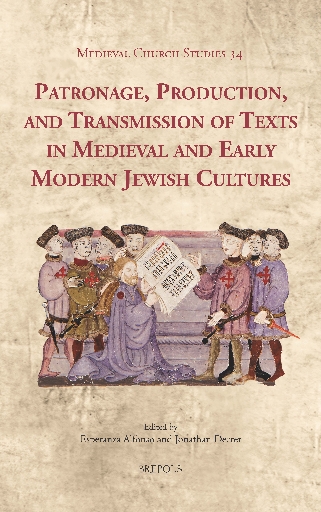
Patronage, Production, and Transmission of Texts in Medieval and Early Modern Jewish Cultures
show More to view fulltext, buy and share links for:Patronage, Production, and Transmission of Texts in Medieval and Early Modern Jewish Cultures show Less to hide fulltext, buy and share links for: Patronage, Production, and Transmission of Texts in Medieval and Early Modern Jewish CulturesMedieval and early modern cultural history has witnessed a recent shift from the study of manuscripts and early printed books as vehicles of texts and images towards their study as cultural objects in their own right. Rather than focusing solely on original authorship, scholars have turned to subjects such as the patronage, production, circulation, and consumption of texts. Codicological features, annotations, glosses, ownership notes, deeds of sale, and other traces have revealed countless insights into the social worlds of texts - their patrons, producers, and readers.
This book contributes to this area of scholarship with respect to Jewish texts and Jewish social contexts by focusing on select cases in the production of Bibles, Haggadot, religious poetry, and translations of and commentaries on scripture in the Eastern and Western Mediterranean between the tenth and sixteenth centuries. Individual essays consider models of patron-client relationships, interconfessional patronage scenarios, manuscript production through ‘multiple hands’, the (incomplete) transition from manuscript production to printed books, and relationships among text, image, and reader as suggested by codicological features.
-
-
-
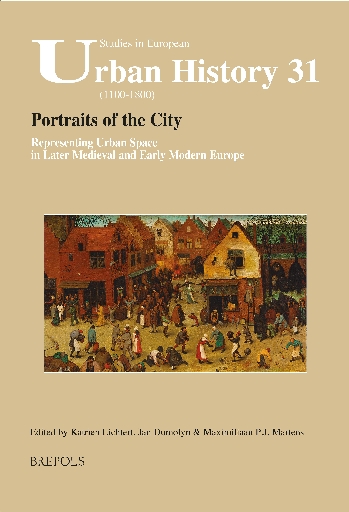
Portraits of the City
show More to view fulltext, buy and share links for:Portraits of the City show Less to hide fulltext, buy and share links for: Portraits of the CityDuring the last decades, representations of medieval and early modern urban space have witnessed an increasing popularity as objects of study within the historical disciplines. Scholars with different backgrounds investigate urban landscapes in various forms and using a wide range of media. In general, such ‘portraits of the city’ cover different types of visual and written documents. The twelve essays gathered in this book all cover specific types of such portraits, ranging from historiographical texts and archival record, over drawings, prints and paintings to maps and real urban architectural settings. Moreover, the interdisciplinary scope results in an ample compilation of various innovative methodologies, currently applied in the fields of study and disciplines addressed in the book. ‘Portraits of the City’ provides a representative overview of the current state of knowledge and is in this way a relevant contribution to the international debate on representations of the city.
-
-
-
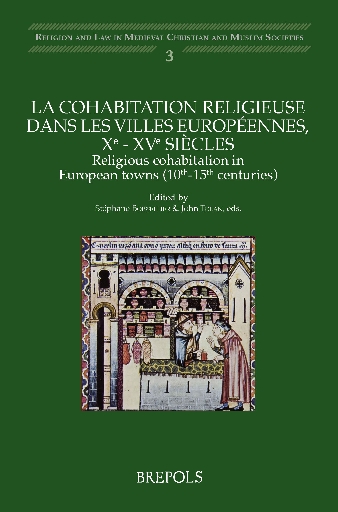
Religious cohabitation in European towns (10th-15th centuries)
show More to view fulltext, buy and share links for:Religious cohabitation in European towns (10th-15th centuries) show Less to hide fulltext, buy and share links for: Religious cohabitation in European towns (10th-15th centuries)Medieval towns, from Portugal to Hungary to Egypt, were places of contact between members of different religious communities, Muslim, Christian and Jewish, who rubbed shoulders in the ports and on the streets, who haggled in the markets, signed contracts, and shared wells, courtyards, dining tables, bath houses, and sometimes beds. These interactions caused legal problems from the point of view of the Jewish, Christian and Muslim judicial scholars of the middle ages, not to mention for the rulers of these towns. These legal attempts to define and solve the problems posed by interreligious relations are the subject of this volume, which brings together the work of seventeen scholars from nine countries (France, Italy, Spain, Hungary, Portugal, Lebanon, Israel, Tunisia, USA), specialists in history, law, archeology and religion.
-
-
-
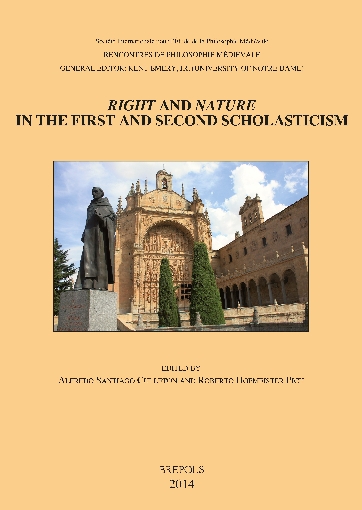
Right and Nature in the First and Second Scholasticism. Derecho y Naturaleza en la primera y segunda escolástica
show More to view fulltext, buy and share links for:Right and Nature in the First and Second Scholasticism. Derecho y Naturaleza en la primera y segunda escolástica show Less to hide fulltext, buy and share links for: Right and Nature in the First and Second Scholasticism. Derecho y Naturaleza en la primera y segunda escolásticaAuthors of the ‘Second Scholasticism’ (as discussed in this volume, at least, mainly Iberian philosophers and theologians of the sixteenth and seventeenth centuries) not only commented on the works and updated the teachings of medieval Scholastic masters, but also introduced many new ideas in all areas of philosophy, namely logic, natural philosophy, metaphysics, moral philosophy, political philosophy and the philosophy of law. In particular, issues arising from the “discovery” of the New World presented new challenges to these thinkers, provoking various reactions among them and causing them to develop new interpretations and theories, especially in practical philosophy and theology. In this volume, scholars from Europe, North America and South America identify and describe some of the main topics and central lines of thought in this still quite unknown chapter in the history of philosophical ideas. The contributors focus on the reception and development of Aristotelian-Thomistic and (to a lesser extent) Scotistic political theory, natural law, positive law and the law of nations in the sixteenth and seventeenth centuries; some authors, moreover, address issues in the development of metaphysics during the same period. For the most part, the studies presented here concern the writings and thought of masters from the Universities of Salamanca, Alcalá, Évora and Coimbra, who responded to new questions and conceived new theories in political philosophy, law and moral philosophy closely related to the issues pertaining to the Spanish and Portuguese colonies in the New World.
-
-
-
The Apocryphal Acts of the Apostles in Latin Christianity
show More to view fulltext, buy and share links for:The Apocryphal Acts of the Apostles in Latin Christianity show Less to hide fulltext, buy and share links for: The Apocryphal Acts of the Apostles in Latin ChristianityThe lives of the apostles after Pentecost are described in the books of the New Testament only in part. Details of their missionary wanderings to the remote corners of the world are found in writings not included in the biblical canon, known as the Apocryphal Acts of the Apostles. In the early Middle Ages these originally Greek writings were translated and rewritten in Latin and circulated under the title Virtutes apostolorum. These texts became immensely popular. They were copied in numerous manuscripts, both as a comprehensive collection with a chapter for each apostle and as individual texts, echoing the needs of monastic and other religious communities that used these texts to celebrate the apostles as saints.
The First International Summer School on Christian Apocryphal Literature (Strasbourg, 2012) concentrated on the transmission of the Apocryphal Acts of the Apostles in the Latin world. This volume also highlights the use of the Bible in the apocryphal Acts, the imagination of the apostles in early Christian art and poetry, and the apocryphal Acts in early medieval print. Other contributions concern the study of Christian apocryphal literature in general and in the context of the Strasbourg Summer School in particular.
-
-
-
The Language of Byzantine Learned Literature
show More to view fulltext, buy and share links for:The Language of Byzantine Learned Literature show Less to hide fulltext, buy and share links for: The Language of Byzantine Learned LiteratureBuilt on a highly traditional educational system, the language of Byzantine literature was for the most part written in an idiom deeply influenced by ancient Greek texts and grammatical handbooks. The resulting overall archaizing impression of Byzantine Greek is largely why the language of learned literature - as compared with the relatively well researched vernacular literature - has seldom been taken seriously as an object of linguistic study. This volume combines the expertise of linguists and scholars of Byzantine literature to challenge the assumption that learned mediaeval Greek is merely the weary continuation of ancient Greek or, worse still, a poor imitation of it, while proposing that it needs to be treated as a literary idiom in its own right.
The contribution that texts of this kind can offer to sub-fields of Greek historical linguistics is explored using specific examples. Sociolinguistic theory provides a particularly useful framework for a more accurate analysis of the relationship between the vernacular and classicizing varieties of Greek literary language. In addition, the impact of the educational system on the production of texts is examined. In another chapter it is shown that a number of far-reaching assumptions, which originated in the 15th century, about accentuation and the middle voice still tend to colour our understanding of Byzantine, as well as ancient, Greek. Other chapters focusing on particles, the dative and the synthetic perfect reveal that Byzantine authors, while of course influenced by the living spoken language, used their classical linguistic heritage in a creative and innovative way.
-
-
-
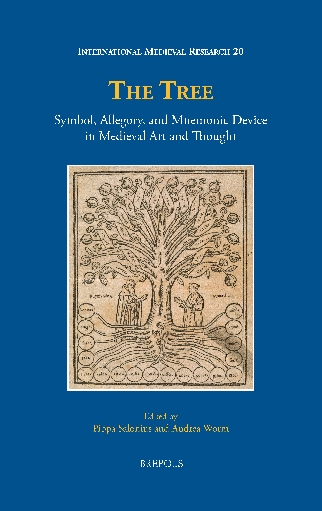
The Tree
show More to view fulltext, buy and share links for:The Tree show Less to hide fulltext, buy and share links for: The TreeWith its vital character - growing, flowering, extending its roots into the ground, and its branches and leaves to the sky - the tree is a polyvalent metaphor, a suggestive symbol, and an allegorical subject. During the Middle Ages, a number of iconographic schemata were based on the image and structure of the tree, including the Tree of Jesse and the Tree of Virtues and Vices. From the late eleventh century onwards such formulae were increasingly used as devices for organizing knowledge and representing theoretical concepts. Despite the abstraction inherent in these schemata, however, the semantic qualities of trees persist in their usage.
The analysis of different manifestations of trees in the Middle Ages is highly instructive for visual, intellectual, and cultural history. Essays in this volume concentrate on the formative period for arboreal imagery in the medieval West, that is, the eleventh to fifteenth centuries. Using a range of methodological strategies and examining material from different media, ranging from illuminated manuscripts to wall painting, stained glass windows, and monumental sculpture, the articles in this volume show how different arboreal structures were conceived, employed, and appropriated by their specific contexts, how they functioned in their original framework, and how they were perceived by their audience.
-
-
-
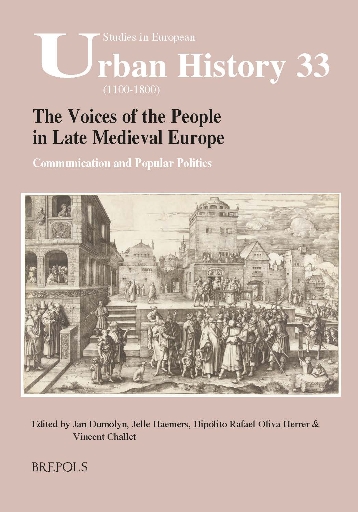
The Voices of the People in Late Medieval Europe
show More to view fulltext, buy and share links for:The Voices of the People in Late Medieval Europe show Less to hide fulltext, buy and share links for: The Voices of the People in Late Medieval EuropeThroughout the medieval period, the popular classes were always reckoned as a potential force in society even though it was usually dangerous for them to articulate divergent social, political and religious opinions. Sources on medieval political and social life seem to show us a world of order, acquiescence and consent. Otherwise, they reveal a picture of bloodshed and violent strife. During times of intense conflict, however, the human tongue was always the most frequently used weapon, much more so than the sword or the dagger. The vox populi, though often difficultly retrievable in the sources, was a ubiquitous one within the realm of later medieval politics. The essays collected in this volume deal with such speech acts of political rebels, with political languages of the ‘popular classes’ in medieval society but also with the subversive twists to speech situations such as preaching, mockery and insults.
Jan Dumolyn is a senior lecturer in medieval history at Ghent University. He publishes on the socio-economic, political and cultural history of the urban world of the medieval Low Countries.
Jelle Haemers lectures medieval history at the University of Leuven. He has published widely on the social history of medieval politics and the urban history of the Low Countries.
Hipólito Rafael Oliva Herrer is professor of Medieval History in the University of Sevilla. He has published both on medieval peasantry and popular political culture, including the making of popular ideologies and forms of popular protest.
Vincent Challet is a senior lecturer at the University of Montpellier-III, and works on the political conscience of communities. He is also the scientific coordinator of the ANR “Thalamus” project which aims to produce a scientific edition of the chronicle and urban statutes of Montpellier in the Middle Ages.
-
-
-
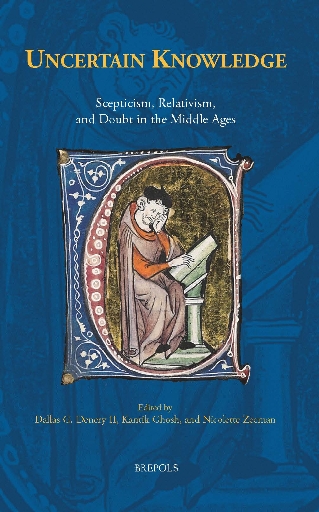
Uncertain Knowledge
show More to view fulltext, buy and share links for:Uncertain Knowledge show Less to hide fulltext, buy and share links for: Uncertain KnowledgeWhat are the forms in which later medieval thinkers articulate epistemological scepticism, relativism, and doubt? Is it possible to voice different forms of uncertainty in different institutional contexts and languages? Bringing together specialists in philosophy, theology, history, and literature, this book undertakes an interdisciplinary investigation of some of the ways in which the problem of knowledge was explored in the Middle Ages. This is a topic of central intellectual importance and has large cultural consequences. The Middle Ages are often still treated by non-medievalists as a time of naive epistemological self-confidence, and we hope that ultimately this revisionist project will have impact beyond medieval studies, illustrating the extent to which this was a period in which many thinkers were intrigued by, and comfortable with, uncertainty.
-
-
-
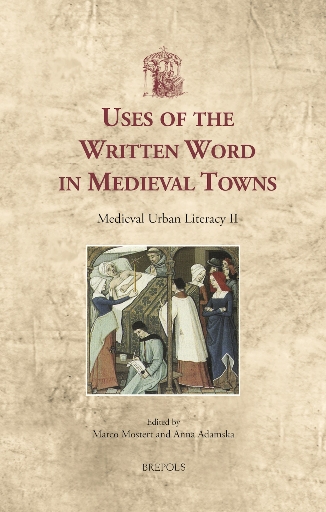
Uses of the Written Word in Medieval Towns
show More to view fulltext, buy and share links for:Uses of the Written Word in Medieval Towns show Less to hide fulltext, buy and share links for: Uses of the Written Word in Medieval TownsIn medieval towns, examples of personal writing appear more prevalent than in non-urban spaces. Certain urban milieus participating in written culture, however, have been the focus of more scholarship than others. Considering the variety among town dwellers, we may assume that literacy skills differed from one social group to another. This raises several questions: Did attitudes towards the written word result from an experience of the urban educational system? On which levels, and in which registers, did different groups of people have access to writing? The need and the usefulness of written texts may not have been the same for communities and for individuals. In this volume we will concentrate on the town dwellers’ personal documents. These documents include practical uses of writing by individuals for their own professional and religious ends, including testaments and correspondence. Besides written records belonging to the domain of ‘pragmatic literacy’, other kinds of texts were also produced in town. Was there any connection between practical literacy, literary (and historical) creativity and book production?
-
-
-
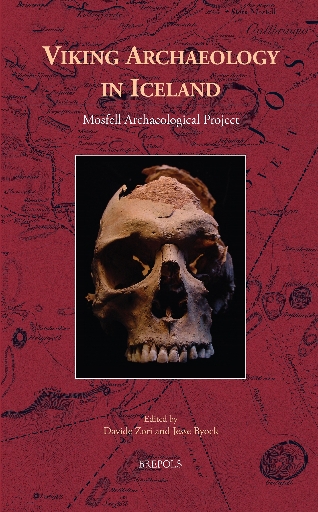
Viking Archaeology in Iceland
show More to view fulltext, buy and share links for:Viking Archaeology in Iceland show Less to hide fulltext, buy and share links for: Viking Archaeology in IcelandThe Viking North Atlantic differs significantly from the popular image of violent raids and destruction characterizing the Viking Age in Northern Europe. In Iceland, Scandinavian seafarers discovered and settled a large uninhabited island. In order to survive and succeed, they adapted lifestyles and social strategies to a new environment. The result was a new society: the Icelandic Free State.
This volume examines the Viking Age in Iceland through the discoveries and excavations of the Mosfell Archaeological Project (MAP) in Iceland’s Mosfell Valley. Directed by Professor Jesse Byock with Field Director Davide Zori, MAP brings together scholars and researchers from Iceland, Britain, Canada, Denmark, Norway, Sweden, Germany, and the United States. The Project incorporates the disciplines of archaeology, history, saga studies, osteology, zoology, paleobotany, genetics, isotope studies, place-names studies, environmental science, and historical architecture. The decade-long research of MAP has led to the discovery of an exceptionally well-preserved Viking chieftain’s farmstead, including a longhouse, a pagan cremation site, a conversion-era stave church, and a Christian graveyard.
The research results presented here tell the story of how the Mosfell Valley developed from a ninth-century settlement of Norse seafarers into a powerful Icelandic chieftaincy of the Viking Age.
-
-
-
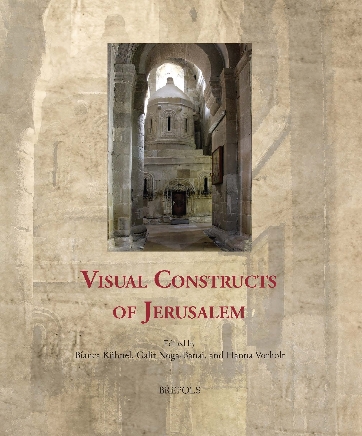
Visual Constructs of Jerusalem
show More to view fulltext, buy and share links for:Visual Constructs of Jerusalem show Less to hide fulltext, buy and share links for: Visual Constructs of JerusalemThe special position of Jerusalem among the cities of the world stems from a long history shared by the three Abrahamic religions, and the belief that the city reflected a heavenly counterpart. Because of this unique combination, Jerusalem is generally seen as extending along a vertical axis stretching between past, present, and future. However, through its many ‘earthly’ representations, Jerusalem has an equally important horizontal dimension: it is represented elsewhere in all media, from two-dimensional maps to monumental renderings of the architecture and topography of the city’s loca sancta.
In documenting the increasing emphasis on studying the earthly proliferations of the city, the current book witnesses a shift in theoretical and methodological insights since the publication of The Real and Ideal Jerusalem in Jewish, Christian, and Islamic Art in 1998. Its main focus is on European translations of Jerusalem in images, objects, places, and spaces that evoke the city through some physical similarity or by denomination and cult - all visual and material aids to commemoration and worship from afar. The book discusses both well-known and long-neglected examples, the forms of cult they generate and the virtual pilgrimages they serve, and calls attention to their written and visual equivalents and companions. In so doing, it opens a whole new vista onto the summa of representations of Jerusalem.
-
-
-
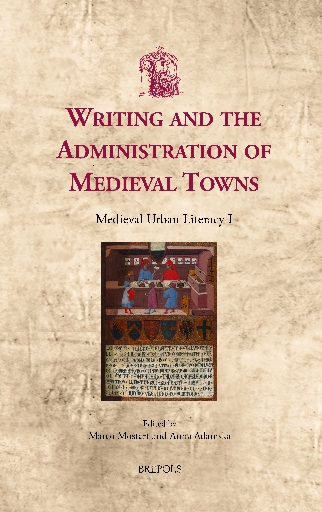
Writing and the Administration of Medieval Towns
show More to view fulltext, buy and share links for:Writing and the Administration of Medieval Towns show Less to hide fulltext, buy and share links for: Writing and the Administration of Medieval TownsIn medieval towns, written statements of law and administration appear more prevalent than in non-urban spaces. Certain urban milieus participating in written culture, however, have been the focus of more scholarship than others. Considering the variety among town dwellers, we may assume that literacy skills differed from one social group to another. This raises several questions: Did attitudes towards the written word result from an experience of the urban educational system? On which levels, and in which registers, did different groups of people have access to writing? The need and the usefulness of written texts may not have been the same for communities and for individuals. In this volume we concentrate on the institutional written records that were most indispensable to communal order, including collections of written law, charters of liberties, and municipal registers.
-
-
-
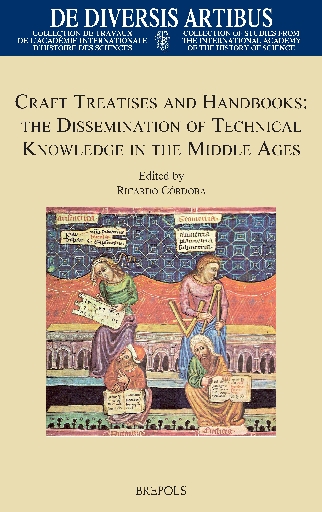
Craft Treatises and Handbooks
show More to view fulltext, buy and share links for:Craft Treatises and Handbooks show Less to hide fulltext, buy and share links for: Craft Treatises and HandbooksThis book is devoted to the study of medieval manuscripts of a technical nature that provide information about manual activities such as textile industry, metallurgy, painting and illumination. The high level of specialization of these crafts involved the need to rely on recipe books, handbooks and treatises. These texts illustrate the various aspects of transmission and dissemination of technical knowledge as well as the written culture of medieval craftsmen.
-
-
-
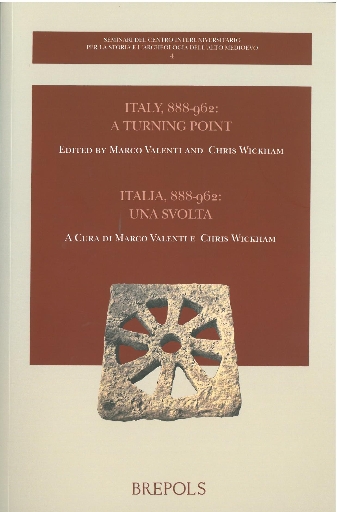
Italy, 888-962: a turning point. Italia, 888-962: una svolta
show More to view fulltext, buy and share links for:Italy, 888-962: a turning point. Italia, 888-962: una svolta show Less to hide fulltext, buy and share links for: Italy, 888-962: a turning point. Italia, 888-962: una svoltaThe years 888-962 are a period in which the Kingdom of Italy was not ruled by kings from across the Alps, the only such period from the end of the eighth century to the end of the eleventh. They were for a long time accepted as a period of major political breakdown and failure, and, in north-central (not southern) Italy, the start of the long run in to the early city communes and Italy’s future history as a radically disunited peninsula. In the light of not only recent historical reanalyses but also the emergence of a large quantity of archaeological data, this image can be tested, and in this book is, by both historians and archaeologists. A far more subtle and nuanced picture emerges from the interdisciplinary work in this volume. This book will be an essential starting-point for all future work on Italy in this period.
-
-
-
La compilación del saber en la Edad Media
show More to view fulltext, buy and share links for:La compilación del saber en la Edad Media show Less to hide fulltext, buy and share links for: La compilación del saber en la Edad MediaLa práctica de la compilación de textos de otros autores, existente ya desde la Antigüedad, se desarrolló durante la Edad Media con diversas técnicas de organización del material, que experimentaron una difusión notable y llegaron a dar vida a diversos géneros literarios como la enciclopedia, el florilegio y el compendio. Las producciones de este tipo pertenecen, desde un punto de vista literario, a la llamada literatura de préstamo o de plagio y por ello han sido obras menospreciadas, aunque este tipo de ’literatura en segundo grado’ está recibiendo mayor atención en la actualidad.
En este volumen se analiza la práctica de la compilación en sus diversas realizaciones y se determina, por una parte, el alcance de su contribución al saber medieval y, por otra, su papel como instrumento del trabajo intelectual y como mediadora en la transmisión de la cultura.
El libro presenta las Actas del Coloquio anual de la FIDEM 2012, que se celebró del 20 al 22 de junio de 2012 en la Universidad Complutense de Madrid organizado por el Departamento de Filología Latina. Los autores, especialistas de más de treinta universidades y centros de investigación, ofrecen un completo panorama sobre las investigaciones que se están llevando a cabo en torno a las compilaciones medievales.
-