


Brepols Online Books Medieval Miscellanea Collection 2014 - bob2014mime

Collection Contents
21 - 40 of 47 results
-
-
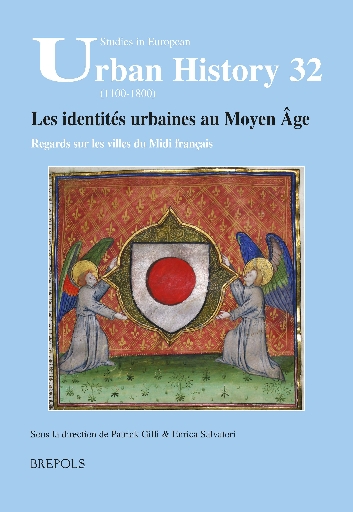
Les identités urbaines au Moyen Âge. Regards sur les villes du Midi français
show More to view fulltext, buy and share links for:Les identités urbaines au Moyen Âge. Regards sur les villes du Midi français show Less to hide fulltext, buy and share links for: Les identités urbaines au Moyen Âge. Regards sur les villes du Midi françaisLa singularité urbaine des villes du Midi français a souvent été négligée. Coincées entre le modèle communal italien triomphant et le puissant mouvement urbain des villes flamandes ou rhénanes, elles apparaissent comme faiblement typées ; leur intégration dans l’espace capétien aurait également limité leur capacité d’autogouvernement et de discussions avec les autorités centrales. Pourtant, le dynamisme de ces cités méridionales est avéré, aussi bien dans leur élan démographique que dans la force des échanges économiques. Que dire également de leur place dans le développement des mouvements religieux contestaires et de leur rayonnement intellectuel facilité par la présence de grandes universités au recrutement international ! À la lumière des nombreux et récents travaux sur le sujet, le colloque offre la première approche comparative sur ces villes méridionales, en insistant sur les traits identitaires qui définissent leurs contours originaux, en particulier dans l’organisation politique.
Patrick Gilli est professeur d’histoire médiévale à l’université Montpellier 3, directeur du CEMM (centre d’études médiévales de Montpellier, EA 4583).
Enrica Salvatori est professeur d’histoire médiévale à l’université de Pise.
-
-
-
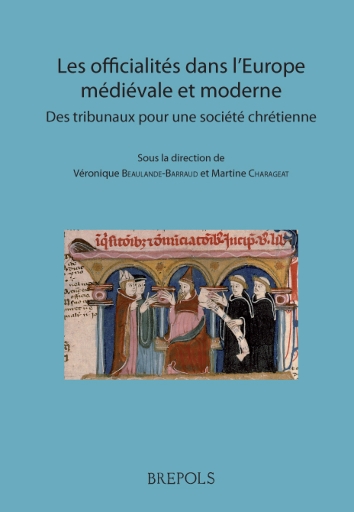
Les officialités dans l'Europe médiévale et moderne
show More to view fulltext, buy and share links for:Les officialités dans l'Europe médiévale et moderne show Less to hide fulltext, buy and share links for: Les officialités dans l'Europe médiévale et moderneLes justices ecclésiastiques suscitent un intérêt historiographique renouvelé ces dernières années, tant comme juridictions temporelles spécifiques que dans les manifestations d’une justice compétente en matière «spirituelle». C’est spécifiquement sur les «cours d’Église», les officialités, que s’est tenu ce colloque réunissant historiens et juristes, médiévistes et modernistes, pour un bilan en forme d’invitation à poursuivre les investigations.
L’histoire des officialités a ainsi été éclairée dans sa diversité et dans son évolution, dans une perspective comparatiste. Leur compétence et la manière dont elles exercent leur juridiction, gracieuse, contentieuse, criminelle, a été mise en valeur, attestant de leur rôle quotidien auprès des populations. Enfin, l’étude de leur activité permet une approche de l’histoire des femmes et du couple qui, à son tour, met en valeur la richesse des sources des officialités, organes de “disciplinement des mœurs” encore en partie méconnus.
-
-
-
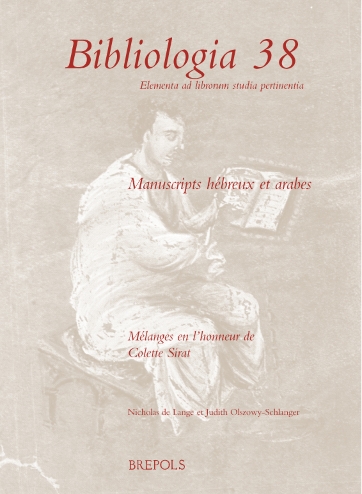
Manuscrits hébreux et arabes
show More to view fulltext, buy and share links for:Manuscrits hébreux et arabes show Less to hide fulltext, buy and share links for: Manuscrits hébreux et arabesL'étude des manuscrits hébreux est à juste titre considérée comme le fondement de la recherche en histoire intellectuelle des juifs. C'est sous la plume de Colette Sirat, dont les travaux ont profondement marqué aussi bien les études sur la pensée juive et que sur l'histoire de l'écriture, que la paléographie hébraïque a acquis une méthodologie rigoureuse, un ancrage institutionnel et une série d'ouvrages de référence.
Manuscrits hébreux et arabes est un recueil de mélanges dédiés à Colette Sirat par ses collègues, amis et disciples. Les articles portant sur des manuscrits provenant de lieux et périodes différents montrent l'envergure des travaux en paléographie et codicologie hébraïque aujourd'hui.
-
-
-
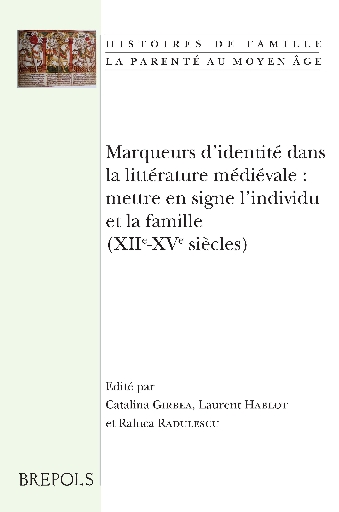
Marqueurs d’identité dans la littérature médiévale : mettre en signe l’individu et la famille (XIIe-XVe siècles)
show More to view fulltext, buy and share links for:Marqueurs d’identité dans la littérature médiévale : mettre en signe l’individu et la famille (XIIe-XVe siècles) show Less to hide fulltext, buy and share links for: Marqueurs d’identité dans la littérature médiévale : mettre en signe l’individu et la famille (XIIe-XVe siècles)Le XIIe siècle marque une fracture épistémologique dont les symptômes les plus visibles sont l’apparition des questionnements identitaires, qu’il s’agisse d’une meilleure définition de l’individu, des familles ou des groupes. Ils se laissent entrevoir avec une force sans précédent sur le fond d’une double mutation, sociale et culturelle. L’éclosion de la littérature vernaculaire, l’effondrement progressif durant tout le XIIe siècle de la suprématie du latin écrit, provoque un bouleversement épistémique. Les marqueurs de l’identité comme les signes héraldiques commencent à préoccuper l’homme médiéval. Les contributions de ce volume se proposent de suivre le développement et la rationalisation de ces marqueurs qui définissent les rapports entre les individus et leurs groupes jusqu’à la fin du Moyen Âge. Cette enquête est menée à travers la fiction vernaculaire, le lieu par excellence où les problématiques identitaires trouvent une voie d’expression à la fois transparente et complexe.
-
-
-
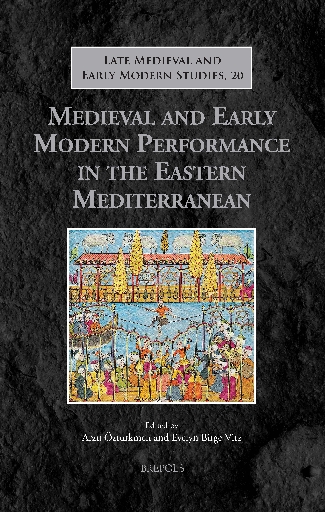
Medieval and Early Modern Performance in the Eastern Mediterranean
show More to view fulltext, buy and share links for:Medieval and Early Modern Performance in the Eastern Mediterranean show Less to hide fulltext, buy and share links for: Medieval and Early Modern Performance in the Eastern MediterraneanThis book brings to life an impressively broad array of performances in the Eastern Mediterranean. It covers many traditional types of performance, including singers, dancers, storytellers, street performers, clowns, preachers, shadow-puppeteers, fireworks displays, and semi-theatrical performances in folk and other celebrations. It explores performance of the secular as well as of the sacred in its many forms, including Sunni, Shiite, Sufi, and Alevi Muslims; Sephardic Jews and those in the Holy Land; and Armenian, Greek, and European Catholic Christians. The book focuses on the Medieval and Early Modern periods, including the Early Ottoman. Some papers reach backward into Late Antiquity, while others demonstrate continuity with the modern Eastern Mediterranean world.
The articles discuss evidence for performers and performance coming from archival sources, architectural and manuscript images, musical notation, historical and ethnographic accounts, literary works, and oral tradition. Across the broad range of issues, chronology, and geography, certain fundamental topics are central: concepts of drama and theatricality; varied definitions of ‘performance’ and related terms; the sacred and the profane, and their frequent intersection; and complex relations between oral and written traditions.
-
-
-
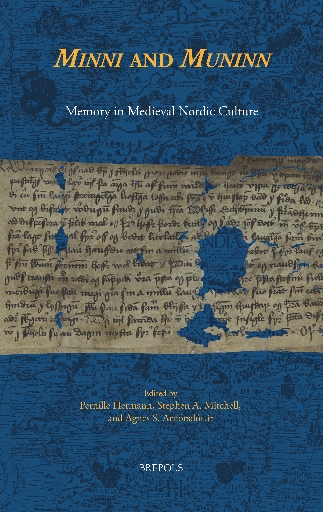
Minni and Muninn
show More to view fulltext, buy and share links for:Minni and Muninn show Less to hide fulltext, buy and share links for: Minni and MuninnIn recent years, various branches of memory studies have provided useful tools of analysis that offer new ways of understanding medieval cultures. The articles in this collection draw on these new theoretical tools for studying - and conceptualizing - memory, in order to reassess the function of memory in medieval Nordic culture. Despite its interdisciplinary and comparative basis, the volume remains very much an empirical study of memory and memory-dependent issues as these took form in the Nordic world.
In addition, the articles deal with a variety of theoretical concepts and areas of investigation which are of relevance when dealing with memory studies in general, such as transmission and media, preservation and storage, forgetting and erasure, and authenticity and falsity. The articles cover a wide range of medieval texts, such as saga, myth, poetry, law, historiography, learned literature, and other forms of verbal expression, such as runic inscriptions.
-
-
-
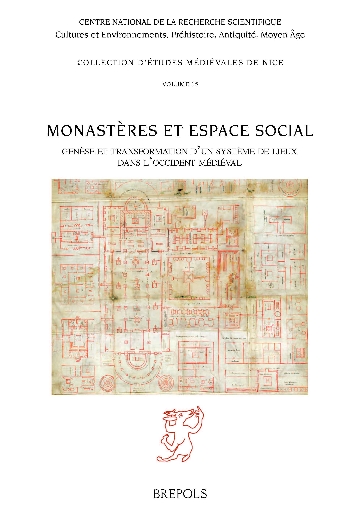
Monastères et espace social
show More to view fulltext, buy and share links for:Monastères et espace social show Less to hide fulltext, buy and share links for: Monastères et espace socialCet ouvrage présente les résultats d’une enquête, menée par des archéologues et des historiens, sur l’organisation spatiale du monachisme au Moyen Âge. Il propose tout à la fois des synthèses inédites sur plusieurs complexes ou cités monastiques et une réflexion sur les processus d’articulation et de hiérarchisation des lieux de vie, de culte et de production constitutifs des monastères occidentaux. Il s’intéresse entre autres aux différentes formes de circulation - déplacements pragmatiques, déambulations liturgiques, parcours mentaux - qui ont favorisé la structuration et la monumentalisation de ces ensembles religieux.
La mise en place et le développement des monastères sont ici appréhendés au travers des usages de l’espace, par l’étude des monuments, des textes et des images qui en portent la trace. Les auteurs de ce volume mettent ainsi en évidence la genèse et la transformation d’un système de lieux singulier qui fut, dans l’Occident médiéval, l’un des principaux laboratoires des représentations et des pratiques de l’espace social.
-
-
-
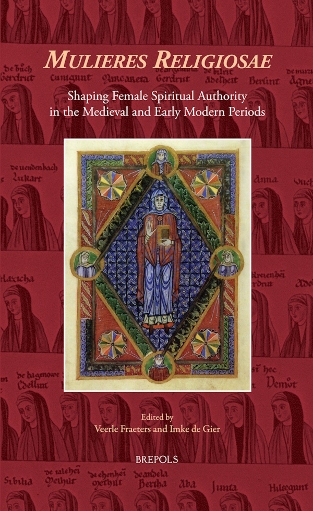
Mulieres Religiosae
show More to view fulltext, buy and share links for:Mulieres Religiosae show Less to hide fulltext, buy and share links for: Mulieres ReligiosaeTraditionally women were denied access to positions of official religious authority within Christianity and were therefore compelled to explore other avenues to acquire and express spiritual leadership. Through twelve case studies covering different regions in Europe, this volume considers the nuances of what constituted female spiritual authority, how it was acquired and manifested by religious women, and how it evolved from the high Middle Ages to the Early Modern period. Whilst current scholarship often emphasizes binaries within the fields of gender and religious authority, this volume examines the manifestation of female religious authority in its multiple facets. It looks both at individuals displaying exceptional forms of agency such as prophesying, as well as more commonplace, communal activities such as letter-writing and music-making. By taking into account the pervasiveness of spirituality in society as a whole in the Pre-Modern era, this collection of essays renegotiates the relationship between the spiritual and the social domain. Through the chronological organization of the contributions insight is gained into the changes in the means and forms female religious authority could take between 1150 and 1750. The narrative is clearly impacted by late medieval enclosure policies and by changing modes of spirituality. Whereas women in the earlier period tended to represent themselves as a door through which God could advance towards mankind, later on they functioned more frequently as a portal through which others could advance towards God.
-
-
-

Nicole Oresme philosophe
show More to view fulltext, buy and share links for:Nicole Oresme philosophe show Less to hide fulltext, buy and share links for: Nicole Oresme philosopheNicole Oresme est sans doute un des philosophes médiévaux les mieux connus. L’intérêt qu’il a suscité depuis longtemps dépasse le cercle étroit des spécialistes du fait de l’exceptionnelle variété de son œuvre, aujourd’hui presque complètement éditée. Cet intérêt a largement contribué à modifier l’image du Moyen Âge conçu traditionnellement comme une période obscure, mais a aussi, malheureusement, conduit à la production d’un nombre considérable de contre-sens, voire de fables.
C’est à l’occasion de la parution de son dernier texte important encore inédit, ses Questions sur la Physique, qu’à l’initiative de Christophe Grellard, nous avons organisé à la Sorbonne les 16 et 17 novembre 2012 deux journées d’études sur son activité philosophique, qui ont pu bénéficier des dernières avancées de la critique.
Ce livre est issu des communications produites à cette occasion, mais, à la lumière des discussions qui ont suivi elles ont été modifiées, puis révisées pour assurer la cohérence de l’ensemble. L’objectif était de réaliser un ouvrage qui ferait le point sur nos connaissances de l’œuvre d’Oresme en philosophie de la nature et en philosophie de la connaissance, et sur les débats dans lesquels elle s’inscrivait.
-
-
-

Normes et hagiographie dans l'Occident latin (VIe-XVIe siècle)
show More to view fulltext, buy and share links for:Normes et hagiographie dans l'Occident latin (VIe-XVIe siècle) show Less to hide fulltext, buy and share links for: Normes et hagiographie dans l'Occident latin (VIe-XVIe siècle)Le Colloque Normes et Hagiographie, tenu à l’Université Lyon-III en octobre 2010, porte bien son nom: il ne s’est pas donné pour objet d’étude l’hagiographie latine comme source d’exemples de comportement, mais bien les relations complexes que les sources hagiographiques entretiennent avec les normes qui régulent les sociétés médiévales occidentales. Puisque, de fait, les textes hagiographiques forment un corpus commun de références et de modèles pour les sociétés christianisées, le projet des organisateurs a été de « partir des normes médiévales » pour évaluer dans quelle mesure l’hagiographie avait contribué à les élaborer, à les faire évoluer voire à les contredire. C’est une question d’histoire des textes, bien loin d’une approche morale des attitudes morales et religieuses. Marie-Céline Isaïa, maître de conférences en histoire du Moyen Âge à l’Université Jean-Moulin Lyon-III, est membre du CIHAM (UMR 5648). Depuis la parution de Remi de Reims. Histoire d’un saint, mémoire d’une Église (Paris, 2010), elle poursuit ses travaux sur les relations entre hagiographie et écriture de l’histoire, du Ve au XIe siècle. Thomas Granier est maître de conférences en histoire du Moyen Âge à l'Université Montpellier-III, membre du CEMM (EA 4583) et membre de l’École Française de Rome. Il a publié plusieurs articles sur l’'histoire de l’Italie du sud du haut Moyen Âge.
-
-
-

Partners in Spirit
show More to view fulltext, buy and share links for:Partners in Spirit show Less to hide fulltext, buy and share links for: Partners in SpiritPartners in Spirit focuses on relations between chaste men and women within religious life in Germany (c. 1100-1500), concentrating on the complex set of negotiations that governed contact between a male priest and his female charge. Although religious women were undeniably reliant on priests for pastoral care (the cura monialium) throughout the medieval period, it does not follow that men saw such care as burdensome or that women were spiritually subordinate in their relations with priests. Within the context of the cura, ordained men and professed women met regularly, often developing intimate friendships and providing each other with crucial spiritual support, despite prevailing fears that contact between the sexes must result in sexual temptation and sin.
Examining the various interactions of priests with religious women, Partners in Spirit traces the ways in which both viewed the cura, highlighting the fluidity of gender and authority within the medieval religious life. In doing so, the volume suggests new ways of considering the intersection of gender, religion, and spiritual power within the medieval world.
-
-
-
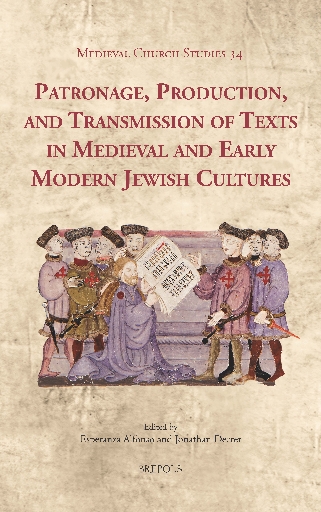
Patronage, Production, and Transmission of Texts in Medieval and Early Modern Jewish Cultures
show More to view fulltext, buy and share links for:Patronage, Production, and Transmission of Texts in Medieval and Early Modern Jewish Cultures show Less to hide fulltext, buy and share links for: Patronage, Production, and Transmission of Texts in Medieval and Early Modern Jewish CulturesMedieval and early modern cultural history has witnessed a recent shift from the study of manuscripts and early printed books as vehicles of texts and images towards their study as cultural objects in their own right. Rather than focusing solely on original authorship, scholars have turned to subjects such as the patronage, production, circulation, and consumption of texts. Codicological features, annotations, glosses, ownership notes, deeds of sale, and other traces have revealed countless insights into the social worlds of texts - their patrons, producers, and readers.
This book contributes to this area of scholarship with respect to Jewish texts and Jewish social contexts by focusing on select cases in the production of Bibles, Haggadot, religious poetry, and translations of and commentaries on scripture in the Eastern and Western Mediterranean between the tenth and sixteenth centuries. Individual essays consider models of patron-client relationships, interconfessional patronage scenarios, manuscript production through ‘multiple hands’, the (incomplete) transition from manuscript production to printed books, and relationships among text, image, and reader as suggested by codicological features.
-
-
-
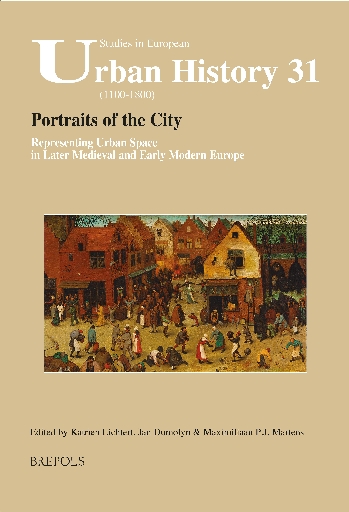
Portraits of the City
show More to view fulltext, buy and share links for:Portraits of the City show Less to hide fulltext, buy and share links for: Portraits of the CityDuring the last decades, representations of medieval and early modern urban space have witnessed an increasing popularity as objects of study within the historical disciplines. Scholars with different backgrounds investigate urban landscapes in various forms and using a wide range of media. In general, such ‘portraits of the city’ cover different types of visual and written documents. The twelve essays gathered in this book all cover specific types of such portraits, ranging from historiographical texts and archival record, over drawings, prints and paintings to maps and real urban architectural settings. Moreover, the interdisciplinary scope results in an ample compilation of various innovative methodologies, currently applied in the fields of study and disciplines addressed in the book. ‘Portraits of the City’ provides a representative overview of the current state of knowledge and is in this way a relevant contribution to the international debate on representations of the city.
-
-
-
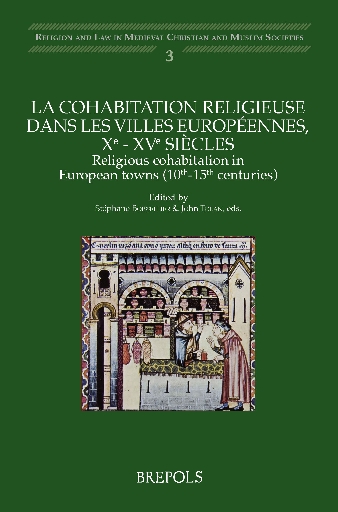
Religious cohabitation in European towns (10th-15th centuries)
show More to view fulltext, buy and share links for:Religious cohabitation in European towns (10th-15th centuries) show Less to hide fulltext, buy and share links for: Religious cohabitation in European towns (10th-15th centuries)Medieval towns, from Portugal to Hungary to Egypt, were places of contact between members of different religious communities, Muslim, Christian and Jewish, who rubbed shoulders in the ports and on the streets, who haggled in the markets, signed contracts, and shared wells, courtyards, dining tables, bath houses, and sometimes beds. These interactions caused legal problems from the point of view of the Jewish, Christian and Muslim judicial scholars of the middle ages, not to mention for the rulers of these towns. These legal attempts to define and solve the problems posed by interreligious relations are the subject of this volume, which brings together the work of seventeen scholars from nine countries (France, Italy, Spain, Hungary, Portugal, Lebanon, Israel, Tunisia, USA), specialists in history, law, archeology and religion.
-
-
-
Right and Nature in the First and Second Scholasticism. Derecho y Naturaleza en la primera y segunda escolástica
show More to view fulltext, buy and share links for:Right and Nature in the First and Second Scholasticism. Derecho y Naturaleza en la primera y segunda escolástica show Less to hide fulltext, buy and share links for: Right and Nature in the First and Second Scholasticism. Derecho y Naturaleza en la primera y segunda escolásticaAuthors of the ‘Second Scholasticism’ (as discussed in this volume, at least, mainly Iberian philosophers and theologians of the sixteenth and seventeenth centuries) not only commented on the works and updated the teachings of medieval Scholastic masters, but also introduced many new ideas in all areas of philosophy, namely logic, natural philosophy, metaphysics, moral philosophy, political philosophy and the philosophy of law. In particular, issues arising from the “discovery” of the New World presented new challenges to these thinkers, provoking various reactions among them and causing them to develop new interpretations and theories, especially in practical philosophy and theology. In this volume, scholars from Europe, North America and South America identify and describe some of the main topics and central lines of thought in this still quite unknown chapter in the history of philosophical ideas. The contributors focus on the reception and development of Aristotelian-Thomistic and (to a lesser extent) Scotistic political theory, natural law, positive law and the law of nations in the sixteenth and seventeenth centuries; some authors, moreover, address issues in the development of metaphysics during the same period. For the most part, the studies presented here concern the writings and thought of masters from the Universities of Salamanca, Alcalá, Évora and Coimbra, who responded to new questions and conceived new theories in political philosophy, law and moral philosophy closely related to the issues pertaining to the Spanish and Portuguese colonies in the New World.
-
-
-
The Apocryphal Acts of the Apostles in Latin Christianity
show More to view fulltext, buy and share links for:The Apocryphal Acts of the Apostles in Latin Christianity show Less to hide fulltext, buy and share links for: The Apocryphal Acts of the Apostles in Latin ChristianityThe lives of the apostles after Pentecost are described in the books of the New Testament only in part. Details of their missionary wanderings to the remote corners of the world are found in writings not included in the biblical canon, known as the Apocryphal Acts of the Apostles. In the early Middle Ages these originally Greek writings were translated and rewritten in Latin and circulated under the title Virtutes apostolorum. These texts became immensely popular. They were copied in numerous manuscripts, both as a comprehensive collection with a chapter for each apostle and as individual texts, echoing the needs of monastic and other religious communities that used these texts to celebrate the apostles as saints.
The First International Summer School on Christian Apocryphal Literature (Strasbourg, 2012) concentrated on the transmission of the Apocryphal Acts of the Apostles in the Latin world. This volume also highlights the use of the Bible in the apocryphal Acts, the imagination of the apostles in early Christian art and poetry, and the apocryphal Acts in early medieval print. Other contributions concern the study of Christian apocryphal literature in general and in the context of the Strasbourg Summer School in particular.
-
-
-
The Language of Byzantine Learned Literature
show More to view fulltext, buy and share links for:The Language of Byzantine Learned Literature show Less to hide fulltext, buy and share links for: The Language of Byzantine Learned LiteratureBuilt on a highly traditional educational system, the language of Byzantine literature was for the most part written in an idiom deeply influenced by ancient Greek texts and grammatical handbooks. The resulting overall archaizing impression of Byzantine Greek is largely why the language of learned literature - as compared with the relatively well researched vernacular literature - has seldom been taken seriously as an object of linguistic study. This volume combines the expertise of linguists and scholars of Byzantine literature to challenge the assumption that learned mediaeval Greek is merely the weary continuation of ancient Greek or, worse still, a poor imitation of it, while proposing that it needs to be treated as a literary idiom in its own right.
The contribution that texts of this kind can offer to sub-fields of Greek historical linguistics is explored using specific examples. Sociolinguistic theory provides a particularly useful framework for a more accurate analysis of the relationship between the vernacular and classicizing varieties of Greek literary language. In addition, the impact of the educational system on the production of texts is examined. In another chapter it is shown that a number of far-reaching assumptions, which originated in the 15th century, about accentuation and the middle voice still tend to colour our understanding of Byzantine, as well as ancient, Greek. Other chapters focusing on particles, the dative and the synthetic perfect reveal that Byzantine authors, while of course influenced by the living spoken language, used their classical linguistic heritage in a creative and innovative way.
-
-
-
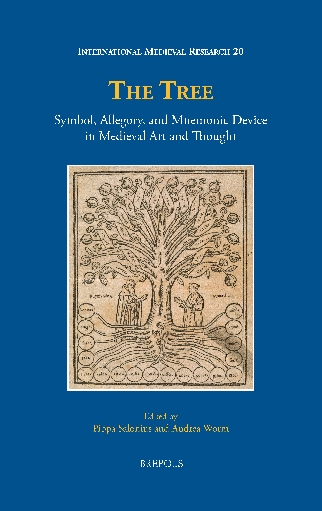
The Tree
show More to view fulltext, buy and share links for:The Tree show Less to hide fulltext, buy and share links for: The TreeWith its vital character - growing, flowering, extending its roots into the ground, and its branches and leaves to the sky - the tree is a polyvalent metaphor, a suggestive symbol, and an allegorical subject. During the Middle Ages, a number of iconographic schemata were based on the image and structure of the tree, including the Tree of Jesse and the Tree of Virtues and Vices. From the late eleventh century onwards such formulae were increasingly used as devices for organizing knowledge and representing theoretical concepts. Despite the abstraction inherent in these schemata, however, the semantic qualities of trees persist in their usage.
The analysis of different manifestations of trees in the Middle Ages is highly instructive for visual, intellectual, and cultural history. Essays in this volume concentrate on the formative period for arboreal imagery in the medieval West, that is, the eleventh to fifteenth centuries. Using a range of methodological strategies and examining material from different media, ranging from illuminated manuscripts to wall painting, stained glass windows, and monumental sculpture, the articles in this volume show how different arboreal structures were conceived, employed, and appropriated by their specific contexts, how they functioned in their original framework, and how they were perceived by their audience.
-
-
-
The Voices of the People in Late Medieval Europe
show More to view fulltext, buy and share links for:The Voices of the People in Late Medieval Europe show Less to hide fulltext, buy and share links for: The Voices of the People in Late Medieval EuropeThroughout the medieval period, the popular classes were always reckoned as a potential force in society even though it was usually dangerous for them to articulate divergent social, political and religious opinions. Sources on medieval political and social life seem to show us a world of order, acquiescence and consent. Otherwise, they reveal a picture of bloodshed and violent strife. During times of intense conflict, however, the human tongue was always the most frequently used weapon, much more so than the sword or the dagger. The vox populi, though often difficultly retrievable in the sources, was a ubiquitous one within the realm of later medieval politics. The essays collected in this volume deal with such speech acts of political rebels, with political languages of the ‘popular classes’ in medieval society but also with the subversive twists to speech situations such as preaching, mockery and insults.
Jan Dumolyn is a senior lecturer in medieval history at Ghent University. He publishes on the socio-economic, political and cultural history of the urban world of the medieval Low Countries.
Jelle Haemers lectures medieval history at the University of Leuven. He has published widely on the social history of medieval politics and the urban history of the Low Countries.
Hipólito Rafael Oliva Herrer is professor of Medieval History in the University of Sevilla. He has published both on medieval peasantry and popular political culture, including the making of popular ideologies and forms of popular protest.
Vincent Challet is a senior lecturer at the University of Montpellier-III, and works on the political conscience of communities. He is also the scientific coordinator of the ANR “Thalamus” project which aims to produce a scientific edition of the chronicle and urban statutes of Montpellier in the Middle Ages.
-
-
-
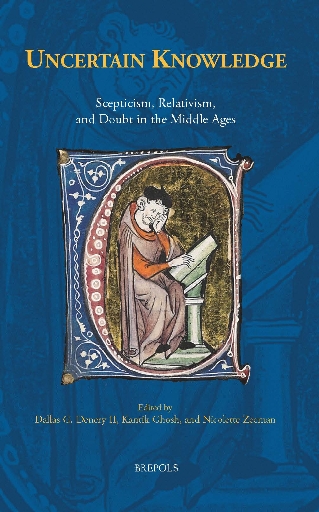
Uncertain Knowledge
show More to view fulltext, buy and share links for:Uncertain Knowledge show Less to hide fulltext, buy and share links for: Uncertain KnowledgeWhat are the forms in which later medieval thinkers articulate epistemological scepticism, relativism, and doubt? Is it possible to voice different forms of uncertainty in different institutional contexts and languages? Bringing together specialists in philosophy, theology, history, and literature, this book undertakes an interdisciplinary investigation of some of the ways in which the problem of knowledge was explored in the Middle Ages. This is a topic of central intellectual importance and has large cultural consequences. The Middle Ages are often still treated by non-medievalists as a time of naive epistemological self-confidence, and we hope that ultimately this revisionist project will have impact beyond medieval studies, illustrating the extent to which this was a period in which many thinkers were intrigued by, and comfortable with, uncertainty.
-