


Brepols Online Books Medieval Miscellanea Collection 2014 - bob2014mime

Collection Contents
41 - 47 of 47 results
-
-
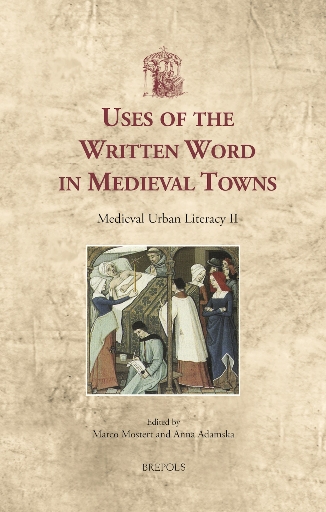
Uses of the Written Word in Medieval Towns
show More to view fulltext, buy and share links for:Uses of the Written Word in Medieval Towns show Less to hide fulltext, buy and share links for: Uses of the Written Word in Medieval TownsIn medieval towns, examples of personal writing appear more prevalent than in non-urban spaces. Certain urban milieus participating in written culture, however, have been the focus of more scholarship than others. Considering the variety among town dwellers, we may assume that literacy skills differed from one social group to another. This raises several questions: Did attitudes towards the written word result from an experience of the urban educational system? On which levels, and in which registers, did different groups of people have access to writing? The need and the usefulness of written texts may not have been the same for communities and for individuals. In this volume we will concentrate on the town dwellers’ personal documents. These documents include practical uses of writing by individuals for their own professional and religious ends, including testaments and correspondence. Besides written records belonging to the domain of ‘pragmatic literacy’, other kinds of texts were also produced in town. Was there any connection between practical literacy, literary (and historical) creativity and book production?
-
-
-
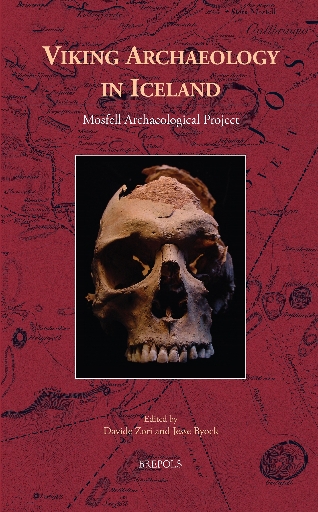
Viking Archaeology in Iceland
show More to view fulltext, buy and share links for:Viking Archaeology in Iceland show Less to hide fulltext, buy and share links for: Viking Archaeology in IcelandThe Viking North Atlantic differs significantly from the popular image of violent raids and destruction characterizing the Viking Age in Northern Europe. In Iceland, Scandinavian seafarers discovered and settled a large uninhabited island. In order to survive and succeed, they adapted lifestyles and social strategies to a new environment. The result was a new society: the Icelandic Free State.
This volume examines the Viking Age in Iceland through the discoveries and excavations of the Mosfell Archaeological Project (MAP) in Iceland’s Mosfell Valley. Directed by Professor Jesse Byock with Field Director Davide Zori, MAP brings together scholars and researchers from Iceland, Britain, Canada, Denmark, Norway, Sweden, Germany, and the United States. The Project incorporates the disciplines of archaeology, history, saga studies, osteology, zoology, paleobotany, genetics, isotope studies, place-names studies, environmental science, and historical architecture. The decade-long research of MAP has led to the discovery of an exceptionally well-preserved Viking chieftain’s farmstead, including a longhouse, a pagan cremation site, a conversion-era stave church, and a Christian graveyard.
The research results presented here tell the story of how the Mosfell Valley developed from a ninth-century settlement of Norse seafarers into a powerful Icelandic chieftaincy of the Viking Age.
-
-
-
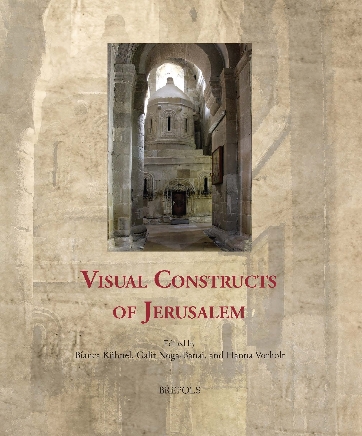
Visual Constructs of Jerusalem
show More to view fulltext, buy and share links for:Visual Constructs of Jerusalem show Less to hide fulltext, buy and share links for: Visual Constructs of JerusalemThe special position of Jerusalem among the cities of the world stems from a long history shared by the three Abrahamic religions, and the belief that the city reflected a heavenly counterpart. Because of this unique combination, Jerusalem is generally seen as extending along a vertical axis stretching between past, present, and future. However, through its many ‘earthly’ representations, Jerusalem has an equally important horizontal dimension: it is represented elsewhere in all media, from two-dimensional maps to monumental renderings of the architecture and topography of the city’s loca sancta.
In documenting the increasing emphasis on studying the earthly proliferations of the city, the current book witnesses a shift in theoretical and methodological insights since the publication of The Real and Ideal Jerusalem in Jewish, Christian, and Islamic Art in 1998. Its main focus is on European translations of Jerusalem in images, objects, places, and spaces that evoke the city through some physical similarity or by denomination and cult - all visual and material aids to commemoration and worship from afar. The book discusses both well-known and long-neglected examples, the forms of cult they generate and the virtual pilgrimages they serve, and calls attention to their written and visual equivalents and companions. In so doing, it opens a whole new vista onto the summa of representations of Jerusalem.
-
-
-
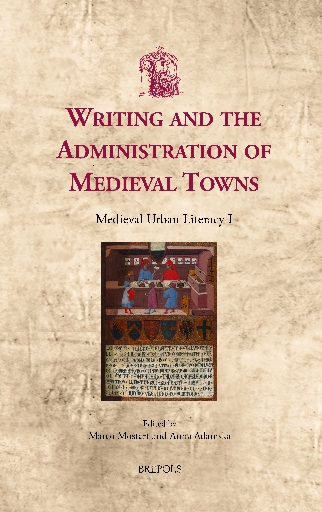
Writing and the Administration of Medieval Towns
show More to view fulltext, buy and share links for:Writing and the Administration of Medieval Towns show Less to hide fulltext, buy and share links for: Writing and the Administration of Medieval TownsIn medieval towns, written statements of law and administration appear more prevalent than in non-urban spaces. Certain urban milieus participating in written culture, however, have been the focus of more scholarship than others. Considering the variety among town dwellers, we may assume that literacy skills differed from one social group to another. This raises several questions: Did attitudes towards the written word result from an experience of the urban educational system? On which levels, and in which registers, did different groups of people have access to writing? The need and the usefulness of written texts may not have been the same for communities and for individuals. In this volume we concentrate on the institutional written records that were most indispensable to communal order, including collections of written law, charters of liberties, and municipal registers.
-
-
-
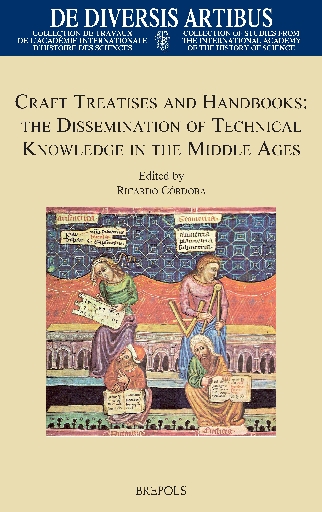
Craft Treatises and Handbooks
show More to view fulltext, buy and share links for:Craft Treatises and Handbooks show Less to hide fulltext, buy and share links for: Craft Treatises and HandbooksThis book is devoted to the study of medieval manuscripts of a technical nature that provide information about manual activities such as textile industry, metallurgy, painting and illumination. The high level of specialization of these crafts involved the need to rely on recipe books, handbooks and treatises. These texts illustrate the various aspects of transmission and dissemination of technical knowledge as well as the written culture of medieval craftsmen.
-
-
-
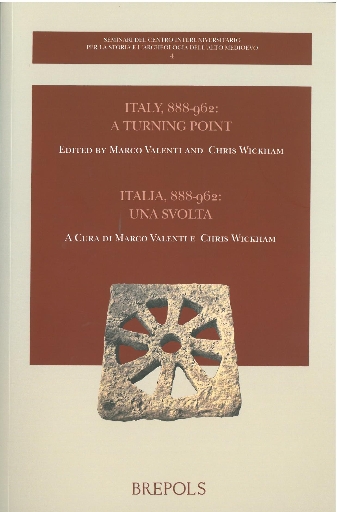
Italy, 888-962: a turning point. Italia, 888-962: una svolta
show More to view fulltext, buy and share links for:Italy, 888-962: a turning point. Italia, 888-962: una svolta show Less to hide fulltext, buy and share links for: Italy, 888-962: a turning point. Italia, 888-962: una svoltaThe years 888-962 are a period in which the Kingdom of Italy was not ruled by kings from across the Alps, the only such period from the end of the eighth century to the end of the eleventh. They were for a long time accepted as a period of major political breakdown and failure, and, in north-central (not southern) Italy, the start of the long run in to the early city communes and Italy’s future history as a radically disunited peninsula. In the light of not only recent historical reanalyses but also the emergence of a large quantity of archaeological data, this image can be tested, and in this book is, by both historians and archaeologists. A far more subtle and nuanced picture emerges from the interdisciplinary work in this volume. This book will be an essential starting-point for all future work on Italy in this period.
-
-
-
La compilación del saber en la Edad Media
show More to view fulltext, buy and share links for:La compilación del saber en la Edad Media show Less to hide fulltext, buy and share links for: La compilación del saber en la Edad MediaLa práctica de la compilación de textos de otros autores, existente ya desde la Antigüedad, se desarrolló durante la Edad Media con diversas técnicas de organización del material, que experimentaron una difusión notable y llegaron a dar vida a diversos géneros literarios como la enciclopedia, el florilegio y el compendio. Las producciones de este tipo pertenecen, desde un punto de vista literario, a la llamada literatura de préstamo o de plagio y por ello han sido obras menospreciadas, aunque este tipo de ’literatura en segundo grado’ está recibiendo mayor atención en la actualidad.
En este volumen se analiza la práctica de la compilación en sus diversas realizaciones y se determina, por una parte, el alcance de su contribución al saber medieval y, por otra, su papel como instrumento del trabajo intelectual y como mediadora en la transmisión de la cultura.
El libro presenta las Actas del Coloquio anual de la FIDEM 2012, que se celebró del 20 al 22 de junio de 2012 en la Universidad Complutense de Madrid organizado por el Departamento de Filología Latina. Los autores, especialistas de más de treinta universidades y centros de investigación, ofrecen un completo panorama sobre las investigaciones que se están llevando a cabo en torno a las compilaciones medievales.
-