


Brepols Online Books Other Miscellanea Collection 2014 - bob2014miot

Collection Contents
17 results
-
-
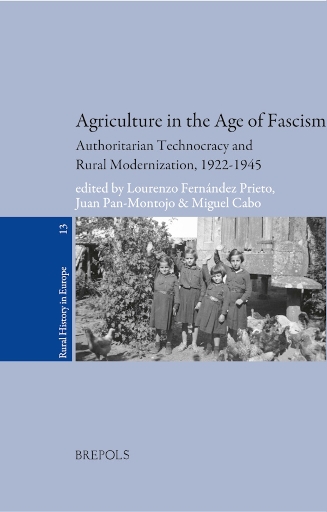
Agriculture in the Age of Fascism
show More to view fulltext, buy and share links for:Agriculture in the Age of Fascism show Less to hide fulltext, buy and share links for: Agriculture in the Age of FascismThe agrarian policies of fascism have never before been studied from a comparative perspective. This volume offers an up-to-date overview, as well as new insights drawn from eight case-studies on Italy, Portugal, Hungary, Germany, Austria, Spain, Japan and Vichy France. The consensus that emerges from them is that the agricultural and rural policies of fascist regimes tended towards modernization and that many of them resembled initiatives pursued in the post-war decades and the Green Revolution, When viewed in this perspective, the fascist era appears less as an aberration and more as an integral part in the global process of agrarian “modernization”, a process whose merits are now being called into question.
-
-
-

Deus Medicus
show More to view fulltext, buy and share links for:Deus Medicus show Less to hide fulltext, buy and share links for: Deus MedicusDans le présent volume le lecteur prendra connaissance des contributions importantes de spécialistes belges, français et italiens présentées à l'occasion d'un colloque organisé à l'Université catholique de Louvain les 15 et 16 juin 2012 par le Centre d'Histoire des Religions Cardinal Julien Ries; le thème se focalisait sur les dieux guérisseurs dans l'antiquité méditerranéenne. Une mise au point s'avérait nécessaire en raison des découvertes récentes. L'action de divinités bienfaisantes, de leurs lieux de culte et de leur impact sociologique est analysée, parfois dans une solution de continuité depuis l'antiquité lointaine jusqu'au début de l'ère chrétienne. Les régions concernées sont la Mésopotamie, l'Égypte, l'Anatolie, le monde minoen, hellénique, biblique et paléo-chrétien.
-
-
-
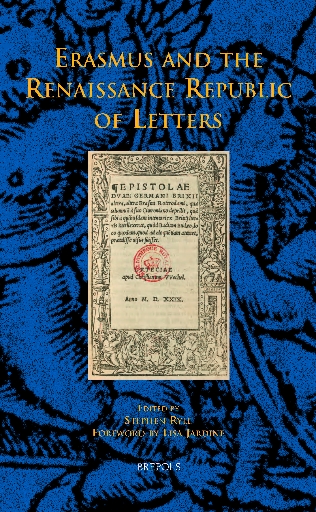
Erasmus and the Renaissance Republic of Letters
show More to view fulltext, buy and share links for:Erasmus and the Renaissance Republic of Letters show Less to hide fulltext, buy and share links for: Erasmus and the Renaissance Republic of LettersThis volume contains a selection from among the papers delivered at a conference held to mark the centenary of a watershed event in early modern studies: the appearance of Volume I of P. S. Allen’s edition of Erasmus’s letters. Erasmus scholarship has been a growing field since the late twentieth century, owing to the enormous volume and vast intellectual range of his oeuvre and to the reprinting of his works from the 1960s onwards, while Allen’s edition has proved the basis for research for scholars of almost every aspect of Renaissance humanism and the Reformation.
The conference aimed to investigate as many aspects as possible of Erasmus’s literary, educational, rhetorical, and theological activities and of their influence on the emerging Europe of the early modern era. The essays collected here present a wide-ranging overview of the current state of Erasmus scholarship, including a survey of the discoveries of letters to and from Erasmus unknown to Allen, the printing for the first time since 1529 of the opening section of an important letter to him from Germain de Brie, an account of the crucial role played by Ulrich von Hutten in the publication of the dialogue Iulius exclusus e coelis, and several studies of the influence of Erasmian thought on early modern political and theological controversies. With its broad coverage of the current field, the volume will prove indispensable to Erasmus scholars.
-
-
-
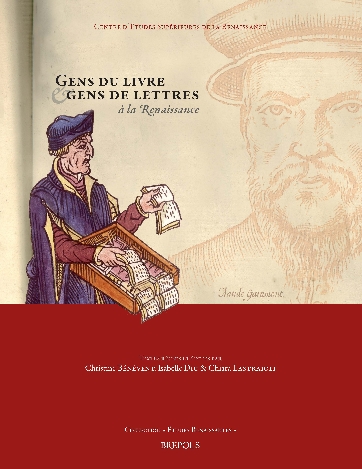
Gens du livre et gens de lettres à la Renaissance
show More to view fulltext, buy and share links for:Gens du livre et gens de lettres à la Renaissance show Less to hide fulltext, buy and share links for: Gens du livre et gens de lettres à la RenaissanceLes articles rassemblés dans ce volume sont le fruit des débats du live colloque international d’études humanistes qui s’est déroulé à Tours en juin 2011. Ils prolongent une réflexion engagée dès 2009 dans un premier colloque parisien, intitulé Passeurs de textes : imprimeurs et libraires à l’âge de l’humanisme. L’enquête ici s’est élargie pour prendre en compte, selon l’heureuse expression de Robert Darnton, l’ensemble des « gens du livre » et des « gens de lettres » à la Renaissance : graveurs de caractères, voyageurs, colporteurs, auteurs, philologues et traducteurs - tous ces artisans ou ces érudits qui ont contribué, dans la fièvre des ateliers de libraires-imprimeurs, à la circulation des textes.
Autour de la figure, à la fois centrale et excentrée, du « passeur de textes », capable de faire franchir au savoir obstacles et frontières, les contributeurs de ce livre se sont interrogés sur la matérialité des textes qui circulent, leurs itinéraires géographiques, leurs cheminements intellectuels ; ils ont aussi cherché à retrouver les motivations de tous les acteurs qui ont patiemment rassemblé le patrimoine culturel de la Renaissance.
Livres, lettres, textes mais aussi images circulent d’un lieu à l’autre, migrent vers de nouveaux univers mentaux, empruntent d’autres langues pour déployer dans le monde occidental l’ensemble des connaissances botaniques, médicales, géographiques, philologiques ou architecturales qui constituent ce patrimoine culturel. Les presses de l’imprimeur deviennent un lieu de passage où s’élaborent des stratégies intellectuelles et commerciales complexes, où se nouent des liens entre les différents acteurs du monde du livre, où les compétences se croisent et se complètent ; la figure du grand graveur et fondeur de caractères typographiques, Claude Garamont, qui faisait en 2011 l’objet d’une commémoration nationale, s’y dessine de manière emblématique.
Depuis l’humble artisan parfois anonyme jusqu’au savant, philologue ou traducteur, qu’il ait nom Budé, Alberti ou Vésale, tous les acteurs évoqués ici interrogent les usages des savoirs, anticipent les goûts du public, construisent la connaissance - jouant pleinement leur rôle de passeurs et, plus encore, de veilleurs attentifs aux livres et aux textes.
-
-
-
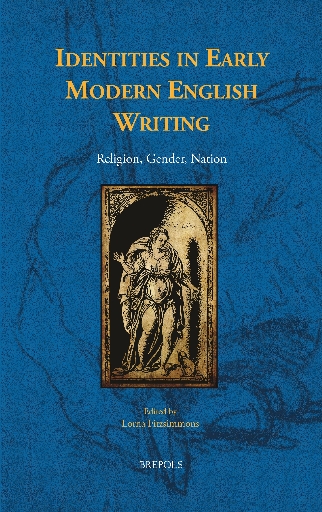
Identities in Early Modern English Writing
show More to view fulltext, buy and share links for:Identities in Early Modern English Writing show Less to hide fulltext, buy and share links for: Identities in Early Modern English WritingThis collection of essays explores the representation of human identity in early modern English writing. The book engages with questions of identity conceived in literary, religious, social, and historical contexts. It addresses a number of important topics in early modern studies today: women’s writing, motherhood, religion, travel writing, and nationalism. Anne-Marie Strohman examines mother figures in the Old Arcadia and the New. Allyna E. Ward considers discourses of Tudor historiography in Anne Dowriche’s The French Historie. Marion Wynne-Davies discusses the representation of Ireland in the writings of Edmund Spenser and Elizabeth Cary. Ryan Hackenbracht turns to Hobbes’ Hebraism and the Last Judgment in Leviathan. Jayne Elisabeth Archer considers the manuscript remains of Lady Ann Fanshawe. Lisa Hopkins looks at theatrical representations of England’s empire in Europe. Anna Suranyi examines national identity in travel literature. From the intimacy of the mother-daughter relationship to the politics of national conflicts and international relations, the book broadens knowledge of the complexities of identity as represented in a selection of significant writings in English from the early modern period. Introduction by Lori Anne Ferrell; afterword by Mary Polito.
-
-
-
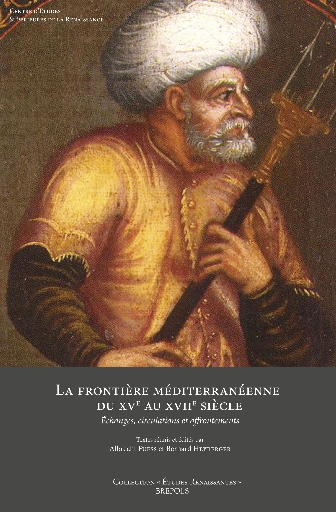
La frontière méditerranéenne du XVe au XVIIe siècle
show More to view fulltext, buy and share links for:La frontière méditerranéenne du XVe au XVIIe siècle show Less to hide fulltext, buy and share links for: La frontière méditerranéenne du XVe au XVIIe siècleLe cadre géographique et chronologique retenu par cet ouvrage collectif le place immédiatement sous les auspices de Fernand Braudel. Comme la fameuse Méditerranée de celui-ci, il semble osciller entre ce qui fait l’unité économique et culturelle du bassin méditerranéen, et ce qui au contraire le divise de façon radicale, essentiellement le conflit entre Islam et Chrétienté. Mais en rassemblant des contributions de spécialistes des deux bords, il tente de connecter des historiographies rarement amenées à se rencontrer.
Les affrontements entre Chrétienté et Islam se poursuivent à cette époque, et des références à la croisade ou au djihad sont employées à l’appui de la revendication d’une souveraineté universelle, ou de la légitimation d’une action aux yeux de l’opinion. Mais les conflits internes aux deux camps l’emportent, et amènent à des alliances plus ou moins explicites entre « chrétiens » et « musulmans », tandis que les échanges commerciaux s’intensifient. La circulation de biens matériels et les transferts de technologie de part et d’autre de la frontière sont attestés, souvent dans un contexte d’opposition sourde ou de compétition.
La notion même de frontière se précise alors, à travers l’essor de la cartographie, l’affirmation de la souveraineté des Etats sur les territoires, et la conclusion de traités. L’évolution de l’art de la guerre amène un renforcement des lignes de frontière et du contrôle du centre politique sur les périphéries. Les juristes s’emploient à légitimer l’appropriation de la mer par les Etats à travers la notion « d’eaux territoriales ». Néanmoins, des zones de l’entre-deux demeurent, et offrent des ressources à des spécialistes de l’affrontement aussi bien que de la négociation et de la circulation, dont plusieurs apparaissent dans ce livre en tant que groupes ou individus.
Selon une démarche aujourd’hui bien établie chez les historiens, les contributions à ce volume combinent une approche locale et une approche globale, qui s’éloignent des grands déterminismes géographiques et économiques braudéliens. Des fragments de vie peuvent, par leur particularité, révéler un aspect plus vaste et représentatif du type de relations qui s’instaurent alors en Méditerranée, en un temps où course, transport et commerce sont étroitement imbriqués.
-
-
-
Le Legs des pères et le lait des mères
show More to view fulltext, buy and share links for:Le Legs des pères et le lait des mères show Less to hide fulltext, buy and share links for: Le Legs des pères et le lait des mèresÊtre homme et être femme constituent deux manières d’être au monde, deux statuts complexes et distincts dans le cadre des activités sociales et des représentations collectives; et si celles-ci sont prises dans les cadres de la normalisation de genre, elles n’en demeurent pas moins réelles et structurantes, quelles que soient les variations historiques et culturelles dont les chroniques, les romans, les films, les bandes dessinées nous apportent le témoignage. Même si l’habitude et l’éducation semblent reconduire l’évidence des places de chaque sexe dans son groupe social et dans une conception binaire associée à l’ordre du monde, une telle vision de la dualité est une création culturelle transmise, reproduite et nuancée au fil des générations : étudier les fausses évidences, dévoiler les singularités oubliées, défricher les formes artistiques les plus récentes, tels sont les objectifs que ce sont fixés les participants au colloque nîmois en prenant comme supports de réflexion des récits allant du Moyen Âge au XXIe siècle. Ils interrogent les modalités de transmission des codes de représentation au sein de la parenté quand elle se développe dans des formes narratives où la réalité se conjugue à la fiction à des fins d’exemplarité.
-
-
-
Measuring Agricultural Growth
show More to view fulltext, buy and share links for:Measuring Agricultural Growth show Less to hide fulltext, buy and share links for: Measuring Agricultural GrowthThis work takes a new look at the question of agricultural production and productivity and reopens the issue of agricultural growth and the questions that still surround its extraordinary impact on European societies. The nine contributions making up the volume set out another approach to this unprecedented shift, written from a new angle with new methods and a new way of associating micro and macro analyses.
These chapters also make a break with the illusion of a single and dominant English or Anglo-Dutch model, and take a critical look against preconceptions that consist of interpreting everything in terms of advances or delays, and of ignoring the context behind the economic decisions made by producers. This collection makes it possible to get away from the eternal confrontation of French and English models, and to change the picture by careful consideration of another country with its own very specific natural and institutional conditions: Spain. It sets out to analyse some of the paths taken by farmers to overcome the constraints under which they operated, using historical experience and statistical analysis, without preconceived ideas.
These papers do not hesitate to cross traditional chronological boundaries and look at different scales of production, at different times and in different places. They make incursions into a subject that is still crucial to present-day society, at a moment when the future of the food supply on much of the planet is as urgent and acute as ever.
-
-
-
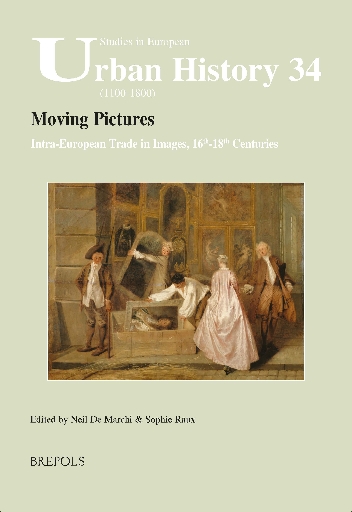
Moving Pictures
show More to view fulltext, buy and share links for:Moving Pictures show Less to hide fulltext, buy and share links for: Moving PicturesThis collection focuses overtly on the internal dynamics and links between art markets in the Early Modern period, but presupposes that art objects - here visual images - are objects of desire. During this period, however, desire changed; a great deal more of these objects came to be made for ordinary domestic consumption, including devotional purposes, than as tokens of the magnificence, piety, cultivation or learning of individual commissioners. Probably most still were commissioned, but to satisfy tastes that, though differentiated internationally, were widely shared within one country or region. Most too were commissioned at a distance, by agents, and were moved between maker and end-point distributor by specialised traders, many of whom - though far from all - were large-scale operators. The dominant focus of contributors here is therefore on the agents of this distance trade, its mechanisms and its impacts in terms of both satisfying and subtly shaping tastes, all at a range of prices. Measurement and mappings are aspects of this traffic. Focus was sharpened by concentrating on three questions: what is currently known about the number of images, whether in the form of paintings, prints, small sculptures or woven textiles, that circulated in early modern Europe? Through what channels and networks were they distributed? And what were the economic, social and institutional contexts?
-
-
-
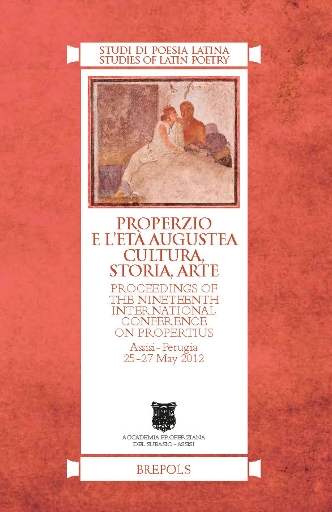
Properzio e l'etá augustea. Cultura, storia, arte
show More to view fulltext, buy and share links for:Properzio e l'etá augustea. Cultura, storia, arte show Less to hide fulltext, buy and share links for: Properzio e l'etá augustea. Cultura, storia, arteThe two thousandth anniversary of the death of Augustus is an important opportunity to reconsider the close relationship the poet Propertius and the town of Assisi had with the first emperor and the Roman world. With regard to Propertius, it was felt that the time had come to take stock of the growing interest in the Umbrian poet, and the speakers of the 2012 Conference (Properzio e l’età augustea: cultura, storia, arte) were invited to focus on two perspectives: the interwoven relationship between Propertius and Augustus, on the one hand, and his problematic interaction with the poets and literary circles of Rome on the other. The comparison with Augustus also called for the introduction of new data in the historical debate regarding the complex of monuments in the city of Assisi, from the Temple of Minerva, which dates back to the triumviral age, to the conspicuous epigraphic heritage of the gens Propertia, and archaeological landmarks such as the Domus Musae and the Domus del Lararium. Taking into account the multifarious stimuli hinted at these proceedings are to be read as a exchange of comparative assessments by philologists, the primary and legitimate custodians of the secretum of the poetry of Propertius , archaeologists, epigraphists and historians, called to define in dynamic terms - of imitation, assimilation and comparison - the relations the poet had with Rome and Augustus, with his hometown of Assisi and the Umbrian and Etruscan cities of the Umbrian Valley, and with the culture, art and the political groups active in triumviral and Augustan Rome.
-
-
-
Textual Transmission in Byzantium: between Textual Criticism and Quellenforschung
show More to view fulltext, buy and share links for:Textual Transmission in Byzantium: between Textual Criticism and Quellenforschung show Less to hide fulltext, buy and share links for: Textual Transmission in Byzantium: between Textual Criticism and QuellenforschungA workshop was held in February 2012 in Madrid to stimulate a debate on textual criticism centred on the analysis of Byzantine texts and their modes of publication, rewriting and diffusion. The main aim was to provide future editors or scholars of the history of texts with a rich typology of concepts to guide their task, such as interpolation, paraphrasis, metaphrasis, quotation, collection, amplification or falsification, among others, but always taking into account that the principles upon which the discipline of textual criticism was founded needed to be reconsidered when dealing with the transmission of Byzantine texts. The present book brings together the different case studies produced by the participants of the workshop into a coherent whole and distributes them into five different sections according to their methodological approaches: 1. Language and style; 2. Virtual libraries and crossed readings; 3. Philosophical treatises and collections; 4.The sources of history; 5. Law texts and their reception. The results of the different approaches put forward by the contributors offer a broad palette of methodological strategies that are, to a great extent, complementary, and will, so we hope, illuminate the task of the future editors with new reflections.
List of contributors: F. J. Andrés Santos, M. Bandini, D. Bianconi, B. Crostini, L. Cuppi, J. M. Featherstone, T. Fernández, E. Gielen, P. Golitsis, M. Hinterberger, C. Macé, M. Menchelli, M. Miglietta, P. Odorico, I. Pérez Martín, F. Pontani, A. Rhoby, J.-D. Rodríguez Martín, F. Ronconi, J. Signes Codoñer, T. E. van Bochove, S. Wahlgren, T. Wauters.
-
-
-
The Golden Age of State Enquiries
show More to view fulltext, buy and share links for:The Golden Age of State Enquiries show Less to hide fulltext, buy and share links for: The Golden Age of State EnquiriesAny state intervention in society requires a high degree of knowledge. This is usually given by a state-sponsored enquiry. Some of these surveys can be traced back to Antiquity, but by the nineteenth century enquiries proved to be different because the nature of the state and the distribution of political influence had changed, and the scientific and financial means to investigate had progressed. This new context prompted states to launch large enquiries to assess transformations in the rural world: new techniques, opening to long distance trade. The heart of the nineteenth century was the golden age of state enquiries. Inspired by the nascent sociology, they fulfilled the desire for scientific knowledge accessible to everyone and the search for innovative solutions for the improvement of agriculture and rural life.
The present volume does not focus on the content of the enquiries; it examines their origins and functioning as new and important objects of historical research, with fourteen studies gathered from twelve countries. The main focus is on Western Europe, with broadening perspectives to the East (Ottoman Empire) and West (Canada and Mexico). The international comparative perspectives highlight the importance of transnational cultural transfers in the nineteenth century. French and British methods were considered models of progress and of a civilised state. Statistical methods and the needs of the administration were discussed and adapted in each state according to their conception of state power, in a context of the construction of the nation state.
-
-
-
The Notion of the Painter-Architect in Italy and the Southern Low Countries
show More to view fulltext, buy and share links for:The Notion of the Painter-Architect in Italy and the Southern Low Countries show Less to hide fulltext, buy and share links for: The Notion of the Painter-Architect in Italy and the Southern Low CountriesSince the time of Vitruvius, architects have been expected to have a broad knowledge of the arts and sciences. The need for good skills in sketching and working up drawings even led, from the sixteenth century onwards, to fierce debates on the meaning and status of ‘disegno’. While Italy saw the emergence of famous painters who excelled as architects, also in the Southern Netherlands the notion that an architect must also have a mastery of the painter’s art became widespread, owing in part to the dissemination of publications by Sebastiano Serlio and Pieter Coecke van Aelst. In the seventeenth century, Peter Paul Rubens was able to make his own contribution to this discussion as a consequence of his sojourns in Italy (1601-1608). Bringing together distinguished art and architecture historians from Europe and North America, this interdisciplinary approach will shed light on the interrelationship of architecture and painting in the Southern Netherlands.
Piet Lombaerde is professor in theory and history of architecture and urbanism at the University of Antwerp, faculty of design sciences. His research interests cover the history of fortifications (1500-1900), urban history and the history of hydraulics. He is co-editor with Krista De Jonge (KU Leuven) of the series Architectura Moderna (Brepols Publisher) and author of several books on the history and theory of architecture and urban planning.
-
-
-
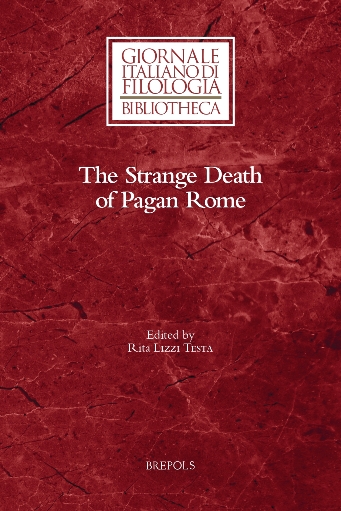
The Strange Death of Pagan Rome
show More to view fulltext, buy and share links for:The Strange Death of Pagan Rome show Less to hide fulltext, buy and share links for: The Strange Death of Pagan RomeThe end of paganism in antique Rome strongly involves the nature of the relations between pagans and Christians in the fourth century AD. The historical paradigm of conflict has been disseminated by scholars as the Hungarian András Alföldi, who in 1934 presented a Christian Constantine in irreconcilable conflict with a pagan Rome, and by Herbert Bloch. The latter, most notably in 1958, in a seminar conference at the Warburg Institute, consolidated the idea of a conflictual model in which the aristocracy of Rome, faced with a tightening of measures against traditional cults, realized a real ‘pagan revival’ and led against Theodosius I «the last pagan army of the ancient world». This model was subjected to a massive critique by Alan Cameron in his The Last Pagans of Rome, Oxford 2011, but in the course of less than two years Cameron’s publication has aroused a strong response, especially on the part of European scholars, and the debate has gained new, effervescent relevance.
This volume, edited by Rita Lizzi Testa, collects the reflections of some Italian scholars - Guido Clemente, R. Lizzi Testa, Giorgio Bonamente, Silvia Orlandi, Giovanni Alberto Cecconi, Lellia Cracco Ruggini, Franca Ela Consolino, Isabella Gualandri, Gianfranco Agosti, Gianluca Grassigli, Alessandra Bravi - and of the illustrious professor François Paschoud from Geneva, on the theme of the last pagans of Rome. It is not only A. Alföldi’s and H. Bloch’s model that provides the dialectic reference for their discussions, but rather, the more insidious in its paradoxical nature, Alan Cameron’s. For the English scholar the concept of conflict is a pure historiographical construction because no real pagans remained in Rome when Theodosius issued laws against paganism. They were not pagan but classical élites, people totally soaked in classical culture, who accepted Christianity when it became compatible with classical culture and the imperial institutions. In his monumental book (more than 800 pages), he argues his position through learned demonstrations and the review of a vast amount of literary, archaeological, epigraphic and even artistic documentation. Nevertheless, much of this evidence can be read again from very different perspectives, and this is what the contributors of the volume try to do.
The volume continues a collection of monographic and miscellaneous studies, now taken over by Brepols Publishers: Giornale Italiano di Filologia. BILIOTHECA (GIFBIB). This series collects studies that are intended to discuss topics on literature, exegesis and textual criticism. The publication rhythm is of one volume per year. The series is a supplement to the scholarly journal Giornale Italiano di Filologia (GIF).
-
-
-
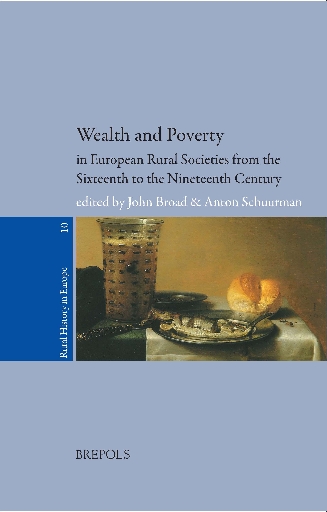
Wealth and Poverty in European Rural Societies from the Sixteenth to Nineteenth Century
show More to view fulltext, buy and share links for:Wealth and Poverty in European Rural Societies from the Sixteenth to Nineteenth Century show Less to hide fulltext, buy and share links for: Wealth and Poverty in European Rural Societies from the Sixteenth to Nineteenth CenturyThis book sheds new light on old problems of wealth, poverty and material culture in rural societies. Much of the debate has concentrated on north-west Europe and the Atlantic world. This volume widens the geographic range to compare less well known areas, with case studies on the Mediterranean world (Catalonia and Greece), from central Europe (Bohemia and Hungary), and from the Nordic countries (Denmark). Methodologically, several papers link the possession of goods to the use of room space, while others highlight the importance of the channels for the circulation of goods, problems of stocks and flows of goods, and the complexities of urban/rural difference. Finally, this book seeks to stimulate new comparative studies in living standards and lifestyles by providing an overview of achievements up till now.
John Broad is visiting academic at the Cambridge Group for the History of Population and Social Structure, University of Cambridge. He has published on rural society and poverty in England, and his current research interests include a book on English rural housing, and large-scale surveys of population, religion, and landholding in England in the eighteenth century.
Anton Schuurman is associate professor of Rural History at Wageningen University. He has published on the history of material culture and rural transformations in the Netherlands. Currently he is writing a book on the processes of modernisation and democratisation in the Dutch countryside from 1840 till 1920.
-
-
-
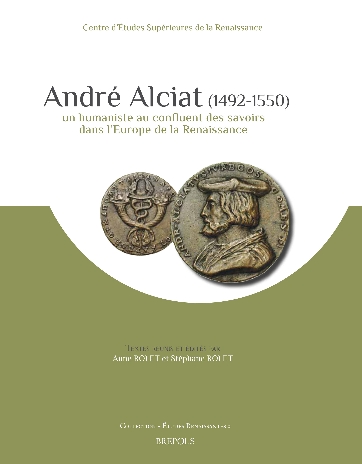
André Alciat (1492-1550) : un humaniste au confluent des savoirs dans l'Europe de la Renaissance
show More to view fulltext, buy and share links for:André Alciat (1492-1550) : un humaniste au confluent des savoirs dans l'Europe de la Renaissance show Less to hide fulltext, buy and share links for: André Alciat (1492-1550) : un humaniste au confluent des savoirs dans l'Europe de la RenaissanceQuelle place occupe l’humaniste André Alciat dans le panorama de la Renaissance européenne ? Comment rendre compte à la fois de la diversité et de l’unité des ouvrages qui composent le corpus alciatique, dont on ne voit souvent que le recueil d’Emblemata, en oubliant la masse des écrits juridiques ?
Pour comprendre les forces qui nourrissent et stimulent cette oeuvre protéiforme, il convenait de replacer dans leur contexte historique et culturel les étapes biographiques et les activités scientifiques multiples du grand juriste milanais, tour à tour « archéologue » précoce et historien, avocat et professeur de droit, mais aussi poète à ses heures. Alciat entretient en effet des relations mouvementées tant avec les princes qu’avec les institutions académiques. Il noue des liens avec les humanistes de toute l’Europe, tels Érasme ou Budé, et sa carrière universitaire témoigne en particulier de la dynamique des échanges entre France et Italie. Dans la genèse et la diffusion de ses travaux, il traite avec les éditeurs comme un stratège en campagne. Son oeuvre enfin remet clairement en question le statut des disciplines constituées et manifeste une authentique sensibilité aux mutations intellectuelles et religieuses de son temps. Les enjeux de la production alciatique dépassent pourtant de beaucoup ces constats. On soulignera tout spécialement l’importance accordée par Alciat au langage symbolique et à l’eikôn, deux voies privilégiées pour assimiler et interpréter l’héritage gréco-latin. On doit également mettre en avant le rôle joué par la réception contemporaine et postérieure - imitateurs, commentateurs, traducteurs et émules - qui, en réinventant, voire en trahissant parfois l’héritage intellectuel d’Alciat, en a fait fructifier les promesses.
Les contributions proposées ici mettent en évidence l’étendue des domaines d’investigation embrassés par Alciat, les multiples facettes de ses compétences, la cohérence de son travail historique, juridique et philologique, les rapports complexes qu’il entretient avec l’Antiquité gréco-romaine et les relations contrastées qu’il développe avec ses contemporains. Des chercheurs venus d’horizons très divers retracent les étapes connues et moins connues d’une existence riche en péripéties, repèrent les fils conducteurs qui assurent la cohésion d’une oeuvre profuse, soulignent le rôle de ses modèles et s’interrogent sur les modalités d’élaboration d’une méthode nouvelle où se fondent les savoirs.
-
-
-
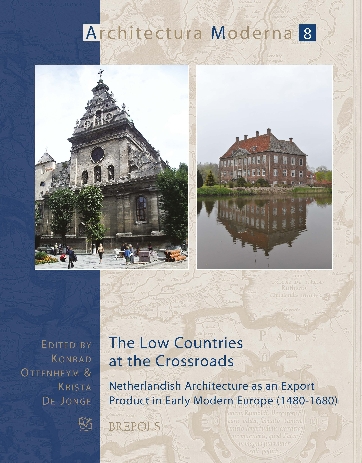
The Low Countries at the Crossroads
show More to view fulltext, buy and share links for:The Low Countries at the Crossroads show Less to hide fulltext, buy and share links for: The Low Countries at the CrossroadsThis book focuses on the diffusion of architectural inventions from the Low Countries to other parts of Europe from the late fifteenth until the end of the seventeenth century. Multiple pathways connected the architecture of the Low Countries with the world, but a coherent analysis of the phenomenon is still missing. Written by an international team of specialists, the book offers case-studies illustrating various mechanisms of transmission, such as the migration of building masters and sculptors who worked as architects abroad, networks of foreign patrons inviting Netherlandish artists, printed models and the role of foreign architects who visited the Low Countries for professional reasons. Its geographical scope is as broad as the period under review and includes all European regions where Netherlandish elements were found: from Spain to Scandinavia and from Scotland to Transylvania.
Konrad Ottenheym is professor of architectural history at Utrecht University, The Netherlands. He is specialised in the architecture of the Northern Low Countries and its international relationships.
Krista De Jonge is professor of architectural history at Leuven University, Belgium. She is well known for her publications on the architecture of the Southern Low Countries of the fifteenth and sixteenth centuries in a European perspective.
-