


Brepols Online Books Medieval Monographs Collection 2014 - bob2014mome

Collection Contents
3 results
-
-
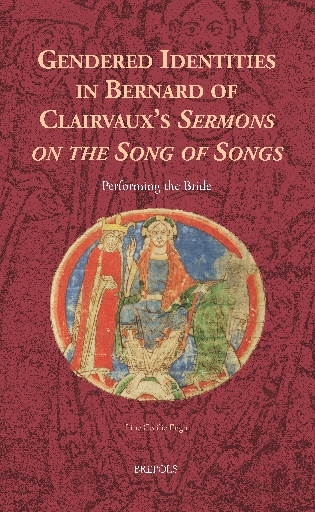
Gendered Identities in Bernard of Clairvaux’s 'Sermons on the Song of Songs'
show More to view fulltext, buy and share links for:Gendered Identities in Bernard of Clairvaux’s 'Sermons on the Song of Songs' show Less to hide fulltext, buy and share links for: Gendered Identities in Bernard of Clairvaux’s 'Sermons on the Song of Songs'In this analysis of Bernard of Clairvaux’s famous Sermons on the Song of Songs, gendered imagery is treated, for the first time, as an interpretative key. Through close readings of Bernard’s text and through the rich array of recent medieval studies on sex and gender, this book challenges familiar interpretations of body, gender, and asceticism, disrupting the commonplace view of medieval monasticism as desexualized and un-gendered.
Bernard not only interprets, but also embodies or actualizes the figure of the bride, generating images of celibacy as erotic pleasure and monks as fecund and female. Through his performance, Bernard provides a hermeneutical model on which he patterns himself and his audience, the Cistercian choir monk. By analyzing the rhetorical functions of Bernard’s female self-representation, the author explores how complex and varied female images in the text are absorbed into the bridal role - lactating mother, ecstatic virgin, weeping widow, needy girl.
By appropriating femaleness, Bernard transformed the Cistercian cloister into an inverted world that anticipated eschatological restoration and salvation. In this parallel monastic reality, the book argues, males performed all parts while gender hierarchy was upheld to establish notions of superior and inferior, worldly and heavenly, humility and sublimity. The male-female duality in this language is not one of equality, but was rather forged into a hermeneutical hierarchy in which, ultimately, a fully Christomimetic man both appropriates and negates femaleness.
-
-
-
God's Chosen People
show More to view fulltext, buy and share links for:God's Chosen People show Less to hide fulltext, buy and share links for: God's Chosen PeopleThe systematic formulation of the status of the People of Israel as the Chosen People of God stands at the heart of Judah Halevi’s famous theological and polemical treatise - the Kuzari.
The idea of the Chosen People is an ancient one and is deeply rooted in Judaism. Through a wide-ranging textual and phenomenological investigation, this book highlights the novel and systematic presentation of the Chosen People in the Kuzari and shows how Judah Halevi draws, in a creative manner, on terms, concepts, and themes borrowed from the Shī‘ī doctrine of the Imām as presented in Shī‘ī literature.
This book presents a historical perspective for understanding the basis of Judah Halevi’s attraction to Shī‘ī theology, with its unique category of God’s Chosen. The polemical argument over the issue of the legitimate successor to leadership in early Islam, as well as the debate around the legitimate successor-group in medieval interreligious disputes, emerges as the historical background for the seemingly surprising link between the Shī‘ī Imām doctrine and the idea of the Chosen People in Judah Halevi’s thought. This link on the one hand portrays Halevi as a bold, original thinker and, on the other, portrays the Shī‘ī Imām doctrine as exceedingly fruitful and reaching beyond the bounds of Islam.
-
-
-
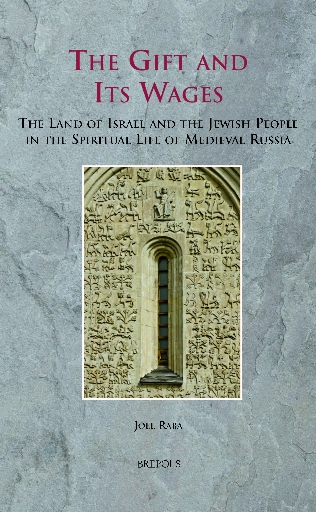
The Gift and Its Wages
show More to view fulltext, buy and share links for:The Gift and Its Wages show Less to hide fulltext, buy and share links for: The Gift and Its WagesRespect for the Old Testament and its heritage was an integral feature of Russian medieval culture and played a major role in determining Old Russia’s value system and its attitude toward past and contemporary events. Jerusalem and the Holy Land were ideals, and the Chosen People and Old Testament heroes were role models and standards for both the past and the present. Yet, in its ongoing effort to be recognized as the ‘New Chosen People’ within the family of nations, Old Russia rejected ‘the Other’, that is the descendants of the ‘Old Chosen People’. The almost total absence of Jews in Russia throughout the ancient period, along with the central role played by Jewish tradition in the development of its culture, are a contradiction. This book presents the story of this dichotomy during the Old Russian millennium, from its inception to the late seventeenth century. The material is organized chronologically, beginning with the creation of the Kievan state in the far reaches of the Khazar polity in the ninth century, and ending with the great transformation, the reforms of Peter the Great. This is preceded by a survey of two sources that shaped the image of the land and people of Israel in the erudite world of ancient Russia: a description of the Holy Land by Abbot Daniel in the early twelfth century, and the ancient Slavic translation of Josephus’s Wars of the Jews.
-