


Brepols Online Books Medieval Monographs Collection 2014 - bob2014mome

Collection Contents
4 results
-
-
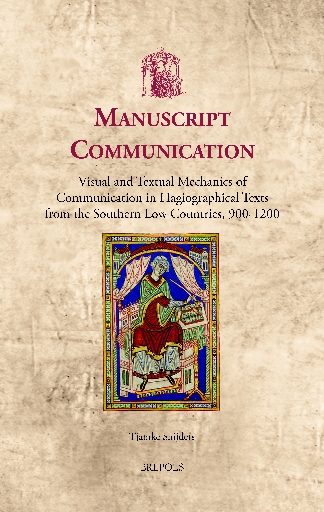
Manuscript Communication
show More to view fulltext, buy and share links for:Manuscript Communication show Less to hide fulltext, buy and share links for: Manuscript CommunicationThis study investigates how medieval abbeys in the Southern Low Countries used hagiographical manuscripts as a communicative tool. Four basic questions are addressed: How did layout influence a manuscript’s communicative potential? Was manuscript communication influenced by its composition? How did the flexibility of texts and manuscripts influence their communicative function? And how did the position of the monastery within the monastic landscape influence manuscript communication?
Ranging from in-depth case studies to discussions of structure and agency in manuscript terminology and layout in the aftermath of New Philology, this book argues that the High Middle Ages witnessed a fundamental process of manuscript diversification and specialisation, which was at the basis of the thirteenth-century revolution in manuscript layout. This led twelfth-century monks to start conceptualising the manuscript as an object with fixed contents, which was to be used and copied as a whole. Consequently, the production and spread of saints’ lives became part of a process of ideological homogenisation among Benedictine monasteries and started a crucial development in medieval literacy.
-
-
-
Magic and Kingship in Medieval Iceland
show More to view fulltext, buy and share links for:Magic and Kingship in Medieval Iceland show Less to hide fulltext, buy and share links for: Magic and Kingship in Medieval IcelandThis volume examines the performative and ideological functions of texts dealing with magic in contexts of social and political conflict. While the rites, representations, and agents of medieval Scandinavian magic have been the object of numerous studies, little attention has been given to magic as a discourse. As a consequence, Old Norse sources mobilizing magic have been analysed mainly as evidence for a stable extra-textual phenomenon. This volume breaks with this perspective.
The book focuses on the use of discourses of magic in thirteenth- and fourteenth-century Icelandic texts concerned with kingship. It is argued that Icelanders constructed magic as a discursive answer to the increasingly pressing question of how to deal with the reality of their subordination to kings. This they did by telling stories of flattering Icelandic successes over kings brought about by magic in a bid to challenge dominant definitions and the social and political status quo. The book thus follows the conditions of emergence that made these subversive discourses of magic meaningful; it describes the various forms they were given, the various constraints weighing upon their use, and the particular political goals they served.
-
-
-
Manuale scholarium
show More to view fulltext, buy and share links for:Manuale scholarium show Less to hide fulltext, buy and share links for: Manuale scholariumLe texte présenté ici date de la fin du XV e siècle. Le Manuale Scolarium, a été écrit par un auteur inconnu sous forme de dialogues. Depuis l’Antiquité, bien des discussions et des conversations ont été écrites. Ce genre littéraire est particulièrement utilisé pour les traités pédagogiques : dialogues entre un père et son fils, un maître et son élève, un roi et son héritier, etc.
Mais les dialogues entre deux jeunes gens, moines ou étudiants, sont bien plus rares. On connaît, pour le IX e siècle, celui qu’a écrit Alcuin qui présente deux jeunes disciples, un franc et un saxon qui conversent à propos de la grammaire. Au XI e siècle, le “Colloque” d’Aelfric Bata écrit un dialogue entre quelques jeunes moines anglo-saxons. Pour le siècle suivant, nous n’avons pas de dialogue entre jeunes gens, avant ce Manuale Scolarium.
Ce texte est un témoignage vivant de la vie des étudiants à l'université d'Heidelberg et offre un regard sur les relations des étudiants entre eux et sur leur appréciation de la vie universitaire.
-
-
-
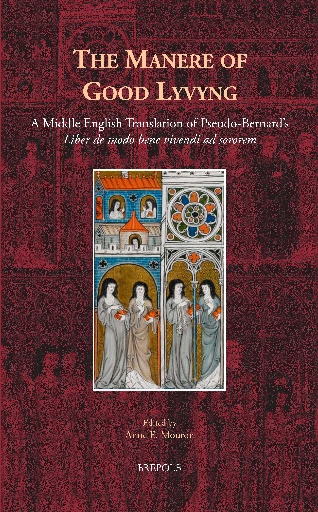
The Manere of Good Lyvyng
show More to view fulltext, buy and share links for:The Manere of Good Lyvyng show Less to hide fulltext, buy and share links for: The Manere of Good LyvyngIn recent years, much critical attention has been devoted to medieval texts written for recluses, such as the Life of Christina of Markyate, Aelred’s Institutio reclusarum, and the Ancrene Wisse. The Manere of Good Lyvyng, in contrast, brings the focus back to the conventual life and to the needs of a nun rather than an anchoress.
The Manere of Good Lyvyng is a late Middle English translation of an earlier Latin text, the Liber de modo bene vivendi ad sororem, long attributed to St Bernard of Clairvaux. Whether in its Latin form or its Middle English rendering, this work is a fascinating text and one with considerable artistic merit. It is neither a flamboyant text nor one strewn with images such as one encounters in the Ancrene Wisse. It is a quiet text, with the beauty and simplicity of a manuscript perfectly written in an elegant script, where no illustration distracts the reader from its reading.
-