


Brepols Online Books Medieval Monographs Collection 2014 - bob2014mome

Collection Contents
2 results
-
-
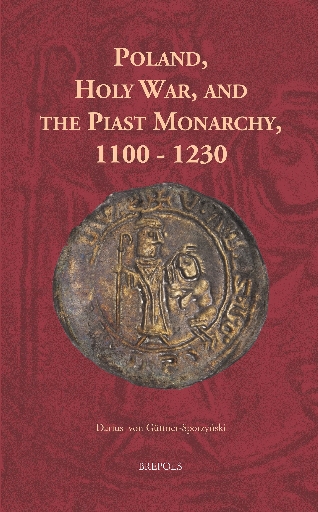
Poland, Holy War, and the Piast Monarchy, 1100-1230
show More to view fulltext, buy and share links for:Poland, Holy War, and the Piast Monarchy, 1100-1230 show Less to hide fulltext, buy and share links for: Poland, Holy War, and the Piast Monarchy, 1100-1230This study charts the evolution of the ideology of holy war and crusading in medieval Poland through Polish incursions into the Baltic, the last bastion of paganism in Europe. It traces the transmission of the idea of holy war and crusade to north central Europe, explaining its impact on political and religious life in Poland, and Polish missionary and crusading activity in Prussia, Pomerelia, and Pomerania. Holy war and crusade helped influence state formation, politics, and dynastic succession. Key mechanisms by which the idea of holy war was transmitted to Poland are examined and compelling evidence is provided that the Polish elites were highly familiar with, and receptive to, the idea of crusade. The Polish elites were deliberate participants in Christian holy wars and undertook various crusading activities during the twelfth century. The influence of the idea of holy war on the actions of the Polish dynasts and the central role of women in the establishment of family traditions of participating in crusading are examined in some detail. Furthermore, this book explores the conditions that enabled the cause of the Christianization of Prussia to be taken up by the Teutonic Order by tracing the divergence of the idea of holy war in the Piast realm away from the norms of Latin Christendom in the late twelfth and early thirteenth centuries. This work offers new perspectives for international studies of warfare sanctioned by religion.
-
-
-
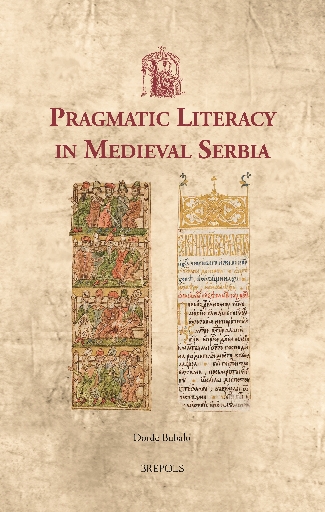
Pragmatic Literacy in Medieval Serbia
show More to view fulltext, buy and share links for:Pragmatic Literacy in Medieval Serbia show Less to hide fulltext, buy and share links for: Pragmatic Literacy in Medieval SerbiaThe interweaving of Latin and Byzantine influences shaped the culture of literacy in medieval Serbia. Unprecedented in the field, this study aims to show that, even if only about 1000 Serbian medieval documents are preserved, this does not mean that little had been written. An exploration of the use of written documents in commercial, legal, and private relations in late medieval Serbia constitutes the basic scope of the research. It focuses on the documents’ fate and on their social roles from the moment they were issued or submitted to their beneficiaries. The making of charters - by rulers, the Church, the aristocracy, towns, and public notaries - is analysed, as are the main fields of the use of the written word - evidentiary procedure, diplomacy, and correspondence. The citation of individual examples of pragmatic literacy allows us to give an approximate idea of how widespread the belief in the power of the written word really was. Even though the ways in which documentary literacy manifested itself in late medieval Serbia display certain idiosyncrasies, the growth in the use and reputation of written documents suggests that the Serbian case was not all that unlike the written customs and practices elsewhere in medieval Europe.
-