


Brepols Online Books Medieval Monographs Collection 2014 - bob2014mome

Collection Contents
21 - 32 of 32 results
-
-
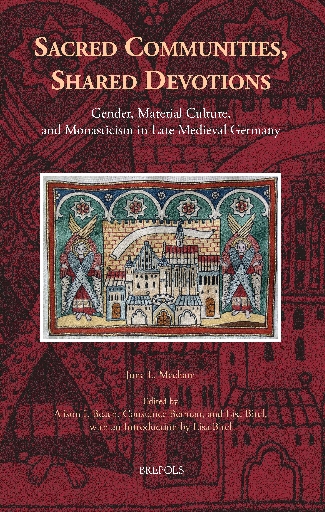
Sacred Communities, Shared Devotions
show More to view fulltext, buy and share links for:Sacred Communities, Shared Devotions show Less to hide fulltext, buy and share links for: Sacred Communities, Shared DevotionsSacred Communities, Shared Devotions takes us behind the gates of six medieval convents in Lower Saxony and into the lives of rich and noble nuns going about their daily labour of religion just before the Lutheran Reformation. Drawing on writings by and about the nuns, as well as an analysis of the costly art and architecture of their monasteries, June Mecham reveals how monastic women wielded their wealth to create a ritual environment dense with Christian images and meanings. Mecham argues that nuns chose devotions and rituals within the framework of a distinct material culture, influenced by local religious customs, gender structures, and social protocols. She questions perceived differences between monastic and lay piety, emphasizing instead the shared religious culture in which monastic and laywomen actively participated, and the continuity that shaped female devotion. Looking through lenses of art, history, and spirituality, Mecham describes the spiritual and social tensions caused by women who vowed poverty but lived a seemingly lavish life funded by private income. Medieval reformers, as well as modern scholars, suggested that profligate nuns hastened the decline of medieval convents, but Sacred Communities, Shared Devotions proves that these women did not oppose reform. They simply fought to maintain their traditional devotions and religious environments even as they adapted to new religious sensibilities.
-
-
-
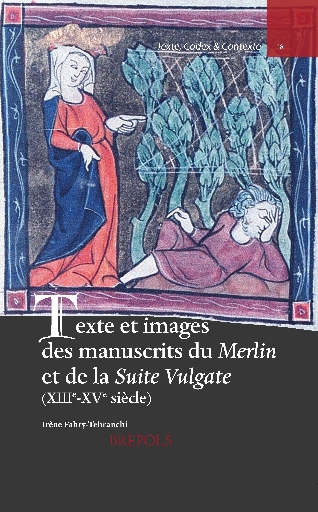
Texte et images des manuscrits du Merlin et de la Suite Vulgate (XIIIe-XVe siècle)
show More to view fulltext, buy and share links for:Texte et images des manuscrits du Merlin et de la Suite Vulgate (XIIIe-XVe siècle) show Less to hide fulltext, buy and share links for: Texte et images des manuscrits du Merlin et de la Suite Vulgate (XIIIe-XVe siècle)Rédigée dans la première moitié du XIII e siècle, la Suite Vulgate du Merlin en prose constitue la dernière pièce du cycle du Graal. Partagée entre le déroulement de la vie de Merlin, qui lui donne une unité de type biographique, et la peinture de la jeunesse héroïque du roi Arthur, cette suite rétrospective sert de transition vers le Lancelot. Elle expose la dynamique d’écriture et l’émulation suscitées par le développement de la prose arthurienne et l’effort de mise en cycle. L’étude de la mise en recueil, de la mise en page et de l’illustration des manuscrits éclaire le mode de production et de réception d’ oeuvres qui continuent d’être copiées et enluminées tout au long du Moyen Âge. Le Merlin et la Suite Vulgate, le plus souvent intégrés à des compilations centrées sur l’histoire du Graal, entretiennent un lien particulier avec le Joseph d’Arimathie, l’Estoire del saint Graal et les Prophéties de Merlin, mais circulent aussi dans des recueils d’ambition didactique ou historique.
Si l’écriture de la Suite Vulgate favorise l’intégration cyclique du Merlin propre, ces textes et leurs programmes iconographiques développent une veine militaire et historique qui interroge leur appartenance générique et tranche avec l’orientation religieuse ou courtoise des autres œuvres de la Vulgate arthurienne.
-
-
-
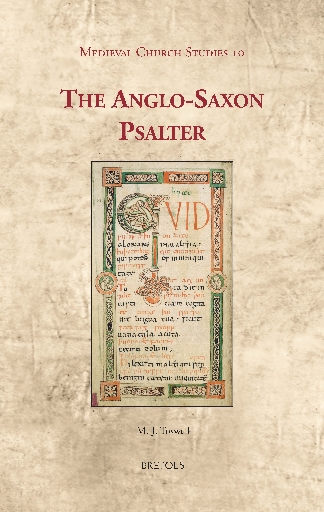
The Anglo-Saxon Psalter
show More to view fulltext, buy and share links for:The Anglo-Saxon Psalter show Less to hide fulltext, buy and share links for: The Anglo-Saxon PsalterThe psalms are at the heart of Christian devotion, in the Middle Ages and still today. Learned early and sung weekly by every medieval monastic and cleric, the psalms were the language Christ and his ancestor David used to speak to God. Powerful and plaintive, angry and anguished, laudatory and lamenting: the psalms expressed the feelings and thoughts of the individuals who devised them and those who sang them privately or publicly in Anglo-Saxon England many generations later. Psalters from Anglo-Saxon England are the largest surviving single group of manuscripts, and also form a very significant percentage of the fragments of manuscripts extant from the period. Psalters were central to the liturgy, particularly for the daily Office, and were the first schoolbooks for the learning of Latin and Christian doctrine. Moreover, from Anglo-Saxon England comes the earliest complex of vernacular psalter material, including glossed and bilingual psalters, complete psalter translations, and poems based on individual psalms and on psalmic structures. The lament psalms are remarkably similar to the Old English elegies in both form and imagery, and the freedom with which vernacular adaptors of the psalms went about their work in Anglo-Saxon England suggests an appropriation of the psalter not as the sacred and unchanging Word but as words that could be turned to use for meditation, study, reading, and private prayer. Worth investigation are both individual figures who used the psalms such as Bede, Alfred, and Ælfric, and also the unknown compilers and scribes who developed new layouts for psalter manuscripts and repurposed earlier or Continental manuscripts for use in Anglo-Saxon England. In Latin and in the vernacular, these codices were central to Anglo-Saxon spirituality, while some of them also continued to be used well into the later Middle Ages.
-
-
-
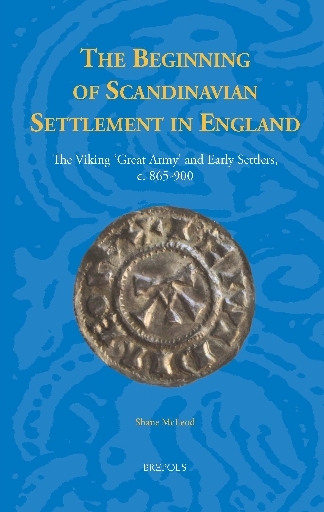
The Beginning of Scandinavian Settlement in England
show More to view fulltext, buy and share links for:The Beginning of Scandinavian Settlement in England show Less to hide fulltext, buy and share links for: The Beginning of Scandinavian Settlement in EnglandThe conquest and settlement of lands in eastern England by Scandinavians represents an extreme migratory episode. The cultural interaction involved one group forcing themselves upon another from a position of military and political power. Despite this seemingly dominant position, by 900 CE the immigrants appear to have largely adopted the culture of the Anglo-Saxons whom they had recently defeated. Informed by migration theory, this work proposes that a major factor in this assimilation was the emigration point of the Scandinavians and the cultural experiences which they brought with them.
Although some of the Scandinavians may have emigrated directly from Scandinavia, most of the first generation of settlers apparently commenced their journey in either Ireland or northern Francia. Consequently, it is the culture of Scandinavians in these regions that needs to be assessed in searching for the cultural impact of Scandinavians upon eastern England. This may help to explain how the immigrants adapted to aspects of Anglo-Saxon culture, such as the issuing of coinage and at least public displays of Christianity, relatively quickly. The geographic origins of the Scandinavians also explain some of the innovations introduced by the migrants, including the use of client kings and the creation of ‘buffer’ states.
-
-
-

The Courtly and Commercial Art of the Wycliffite Bible
show More to view fulltext, buy and share links for:The Courtly and Commercial Art of the Wycliffite Bible show Less to hide fulltext, buy and share links for: The Courtly and Commercial Art of the Wycliffite BibleIn 1409, Archbishop Thomas Arundel banned the Wycliffite Bible, along with the heresy attributed to Oxford theologian John Wyclif for which it was named. Containing the first complete translation of the Bible into English, the Wycliffite Bible is nonetheless the most numerous extant work in Middle English by a wide margin.
Nearly half the existing copies of the Wycliffite Bible are illuminated. This book offers the first sustained, critical examination of the decoration of Wycliffite Bibles. This study has found that many copies were decorated by the most prominent border and initial artists of their eras. Many more were modeled on these styles. Such highly regarded artists had little to gain from producing volumes that might lead them to trial as heretics and ultimately to the stake.
This unprecedented study contributes to recent revisionist criticism and troubles long-standing assumptions about Wycliffism and the Wycliffite Bible. It contends that the manuscript record simply does not support a stark interpretation of the Wycliffite Bible as a marginalized text. Rather, this study reveals a prolific and vibrant textual exchange within the book culture of late medieval England.
-
-
-
The Daughters of Henry II and Eleanor of Aquitaine
show More to view fulltext, buy and share links for:The Daughters of Henry II and Eleanor of Aquitaine show Less to hide fulltext, buy and share links for: The Daughters of Henry II and Eleanor of AquitaineThe three daughters of Henry II and Eleanor of Aquitaine all undertook exogamous marriages which cemented dynastic alliances and furthered the political and diplomatic ambitions of their parents and their spouses. It might be expected that the choices made by Matilda, Leonor, and Joanna with regard to religious patronage and dynastic commemoration would follow the customs and patterns of their marital families, yet in many cases these choices appear to have been strongly influenced by ties to their natal family. Their involvement in the burgeoning cult of Thomas Becket, their patronage of Fontevrault Abbey, the names they gave to their children, and the ways in which they were buried, suggests that all three women were able, to varying degrees, to transplant Angevin family customs to their marital lands.
By examining the childhoods, marriages, and programmes of patronage and commemoration of Matilda, Leonor and Joanna, this monograph compares and contrasts the experiences of three high-profile twelfth-century royal women, and advances the hypothesis that there may have been stronger emotional ties within the Angevin dynasty than has previously been allowed for.
-
-
-
The Gift and Its Wages
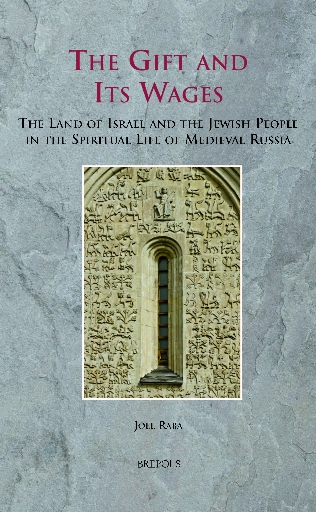
show More to view fulltext, buy and share links for:The Gift and Its Wages show Less to hide fulltext, buy and share links for: The Gift and Its WagesRespect for the Old Testament and its heritage was an integral feature of Russian medieval culture and played a major role in determining Old Russia’s value system and its attitude toward past and contemporary events. Jerusalem and the Holy Land were ideals, and the Chosen People and Old Testament heroes were role models and standards for both the past and the present. Yet, in its ongoing effort to be recognized as the ‘New Chosen People’ within the family of nations, Old Russia rejected ‘the Other’, that is the descendants of the ‘Old Chosen People’. The almost total absence of Jews in Russia throughout the ancient period, along with the central role played by Jewish tradition in the development of its culture, are a contradiction. This book presents the story of this dichotomy during the Old Russian millennium, from its inception to the late seventeenth century. The material is organized chronologically, beginning with the creation of the Kievan state in the far reaches of the Khazar polity in the ninth century, and ending with the great transformation, the reforms of Peter the Great. This is preceded by a survey of two sources that shaped the image of the land and people of Israel in the erudite world of ancient Russia: a description of the Holy Land by Abbot Daniel in the early twelfth century, and the ancient Slavic translation of Josephus’s Wars of the Jews.
-
-
-
The Library of the Abbey of La Trappe
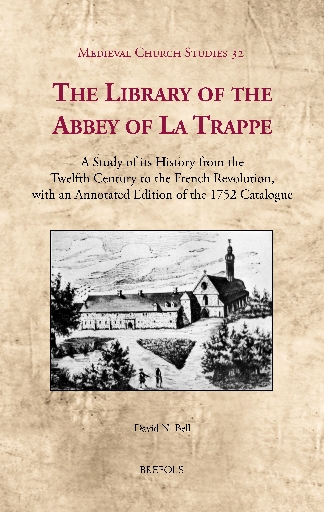
show More to view fulltext, buy and share links for:The Library of the Abbey of La Trappe show Less to hide fulltext, buy and share links for: The Library of the Abbey of La TrappeThis volume presents a study of the library of the Cistercian abbey of La Trappe in Normandy from the twelfth century to the French Revolution, together with an annotated edition of the library catalogue of 1752. The abbey was founded as a Savigniac house, became Cistercian in 1147, and is inseparably linked with the name of Armand-Jean de Rancé, the great monastic reformer and founder of the Order of Cistercians of the Strict Observance. When he became abbot of La Trappe in 1664, he brought with him many of his own books and had a new library built to house the monastic collection. Rancé died in 1700. Other books were then added over time until, in 1752, the abbey possessed about 4,300 volumes. The detailed catalogue is divided into two parts. The first part lists the books by subject, beginning, as might be expected, with bibles; the second part lists the same books by author. The information presented in this study of the abbey and its library is of first importance not only for understanding the nature and development of Cistercian intellectual and spiritual life, but also for the history of early modern libraries and the development of library cataloguing.
-
-
-
The Manere of Good Lyvyng
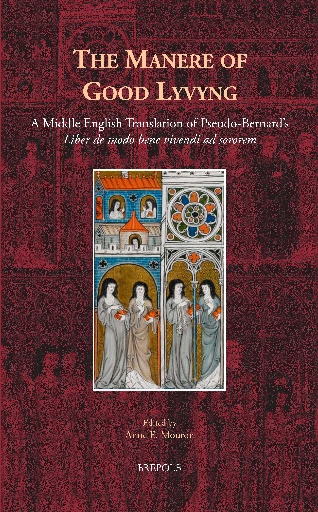
show More to view fulltext, buy and share links for:The Manere of Good Lyvyng show Less to hide fulltext, buy and share links for: The Manere of Good LyvyngIn recent years, much critical attention has been devoted to medieval texts written for recluses, such as the Life of Christina of Markyate, Aelred’s Institutio reclusarum, and the Ancrene Wisse. The Manere of Good Lyvyng, in contrast, brings the focus back to the conventual life and to the needs of a nun rather than an anchoress.
The Manere of Good Lyvyng is a late Middle English translation of an earlier Latin text, the Liber de modo bene vivendi ad sororem, long attributed to St Bernard of Clairvaux. Whether in its Latin form or its Middle English rendering, this work is a fascinating text and one with considerable artistic merit. It is neither a flamboyant text nor one strewn with images such as one encounters in the Ancrene Wisse. It is a quiet text, with the beauty and simplicity of a manuscript perfectly written in an elegant script, where no illustration distracts the reader from its reading.
-
-
-
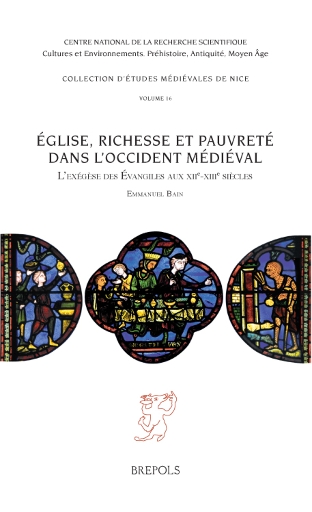
Église, richesse et pauvreté dans l'Occident médiéval
show More to view fulltext, buy and share links for:Église, richesse et pauvreté dans l'Occident médiéval show Less to hide fulltext, buy and share links for: Église, richesse et pauvreté dans l'Occident médiévalHeureux, vous les pauvres : le Royaume des cieux est à vous. […] Mais malheureux, vous les riches : vous tenez votre consolation (Luc, 6, 20 et 24). Les appels à la pauvreté et au partage, les mises en garde contre les richesses s'avèrent extrêmement fréquents dans les textes évangéliques les plus célèbres de nos jours encore. L'objet de cet ouvrage est d'étudier leur écho dans la société occidentale des XII e et XIII e siècles, où les richesses issues du commerce commencent à affluer dans les villes et où les inégalités se creusent, tandis que la Bible demeure l'autorité par excellence.
L'auteur s'intéresse tout d'abord à l'élaboration par les moines et les clercs d'un idéal de pauvreté volontaire, qui ne s'impose qu'à partir du XII e siècle. Il étudie les étapes, les acteurs et les enjeux de cette construction, qui concerne tout à la fois l'interprétation de passages fondamentaux de l'Évangile, la place accordée aux laïcs et l'expression de la hiérarchie dans l'Église. L'affirmation de la pauvreté y apparaît indissociable de celle d'une forme de domination. Il pose ensuite la question de l'articulation de ce discours aux réalités sociales. L'exaltation de la pauvreté se traduit-elle par une hostilité à l'égard des richesses et des riches ? Par une condamnation des activités lucratives ? Par une revalorisation de l'image des miséreux ? Il apparaît plutôt - et c'est la thèse que soutient l'auteur - que la préoccupation essentielle des exégètes était de placer l'Église au coeur de la société, au centre des échanges, matériels comme symboliques, si bien que les riches firent l'objet de toutes les attentions, au risque d'en oublier les pauvres.
-
-
-
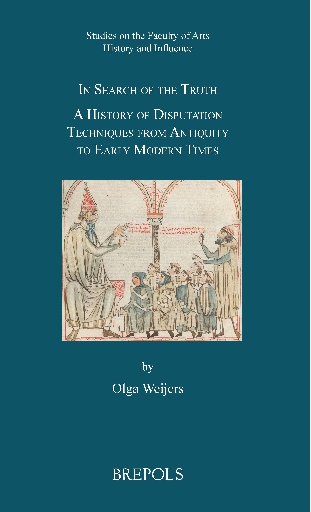
In Search of the Truth
show More to view fulltext, buy and share links for:In Search of the Truth show Less to hide fulltext, buy and share links for: In Search of the TruthDisputation and debate have accompanied human development from its beginnings. However, what we still call ‘disputation’, technically speaking, is a particular method of reasoning and analysing, involving either a debate between two people, or of one person with himself. It is this method which is the object of this study. The disputation was one of the main methods of teaching and research during the Middle Ages. Tracing its development shows how it influenced the way in which people examined abstract problems. Reasoning and arguing about contradictory positions remained a feature of intellectual life well into the nineteenth century, and the practice remains alive even today.
For a long time the disputation was the main tool for analysing problems in a range of fields, especially in philosophy and theology. The main features were the analysis of opposite positions and thorough discussion of the various arguments for both sides, the collective search for the truth in special public disputations, the recognition that the truth may differe from the conclusion reached and the willingness to accept better arguments if they brought one closer to the truth. All this is typical of an intellectual attitude, the key features of which are critical thinking and honest collaborative research, that still marks the Western world. The history of the disputation can tell us something about the way in which we learned to think.
-
-
-

The Death Ritual at Cluny in the Central Middle Ages
show More to view fulltext, buy and share links for:The Death Ritual at Cluny in the Central Middle Ages show Less to hide fulltext, buy and share links for: The Death Ritual at Cluny in the Central Middle AgesThis volume presents a complete reconstruction of the ritual response to terminal illness and death at the monastic community of Cluny at the height of its development in the later eleventh and early twelfth centuries. Based on the best manuscript of the customary of Bernard, the only account of the abbey's customs written at and for Cluny itself, the reconstruction contains not just Bernard's Latin description of the ritual process, but also the full texts of the prayers and chants that accompanied it, gathered, in the absence of surviving ritual books from Cluny itself, from contemporary sources with clear ties to the Cluniac customs. Facing-page English and French translations make the results available to readers with little or no facility in Latin. The author places the Cluniac death ritual in the context of religious responses to death, dying and the care of the dead in medieval Latin Christianity as a whole. He also explicates the origins, development and meaning of the Cluniac death ritual's myriad elements as they were spoken, sung and performed within the sacred spaces of the monastic complex-cloister, chapter house, infirmary, church and cemetery.
Frederick S. Paxton is Brigida Pacchiani Ardenghi Professor of History at Connecticut College, in New London, CT, USA. He is the author of Christianizing Death: The Making of a Ritual Process in Early Medieval Europe (1990), Anchoress and Abbess in Ninth-Century Saxony: the Lives of Liutbirga of Wendhausen and Hathumoda of Gandersheim (2009) and numerous articles and essays on sickness, death, dying and the dead in medieval Europe.
-