


Brepols Online Books Medieval Miscellanea Collection 2015 - bob2015mime

Collection Contents
2 results
-
-
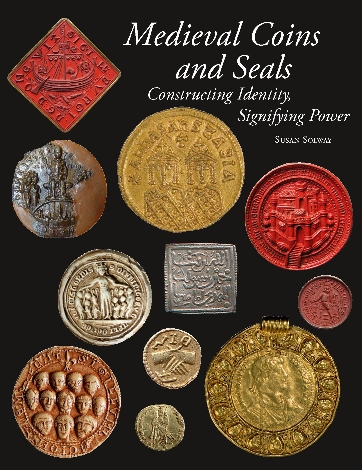
Medieval Coins and Seals: Constructing Identity, Signifying Power
show More to view fulltext, buy and share links for:Medieval Coins and Seals: Constructing Identity, Signifying Power show Less to hide fulltext, buy and share links for: Medieval Coins and Seals: Constructing Identity, Signifying PowerMedieval Coins and Seals: Constructing Identity, Signifying Power showcases these objects as intrinsic and highly significant aspects of medieval visual culture, and contributes to an understanding of the many ways in which they functioned as conveyors of meaning in Western European, Islamic, and Byzantine cultures from the fifth to the fifteenth century. The essays presented here, by art historians, numismatists, sigillographers, and historians on a wide variety of coins and seals, afford fresh insight into these tantalizing relics of medieval art and the vibrant cultural roles they played at the time of their creation. Through their images and inscriptions, they conveyed complex cultural attitudes by means of sophisticated visual strategies carefully constructed to further the subjective agendas of rulers and − in the case of seals − of aristocrats, ordinary individuals, towns, corporations, and government officials. The messages conveyed by these tightly controlled objects were, above all, ones of authority, identity, and legitimacy, with goals or subtexts that included the politics of self- presentation; the construction of personal, civic, national and cultural identity; the advertisement of dynastic succession; and much more. As forceful modes of visual discourse designed to carry calculated, at times propagandistic, communications to broadly dispersed audiences, coins and seals actively served during these centuries as sociocultural agents that helped mold public opinion (as they had in antiquity), and thereby shaped the medieval world.
-
-
-
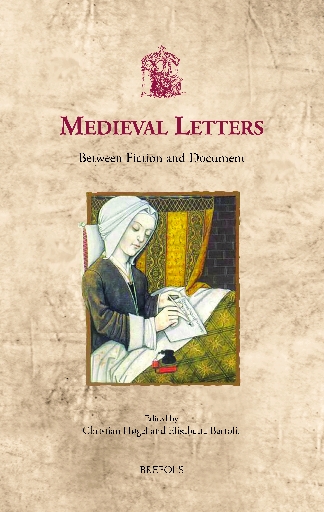
Medieval Letters
show More to view fulltext, buy and share links for:Medieval Letters show Less to hide fulltext, buy and share links for: Medieval LettersModern scholarship on medieval letters has often focused on the divide between fictionality and historicity. Attempts have been made to distinguish between ‘real’ letters and those that were used as stylistic models, and discussion has focused on how to make use of these texts as historical sources. In this volume, which draws on the proceedings of the ‘Medieval Letters between Fiction and Document’ conference held in Siena in 2013, scholars including Peter Dronke, Ronald Witt, Joan Ferrante, and Sylvie Lefèvre analyse the historical value of medieval letters in both Latin and other European languages and explore different disciplinary approaches to the field. Comprising contributions on methodology, Latin literature up to the fifteenth century, Byzantine and Romance literature, and courtly letters, this unique book also documents the debate on unedited texts - including women’s love letters - and on celebrated cases of disputed authorship such as the Epistolae duorum amantium and Dante’s Epistola to Cangrande. It thus offers a significant re-evaluation of the huge and partly unpublished heritage of medieval letters across Europe, and provides important insights into the use of these unique sources in social, literary, and legal history.
-