


Brepols Online Books Medieval Miscellanea Collection 2015 - bob2015mime

Collection Contents
3 results
-
-
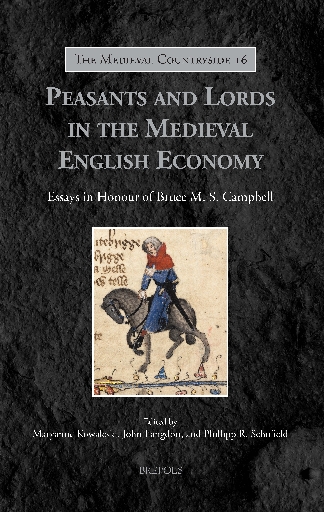
Peasants and Lords in the Medieval English Economy
show More to view fulltext, buy and share links for:Peasants and Lords in the Medieval English Economy show Less to hide fulltext, buy and share links for: Peasants and Lords in the Medieval English EconomyProfessor Bruce Campbell’s career has been devoted to providing systematic and highly influential studies of the medieval economy and society of the British Isles, including his innovative work on the role of the elites in defining medieval agricultural practices. This volume draws together essays from a distinguished group of researchers who have been inspired by Campbell’s work and the spirit of collegiality and inclusiveness that he has always demonstrated, and who wish to celebrate his significant contributions to scholarship. Many of the essays collected here engage directly with critical issues raised in Professor Campbell’s own research: how medieval society fed itself with reputedly very low levels of technology, the productivity of medieval society as a whole, the impact of external forces (particularly climate), the relationship between lords and peasants, and the importance of nonseigniorial contributions to the medieval economy.
-
-
-
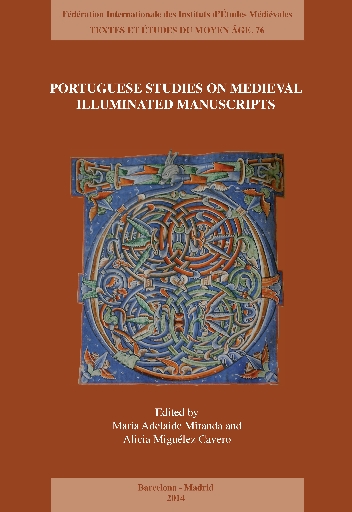
Portuguese Studies on Medieval Illuminated Manuscripts
show More to view fulltext, buy and share links for:Portuguese Studies on Medieval Illuminated Manuscripts show Less to hide fulltext, buy and share links for: Portuguese Studies on Medieval Illuminated ManuscriptsIn the most recent years a group of young researchers has given a new impetus to the study of Book Illumination in Portugal, promoting national and international research that focuses on understanding illuminated manuscripts in both their aesthetics and material dimensions, as well as the relationship between text and image. The developement of interdisciplinary research thanks, in part, to strategic partnerships between the Humanities and the domain of Exact Science has been established to address new issues raised by the need of more comprehensive and wide studies around the illuminated manuscript.
This volume gives thus light to the most important contributions of these new approaches, including new technical studies of pigments in manuscripts of the fund of the Monastery of Alcobaça and three copies of Hugh of Fouilloy’s Book of Birds, inquiries concerning a mismounted mappamundiin the Lorvão Beatus, a study of two southern French legal manuscripts, the image of the artist in astrological iconography, problems raised by two books of hours in the National Library of Portugal, and penwork decoration in fifteenth-century Hebrew manuscripts.
The authors of the volume belong to three Portuguese academic institutions. Maria Adelaide Miranda, Alicia Miguélez Cavero, Catarina Fernandes Barreira, Maria Alessandra Bilotta, Ana Lemos and Luís Ribeiro are integrated members of the Institute of Medieval Studies of the Nova University of Lisbon; Maria João Melo, Rita Castro, Conceição Casanova, Vania Solange Muralhas e Rita Araújo are members of the Department of Conservation and Restoration of the Nova University of Lisbon; Luís Urbano Afonso e Tiago Moita are members of the Institute of History of Art of the University of Lisbon.
-
-
-
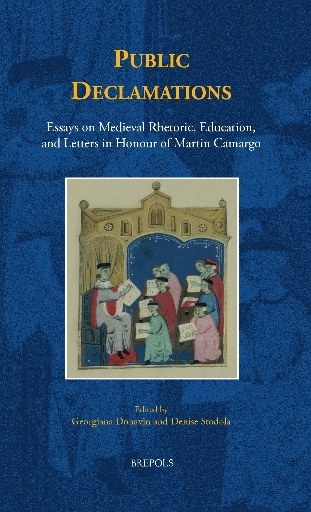
Public Declamations
show More to view fulltext, buy and share links for:Public Declamations show Less to hide fulltext, buy and share links for: Public DeclamationsMartin Camargo, Professor of English, Medieval Studies, and Classics at the University of Illinois at Urbana-Champaign, is a beloved teacher, mentor, colleague, and the scholar whose work this collection celebrates. With interests in defining ‘medieval rhetoric’, understanding the history of both literary and bureaucratic epistles, explaining the revival of rhetorical studies in fourteenth-century England, editing texts for teaching the trivium, and excavating performance pedagogies in medieval language classrooms, Carmago has paved the way for scholars in many fields, including educational and institutional history; literature, language, and manuscript studies; and rhetoric in the Middle Ages.
This book pays tribute to his own ground-breaking research by presenting original and inventive new work in many of these fields. Authored by established scholars and innovative new researchers alike, the essays contained in this volume give significant scope to didactic medieval commentaries, theories of medieval rhetoric and language, literary epistles and the ars dictaminis, and poetry of various genres including romances and riddles, as well as to the classroom practices that all of these investigations infer. In keeping with Camargo’s generosity in sharing resources, the authors hope that their essays in turn will provide encouragement and suggestions for further work.
-