


Brepols Online Books Medieval Miscellanea Collection 2015 - bob2015mime

Collection Contents
4 results
-
-
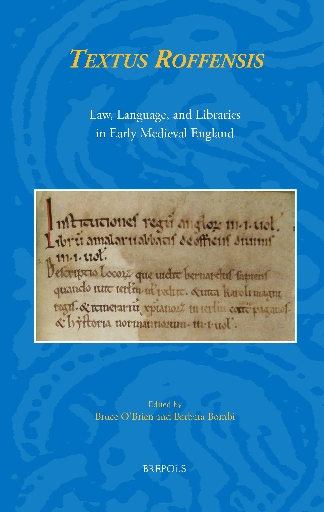
Textus Roffensis
show More to view fulltext, buy and share links for:Textus Roffensis show Less to hide fulltext, buy and share links for: Textus RoffensisTextus Roffensis, a Rochester Cathedral book of the early twelfth century, holds some of the most significant texts issued in early medieval England, ranging from the oldest English-language law code of King Æthelberht of Kent (c. 600) to a copy of Henry I’s Coronation Charter (5 August 1100). Textus Roffensis also holds abundant charters (including some forgeries), narratives concerning disputed property, and one of the earliest library catalogues compiled in medieval England. While it is a familiar and important manuscript to scholars, however, up to now it has never been the object of a monograph or collection of wide-ranging studies. The seventeen contributors to this book have subjected Textus Roffensis to close scrutiny and offer new conclusions on the process of its creation, its purposes and uses, and the interpretation of its laws and property records, as well as exploring significant events in which Rochester played a role and some of the more important people associated with the See. The work of the contributors takes readers into the mind of the scribes and compiler (or patron) behind the Textus Roffensis, as well as into the origins and meaning of the texts that the monks of early twelfth-century Rochester chose to preserve. The essays contained here not only set the study of the manuscript on a firm foundation, but also point to new directions for future work.
-
-
-
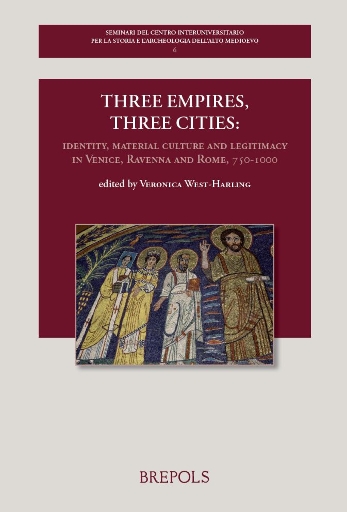
Three empires, three cities
show More to view fulltext, buy and share links for:Three empires, three cities show Less to hide fulltext, buy and share links for: Three empires, three citiesThis book focuses on three Italian cities in the early middle ages, Rome, Ravenna and Venice, and looks at them in a new light. The unifying element linking them was their common Byzantine past, since they remained in the sphere of imperial power after the creation of the Lombard kingdom in the late 6th century, up to 750. What happened to them when their links with the Byzantine Empire were almost entirely severed in the 8th century? Did they remain socially and culturally heirs of Byzantium in the 9th and 10th centuries in their political structures, social organisation, material culture, ideological frame of reference and representation of identity? Or did they become part of the next imperial powers of Italy, the Carolingian and the Ottonian empires? A workshop in Oxford in 2014 brought together an international group of specialists to discuss these questions in a comparative context; the excitement of their debates is captured in the discussion sections linking the papers in this volume. Early medieval Italy can be seen in a new way as a result.
-
-
-
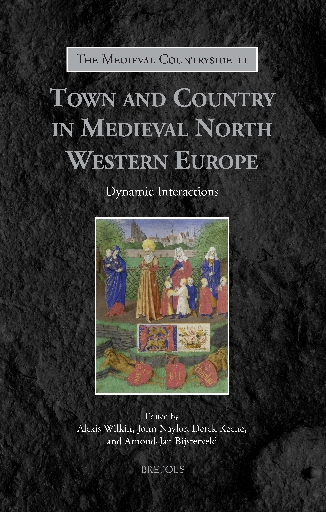
Town and Country in Medieval North Western Europe
show More to view fulltext, buy and share links for:Town and Country in Medieval North Western Europe show Less to hide fulltext, buy and share links for: Town and Country in Medieval North Western EuropeThis volume explores the relationships and interactions between medieval urban populations and their rural counterparts across north western Europe from the seventh to sixteenth centuries. This theme has become increasingly fragmented in recent decades, resulting in scholars being largely unaware of developments outside their own areas. The present volume brings together historians and archaeologists in order to highlight the varied ways in which town–country interactions can be considered, from perspectives that include economy, politics, natural environment, material culture, and settlement hierarchy. As a whole, the papers offer innovative interdisciplinary perspectives on the topic that create a new platform from which to understand more fully the complex, bilateral relationships in which both urban and rural spheres were able to influence and challenge each other. Contributions are wide-ranging, from the activities of elite, aristocratic groups in and around individual towns, to large-scale surveys covering wide areas. With coverage from the North Sea to the western Baltic, the book will be relevant to a range of disciplines including archaeology, history, and geography, and is aimed towards both advanced students and established scholars.
-
-
-
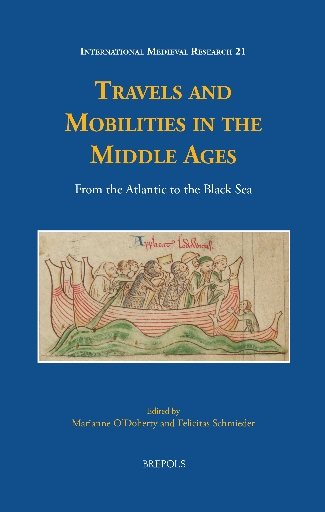
Travels and Mobilities in the Middle Ages
show More to view fulltext, buy and share links for:Travels and Mobilities in the Middle Ages show Less to hide fulltext, buy and share links for: Travels and Mobilities in the Middle AgesThis collection of research, which brings together contributions from scholars around the world, reflects the range and variety of work that is currently being undertaken in the field of travel and mobility in the European Middle Ages. The essays draw on diverse methodological approaches, from the archival and literary to the art historical and archaeological. The collection focuses not just on key medieval modes of travel and mobility, but also on themes whose relevance continues to resonate in the modern world. Topics touched upon include religious and diplomatic journeys, migration, mobility and governance, gendered mobilities, material culture and mobility, mobility and disability, travel and status, and notions of home and abroad. Broad themes are approached through case studies of individuals, families, and groups, ranging from kings, queens, and nobles to friars, exiles, and students. The geographical reach of the collection is particularly broad, encompassing travellers from Southern, Western, Northern, Central and Eastern Europe and journeys to destinations as diverse as Scandinavia, the Black Sea, the Mediterranean, and the Indian Ocean. A wide-ranging and detailed introduction situates the collection in its scholarly context.
-