


Brepols Online Books Other Miscellanea Collection 2015 - bob2015miot

Collection Contents
14 results
-
-
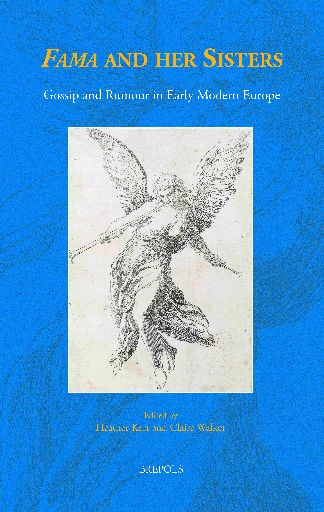
'Fama' and her Sisters
show More to view fulltext, buy and share links for:'Fama' and her Sisters show Less to hide fulltext, buy and share links for: 'Fama' and her SistersThe essays in this collection demonstrate how Fama and her sisters, gossip and rumour, were central in private and public discourses about state and society in early modern Europe. In an era when oral, scribal, visual, and print cultures competed to satisfy a growing public demand for ‘news’, gossip and rumour informed people about the actions and morals of their social and political elites, and they commonly enabled people who did not usually participate in politics to engage with the public discourses about religion, governance, and society which shaped their lives and the state. So while gossip and rumour might be scurrilous and entertaining, they nonetheless performed a vital political function, regulating communal and political behaviour in the upper social echelons, as well as in neighbourhoods lower down the social scale where they might constitute a form of popular justice. This timely interdisciplinary study explores how gossip and rumour functioned dualistically at all levels of the early modern state and society either to advance or to defame reputations, and thereby shape public opinion.
-
-
-
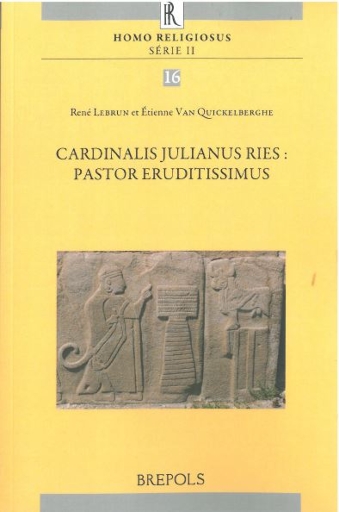
Cardinalis Julianus Ries, Pastor eruditissimus
show More to view fulltext, buy and share links for:Cardinalis Julianus Ries, Pastor eruditissimus show Less to hide fulltext, buy and share links for: Cardinalis Julianus Ries, Pastor eruditissimusLe présent volume dédié à la mémoire du Cardinal Julien Ries comporte deux parties : la première concerne la vie et l'oeuvre du prélat. Elle contient les contributions de plusieurs spécialistes de l'histoire des religions qui ont bien connu le Cardinal et ont eu le bonheur de travailler avec ce grand savant qu'il convient de ranger aux côtés de Franz Cumont, de Georges Dumézil ou encore de Mircéa Eliade. Sa réflexion sur l'Home Religiosus à la lumière des découvertes le plus récentes est essentielle. La bibliographie du Cardinal est impressionante et témoigne d'une activité débordante sur le plan universitaire; son enseignement tout comme ses recherches dans le cadre de l'Université catholique de Louvain, du Centre d'Histoire des religions qu'il y fonda, ou encore de l'Université du Sacré Coeur à Milan ont fait forte impression. Mais la personnalité universitaire du Cardinal J.Ries ne doit pas l'emporter sur l'homme d'Eglise. le « Pastor bonus » qu'il fut, le curé de campagne aimé et respecté.
La deuxième partie de l'ouvrage comporte la traduction actualisée et commentée de textes provenant de l'ancien Orient (monde anatolien, égyptien, iranien) et mettant en lumière la fonction sacerdotale dans l'Antiquité, à savoir le rôle et les devoirs du prêtre, la hiérarchie sacerdotale, son influence sur la société ainsi que son rôle politique et culturel.
-
-
-
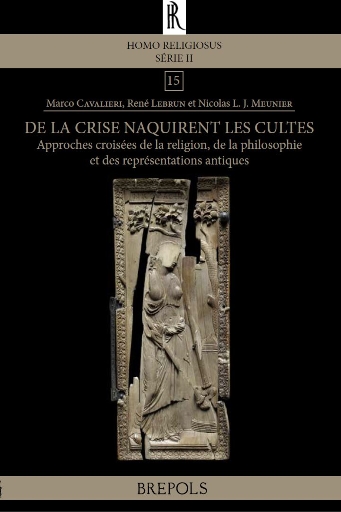
De la crise naquirent les cultes
show More to view fulltext, buy and share links for:De la crise naquirent les cultes show Less to hide fulltext, buy and share links for: De la crise naquirent les cultesDans le présent volume le lecteur prendra connaissance des contributions présentées à l’occasion d’un colloque international organisé à l’Université catholique de Louvain les 12 et 13 juin 2014 par le Centre d’étude des Mondes Antiques en collaboration avec le Centre d’Histoire des Religions Cardinal Julien Ries et les Actions de Recherche Concertées « A World in Crisis? ». Le thème se focalisait sur la corrélation des notions de « culte » et de « crise », dont les acceptions particulières se trouvent sensiblement modifiées et enrichies par leur mise en rapport. Le concept supérieur ainsi formé peut lui-même être mis en relation avec l’expression anglo-saxonne « Crisis Cults », originellement un des produits de la recherche ethno-anthropologique américaine des années 1970. Les contributeurs ont ainsi été invités à réfléchir sur la différence qu’ils pourraient éventuellement identifier, en se basant sur leur propre domaine de spécialisation, entre des cultes subissant une crise (ce que représente l’expression française « cultes en crise ») et des cultes issus d’une crise, autrement dit des cultes qui sont une réponse à une situation de crise (ce que traduit l’expression anglaise « Crisis Cults »).
Par son sujet même, ce volume se veut interdisciplinaire et subséquemment transversal aux thématiques abordées. Dans ces pages en effet ont été rassemblées les interventions de spécialistes provenant des domaines de l’archéologie, de la numismatique, de la philologie, de l’histoire et de la philosophie, autant de contributions portant sur des sujets aussi variés que le monde minoen, l’Égypte ancienne, les institutions de la Grèce classique, les civilisations anatoliennes, la philosophie platonicienne, la Rome aussi bien républicaine qu’impériale et l’époque tardo-antique.
Finalement, ce livre, non seulement constitue une avancée de la recherche dans différentes disciplines, mais ouvre aussi la voie à une étude phénoménologique et transversale des notions de « crise » et de « culte » et a ainsi posé quelques jalons en vue d’études ultérieures sur un sujet qui est loin d’être épuisé.
-
-
-
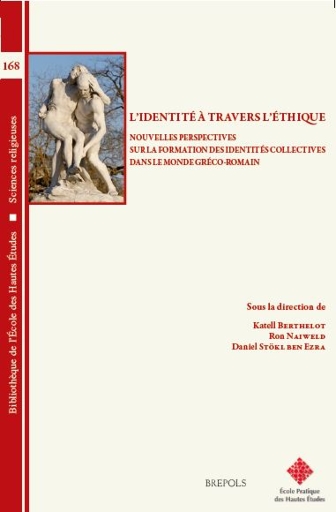
L'identité à travers l'éthique
show More to view fulltext, buy and share links for:L'identité à travers l'éthique show Less to hide fulltext, buy and share links for: L'identité à travers l'éthiqueCe livre réunit dix articles rédigés par des spécialistes des religions et des écoles philosophiques de lAntiquité, qui sinterrogent sur le rôle des discours, des valeurs et des catégories éthiques dans la formation des identités collectives au sein du monde gréco-romain.
Ce questionnement nous a paru nécessaire dans le contexte actuel de la recherche historique sur lAntiquité tardive. En e et, dans lhistoire de la recherche, la problématique de lidentité a principalement été abordée via létude des facteurs doctrinaux, rituels, institutionnels ou politiques. Il nous a semblé que le facteur éthique navait pas encore béné cié dune attention s u sa nte.
Notre but a été dexaminer comment les di érents groupes philosophiques et religieux (dans la mesure où lon peut nettement les distinguer dans le contexte de lAntiquité tardive) ont mobilisé des notions et des valeurs éthiques dans le processus, parfois inconscient, de la formation de leur identité.
-
-
-
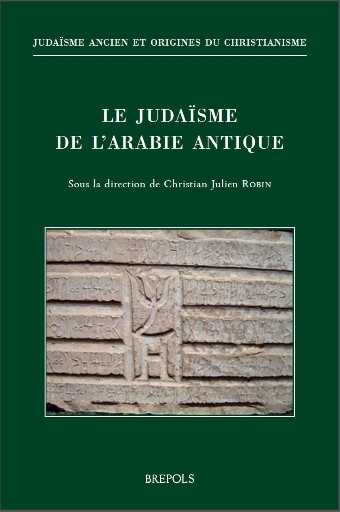
Le judaïsme de l'Arabie antique
show More to view fulltext, buy and share links for:Le judaïsme de l'Arabie antique show Less to hide fulltext, buy and share links for: Le judaïsme de l'Arabie antiqueLe judaïsme était solidement enraciné en Arabie quand Muḥammad fils de ʿAbd Allāh, le prophète de l’islam, s’est engagé dans une nouvelle voie. On le sait par les auteurs de langues grecque et syriaque de l’Antiquité tardive et par la Tradition arabo-musulmane. Par ailleurs, depuis l’islamisation de l’Arabie, il y a toujours eu des juifs, principalement au Yémen.Cependant, on a d’ordinaire considéré ces sources manuscrites, recopiées avec des erreurs, corrigées, remaniées, amplifiées et parfois falsifiées, avec une grande suspicion. On a notamment douté que le Yémen antique (le royaume de Ḥimyar) ait été juif et que ses rois aient dominé une grande partie de l’Arabie. Depuis une cinquantaine d’années, les recherches archéologiques apportent des confirmations et des correctifs. La découverte de dizaines d’inscriptions et de graffites au Yémen et dans le Ḥijāz en Arabie séoudite a mis en évidence que le judaïsme s’était enraciné en Arabie dès les premiers siècles de l’ère chrétienne et qu’il était dominant au Yémen à partir du iv e siècle, et probablement plus tôt dans certaines oasis du Ḥijāz. Le christianisme, qui a eu de nombreux adeptes dans les îles du golfe Arabo-persique et sur les côtes, ne s’est propagé au Yémen que tardivement dans quelques régions périphériques. Le judaïsme de l’Arabie antique dresse le premier inventaire exhaustif de toutes les données disponibles. Il tente également de dépasser cette première étape en mettant en évidence une série de petits faits qui permettent de s’interroger sur la nature du judaïsme qui s’est répandu en Arabie à partir du IIe siècle.
-
-
-
On Good Authority
show More to view fulltext, buy and share links for:On Good Authority show Less to hide fulltext, buy and share links for: On Good AuthorityThis book brings together views from various disciplines on the concept of authority in Greek and Latin literature from Antiquity to the Renaissance. More specifically it deals with the questions how texts attempt to gain authority, and if and how they use-or abuse-earlier writings in the construction of their own authority. Moreover, this volume examines to what extent a text’s authoritative claims influence its transmission and reception and how these claims themselves are subject to evolution over time. In this context, special attention is devoted to compilation literature (such as anthologies and commonplace books), which is characterized by extensive use of existing source material and thus specifically poses the problem of the role played by compilers in transmitting and establishing authority. The volume contains fifteen articles in which the contributors discuss various cases and texts that illustrate the different factors at stake in dealing with and constructing authority.
List of contributors: S. Boodts, L. Bossina, M. Crab, E. De Bom, E. De Ridder, I. De Vos, S. Delmas, I. Draelants, B. Flusin, E. Gielen, J. Hamesse, U. Kenens, K. Levrie, J. Mansfeld, S. Morlet, L. Waelkens.
-
-
-
Patristic Studies in the Twenty-First Century
show More to view fulltext, buy and share links for:Patristic Studies in the Twenty-First Century show Less to hide fulltext, buy and share links for: Patristic Studies in the Twenty-First CenturyTo mark the fiftieth anniversary of its inception, the International Association of Patristic Studies, in collaboration with the Center for the Study of Christianity in the Hebrew University of Jerusalem, convened an international conference in Jerusalem on 25th – 27th June, 2013. The theme of the conference was the state of patristic studies in the twenty-first century, focusing on the implications of the various settings and interests of patristic studies for the future of the field.
The collected proceedings include an overview of the current state of patristic studies around the world, with presentations from leading researchers from Eastern and Western Europe, North and South America, Africa, Asia and Australia, as well as plenary lectures and shorter papers on six designated themes which demonstrate the interdisciplinary relevance and contribution of Patristics: Patristics and the Confluence of Jewish, Christian and Muslim Cultures; Patristics Between Eastern and Western Christian Traditions; Patristics and Theology; Patristics, Literature and the Histories of the Book; Patristics and Art; Patristics and Archaeology.
-
-
-
Pouvoir et puissances chez Philon d’Alexandrie
show More to view fulltext, buy and share links for:Pouvoir et puissances chez Philon d’Alexandrie show Less to hide fulltext, buy and share links for: Pouvoir et puissances chez Philon d’AlexandrieThis collection of contributions focuses on the theme of power and divine powers in his work, with the latter constituting the limit of what human beings can know about God. In a vertical dimension, Philo never loses sight of these divine powers. The concept of power, however, also has a crucial horizontal dimension in human interaction and the political sphere, from the Egypt of the exodus, over Rome, to the Alexandria of Philo’s era.
-
-
-
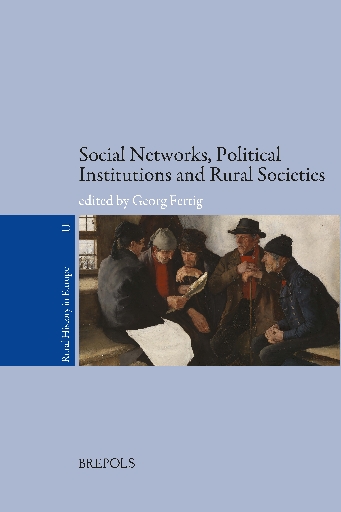
Social Networks, Political Institutions, and Rural Societies
show More to view fulltext, buy and share links for:Social Networks, Political Institutions, and Rural Societies show Less to hide fulltext, buy and share links for: Social Networks, Political Institutions, and Rural SocietiesThis book is a collection of essays on social networks, social capital, and kinship in historical and contemporary rural societies. They span a wide range of European countries and historical situations, from early modern Flanders and Italy to present-day Austria and Armenia. All the essays describe in detail how people on the countryside connected with one another in formal or informal relations. In doing so, the authors use and critically discuss methods of historical interpretation, social network analysis, and econometrics. The book analyses these topics in three steps. First, the authors address whether social relations can be of economic use. Secondly, they examine the institutional conditions for such a conversion of social into economic capital, reconstructing the often unexpected ways in which the economic and social spheres were connected both in ‘pre-modern’ and in ‘modern’ settings. Thirdly, they show how political institutions were constructed out of social networks.
Georg Fertig is professor of economic and social history at Halle University in Germany. He has worked extensively on 18th and 19th-century historical demography and agrarian history.
-
-
-
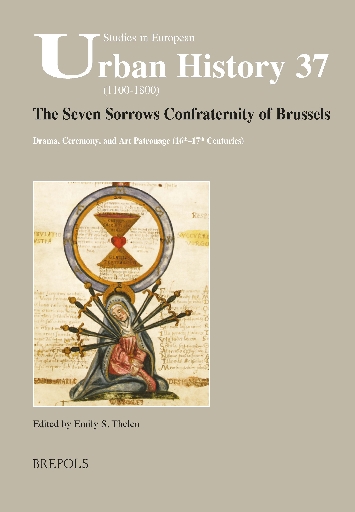
The Seven Sorrows Confraternity of Brussels
show More to view fulltext, buy and share links for:The Seven Sorrows Confraternity of Brussels show Less to hide fulltext, buy and share links for: The Seven Sorrows Confraternity of BrusselsDevotion to the Virgin of Seven Sorrows flourished in the Low Countries in the late fifteenth and early sixteenth centuries under the auspices of the court of Philip the Fair. Quickly becoming a widespread phenomenon, the Seven Sorrows devotion generated dramatic plays, artistic works, music, and numerous miracles. Underlying the popularity of the devotion was the network of confraternity chapters dedicated to the Virgin of Sorrows. Of these chapters, the Seven Sorrows confraternity of Brussels was singled out, receiving the special patronage of Philip the Fair, Maximilian I, and Margaret of Austria. Taking the confraternity of Brussels as a focal point, this volume examines the Seven Sorrows devotion in its urban context. The essays of this collection explore the artistic, musical, and dramatic products of the Seven Sorrows devotion as created in and by the civic networks and artistic channels of Brussels. The structure of the confraternity and its historical importance for the city are also demonstrated. As an important counterpoint to work in Italian confraternity studies, this volume is the first interdisciplinary study of a confraternity in the Low Countries in English.
Emily S. Thelen is a musicologist specialising in music and liturgy of the fifteenth and sixteenth centuries in the Low Countries. She received her PhD from Princeton University and most recently has held a post-doctoral fellowship at KU Leuven.
-
-
-
Analysis of Ancient and Medieval Texts and Manuscripts: Digital Approaches
show More to view fulltext, buy and share links for:Analysis of Ancient and Medieval Texts and Manuscripts: Digital Approaches show Less to hide fulltext, buy and share links for: Analysis of Ancient and Medieval Texts and Manuscripts: Digital ApproachesHow has the digital turn truly changed the nature of our research, particularly in the field of medieval scholarship where our collections are almost never large enough to justify the term 'big data'? All kind of new avenues of research are emerging, thanks to the creativity of scholars and to their interest in what digital means can offer. This collection of articles aims to give an up-to-date overview of the use of computer-assisted methods in several fields of scholarship dealing with ancient and medieval texts and manuscripts (from codicology and palaeography to textual criticism and literary or historical studies), across the boundaries of language and period. In moving away from theoretical debates about what the field of digital humanities is or should be, we present here a clearer picture of what textual scholars can achieve when they use computers for their research needs and purposes, and what their expectations may be in terms of the technology and developments in computational methodology.
List of contributors: T. Andrews, P. Andrist, F. Cafiero, J.-B. Camps, A. Cantera, A. Castro Correa, T. Heikkilä, A. Hoenen, A. Jordanous, E. R. Luján, C. Macé, E. Orduña, I. Rabin, P. Roelli, M. Romanov, S. Rubenson, L. Spinazzè, F. Stella, C. Tupman, K. Van Dalen-Oskam, J. van Zundert.
-
-
-

Autorité des auteurs antiques : entre anonymat, masques et authenticité
show More to view fulltext, buy and share links for:Autorité des auteurs antiques : entre anonymat, masques et authenticité show Less to hide fulltext, buy and share links for: Autorité des auteurs antiques : entre anonymat, masques et authenticitéIl n’est pas certain qu’il faille renoncer, dans le cas de la littérature ancienne, aux notions d’originalité, de style en tant que singularité ou expression propre de l’auteur, ou d’autonomie du littéraire. Dans la dialectique invention-fidélité au modèle, le mérite d’un auteur consistait à promouvoir une variante surprenante d’une histoire pourtant notoire, quoique peu répandue dans l’espace où il l’implante précisément et l’adapte. L’originalité consistait à rejoindre le dénouement connu par une voie inédite.
À défaut de toujours pouvoir retrouver la trace des auteurs réels de certains écrits anciens, surtout de ceux dont l’œuvre s’est vue attribuer une autorité de norme collective, à défaut de savoir d’où ils venaient et quelle était l’expérience qu’ils ont vécue ou l’histoire réelle qu’ils ont mise en mots, les contributions de ce volume s’interrogent sur le rapport des auteurs de textes religieux, mythologiques ou littéraires aux valeurs qui firent autorité ou qui sont à l’origine de leur « autorité ».
-
-
-
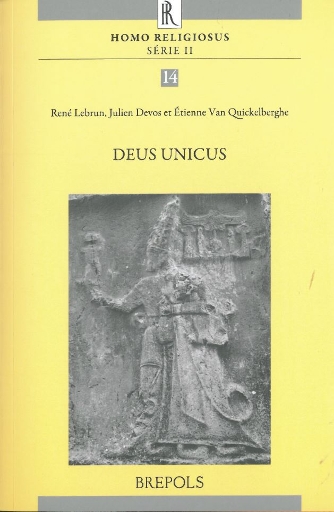
Deus Unicus
show More to view fulltext, buy and share links for:Deus Unicus show Less to hide fulltext, buy and share links for: Deus UnicusDans le présent volume le lecteur prendra connaissance des contributions importantes de nombreux spécialistes de l’histoire des religions liées à l'antiquité médierranéenne et présentées lors d’un colloque organisé à l’Université catholique de Louvain les 7 et 8 juin 2013 par le Centre d’Histoire des Religions Cardinal Julien RIES ; le thème s’articulait autour des origines du monothéisme en particulier en Méditerranée orientale et les régions adjacentes. L'analyse est difficile et réclame de fortes nuances ; notamment, il convient de ne pas confondre hénothéisme et monothéisme, et dans ce dernier cas, il convient de s'interroger sur la nature de cet être divin, son mode de fonctionnement ; y avait-il un signe annonciateur de ce qui deviendra la « métaphysique » aristotélicienne ?
-
-
-
Religious Obedience and Political Resistance in the Early Modern World
show More to view fulltext, buy and share links for:Religious Obedience and Political Resistance in the Early Modern World show Less to hide fulltext, buy and share links for: Religious Obedience and Political Resistance in the Early Modern WorldSeguendo una prospettiva storico-critica, i saggi raccolti nel volume propongono un’analisi delle trasformazioni delle idee teologico-politiche nel mondo islamico e nel mondo ebraico-cristiano della prima età moderna indagando quella affinità intrinseca che rileviamo se, da una mappatura particolare di dati fattuali e di culture specifiche, alziamo lo sguardo verso una prospettiva più ampia di sviluppo geografico-culturale e di circolazione delle idealità religiose, politiche, filosofiche e giuridiche. In questo volume, specialisti e studiosi della storia della filosofia e del diritto si sono interrogati sul ruolo che il modello normativo scritturale ha avuto nel pensiero occidentale e nel vicino Oriente nell’arco di tempo che va dal lungo medioevo alla modernità. Modelli concettuali, storico-politici e linguistici hanno fatto emergere la questione delle diverse forme di coesistenza religiosa, di coesistenza politica ed etnica in una medesima area geografica o su territori nazionali. I conflitti politico-religiosi cinque-seicenteschi posero filosofi e teologi di fronte al bivio tra l’obbedienza alla legge umana e l’osservanza della legge divina, e resero improrogabile la necessità di porre limiti e di ridisegnare l’estensione del potere politico per conservare la pace nella res publica. Il volume offre un incontro di personalità, di idee, di tradizioni culturali e di ricerche filosofiche e storiche, un progetto di studio e un contributo a successivi approfondimenti che si inserisce in una teoria della storia e della storiografia moderna che concepisce le concrezioni culturali, teoriche e materiali, il loro incontrarsi e trasformarsi attraverso le narrazioni di autori, di popoli, di libri e di traduzioni come nucleo della civiltà moderna. Una visione della cultura che, non nell’autocentrismo ma nel transfer culturale, coglie elementi fondanti, insegnamento e origine di riflessioni per la nostra contemporaneità.
-