


Brepols Online Books Other Monographs Collection 2015 - bob2015moot

Collection Contents
21 - 27 of 27 results
-
-
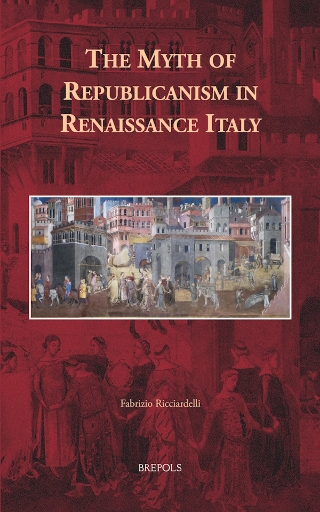
The Myth of Republicanism in Renaissance Italy
show More to view fulltext, buy and share links for:The Myth of Republicanism in Renaissance Italy show Less to hide fulltext, buy and share links for: The Myth of Republicanism in Renaissance ItalyThe period between the late thirteenth and early fourteenth centuries saw significant discussion in Italy about the two different political models of republicanism and seignorialism, reaching a climax at the end of the Trecento when the most influential scholars of Florence and Venice began to attack the despotism imposed on Milan by the Visconti. The arguments put forward by both sides were largely predictable: supporters of a Republic argued that liberty — represented by an elective government and independence from foreign powers — was of greatest importance, while those in favour of seignorialism instead claimed that they brought order, unity, and social peace.
In this book, the two systems of government represented in Italy are revisited, the arguments put forward by their supporters are compared and contrasted, and the development in the use of political language, especially in the city-states of Central and Northern Italy, is explored. The reality, it is suggested, is that the political systems of republicanism and seignorialism were not so very different. Republican governments ignored universal suffrage, those supported by signori did not always run totalitarian governments, and in both cases, power continued to be held by recurring oligarchical groups who were unwilling to enter into constructive dialogue with their opponents. However, as the two sides fought for power, the political arena became the testing ground for new forms of communication that could be used to manage and manipulate public opinion.
-
-
-
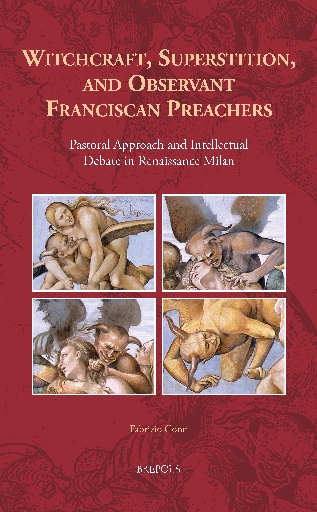
Witchcraft, Superstition, and Observant Franciscan Preachers
show More to view fulltext, buy and share links for:Witchcraft, Superstition, and Observant Franciscan Preachers show Less to hide fulltext, buy and share links for: Witchcraft, Superstition, and Observant Franciscan PreachersThis book offers a new and innovative approach to the study of magic and witchcraft in Italy between the late Middle Ages and the early modern period. Unusually, this subject is explored not through inquisitorial trial records or demonological literature, but through the sermons and confession manuals produced by Observant Franciscan friars, focusing on the so-called ‘pastoral’ approach to folklore, superstition, and witchcraft - an approach that appears to have been notably less harsh than that taken by inquisitors and dedicated demonologists.
Central to this research are the writings of a number of friars active at the friary of St Angelo’s in Milan. Among them were preachers and confessors such as Bernardino Busti, who treated superstition as part of a model that categorized the beliefs and behaviours of the faithful, as well as dedicated intellectuals such as Samuele Cassini, who took scepticism towards elements of belief in witchcraft still further, ultimately leading to a clash with groups such as the Dominicans.
By considering the writings of these men in their wider literary and pastoral context, and in the light of the broader reforming aims of the Franciscans, this unique study not only offers new insights into the late medieval understanding of superstition and witchcraft, but also makes an important contribution to the history of pastoral care.
-
-
-
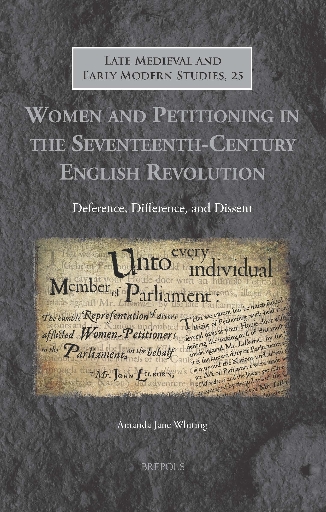
Women and Petitioning in the Seventeenth-Century English Revolution
show More to view fulltext, buy and share links for:Women and Petitioning in the Seventeenth-Century English Revolution show Less to hide fulltext, buy and share links for: Women and Petitioning in the Seventeenth-Century English RevolutionDuring the English Civil Wars and Revolution (1640-60), the affairs of Church and State came under a crucial new form of comment and critique, in the form of public petitions. Petitioning was a readily available mode of communication for women, and this study explores the ways in which petitioning in seventeenth-century England was adapted out of and differed from pre-Revolutionary modes, whilst also highlighting gendered conventions and innovations of petitioning in that period.
Male petitioning in the seventeenth century did not have to negotiate the cultural assumptions about intellectual inferiority and legal incapacity that constrained women. Yet just because women did not claim separate (and modern) women’s rights does not mean that they were passive, quiescent, or had no political agency. On the contrary, as this study shows, women in the Revolution could use petitioning as a powerful way to address those in power, precisely because it was done from an assumed position of weakness. The petition is not simply a text, authored by a single pen, but a series of social transactions, performed in multiple social and political settings, frequently involving people previously excluded from participation in political discussion or action. To the extent that women participated in collective petitioning, or turned their individual addresses into printed artefacts for public scrutiny, they also participated in the public sphere of political opinion and debate.
-
-
-
Gianfrancesco Pico della Mirandola: fede, immaginazione e scetticismo.
show More to view fulltext, buy and share links for:Gianfrancesco Pico della Mirandola: fede, immaginazione e scetticismo. show Less to hide fulltext, buy and share links for: Gianfrancesco Pico della Mirandola: fede, immaginazione e scetticismo.Nelle vicende storiografiche che determinano fortuna e ricezione dell’eredità di un autore, Gianfrancesco Pico della Mirandola ha conosciuto la sorte di chi esordisce all'ombra delle personalità distintive dell’epoca in cui vive e finisce per essere giudicato principalmente in relazione ad esse. Nipote di Giovanni Pico, discepolo di Girolamo Savonarola, Gianfrancesco ha faticato, così, a liberarsi dalle angustie delle definizioni di editore delle opere dello zio e apologeta del frate di San Marco, nonostante sia sopravvissuto all’uno come all’altro di quasi quarant’anni, lasciando una produzione tanto vasta da suggerire almeno cautela nella pretesa di ridurla a semplice ripresa di istanze altrui. Lo studio qui presentato propone una lettura complessiva dell’opera di Pico, individuando in fede, immaginazione e scetticismo i concetti intorno ai quali si articola la riflessione pichiana. Emerge così il profilo di una filosofia ‘inattuale’, costruita in tenace polemica con le istanze speculative tipiche del Rinascimento italiano ed europeo: all’ideale umanistico di concordia tra religione e sapienza pagana è contrapposto un atteggiamento critico nei confronti della razionalità filosofica, abbandonata a favore di una opzione fideistica; al mito cinquecentesco della dignitas hominis è sostituita una analisi delle debolezze, in campo etico e teoretico, della natura umana, condotta attraverso un originale ripensamento del ruolo dell’immaginazione, la facoltà conoscitiva che la maggior parte degli intellettuali del Rinascimento considerava segno delle capacità ‘magiche’ dell’anima. Proponendosi come una sorta di ‘anti-Ficino’ della propria epoca, Gianfrancesco introduce, primo tra i suoi contemporanei, temi destinati a lunga fortuna nella modernità: la messa in discussione del primato di Aristotele e del metodo scientifico aristotelico; il recupero dello scetticismo pirroniano, la riflessione sulla pluralità e la vanitas delle filosofie e l’interrogativo sulle diverse potenzialità epistemologiche di ratio e fides.
-
-
-
Himnodia hispánica
show More to view fulltext, buy and share links for:Himnodia hispánica show Less to hide fulltext, buy and share links for: Himnodia hispánicaSe puede decir que la himnodia cristiana, nacida en la liturgia siria con san Efrén (306-373), comienza a formar parte de la litúrgica de Occidente con san Hilariode Poitiers († 366) y sobre todo con san Ambrosio (340-397), su verdadero creador. Es a partir del siglo V cuando los himnos entrarán en la liturgia hispánica.
Esta es la traducción al español de los 210 himnos considerados hispánicos. Es la primera traducción que se hace de todos ellos. Con anterioridad muy pocos de estos han sido traducidos al español, generalmente de forma tangencial; algunos más son los traducidos al inglés. Muchas de estas traducciones pueden encontrarse en distintas web.
Es la primera traducción que se hace sobre un texto latino reciente (J. Castro Sánchez, Hymnodia Hispanica, CC SL 167, Turnhout, 2011), que, tomando como referencia la edición de Blume (Hymnodia Gothica. Die Mozarabischen Hymnen des alt-spanischen Ritus (Analecta Hymnica Medii Aeui, 27), Leipzig, 1897, reprint 1961) y partiendo sobre todo de la lectura de los manuscritos, ha tenido también en cuenta todas las ediciones particulares y los estudios posteriores sobre la himnodia de nuestra liturgia.
Cumple además dos importantes objetivos. Por una parte se pone al alcance de un lector culto, no necesariamente especialista, un rico tesoro de nuestra cultura, como es la poesía española, que en estos siglos (VI-XII) se identifica con la poesía religiosa. Por otra parte pretende ser un instrumento útil para mejor comprender la fijación del texto de los himnos de la edición crítica anteriormente citada.
José Castro Sánchez, Profesor Titular de latin de la Universidad de Córdoba (España) (actualmente jubilado),
Emilio García Ruiz, Catedrático de latin del Instituto Juana de Castilla de Madrid (España) (actualmente jubilado).
-
-
-
Summaries, Divisions and Rubrics of the Latin Bible
show More to view fulltext, buy and share links for:Summaries, Divisions and Rubrics of the Latin Bible show Less to hide fulltext, buy and share links for: Summaries, Divisions and Rubrics of the Latin BibleDom Donatien De Bruyne's work of a century ago has been all but unobtainable since it was first published quasi-anonymously just before the outbreak of the Great War. Originally conceived as an instrumentum laboris to the great Benedictine project to produce a critical edition of the Vulgate, it now has a new life as a unique collection of the division systems that were used with the biblical books before the twelfth century. These constitute a primary interpretation of the text, anterior to, and more pervasive in influence than any work of formal biblical exegesis.
This collection makes available the raw material for a new chapter in the study of the Latin Bible and the study of its reception in the later patristic and medieval periods. Moreover, it may usher in a new chapter in the history of biblical exegesis.
Donatien De Bruyne (1871-1935), a monk of the abbey of Maredsous (Belgium), worked from 1907 onward as a member of the Pontifical Commission for the Revision of the Vulgate. Visiting the European libraries he collected a great amount of material for the critical edition of the Vulgate, with a special attention to the Old Latin and also to ‘parabiblical’ texts such as summaries, divisions, and prefaces, a care uncommon at that time. His expertise in Latin palaeography and patristics was broadly recognised.
-
-
-
Une piété de la raison, philosophie et religion dans le stoïcisme impérial
show More to view fulltext, buy and share links for:Une piété de la raison, philosophie et religion dans le stoïcisme impérial show Less to hide fulltext, buy and share links for: Une piété de la raison, philosophie et religion dans le stoïcisme impérialHow can the stoics reconcile the research of rational piety based on moral perfection with the legitimization of the ritualism and traditional representation of pagan gods? After studying the constant oscillation between the legitimization and condemnation of traditional rites in ancient stoicism, we demonstrate that the roman stoics, Seneca, Cornutus, Persius, Epictectus and Marcus Aurelius, address the same question, but with two essential specifics: adapting it to the political-religious context of Imperial Rome and paying particular attention to their readers as to the pedagogic strategist to grant their moral conversion.
-