


Brepols Online Books Medieval Miscellanea Collection 2016 - bob2016mime

Collection Contents
3 results
-
-
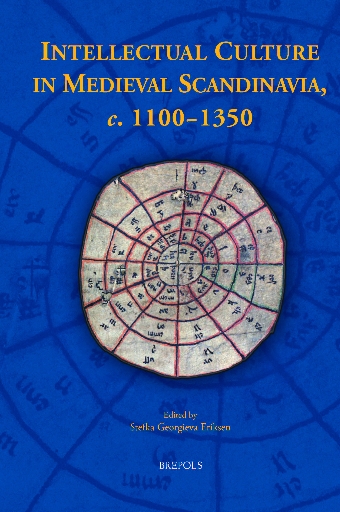
Intellectual Culture in Medieval Scandinavia, c. 1100–1350
show More to view fulltext, buy and share links for:Intellectual Culture in Medieval Scandinavia, c. 1100–1350 show Less to hide fulltext, buy and share links for: Intellectual Culture in Medieval Scandinavia, c. 1100–1350This book investigates the nature of intellectual activity in the Middle Ages from the perspective of medieval Scandinavia by discussing how a multimodal and multilingual Scandinavian culture emerged through the dynamic interchange of foreign and local impulses in the minds of creative intellectuals. By deploying cognitive theory, this volume conceptualizes intellectual culture as the result of the individual’s cognition, which incorporates physical perceptions of the world, memory and creation, rationality, emotionality and spirituality, and decision making. In doing so, it elucidates the diversity of social roles that could be assumed by people engaged in the activity of thinking. Attention is paid in particular to the key intellectual activities of negotiating secular and religious authority and identity; to thinking and learning through verbal and visual means; and to ruminating on worldly existence and heavenly salvation. These processes are explored in a series of essays that focus on various visual and textual artefacts, among them Church art and sculptures, manuscript fragments, and texts of both different languages (Latin and Old Norse) and genres (sagas, poetry and grammatical treatises, laws, liturgical explanations and theological texts). The variety of intellectual and ideational processes connected to the textual and material culture of medieval Scandinavia forms the focal point of this study. As a result, this book actively seeks to transcend the traditional cultural dichotomies of written versus oral material, Latin versus vernacular, lay versus secular, or European versus Nordic by foregrounding the cognitive and creative agency of intellectuals in medieval Scandinavia.
-
-
-
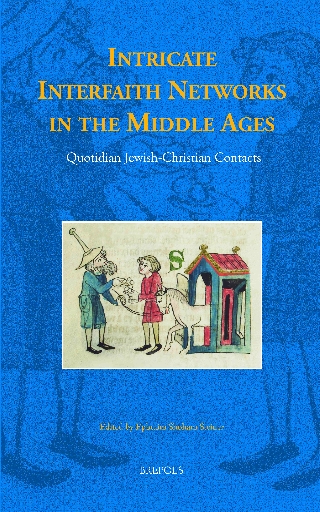
Intricate Interfaith Networks in the Middle Ages
show More to view fulltext, buy and share links for:Intricate Interfaith Networks in the Middle Ages show Less to hide fulltext, buy and share links for: Intricate Interfaith Networks in the Middle AgesRecent scholarship has suggested that the religious divide between Jews and Christians in the Middle Ages, although ever-present (and at times even violently so), did not stop individuals and groups from forming ties and expanding them in more intricate ways than previously thought. Moreover, these networks appear to have functioned with an apparent disregard towards any confessional and religious differences. Nevertheless, this was by no means a straightforward or simple situation; both the theological background to how each faith viewed ‘other’ beliefs, as well as the strong social, religious, and authoritative circles that at the least critiqued, even if they did not entirely discourage such contacts, created a formidable opposition to these networks. The articles in this book were presented as papers during an international workshop at the Central European University in Budapest in February 2010. In these presentations and discussions, the premise of interfaith relations and networks was thoroughly explored across Europe from the Iberian Peninsula to the eastern Hungarian frontier, and from England to Italy throughout the high and later medieval period. In this volume, the contributors explore a number of phenomena through different disciplinary approaches. Ties of an economic and cultural nature are examined, and attention is paid to social contacts and networks in the fields of art and the sciences, and matters of daily life. The picture that emerges is altogether more nuanced and diverse than the bipolar paradigm that has dominated previous scholarship.
-
-
-
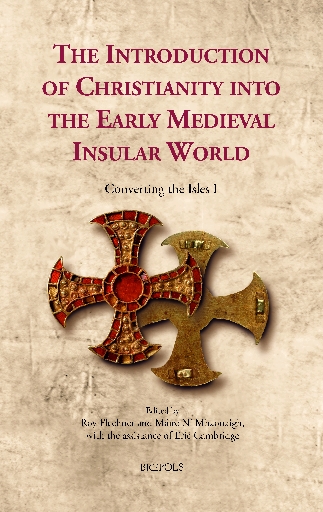
The Introduction of Christianity into the Early Medieval Insular World
show More to view fulltext, buy and share links for:The Introduction of Christianity into the Early Medieval Insular World show Less to hide fulltext, buy and share links for: The Introduction of Christianity into the Early Medieval Insular WorldConversion to Christianity is arguably the most revolutionary social and cultural change that Europe experienced throughout Late Antiquity and the early Middle Ages. Christianisation affected all strata of society and transformed not only religious beliefs and practices, but also the nature of government, the priorities of the economy, the character of kinship, and gender relations. It is against this backdrop that an international array of leading medievalists gathered under the auspices of the Converting the Isles Research Network (funded by the Leverhulme Trust) to investigate social, economic, and cultural aspects of conversion in the early medieval Insular world, covering different parts of Britain, Ireland, Scandinavia, and Iceland.
This is is the first of two volumes showcasing research generated through the ‘Converting the Isles’ Network. This volume focuses on specific aspects of the introduction of Christianity into the early medieval Insular world, including the nature and degree of missionary activity involved, socio-economic stimulants for conversion, as well as the depiction and presentation of a Christian saint. Its companion volume has the transformation of landscape as its main theme. By adopting a broad comparative and crossdisciplinary approach that transcends national boundaries, the material presented here and in volume II offers novel perspectives on conversion that challenge existing historiographical narratives and draw on up-to-date archaeological and written evidence in order to shed light on central issues pertaining to the conversion of the Isles.
-