


Brepols Online Books Medieval Miscellanea Collection 2016 - bob2016mime

Collection Contents
4 results
-
-
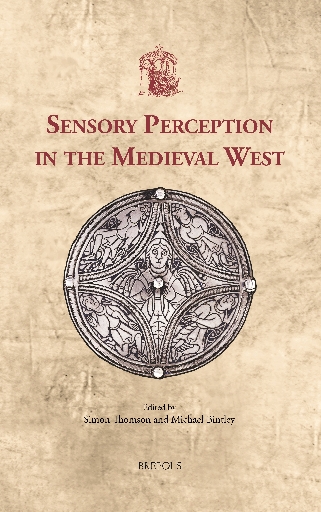
Sensory Perception in the Medieval West
show More to view fulltext, buy and share links for:Sensory Perception in the Medieval West show Less to hide fulltext, buy and share links for: Sensory Perception in the Medieval WestWhat was it like to experience the medieval world through one’s senses? Can we access those past sensory experiences, and use our senses to engage with the medieval world? How do texts, objects, spaces, manuscripts, and language itself explore, define, exploit, and control the senses of those who engage with them?
This collection of essays seeks to explore these challenging questions. To do so is inevitably to take an interdisciplinary and context-focused approach. As a whole, this book develops understanding of how different fields speak to one another when they are focused on human experiences, whether of those who used our sources in the medieval period, or of those who seek to understand and to teach those sources today.
Articles by leading researchers in their respective fields examine topics including: Old English terminology for the senses, effects of the digitisation of manuscripts on scholarship, Anglo-Saxon explorations of non-human senses, scribal sensory engagement with poetry, the control of sound in medieval drama, bird sounds and their implications for Anglo-Saxon sensory perception, how goldwork controls the viewing gaze, legalised sensory impairment, and the exploitation of the senses by poetry, architecture, and cult objects.
-
-
-
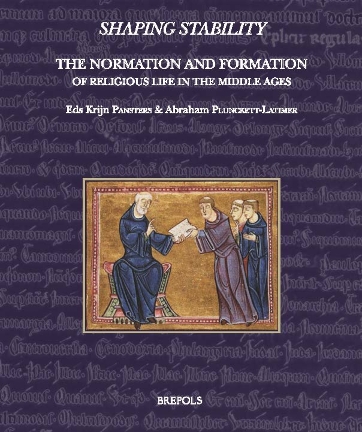
Shaping Stability
show More to view fulltext, buy and share links for:Shaping Stability show Less to hide fulltext, buy and share links for: Shaping StabilityThis volume examines the efforts of medieval religious communities and orders to bring stability to the dynamic complexity of organized religious life. By focusing on legislative structures and normative documents (rules, customaries, constitutions), the authors address not only such matters as the meaning of these texts and the motivations behind them, but also the evolving conditions of their production and use, the internal politics of institutional change, and the reality of “precept not practice.” These papers thus present spiritual principles and social practices in their historical and functional contexts, confront normative programs with formative processes, and explain distinctive modes and models of life within the broader landscape of medieval organized religion..
-
-
-
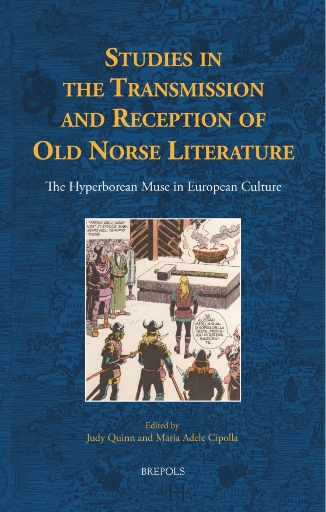
Studies in the Transmission and Reception of Old Norse Literature
show More to view fulltext, buy and share links for:Studies in the Transmission and Reception of Old Norse Literature show Less to hide fulltext, buy and share links for: Studies in the Transmission and Reception of Old Norse LiteratureThe compelling world of the Vikings and their descendants, preserved in the sagas, poetry, and mythology of medieval Iceland, has been an important source of inspiration to artists and writers across Europe, as well as to scholars devoted to editing and interpreting the manuscript texts. A variety of creative ventures have been born of the processes of imagining this distant ‘hyperborean’ world. The essays in this volume, by scholars from Italy, Sweden, Denmark, Norway, Germany, and the UK, examine the scholarly and artistic reception of a variety of Old Norse texts from the beginnings of the manuscript tradition in twelfth-century Iceland to contemporary poetry, crime fiction, and graphic novels produced in Britain, Ireland, Italy, and Iceland. The influence of Old Norse literature is further explored in the context of Shakespeare’s plays, eighteenth-century Italian opera, the Romantic movement in Sweden and Denmark, and the so-called ‘nordic renaissance’ of the late nineteenth century (including the works of August Strindberg and William Morris), as well as in some of the political movements of twentieth-century northern Europe. Interest in Old Norse literature is charted as it spread beyond intellectual centres in Europe and out to a wider reading and viewing public. The influence of the ‘hyperborean muse’ is evident throughout this book, as the idea of early Nordic culture has been refashioned to reflect contemporary notions and ideals.
-
-
-
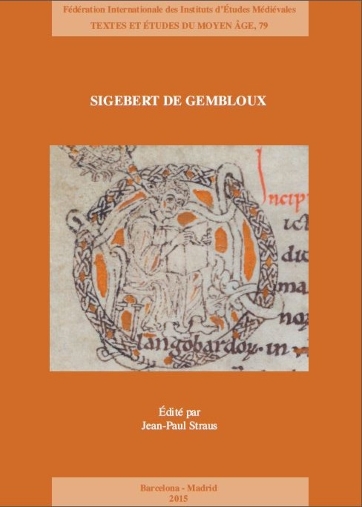
Sigebert de Gembloux
show More to view fulltext, buy and share links for:Sigebert de Gembloux show Less to hide fulltext, buy and share links for: Sigebert de GemblouxSigebert de Gembloux (1028 env. - 5 octobre 1112) s'est illustré en des genres littéraires très divers, le point culminant de son œuvre étant sans conteste sa Chronique qui constitue, comme l'écrit très justement M. Chazan, « un des sommets de l'historiographie médiévale ».
La recherche à son sujet ne cesse d'évoluer, et l’ouvrage qu’on présente ici en est sans conteste un précieux jalon. Il est la conclusion d’une rencontre qui se tint à Bruxelles et à Gembloux les 5 et 6 octobre 2012. Point de départ plus qu’aboutissement, cette rencontre a ouvert des perspectives neuves autant que variées. S'y croisent les points de vue de l'historien, de l'archéologue et du philologue qui se penchent sur le personnage, l'oeuvre et son terreau, l'abbaye de Gembloux. Ce recueil ne prétend pas à l’exhaustivité - l’est-on jamais en aussi riche matière où de plus l’enquête ne cesse d’évoluer ? On reconnaîtra en filigrane les traces d’autres recherches en cours sur le même sujet, auxquelles d’ailleurs les textes font de fréquentes références. Il y a donc deux cohérences, celle de l’ensemble des articles présentés ici, qui couvrent un large éventail dont les sujets s’enchaînent et se répondent, et celle qui englobe d’autres écrits importants tenant au même objet. Ainsi, le présent ouvrage contribue sans aucun doute à l’avancement des études sigebertiennes.
Les contributions sont dues à M. Chazan (U. Lorraine), M. De Waha (ULB), J. Meyers (U. Montpellier), Ph. Mignot (Dir° arch. Wall.), P. Tombeur (UCL), W. Verbaal (UGent), M. Verweij (KBR Bruxelles)
-