


Brepols Online Books Medieval Miscellanea Collection 2016 - bob2016mime

Collection Contents
42 results
-
-
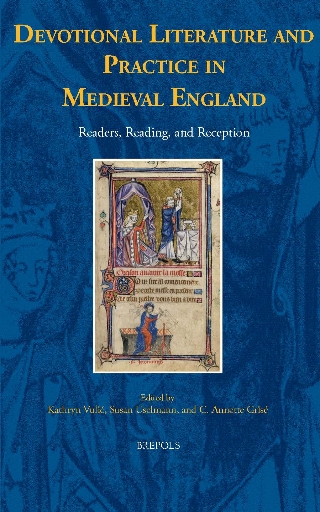
Devotional Literature and Practice in Medieval England
show More to view fulltext, buy and share links for:Devotional Literature and Practice in Medieval England show Less to hide fulltext, buy and share links for: Devotional Literature and Practice in Medieval EnglandThis volume recognises that religious writings care deeply about how devotional reading takes place, providing models for improving reading as a way of improving one’s ability to worship. The abundant evidence from medieval England suggests a deep interest among devotional writers in documenting, teaching, and circumscribing devotional reading, given the importance of careful reading practices for salvation. This volume therefore draws together a wide range of interests in and approaches to studying the reading and reception of devotional texts in medieval England, from representations of readers and reading in devotional texts, to literary production and reception of devotional texts and images, to manuscripts and early books as devotional objects, to individual readers and patrons of devotional texts.
Prefaced by a substantial introduction by the editors - setting the community in its wider religious and cultural environment and against the backdrop of broad historiographical trends - this volume brings together substantial essays based on original research by new and leading scholars in the field of medieval English studies. This collection (and indeed, many of the individual articles) brings into dialogue a number of traditional disciplinary approaches - early and late medieval English literary studies, gender studies, manuscript studies, and religious studies. It strives to reflect trends in current scholarship of breaking down disciplinary boundaries and exploring the relationships between and among not only analytical and critical perspectives, but also the kinds of evidence examined.
-
-
-
Felici curiositate. Studies in Latin Literature and Textual Criticism from Antiquity to the Twentieth Century. In Honour of Rita Beyers
show More to view fulltext, buy and share links for:Felici curiositate. Studies in Latin Literature and Textual Criticism from Antiquity to the Twentieth Century. In Honour of Rita Beyers show Less to hide fulltext, buy and share links for: Felici curiositate. Studies in Latin Literature and Textual Criticism from Antiquity to the Twentieth Century. In Honour of Rita BeyersThe papers collected in this Festschrift in honour of Rita Beyers, Professor Emerita of Latin at the University of Antwerp and Director of the Corpus Christianorum, Series Latina and Continuatio Mediaevalis, focus on ancient (especially Christian) Latin literature and its influence in the Middle Ages and beyond.
In the first section, new light is shed on some important apocryphal texts from the second to the tenth century. The second part is devoted to literary and doctrinal aspects of works produced in the patristic era. The third part brings together a number of micro-historical studies on medieval (Latin, Byzantine, and vernacular) literature. The papers of the fourth section present some little-known Neo-Latin texts and offer a fresh analysis of the reception of ancient Christian texts in modern French and English literature. The volume, which contains several critical editions of previously unedited texts, concludes with two essays musing on the art of textual editing and the quintessence of philology.
-
-
-
L'icône dans la pensée et dans l'art
show More to view fulltext, buy and share links for:L'icône dans la pensée et dans l'art show Less to hide fulltext, buy and share links for: L'icône dans la pensée et dans l'artLa synonymie icône − image divine − objet de culte a toujours posé problème. Évidente pour les Byzantins vainqueurs dans la crise qui a opposé les adorateurs des icônes au parti des iconoclastes, elle est cependant contestée aussi bien par les Latins, malgré les vertus pédagogiques qu’ils ont assignées aux images, que par nombre de communautés chrétiennes orientales habituées à accorder un pouvoir divin aux objets de culte et aux reliques. Cette synonymie repose toutefois sur l’un des principes fondateurs du christianisme : le rapport entre la connaissance de Dieu et le statut de l’homme « image de Dieu ».
Les études ici réunies ne sont pas focalisées sur le seul dossier des crises iconoclastes byzantines et des ripostes latines, mais se déploient sur trois moments historiques du christianisme. Dans ses deux premières parties, le volume propose un croisement des perspectives grecque, puis byzantine, et latine romaine, puis carolingienne sur le monde visible et l’image. La troisième partie réfléchit sur les modalités par lesquelles le monde slave, héritier de Byzance, prend à son compte les fonctions religieuses et politiques assignées à l’image sous l’appellation d’icône, en en faisant l’un de ses principaux repères identitaires.
Chacun des articles étudie les implications de l’image dans la réflexion sur le divin et, en retour, l’impact de cette réflexion sur la configuration de l’image elle-même. La relation mutuelle entre théologie et image, que celle-ci soit visuelle ou purement noétique, est au cœur de cet ouvrage.
-
-
-
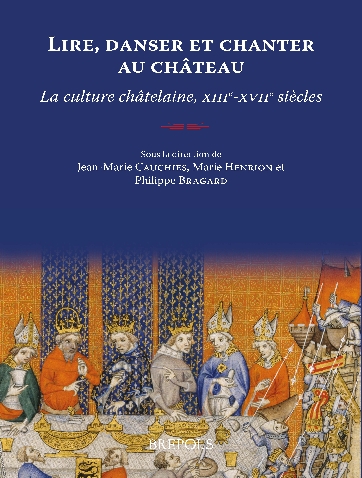
Lire, danser et chanter au château. La culture châtelaine, XIII-XVIIe siècles
show More to view fulltext, buy and share links for:Lire, danser et chanter au château. La culture châtelaine, XIII-XVIIe siècles show Less to hide fulltext, buy and share links for: Lire, danser et chanter au château. La culture châtelaine, XIII-XVIIe sièclesLieu de défense, de résidence, d’exercice et de représentation du pouvoir, d’exploitation et d’administration, le château du moyen âge et du premier âge moderne est aussi lieu de culture, de fête et de divertissement. Il peut être aussi objet de regards culturels. Ce lieu se prête à la danse, aux concerts, aux réjouissances en tout genre. Trouvères et ménestrels, bateleurs et jongleurs y proposent leurs récits, leurs chants, leurs spectacles. Tout y concourt à la « théâtralisation constante du mode de vie noble ». Mais la demeure seigneuriale est aussi lieu de création, quand le maître et seigneur y accueille pour qu’ils y résident et s’y adonnent à la production écrivains, musiciens ou artistes. Une poésie de cour y a d’ailleurs pris naissance, en France, en Italie, en Allemagne. Plus tard, des troupes de comédiens y seront entretenues. Poètes et artistes venus au château l’ont ensuite célébré de leur plume ou de leur pinceau. Entre ses murs, un espace privilégié peut être celui d’une bibliothèque, éventuelle héritière d’un « cabinet de manuscrits ». Certains seigneurs sont eux-mêmes écrivains. Et si des livres reposent dans le château, le château trouvera en retour sa place dans les livres, par le texte, l’image, la description et la figuration, réalistes ou idéalisées.
Après le château lui-même, ses abords, sa gestion, voici venu le temps de « Lire, danser et chanter au château. La culture châtelaine, XIII e-XVII e siècles », thème du quatrième colloque de la Fondation van der Burch au château-fort d’Écaussinnes-Lalaing en mai 2013.
-
-
-
Translation and Authority - Authorities in Translation
show More to view fulltext, buy and share links for:Translation and Authority - Authorities in Translation show Less to hide fulltext, buy and share links for: Translation and Authority - Authorities in TranslationThe question about the relation between medieval translation practices and authority is a complex and multifaceted one. Depending on one’s decision to focus on the authority of the source-text or of the translated text itself, on the author of the original text, on the translator, or on the user of the translation, it falls apart in several topics to be tackled, such as, just to name a few: To what extent does the authority of the text to be translated affect translational choices? How do translators impose authority on their text? By lending their name to a translation, do they contribute to its authoritative status?
After two introductory essays that set the scene for the volume, addressing the above questions from the perspective of translations of authoritative texts into Dutch and French, the focus of the volume shifts to the translators themselves as authorities. A next section deals with the choices of texts to be translated, and the impact these choices have on the translation method. A third part is dedicated to papers that examine the role of the users of the translations.
The selection of papers in the present volume gives a good indication of the issues mentioned above, embedded in a field of tension between translations made from a learned language to a vernacular language, translations from one vernacular to another, or even from a vernacular to the Latin language.
-
-
-
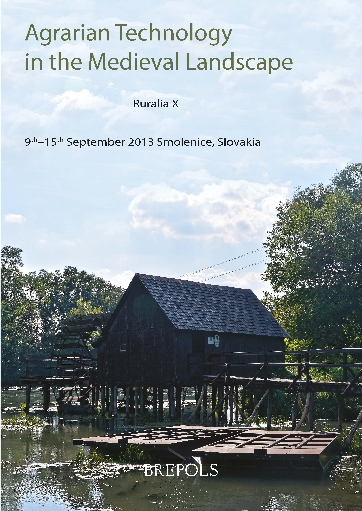
Agrarian Technology in the Medieval Landscape
show More to view fulltext, buy and share links for:Agrarian Technology in the Medieval Landscape show Less to hide fulltext, buy and share links for: Agrarian Technology in the Medieval LandscapeRuralia X includes 27 papers dealing with agrarian technologies in the medieval landscape as seen in different European countries. The subject areas include cultivation, livestock husbandry, gardening, viticulture and woodland management – interpreting the concept of agrarian production in a broad sense – studied mainly on the basis of archaeology, but also using iconography, documentary evidence and archaeo-environmental approaches.
Ruralia X, marks an important step on the way towards interpreting innovation, as well as understanding the varieties of agrarian activity from a Europe-wide perspective.
Authors from 14 countries provide a broad overview of the current issues, complemented by extensive bibliographies. Ruralia X represents one of the current fields of European archaeological research and offers a solid foundation for further comparative studies.
-
-
-
Approaches to Poverty in Medieval Europe
show More to view fulltext, buy and share links for:Approaches to Poverty in Medieval Europe show Less to hide fulltext, buy and share links for: Approaches to Poverty in Medieval EuropeThe essays in this volume re-examine two major medieval turning points in the relationship between rich and poor: the revolution in charity of the twelfth and thirteenth centuries, and the era of late medieval crises when the vulnerability of the poor increased dramatically and charitable generosity often declined. Drawing on a variety of sources from England, France, the Low Countries, Italy, and Iberia, the contributors to this volume add new perspectives on the agency of the poor, the influence of gendered forms of devotion, parallels in Christian and Jewish representations of the deserving and undeserving poor, and the effect of mendicant piety on the status of the involuntary poor. A broader implication of the volume as a whole is that medieval studies of poverty and wealth need to pay more attention to the role of rulers, ruling elites, and public policy in shaping the experiences of the poor.
-
-
-

Aspetti del meraviglioso nelle letterature medievali. Aspects du merveilleux dans les littératures médiévales
show More to view fulltext, buy and share links for:Aspetti del meraviglioso nelle letterature medievali. Aspects du merveilleux dans les littératures médiévales show Less to hide fulltext, buy and share links for: Aspetti del meraviglioso nelle letterature medievali. Aspects du merveilleux dans les littératures médiévalesThis book provides a fresh insight into European medieval culture by focusing on the concept of the marvellous as it was depicted in medieval writings. Drawing together papers that were presented at the Aspects of the Marvellous in Medieval Literature conference, held at the University of L’Aquila in November 2012, the volume takes a broad multicultural and multilingual approach that offers new perspectives onto the various kinds of mirabile and their common themes in texts from across Europe. Contributions to this volume pay equal attention to both Latin and vernacular writings, and cover aspects of the marvellous in fields as diverse as medieval Latin literature, Romance, Germanic, and Celtic philology, miracles and mirabilia, monsters and fairies, strange creatures and fantastic worlds. Above all, by expanding analysis through different literatures, languages, and literary genres, the volume not only provides an opportunity to compare and contrast key themes and features of these texts, but also casts new light onto the making of our own cultural identity.
-
-
-
Crusading on the Edge
show More to view fulltext, buy and share links for:Crusading on the Edge show Less to hide fulltext, buy and share links for: Crusading on the EdgeThis volume brings together contributions from fifteen historians and art historians working on the history of the crusades, focusing on Iberia and the Baltic region. The subjects treated include the historiography of the Iberian and Baltic crusades; the transfer of crusading ideas from the Holy Land to Iberia and the Baltic region and the use of such ideas in local rhetoric and propaganda; the papal attitudes towards the Iberian and Baltic campaigns; the papal attitudes towards Muslims living in Christian Spain; the interaction between conquered and conquerors as reflected in art and architecture; and the exchange of information about the crusades in Iberia and the wider Baltic Region. The collection thus throws further light not only onto events in the Iberian Peninsula and the Baltic region but also onto the development of the crusade movement in general. It constitutes a valuable resource for both undergraduates and postgraduates studying the crusade movement in the Middle Ages.
Torben Kjersgaard Nielsen is Associate Professor in Medieval History at Aalborg University, Denmark. His main research interests cover the history of the Baltic Crusades, the medieval papacy, and Denmark in the Middle Ages.
Iben Fonnesberg-Schmidt is Professor (MSO) of Medieval History at Aalborg University, Denmark. Her research interests focus on papal communication and papal involvement in mission and crusades in the central Middle Ages.
-
-
-
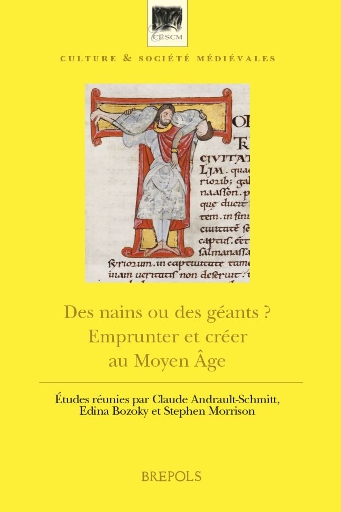
Des nains ou des géants ?
show More to view fulltext, buy and share links for:Des nains ou des géants ? show Less to hide fulltext, buy and share links for: Des nains ou des géants ?« Bernard de Chartres disait que nous sommes comme des nains assis sur les épaules de géants de sorte que nous pouvons voir davantage [de choses] qu’eux et plus loin non certes à cause de l’acuité de notre propre vue ou de la hauteur de notre corps, mais parce que nous sommes soulevés en hauteur et élevés à une hauteur gigantesque » (Jean de Salisbury, Metalogicon, III, 4).
Les géants de l’adage sont l’incarnation de l’autorité du passé, si prégnante dans la culture du Moyen Âge. Mais la tradition, qui est à la fois contrainte et force, porte en elle les germes d’une véritable inventivité. La nouveauté se nourrit de l’ancien, pour le transformer et le dépasser.
Issues d'un colloque interdisciplinaire organisé à Poitiers en 2011, les études de ce volume se proposent d'analyser la nature, le contenu, les modalités ou la finalité des emprunts pour appréhender des phénomènes plus complexes tels que la recomposition ou le déplacement, fondés plutôt sur la notion de référence, d’allusion, d’influence, de choix. Passifs ou délibérés, individuels ou collectifs, éphémères ou durables, ces réaménagements peuvent être considérés comme autant de créations nouvelles témoignant de la vitalité du Moyen Âge et de sa capacité à façonner un paysage culturel en perpétuel mouvement. Les éditeurs du volume - Claude Andrault-Schmitt, Edina Bozoky et Stephen Morrison -, sont professeurs à l'Université de Poitiers et membres du Centre d'études supérieures de Civilisation médiévale.
-
-
-
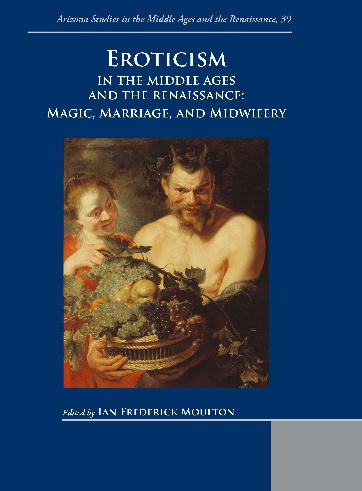
Eroticism in the Middle Ages and the Renaissance
show More to view fulltext, buy and share links for:Eroticism in the Middle Ages and the Renaissance show Less to hide fulltext, buy and share links for: Eroticism in the Middle Ages and the RenaissanceMagic rings; seductive she-devils; satyrs bound and whipped on stage; a woman sexually coerced in the confessional; a boy caught masturbating over a midwifery manual; a marriage of true minds between two men; a prince led to repentance at the sight of a naked girl prepared to give her life for his. These varied manifestations of medieval and early modern sexuality - each at the center of one of the essays in this volume - suggest the ubiquity and diversity of eroticism in the period. The erotic is the stuff of legend, but also of daily life. It is inextricable from relations of power and subordination and is plays a fundamental role in the heirarchical social structures of the period. The erotic is also very much a part of the spiritual realm, often in morally ambiguous ways. The seven essays collected in this volume explore the role the erotic played in early modern notions of happiness or fulfillment, in clerical life, in Jewish legend, heretical magic and Christian marriage, in poetry, on the public stage, and in medical manuals.
-
-
-
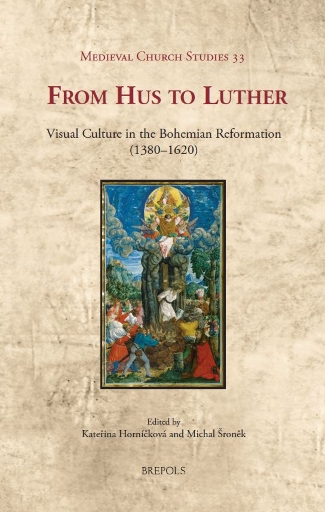
From Hus to Luther
show More to view fulltext, buy and share links for:From Hus to Luther show Less to hide fulltext, buy and share links for: From Hus to LutherThis book portrays a little-known phenomenon in Bohemian cultural and political history - the visual culture that grew up in the environment of Reformation churches in Bohemia from the time of the Hussites until the defeat of the Estates by the Habsburg coalition at White Mountain in 1620. It provides the first comprehensive overview of a forgotten era of artistic production over a period of approximately two hundred years, when most of the population of Bohemia professed non-Catholic faiths.
During the fifteenth and sixteenth centuries a unique situation arose in Bohemia, with five main Christian denominations (Utraquists, Lutherans, the Unity of Brethren, Calvinists, and Catholics) gradually coming to function alongside each other, with a number of other religious groups also active. The main churches, which had a fundamental influence on political stability in the state, were the majority Utraquists and the minority Catholics. Yet the essays of this book establish that despite the particularities of the Bohemian situation, the religious trends of Bohemia were an integral part of the process of Reformation across Europe.
Featuring over fifty illustrations including manuscript illumination, panel painting, and architecture, the book also presents the surviving cultural products of the four non-Catholic Christian denominations, ranging from the more moderate to radical Reformation cultures. The book also analyses the attitudes of these denominations to religious representations, and illuminates their uses of visual media in religious and confessional communication. The book thus opens up both the Reformation culture of Bohemia and its artistic heritage to an international audience.
-
-
-
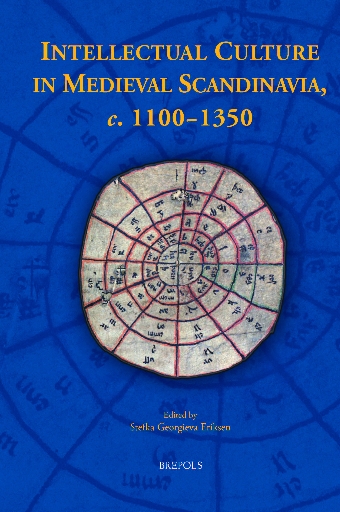
Intellectual Culture in Medieval Scandinavia, c. 1100–1350
show More to view fulltext, buy and share links for:Intellectual Culture in Medieval Scandinavia, c. 1100–1350 show Less to hide fulltext, buy and share links for: Intellectual Culture in Medieval Scandinavia, c. 1100–1350This book investigates the nature of intellectual activity in the Middle Ages from the perspective of medieval Scandinavia by discussing how a multimodal and multilingual Scandinavian culture emerged through the dynamic interchange of foreign and local impulses in the minds of creative intellectuals. By deploying cognitive theory, this volume conceptualizes intellectual culture as the result of the individual’s cognition, which incorporates physical perceptions of the world, memory and creation, rationality, emotionality and spirituality, and decision making. In doing so, it elucidates the diversity of social roles that could be assumed by people engaged in the activity of thinking. Attention is paid in particular to the key intellectual activities of negotiating secular and religious authority and identity; to thinking and learning through verbal and visual means; and to ruminating on worldly existence and heavenly salvation. These processes are explored in a series of essays that focus on various visual and textual artefacts, among them Church art and sculptures, manuscript fragments, and texts of both different languages (Latin and Old Norse) and genres (sagas, poetry and grammatical treatises, laws, liturgical explanations and theological texts). The variety of intellectual and ideational processes connected to the textual and material culture of medieval Scandinavia forms the focal point of this study. As a result, this book actively seeks to transcend the traditional cultural dichotomies of written versus oral material, Latin versus vernacular, lay versus secular, or European versus Nordic by foregrounding the cognitive and creative agency of intellectuals in medieval Scandinavia.
-
-
-
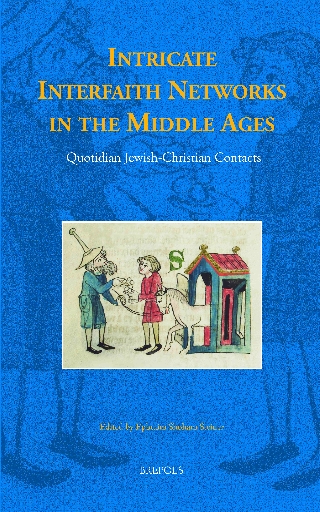
Intricate Interfaith Networks in the Middle Ages
show More to view fulltext, buy and share links for:Intricate Interfaith Networks in the Middle Ages show Less to hide fulltext, buy and share links for: Intricate Interfaith Networks in the Middle AgesRecent scholarship has suggested that the religious divide between Jews and Christians in the Middle Ages, although ever-present (and at times even violently so), did not stop individuals and groups from forming ties and expanding them in more intricate ways than previously thought. Moreover, these networks appear to have functioned with an apparent disregard towards any confessional and religious differences. Nevertheless, this was by no means a straightforward or simple situation; both the theological background to how each faith viewed ‘other’ beliefs, as well as the strong social, religious, and authoritative circles that at the least critiqued, even if they did not entirely discourage such contacts, created a formidable opposition to these networks. The articles in this book were presented as papers during an international workshop at the Central European University in Budapest in February 2010. In these presentations and discussions, the premise of interfaith relations and networks was thoroughly explored across Europe from the Iberian Peninsula to the eastern Hungarian frontier, and from England to Italy throughout the high and later medieval period. In this volume, the contributors explore a number of phenomena through different disciplinary approaches. Ties of an economic and cultural nature are examined, and attention is paid to social contacts and networks in the fields of art and the sciences, and matters of daily life. The picture that emerges is altogether more nuanced and diverse than the bipolar paradigm that has dominated previous scholarship.
-
-
-

Jews and Christians in Medieval Europe
show More to view fulltext, buy and share links for:Jews and Christians in Medieval Europe show Less to hide fulltext, buy and share links for: Jews and Christians in Medieval EuropeThe name of Bernhard Blumenkranz is well known to all those who study the history of European Jews in the Middle Ages and in particular the history of Jewish-Christian relations. Blumenkranz was born in Vienna in 1913; he left for Switzerland during the war and obtained a doctorate at the University of Basel on the portrayal of Jews in the works of Augustine. He subsequently moved to France where his numerous publications revived and renovated the field of Jewish studies. The international group of scholars who wrote the fifteen essays in this volume, beyond paying homage to Blumenkranz’s work, trace the trajectories of various lines of inquiry that he initiated: Christian theology of Judaism, problems of conversion and proselytism, geography and topography of Medieval Jewish communities, the representation of Jews in Christian art. These essays provide both an assessment of Blumenkranz’s intellectual legacy and a snapshot of the evolution of the field over the last sixty years.
-
-
-
Journeying along Medieval Routes in Europe and the Middle East
show More to view fulltext, buy and share links for:Journeying along Medieval Routes in Europe and the Middle East show Less to hide fulltext, buy and share links for: Journeying along Medieval Routes in Europe and the Middle EastFocusing on routes and journeys throughout medieval Europe and the Middle East in the period between Late Antiquity and the thirteenth century, this multi-disciplinary book draws on travel narratives, chronicles, maps, charters, geographies, and material remains in order to shed new light on the experience of travelling in the Middle Ages.
The contributions gathered here explore the experiences of travellers moving between Latin Europe and the Holy Land, between southern Italy and Sicily, and across Germany and England, from a range of disciplinary perspectives. In doing so, they offer unique insights into the experience, conditions, conceptualization, and impact of human movement in medieval Europe. Many essays place a strong emphasis on the methodological problems associated with the study of travel and its traces, and the collection is enhanced by the juxtaposition of scholarly work taking different approaches to this challenge. The papers included here engage in cross-disciplinary and interdisciplinary dialogue and are supported by a discursive, contextualizing introduction by the editors.
-
-
-
L'Ésotérisme shi'ite, ses racines et ses prolongements
show More to view fulltext, buy and share links for:L'Ésotérisme shi'ite, ses racines et ses prolongements show Less to hide fulltext, buy and share links for: L'Ésotérisme shi'ite, ses racines et ses prolongementsTogether with the notion of secrecy, the core of Shi'i esotericism gravitates around the ẓāhir/bāṭin dualism. This dialectical relationship between the visible and the hidden, which has been inherited from Late Antiquity, buttresses the main doctrines of esoteric Shi'ism which include a dualistic worldview, doctrines of emanation, the contrast between the people of knowledge and of ignorance, the soterial nature of knowledge and of the Guide who possesses it, the two levels of the Scriptures, the need for hermeneutics, and initiatory knowledge and practices. It is true that the birthplace of Shi'ism was Iraq, which had been the central province of the Sassanid Persian Empire until the advent of Islam. This region and its main cities were home to the many intellectual and spiritual traditions of Late Antiquity, including various Jewish, Christian, Judeo-Christian, Mazdean, Manichean, Neoplatonic and Gnostic movements, with these traditions living on for several centuries after the advent of the religion of the Arabs. The articles in this collection, written by recognised scholars in the field, are divided into three sections covering a very wide period of time: the "prehistory" of these doctrines before Islam, early esoteric Shi'ism and its developments in both Shi'i and non-Shi'i Sufism, occult sciences and philosophy.
-
-
-
La fabrique de la traduction
show More to view fulltext, buy and share links for:La fabrique de la traduction show Less to hide fulltext, buy and share links for: La fabrique de la traductionAprès un premier volume consacré à la traduction intralinguale de l’ancien français au français moderne, ce deuxième ouvrage d’un projet en trois volets, portant sur des aspects peu étudiés de la translatio studii médiévale, se propose d’aborder dans une même réflexion les questions de la traduction empêchée et de la traduction manipulée. Les chapitres qui le composent étudient selon des approches complémentaires aussi bien des sources manipulées que des sources non traduites. Ils permettent de révéler des différences typologiques et génériques et de distinguer plus clairement ces deux frontières de la traduction médiévale.
Se dégage ainsi de la diversité des approches et des sujets un enseignement majeur : l’activité de sélection, de philtre, de mystification, de dissimulation est à la fois le résultat d’un acte individuel et d’une stratégie plurielle. Celle-ci n’est pas seulement le fruit d’un oubli plus ou moins volontaire, plus ou moins conscient, de pans entiers de la culture, des sciences, des lettres exprimées dans d’autres langues et qui ne franchissent pas le seuil de leur idiome d’origine. Elle est aussi à la source d’un certain nombre d’ouvrages revendiquant une filiation littérale qui apparaît aujourd’hui comme fantaisiste ou fictive, comme c’est le cas avec le « topos du livre source ». Comment interpréter cette disposition à la falsification propre à des clercs nourris de morale chrétienne ? Comment expliquer que ces auteurs ne manifestent aucune réserve critique devant les supercheries qu’ils accumulent avec une évidente délectation ou une peur inquiète du vide ? Comment analyser le recours évident au stéréotype propre à l’art littéraire de leur temps : la « nostalgie du passé » ?
Au terme de ce parcours critique, on constate que la traduction empêchée et la traduction manipulée font apparaître plus clairement les confins et les différences structurelles entre une translatio studii identitaire et une traduction en français savante.
Claudio Galderisi est professeur de langues et littératures de la France médiévale à l’Université de Poitiers (CESCM). Il a dirigé les trois volumes des Translations médiévales. Cinq siècles de traductions en français au Moyen Âge (xi e-xv e s.) (Brepols, 2011). Il a codirigé avec Jean-Jacques Vincensini le volume sur la traduction intralinguale (Brepols 2015).
Jean-Jacques Vincensini est professeur de langue et littératures médiévales à l’Université de Tours (CESR). Il a édité et traduit notamment les Romans de Mélusine de Jean d’Arras et de Couldrette et prépare l’édition et la traduction de l’Escoufle de Jean Renart. Il a codirigé avec Claudio Galderisi le volume sur la traduction intralinguale.
-
-
-
La rigueur et la passion. Mélanges en l’honneur de Pascale Bourgain
show More to view fulltext, buy and share links for:La rigueur et la passion. Mélanges en l’honneur de Pascale Bourgain show Less to hide fulltext, buy and share links for: La rigueur et la passion. Mélanges en l’honneur de Pascale BourgainCe volume qui renferme 57 contributions portant sur la littérature médiolatine rend hommage à Pascale Bourgain, Professeur émérite d’Histoire et tradition manuscrite des textes littéraires à l’École nationale des chartes. Ces Mélanges peuvent se lire comme une histoire littéraire du Moyen Âge latin. Toute la période médiévale est en effet couverte largement, du v e siècle à la Renaissance et, au-delà, jusqu’aux entreprises du xix e siècle pour redonner vie aux anciens textes. Les œuvres relevant de ces divers champs et temps sont analysées en faisant converger sur elles l’éclairage d’une ou, souvent, de plusieurs disciplines parmi celles qui portent sur le manuscrit : codicologie, histoire de l’enluminure, histoire des bibliothèques ; ou sur les textes qu’il transmet : édition critique, histoire littéraire et critique d’attribution ; sur leurs relations d’influence, de la Quellenforschung à l’analyse des inflexions que subit un même passage repris d’une œuvre à l’autre ; sur la langue de ces textes : lexicographie, grammaire, art de la traduction, étude des interactions entre langues latine et romanes ; sur leur forme littéraire, d’une poésie de facture classique à la prose d’art en passant par la poésie rythmique ; sur enfin ce qu’il y a de plus subtil à décrire dans les textes, leur style, et la manière dont style et sens, loin de s’opposer, s’épousent.
-
-
-
Law and Religious Minorities in Medieval Societies: Between Theory and Praxis
show More to view fulltext, buy and share links for:Law and Religious Minorities in Medieval Societies: Between Theory and Praxis show Less to hide fulltext, buy and share links for: Law and Religious Minorities in Medieval Societies: Between Theory and PraxisMuslim law developed a clear legal cadre for dhimmīs, inferior but protected non-Muslim communities (in particular Jews and Christians) and Roman Canon law decreed a similar status for Jewish and Muslim communities in Europe. Yet the theoretical hierarchies between faithful and infidel were constantly brought into question in the daily interactions between men and women of different faiths in streets, markets, bath-houses, law courts, etc. The twelve essays in this volume explore these tensions and attempts to resolve them. These contributions show that law was used to try to erect boundaries between communities in order to regulate or restrict interaction between the faithful and the non-faithful-and at the same time how these boundaries were repeatedly transgressed and negotiated. These essays explore also the possibilities and the limits of the use of legal sources for the social historian.
-
-
-
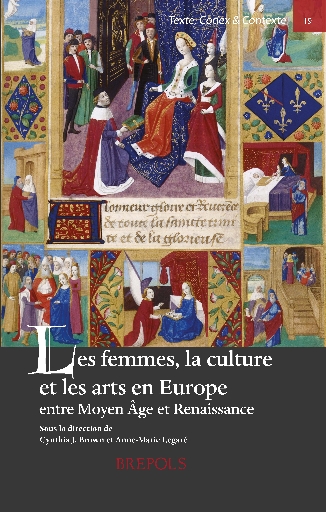
Les femmes, la culture et les arts en Europe entre Moyen Âge et Renaissance
show More to view fulltext, buy and share links for:Les femmes, la culture et les arts en Europe entre Moyen Âge et Renaissance show Less to hide fulltext, buy and share links for: Les femmes, la culture et les arts en Europe entre Moyen Âge et RenaissanceThe articles in this collection explore female patronage in literary, artistic and bibliophilic spheres from the Middle Ages to the early Renaissance with the aim of better defining women’s roles in the textual and visual (re)production and transmission of secular and religious works. What was their influence as commissioners of these oeuvres? Were literary texts translated or revised with a female-oriented message in mind? To what extent were images in illuminated manuscripts, illustrated books and paintings adapted to women’s interests? Bringing to light the phenomenon of cultural feminization, its conditions and constraints, the multidisciplinary approaches presented here elucidate in innovative and original fashion the real character of female patronage in Europe between the 13th and 16th centuries.
-
-
-
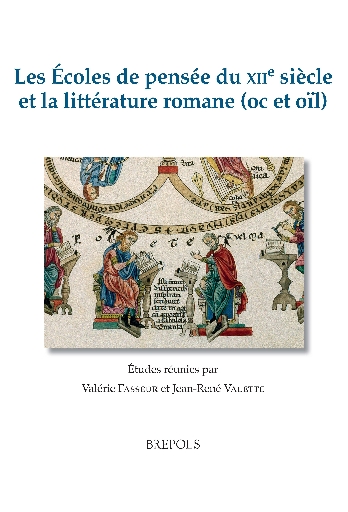
Les Écoles de pensée du XIIe siècle et la littérature romane (oc et oïl)
show More to view fulltext, buy and share links for:Les Écoles de pensée du XIIe siècle et la littérature romane (oc et oïl) show Less to hide fulltext, buy and share links for: Les Écoles de pensée du XIIe siècle et la littérature romane (oc et oïl)Souvent présentée comme une période charnière, la « Renaissance du xii e siècle » voit fleurir les écoles : école de Laon, de Saint-Victor, de Paris, de Chartres, école d’Abélard aussi, auxquelles on peut ajouter le groupe formé par les Porrétains ou bien encore les « écoles du cloître » (chartreux, cisterciens, clunisiens). L’« âge des écoles » marque ainsi le passage d’une forme de vie intellectuelle à une autre, l’évolution de la culture monastique vers la culture urbaine, qui verra la naissance de l’université de Paris au xiii e siècle et l’avènement de la scolastique. Au moment où se produit un tel essor, la littérature en langue romane connaît une seconde naissance. La langue d’oc voit s’épanouir la lyrique tandis qu’au nord de la Loire, dès les dernières années du xi e siècle, les chansons de geste se répandent, avant que les romans et la poésie des trouvères ne fassent leur apparition. Loin d’être étrangers l’un à l’autre, ces deux phénomènes entretiennent des rapports nombreux et complexes qui valent d’autant plus d’être étudiés que le retentissement de ces écoles de pensée sur la littérature romane est perceptible bien au-delà du xii e siècle. Telle est l’ambition de cet ouvrage, qui propose un bilan historiographique, de nombreuses études de cas et une réflexion à caractère épistémologique.
-
-
-
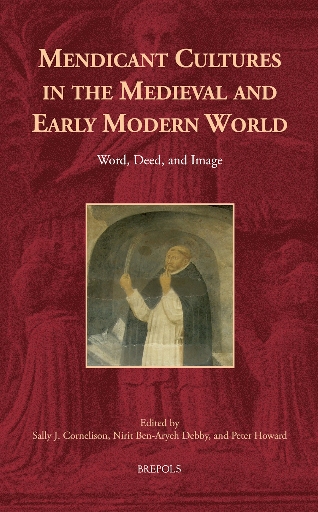
Mendicant Cultures in the Medieval and Early Modern World
show More to view fulltext, buy and share links for:Mendicant Cultures in the Medieval and Early Modern World show Less to hide fulltext, buy and share links for: Mendicant Cultures in the Medieval and Early Modern WorldThe eleven interdisciplinary essays that comprise this book complement and expand upon a significant body of literature on the history of the Franciscan and Dominican orders during the later Middle Ages and the early modern period. They elucidate and examine the ways in which mendicant friars established, sustained, and transformed their institutional identities and shaped the devotional experiences of the faithful to whom they ministered via verbal and visual culture. Taking primary texts and images as their point of departure, these essays break new scholarly ground by revising previous assumptions regarding mendicant life and actions and analysing sites, works of art, and texts that either have been neglected in the existing literature or that have not been examined through the lens of current methodologies such as sermon studies, ritual, gender, and cross-cultural interactions. Indeed, the varied methods and subjects of these essays demonstrate there is still much to be learned about the mendicant orders and the ways and spaces in which they operated and presented themselves on the local, regional, and global stages.
-
-
-
Neoplatonism in the Middle Ages
show More to view fulltext, buy and share links for:Neoplatonism in the Middle Ages show Less to hide fulltext, buy and share links for: Neoplatonism in the Middle AgesOne of the most important texts in the history of medieval philosophy, the Book of Causes was composed in Baghdad in the 9th century mainly from the Arabic translations of Proclus’ Elements of Theology. In the 12th century, it was translated from Arabic into Latin, but its importance in the Latin tradition was not properly studied until now, because only 6 commentaries on it were known. Our exceptional discovery of over 70 unpublished Latin commentaries mainly on the Book of Causes, but also on the Elements of Theology, prove, for the first time, that the two texts where widely disseminated and commented on throughout many European universities (Paris, Oxford, Erfurt, Krakow, Prague), from the 13th to the 16th century. These two volumes provide 14 editions (partial or complete) of the newly-discovered commentaries, and yields, through historical and philosophical analyses, new and essential insights into the influence of Greek and Islamic Neoplatonism in the Latin philosophical traditions.
-
-
-
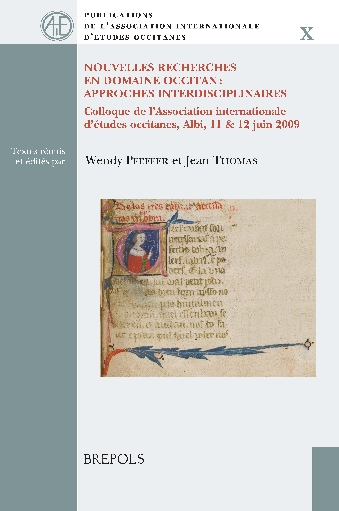
Nouvelles recherches en domaine occitan: Approches interdisciplinaires
show More to view fulltext, buy and share links for:Nouvelles recherches en domaine occitan: Approches interdisciplinaires show Less to hide fulltext, buy and share links for: Nouvelles recherches en domaine occitan: Approches interdisciplinairesLes Actes d'un colloque tenu à Albi en 2009 qui a réuni de jeunes universitaires présentant leurs recherches dans plusieurs domaines de l'étude de l'occitan: la littérature, la linguistique, la musique, du Moyen Âge à nos jours. De nouvelles approches scientifiques par des étudiants venant de plusieurs pays. Sous les rubriques de littérature et musique du Moyen Âge, des XVIIe et XVIIIe siècles, l'ère moderne, avec aussi des discussions de la langue et la littérature occitanes comme outil pour les historiens. Une mise en valeur non seulement des études occitanes mais de la langue même, utilisée pour présenter quelques-unes de ces communications scientifiques.
-
-
-

Objects, Environment, and Everyday Life in Medieval Europe
show More to view fulltext, buy and share links for:Objects, Environment, and Everyday Life in Medieval Europe show Less to hide fulltext, buy and share links for: Objects, Environment, and Everyday Life in Medieval EuropeArtefacts and environmental remains are abundant from archaeological excavations across Europe, but until now they have most commonly been used to accompany broader narratives built on historical sources and studies of topography and buildings, rather than being studied as important evidence in their own right. The papers in this volume aim to redress the balance by taking an environmental and artefact-based approach to life in medieval Europe.
The contributions included here address central themes such as urban identities, the nature of towns and their relationship with their hinterlands, provisioning processes, and the role of ritual and religion in everyday life. Case studies from across Europe encourage a comparative approach between town and country, and provide a pan-European perspective to current debates.
The volume is divided into four key parts: an exploration of the processes of provisioning; an assessment of the dynamics of urban population; an examination of domestic life; and a discussion of the status quaestionis and future potential of urban environmental archaeology. Together, these sections make a significant contribution to medieval archaeology and offer new and unique insights into the conditions of everyday life in medieval Europe.
-
-
-
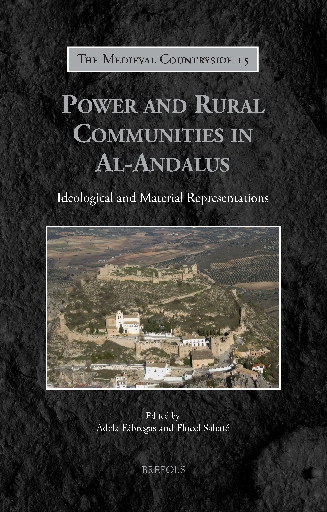
Power and Rural Communities in Al-Andalus
show More to view fulltext, buy and share links for:Power and Rural Communities in Al-Andalus show Less to hide fulltext, buy and share links for: Power and Rural Communities in Al-AndalusThis volume explores new definitions of state power in Al-Andalus throughout the Middle Ages by examining the interactions of the Andalusian state with its Islamic society, looking at specific moments in Andalusian history in a variety of local, geographical contexts. The essays collected here adopt largely archaeological methodologies, considering in turn the various spaces reclaimed by the state and its material remains, as well as the footprints of state impact on other local and territorial organizational structures. In addition, these means of analysis directly highlight those spaces that remained outside of state control, while also supporting consideration of how and why they managed to do so.
The essays use the territorial dimension of the kinship–state dichotomy as a starting point for considering its means of operation and evolution over time. Beginning with the traditional assumption that territorial configuration patterns are heavily determined by the relative weight of the different authorities operating in a given territory, the essays identify the different agents operating in Al-Andalus (mainly the state and gentry-based peasant communities) through insightful archaeological and historical considerations of medieval Andalusian society’s material remains. With special attention also paid to the Nasrid Kingdom of Granada — the Andalusian territory lasting longest under Muslim rule — this collection makes an important contribution to larger historiographical debates surrounding the medieval Islamic world.
-
-
-
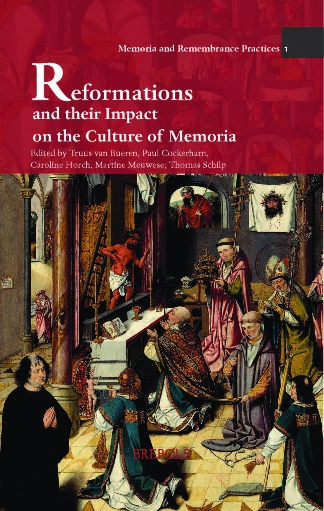
Reformations and their Impact on the Culture of Memoria
show More to view fulltext, buy and share links for:Reformations and their Impact on the Culture of Memoria show Less to hide fulltext, buy and share links for: Reformations and their Impact on the Culture of MemoriaThis volume presents cultural studies approaches to different modes of memoria (the original medieval way of commemoration), taking into account specific confessional contexts. It mainly focuses on the consequences of political, religious and social reforms in the period from 1200 to 1800. Scholars from multiple subject areas in the field of cultural studies evaluate if, and to what extent, reform processes and political or social change have influenced different practices of memoria.
Since customs of commemoration of the dead (and the living) serve as a means of self-reassurance for a society, they allow significant insights into what the respective societies were grounded upon. This volume delivers the first discipline-specific and methodologically diverse approach to the consequences of different reforms on memoria.
In this way this overview creates a ‘history of memoria’ throughout the centuries.
-
-
-
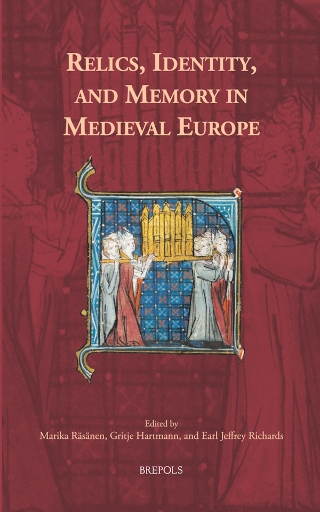
Relics, Identity, and Memory in Medieval Europe
show More to view fulltext, buy and share links for:Relics, Identity, and Memory in Medieval Europe show Less to hide fulltext, buy and share links for: Relics, Identity, and Memory in Medieval EuropeThis volume contributes to current discussions of the place of relics in devotional life, politics, and identity-formation, by illustrating both the power which relics were thought to emanate as well as the historical continuity in the significance assigned to that power. Relics had the power to ‘touch’ believers not only as material objects, but also through different media that made their presence tangible and valuable. Local variants in relic-veneration demonstrate how relics were exploited, often with great skill, in different religious and political contexts. The volume covers both a wide historical and geographical span, from Late Antiquity to the early modern period, and from northern, central, and southern Europe.
The book focuses on textual, iconographical, archaeological, and architectural sources. The contributors explore how an efficient manipulation of the liturgy, narrative texts, iconographic traditions, and architectural settings were used to construct the meaningfulness of relics and how linguistic style and precision were critically important in creating a context for veneration. The methodology adopted in the book combines studies of material culture and close reading of textual evidence in order to offer a new multidisciplinary purchase on the study of relic cults.
-
-
-
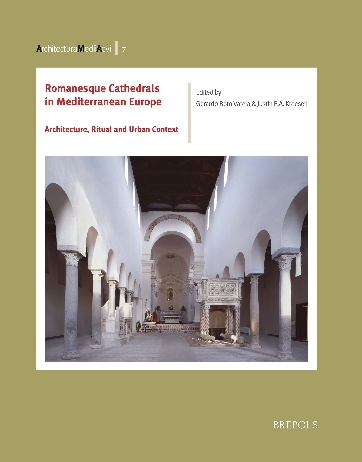
Romanesque Cathedrals in Mediterranean Europe
show More to view fulltext, buy and share links for:Romanesque Cathedrals in Mediterranean Europe show Less to hide fulltext, buy and share links for: Romanesque Cathedrals in Mediterranean EuropeThis volume explores the architecture and configuration of Romanesque cathedrals in Europe, especially around the Mediterranean, paying special attention to liturgical ritual, furnishings, iconography, and urban context. From the tenth to the twelfth centuries, cultural and artistic interchange around the Mediterranean gave rise to the first truly European art period in Medieval Western Europe, commonly referred to as ‘Romanesque’. A crucial aspect of this integrative process was the mobility of artists, architects and patrons, as well as the capacity to adopt new formulas and integrate them into existing patterns. Some particularly creative centers exported successful models, while others became genuine melting pots. All this took shape over the substrate of Roman Antiquity, which remained in high esteem and was frequently reused.
In these studies, Romanesque cathedrals are employed as a lens with which to analyze the complexity and dynamics of the cultural landscape of southern and central Europe from the tenth to the twelfth centuries. The architecture of every cathedral is the result of a long and complicated process of morphogenesis, defined by spatial conditions and the availability of building materials. Their interior arrangements and imagery largely reflected ritual practice and the desire to express local identities. The various contributions to this volume discuss the architecture, interior, and urban setting of Romanesque cathedrals and analyze the factors which helped to shape them. In so doing, the focus is both on the influence of patrons and on more bottom-up factors, including community practices.
-
-
-
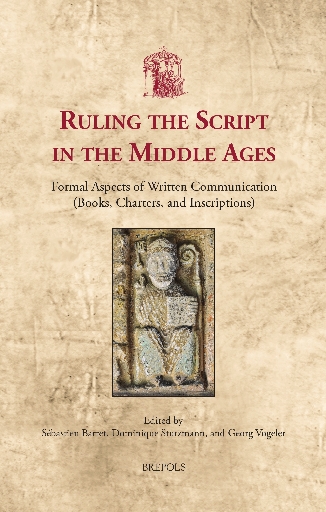
Ruling the Script in the Middle Ages
show More to view fulltext, buy and share links for:Ruling the Script in the Middle Ages show Less to hide fulltext, buy and share links for: Ruling the Script in the Middle AgesThe textuality and materiality of documents are an essential part of their communicative role. Medieval writing, as part of the interpersonal communication process, had to follow rules to ensure the legibility and understanding of a text and its connotations. This volume provides new insights into how different kinds of rules were designed, established, and followed in the shaping of medieval documents, as a means of enabling complex and subtle communicational phenomena. Because they provide a perspective for approaching the material they are supposed to organize, these rules (or the postulation of their use) provide powerful analytical tools for structural studies into given corpora of documents.
Originating in talks given at the International Medieval Congress in Leeds between 2010 and 2012, the twenty papers in this collection offer a precise, in-depth analysis of a variety of medieval scripts, including books, charters, accounts, and epigraphic documents. In doing so, they integrate current developments in palaeography, diplomatics, and codicology in their traditional methodological set, as well as aspects of the digital humanities, and they bridge the gap between the so-called ‘auxiliary sciences of history’ and the field of communication studies. They illustrate different possibilities for exploring how the formal aspects of scripts took their place in the construction of effective communication structures.
-
-
-
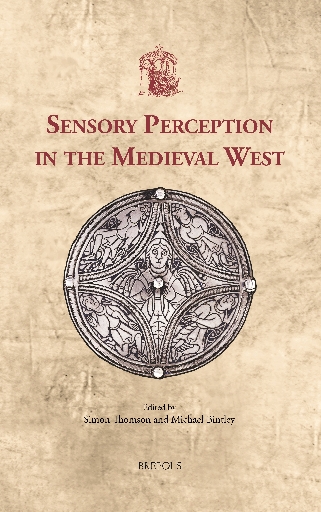
Sensory Perception in the Medieval West
show More to view fulltext, buy and share links for:Sensory Perception in the Medieval West show Less to hide fulltext, buy and share links for: Sensory Perception in the Medieval WestWhat was it like to experience the medieval world through one’s senses? Can we access those past sensory experiences, and use our senses to engage with the medieval world? How do texts, objects, spaces, manuscripts, and language itself explore, define, exploit, and control the senses of those who engage with them?
This collection of essays seeks to explore these challenging questions. To do so is inevitably to take an interdisciplinary and context-focused approach. As a whole, this book develops understanding of how different fields speak to one another when they are focused on human experiences, whether of those who used our sources in the medieval period, or of those who seek to understand and to teach those sources today.
Articles by leading researchers in their respective fields examine topics including: Old English terminology for the senses, effects of the digitisation of manuscripts on scholarship, Anglo-Saxon explorations of non-human senses, scribal sensory engagement with poetry, the control of sound in medieval drama, bird sounds and their implications for Anglo-Saxon sensory perception, how goldwork controls the viewing gaze, legalised sensory impairment, and the exploitation of the senses by poetry, architecture, and cult objects.
-
-
-
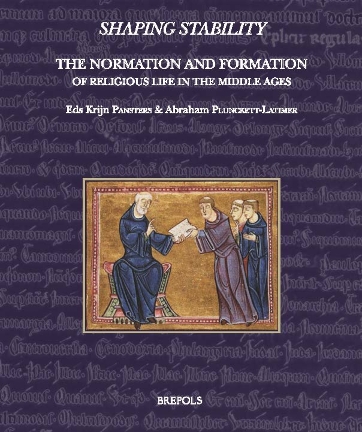
Shaping Stability
show More to view fulltext, buy and share links for:Shaping Stability show Less to hide fulltext, buy and share links for: Shaping StabilityThis volume examines the efforts of medieval religious communities and orders to bring stability to the dynamic complexity of organized religious life. By focusing on legislative structures and normative documents (rules, customaries, constitutions), the authors address not only such matters as the meaning of these texts and the motivations behind them, but also the evolving conditions of their production and use, the internal politics of institutional change, and the reality of “precept not practice.” These papers thus present spiritual principles and social practices in their historical and functional contexts, confront normative programs with formative processes, and explain distinctive modes and models of life within the broader landscape of medieval organized religion..
-
-
-
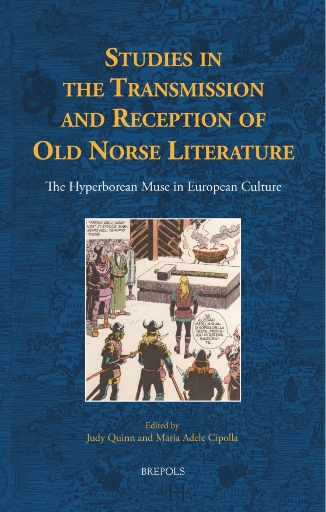
Studies in the Transmission and Reception of Old Norse Literature
show More to view fulltext, buy and share links for:Studies in the Transmission and Reception of Old Norse Literature show Less to hide fulltext, buy and share links for: Studies in the Transmission and Reception of Old Norse LiteratureThe compelling world of the Vikings and their descendants, preserved in the sagas, poetry, and mythology of medieval Iceland, has been an important source of inspiration to artists and writers across Europe, as well as to scholars devoted to editing and interpreting the manuscript texts. A variety of creative ventures have been born of the processes of imagining this distant ‘hyperborean’ world. The essays in this volume, by scholars from Italy, Sweden, Denmark, Norway, Germany, and the UK, examine the scholarly and artistic reception of a variety of Old Norse texts from the beginnings of the manuscript tradition in twelfth-century Iceland to contemporary poetry, crime fiction, and graphic novels produced in Britain, Ireland, Italy, and Iceland. The influence of Old Norse literature is further explored in the context of Shakespeare’s plays, eighteenth-century Italian opera, the Romantic movement in Sweden and Denmark, and the so-called ‘nordic renaissance’ of the late nineteenth century (including the works of August Strindberg and William Morris), as well as in some of the political movements of twentieth-century northern Europe. Interest in Old Norse literature is charted as it spread beyond intellectual centres in Europe and out to a wider reading and viewing public. The influence of the ‘hyperborean muse’ is evident throughout this book, as the idea of early Nordic culture has been refashioned to reflect contemporary notions and ideals.
-
-
-
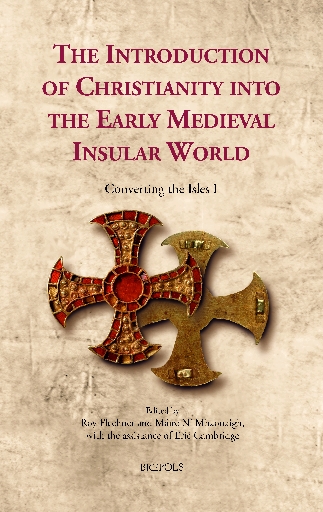
The Introduction of Christianity into the Early Medieval Insular World
show More to view fulltext, buy and share links for:The Introduction of Christianity into the Early Medieval Insular World show Less to hide fulltext, buy and share links for: The Introduction of Christianity into the Early Medieval Insular WorldConversion to Christianity is arguably the most revolutionary social and cultural change that Europe experienced throughout Late Antiquity and the early Middle Ages. Christianisation affected all strata of society and transformed not only religious beliefs and practices, but also the nature of government, the priorities of the economy, the character of kinship, and gender relations. It is against this backdrop that an international array of leading medievalists gathered under the auspices of the Converting the Isles Research Network (funded by the Leverhulme Trust) to investigate social, economic, and cultural aspects of conversion in the early medieval Insular world, covering different parts of Britain, Ireland, Scandinavia, and Iceland.
This is is the first of two volumes showcasing research generated through the ‘Converting the Isles’ Network. This volume focuses on specific aspects of the introduction of Christianity into the early medieval Insular world, including the nature and degree of missionary activity involved, socio-economic stimulants for conversion, as well as the depiction and presentation of a Christian saint. Its companion volume has the transformation of landscape as its main theme. By adopting a broad comparative and crossdisciplinary approach that transcends national boundaries, the material presented here and in volume II offers novel perspectives on conversion that challenge existing historiographical narratives and draw on up-to-date archaeological and written evidence in order to shed light on central issues pertaining to the conversion of the Isles.
-
-
-
The Medieval South Caucasus. Artistic Cultures of Albania, Armenia and Georgia
show More to view fulltext, buy and share links for:The Medieval South Caucasus. Artistic Cultures of Albania, Armenia and Georgia show Less to hide fulltext, buy and share links for: The Medieval South Caucasus. Artistic Cultures of Albania, Armenia and GeorgiaThe volume serves as an introduction to what its editors have chosen to call the “artistic cultures” prevalent during the Middle Ages in the region of the South Caucasus. Although far from comprehensive in terms of material, chronology and geography, the volume intends to raise awareness of a region whose artistic wealth and cultural diversity has remained relatively unknown to most medievalists. Stretching from Eastern Anatolia and the Black Sea in the West to the Caspian Sea in the East, and from the snow-capped Great Caucasus mountain range in the north to the Armenian highlands in the south, medieval southern Caucasia was originally divided into the kingdom of Caucasian Albania, Greater and Lesser Armenia, and western and eastern Georgia, that is, the kingdoms of Lazica (Egrisi) and Iberia (Kartli) respectively. Together, these entities made the South Caucasus a true frontier region between Europe and Asia and a place of transcultural exchange. Its official Christianization began as early as in the fourth century, even before Constantine the Great founded Constantinople or had himself been converted to Christianity. During the subsequent centuries, the region became a well-connected and strategic buffer zone for its neighboring and occupant Byzantine, Persian, Islamic, Seljuk and Mongol powers. And although subject to constantly shifting borders, the medieval kingdoms of the South Caucasus remained an internally diverse yet shared and distinct geographical and historical unity. Far from being isolated, these cultures were part of a much wider medieval universe. Because of the transcultural nature and elevated artistic quality of their objects and monuments, they have much to offer the field of art history, which has recently been challenged to think more globally in terms of transculturation, movement and appropriation among medieval cultures.
-
-
-
The Mirror in Medieval and Early Modern Culture
show More to view fulltext, buy and share links for:The Mirror in Medieval and Early Modern Culture show Less to hide fulltext, buy and share links for: The Mirror in Medieval and Early Modern CultureMirrors have always fascinated humankind. They collapse ordinary distinctions, making visible what is normally invisible, and promising access to hidden realities. Yet, these liminal objects also point to the limitations of human perception, knowledge, and wisdom. In this interdisciplinary volume, specialists in medieval and early modern science, cultural and political history, as well as art history, philosophy, and literature come together to explore the intersections between material and metaphysical mirrors in Europe and the Islamic world. During the time periods studied here, various technologies were transforming the looking glass as an optical device, scientific instrument, and aesthetic object, making it clearer and more readily available, though it remained a rare and precious commodity. While technical innovations spawned new discoveries and ways of seeing, belief systems were slower to change, as expressed in the natural sciences, mystical writings, literature, and visual culture. Mirror metaphors based on analogies established in the ancient world still retained significant power and authority, perhaps especially when related to Aristotelian science, the medieval speculum tradition, religious iconography, secular imagery, Renaissance Neoplatonism, or spectacular Baroque engineering, artistry, and self-fashioning. Mirror effects created through myths, metaphors, rhetorical strategies, or other devices could invite self-contemplation and evoke abstract or paradoxical concepts. Whether faithful or deforming, specular reflections often turn out to be ambivalent and contradictory: sometimes sources of illusion, sometimes reflections of divine truth, mirrors compel us to question the very nature of representation.
-
-
-
The Prague Sacramentary
show More to view fulltext, buy and share links for:The Prague Sacramentary show Less to hide fulltext, buy and share links for: The Prague SacramentaryThe Prague Sacramentary is a unique liturgical manuscript which can be very precisely located in a specific social and historical context. It was written in the turbulent period when Charlemagne crossed Bavaria to fight the Avars and when his son Pippin rebelled against him, seeking support among the Bavarian nobility. The manuscript can be linked to specific groups of Bavarian elites that had to come to terms with this explosive political situation. It also elucidates the ways in which Christian culture was expressed and experienced in Bavaria at the end of the eighth century. Although Bavaria may be regarded as a periphery from a Frankish perspective, it was certainly no cultural backwater. Because of its geographical position at the crossroads of Italian, Bavarian, and Frankish culture, Bavaria produced unique and intriguing texts and artefacts.
One such object is analysed here by a team of experts, shedding renewed light on the earthly and heavenly concerns of an early medieval community in a specific region. It includes a discussion of the topics of the formal invocation of saints, vernacular understandings of Latin texts, marriage, politics, and concerns for ritual purity as well as the well-being of the conflict-ridden Carolingian family.
-
-
-
Loyalty in the Middle Ages
show More to view fulltext, buy and share links for:Loyalty in the Middle Ages show Less to hide fulltext, buy and share links for: Loyalty in the Middle AgesAlthough ‘loyalty’ is in itself a relatively modern term, as a phenomenon it has long been recognised as a fundamental element of social relationships. The essays collected in this volume address the concept of loyalty as it was understood in the Middle Ages, exploring the theme of loyalty from three separate angles — the ties between individuals (such as marriage or feudal ties), the ties between individuals and groups (for example, the role of the individual in their wider family), and the ties between institutions and groups (such as monastic orders or guilds) — and questioning how, when, and why the phenomenon of loyalty first developed.
This volume, which draws together contributions from leading historians, explores how loyalty was manifested, both in public and in private, in the medieval world. Covering topics as diverse as religious orders, royal courts, and funeral customs, the essays collected here explore the interplay between loyalty and love, friendship, obedience, and justice, and question how the value of loyalty functioned both in theory and in practice across a range of social spaces. Together, these articles offer a unique new perspective on medieval society and provide a framework that also promises to be fruitful for future research.
-
-
-

Reading Sacred Scripture with Thomas Aquinas
show More to view fulltext, buy and share links for:Reading Sacred Scripture with Thomas Aquinas show Less to hide fulltext, buy and share links for: Reading Sacred Scripture with Thomas AquinasThomas Aquinas is still most widely known for his works in systematic theology (Summa theologiae) and as a commentator of Aristotle. Recent decades, however, have seen a revived interest in Aquinas as a biblical scholar. The essays gathered in this volume explore the richness of his biblical commentaries by analyzing the hermeneutical tools employed in his reading of Scripture and investigating the contemporary relevance of his biblical exegesis. Its goal is to familiarize the contemporary reader with an indispensable dimension of his scholarly activity: as a master in Sacred Scripture (magister in sacra pagina) Aquinas taught theology as a form of speculative reading of the revealed Word of God and hence the reading of the various books of the Bible constituted the axis of his scriptural didactics. Altogether, the nineteen contributions in the volume offers an up-to-date analysis of Aquinas’s contribution to medieval biblical exegesis and points to ways in which it can enrich contemporary debates on the relation between exegesis and systematic theology.
Contributors: Christopher Baglow, Timothy F. Bellamah, Lluís Clavell, Gilbert Dahan, Leo J. Elders, Jeremy Holmes, Daniel Keating, Matthew Levering, Enrique Martínez, Miroslaw Mróz, Mauricio Narváez, Marco Passarotti, Matthew J. Ramage, Elisabeth Reinhardt, Margherita Maria Rossi, Piotr Roszak, Olivier-Thomas Venard, Jörgen Vijgen, Robert J. Woźniak.
-
-
-
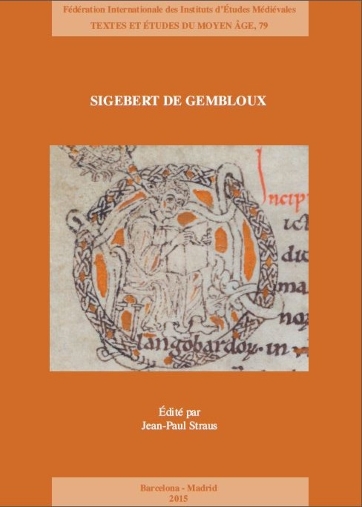
Sigebert de Gembloux
show More to view fulltext, buy and share links for:Sigebert de Gembloux show Less to hide fulltext, buy and share links for: Sigebert de GemblouxSigebert de Gembloux (1028 env. - 5 octobre 1112) s'est illustré en des genres littéraires très divers, le point culminant de son œuvre étant sans conteste sa Chronique qui constitue, comme l'écrit très justement M. Chazan, « un des sommets de l'historiographie médiévale ».
La recherche à son sujet ne cesse d'évoluer, et l’ouvrage qu’on présente ici en est sans conteste un précieux jalon. Il est la conclusion d’une rencontre qui se tint à Bruxelles et à Gembloux les 5 et 6 octobre 2012. Point de départ plus qu’aboutissement, cette rencontre a ouvert des perspectives neuves autant que variées. S'y croisent les points de vue de l'historien, de l'archéologue et du philologue qui se penchent sur le personnage, l'oeuvre et son terreau, l'abbaye de Gembloux. Ce recueil ne prétend pas à l’exhaustivité - l’est-on jamais en aussi riche matière où de plus l’enquête ne cesse d’évoluer ? On reconnaîtra en filigrane les traces d’autres recherches en cours sur le même sujet, auxquelles d’ailleurs les textes font de fréquentes références. Il y a donc deux cohérences, celle de l’ensemble des articles présentés ici, qui couvrent un large éventail dont les sujets s’enchaînent et se répondent, et celle qui englobe d’autres écrits importants tenant au même objet. Ainsi, le présent ouvrage contribue sans aucun doute à l’avancement des études sigebertiennes.
Les contributions sont dues à M. Chazan (U. Lorraine), M. De Waha (ULB), J. Meyers (U. Montpellier), Ph. Mignot (Dir° arch. Wall.), P. Tombeur (UCL), W. Verbaal (UGent), M. Verweij (KBR Bruxelles)
-
-
-
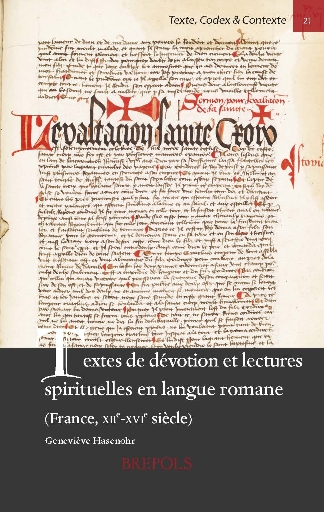
Textes de dévotion et lectures spirituelles en langue romane (France, XIIe-XVIe siècle)
show More to view fulltext, buy and share links for:Textes de dévotion et lectures spirituelles en langue romane (France, XIIe-XVIe siècle) show Less to hide fulltext, buy and share links for: Textes de dévotion et lectures spirituelles en langue romane (France, XIIe-XVIe siècle)Ce volume réunit 27 articles que Geneviève Hasenohr a consacrés à la littérature de dévotion médiévale entre 1978 et 2007. Études et éditions de textes romans font toucher du doigt ce que furent au quotidien les modèles de vie chrétienne et les lectures spirituelles proposés aux laïcs en France entre e et e siècle, leur fonds monastique commun et leur touche propre. Cette reprise est complétée par la publication actualisée d’une documentation inédite, attendue depuis des décennies par les médiévistes : une partie des notices documentaires primitivement destinées à prendre place dans le t. 2 (jamais paru) du vol. VIII du Grundriss der romanischen Literaturen des Mittelalters : La littérature ançaise aux e et e siècles (t.1, Heidelberg, 1988). uelques études plus philologiques, une bibliographie de l’auteur et plusieurs index complètent la sélection.
Chartiste, ancien membre de l’École Française de Rome, Geneviève Hasenohr est une philologue, historienne des textes de spiritualité médiévaux en langue romane. Elle a dirigé la Section romane de l’Institut de Recherche et d’Histoire des Textes (CNRS) et enseigné à l’Université de Paris-Sorbonne ainsi qu’à l’École Pratique des Hautes Études. Elle est correspondante de l’Académie des Inscriptions et Belles-Lettres.
-