


Brepols Online Books Medieval Monographs Collection 2016 - bob2016mome

Collection Contents
3 results
-
-
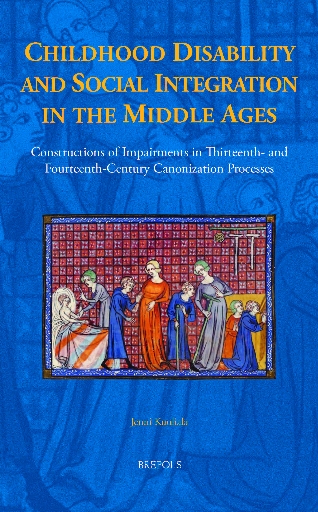
Childhood Disability and Social Integration in the Middle Ages
show More to view fulltext, buy and share links for:Childhood Disability and Social Integration in the Middle Ages show Less to hide fulltext, buy and share links for: Childhood Disability and Social Integration in the Middle AgesThis volume offers new insights into medieval disability studies by analysing miracle testimonies from canonization processes as sources for the study of medieval attitudes to and understanding of childhood physical impairments: how they were defined, and the social consequences of childhood disability on the family, on the community, and on children themselves.
In these texts, laypeople from different social groups carefully described events leading to children’s miraculous cures of physical impairments, as well as the conditions themselves. They thus provide an exceptionally rich (yet hitherto unexplored) window into the ways in which medieval society defined, explained, and understood children’s impairments.
Besides simply describing disabilities and miraculous cures, these testimonies also reveal various aspects of everyday experiences and communal attitudes towards impaired children. The few testimonies by the children themselves offer fascinating insights into personal experiences of physical disability and how disability affected a child’s socialization and the formation of identity.
This study thus aims to tease apart the often-complex ways in which medieval society both viewed physical differences and how it chose to (re)construct these differences in the discourse of the miraculous, as well as in everyday life.
-
-
-
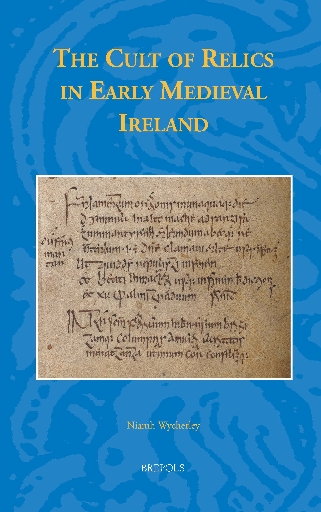
The Cult of Relics in Early Medieval Ireland
show More to view fulltext, buy and share links for:The Cult of Relics in Early Medieval Ireland show Less to hide fulltext, buy and share links for: The Cult of Relics in Early Medieval IrelandAs the cult of saints became increasingly important to the Christian religion during the latter centuries of the Roman Empire, so too the veneration of relics became a central element of Christian piety. The relics of holy men and women - the very tangibility of which ensured their lasting appeal - could be used to heal the sick, improve the weather, ensure victory in battle, and represent power and authority. Even today, in an era of declining church attendance, famous relics such as the head of St Catherine of Siena or the tongue of St Anthony of Padua continue to draw hundreds of thousands of pilgrims; the need to preserve and venerate objects associated with the important and the famous is a well-established human trait.
This book is the first to explore the historical roots of the cult of relics in early medieval Ireland, deepening our understanding of how the pagan Irish adapted to the new religion. Examining the cult of relics from the earliest Irish sources up to the ninth century, it provides insights into the role of relics and the culture and people to whom they were so significant. The volume investigates how the Christian phenomenon of relic veneration developed in early Ireland and it evaluates the continuity between Irish practice and that on the continent. By offering a new model of how the cult of relics evolved and by exploring the extent to which it helped forge early Irish Christianity, the arguments presented here have the potential to reshape views of the entire period.
-
-
-
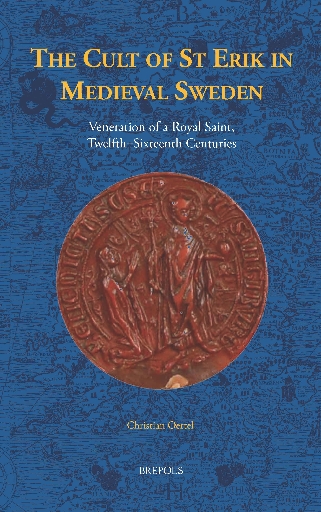
The Cult of St Erik in Medieval Sweden
show More to view fulltext, buy and share links for:The Cult of St Erik in Medieval Sweden show Less to hide fulltext, buy and share links for: The Cult of St Erik in Medieval SwedenIn this first comprehensive monograph on St Erik, the author follows the cult of the Swedish royal saint from its obscure beginnings in the twelfth century up to its climax in the time of the Kalmar Union (1397-1523). The focus of the book lies on the interaction of the cult with different groups within medieval Swedish society and these group’s attempts to utilize the prestige of the saint to further their political aims. From the middle of the thirteenth century, the cult was particularly connected to the archbishopric of Uppsala and the royal dynasty of Bjalbo. During the fifteenth century the Swedish royal saint symbolized (together with St Olaf of Norway and St Knut of Denmark) the three kingdoms of the Kalmar Union. At the same time, his prestige was successfully employed in the propaganda of King Karl Knutsson (Bonde) and the three Sture-riksförestandare to legitimate their anti-Union politics. In order to gain a broader perspective, the author uses a wide variety of sources. These include a number of texts which contain information about the cult of the saint (legend, miracle collection, offices, sermons, chronicles, charters). In addition, different sorts of depictions showing St Erik on wall paintings, altarpieces, seals, and coins are used in order to give a comprehensive account of the multifaceted veneration of this saint.
-