


Brepols Online Books Medieval Monographs Collection 2016 - bob2016mome

Collection Contents
18 results
-
-
Le 'De scientiis Alfarabii' de Gérard de Crémone. Contributions aux problèmes de l'acculturation au XIIe siècle.
show More to view fulltext, buy and share links for:Le 'De scientiis Alfarabii' de Gérard de Crémone. Contributions aux problèmes de l'acculturation au XIIe siècle. show Less to hide fulltext, buy and share links for: Le 'De scientiis Alfarabii' de Gérard de Crémone. Contributions aux problèmes de l'acculturation au XIIe siècle.Gérard de Crémone (XII e s.) fut un traducteur possédé par une passion acculturante à laquelle il n’eut de cesse de tout sacrifier. Adepte de la traduction dite «mimétique», il constitue l’un des maillons essentiels de la chaîne des savoirs scientifiques et philosophiques médiévaux, qui se révèle déterminant pour préciser la manière dont l’ensemble des courants intellectuels grec, arabe et latin ont joué l’un sur l’autre dans la diffusion, l’assimilation et la transformation des instruments, méthodes et systèmes de pensée. À ce titre, sa version (De scientiis) du Recensement des sciences d’al-Fārābī - ([Kitab] Ihsā’ al-‛ulūm) est d’autant plus intéressante qu’elle entra en concurrence directe avec celle de son contemporain et rival Dominicus Gundissalinus, partisan d’une traduction dite «confiscatrice». En procurant la première editio maior, fondée sur 4 manuscrits «complets», traduite et annotée, notre intention est d’apporter une contribution non seulement à l’élaboration du corpus gérardien, mais aussi à l’histoire des processus acculturants au Moyen Âge. Dans l’importante étude qui la précède, la confrontation des traductions gérardienne et gondissalinienne nous a entre autres permis, en évaluant la distance qui les sépare l’une de l’autre, de mesurer toute l’incidence qu’un même contexte socio-culturel peut avoir sur deux sensibilités d’érudit de nature assez différente, voire opposée, et de montrer en quoi et dans quelle proportion elle a pu conditionner l’histoire de la réception du texte farabien dans la tradition latine des XIII e et XIV e siècles principalement.
-
-
-

Medieval Anglo-Irish Troubles
show More to view fulltext, buy and share links for:Medieval Anglo-Irish Troubles show Less to hide fulltext, buy and share links for: Medieval Anglo-Irish TroublesBritish Library MS Harley 913 is an early fourteenth-century trilingual manuscript whose paradoxically devotional and ribald contents display many distinct aspects of the Anglo-Irish socio-political reality of the day. However, several of its texts have, in the past, suffered from repeated scholarly misreadings, in part because scholars have not taken the time to seriously consider the manuscript’s contents as a whole, and in part because fluctuations in the political, social, and religious climate between Ireland and England have prejudiced how some scholars have approached these works.
This book examines these texts, as well as their subsequent misinterpretations, in the order in which they occur in the manuscript and reveals the pattern of politicized discourse surrounding this important medieval Anglo-Irish cultural artefact that has hitherto obscured, rather than elucidated, the very personal interactions of some of the era’s key figures. For the first time, this volume allows readers to visualize the manuscript in its entirety and complexity. Texts touching on the taboos of incest, regicide, and witchcraft, together with the clandestine manoeuvrings of the power-hungry and influential, reveal a surprisingly complicated interlacing of events across medieval Ireland, England, and the Continent.
-
-
-
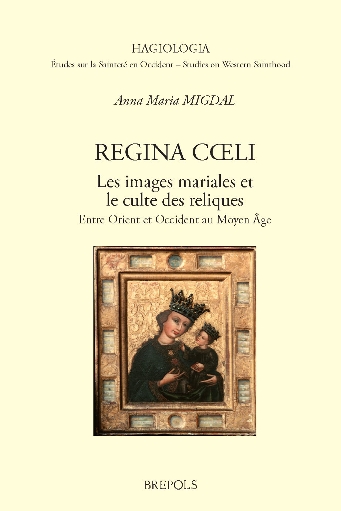
Regina Cœli. Les images mariales et le culte des reliques
show More to view fulltext, buy and share links for:Regina Cœli. Les images mariales et le culte des reliques show Less to hide fulltext, buy and share links for: Regina Cœli. Les images mariales et le culte des reliquesLes images-reliquaires, dont la singularité attire notre attention, se définissent par la complexité de leur composition tant au point de vue artistique qu’au point de vue religieux. Il s’agit ici des peintures sur panneau de bois (plus rarement, sur verre églomisé), ayant fonction de porte-reliques, et décorées dans certains cas de pierres précieuses ou semi-précieuses. Le modèle de tableau-reliquaire : panneau unique, diptyque et triptyque comprenant le portrait de la Vierge à l’Enfant enchâssé dans une large bordure incrustée de reliques, se répandit particulièrement dans la péninsule italienne, et par la suite en Europe centrale. Cependant, les reliquaires polonais, connus sur le territoire de la Petite-Pologne durant le xv e siècle jusqu’au début du siècle suivant, ne sont mentionnés que de manière sporadique dans l’histoire de l’art. Ils sont apparus dans quelques articles, mais sans avoir fait l’objet d’aucune analyse spécifique quant à leur contenu iconographique, leur similarité formelle, ainsi qu’à l’égard de leur usage dévotionnel. C’est pourquoi, nous souhaitons les joindre aux créations semblables répandues dans l’art entre Orient et Occident au Moyen Âge. Dans la même optique, il serait également intéressant de s’interroger sur la continuité de tels objets au-delà de l’époque médiévale.
-
-
-
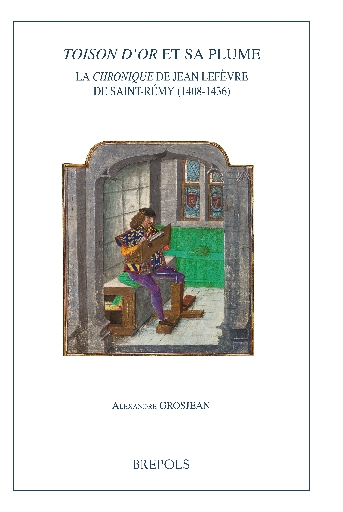
Toison d'or et sa plume, la "chronique" de Jean Lefèvre de Saint-Rémy (1408-1436)
show More to view fulltext, buy and share links for:Toison d'or et sa plume, la "chronique" de Jean Lefèvre de Saint-Rémy (1408-1436) show Less to hide fulltext, buy and share links for: Toison d'or et sa plume, la "chronique" de Jean Lefèvre de Saint-Rémy (1408-1436)Jean Lefèvre de Saint-Rémy (1396-1468) fut poursuivant d’armes dans les rangs anglais à la bataille d’Azincourt, héraut Charolais puis roi d’armes de l’ordre de la Toison d’or fondé par Philippe le Bon en 1430. L’œuvre historiographique qu’il rédige à la fin de sa vie s’inspire de la prestigieuse chronique d’Enguerrand de Monstrelet et mêle souvenirs personnels et interpolations de sources diverses, brossant un tableau voulu idéal de la cour de Bourgogne entre 1408 et 1436 et particulièrement du principat de Philippe le Bon, maître auquel ce serviteur doit tout. Les particularités de son récit posent le problème du héraut d’armes écrivant l’histoire, phénomène exceptionnel qui fut favorisé par l’émulation existante à la cour des ducs de Bourgogne, reconnue comme l’un des foyers les plus prolifiques en la matière au XV e siècle.
-
-
-
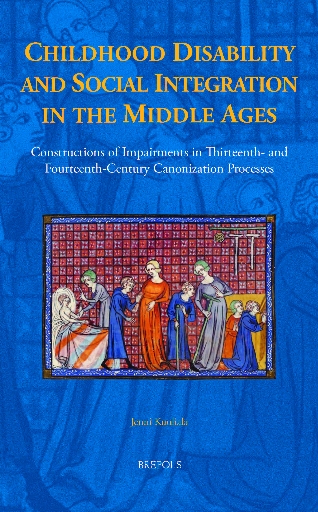
Childhood Disability and Social Integration in the Middle Ages
show More to view fulltext, buy and share links for:Childhood Disability and Social Integration in the Middle Ages show Less to hide fulltext, buy and share links for: Childhood Disability and Social Integration in the Middle AgesThis volume offers new insights into medieval disability studies by analysing miracle testimonies from canonization processes as sources for the study of medieval attitudes to and understanding of childhood physical impairments: how they were defined, and the social consequences of childhood disability on the family, on the community, and on children themselves.
In these texts, laypeople from different social groups carefully described events leading to children’s miraculous cures of physical impairments, as well as the conditions themselves. They thus provide an exceptionally rich (yet hitherto unexplored) window into the ways in which medieval society defined, explained, and understood children’s impairments.
Besides simply describing disabilities and miraculous cures, these testimonies also reveal various aspects of everyday experiences and communal attitudes towards impaired children. The few testimonies by the children themselves offer fascinating insights into personal experiences of physical disability and how disability affected a child’s socialization and the formation of identity.
This study thus aims to tease apart the often-complex ways in which medieval society both viewed physical differences and how it chose to (re)construct these differences in the discourse of the miraculous, as well as in everyday life.
-
-
-
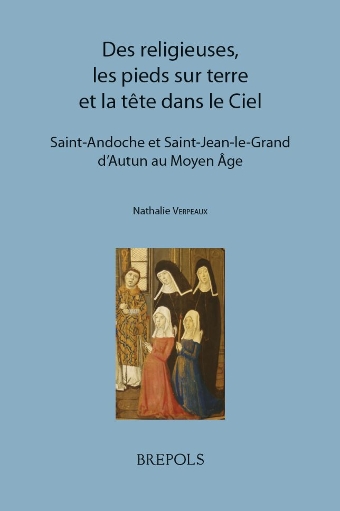
Des religieuses, les pieds sur terre et la tête dans le Ciel
show More to view fulltext, buy and share links for:Des religieuses, les pieds sur terre et la tête dans le Ciel show Less to hide fulltext, buy and share links for: Des religieuses, les pieds sur terre et la tête dans le CielÀ Autun, durant toute la seconde moitié du Moyen Âge - et à l’époque moderne -, deux abbayes de femmes de l’ordre de Saint-Benoît coexistent. Ces deux communautés naissent et se développent dans un double mouvement de complémentarité et de concurrence. L’analyse des origines et du mode de vie des religieuses montre que, issues des couches supérieures de la société autunoise et bourguignonne, voire auvergnate et comtoise, ces femmes retrouvent à l’intérieur de la clôture le confort auquel sont habitués leurs proches. Elles ne sont toutefois pas totalement coupées du monde, contrairement aux injonctions de certaines autorités ecclésiastiques et, si elles font appel à de nombreux officiers, tant temporels que spirituels, elles n’hésitent pas à sortir de l’enceinte monastique ; en fait, les deux communautés sont profondément intégrées dans la cité éduenne et dans la région. Elles possèdent en effet de nombreux biens et domaines et les religieuses surveillent attentivement la gestion de leur temporel ; elles jouent également un rôle spirituel important par leurs prières, la nomination de prêtres dans les églises de leurs domaines et la célébration de nombreux anniversaires pour leurs bienfaiteurs et les fondateurs d’obits.
-
-
-
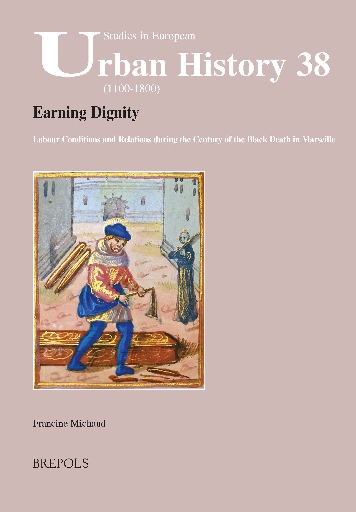
Earning Dignity: Labour Conditions and Relations during the Century of the Black Death in Marseille
show More to view fulltext, buy and share links for:Earning Dignity: Labour Conditions and Relations during the Century of the Black Death in Marseille show Less to hide fulltext, buy and share links for: Earning Dignity: Labour Conditions and Relations during the Century of the Black Death in Marseille'Earning Dignity: Labour Conditions and Relations during the Century of the Black Death' sheds a direct light on the changing labour market and working relations of medieval Marseille before and after the Black Death. The author's close analysis of hundreds of notarized contracts and legal suits provides an unparalleled comprehensive study of the prime actors in work relations - masters and employees; men, women, and children- integral to the Massilian port economy through its most turbulent period of pestilence, warfare, and tense labour relations after 1348. By establishing the longer trends of pre-plague conditions, the author reveals the predicaments masters found themselves in the new labour shortages after the Black Death, the intensified used of money in work relations, and the broader place of unskilled workers (not least among them, women) in urban, household, agricultural, and maritime trades. The study ends as the calamitous century drew to a close, when changing relations, long-term debt, and demanded dignity of labourers undoubtedly created the basis for longer term trends in work relations in the century to follow.
-
-
-
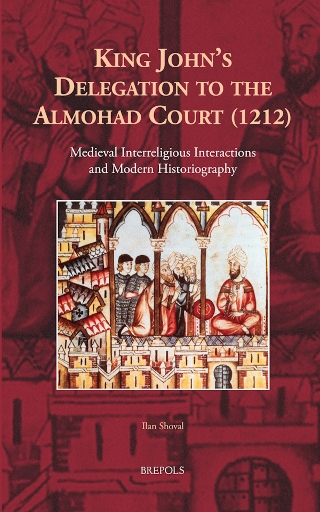
King John's Delegation to the Almohad Court (1212)
show More to view fulltext, buy and share links for:King John's Delegation to the Almohad Court (1212) show Less to hide fulltext, buy and share links for: King John's Delegation to the Almohad Court (1212)Is Matthew Paris’s story of an English diplomatic delegation, sent by King John to the caliph of Morocco in the summer of 1212, nothing more than fiction, or does it report actual historical events? Did King John really offer to subjugate his kingdom to the Muslim caliph and did he consider converting to Islam? Was one of John’s diplomats genuinely a converted Jew with whom the Muslim ruler conversed about theological issues? And how may a new reading of this medieval chronicle in its appropriate historical context contribute to our understanding of the professionalization of diplomatic practice, the emergence of European bureaucratic kingship, Christian–Muslim political interaction, interreligious polemic, and conversion? In this book, these questions are explored as part of the first full-scale study of Matthew Paris’s report. The volume proposes an entirely new interpretation of the text and portrays a multifaceted and inherently complex picture of the interactions between Christians, Muslims, and Jews around 1200 that draws on law, politics, statecraft, history, culture, and religion. This study also prompts a re-evaluation of the delegation story as a ‘test case’ for John’s measures during his reign. Matthew’s text is examined in its historical context of Christian–Muslim encounters on the frontier in order to advance our understanding of a crucial era of political and diplomatic transformation.
-
-
-
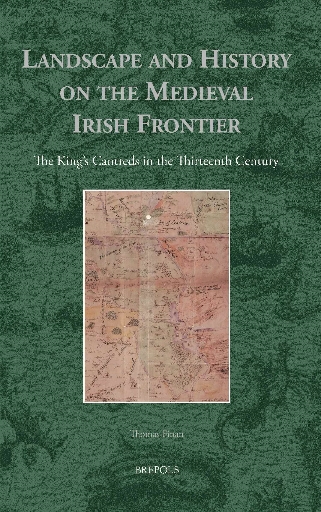
Landscape and History on the Medieval Irish Frontier
show More to view fulltext, buy and share links for:Landscape and History on the Medieval Irish Frontier show Less to hide fulltext, buy and share links for: Landscape and History on the Medieval Irish FrontierThis work offers a new and innovative insight into the history of thirteenth-century Ireland by exploring the interplay between Gaelic lords, Anglo-Norman lords, and the medieval environmental landscape that connected them. Focusing on the king’s cantreds of Roscommon, a space that was both the homeland of the O’Conor royal authority from the eighth century and a defined holding of the English kings from the early thirteenth century, the book explores the frontier landscape as an active player in its own right within Irish history and discusses the way that both Gaels and Anglo-Normans interacted with, and were in turn influenced by, this environment. This unique approach to Irish history enables the author to step away from the traditional view of a dyadic relationship between Gaelic and Anglo-Norman lords and instead demonstrate that not only did both sides alter and change the environment around them according to their perceptions of their enemies and the threat posed by the land, but that the landscape itself was to play a significant role in shaping and influencing the identities and destiny of its inhabitants.
-
-
-
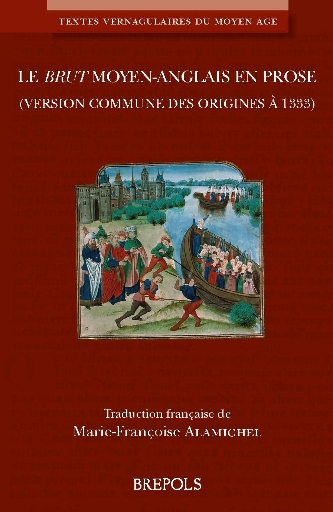
Le Brut moyen-anglais en prose (version commune des origines à 1333)
show More to view fulltext, buy and share links for:Le Brut moyen-anglais en prose (version commune des origines à 1333) show Less to hide fulltext, buy and share links for: Le Brut moyen-anglais en prose (version commune des origines à 1333)Près de 200 manuscrits du Brut en prose moyen anglais nous sont parvenus soulignant ainsi l'extraordinaire popularité de cette œuvre. Le présent ouvrage est la traduction française de sa première partie qui s’achève en 1333 avec la bataille de Halidon Hill. Elle est accompagnée de la reprise de l’édition du texte d’origine par F. Brie pour l’Early English Text Society. Une longue introduction, une cinquantaine de pages de notes et un double index viennent compléter le volume.
L’ouvrage sera utile aux historiens qui trouveront ce que les Anglais des XIV e et XV e siècles avaient choisi de retenir de leur passé national. Les littéraires pourront s’attarder sur les moyens rhétoriques et de propagande de ce récit engagé. Le plus grand public, enfin, découvrira un récit aux multiples facettes qui montre que la construction de l’identité nationale anglaise reposait à la fois sur l’Histoire et l’imaginaire - mythes troyens et arthuriens, prophéties de Merlin, miracles chrétiens. Ce mélange fait tout l’intérêt de ce texte fondamental de l’Angleterre médiévale.
-
-
-
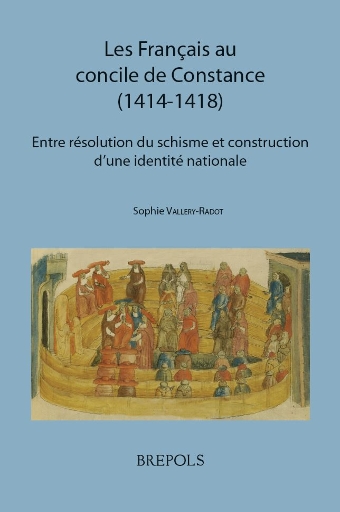
Les Français au concile de Constance (1414-1418)
show More to view fulltext, buy and share links for:Les Français au concile de Constance (1414-1418) show Less to hide fulltext, buy and share links for: Les Français au concile de Constance (1414-1418)Le concile de Constance est ouvert par le pape Jean XXIII en novembre 1414 afin de résoudre le schisme qui divise l’Église d’Occident depuis 1378. Les Pères conciliaires sont regroupés en quatre puis cinq nations conciliaires dont la nation française. Qui est-elle ?
Cet ouvrage se propose d’abord de répondre à cette question par le biais d’une étude prosopographique. Il s’agit d’identifier les membres de la nation française, de déterminer leur appartenance à des réseaux, qu’ils soient curiaux, familiaux, religieux, universitaires ou politiques. Ce travail s’attarde aussi sur les conflits entre les nations conciliaires et sur la construction de l’identité nationale française dans le cadre conciliaire.
À l’occasion du sixième centenaire de la réunion de ce concile, cet ouvrage apporte un regard renouvelé sur le rôle qu’y jouent les membres de la nation française.
On trouvera également dans cet ouvrage les notices biographiques des Pères conciliaires membres de la nation française.
-
-
-

Per sen de trobar : l'opera lirica di Daude de Pradas
show More to view fulltext, buy and share links for:Per sen de trobar : l'opera lirica di Daude de Pradas show Less to hide fulltext, buy and share links for: Per sen de trobar : l'opera lirica di Daude de PradasL’œuvre lyrique du troubadour Daude de Pradas a déjà fait l’objet d’une édition intégrale publiée par Alexander H. Schutz en 1933. Quatre-vingts ans après, une mise à jour et une révision des résultats présentés par le savant américain semblent nécessaires. Tenu par son premier éditeur pour un auteur tardif et peu original, Daude de Pradas est aujourd’hui à considérer comme un poète actif d’entre la fin du xii e et le début du xiii e siècle, presque contemporain de la génération dite « classique » des troubadours. Les contenus ainsi que la forme de son œuvre sont bien plus intéressant que ce que l’on croyait. Cette nouvelle édition vise à proposer un texte plus fiable que celui établi par M. Schutz. Elle tente de résoudre les conflits d’attribution de certains textes, de les rectifier à l’aide des études les plus récentes des hypothèses chronologiques et biographiques considérées désormais comme acquises. Enfin elle s’efforce d’expliquer, au moins en partie, à l’aide d’un apparat de notes interprétatives et à l’aide des traductions intégrales des textes, les nombreux vers obscurs et difficiles d’un auteur lu seulement de façon superficielle.
Silvio Melani a étudié la Philologie romane aux Universités de Pise et de Florence et a été Lecteur de langue et littérature italiennes à l’Université de Stockholm. Parmi ses travaux, il a publié l’édition critique de Philippe de Novare (Guerra di Federico II in Oriente, Napoli 1994) et le recueil d’essais historiques Ospitalieri, monaci e guerrieri, Turku 2002. En ce moment, il termine son deuxième Doctorat à l’Université de Udine.
-
-
-
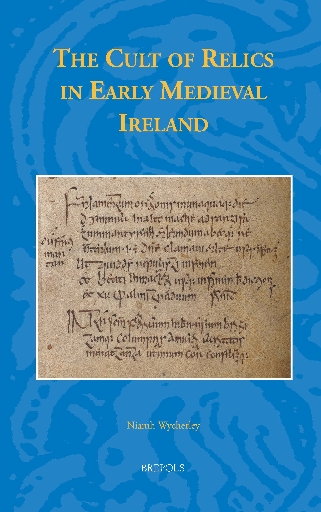
The Cult of Relics in Early Medieval Ireland
show More to view fulltext, buy and share links for:The Cult of Relics in Early Medieval Ireland show Less to hide fulltext, buy and share links for: The Cult of Relics in Early Medieval IrelandAs the cult of saints became increasingly important to the Christian religion during the latter centuries of the Roman Empire, so too the veneration of relics became a central element of Christian piety. The relics of holy men and women - the very tangibility of which ensured their lasting appeal - could be used to heal the sick, improve the weather, ensure victory in battle, and represent power and authority. Even today, in an era of declining church attendance, famous relics such as the head of St Catherine of Siena or the tongue of St Anthony of Padua continue to draw hundreds of thousands of pilgrims; the need to preserve and venerate objects associated with the important and the famous is a well-established human trait.
This book is the first to explore the historical roots of the cult of relics in early medieval Ireland, deepening our understanding of how the pagan Irish adapted to the new religion. Examining the cult of relics from the earliest Irish sources up to the ninth century, it provides insights into the role of relics and the culture and people to whom they were so significant. The volume investigates how the Christian phenomenon of relic veneration developed in early Ireland and it evaluates the continuity between Irish practice and that on the continent. By offering a new model of how the cult of relics evolved and by exploring the extent to which it helped forge early Irish Christianity, the arguments presented here have the potential to reshape views of the entire period.
-
-
-
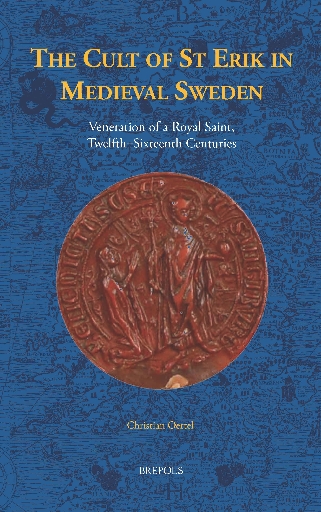
The Cult of St Erik in Medieval Sweden
show More to view fulltext, buy and share links for:The Cult of St Erik in Medieval Sweden show Less to hide fulltext, buy and share links for: The Cult of St Erik in Medieval SwedenIn this first comprehensive monograph on St Erik, the author follows the cult of the Swedish royal saint from its obscure beginnings in the twelfth century up to its climax in the time of the Kalmar Union (1397-1523). The focus of the book lies on the interaction of the cult with different groups within medieval Swedish society and these group’s attempts to utilize the prestige of the saint to further their political aims. From the middle of the thirteenth century, the cult was particularly connected to the archbishopric of Uppsala and the royal dynasty of Bjalbo. During the fifteenth century the Swedish royal saint symbolized (together with St Olaf of Norway and St Knut of Denmark) the three kingdoms of the Kalmar Union. At the same time, his prestige was successfully employed in the propaganda of King Karl Knutsson (Bonde) and the three Sture-riksförestandare to legitimate their anti-Union politics. In order to gain a broader perspective, the author uses a wide variety of sources. These include a number of texts which contain information about the cult of the saint (legend, miracle collection, offices, sermons, chronicles, charters). In addition, different sorts of depictions showing St Erik on wall paintings, altarpieces, seals, and coins are used in order to give a comprehensive account of the multifaceted veneration of this saint.
-
-
-
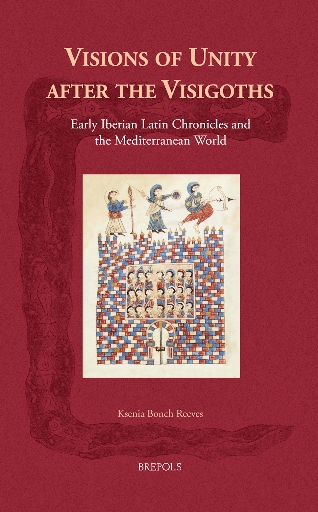
Visions of Unity after the Visigoths
show More to view fulltext, buy and share links for:Visions of Unity after the Visigoths show Less to hide fulltext, buy and share links for: Visions of Unity after the VisigothsThis study focuses on post-Visigothic Latin chronicles as testimonies of an intense search for models of stability and social cohesion on the Iberian Peninsula. As the principal source of Iberian political thought between the eighth and mid-thirteenth centuries, these texts have long been regarded from the perspective of modern-day national boundaries of a political entity called Spain. From the post-national perspective of Mediterranean studies, which considers Iberian centres of power in cultural contact with the broader world, post-Visigothic Iberian chronicle writing is seen as a cultural practice that seeks to reconcile the imperative of unity and stability with the reality of diversity and social change.
The book examines, firstly, the Andalusi Christian narrative of Visigothic political demise, which originated in Iberian dhimmī communities between the mid-eighth and mid-ninth centuries. Second, it explores the narrative of sovereignty, developed in Asturias-León from the late ninth century onwards. Finally, it examines the historiographical manipulation of both of these traditions in Rodrigo Jiménez de Rada’s Historia de rebus Hispanie (1243).
The ongoing contact between Iberian Latin textual communities and the broader Mediterranean is interpreted as central to both the development of Iberian historical mythology and its historiographical renovation.
-
-
-
Identité, filiation et parenté dans les romans du Graal en prose
show More to view fulltext, buy and share links for:Identité, filiation et parenté dans les romans du Graal en prose show Less to hide fulltext, buy and share links for: Identité, filiation et parenté dans les romans du Graal en proseLe cycle Lancelot-Graal et le Perlesvaus, écrits dans la première moitié du XIIIe siècle, sont construits autour d’un temps horizontal, organisé autour de la figure du roi Arthur, ce qui rend toute idée de succession problématique. Mais dans le même temps, la société a subi de profonds bouleversements : qu’il s’agisse de l’institution du mariage, des règles de transmission de l’héritage ou encore de l’ancrage du lignage dans des lieux géographiques très précis, les relations entre les individus se sont lentement modifiées. Les auteurs doivent donc faire coexister des éléments disparates, voire même contradictoires. La généalogie entre dans le roman arthurien par le biais du cycle de la Vulgate et ce temps vertical influe sur le roman, les relations de parenté devenant ainsi déterminantes dans la construction narrative des personnages.
-
-
-
Priscien glosé
show More to view fulltext, buy and share links for:Priscien glosé show Less to hide fulltext, buy and share links for: Priscien gloséL’étude de l’Ars de Priscien, débutée discrètement dans les Îles britanniques au VIIe siècle, a occupé une position essentielle dans la formation médiévale. Sous l’impulsion d’Alcuin, elle a ouvert de nouvelles perspectives aux réflexions grammaticales pour des générations d’écolâtres. Les plus anciens témoins manuscrits de l’Ars attestent que les innombrables explications notées en marges ont tenu un rôle capital dans la transmission du savoir.
Le présent volume décrit le contexte pédagogique et plus largement le milieu culturel dans lequel s’insère l’étude de la grammaire dans le haut Moyen Âge, et s’attache tout spécialement à dégager les étapes de sa réception dans les monastères, d’abord sous l’angle des livres qui la transmettent, puis de celui des maîtres qui les ont utilisés. À cet effet, les gloses constituent des témoignages fondamentaux qui font l’objet d’une triple enquête : typologique, textuelle et historique.
Les gloses présentées ici dévoilent les rouages intimes d’un monde scolaire en constant renouvellement. Elles font la lumière sur les patients travaux des maîtres carolingiens, qui ont minutieusement décortiqué le texte complexe de Priscien. Elles montrent l’élaboration d’une méthodologie promise à un brillant avenir. Et si les Carolingiens se sont attachés surtout aux seize premiers livres, ils n’en ont pas moins préparé le terrain d’une seconde réception, qui placera, dès la fin du XIe siècle, les deux derniers livres sur la syntaxe au centre des débats scolastiques.
-
-
-
The Bible and the Apocrypha in the Early Irish Church (A.D. 600-1200)
show More to view fulltext, buy and share links for:The Bible and the Apocrypha in the Early Irish Church (A.D. 600-1200) show Less to hide fulltext, buy and share links for: The Bible and the Apocrypha in the Early Irish Church (A.D. 600-1200)The twenty-one essays in this volume, published from 1971 onwards, together with the introductions and conclusion, treat of the Bible and apocryphal works in Ireland during the pre-Norman period, from A.D. 600 to 1200. The essays cover developments during the period from Professor Bernhard Bischoff’s seminal 1954 essay ("Wendepunkte"), on new evidence for Irish contributions in the field, down to the present day. After an initial survey of research during this period, attention is paid to the texts of the Latin Bible, in particular the Psalms and the Four Gospels, and to the Antiochene influence on Psalm interpretation, as well as to the rich corpus of Irish apocryphal writings, some of them very early (Transitus Mariae, so-called Infancy Narrative of Thomas, texts on the Magi and a related Infancy Narrative). Special attention is paid to the creative biblical interpretation of the Psalms in the early Irish Church A.D. 600-800, and also to what appears to be an early Irish (early eighth-century) commentary on the Apocalypse. It is hoped that these essays will contribute to a renewed examination of early Irish exegesis in this the sixtieth year of the publication of Dr Bischoff’s 1954 essay.
Martin McNamara studied theology in Rome and later biblical studies at the Pontifical Biblical Institute, Rome and Jerusalem, and at the École Biblique, Jerusalem. He specialised in the Aramaic translations of the Hebrew Bible (‘Targums’), with a doctoral dissertation in 1965 (published 1966) and has many later essays on the topic, published as collected essays in 2011. He has been active since 1954 in the study and critical edition of Irish texts on the Bible and the Apocrypha, and has written extensively on these topics.
-