


Brepols Online Books Other Monographs Collection 2016 - bob2016moot

Collection Contents
19 results
-
-
Poems
show More to view fulltext, buy and share links for:Poems show Less to hide fulltext, buy and share links for: PoemsTheodore Metochites (c. 1270-1332), an important writer of Late Byzantium, composed twenty long Poems in dactylic verse, which constitute an unicum in Byzantine Literature. Some of them are clearly autobiographic, offering important details about their author’s career, while others are devoted to some saints of the Byzantine church (St Athanasius of Alexandria and the three prelates Basil of Caesarea, Gregory the Theologian and John Chrysostom). Some of them are addressed to close friends of Metochites (like the polymath Nikephoros Gregoras, or the church historian Nikephoros Xanthopoulos), asking for their advice or complaining about his own difficulties. Three of them are funerary Poems, extolling the virtues and mourning the death of persons close to the emperor Andronikos II Palaiologos, who was the protector and benefactor of Metochites. The last seven Poems are written in a more reflective mood, discussing the precariousness of human happiness and the inevitability of man’s fall due to the adverse circumstances of his life. All those Poems are preserved in MS. Parisinus graecus 1776, which was written in all probability under Metochites’ supervision. The translation is accompanied by notes clarifying the sense of difficult passages and giving references to the texts that inspired Metochites directly or to parallel passages in the works of Metochites himself, or other Greek and Byzantine authors.
The source text of this volume appeared in Corpus Christianorum Series Graeca as Theodorus Metochita, Carmina (CC SG 83). References to the corresponding pages of the Corpus Christianorum edition are provided in the margins of this translation.
-
-
-
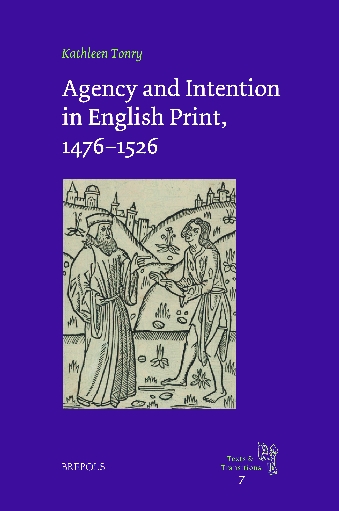
Agency and Intention in English Print, 1476–1526
show More to view fulltext, buy and share links for:Agency and Intention in English Print, 1476–1526 show Less to hide fulltext, buy and share links for: Agency and Intention in English Print, 1476–1526This volume offers a new intellectual framework for early print that bridges divisions between the study of print and the study of literature, between manuscripts and printed books, and between pre- and post-1500 textual cultures. Through an extensive focus on medieval texts and ideas, it is demonstrated here that in the half-century before the Reformation, English print was part of a highly energetic tradition of late medieval textual production. Central to this tradition was the expression of ethical agency, or moral ‘entente’, through the creation of texts and books. This insight reveals how the first English printed books expressed the deliberate moral and cultural commitments of individual printers.
By following early print across a range of genres (history writing, religious instruction, hagiography, law books, and translation), this study also sheds light on the contexts within which the agencies of early printers mattered, including mercantile politics, civic and statute law, and theological economics.
The volume, which treats the pre-Reformation press as a whole, is based in particular on the bibliographical evidence provided in editions by William Caxton, Wynkyn de Worde, Richard Pynson, John Rastell, and Thomas Berthelet, as well as on close readings of texts and contextual materials. The questions raised here, however, are about more than old books and early printers: ultimately, this study argues that the history of the material book is an intellectual history of agency and textual production.
-
-
-
Apuleius and the Metamorphoses of Platonism
show More to view fulltext, buy and share links for:Apuleius and the Metamorphoses of Platonism show Less to hide fulltext, buy and share links for: Apuleius and the Metamorphoses of PlatonismThis book presents a thorough re-examination of Apuleius’ Platonic philosophy, encompassing both his philosophical and literary works. Its primary concern lies in demonstrating how there is no significant gap between the Platonic philosophy of the Opuscula (De deo Socratis, De Platone et eius dogmate, De mundo) and the literary tastes of his rhetorical and most important output, such as the Apologia, the Florida, and foremost the Metamorphoses. Apuleius’ Middle-Platonism did not limit itself to technical works, but also influenced his literary interests.
Up to now, Apuleius’ Platonism has been very poorly investigated. It had attracted the attention of only a few - although prominent - scholars (Festugière, Dodds, Theiler), before being taken briefly into consideration in the monographs by John Dillon (The Middleplatonists, London 1977) and Stephen Gersh (Middle Platonism and Neoplatonism. The Latin Tradition, Notre Dame 1986). Because of his multifaceted interests and brilliant style, which is reflected in his conferences, judicial orations and in the novel, Apuleius was mainly treated as a sophist. In the wake of a recent revival of interest in Greek Middle Platonism and in its predecessors (such as Philo of Alexandria or Plutarch), the rhetor of Madauros is worthy of a new examination. This book aims at considering Apuleius as a Philosophus Platonicus who, at the same time, is a Latin Sophist, showing how the two aspects are closely intertwined.
Examining only one aspect would be easy, but would not do justice to Apuleius’ personality. In particular, it is necessary to insert him into a philosophical line, which runs from the first to the third century AD, thus outlining the specifics of Latin Platonism. On the other hand, it is necessary to take into account the concerns of the Second Sophistic in philosophy, though in a somewhat trivialized and less systematic way.
The title of the book (Apuleius and the Metamorphoses of Platonism) indeed underlines how Apuleius’ chameleonic Platonism ‘transforms’ itself, both in his philosophical and his literary works. While challenging the current scholarly trend that overrates the philosophical presence in the Metamorphoses, this book suggests new outlooks, as well as providing a new perspective on many hypotheses previously considered as a given. In order to do this, it investigates the literary, religious and philosophical, Graeco-Roman / African milieu in which Apuleius lived from a literary, religious and philosophical point of view, while considering his influence on authors from Late Antiquity.
-
-
-
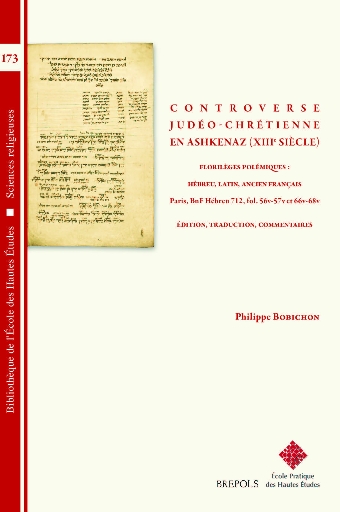
Controverse judéo-chrétienne en Ashkenaz (XIIIe siècle)
show More to view fulltext, buy and share links for:Controverse judéo-chrétienne en Ashkenaz (XIIIe siècle) show Less to hide fulltext, buy and share links for: Controverse judéo-chrétienne en Ashkenaz (XIIIe siècle)Ces documents inédits - et semble-t-il uniques - intéressent à la fois l’étude du latin médiéval et celle des relations entre juifs et chrétiens, en Ashkenaz, au XIIIe siècle. Ils offrent plusieurs pages de latin translittéré tout en se distinguant par leurs diverses caractéristiques des autres écrits destinés, dans la littérature hébraïque médiévale, à la controverse avec les chrétiens. L’argumentation se fonde exclusivement ici sur des emprunts à la tradition latine chrétienne invariablement restitués dans la langue originale (en caractères hébreux), généralement accompagnés d’une ébauche de traduction hébraïque et fréquemment précédés, en hébreu et en ancien français (caractères hébreux), d’indications relatives à leur utilisation polémique. Cette stratégie argumentative s’apparente à celle des chrétiens invoquant à la même époque, sur des questions analogues, la tradition rabbinique. Ces deux florilèges sont manifestement le fruit d’un travail collectif, encore inachevé, dont ils ne représentent que deux étapes distinctes et sans doute deux témoins parmi beaucoup d’autres. Ils attestent la réalité d’un débat judéo-chrétien qui n’était en aucune manière réservé à une élite, et l’imminence de ses enjeux. Ils sont la preuve d’une réaction concertée à l’entreprise chrétienne de conversion.
L’édition et la traduction s’accompagnent d’une analyse codicologique, paléographique, linguistique et textuelle. Les commentaires de la seconde partie situent le détail de l’argumentation dans l’ensemble des écrits de controverse judéo-chrétienne. Les conclusions, fondées sur la complémentarité des approches, s’achèvent par une mise en contexte prenant en compte les perspectives de recherche encore offertes par ces deux documents exceptionnels.
-
-
-
Cosmographical Novelties in French Renaissance Prose (1550–1630)
show More to view fulltext, buy and share links for:Cosmographical Novelties in French Renaissance Prose (1550–1630) show Less to hide fulltext, buy and share links for: Cosmographical Novelties in French Renaissance Prose (1550–1630)Contemporary historiography holds that it was the practices and technologies underpinning both the Great Voyages and the ‘New Science’, as opposed to traditional book learning, which led to the major epistemic breakthroughs of early modernity. This study, however, returns to the importance of book-learning by exploring how cosmological and cosmographical ‘novelties’ were explained and presented in Renaissance texts, and discloses the ways in which the reports presented by sailors, astronomers, and scientists became not only credible but also deeply disturbing for scholars, preachers, and educated laymen in sixteenth- and seventeenth-century France.
It is argued here that dialectic - the art of argumentation and reasoning - played a crucial role in articulating and popularizing new learning about the cosmos by providing the argumentative toolkit needed to define, discard, and authorize novelties. The debates that shaped them were not confined to learned circles; rather, they reached a wider audience via early modern vernacular genres such as the essay.
Focusing both on major figures such as Montaigne or Descartes, as well as on now-forgotten popularizers such as Belleforest and Binet, this book describes the deployment of dialectic as a means of articulating and disseminating, but also of containing, the disturbance generated by cosmological and cosmographical novelties in Renaissance France, whether for the lay reader in Court or Parliament, for the parishioner at Church, or for the student in the classroom.
-
-
-
Infanticide, Secular Justice, and Religious Debate in Early Modern Europe
show More to view fulltext, buy and share links for:Infanticide, Secular Justice, and Religious Debate in Early Modern Europe show Less to hide fulltext, buy and share links for: Infanticide, Secular Justice, and Religious Debate in Early Modern EuropeOn 5 December 1709, in Bologna, Lucia Cremonini is accused of a terrible crime: the murder of her newborn son. This tragic episode, exhumed from the depths of time, is placed at the centre of an enthralling study by one of the leading scholars of modern history and the history of religious beliefs. During the course of a dramatic trial the crime is debated by representatives of religious, philosophical, moral, and scientific culture, all characteristic of the formative period of the modern world and all seeking a convincing answer to fundamental questions. When does life begin? When can a human being first be described as such, so that his or her killing is a crime punishable by the maximum penalty? What is the true role of baptism in the formation of the human person? These are all highly topical questions in an age like our own, where belief is subject to the powerful assaults of scientific research and new questions are being raised about the essence and the limits of human existence.
This is a translation from the original Italian publication 'Dare l'anima' (Einaudi, 2005).
Translation by Hilary Siddons.
-
-
-
L'extrait des Questions et réponses sur les évangiles d'Eusèbe de Césarée : un commentaire
show More to view fulltext, buy and share links for:L'extrait des Questions et réponses sur les évangiles d'Eusèbe de Césarée : un commentaire show Less to hide fulltext, buy and share links for: L'extrait des Questions et réponses sur les évangiles d'Eusèbe de Césarée : un commentaireAprès avoir édité le texte des Questions évangéliques d’Eusèbe de Césarée (env. 265-env. 340) dans la forme abrégée sous laquelle il nous est parvenu, Claudio Zamagni livre ici son commentaire de ce texte. Le texte originel de cet ouvrage d’Eusèbe est perdu. Il comportait deux parties. La première, dédiée à un certain Stéphanos, traitait des problèmes concernant les généalogies de Jésus d’après les évangiles ; la deuxième, faisant intervenir un autre questionneur, Marinos, concernait la résurrection de Jésus ainsi que les visions des anges, les apparitions du Ressuscité aux disciples. En grec, le texte est connu par des fragments provenant principalement de la chaîne de Nicétas d’Héraclée sur Luc et de manuscrits d’autres genres de recueils, et par une « sélection (eklogè) en abrégé », fondée sur l’ensemble de l’ouvrage. La tradition syriaque est elle-mme double : une version faite au tournant du vii e au viii e siècle, qui donne un résumé par rapport aux traditions grecques disponibles, et une autre, plus ancienne, peut-être du v e siècle, connue par l’intermédiaire de Commentaires évangéliques de Georges de Belthan (viii e s.) et de Denys bar Salibi (xii e s.). Le commentaire de Claudio Zamagni s’attache à la comparaison de l’eklogè et des fragments de Nicétas, qui offrent un texte élargi, sans couvrir l’ensemble présent dans la sélection des Questions à Stéphanos, et qui sont le seul témoin pour d’amples parties des Questions à Marinos. Il tient compte aussi des témoins syriaques. Le travail, qui prend appui sur une bibliographie exhaustive, a pour fin de reconstituer le mieux possible la structure de l’ouvrage d’Eusèbe, en assignant sa place à chacun des fragments et en appréciant leur fidélité à l’original, d’approfondir la connaissance de la méthode exégétique d’Eusèbe et de la définir par rapport à ses devanciers, notamment Origène, et à ses successeurs, de préciser aussi comment se situe le texte néotestamentaire des Questions dans les traditions textuelles des évangiles. Ce livre étudie en outre la postérité de l’ouvrage d’Eusèbe en Orient et en Occident, jusqu’au Moyen Âge.
-
-
-
La déesse Korè-Perséphone: mythe, culte et magie en Attique
show More to view fulltext, buy and share links for:La déesse Korè-Perséphone: mythe, culte et magie en Attique show Less to hide fulltext, buy and share links for: La déesse Korè-Perséphone: mythe, culte et magie en AttiqueDuality of her nature is a salient trait of Greek goddess Kore-Persephone. It is reflected not only in her name but also in her fate. She moves perpetually between the Underworld and that of the Living, and between maidenhood and womanhood. This research focuses on the Kore-Persephone myth in Attica, how she was worshipped and how she was present even outside the civic religion. This work explores the myth of Kore, the etymology of her name according to ancient Greeks, how she was worshipped or celebrated in festivals in Attica, either alone or along with Demeter. Finally the author attempts to identify her role in magic, in the Dionysian or Orphic religious societies, and in Artemidorus’ oneirocritical treatise.
-
-
-
La notion d'adab chez Ibn Qutayba : étude générique et éclairage comparatiste
show More to view fulltext, buy and share links for:La notion d'adab chez Ibn Qutayba : étude générique et éclairage comparatiste show Less to hide fulltext, buy and share links for: La notion d'adab chez Ibn Qutayba : étude générique et éclairage comparatisteCette recherche s’inscrit dans une double démarche : restitution d’une cohérence globale à l’oeuvre d’Ibn Qutayba (213/828-276/889) et essai de définition de la notion d’adab (genre littéraire, éthique, paideia ?). Elle s’articule autour de la fonction d’auteur telle qu’elle apparaît dans les ‘Uyūn al-Aḫbār, somme de récits et vers exemplaires, ainsi que de la fonction rhétorique de cet ouvrage qui l’apparente à un recueil d’exempla de l’Occident médiéval. La parenté des‘Uyūn al-Aḫbār avec le genre de l’encyclopédie y est également abordée. Enrichie d’un éclairage comparatiste apporté par la littérature médiévale occidentale, la confrontation critique de ce texte avec les interprétations qui en ont été données est fondée sur l’analyse rhétorique et stylistique du prologue des ‘Uyūn al-Aḫbār, ainsi que sur la lecture transversale des introductions des trois ouvrages fondamentaux d’adab d’Ibn Qutayba, que sont l’Adab al-Kātib, les ‘Uyūn al-Aḫbār et les Ma‛ārif. La traduction annotée des deux dernières citées accompagne cette recherche.
-
-
-
Peace and Peril
show More to view fulltext, buy and share links for:Peace and Peril show Less to hide fulltext, buy and share links for: Peace and PerilEmperor Wu is generally recognized as the greatest ruler of the Han Dynasty, and his wars against the steppe warrior Xiongnu as one of his greatest undertakings. To the chief narrator of these events, ancient Chinese historian Sima Qian, the turning point in Han Dynasty history was the way Emperor Wu had abandoned the policy of peaceful relations with the Xiongnu, and launched China on a series of campaigns that would last for decades. This has been almost universally accepted as “truth” in modern scholarship, but these claims cannot be taken at face value.
Firstly, this book identifies ways in which the Shiji account is riddled with inconsistencies and deliberately misleading information, and provides explanations for this. He hid signs of rising disquiet with the peace policy of earlier rulers, and concealed indications that for at least two decades China’s leadership had been searching for alternatives.
Secondly, the work reconstructs a more accurate narrative of events for one hundred years of Han - Xiongnu relations than can be gained by a straight-forwarding reading of individual chapters of the Shiji. A narrative emerges of an historian with an agenda, and of a century of Han - Xiongnu relations that is markedly different from any previously produced.
-
-
-
Pilgrimage to Heaven: Eschatology and Monastic Spirituality in Early Medieval Ireland
show More to view fulltext, buy and share links for:Pilgrimage to Heaven: Eschatology and Monastic Spirituality in Early Medieval Ireland show Less to hide fulltext, buy and share links for: Pilgrimage to Heaven: Eschatology and Monastic Spirituality in Early Medieval IrelandThis book focuses on the expectation of the Judgment and the afterlife in early medieval Irish monastic spirituality. It has been claimed that in the Early Middle Ages, Christianity became for the first time a truly otherworldly religion and in monastic spirituality this otherworldly perspective gained an especially prominent role. In this book, Dr Ritari explores the role of this eschatological expectation in various sources, including hagiography produced by the monastic familia of St Columba, the sermons of St Columbanus, the Navigatio sancti Brendani portraying St Brendan’s sea voyages, and the vision attributed to St Adomnán about Heaven and Hell. One recurrent image used by the Irish authors to portray the Christian path to Heaven is the image of peregrinatio, a life-long pilgrimage. Viewing human life in this perspective inevitably influenced the human relationship with the world making the monastic into a pilgrim who is not supposed to get attached to anything encountered on the way but to keep constantly in mind the end of the journey.
-
-
-
Poétique de la prière dans les œuvres d'Ovide
show More to view fulltext, buy and share links for:Poétique de la prière dans les œuvres d'Ovide show Less to hide fulltext, buy and share links for: Poétique de la prière dans les œuvres d'OvideFrom his early works to the poems of exile, Ovid constructed a personal poetic language, mixing religious stylemes belonging to the liturgical language of the Augustan age with purely poetic stylemes, some taken from literary tradition, others quite original: he thus plays on the border-line separating the religious carmen from the poetic carmen, giving birth to a new song endowing poetry with a sacred status, making it the properly poietic music of creation whose breath gives the world its meaning, its form and its beauty.
When Ovid speaks to us of love, he also speaks to us of poetry, but not just a narcissistic poetry taken as its object and own end. What is reflected in the mirror of Ovidian verse as it takes shape in the utterance of prayer is a perspective – a transcendental perspective through which the poet attempts to contemplate the sacred Music which organizes the universe.
-
-
-
Religion et gouvernement dans l'Empire romain
show More to view fulltext, buy and share links for:Religion et gouvernement dans l'Empire romain show Less to hide fulltext, buy and share links for: Religion et gouvernement dans l'Empire romainLa religion romaine était une religion légaliste, et les romains pensaient partout et toujours juridiquement : ce sont les truismes de l'histoire ancienne. Néanmoins, au-delà du sujet du culte public, il n'y a aucune enquête contemporaine sur l'imbrication de la religion et du droit civil. Religion et gouvernement dans l'Empire romain propose d'examiner la sociologie de la religion et la subjectivité politique dans l'empire romain : l'ascétisme comme discipline du citoyen dans l'antiquité tardive ; la tolérance des pratiques religieuses non-romaines par le gouvernement de l'Empire ; l'improvisation dans les rites romains religieux et juridiques ; et l'utilisation de la citoyenneté comme métaphore pour l'affiliation religieuse, du monde classique à l'empire chrétien. Le livre fournit l'étude moderne la plus détaillée des textes légaux et religieux sur son sujet.
-
-
-
The Church of Saint-Eustache in the Early French Renaissance
show More to view fulltext, buy and share links for:The Church of Saint-Eustache in the Early French Renaissance show Less to hide fulltext, buy and share links for: The Church of Saint-Eustache in the Early French RenaissanceConsidered the most important French Renaissance church, Saint-Eustache in Paris has long remained an enigma. What new circumstances allowed its parishioners, long desirous of a new church, suddenly to begin buiding it 1532? Did Francis I play a role? Was the obscure Jean Delamarre possibly its architect? Could the ideas of the Italian theorist, Serlio, have affected his design? These and other key issues are resolved by the author in a sustained reading of all known evidence. The baffling formal complexity of the church is clarified through lucid analysis that employs hundreds of new photographs executed by the author. The building is studied within the context of sixteenth-century French architecture and its roots in antiquity, the Italian Renaissance, Romanesque and Gothic France, and the Flamboyant Style. Sankovitch’s work will serve as a standard for all those who desire to understand this mysterious building and its times. A bright, clear window revealing an unseen architecture, previously an invisible - or at best murky - episode in the history of art, it is a portal to all future research on the building, and a key to the architectural life of the period.
-
-
-
The Greeks of Venice, 1498–1600
show More to view fulltext, buy and share links for:The Greeks of Venice, 1498–1600 show Less to hide fulltext, buy and share links for: The Greeks of Venice, 1498–1600People have always immigrated in search of better working and living conditions, to escape persecution, reconnect with family, or simply for the experience. This volume traces the history of Venice’s Greek population during the formative years between 1498 and 1600 when thousands left their homelands for Venice. It describes how Greeks established new communal and social networks, and follows their transition from outsiders to insiders (though not quite Venetians) through an approach that offers a comparative perspective between the ‘native’ and the immigrant. It places Greeks within the context of multi-cultural, multi-ethnic, and multi-lingual Venice. Personal stories are interwoven throughout for a more intimate account of how people lived, worked, prayed, and formed new social networks. These accounts have been drawn from a variety of sources collected from the Venetian state archives, the archives of the Venetian church, and documentation held by the Hellenic Institute of Venice. Notarial documents, petitions, government and church records, registries of marriages and deaths, and census data form part of the collected material discussed here. Above all, this study aims to reconstruct the lives of the largest ethnic and Christian minority in early modern Venice, and to trace the journey of all immigrants, from foreigner to local.
-
-
-
The Lord's Prayer. Origins and Early Interpretations
show More to view fulltext, buy and share links for:The Lord's Prayer. Origins and Early Interpretations show Less to hide fulltext, buy and share links for: The Lord's Prayer. Origins and Early InterpretationsIn first-century Palestine, a revival was taking place. Many Jews were looking for a more personal encounter with their God. They believed that the glory of YHWH was not confined to the Jerusalem sanctuary, and that in the ‘temples’ of their homes and synagogues they could be like the priests. They would offer sacrifices not of animals, but of prayer. It was in this setting that Jesus taught his followers to say, “Our Father in heaven ...”
Over the course of two centuries, this Jewish prayer became a central feature of Christian ritual. The process of transformation is discerned in various texts: the Gospels of Matthew and Luke, the Didache, and Tertullian’s De oratione. To a significant degree, each of these interpreters built upon the foundation which Jesus had established. Yet they also created innovatory significance, forms and functions for this simple prayer.
This work presents the early interpretive history of the Lord’s Prayer. It not only surveys what it meant to Jesus and the early Christians, but also seeks to address the question of why the understanding of the Lord’s Prayer changes. Biblical texts invite - even urge - new interpretations. The meaning of the Lord’s Prayer is to be found not just in its ‘original sense,’ but in the history of its meaning. This work traces the beginning chapters of a two-thousand-year-story which we ourselves continue to shape.
-
-
-
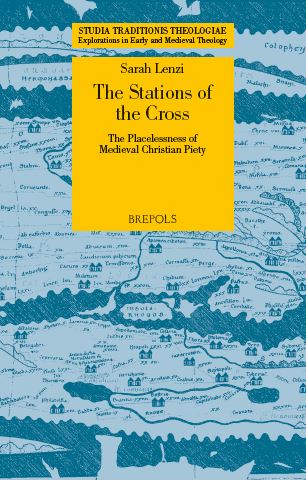
The Stations of the Cross
show More to view fulltext, buy and share links for:The Stations of the Cross show Less to hide fulltext, buy and share links for: The Stations of the CrossThe Christian practice of the Stations of the Cross has historically largely been the purview of devotional authors. In this academic study, the Reverend Doctor Sarah Lenzi revisits the evidence-based history of the western European development of the Stations as it was laid out at the turn of the twentieth century. She begins with a discussion of how this history is often neglected in favor of a mythic history that places the development in Jerusalem at the time of the Crusades and she then reestablishes the western origins. While the early twentieth-century authors who worked on the Stations are invaluable for the history they uncovered, there were gaps in the analyses they offered based on that history. In the chapters that follow, Rev. Dr. Lenzi works to debunk those interpretations and to offer a new understanding of the development of the Stations of the Cross. A close examination of pilgrimage texts as well as medieval meditation manuals puts this particular practice in the broader context of Medieval Christian history and ritual, and works to place it appropriately on the spectrum of pietistic behavior. With a new understanding of the development of the Stations of the Cross, Rev. Dr. Lenzi helps to explore notions of time, place, and space in Medieval Christianity, arguing for an understanding of placelessness in Christian piety that is enabled through intentional ritualized use of imagination, narrative, body, and word.
-
-
-
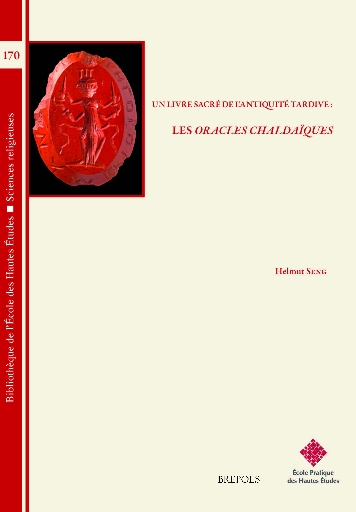
Un livre sacré de l'Antiquité tardive : les Oracles Chaldaïques
show More to view fulltext, buy and share links for:Un livre sacré de l'Antiquité tardive : les Oracles Chaldaïques show Less to hide fulltext, buy and share links for: Un livre sacré de l'Antiquité tardive : les Oracles ChaldaïquesLa définition devenue classique des Oracles Chaldaïques comme « une sorte de bible des derniers néo-platoniciens » résume la signification de ce texte médio-platonicien, qui n’a été conservé que sous forme de fragments et n’en est que plus difficile à comprendre. La tâche est compliquée par le fait que son langage poétique regorge d'images et de métaphores, et que ses exégètes antiques, ainsi que ses principaux témoins, en ont fait un usage créatif. Le présent volume offre une synthèse de la tradition, de la réception et de l’histoire de la recherche, ainsi que l’interprétation de la plupart des fragments et de nombreux témoignages dans le cadre d’une reconstruction systématique des conceptions philosophiques proposées dans les Oracles Chaldaïques. L’un des principaux thèmes abordés sera celui des idées cosmologiques liées à une hiérarchie des êtres résumée par la formule « âme-homme-salut », cela, à la lumière des informations glanées sur la pratique rituelle théurgique.
-
-
-
La scena dell'inganno. Finzioni tragiche nel teatro di Seneca
show More to view fulltext, buy and share links for:La scena dell'inganno. Finzioni tragiche nel teatro di Seneca show Less to hide fulltext, buy and share links for: La scena dell'inganno. Finzioni tragiche nel teatro di SenecaQuesto studio è dedicato all’analisi delle situazioni di inganno e finzione presenti nel corpus tragico di Seneca. Si articola in due parti: nella prima sono prese in esame la terminologia dell’inganno e della finzione e la loro morfologia, attraverso una classificazione del lessico, dei personaggi e dei loci drammatici. Nella seconda parte, invece, il tema viene indagato a partire dalla scenografia drammatica, sfondo comune del teatro senecano, il regnum, da un lato, e l’ambiente naturale, dall’altro, entrambi elementi connotativi, in diretto e attivo rapporto con gli avvenimenti e con i personaggi. Lungi dall’essere riducibili a mero omaggio nei confronti della tradizione o del repertorio mitico, fraus e dolus rappresentano tratti costitutivi ed elementi strutturali del teatro di Seneca, che concorrono profondamente, per così dire, ‘a far tragedia’.
-