


Brepols Online Books Medieval Miscellanea Collection 2017 - bob2017mime

Collection Contents
6 results
-
-
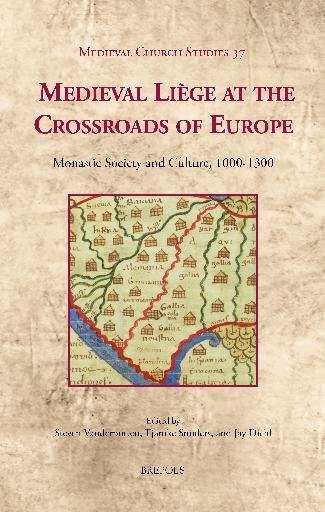
Medieval Liège at the Crossroads of Europe
show More to view fulltext, buy and share links for:Medieval Liège at the Crossroads of Europe show Less to hide fulltext, buy and share links for: Medieval Liège at the Crossroads of EuropeDuring the high Middle Ages, the bishopric of Liège found itself at a cultural crossroads between the German Empire and the French lordships. The Liègeois themselves summed up the situation when they declared that: ‘Gaul considers us its most distant inhabitants, Germany as nearby citizens. In fact we are neither, but both at the same time’. This same complexity is also echoed by present-day historians, who have described Liège as a hub of interactions between two great civilisations. Medieval monastic communities in Liège were key sites of this exchange, actively participating in the cultural developments, social networks, and political structures of both regions.
Bringing together the work of international scholars, this collection of essays addresses the problem of monastic identity and its formation in a region that was geographically wedged between two major competing socio-political powers. It investigates how monastic communities negotiated the uncertainties of this situation, while also capitalizing on the opportunities it presented. As such, this book sheds light on the agency of monastic identity formation in a small but complex region caught at the crossroads of two major powers.
-
-
-
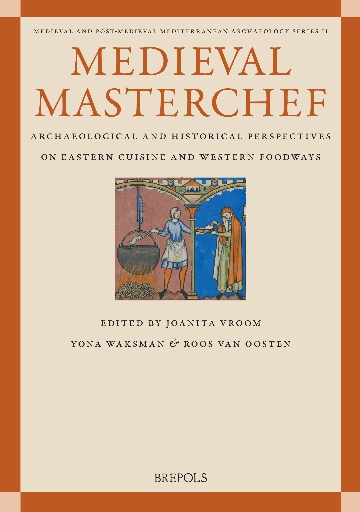
Medieval MasterChef
show More to view fulltext, buy and share links for:Medieval MasterChef show Less to hide fulltext, buy and share links for: Medieval MasterChefThe focus in this varied collection of studies by key scholars in the field is on cuisine and foodways in the Mediterranean and north-western Europe during Medieval and Post-Medieval times (ca. 6th- 20th centuries). The scope of the contributions encompasses archaeological and historical perspectives on eating habits, cooking techniques, diet practices and table manners in the Byzantine Empire, the Islamic World, the Crusader States, Medieval and Renaissance Europe and the Ottoman Empire. The volume offers a state of the art of an often still hardly known territory in gastronomical archaeology, which makes it essential reading for scholars and a larger audience alike.
'The book’s strength lies in the authors’ recognition that incorporating archaeological, material culture, and textual evidence with culinary history is of paramount importance in developing a comprehensive and textured comprehension of meals and mealtimes in the past.' - Mary C. Beard.
-
-
-
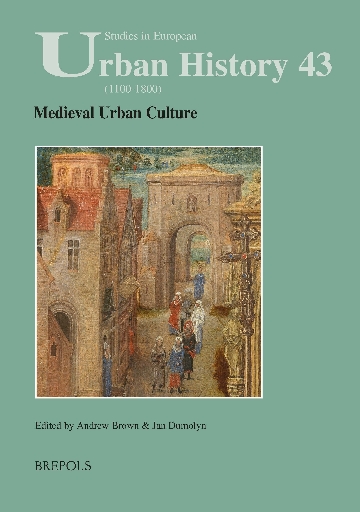
Medieval Urban Culture
show More to view fulltext, buy and share links for:Medieval Urban Culture show Less to hide fulltext, buy and share links for: Medieval Urban CultureThis volume explores the specificity of the urban culture in western Europe during the period c. 1150-1550. Since the mid-twentieth century, many studies have complicated the association, traditionally made, between the medieval growth of towns and the birth of a modern, secular world; but few have given any attention to what actually made urban culture ‘urban’. This volume begins by placing medieval ‘urban culture’ within its spatial context, to consider how urban conditions determined the perception and representation of the city-dweller. Contributors examine a variety of urban cultures, from the political to the artistic, from London and Bruges to Florence and Venice, and beyond Europe. They show how urban culture involved a process of interaction with other discourses (royal, noble, ecclesiastical) and that it was not monolithic: the relationship between urban environments and the cultures they generated were hybrid, fluid and dynamic.
-
-
-
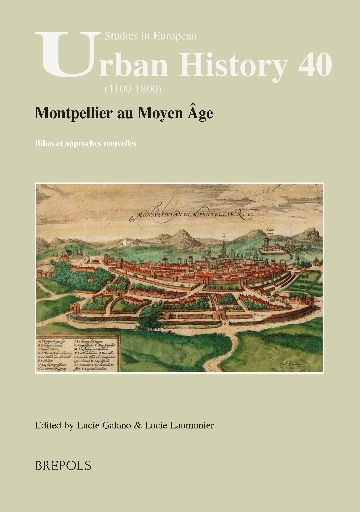
Montpellier au Moyen Âge
show More to view fulltext, buy and share links for:Montpellier au Moyen Âge show Less to hide fulltext, buy and share links for: Montpellier au Moyen ÂgeFondée à la fin du x e siècle, Montpellier connut une expansion fulgurante à partir du xii e, à la faveur du développement d’échanges culturels et économiques, vers la Méditerranée ou le nord de l’Europe. Cette expansion était le fruit de politiques menées par les Guilhem et confirmée lors du passage de la seigneurie sous l’autorité des rois d’Aragon et de Majorque après 1204, quand la ville obtint un gouvernement consulaire. Devenue une communauté urbaine d’importance au xiii e siècle, Montpellier était habitée par une population cosmopolite. Dans et hors les murs se croisaient grands marchands, changeurs et simples revendeurs, universitaires et intellectuels de renom, artisans et agriculteurs. L’attractivité et le rayonnement de Montpellier en faisaient l’une des principales villes du Bas-Languedoc. Pourtant, son histoire médiévale n’a bénéficié que d’une attention inégale de la part des chercheurs. Cet ouvrage procède d’un colloque international réuni à Montpellier en 2013 et rassemble des articles réalisés par les principaux contributeurs et principales contributrices à l’histoire et à l’archéologie de la ville. Basées sur des archives originales ou sur la réinterprétation de données connues, les recherches proposées ici, tout en présentant un bilan des travaux passés, empruntent des voies nouvelles démontrant les promesses des études historiques et archéologiques sur Montpellier.
-
-
-

Music, Liturgy, and the Veneration of Saints of the Medieval Irish Church in a European Context
show More to view fulltext, buy and share links for:Music, Liturgy, and the Veneration of Saints of the Medieval Irish Church in a European Context show Less to hide fulltext, buy and share links for: Music, Liturgy, and the Veneration of Saints of the Medieval Irish Church in a European ContextThis book opens up discussion on the liturgical music of medieval Ireland by approaching it from a multidisciplinary, European perspective. In so doing, it challenges received notions of an idiosyncratic ‘Celtic Rite’, and of the prevailing view that no manuscripts with music notation have survived from the medieval Irish Church. This is due largely to a preoccupation by earlier scholars with pre-Norman Gaelic culture, to the neglect of wider networks of engagement between Ireland, Britain, and continental Europe. In adopting a more inclusive approach, a different view emerges which demonstrates the diversity and international connectedness of Irish ecclesiastical culture throughout the long Middle Ages, in both musico-liturgical and other respects.
The contributors represent a variety of specialisms, including musicology, liturgiology, palaeography, hagiology, theology, church history, Celtic studies, French studies, and Latin. From this rich range of perspectives they investigate the evidence for Irish musical and liturgical practices from the earliest surviving sources with chant texts to later manuscripts with music notation, as well as exploring the far-reaching cultural impact of the Irish church in medieval Europe through case studies of liturgical offices in honour of Irish saints, and of saints traditionally associated with Ireland in different parts of Europe.
-
-
-
Monuments & Memory: Christian Cult Buildings and Constructions of the Past
show More to view fulltext, buy and share links for:Monuments & Memory: Christian Cult Buildings and Constructions of the Past show Less to hide fulltext, buy and share links for: Monuments & Memory: Christian Cult Buildings and Constructions of the PastThis volume honours Sible de Blaauw on the occasion of his retirement from Radboud University. It is above all a tribute to an influential and respected voice in the field of early Christian art and architecture. Thirty-one authors have sought to provide their own unique answer to the question of how Christian cult buildings have played a role in cultural memory in different periods and in various geographical and cultural contexts. From its very onset, this publication was envisioned as a parallel to De Blaauw’s own research interests: Rome and its monuments, early Christianity, Christian religious heritage, liturgy and architecture, continuity of tradition, and memory. The contributions have been arranged according to three sections: Monuments - Places - Decoration & Liturgical Furnishing. Every essay addresses the memorial potential of Christian buildings, of their location, or of the accoutrement, whether or not still in situ. Not surprisingly, Rome re-appears frequently in all sections, with Rome’s churches receiving special attention. Together the essays cover a period from Late Antiquity to modern times, from Helena to Gerhard Richter, from late antique poets to a Ravennesque mosaic in the 1930s. Thus, this volume assumes the diachronic nature that characterizes De Blaauw’s own scholarship. The leitmotifs of Christian cult and material and immaterial constructions of the past tie together the sections as well as the book as a whole. Nevertheless, the main binding element between the essays is their authors’ fondness and appreciation of Sible de Blaauw.
-