


Brepols Online Books Medieval Miscellanea Collection 2017 - bob2017mime

Collection Contents
3 results
-
-
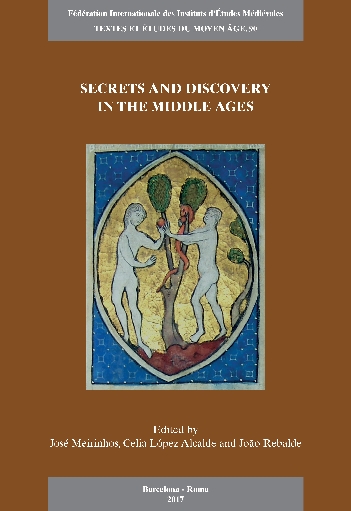
Secrets and Discovery in the Middle Ages
show More to view fulltext, buy and share links for:Secrets and Discovery in the Middle Ages show Less to hide fulltext, buy and share links for: Secrets and Discovery in the Middle AgesFIDEM’s 5th European Congress of Medieval Studies took place in Porto, Portugal, from 25th to 29th June 2013 under the title Secrets and Discovery in the Midle Ages. The Congress set out to discuss the presence and importance of secrets in the spheres of imagination, culture, thinking, sciences, politics, religion, and everyday life during the Middle Ages (from the onset of the 6th to the midle of the 16th century). The Congress was designed to promote discussion on secrets and discovery in all the domains of Medieval Studies, in any medieval language, and in a wide array of subjects: Confession and Intimacy; Conspiracy and Betrayal; Government and Diplomacy; Health and Life; Hermeticism and Transmutation; Holiness and Relics; Knowledge and Scepticism; Mysticisms and Kabbalah; Nature and the Supernatural; Past and Future; Planets and Harmony; Prophecy and Divination; Sermons and Preaching; Symbols and Dreams; Truth and Fakes; Unknown Worlds and Lost Places; Warfare and Strategy. In the tradition of FIDEM’s meetings, the Congress enjoyed a very high attendance, with addresses delivered on all these domains, of which the present volume includes only a part submitted to and selected by a specialised committee.
-
-
-
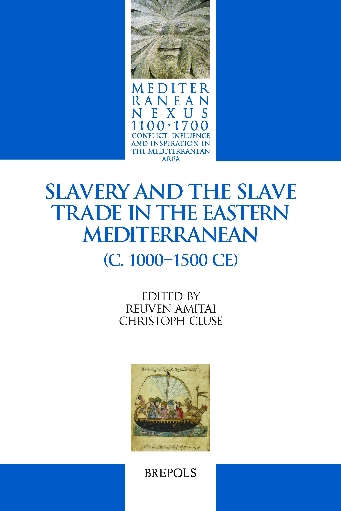
Slavery and the Slave Trade in the Eastern Mediterranean (c. 1000-1500 ce)
show More to view fulltext, buy and share links for:Slavery and the Slave Trade in the Eastern Mediterranean (c. 1000-1500 ce) show Less to hide fulltext, buy and share links for: Slavery and the Slave Trade in the Eastern Mediterranean (c. 1000-1500 ce)Slavery has played a significant role in the history of human society, not the least in the greater Mediterranean region, since ancient times. Long neglected by mainstream historians, the medieval history of slavery has received an increasing amount of attention by scholars, since the pioneering work of Charles Verlinden (1907–1996). Today historians have generally laid to rest the nineteenth-century preoccupation with whether slavery was a significant ‘mode of production’ in the post-classical period, to concentrate on the changing face of the institution over time by looking at legal norms, linguistic representations and social practice. This volume presents a multi-faceted and interdisciplinary approach to slavery and the slave trade in the Eastern Mediterranean region in the pre-modern period, placing these into a larger historical and cultural context. It surveys the significance of slavery in the three monotheistic traditions, the involvement of Eastern and Western merchants and other agents in the slave trade, and offers new interpretations concerning the nature of this commerce.
-
-
-
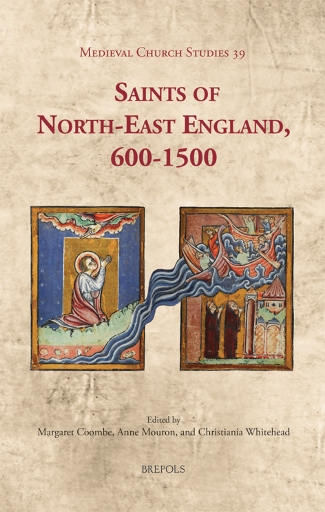
Saints of North-East England, 600-1500
show More to view fulltext, buy and share links for:Saints of North-East England, 600-1500 show Less to hide fulltext, buy and share links for: Saints of North-East England, 600-1500During the seventh and early eighth centuries a number of influential saints’ cults were established within the Anglo-Saxon kingdom of Northumbria, most notably the cult of St Cuthbert served by the monks of Lindisfarne. Reacting to the Danish incursions of the ninth century, the Lindisfarne community gradually migrated south to Durham, where, in the early eleventh century, the relics of further Northumbrian saints were collected to join those of Cuthbert. Following the re-foundation of the Durham church as a Benedictine house in 1083, the community sought to legitimise itself by stressing its links with an ancient, saintly past. A century later, the cults of new hermit saints such as Godric of Finchale and Bartholomew of Farne, extensively modelled on St Cuthbert’s example, were added to the north-eastern Durham familia.
This volume takes an interdisciplinary approach to these north-eastern saints, offering a comprehensive snapshot of new scholarship within the field. The first section focuses on the most eminent saints and hagiographers of Anglo-Saxon Northumbria: Cuthbert, Wilfrid and Bede. The second section examines their utility for the twelfth-century, Anglo-Norman community at Durham, and surveys the cults which emerged alongside, including the early saint-bishops of Hexham Augustinian priory. The third section reviews the material culture which developed around these saints in the fourteenth and fifteenth centuries: their depiction in stained glass, their pilgrimages and processions, and the use of their banners in the Anglo-Scottish wars. A concluding essay re-evaluates the north-eastern cult of saints from post-Reformation perspectives.
-