


Brepols Online Books Medieval Miscellanea Collection 2017 - bob2017mime

Collection Contents
41 results
-
-

Editing and Interpretation of Middle English Texts
show More to view fulltext, buy and share links for:Editing and Interpretation of Middle English Texts show Less to hide fulltext, buy and share links for: Editing and Interpretation of Middle English TextsThese fifteen essays, all published here for the first time, explore issues related to the editing and interpretation of Middle English literature. These include the treatment of various types of evidence (variant readings; punctuation; capitalization; rubrication; physical layout), in relation to both manuscript transmission and the transition from manuscript to print. The editorial representation of these and other aspects constitutes an act of textual interpretation at the most fundamental level, which subsequently influences scholarly understanding.
Two major fields of writing - religious texts and chronicles - provide the focus of this volume. Major works that receive attention include Trevisa’s translation of the Polychronicon, the Middle English Brut, Piers Plowman, Nicholas Love’s Mirror of the Blessed Life of Jesus Christ, and John Mirk’s Festial; a wide range of shorter devotional and historical texts, in both verse and prose, is also considered, as are aspects related to the translation of texts from Latin and French into Middle English. Almost all of the contributors are experienced editors of medieval texts. Several contribute further insights into texts they have edited, whilst others discuss or offer new editions of previously unpublished works. Collectively, these essays foreground the many and varied matters of interpretation that confront the editor of Middle English texts.
-
-
-

From Carickfergus to Carcassonne
show More to view fulltext, buy and share links for:From Carickfergus to Carcassonne show Less to hide fulltext, buy and share links for: From Carickfergus to Carcassonne‘From Carrickfergus to Carcassonne…’ has its genesis in the IRC funded exhibition of the same name which explores the unlikely links between medieval Ulster and Languedoc.
Hinging upon the personal story of a charismatic individual - Hugh de Lacy, earl of Ulster, ‘From Carrickfergus to Carcassonne’ explores the wider interplay between the Gaelic, Angevin, Capetian and Occitan worlds in the late twelfth and early thirteenth centuries.
This book brings to light new research linking de Lacy to a conspiracy with the French king and details his subsequent exile and participation in the Albigensian Crusade in the south of France. The combined papers in this volume detail this remarkable story through interrogation of the historical and archaeological evidence, benefitting not just from adept scholarly study from Ireland and the UK but also from a Southern French perspective. The ensemble of papers describe the two realms within which de Lacy operated, the wider political machinations which led to his exile, the Cathar heresy, the defensive architecture of France and Languedoc and the architectural influences transmitted throughout this period from one realm to another.
In exploiting the engaging story of Hugh de Lacy, this volume creates a thematic whole which facilitates wide ranging comparison between events such as the Anglo-Norman take-over of Ireland and the Albigensian Crusade, the subtleties of doctrine in Ireland and Languedoc and the transmission of progressive castle design linking the walls of Carcassonne and Carrickfergus.
-
-
-
Genèse des espaces politiques (IXe-XIIe siècle)
show More to view fulltext, buy and share links for:Genèse des espaces politiques (IXe-XIIe siècle) show Less to hide fulltext, buy and share links for: Genèse des espaces politiques (IXe-XIIe siècle)Depuis le XIXe siècle, les historiens français et allemands racontent une histoire fondamentalement différente de la transition entre le monde carolingien et les Xe-XIIe siècles : pour les premiers, l’apparition de principautés « territoriales » dans le monde post-carolingien est avant toute chose le signe de la désagrégation des institutions carolingiennes et représente une mutation fondamentale dans l’organisation des pouvoirs. Pour les seconds, il n’y a pas de véritable solution de continuité dans un système où le pouvoir a toujours reposé non sur la domination d’un territoire mais sur l’importance des liens interpersonnels entre le roi et l’aristocratie, et cela dès l’époque carolingienne. Le but de cet ouvrage est de montrer comment l’importance dévolue au caractère territorial du pouvoir – largement remis en question par la recherche actuelle – a influé sur la manière dont on raconte l’histoire de l’empire carolingien et des royaumes post-carolingiens à l’Est et à l’Ouest du Rhin, grâce à plusieurs mises au point historiographiques et à de nombreuses études de cas.
-
-
-
La letteratura di istruzione nel Medioevo germanico
show More to view fulltext, buy and share links for:La letteratura di istruzione nel Medioevo germanico show Less to hide fulltext, buy and share links for: La letteratura di istruzione nel Medioevo germanicoLa letteratura d’istruzione intesa nella sua accezione più ampia costituisce uno dei campi d’indagine più fecondi della cultura medievale d’area germanica, sia perché consente di seguire la nascita e lo sviluppo di diverse forme letterarie in società nelle quali a lungo la trasmissione della conoscenza era stata orale, sia perché aiuta a comprendere le dinamiche di adattamento di quelle popolazioni al mondo classico e cristiano col quale esse vennero in contatto, gradualmente, nei secoli compresi tra la Tarda Antichità e il Medioevo.
Ma già prima dell’incontro con la superiore cultura latina le popolazioni germaniche dovettero essere ben consapevoli “dell’utilità di quella socializzazione del sapere che è alla base di ogni attività formativa”, dandone evidenza anche nei primissimi documenti scritti, perfino quelli runici.
L’istruzione, che è primariamente condivisione del sapere, diventa così il “pretesto” per la traduzione, l’adattamento e l’originale redazione di opere di grande profondità. Opere dai contenuti più diversi: saggi grammaticali, riflessioni sulla lingua, testi filosofici, storici, pedagogici.
I saggi contenuti nel volume danno un quadro variegato del fermento d’interessi, curiosità, rifl essioni che le popolazioni germaniche, non solo nei primi secoli della loro storia, hanno dedicato a un tema centrale per lo sviluppo di qualunque comunità culturalmente evoluta, come è la condivisione del sapere e la formazione delle generazioni future, e costituiscono l’omaggio e il saluto della comunità accademica, non solo italiana, a Fabrizio D. Raschellà, a conclusione della sua carriera.
-
-
-
Secrets and Discovery in the Middle Ages
show More to view fulltext, buy and share links for:Secrets and Discovery in the Middle Ages show Less to hide fulltext, buy and share links for: Secrets and Discovery in the Middle AgesFIDEM’s 5th European Congress of Medieval Studies took place in Porto, Portugal, from 25th to 29th June 2013 under the title Secrets and Discovery in the Midle Ages. The Congress set out to discuss the presence and importance of secrets in the spheres of imagination, culture, thinking, sciences, politics, religion, and everyday life during the Middle Ages (from the onset of the 6th to the midle of the 16th century). The Congress was designed to promote discussion on secrets and discovery in all the domains of Medieval Studies, in any medieval language, and in a wide array of subjects: Confession and Intimacy; Conspiracy and Betrayal; Government and Diplomacy; Health and Life; Hermeticism and Transmutation; Holiness and Relics; Knowledge and Scepticism; Mysticisms and Kabbalah; Nature and the Supernatural; Past and Future; Planets and Harmony; Prophecy and Divination; Sermons and Preaching; Symbols and Dreams; Truth and Fakes; Unknown Worlds and Lost Places; Warfare and Strategy. In the tradition of FIDEM’s meetings, the Congress enjoyed a very high attendance, with addresses delivered on all these domains, of which the present volume includes only a part submitted to and selected by a specialised committee.
-
-
-
Slavery and the Slave Trade in the Eastern Mediterranean (c. 1000-1500 ce)
show More to view fulltext, buy and share links for:Slavery and the Slave Trade in the Eastern Mediterranean (c. 1000-1500 ce) show Less to hide fulltext, buy and share links for: Slavery and the Slave Trade in the Eastern Mediterranean (c. 1000-1500 ce)Slavery has played a significant role in the history of human society, not the least in the greater Mediterranean region, since ancient times. Long neglected by mainstream historians, the medieval history of slavery has received an increasing amount of attention by scholars, since the pioneering work of Charles Verlinden (1907–1996). Today historians have generally laid to rest the nineteenth-century preoccupation with whether slavery was a significant ‘mode of production’ in the post-classical period, to concentrate on the changing face of the institution over time by looking at legal norms, linguistic representations and social practice. This volume presents a multi-faceted and interdisciplinary approach to slavery and the slave trade in the Eastern Mediterranean region in the pre-modern period, placing these into a larger historical and cultural context. It surveys the significance of slavery in the three monotheistic traditions, the involvement of Eastern and Western merchants and other agents in the slave trade, and offers new interpretations concerning the nature of this commerce.
-
-
-
The Age of Affirmation
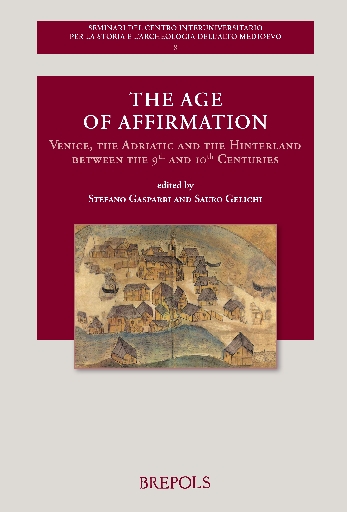
show More to view fulltext, buy and share links for:The Age of Affirmation show Less to hide fulltext, buy and share links for: The Age of AffirmationThis volume brings together the Proceedings of the seminar held on 29 and 30 October 2015 at the Department of Humanities of Ca’ Foscari University of Venice. The title of the book, which is the same as the seminar, refers to the “age of consolidation” of Venice, that had been identified by the promoters of the initiative as the 9th and 10th centuries. All the papers in the volume, therefore, consider a Venetian reality as already formed, even in its early days; a reality, or rather a social, economic and political community which, at this moment in time, reinforces its urban aspect, and creates the basis for the growth that will characterize its history after the tenth century.
The book collects twelve papers of archaeological, historical, epigraphic and historical-artistic subject.
-
-
-
Theorizing Old Norse Myth
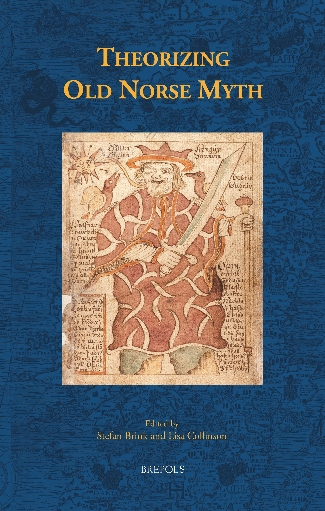
show More to view fulltext, buy and share links for:Theorizing Old Norse Myth show Less to hide fulltext, buy and share links for: Theorizing Old Norse MythThis collection explores the theoretical and methodological foundations through which we understand Old Norse myths and the mythological world, and the medieval sources in which we find expressions of these. Some contributions take a broad, comparative perspective; some address specific details of Old Norse myths and mythology; and some devote their attention to questions concerning either individual gods and deities, or more topographical and spatial matters (such as conceptions of pagan cult sites). The elements discussed provide an introductory and general overview of scholarly enquiry into myth and ritual, as well as an attempt to define myth and theory for Old Norse scholarship. The articles also offer a rehabilitation of the comparative method alongside a discussion of the concept of ‘cultural memory’ and of the cognitive functions that myths may have performed in early Scandinavian society. Particular subjects of interest include analyses of the enigmatic god Heimdallr, as well as the more well-known Óðinn, the deities, the female ásynjur, and the ‘elves’ or álfar. Text-based discussions are set alongside recent archaeological discoveries of cult buildings and cult sites in Scandinavia, together with a discussion of the most enigmatic site of all: Uppsala in Sweden. The key themes discussed throughout this volume are brought together in the concluding chapter, in a comprehensive summary that sheds new light on current scholarly perspectives.
-
-
-
Acquérir, prélever, contrôler: Les ressources en compétition (400-1100)
show More to view fulltext, buy and share links for:Acquérir, prélever, contrôler: Les ressources en compétition (400-1100) show Less to hide fulltext, buy and share links for: Acquérir, prélever, contrôler: Les ressources en compétition (400-1100)Les ressources matérielles sont un élément de première importance de la compétition au Haut Moyen Âge, en étant l’arrière-plan, souvent le moyen, parfois l’enjeu de la compétition elle-même. D'une part, la compétition conduit ou souvent impose de mobiliser des ressources, d’autre part, ses formes sont affectées par la disponibilité ou la rareté des ressources. Elles sont donc un point d’observation privilégié pour comprendre les systèmes de valeurs et les règles, souvent implicites, qui président alors aux actions des élites. Ce volume est le résultat du troisième colloque organisé à Rome par le groupe international de recherches sur la compétition dans les sociétés médiévales (400-1000). En croisant des perspectives qui tiennent de l’anthropologie et de certaines lignes de l’histoire économique, ce livre prend en considération les formes du rapport entre compétition et ressources dans une grande variété de milieux sociaux et institutionnels de l’Europe occidentale du haut Moyen Âge, de la famille aux élites politiques et religieuses, aux sociétés rurales, aux communautés artisanes et marchandes.
-
-
-

Appropriation, Interpretation and Criticism
show More to view fulltext, buy and share links for:Appropriation, Interpretation and Criticism show Less to hide fulltext, buy and share links for: Appropriation, Interpretation and CriticismThe contributions in this volume are dedicated to cross-cultural exchanges during the Middle Ages among exponents of the Arabic, Hebrew and Latin philosophical and theological traditions. They draw particular attention to the intellectual approaches which shaped the interplays among these traditions - interplays that were characterized by the contact of various languages being used by people of different religious beliefs in their quest for knowledge: Spanish Jews writing in Arabic, Jews collaborating in the translation of Arabic texts into Latin through the vernacular, Western Muslims whose writings were read mainly by Jews and Christians in Hebrew and Latin, etc. Altogether, the eleven studies contained in this book wish to offer new insights into the rich exchanges of knowledge among communities of learning and their scholarly traditions during the Middle Ages and beyond.
-
-
-
Boundaries in the Medieval and Wider World
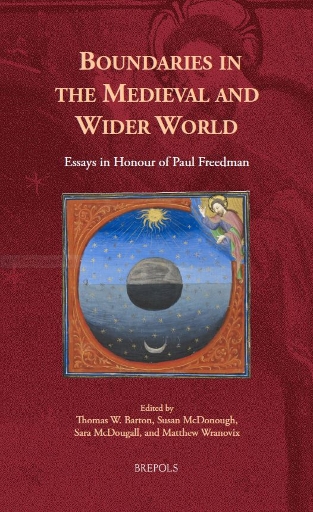
show More to view fulltext, buy and share links for:Boundaries in the Medieval and Wider World show Less to hide fulltext, buy and share links for: Boundaries in the Medieval and Wider WorldThroughout his distinguished career at Vanderbilt and Yale, Paul H. Freedman has established a reputation for pushing against and crossing perceived boundaries within history and within the historical discipline. His numerous works have consistently ventured into uncharted waters: from studies uncovering the hidden workings of papal bureaucracy and elite understandings of subaltern peasants, to changing perceptions of exotic products and the world beyond Europe, to the role modern American restaurants have played in taking cuisine in exciting new directions.
The fifteen essays collected in this volume have been written by Paul Freedman’s former students and closest colleagues to both honour his extraordinary achievements and to explore some of their implications for medieval and post-medieval European society and historical study. Together, these studies assess and explore a range of different boundaries, both tangible and theoretical: boundaries relating to law, religion, peasants, historiography, and food, medicine, and the exotic. While drawing important conclusions about their subjects, the collected essays identify historical quandaries and possibilities to guide future research and study.
-
-
-
Discipuli dona ferentes
show More to view fulltext, buy and share links for:Discipuli dona ferentes show Less to hide fulltext, buy and share links for: Discipuli dona ferentesIn recognition and celebration of the achievements of Marlia (Maria Cordelia) Mundell Mango as a researcher and as a teacher, twelve of her doctoral students offer her this volume of collected essays, showcasing recent research in Byzantine archaeology and material culture studies. The essays are divided into three sections. The first comprises studies on Byzantine economy, shipping, road networks, production and trade from Late Antiquity down to the time of the Crusades. The studies in the second part discuss facets of the material culture and the lifestyle especially of the upper social strata in the Byzantine Empire, while those of the final section explore aspects of artistic creativity in the lands of the empire. Taken together, these diverse studies offer ‘glimpses’ into the Byzantine economy and trade, lifestyle and religion, ideology and identity, artistic creativity and its impact beyond the Byzantine frontier, illustrating a variety of methodological approaches and pointing towards new directions for future research. Their wide chronological, geographic and thematic coverage is in itself a tribute to Marlia Mango’s breadth of knowledge and a reflection of her far-ranging research interests.
-
-
-
Episcopal Power and Local Society in Medieval Europe, 1000-1400
show More to view fulltext, buy and share links for:Episcopal Power and Local Society in Medieval Europe, 1000-1400 show Less to hide fulltext, buy and share links for: Episcopal Power and Local Society in Medieval Europe, 1000-1400The medieval bishop occupied a position of central importance in European society between 900 and 1400. Indeed, medieval bishops across Europe were involved in an assortment of ecclesiastical and secular affairs, a feature of the episcopal office in this period that ensured their place amongst the most influential figures in their respective milieux. Such prominence has inevitably piqued the interest of modern scholars and a number of important studies focusing on individual aspects of the medieval episcopal office have emerged, notably in recent years. Yet scholarly attention has often been drawn towards the careers of extraordinary bishops, men whose renown was often due to their involvement in both ecclesiastical and secular activities that took them beyond the borders of their dioceses. As a result, there has been a tendency to overlook the significance of the function of the episcopal office within local society, and, in particular, the way that this context shaped episcopal power.
The purpose of this volume is to examine the foundations of episcopal power in medieval Europe by considering its functioning and development at the level of local society. This collection of essays derives from papers delivered at a conference at Cardiff University in May 2013, and is divided into three sections focusing on the construction of episcopal power in local society, the ways in which it was augmented, and the different forms through which it was expressed. The essays have a broad geographical scope and include studies focused on English, French, Italian, and Icelandic dioceses.
-
-
-
Formal Approaches and Natural Language in Medieval Logic
show More to view fulltext, buy and share links for:Formal Approaches and Natural Language in Medieval Logic show Less to hide fulltext, buy and share links for: Formal Approaches and Natural Language in Medieval LogicThe late medieval period is widely acknowledged as one of the most salient moments of the history of logic and semantics. It not only considered logic as a sine qua non condition for scientific knowledge, it also begot highly sophisticated theories about both argumentation and language. The last fifty years of increasingly intense research have brought about an ever more detailed knowledge of these theories. And yet, the questions as to what kind of logic is medieval logic, whether and to what extent it corresponds to our conception of logic, and, even, what the nature of its object was, remain challenging. That it has a formal character is widely accepted; and its semantic components display remarkable affinities with contemporary ones. But is it formal in the way modern logic is - or believes it is? Medieval logic does not really make recourse to symbolisms, after all, and the fact that the idea of formal validity might have been born in the twelfth century does not mean that developing formal approaches was an aim of medieval logicians. And what is its semantics a semantics of? Medieval logicians use Latin to deal with Latin constructions, but do these constructions belong to natural language or are they regimented to the point of forming some sort of ideal language?
The twenty-five papers gathered in this volume deal with these issues, thus allowing to reassess the broader questions of the formal character and formalising ambitions of medieval logic, as well as that of the natural character of the language in (and on) which it operated: in other words, they address the question of the nature, object and purpose of medieval logic.
-
-
-
Irénée de Lyon et les débuts de la Bible chrétienne
show More to view fulltext, buy and share links for:Irénée de Lyon et les débuts de la Bible chrétienne show Less to hide fulltext, buy and share links for: Irénée de Lyon et les débuts de la Bible chrétienneCet ouvrage est issu d’une rencontre scientifique, qui a eu lieu à Lyon en juillet 2014. Des biblistes et des théologiens ont cherché à interroger l’œuvre d’Irénée, particulièrement l’Adversus Haereses, sous l’angle de son rapport à une Bible juive et à une Bible chrétienne en voie de formation. Après quelques considérations générales sur l’herméneutique d’Irénée et l’autorité qu’il attribue aux documents de l’Église, particulièrement aux évangiles, les chercheurs ont examiné sa relation à certains livres privilégiés (évangiles, épîtres). Sur le fond d’une recherche statistique très complète due à L. Mellerin, la part la plus importante de l’ouvrage consiste ensuite en études de la réception de quelques lieux stratégiques, vétéro- ou néotestamentaires, chez Irénée. Le recueil est complété par des indices.
-
-
-
La traduction entre Moyen Âge et Renaissance
show More to view fulltext, buy and share links for:La traduction entre Moyen Âge et Renaissance show Less to hide fulltext, buy and share links for: La traduction entre Moyen Âge et RenaissanceAprès deux premiers volumes consacrés à la traduction intralinguale de l’ancien français au français moderne et aux questions concernant la traduction empêchée et la traduction manipulée, ce troisième ouvrage entend sillonner deux domaines mal connus de la traduction au Moyen Âge et à la Renaissance, domaines que seules les apparences distinguent : la réception des traductions médiévales au XVI e siècle et la pratique de l’auto-traduction.
La Journée d’étude dont ce livre recueille les contributions a permis de dénouer les nombreux liens qui lient ces deux thématiques autour des notions centrales de rupture et de continuité, de fidélité idéalisée et d’infidélité impossible. D’un côté, on voit que le traducteur de la Renaissance qui a accès aux traductions médiévales est poussé à en prendre le contre-pied pour marquer une nouvelle subalternité alors que, en même temps, il peut en subir profondément l’influence. De l’autre côté, l’auto-traducteur est pensé comme incapable de se trahir lui-même. La relation au texte initial et, en conséquence, la contrainte de fidélité ne sont-elles pas différentes selon que le traducteur translate sa propre création ou qu’il auto-traduit une œuvre originale ? Les quatre théorèmes exposés ici dans l’article d’ouverture de la section consacrée à l’auto-traduction au Moyen Âge et à la Renaissance montrent comment les caractères spécifiques de l’écriture médiévale et l’usage social et culturel des langues ont façonné la pratique de l’auto-traduction.
Les liens sont serrés entre les deux thèmes du présent ouvrage : dans les deux cas, le traducteur est confronté à la question de la médiation de ce qui existe déjà, médiation qui ne peut se comprendre qu’au regard des aires culturelles privilégiées dans lesquelles elle s’effectue. Les deux volets de ce troisième volume jettent une lumière originale sur une des raisons internes de la traduction : elle ne peut vivre que dans un perpétuel renouvellement.
-
-
-
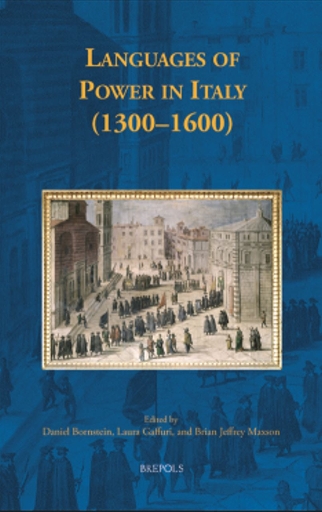
Languages of Power in Italy (1300-1600)
show More to view fulltext, buy and share links for:Languages of Power in Italy (1300-1600) show Less to hide fulltext, buy and share links for: Languages of Power in Italy (1300-1600)The essays in this collection explore the languages — artistic, symbolic, and ritual, as well as written and spoken — in which power was articulated, challenged, contested, and defended in Italian cities and courts, villages, and countryside, between 1300 and 1600. Topics addressed include court ceremonial, gossip and insult, the performance of sanctity and public devotions, the appropriation and reuse of imagery, and the calculated invocation (and sometimes undermining) of authoritative models and figures. The collection balances a broad geographic and chronological range with a tight thematic focus, allowing the individual contributions to engage in vigorous and fruitful debate with one another even as they speak to some of the central issues in current scholarship. The authors recognize that every institutional action is, in its context, a political act, and that no institution operates disinterestedly. At the same time, they insist on the inadequacy of traditional models, whether Marxian or Weberian, as the complex realities of the early modern state pose tough problems for any narrative of modernization, rationalization, and centralization.
-
-
-

Les Auctoritates Aristotelis, leur utilisation et leur influence chez les auteurs médiévaux
show More to view fulltext, buy and share links for:Les Auctoritates Aristotelis, leur utilisation et leur influence chez les auteurs médiévaux show Less to hide fulltext, buy and share links for: Les Auctoritates Aristotelis, leur utilisation et leur influence chez les auteurs médiévauxEn 1974, à l'époque de la publication du texte des Auctoritates Aristotelis les chercheurs n'avaient pas encore mesuré l'influence que ce florilège avait pu avoir dans bon nombre d'œuvres médiévales. Nombreux étaient ceux qui ne connaissaient même pas ce recueil et qui préféraient se référer directement à l'œuvre même du Stagirite pour identifier des citations. Mais la réalité médiévale était bien différente. En effet, les recherches menées après la parution de l'édition ont modifié considérablement notre conception de l'usage qu'en firent les intellectuels du 13e au 17e siècle. Beaucoup de progrès ont été faits depuis, surtout dans le domaine des éditions critiques de textes philosophiques encore inédits à l'époque. Il suffit de consulter les apparats critiques des sources utilisées par ces auteurs pour constater qu'ils furent nombreux à citer des « auctoritates » d'Aristote, extraites de ce florilège. D'autre part, les recherches réalisées progressivement, montrent que ce recueil a aussi une histoire.
Les études réunis dans ce volume se proposent de présenter un nouvel état de la question et de montrer à l'aide d'exemples pertinents l'usage qui fut fait des citations contenues dans le recueil par divers auteurs de l'époque. D'autre part, les informations glanées dans les divers exposés illustrent parfaitement des moments de son histoire. Ils ne rendent pas stériles les recherches ultérieures mais proposent diverses voies d'accès à la reconstitution de son élaboration, sans épuiser pour autant le sujet. Ces études permettent déjà de constater le succès énorme que connut le recueil, non seulement pendant l'époque scolastique, mais aussi jusqu'à la fin du 17e siècle, ce qui peut paraître étrange à première vue.
-
-
-
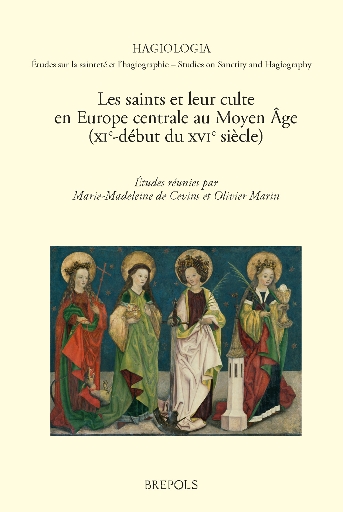
Les saints et leur culte en Europe centrale au Moyen Âge
show More to view fulltext, buy and share links for:Les saints et leur culte en Europe centrale au Moyen Âge show Less to hide fulltext, buy and share links for: Les saints et leur culte en Europe centrale au Moyen ÂgeL’Europe centrale n’est pas une aire, c’est un monde. Les contributions de ce volume aident à en prendre la mesure. Elles posent la question de l’existence d’un modèle de sainteté centre-européen au Moyen Âge. La géographie de la sainteté proposée voici trente ans par André Vauchez dans sa thèse sur « La sainteté en Occident » s’en trouve passablement bouleversée : celle-ci rangeait l’Europe centrale dans la partie « froide » de la christianitas, réfractaire au changement en matière de dévotions. Or, à l’examen, cet espace s’avère à la fois inventif en matière de figures saintes, particulièrement au xv e siècle, et réceptif par rapport aux nouveaux cultes.
-
-
-
Lieu, espace, mouvement: Physique, Métaphysique et Cosmologie (xii e-xvi e siècles)
show More to view fulltext, buy and share links for:Lieu, espace, mouvement: Physique, Métaphysique et Cosmologie (xii e-xvi e siècles) show Less to hide fulltext, buy and share links for: Lieu, espace, mouvement: Physique, Métaphysique et Cosmologie (xii e-xvi e siècles)Présentées dans le cadre d’un colloque organisé à l’Université de Fribourg (Suisse), les contributions rassemblées dans ce volume examinent des doctrines originales sur le lieu, l’espace et le mouvement. En pointant des apports encore inexplorés, elles permettent de mieux comprendre les transformations de ces notions entre Moyen Âge et première Époque moderne. Ce recueil offre ainsi une reconstruction thématique sur la longue durée : des questionnements suscités par la réception latine des traités platoniciens, aristotéliciens et pythagoriciens (xii e-xiv e siècles) jusqu’aux synthèses élaborées durant la scolastique tardive (xvi e siècle). Les articles réunis dans ces Actes s’attachent à expliciter diverses thèses soutenues en physique, métaphysique ou cosmologie, et ayant contribué à façonner une nouvelle image de l’univers.
-
-
-
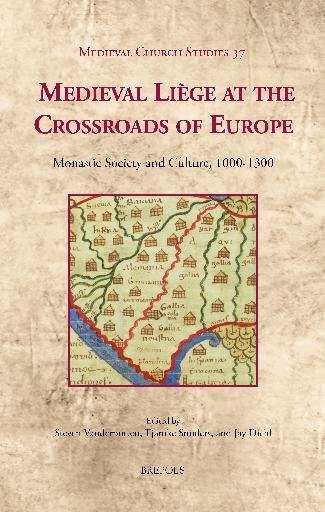
Medieval Liège at the Crossroads of Europe
show More to view fulltext, buy and share links for:Medieval Liège at the Crossroads of Europe show Less to hide fulltext, buy and share links for: Medieval Liège at the Crossroads of EuropeDuring the high Middle Ages, the bishopric of Liège found itself at a cultural crossroads between the German Empire and the French lordships. The Liègeois themselves summed up the situation when they declared that: ‘Gaul considers us its most distant inhabitants, Germany as nearby citizens. In fact we are neither, but both at the same time’. This same complexity is also echoed by present-day historians, who have described Liège as a hub of interactions between two great civilisations. Medieval monastic communities in Liège were key sites of this exchange, actively participating in the cultural developments, social networks, and political structures of both regions.
Bringing together the work of international scholars, this collection of essays addresses the problem of monastic identity and its formation in a region that was geographically wedged between two major competing socio-political powers. It investigates how monastic communities negotiated the uncertainties of this situation, while also capitalizing on the opportunities it presented. As such, this book sheds light on the agency of monastic identity formation in a small but complex region caught at the crossroads of two major powers.
-
-
-
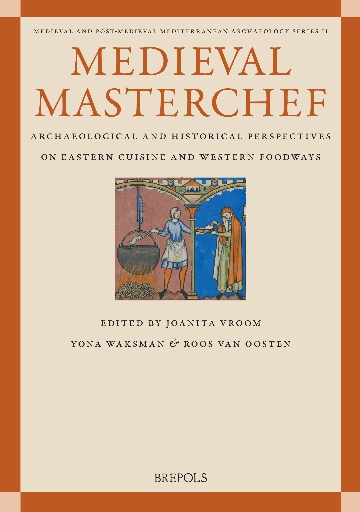
Medieval MasterChef
show More to view fulltext, buy and share links for:Medieval MasterChef show Less to hide fulltext, buy and share links for: Medieval MasterChefThe focus in this varied collection of studies by key scholars in the field is on cuisine and foodways in the Mediterranean and north-western Europe during Medieval and Post-Medieval times (ca. 6th- 20th centuries). The scope of the contributions encompasses archaeological and historical perspectives on eating habits, cooking techniques, diet practices and table manners in the Byzantine Empire, the Islamic World, the Crusader States, Medieval and Renaissance Europe and the Ottoman Empire. The volume offers a state of the art of an often still hardly known territory in gastronomical archaeology, which makes it essential reading for scholars and a larger audience alike.
'The book’s strength lies in the authors’ recognition that incorporating archaeological, material culture, and textual evidence with culinary history is of paramount importance in developing a comprehensive and textured comprehension of meals and mealtimes in the past.' - Mary C. Beard.
-
-
-
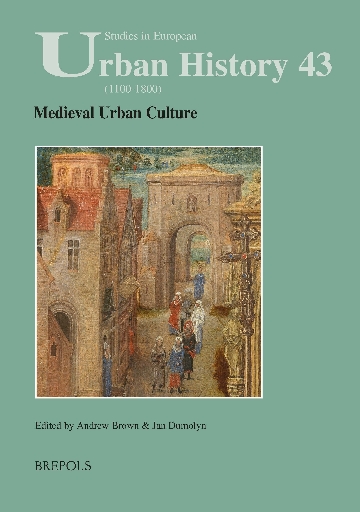
Medieval Urban Culture
show More to view fulltext, buy and share links for:Medieval Urban Culture show Less to hide fulltext, buy and share links for: Medieval Urban CultureThis volume explores the specificity of the urban culture in western Europe during the period c. 1150-1550. Since the mid-twentieth century, many studies have complicated the association, traditionally made, between the medieval growth of towns and the birth of a modern, secular world; but few have given any attention to what actually made urban culture ‘urban’. This volume begins by placing medieval ‘urban culture’ within its spatial context, to consider how urban conditions determined the perception and representation of the city-dweller. Contributors examine a variety of urban cultures, from the political to the artistic, from London and Bruges to Florence and Venice, and beyond Europe. They show how urban culture involved a process of interaction with other discourses (royal, noble, ecclesiastical) and that it was not monolithic: the relationship between urban environments and the cultures they generated were hybrid, fluid and dynamic.
-
-
-
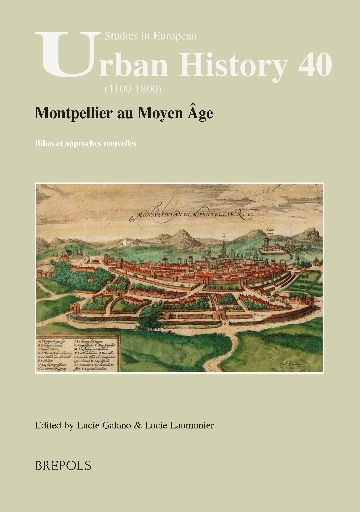
Montpellier au Moyen Âge
show More to view fulltext, buy and share links for:Montpellier au Moyen Âge show Less to hide fulltext, buy and share links for: Montpellier au Moyen ÂgeFondée à la fin du x e siècle, Montpellier connut une expansion fulgurante à partir du xii e, à la faveur du développement d’échanges culturels et économiques, vers la Méditerranée ou le nord de l’Europe. Cette expansion était le fruit de politiques menées par les Guilhem et confirmée lors du passage de la seigneurie sous l’autorité des rois d’Aragon et de Majorque après 1204, quand la ville obtint un gouvernement consulaire. Devenue une communauté urbaine d’importance au xiii e siècle, Montpellier était habitée par une population cosmopolite. Dans et hors les murs se croisaient grands marchands, changeurs et simples revendeurs, universitaires et intellectuels de renom, artisans et agriculteurs. L’attractivité et le rayonnement de Montpellier en faisaient l’une des principales villes du Bas-Languedoc. Pourtant, son histoire médiévale n’a bénéficié que d’une attention inégale de la part des chercheurs. Cet ouvrage procède d’un colloque international réuni à Montpellier en 2013 et rassemble des articles réalisés par les principaux contributeurs et principales contributrices à l’histoire et à l’archéologie de la ville. Basées sur des archives originales ou sur la réinterprétation de données connues, les recherches proposées ici, tout en présentant un bilan des travaux passés, empruntent des voies nouvelles démontrant les promesses des études historiques et archéologiques sur Montpellier.
-
-
-

Music, Liturgy, and the Veneration of Saints of the Medieval Irish Church in a European Context
show More to view fulltext, buy and share links for:Music, Liturgy, and the Veneration of Saints of the Medieval Irish Church in a European Context show Less to hide fulltext, buy and share links for: Music, Liturgy, and the Veneration of Saints of the Medieval Irish Church in a European ContextThis book opens up discussion on the liturgical music of medieval Ireland by approaching it from a multidisciplinary, European perspective. In so doing, it challenges received notions of an idiosyncratic ‘Celtic Rite’, and of the prevailing view that no manuscripts with music notation have survived from the medieval Irish Church. This is due largely to a preoccupation by earlier scholars with pre-Norman Gaelic culture, to the neglect of wider networks of engagement between Ireland, Britain, and continental Europe. In adopting a more inclusive approach, a different view emerges which demonstrates the diversity and international connectedness of Irish ecclesiastical culture throughout the long Middle Ages, in both musico-liturgical and other respects.
The contributors represent a variety of specialisms, including musicology, liturgiology, palaeography, hagiology, theology, church history, Celtic studies, French studies, and Latin. From this rich range of perspectives they investigate the evidence for Irish musical and liturgical practices from the earliest surviving sources with chant texts to later manuscripts with music notation, as well as exploring the far-reaching cultural impact of the Irish church in medieval Europe through case studies of liturgical offices in honour of Irish saints, and of saints traditionally associated with Ireland in different parts of Europe.
-
-
-
Nihil veritas erubescit
show More to view fulltext, buy and share links for:Nihil veritas erubescit show Less to hide fulltext, buy and share links for: Nihil veritas erubescitEn hommage à Paul Mattei, Professeur de langue et littérature latines à l’Université Lyon-II – Lumière, ce volume rassemble quarante-huit contributions consacrées à la patristique, au christianisme antique, ainsi qu’à la littérature tardoantique et médiévale.
Divisé en huit sections, le volume propose dans les quatre premières des études sur les Pères africains, sur Augustin en particulier ainsi que sur d’autres Pères latins et sur des questions exégétiques. Sont ainsi évoquées les figures de Tertullien, Cyprien de Carthage, Augustin d’Hippone, mais également Ambroise de Milan, ainsi que des aspects aussi bien lexicaux, littéraires que doctrinaux de la lecture de la Bible par les Pères, latins et grecs.
Les quatre sections suivantes proposent des contributions sur la poésie tardoantique, païenne ou chrétienne, sur la littérature latine et grecque du Moyen-Âge, sur l’histoire, en particulier ecclésiastique, et sur des questionnements linguistiques.
Les contributions inédites rassemblées dans ce volume témoignent de la richesse des liens scientifiques tissés par Paul Mattei.
-
-
-

Originaux et cartulaires dans la Lorraine médiévale (XIIe - XVIe siècles)
show More to view fulltext, buy and share links for:Originaux et cartulaires dans la Lorraine médiévale (XIIe - XVIe siècles) show Less to hide fulltext, buy and share links for: Originaux et cartulaires dans la Lorraine médiévale (XIIe - XVIe siècles)Entourés des attentions des médiévistes, les cartulaires sont devenus un objet d’histoire. Ces recueils, résultant de la compilation d’actes par une institution ou une personne juridique, entretiennent des relations complexes avec les originaux, sources directes ou indirectes mises en œuvre par les cartularistes. Qu’il s’agisse de la sélection des matériaux ou du transfert d’informations du modèle à la cible, le travail accompli est affaire de choix, divers et multiples, dont il faut retrouver les logiques pour espérer comprendre les objectifs des hommes qui ont commandités et réalisés ces manuscrits. Même soumis à des contingences matérielles, les copistes conservent une certaine marge de manœuvre dans le traitement de leur documentation. Ils trient, classent ou reclassent les documents qu’ils accueillent et enfin transcrivent les actes en adoptant certains principes. Ce recueil d’études a pour but de renouveler la confrontation originaux-cartulaires, à travers l’analyse d’un recueil et de son chartrier ou grâce à l’exploration d’une question liée à la transcription, à travers plusieurs cartulaires.
La question est ici approchée dans un cadre régional, en l’occurrence la Lorraine médiévale, principalement constituée des diocèses de Metz, Toul et Verdun - et occasionnellement étendue à l’ancienne Lotharingie. La chronologie est délibérément large (XIIe - XVIe siècle), donnant toute leur place aux expériences, parfois négligées, de la fin du Moyen Âge. À défaut d’aborder systématiquement le phénomène de la « mise en cartulaire », les dossiers ici réunis voudraient en enrichir les données et questionnements.
-
-
-
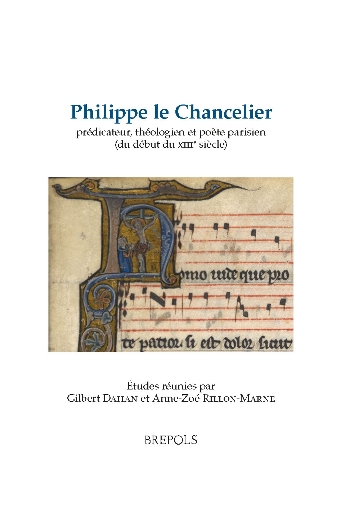
Philippe le Chancelier prédicateur, théologien et poète parisien du début du xiii e siècle
show More to view fulltext, buy and share links for:Philippe le Chancelier prédicateur, théologien et poète parisien du début du xiii e siècle show Less to hide fulltext, buy and share links for: Philippe le Chancelier prédicateur, théologien et poète parisien du début du xiii e siècleHomme de savoir et de pouvoir, Philippe le Chancelier (mort en 1236) se distingue par une production de qualité dans des domaines aussi divers que la théologie, la prédication ou encore la poésie lyrique. Sa charge de chancelier de Notre-Dame de 1217 à 1236 le place au cœur des événements qui rythment la vie ecclésiastique parisienne. Il prend part aux grandes querelles de son temps, notamment celles qui entourent l’émergence de l’université. Il est l’auteur de l’une des premières sommes préscolastiques, la Summa de bono, qui exerce une influence notable sur plusieurs générations de théologiens. D’autre part, il est un prédicateur très apprécié dont les sources conservent une trace abondante. Sa production lyrique occupe une place importante dans l’histoire littéraire et musicale.
Encore mal connue, cette figure complexe et prolixe mérite donc qu’on lui consacre des études croisées, permettant l’éclairage de différents champs disciplinaires. Les études ici assemblées ont pour ambition d’aborder chacun des domaines dans lesquels Philippe le Chancelier s’est illustré, dans le but de faire dialoguer ces corpus et de faire apparaître des zones de cohérence ou des registres intertextuels encore peu explorés.
-
-
-
Philologie, herméneutique et histoire des textes entre Orient et Occident
show More to view fulltext, buy and share links for:Philologie, herméneutique et histoire des textes entre Orient et Occident show Less to hide fulltext, buy and share links for: Philologie, herméneutique et histoire des textes entre Orient et OccidentCe volume en hommage à Sever Voicu, ancien Scriptor Graecus à la Bibliothèque Vaticane et professeur à l’Istituto Patristico «Augustinianum» à Rome, rassemble des contributions sur la patristique, les christianismes orientaux, les apocryphes de l’Ancien et du Nouveau Testament, la paléographie et la codicologie.
La première section accueille des études codicologiques sur la circulation de manuscrits et de textes entre le XIVe et le XVIe siècle. La deuxième section est dédiée aux traductions anciennes (en latin, en copte, en arménien, en éthiopien), ainsi qu’à l’édition de textes fragmentaires (grecs, coptes). Les contributions de la troisième section cherchent à éclairer des questions exégétiques ou discutent le contexte de production d’un texte, son auteur, son destinataire. Suivent des études sur des textes pseudépigraphes grecs ainsi que sur les apocryphes de l’Ancien et du Nouveau Testament en grec, en latin, en arménien, en géorgien, en roumain. Le volume se termine par une section consacrée à des textes de Jean Chrysostome ou qui lui sont attribués, en grec et dans des traductions syriaques, arméniennes, géorgiennes et slavonnes. Le livre contient plusieurs éditions de textes inédits, ainsi que des descriptions de manuscrits pas ou peu connus.
-
-
-
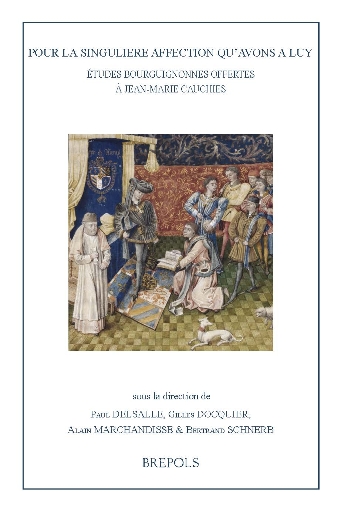
Pour la singuliere affection qu’avons a luy. Études bourguignonnes offertes à Jean-Marie Cauchies
show More to view fulltext, buy and share links for:Pour la singuliere affection qu’avons a luy. Études bourguignonnes offertes à Jean-Marie Cauchies show Less to hide fulltext, buy and share links for: Pour la singuliere affection qu’avons a luy. Études bourguignonnes offertes à Jean-Marie CauchiesMembre de la Classe des Lettres et des Sciences morales et politiques de l’Académie royale de Belgique et de la Commission royale d’Histoire de Belgique, Docteur honoris causa des Universités Jean Moulin Lyon 3 et de Haute-Alsace à Mulhouse, Professeur des Universités Saint-Louis de Bruxelles et catholique de Louvain, Secrétaire général du Centre européen d’Études bourguignonnes, Jean-Marie Cauchies a connu un parcours académique et une carrière universitaire prestigieux et exemplaires. À l’heure où il quitte sa charge d’enseignement pour une retraite sereine, mais sans doute aussi très studieuse, ses collègues et amis ont souhaité lui offrir un ensemble d’études relevant d’une matière à laquelle le jubilaire a consacré une part majeure de sa production scientifique - avec les trois volumes d’Ordonnances de Jean sans Peur et de Philippe le Bon, générales et destinées au Hainaut, parus à ce jour (Commission royale pour la publication des Anciennes Lois et Ordonnances de Belgique) et sa biographie de Philippe le Beau (Brepols, Coll. Burgundica) - en l’occurrence l’histoire des pays bourguignons des ducs de la Maison de Valois, puis de leurs successeurs Habsbourg. Si elles ne peuvent rendre compte de l’extrême diversité des thèmes auxquels Jean-Marie Cauchies aura consacré ses travaux bourguignons, lesquels relèvent aussi souvent, de façon fatalement imbriquée, des histoires du Hainaut et du droit, auxquels d’autres recueils d’hommage sont consacrés ailleurs, elles se veulent l’expression, à son égard, d’une admiration fondée et d’un riche esprit de convivialité scientifique et humaine.
-
-
-

Pursuing Middle English Manuscripts and their Texts
show More to view fulltext, buy and share links for:Pursuing Middle English Manuscripts and their Texts show Less to hide fulltext, buy and share links for: Pursuing Middle English Manuscripts and their TextsThis volume brings together essays by leading authorities on the production, reception, and editing of medieval English manuscripts in honour of Ralph Hanna, on the occasion of his retirement as Professor of Palaeography at the University of Oxford. Ralph Hanna has made an enormous contribution to the study of Middle English manuscripts; his numerous essays and books have discussed the development of London literature, alliterative poetry (especially Piers Plowman), regionalism, and the production and circulation of manuscripts. The essays included in this volume are arranged into four major sections corresponding to Ralph Hanna’s core areas of interest: Manuscript production; Dialect; Regionalism; Reading and Editing manuscripts.
These essays, written by leading scholars in their fields, offer new insights into the manuscripts of major Middle English writers and on scribal practice, as well as studies of individual codices. Essays cover a wide regional and chronological range, stretching from the beginnings of London literature traced in the works of Peter of Cornwall to the circulation of John Lydgate’s Troy Book, and encompassing manuscripts and texts composed and circulated outside the capital. Dialectal studies offer reconsiderations of the evidence for a Wycliffite orthography, the dialect of William Langland, and the vocabulary of the alliterative Morte Arthure. A final section on reading and editing investigates the structure and divisions in the manuscripts of the A Version of Piers Plowman, and examines specific readings in the Prick of Conscience and the Canterbury Tales. The volume also includes a tribute to Ralph Hanna and a list of his extensive publications.
-
-
-
Religious Minorities in Christian, Jewish and Muslim Law (5th - 15th centuries)
show More to view fulltext, buy and share links for:Religious Minorities in Christian, Jewish and Muslim Law (5th - 15th centuries) show Less to hide fulltext, buy and share links for: Religious Minorities in Christian, Jewish and Muslim Law (5th - 15th centuries)The fruit of a sustained and close collaboration between historians, linguists and jurists working on the Christian, Muslim and Jewish societies of the Middle Ages, this book explores the theme of religious coexistence (and the problems it poses) from a resolutely comparative perspective. The authors concentrate on a key aspect of this coexistence: the legal status attributed to Jews and Muslims in Christendom and to dhimmīs in Islamic lands. What are the similarities and differences, from the point of view of the law, between the indigenous religious minority and the foreigner? What specific treatments and procedures in the courtroom were reserved for plaintiffs, defendants or witnesses belonging to religious minorities? What role did the law play in the segregation of religious groups? In limiting, combating, or on the contrary justifying violence against them? Through these questions, and through the innovative comparative method applied to them, this book offers a fresh new synthesis to these questions and a spur to new research.
-
-
-
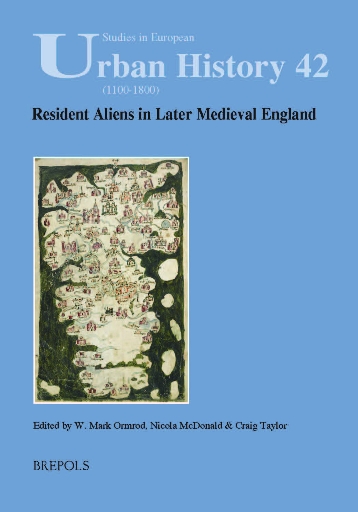
Resident Aliens in Later Medieval England
show More to view fulltext, buy and share links for:Resident Aliens in Later Medieval England show Less to hide fulltext, buy and share links for: Resident Aliens in Later Medieval EnglandThe essays collected in this volume identify and analyse the presence of immigrants in late medieval England. Drawing on unique evidence from the alien subsidies collected in England between 1440 and 1487 and other newly accessible archival resources, and deploying a wide range of historical and cultural methods, they reveal the considerable contribution of foreign-born people to the economy, society and culture of England in the age of the Black Death, the Hundred Years War and the Wars of the Roses.
-
-
-
Saints of North-East England, 600-1500
show More to view fulltext, buy and share links for:Saints of North-East England, 600-1500 show Less to hide fulltext, buy and share links for: Saints of North-East England, 600-1500During the seventh and early eighth centuries a number of influential saints’ cults were established within the Anglo-Saxon kingdom of Northumbria, most notably the cult of St Cuthbert served by the monks of Lindisfarne. Reacting to the Danish incursions of the ninth century, the Lindisfarne community gradually migrated south to Durham, where, in the early eleventh century, the relics of further Northumbrian saints were collected to join those of Cuthbert. Following the re-foundation of the Durham church as a Benedictine house in 1083, the community sought to legitimise itself by stressing its links with an ancient, saintly past. A century later, the cults of new hermit saints such as Godric of Finchale and Bartholomew of Farne, extensively modelled on St Cuthbert’s example, were added to the north-eastern Durham familia.
This volume takes an interdisciplinary approach to these north-eastern saints, offering a comprehensive snapshot of new scholarship within the field. The first section focuses on the most eminent saints and hagiographers of Anglo-Saxon Northumbria: Cuthbert, Wilfrid and Bede. The second section examines their utility for the twelfth-century, Anglo-Norman community at Durham, and surveys the cults which emerged alongside, including the early saint-bishops of Hexham Augustinian priory. The third section reviews the material culture which developed around these saints in the fourteenth and fifteenth centuries: their depiction in stained glass, their pilgrimages and processions, and the use of their banners in the Anglo-Scottish wars. A concluding essay re-evaluates the north-eastern cult of saints from post-Reformation perspectives.
-
-
-
Teaching and Learning in Medieval Europe
show More to view fulltext, buy and share links for:Teaching and Learning in Medieval Europe show Less to hide fulltext, buy and share links for: Teaching and Learning in Medieval EuropeOver the span of his career, Gernot R. Wieland has been actively engaged in the contribution and promotion of the study of medieval literature, particularly in Anglo-Latin and Old English. From his early work on glosses in Anglo-Saxon manuscripts, to his later editorial work for The Journal of Medieval Latin, Wieland has provided the field with diverse, diligent, and creative scholarship. The contributors of this volume pay tribute to the significance of Wieland’s teaching and learning in the literature of medieval Europe by presenting him with twelve essays on varied aspects of the subject.
The first section of the volume aims to honour Wieland’s contributions to the study of medieval glossing. It deals with the history of glossing from early medieval Latin literature to late Middle English grammatical texts, as well as the early interpretative history of Walter of Châtillon’s Alexandreis and Geoffrey of Monmouth’s Historia regum Britannie. The following section corresponds with Wieland’s interest in Anglo-Saxon literature, with essays on the bilingual letters of Ælfric of Eynsham, the poetry of Alcuin of York, and the Old English Hexateuch. The second half of the volume, which examines elements of Latin literature from the eleventh to the fourteenth century, is divided into two sections containing essays that well represent Wieland’s diverse philological and literary interests in medieval Latin. The third section of the volume on the texts and contexts of Latin literature presents essays on the books of Abbot Maiolus of Cluny, on scholastic virtues of good teaching, and on Walter Map’s Dissuasio Valerii. The final section on the texts and manuscripts of Latin literature provides editions of and commentaries on a Latin-Greek phrase-book, a treatise on the firmament of Genesis 1:6.
With these contributions, this volume honours the research interests of a great teacher and learner of the Middle Ages: Gernot Weiland.
-
-
-
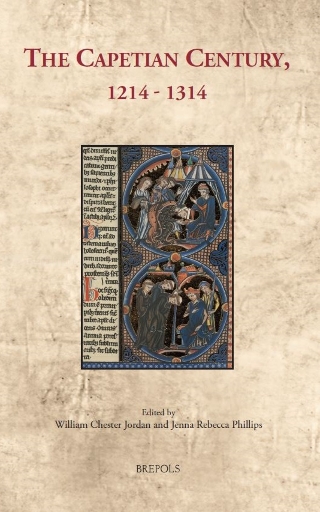
The Capetian Century, 1214 to 1314
show More to view fulltext, buy and share links for:The Capetian Century, 1214 to 1314 show Less to hide fulltext, buy and share links for: The Capetian Century, 1214 to 1314This volume provides a fresh look at the Capetian century (1214-1314), a period that changed the cultural and political fabric and laid the foundation for the modernisation of the medieval West.
The period from the birth of Louis IX to the death of Philip the Fair is remarkable for a series of developments and accomplishments associated with the Capetian kings of France. Innovations in architecture, manuscript illumination, and music all helped shape the cultural fabric of French and European life. Administrative historians emphasize the development of political institutions that have been said to lay foundations of the modern State. ‘Moral reform’, partly in support of the crusading movement, led to various changes in policies toward Jews, prostitutes, heretics, and many other social groups.
This volume brings together essays presented at the Capetian Century Conference held at Princeton University, commemorating two seminal anniversaries bracketing the 'Capetian Century' - the Battle of Bouvines (1214), and the death of Philip the Fair (1314).
-
-
-
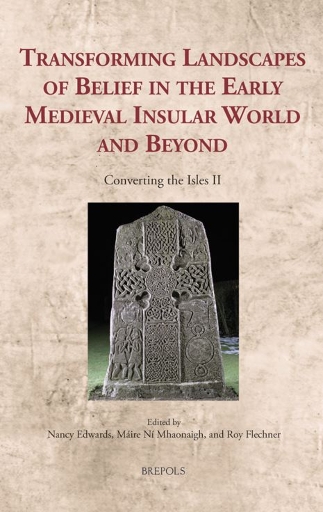
Transforming Landscapes of Belief in the Early Medieval Insular World and Beyond
show More to view fulltext, buy and share links for:Transforming Landscapes of Belief in the Early Medieval Insular World and Beyond show Less to hide fulltext, buy and share links for: Transforming Landscapes of Belief in the Early Medieval Insular World and BeyondConversion to Christianity is arguably the most revolutionary social and cultural change that Europe experienced throughout Late Antiquity and the early Middle Ages. Christianization affected all strata of society and transformed not only religious beliefs and practices, but also the nature of government, the priorities of the economy, the character of kinship, and gender relations. It is against this backdrop that an international array of leading medievalists gathered under the auspices of the Converting the Isles Research Network (funded by the Leverhulme Trust) to investigate social, economic, and cultural aspects of conversion in the early medieval Insular world, covering different parts of Britain, Ireland, Scandinavia, and Iceland.
This volume analyses the effects of religious conversion on landscapes of cult and on religious practice in Europe, focusing in particular on Britain and Ireland. Adopting an interdisciplinary and comparative approach, the volume investigates the interaction between different forms of belief, their coexistence and competition. It discusses the coming of writing, the power of the word, landscapes of ritual, and converting communities. The contributors include leading historians, archaeologists, linguists, and literary scholars. This is the second volume to emerge from research undertaken by contributors to the Converting the Isles Research Network and forms a companion volume to The Introduction of Christianity into the Early Medieval Insular World.
See the companion volume at: http://www.brepols.net/Pages/ShowProduct.aspx?prod_id=IS-9782503554624-1
-
-
-
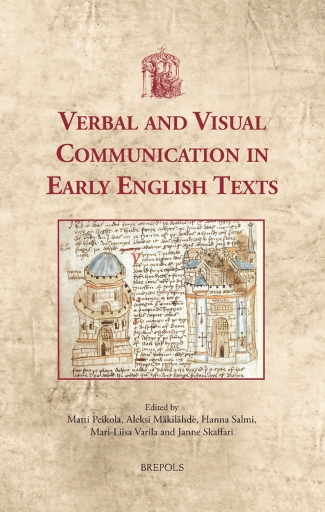
Verbal and Visual Communication in Early English Texts
show More to view fulltext, buy and share links for:Verbal and Visual Communication in Early English Texts show Less to hide fulltext, buy and share links for: Verbal and Visual Communication in Early English TextsWhen reading a text our understanding of its meaning is influenced by the visual form and material features of the page. The chapters in this volume investigate how visual and material features of early English books, documents, and other artefacts support - or potentially contradict - the linguistic features in communicating the message. In addition to investigating how such communication varies between different media and genres, our contributors propose novel methods for analysing these features, including new digital applications. They map the use of visual and material features - such as layout design or choice of script/typeface - against linguistic features - such as code-switching, lexical variation, or textual labels - to consider how these choices reflect the communicative purposes of the text, for example guiding readers to navigate the text in a certain way or persuading them to arrive at a certain interpretation. The chapters explore texts from the medieval and the early modern periods, including saints’ lives, medical treatises, dictionaries, personal letters, and inscriptions on objects. The thematic threads running through the volume serve to integrate book studies with discourse linguistics, the medieval with the early modern, manuscript with print, and the verbal with the visual.
-
-
-
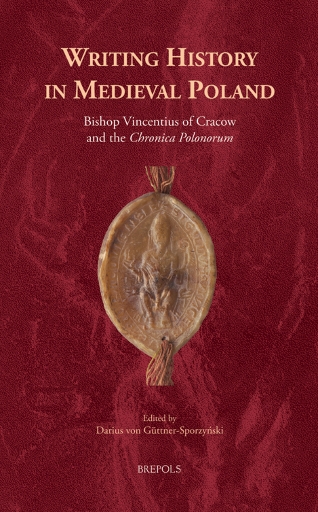
Writing History in Medieval Poland
show More to view fulltext, buy and share links for:Writing History in Medieval Poland show Less to hide fulltext, buy and share links for: Writing History in Medieval PolandThis volume presents an in-depth analysis of the Chronica Polonorum, one of the greatest works of the twelfth-century renaissance which profoundly influenced history writing in Central Europe. The Chronica Polonorum was written by Poland’s first native historian Vincentius of Cracow. Educated in Paris and Bologna, he was the first canonically elected bishop of Cracow and a participant of the Fourth Lateran Council. The eyewitness accounts given in the Chronica Polonorum offer insights into the development of twelfth-century Poland, the ambitions of its dynasty, the country’s integration into Christendom, and the interaction between the Polish and Western elites. Vincentius’s work is considered a masterpiece in literary erudition grounded in classical training. The historical evidence it presents illuminates the socio-cultural interaction between Poland and the West during the period. Vincentius’s chronicle demonstrates the strong, enduring influence of the history, law, and traditions of ancient Rome in twelfth-century Europe.
This book deals with several subjects which have increasingly gained in prominence in English-language scholarship in recent years, such as the development of political culture, the diffusion and growth of ideas, the Christianization of the peripheral regions of Europe, and the interaction between cultural, political, and economic changes. In analysing the work of Vincentius and the Polish historiography of the Chronica Polonorum, this volume provides important insights into the development of the so-called peripheral regions of twelfth-century Europe and Poland’s engagement in the twelfth-century renaissance.
-
-
-
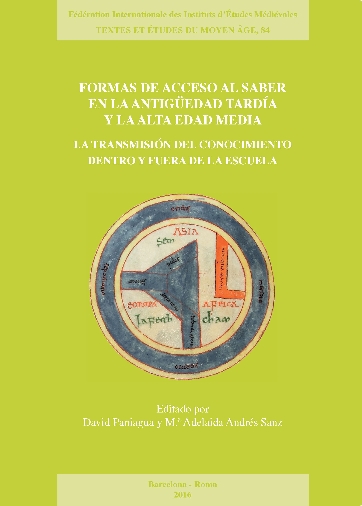
Formas de acceso al saber en la Antigüedad Tardía y en la Alta Edad Media
show More to view fulltext, buy and share links for:Formas de acceso al saber en la Antigüedad Tardía y en la Alta Edad Media show Less to hide fulltext, buy and share links for: Formas de acceso al saber en la Antigüedad Tardía y en la Alta Edad MediaEl presente volumen tiene su origen en el Coloquio Internacional Formas de acceso al saber de la Antigüedad Tardía a la Alta Edad Media (V), celebrado en la Universidad de Salamanca en octubre de 2014, bajo la dirección de D. Paniagua, en el marco de actuación del Proyecto de Investigación «La evolución de los saberes y su transmisión en la Antigüedad Tardía y la Alta Edad Media latinas II» (Investigadora Principal: M.a A. Andrés Sanz). El coloquio, al igual que el proyecto en el que se enmarcó, tuvo como objetivo profundizar en el conocimiento de las formas de evolución y de utilización de los textos latinos tardoantiguos y altomedievales ligados a la transmisión de conocimientos. Este conjunto de estudios, variados en sus diferentes aproximaciones filológicas, tiene como común denominador el interés por explorar las múltiples y ricas implicaciones culturales de estos textos, atendiendo no solamente al corpus escrito conservado -incluido el estudio de sus fuentes y de su posteridad literaria- sino también a su transmisión material concreta, generalmente en forma de códices, y a los entornos (escolares o no) en los que ésta tiene lugar.
-
-
-
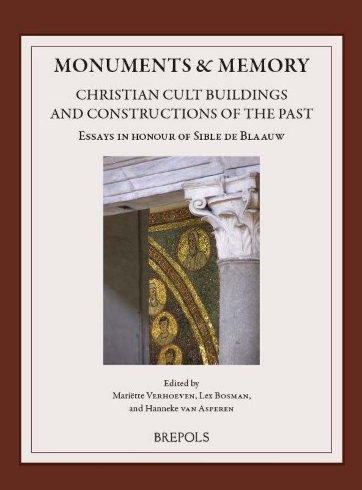
Monuments & Memory: Christian Cult Buildings and Constructions of the Past
show More to view fulltext, buy and share links for:Monuments & Memory: Christian Cult Buildings and Constructions of the Past show Less to hide fulltext, buy and share links for: Monuments & Memory: Christian Cult Buildings and Constructions of the PastThis volume honours Sible de Blaauw on the occasion of his retirement from Radboud University. It is above all a tribute to an influential and respected voice in the field of early Christian art and architecture. Thirty-one authors have sought to provide their own unique answer to the question of how Christian cult buildings have played a role in cultural memory in different periods and in various geographical and cultural contexts. From its very onset, this publication was envisioned as a parallel to De Blaauw’s own research interests: Rome and its monuments, early Christianity, Christian religious heritage, liturgy and architecture, continuity of tradition, and memory. The contributions have been arranged according to three sections: Monuments - Places - Decoration & Liturgical Furnishing. Every essay addresses the memorial potential of Christian buildings, of their location, or of the accoutrement, whether or not still in situ. Not surprisingly, Rome re-appears frequently in all sections, with Rome’s churches receiving special attention. Together the essays cover a period from Late Antiquity to modern times, from Helena to Gerhard Richter, from late antique poets to a Ravennesque mosaic in the 1930s. Thus, this volume assumes the diachronic nature that characterizes De Blaauw’s own scholarship. The leitmotifs of Christian cult and material and immaterial constructions of the past tie together the sections as well as the book as a whole. Nevertheless, the main binding element between the essays is their authors’ fondness and appreciation of Sible de Blaauw.
-