


Brepols Online Books Other Miscellanea Collection 2017 - bob2017miot

Collection Contents
1 - 20 of 21 results
-
-
Beatus Rhenanus (1485-1547) et une réforme de l’Eglise : engagement et changement
show More to view fulltext, buy and share links for:Beatus Rhenanus (1485-1547) et une réforme de l’Eglise : engagement et changement show Less to hide fulltext, buy and share links for: Beatus Rhenanus (1485-1547) et une réforme de l’Eglise : engagement et changementEn 2014 un texte de Martin Luther (le De libertate christiana, 1520) portant des corrections manuscrites de Luther lui-même a été découvert à Sélestat. Il fait partie de la bibliothèque de Beatus Rhenanus (1485-1547). Ce livre contient aussi des corrections et des annotations manuscrites de Rhenanus. D’autres entrées font savoir que le texte a servi de modèle à une nouvelle édition à Bâle, chez l’imprimeur Adam Petri. Ces faits prouvent que Rhenanus fut en fait l’éditeur scientifique de ce traité fondamental de Luther.
Cette découverte - qui est étudiée ici pour les annotations de Rhenanus - et l’exploitation d’autres données fournies par les auteurs de ce volume permettent de présenter un nouveau visage de Rhenanus partisan d’une réforme de l’Eglise.
Grâce à ses connaissances, à ses publications et à son entourage, Rhenanus jouissait d’une autorité scientifique et morale très importante. Directeur de publications, conseiller scientifique ou représentant d’Erasme auprès de plusieurs grands imprimeurs du Rhin Supérieur, il avait accès aux moyens de communication les plus puissants.
C’était un homme complexe. Son esprit à la fois ouvert et critique lui permettait d’innover en littérature et en histoire. Il pouvait s’enthousiasmer pour les idées des autres ou en imaginer de nouvelles lui-même. Pourtant, en homme discret et habituellement prudent, il agissait souvent sous le couvert de l’anonymat. Il se passionna pour une réforme de l’Eglise, mais choisit de taire une partie importante de ses interventions.
Le contenu de ce livre lève le voile sur ses engagements qui pouvaient évoluer dans le temps.
-
-
-
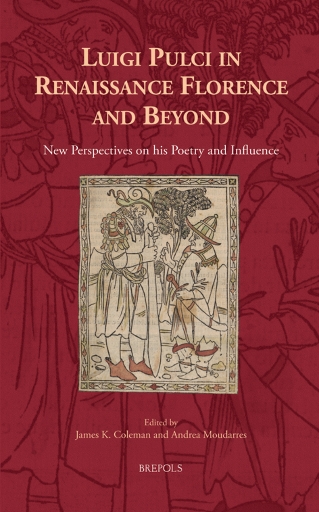
Luigi Pulci in Renaissance Florence and Beyond
show More to view fulltext, buy and share links for:Luigi Pulci in Renaissance Florence and Beyond show Less to hide fulltext, buy and share links for: Luigi Pulci in Renaissance Florence and BeyondLuigi Pulci’s rollicking, ribald account of the exploits of the paladin Orlando and his giant friend Morgante has never failed to provoke strong reactions in its readers. Pulci’s irreverent satirical wit made his Morgante an instant bestseller following its initial publication, but also drew the ire of powerful enemies like the Dominican friar Girolamo Savonarola, who called for copies to be burned in the ‘bonfires of vanities’ organized by his followers in Florence. The Morgante is the most important immediate precursor to the Orlando innamorato and the Orlando furioso, yet relatively little critical attention has been devoted to Pulci’s work compared to that of his successors Boiardo and Ariosto.
This volume – the first collection of critical essays dedicated to Pulci – offers a comprehensive reassessment of Pulci’s work and legacy, shedding new light on the cultural and literary traditions that Pulci draws from and subverts, the social and political forces that shaped Pulci’s work, and the breadth of Pulci’s influence from the Renaissance to the present day.
-
-
-
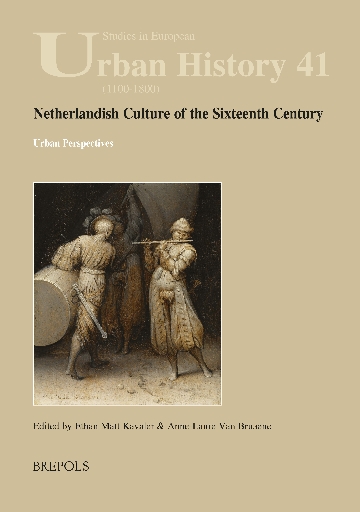
Netherlandish Culture of the Sixteenth Century
show More to view fulltext, buy and share links for:Netherlandish Culture of the Sixteenth Century show Less to hide fulltext, buy and share links for: Netherlandish Culture of the Sixteenth CenturyThe authors of this volume examine various fields of cultural discourse in the Netherlands of the sixteenth century: the political, commercial, religious, artistic, and sensory domains, and less obviously metaphysical properties like time and space. What defined the Low Countries were not its borders and its territories but its cities, and their economies dominated political relations. A dense network of large cities and small towns developed hand in hand with a broad range of textile and luxury industries. In Antwerp, culture was commerce: its art and printing industries catered to much of the Western world and, at the same time, carved a confident self-image celebrating the liberal arts as a means of social and self-improvement. Antwerp is omnipresent in this book, with essays on its painting, printing, politics, and public festivals. But other cities such as Bruges, Leuven, and Leiden also figure prominently. It was precisely the interconnectedness of urban centers, large, middle and small, rather than their autonomous character, that defined civic culture in the Low Countries. Among the topics treated are differing notions of urban topography, the dialogue between city and court, issues of censorship, and the sensory and psychological response to texts and images.
-
-
-
Trent and Beyond. The Council, Other Powers, Other Cultures
show More to view fulltext, buy and share links for:Trent and Beyond. The Council, Other Powers, Other Cultures show Less to hide fulltext, buy and share links for: Trent and Beyond. The Council, Other Powers, Other CulturesFor centuries, the Council of Trent has been studied as a fundamental episode in European history wherein doctrinal and institutional unity was lost. Although the Council decrees nowhere refer to the contexts of the peoples met by Christopher Columbus, nor to the Cathay regions rediscovered by missionaries, nor to their religions, their superstitions or their political systems, the Council was nonetheless a global event. The Roman Church, which lost doctrinal control of the considerable part of Europe captured by different forms of Protestantism, imposed itself upon its followers through the application of conciliar decrees. Freed of its exclusively European perspective it opened up to cultures of the rest of the world. The customs and traditions thus encountered, the relationships with political authorities, possibilities for the construction of a new Christianity offered by New Worlds, disclosing spaces and contexts to the Tridentine Church, with accommodations and cross-fertilizations, with a return to origins and tradition, obliged that it begin to think of itself, perhaps for the first time, as a universal Church.
The Council and Beyond suggests not only reconsideration of Europe through the prism of the Tridentine decrees and the long processes of their dissemination, but also through an intercontinental consideration, a spatial perspective that would become universal to the Church and to the normative texts that had been elaborated at Trent.
-
-
-
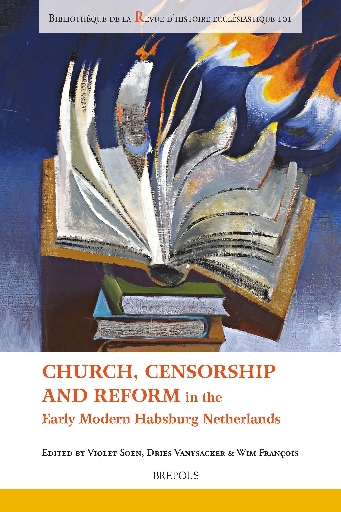
Church, Censorship and Reform in the Early Modern Habsburg Netherlands
show More to view fulltext, buy and share links for:Church, Censorship and Reform in the Early Modern Habsburg Netherlands show Less to hide fulltext, buy and share links for: Church, Censorship and Reform in the Early Modern Habsburg NetherlandsIn recent years, historiography has come to rethink the traditional account of a state-backed Counter-Reformation in the early modern Habsburg Netherlands. Hence, this volume takes a refreshing perspective on the themes of church and reform in this region from the late fifteenth century onwards. The first part interrogates the dynamics of repression and censorship in matters of religion. Six chapters underline that this censorship was not only state- or church-driven, but performed by a multitude of actors, ranging from professional organisations to university theologians. Throughout the Ancient Regime, this resulted in an institutionally and regionally fragmented policy, opening margins of manoeuver for those concerned. A second part focuses on more internal impulses for Catholic Reform in the sixteenth century, especially those created by the Council of Trent. As such, this volume helps to contextualise the Counter-Reformation of the seventeenth century in a long-term perspective, identifying the myriad of actors and motives behind this Catholic revival.
-
-
-
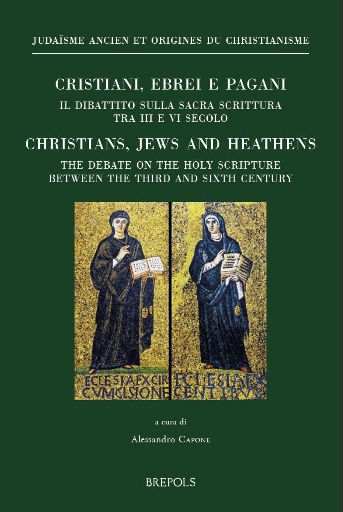
Cristiani, ebrei e pagani: il dibattito sulla Sacra Scrittura tra III e VI secolo - Christians, Jews and Heathens: the Debate on the Holy Scripture between the Third and the Sixth Century
show More to view fulltext, buy and share links for:Cristiani, ebrei e pagani: il dibattito sulla Sacra Scrittura tra III e VI secolo - Christians, Jews and Heathens: the Debate on the Holy Scripture between the Third and the Sixth Century show Less to hide fulltext, buy and share links for: Cristiani, ebrei e pagani: il dibattito sulla Sacra Scrittura tra III e VI secolo - Christians, Jews and Heathens: the Debate on the Holy Scripture between the Third and the Sixth CenturyMany of the contributions here collected were presented on the International Day of Studies entitled “Cristiani, ebrei e pagani: il dibattito sulla Sacra Scrittura tra III e VI secolo”, held in Lecce (October 4th, 2013). The book explores the different approaches to the Sacred Scriptures by Christians, Jews and Heathens considered according to their various internal, geographical and chronological articulations, and more generally to the debate on the Scriptures developed between the 3rd and the 6th centuries in a society in which the interactions and meetings between peoples, religions and intellectuals were rather widespread. In particular, the contributions, which contribute to the reconstruction of a complex and articulated cultural landscape, are organized in three sections: I. Contraddizioni bibliche e cultura pagana (S. Morlet, C. Moreschini, A. Capone); II. Esegesi e polemica: Celso e Macario di Magnesia (E. Saponaro, P. De Giorgi, A. Cataldo); III. III. Ebrei, pagani e Sacre Scritture (P. Andris, G. Rinaldi, M. Ryzhik).
-
-
-

Dieu de l’Orage dans l’Antiquité méditerranéenne
show More to view fulltext, buy and share links for:Dieu de l’Orage dans l’Antiquité méditerranéenne show Less to hide fulltext, buy and share links for: Dieu de l’Orage dans l’Antiquité méditerranéenneDans le présent volume le lecteur prendra connaissance des contributions de plusieurs spécialistes de l’Histoire des Religions de l’Antiquité méditerranéenne centrées sur des aspects méconnus ou peu connus du dieu de l’orage dans diverses civilisations antiques : Égypte, Anatolie, Mésopotamie, Iran, Grèce, Rome, Étrurie, et présentées dans le cadre du colloque annuel organisé les 5 et 6 juin 2015 par le Centre d’Histoire des Religions Cardinal Julien Ries à l’Université catholique de Louvain (Louvain-la-Neuve). On y découvrira que ce grand dieu n’est pas uniquement un dieu de l’orage tonitruant, de la foudre, mais aussi un dieu souriant, bienfaiteur des agriculteurs, des viticulteurs, des forces vives de la Nature.
-
-
-
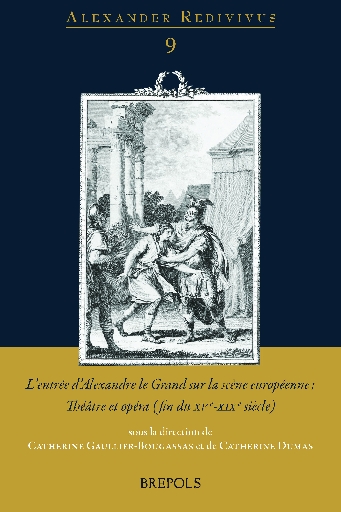
L'entrée d'Alexandre le Grand sur la scène européenne (fin xv e-xix e siècle)
show More to view fulltext, buy and share links for:L'entrée d'Alexandre le Grand sur la scène européenne (fin xv e-xix e siècle) show Less to hide fulltext, buy and share links for: L'entrée d'Alexandre le Grand sur la scène européenne (fin xv e-xix e siècle)À partir de la fin du xv e siècle et surtout des xvi e et xvii e siècles, le plus spectaculaire renouvellement esthétique de la figure d’Alexandre le Grand vient de la création d’un théâtre, puis d’un opéra, qui lui sont consacrés. Or la naissance et le développement en Europe de ces écritures dramatiques puis lyriques sur le Macédonien n’ont été jusqu’ici que très peu étudiés. Les œuvres, nombreuses et très diverses, témoignent d’une inventivité certaine et constituent un pan important de la réception de son histoire et de sa légende. En Europe occidentale, la composition des premières pièces de théâtre, d’abord surtout des tragédies, succède aux traductions humanistes de Quinte-Curce, de Justin et de Plutarque. Elle relance un processus de jeu avec l’Histoire et de mise en fiction que les auteurs de ces traductions avaient précisément cherché à arrêter après les libertés médiévales. Aux xviii e et xix e siècles, si les pièces de théâtre qui s’écrivent encore sont moins souvent représentées que celles du xvii e siècle, de très nombreux opéras contribuent à façonner durablement les représentations du conquérant en Europe occidentale, tandis dans le monde hellénique le théâtre d’ombres s’approprie le personnage antique comme figure de sauveur. Alexandre prend ainsi vie, avec son entourage, dans des genres dramatiques et lyriques divers, les auteurs l’adaptent avec la plasticité qui caractérise son personnage. Il incarne toujours un prestige qu’ils s’approprient, pour susciter l’admiration, parfois la pitié, moins souvent l’indignation ou le rire.
Cet ouvrage constitue le premier volume collectif consacré aux réinventions d’Alexandre et de son entourage en héros dramatiques et lyriques. Il réunit dix-neuf articles sur les littératures et les spectacles français, néo-latins, espagnols, italiens, anglais, germaniques et néo-helléniques, et se termine par des répertoires des œuvres françaises, espagnoles, italiennes, anglaises et germaniques.
-
-
-
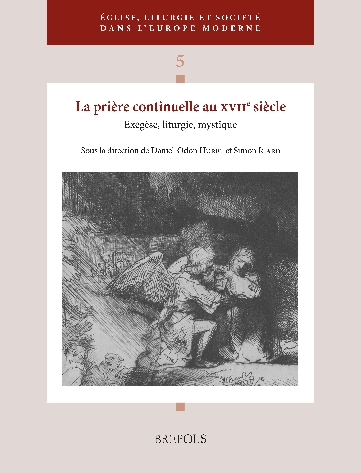
La prière continuelle au XVIIe siècle
show More to view fulltext, buy and share links for:La prière continuelle au XVIIe siècle show Less to hide fulltext, buy and share links for: La prière continuelle au XVIIe siècle«Il faut toujours prier» (Lc 18, 1). «Priez sans cesse» (1 Th 5, 17). Ces injonctions bibliques ont toujours constitué un défi pour les spiritualités chrétiennes: est-il possible de prièr sans interruption? Les études et les sources rassemblées dans le présent ouvrage présentent les réponses apportées au XVII e siècle. Inscrites dans une tradition multiséculaire et confrontées aux exigences de la modernité, les doctrines et les pratiques de l’oraison perpétuelle ont à la fois suscité des débats engageant des philosophies de l’acte libre et des réflexions sur la place de la prière individuelle et collective dans la société. La continuité de la prière fut un enjeu fondamental pour le catholicisme réformé par le concile de Trente, au croisement de l’exégèse, de la liturgie et de la mystique.
-
-
-
Langage des dieux, langage des démons, langage des hommes dans l'Anquité
show More to view fulltext, buy and share links for:Langage des dieux, langage des démons, langage des hommes dans l'Anquité show Less to hide fulltext, buy and share links for: Langage des dieux, langage des démons, langage des hommes dans l'AnquitéBy “barbarian names”, we denote names or words used, principally within a ritual context in ancient religions, the efficacy of which depends upon a semantic opacity, a strangeness or even an unintelligibility. In order to determine the distance that constitutes the ‘barbarous’ character of these names, this book offers a series of studies on various examples – a majority concerning Middle- or Neo-Platonic texts – which will allow the reader to appreciate the theories through which Antiquity viewed the relationships, particularly the interchange, between the various beings that inhabit the world – mortals, demons, and gods – each group having its own language, mode of expression, its manner of being situated within the hierarchical order of reality, and being related to others.
-
-
-
Le figure del mito in Properzio
show More to view fulltext, buy and share links for:Le figure del mito in Properzio show Less to hide fulltext, buy and share links for: Le figure del mito in ProperzioThe myth in Propertius was already dealt with in Colloquium Propertianum in 2002, but in the present book - Le figure del mito in Properzio - appears as an ethical and aesthetic value in thefield of letters, arts and historical memory of the Roman people. Propertius’ Elegies show a deep and refined Hellenistic culture that seeks its roots in Etruscan and Umbrian origins, in the years when Augustus was restoring the temples of past ages and creating the principatus. The topic of the myth throughout the four books of Elegies differs both from Catullus and from the writers of his period (Virgil, Horace, Ovid, Tibullus) and constitutes a peculiar entity, where the memory of the past becomes present.
-
-
-
Les Arts poétiques du XIIIe au XVIIe siècles
show More to view fulltext, buy and share links for:Les Arts poétiques du XIIIe au XVIIe siècles show Less to hide fulltext, buy and share links for: Les Arts poétiques du XIIIe au XVIIe sièclesLa notion d’« Art poétique » recouvre une réalité plurielle et protéiforme : les ouvrages ainsi qualifiés se proposent, selon les âges et les contextes, de catégoriser, de normaliser ou de canoniser les pratiques poétiques. Entre la pratique et la théorisation au sens large se jouent dès lors des rapports complexes, qu’interrogent les seize contributions regroupées dans ce volume, où cette problématique est envisagée selon un large spectre de périodes et de langues, mais également dans une perspective pluridisciplinaire.
-
-
-
Les Mystères : nouvelles perspectives
show More to view fulltext, buy and share links for:Les Mystères : nouvelles perspectives show Less to hide fulltext, buy and share links for: Les Mystères : nouvelles perspectivesThis multidisciplinary volume features a comparative and critical study of the mysteries in the major religions of the Antiquity. It considers ceremonies, rituals, sacraments and the theological content, made up of doctrine and dogma. The domains taken into consideration include Greek and Roman paganism, Judaism and Christianity, Mazdeism, Eastern cults, as well as their prolongations until the Middle Ages and the Reformation. This study has as a starting point the vocabulary and the linguistic transpositions and exchanges, in order to move on to the wider field of the major religious and philosophical issues.
Profound unity of the theme in this volume is due to the theme’s paradoxically great nature. Any mystery is intended to be revealed. It kindles great expectations and appears concealed only to be better disclosed. This promising dialectic construction explains the crucial role played by mysteries in the history of religions.
-
-
-
Les principes cosmologiques du platonisme
show More to view fulltext, buy and share links for:Les principes cosmologiques du platonisme show Less to hide fulltext, buy and share links for: Les principes cosmologiques du platonismeCe volume étudie les mutations de sens que la notion de principe a connues au sein de la cosmologie platonicienne, depuis l’ancienne Académie jusqu’au néoplatonisme tardif. Dans cet intervalle, la question de la nature et du nombre des principes cosmologiques est apparue comme un enjeu central de la défense du platonisme, dans sa confrontation avec les écoles rivales, mais aussi, à partir de l’époque impériale, avec le christianisme. Au sein de cette histoire, les critiques et réceptions aristotéliciennes ont joué un rôle déterminant et ont, d’un certain point de vue, préparé le tournant inauguré par Plotin : de Théophraste, qui le premier articule la causalité du Premier Moteur et l’héritage platonicien des Formes intelligibles, à Alexandre d’Aphrodise, qui critique l’anthropomorphisme inhérent aux théories providentialistes des platoniciens impériaux, les exégètes péripatéticiens ont ouvert des pistes qui seront adaptées et transformées à travers les différents systèmes néoplatoniciens. Reprenant à Alexandre sa critique des conceptions artificialistes de la cosmologie platonicienne, Plotin s’oppose à lui pour défendre l’efficience causale des Formes intelligibles, qu’il définit comme des réalités vivantes et intellectives, en les insérant dans un système de dérivation de toutes choses depuis l’Un. À sa suite, les différents diadoques néoplatoniciens placeront la vie au cœur du monde intelligible, définissant les Formes comme des réalités vivantes et intellectives dotées d’une efficience propre : la puissance de faire advenir des réalités dérivées.
-
-
-
Praedicatio Patrum
show More to view fulltext, buy and share links for:Praedicatio Patrum show Less to hide fulltext, buy and share links for: Praedicatio PatrumThis volume contains the proceedings of the conference “Ministerium Sermonis. An International Colloquium on North African Patristic Sermons” (Malta, 8-10 April 2015) and hopes to give a new impetus to the study of late antique African preaching. Several contributions challenge accepted views regarding the corpus of North African homilies as well as common assumptions concerning supposedly North African sermon collections. Other contributions offer detailed philological, theological and rhetorical text analyses, and focus on the sermons of Augustine as well as on Donatist preaching and the corpus of Pseudo-Fulgentius. The present volume may be considered a sequel to the proceedings of the first two Ministerium Sermonis conferences (Leuven - Turnhout, 2008 and Rome, 2011), which have been published in the same series.
-
-
-
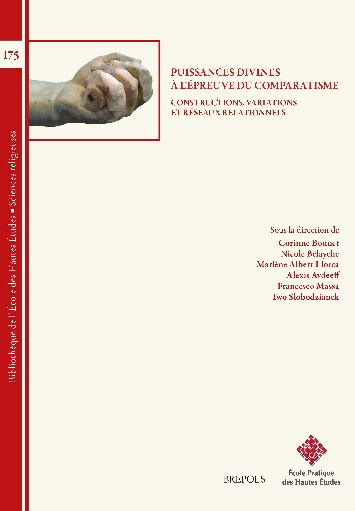
Puissances divines à l’épreuve du comparatisme
show More to view fulltext, buy and share links for:Puissances divines à l’épreuve du comparatisme show Less to hide fulltext, buy and share links for: Puissances divines à l’épreuve du comparatisme«Les dieux helléniques sont des Puissances, non des personnes. La pensée religieuse répond aux problèmes d'organisation et de classification des Puissances. » En partant de ce texte de Jean-Pierre Vernant et en intégrant les perspectives nouvelles issues des travaux des historiens et des anthropologues du religieux, ce livre explore de façon comparatiste, et sans partir de modèles préalables, la pertinence de cette proposition. Il soulève deux questions aussi simples que redoutables : qu’est-ce qu’une puissance divine ? Comment la conçoit-on et l’inscrit-on dans le temps, dans l’espace, dans des réseaux relationnels ? La réflexion s'organise autour de deux axes : étude de la terminologie relative à la puissance divine et des modalités de son expression à travers les images, les textes et les pratiques rituelles ; analyse des modes de construction des puissances et des réseaux dans lesquels elles s'inscrivent. Ce livre pénètre ainsi au cœur même de la fabrique du divin et des structures qui l’organisent, en contexte polythéiste comme monothéiste. Centré sur le système de pensée des Grecs et des Romains, il s’attache aussi à le mettre en regard avec d’autres aires culturelles de l’Antiquité (Égypte, Mésopotamie, Israël) et avec des sociétés qu’étudient aujourd’hui les anthropologues.
-
-
-
Religions de Rome
show More to view fulltext, buy and share links for:Religions de Rome show Less to hide fulltext, buy and share links for: Religions de RomeOn the occasion of Professor Robert Schilling’s hundredth birthday (April the 17th of 1913), his disciples and friends organized a colloquium “following in the wake of [his] works”. It was a matter of bringing out the decisive impetus this great scholar gave to the studies about Roman religion, and of assessing the scope of his contribution to the research he carried out into religious sciences of antiquity. In particular this meeting has led to a collective thought in return about the method and about the main issues of R. Schilling’s investigations: Venus and Janus, but also the calendar, Ovid’s Fasti, or even Roman theology.
-
-
-
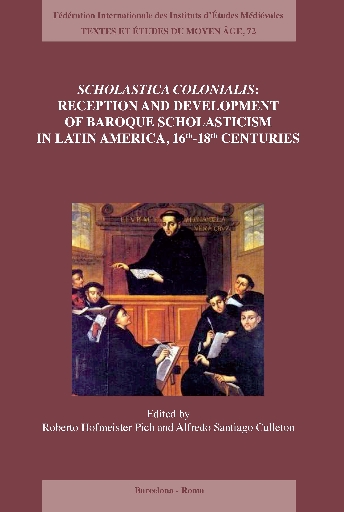
Scholastica Colonialis: Reception and Development of Baroque Scholasticism in Latin America, 16th-18th Centuries
show More to view fulltext, buy and share links for:Scholastica Colonialis: Reception and Development of Baroque Scholasticism in Latin America, 16th-18th Centuries show Less to hide fulltext, buy and share links for: Scholastica Colonialis: Reception and Development of Baroque Scholasticism in Latin America, 16th-18th CenturiesThis volume is a collection of studies on Latin American scholasticism originally presented at the Fourth International Conference of Medieval Philosophy at the Pontifícia Universidade Católica do Rio Grande do Sul (PUCRS), Porto Alegre, Brazil, November 12-14, 2012. These essays provide a significant overview of authors, works and areas of interest associated to scholastic thought in the 16th-18th centuries, focusing particularly on Latin American or European-born authors whose philosophical and theological careers were significantly set in Latin American soil and, due to their education, reveal a profound acquaintance with European philosophical theories and problems. The reception and development of Medieval thought in Baroque scholasticism, the connections between European philosophy, mainly Iberian scholasticism, and philosophical-theological debates in the «New World», and the revisiting by Latin American scholars of Medieval schools of thought and theoretical patterns taught in Europe, prompted by the encounter with several peoples living in the new continent and the search and justification for models of colonization, are some of the relevant issues discussed in here. The studies collected in this volume place colonial scholasticism in the history of ideas by letting authors and their writings speak for themselves.
-
-
-
Scrinium Augustini. The World of Augustine's Letters
show More to view fulltext, buy and share links for:Scrinium Augustini. The World of Augustine's Letters show Less to hide fulltext, buy and share links for: Scrinium Augustini. The World of Augustine's LettersThis volume contains the proceedings of the international symposium on Augustine’s correspondence held at the Nicolaus Copernicus University in Toruń (Poland) on 25-26 June 2015, which was a part of a wider project dedicated to the study of Augustine’s correspondence. Another part of the project is a fully searchable on-line catalogue of issues present in the Letters (www.scrinium.umk.pl).
The papers presented in the book access the large corpus of Augustine’s epistles from various academic perspectives (theological, philosophical, historical, literary and rhetorical). First, the present study is thematically more wide-ranging than any of those that had been previously published on this subject; second, it is interdisciplinary in its focus and methodology; third, it provides new, substantial insights into selected problems of Augustine’s work; fourth, it approaches the Letters from two complementary, methodological perspectives: the first part of the book contains papers which study widely defined problem in the light of the whole corpus, while those in the second part deal with specific problems found in particular letters. The result is a significant contribution to our understanding of the complex and fascinating Augustinian world, seen through the lens of his letters, provided by authors whose academic experience and scholarly achievements guarantee its quality.
-
-
-
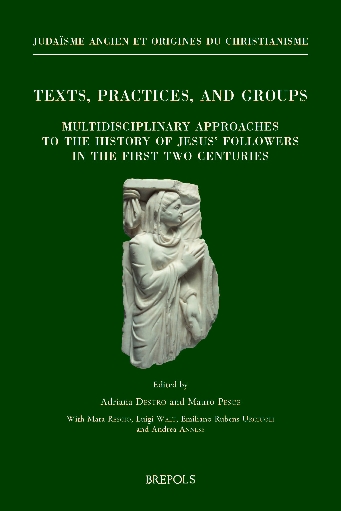
Texts, Practices, and Groups. Multidisciplinary approaches to the history of Jesus’ followers in the first two centuries
show More to view fulltext, buy and share links for:Texts, Practices, and Groups. Multidisciplinary approaches to the history of Jesus’ followers in the first two centuries show Less to hide fulltext, buy and share links for: Texts, Practices, and Groups. Multidisciplinary approaches to the history of Jesus’ followers in the first two centuriesWithin the contemporary renewal of the exegetical and historical research on Jesus and early Christianity, this book focuses on a wider knowledge of the social and cultural context of the first two centuries, thanks to a systematic research of documentary materials and archaeological data (epigraphs and documentary papyri). Secondly, the book faces the increasingly perceived need to use all the existing literary material for the reconstruction of the historical Jesus and the first groups of his followers. Thirdly, the book stresses the importance of giving space to new epistemological and methodological perspectives in the field of human sciences. The last section of the volume is dedicated to the connection of contemporary research with the interpretations of Jesus and early Christianity developed in the modern age.
-