


Brepols Online Books Medieval Monographs Collection 2017 - bob2017mome

Collection Contents
3 results
-
-
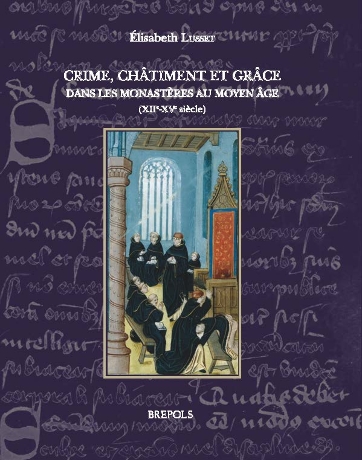
Crime, châtiment et grâce dans les monastères au Moyen Âge (XIIe-XVe siècle)
show More to view fulltext, buy and share links for:Crime, châtiment et grâce dans les monastères au Moyen Âge (XIIe-XVe siècle) show Less to hide fulltext, buy and share links for: Crime, châtiment et grâce dans les monastères au Moyen Âge (XIIe-XVe siècle)Ce livre analyse les crimes commis à l’intérieur des monastères médiévaux (violences, homicides ou encore vols) et la manière dont les religieux criminels étaient corrigés tant par les abbés, les évêques, les chapitres généraux des ordres religieux que par les organes de la curie romaine. Il compare, à l’échelle de l’Europe, les établissements de moines, chanoines réguliers et moniales, qu’ils appartiennent à un ordre (Cluny, Cîteaux, Prémontré, Grande Chartreuse) ou à une nébuleuse moins définie sur le plan juridique (abbayes et prieurés de moines bénédictins ou de chanoines réguliers). En explorant le fonctionnement de la justice claustrale, les peines prescrites ainsi que les mécanismes de réconciliation des criminels, l’ouvrage éclaire sous un angle nouveau les processus de construction institutionnelle et de réforme des ordres religieux entre les XII e et XV e siècles.
-
-
-
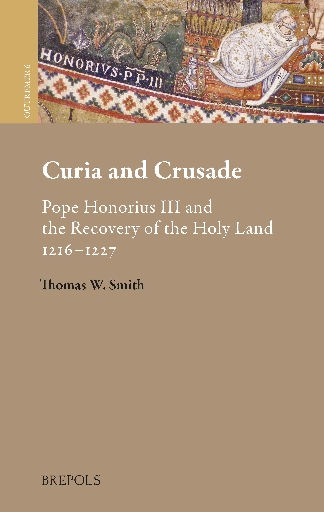
Curia and Crusade
show More to view fulltext, buy and share links for:Curia and Crusade show Less to hide fulltext, buy and share links for: Curia and CrusadeThe pontificate of Honorius III (1216-27) ranks among the most important papal reigns of the thirteenth century: the pope organised two large-scale crusades to recover the Holy Land, the second of which recovered Jerusalem for the first time since 1187; he presided over a ‘golden summer’ of papal-imperial relations with the medieval stupor mundi, Frederick II, emperor of the Romans and king of Sicily; he developed an original theological conception of his office; and he laid the foundations for a centralised papal financial machine. Yet, despite his significant impact on thirteenth-century Christendom, Honorius has often languished in the shadow of his famous predecessor, Innocent III - a balance that the present book redresses.
Grounded in extensive original research into the manuscripts of Honorius’s letter registers, this study develops a revisionist interpretation of how the curia marshalled the crusading movement to recover the Holy Land. Questioning the utility of the historiographical construct of ‘papal policy’, this book provides new insights into crusade diplomacy, papal theology, the roles of legates, and the effectiveness of crusade taxation. It also includes a comprehensive and accessible introduction to the papal chancery and its documents, which will be of particular use to students and those approaching the medieval papacy for the first time.
-
-
-
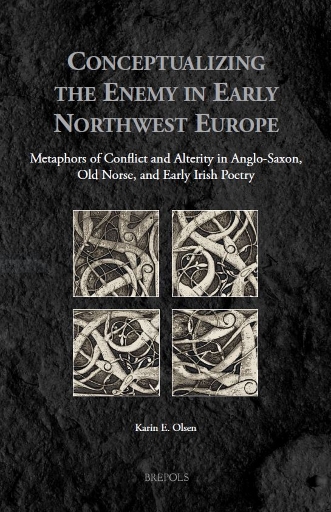
Conceptualizing the Enemy in Early Northwest Europe
show More to view fulltext, buy and share links for:Conceptualizing the Enemy in Early Northwest Europe show Less to hide fulltext, buy and share links for: Conceptualizing the Enemy in Early Northwest EuropeDespite the prominence of conflicts in all mythological and heroic literature, perceptions of these conflicts and their participants are shaped by different cultural influences. Socio-economic, political, and religious factors all influence how conflict is perceived and depicted in literary form. This volume provides the first comparative analysis to explore conceptions of conflict and otherness in the literary and cultural contexts of the early North Sea world by investigating the use of metaphor in Old English, Old Norse, and Early Irish poetry. Applying Conceptual Metaphor Theory together with literary and anthropological analysis, the study examines metaphors of conflict and alterity in a range of (pseudo-)mythological, heroic, and occasional poetry, including Beowulf, Old Norse skaldic and eddic verse, and poems from the celebrated ‘Ulster Cycle’. This unique approach not only sheds new light on a wide spectrum of metaphorical techniques, but also draws important conclusions concerning the common cultural heritage behind these three poetic corpora.
-