


Brepols Online Books Medieval Monographs Collection 2017 - bob2017mome

Collection Contents
3 results
-
-
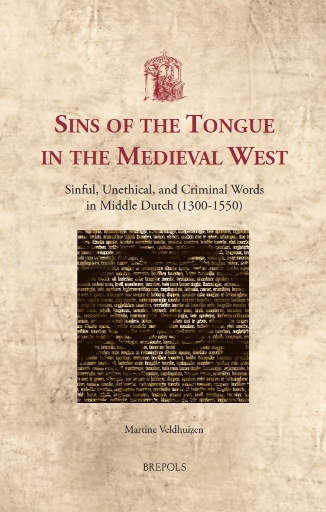
Sins of the Tongue in the Medieval West
show More to view fulltext, buy and share links for:Sins of the Tongue in the Medieval West show Less to hide fulltext, buy and share links for: Sins of the Tongue in the Medieval WestAs modern medievalists have repeatedly established, harmful speech conduct (‘sins of the tongue’) aroused considerable interest among medieval authors. Lying, boasting, flattering, railing, backbiting, grumbling, false swearing, and garrulous and incendiary speech were but a few of the speech acts that provoked moral condemnation all over Western Europe from the thirteenth century onward.
This study examines medieval notions of harmful speech conduct as reflected in Middle Dutch ecclesiastical, secular-ethical, and legal textual sources. According to these texts, the tongue was able to ‘break bones’ and inflict considerable damage on the speaker, on listeners, and on other relevant participants in speech situations.
The book utilises two novel approaches. First, the subject is systematically explored in terms of three different types of behaviour in order to discover an overarching discourse: harmful speech as a sin, as moral misbehaviour, and as a crime. Second, ideas from modern language theory are used to analyse the textual sources. By adopting these two approaches, the book asserts that an overarching discourse of harmful speech can be found in the Middle Dutch ecclesiastical, secular-ethical, and legal domains, a discourse coined in this study as ‘the discourse of the untamed tongue’.
-
-
-
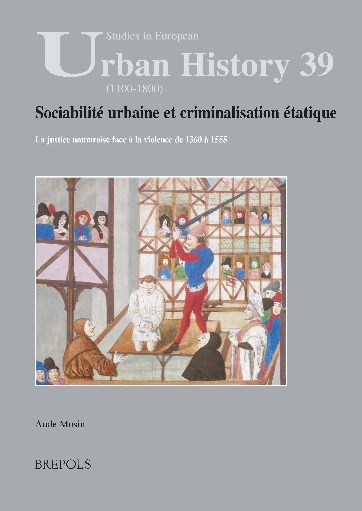
Sociabilité urbaine et criminalisation étatique
show More to view fulltext, buy and share links for:Sociabilité urbaine et criminalisation étatique show Less to hide fulltext, buy and share links for: Sociabilité urbaine et criminalisation étatiqueThe study of violence under its different forms and its regulation in a town of the Low Countries, namely Namur, between the second half of the 14th century and the first half of the 16th century provides a renewed perspective on the problematic of the transition between “urban sociability” and “state criminalisation”. Urban communities developed institutions and original methods of regulation to control aggressiveness. Violent behaviours and the safeguard of peace between their members were the main focus of these communities. Later on, central authorities, in the framework of a developing State, brought their own means of framing violence. Violence gradually became the monopoly of authorities. This “legitimate” violence of the State became a way to discriminate the violence of populations. The violence in the town and its framing is a privileged field to address the construction of the Modern State, one of the main supports of which is justice.
-
-
-
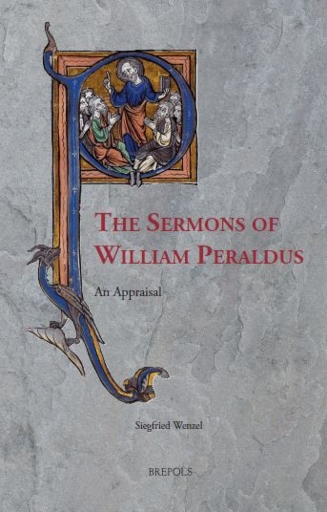
The Sermons of William Peraldus
show More to view fulltext, buy and share links for:The Sermons of William Peraldus show Less to hide fulltext, buy and share links for: The Sermons of William PeraldusThe French Dominican William Peraldus or Guillaume Peyraut (died c. 1275), well known for his long summae on the vices and virtues, also produced several cycles of sermons, of which two deal with the Epistle and the Gospel readings for the Sundays of the Church year. This study analyzes the latter in some detail and argues that, rather than collecting sermons he had preached earlier, Peraldus wrote these sermons systematically for the use of other preachers. The Epistle sermons for the first Sunday in Advent and the Gospel sermons for the third Sunday in Advent are presented in their original Latin text together with an English translation in order to demonstrate how Peraldus dealt with the biblical text as well as his moral concerns and his literary style. The selected texts are then compared with several other major cycles produced in France in Peraldus’s time. Like his summae on the vices and the virtues, Peraldus’s sermons became very popular in medieval Europe, as is witnessed by selective copying and citations that can be seen in a number of instances primarily from the sermon literature of later medieval England. One aspect of this popularity is the adaptation of his material into a genuine sermon, as it can be found in the sermons attributed to Repingdon, of which one is here examined in detail.
-