


Brepols Online Books Medieval Monographs Collection 2017 - bob2017mome

Collection Contents
2 results
-
-
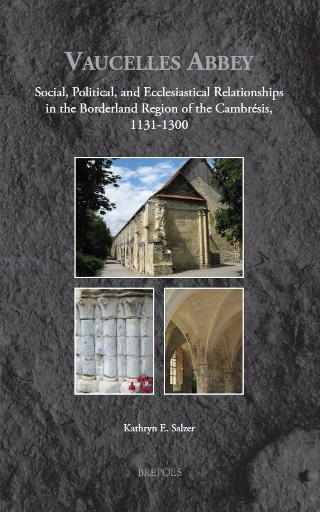
Vaucelles Abbey
show More to view fulltext, buy and share links for:Vaucelles Abbey show Less to hide fulltext, buy and share links for: Vaucelles AbbeyFounded in 1131 by the castellan of Cambrai, Vaucelles Abbey thrived in a borderland region, where German emperors, French kings, Flemish counts, bishops of Cambrai, and the Cistercian Order all had active interests. To understand how Vaucelles flourished, we must look at the relationships that the house created and fostered with various international, regional, and local individuals and institutions. Vaucelles used these connections to protect the vast patrimony that the monks created in the two centuries after its foundation.
This study asserts that three principal factors influenced the foundation and development of Vaucelles. First, the abbey was fortunate in its local support, beginning with the castellan family and expanding to include numerous regional families and the bishops of Cambrai. Second, the abbey was established in a political borderland, a geo-political situation that Vaucelles survived and actually turned into a positive feature of its development. And finally, Vaucelles was a Cistercian monastery, a direct daughter house of Clairvaux. Vaucelles’ Cistercian observance fostered relationships that were particularly significant to the abbey’s development from the late twelfth century onward. These factors offer exceptional tools for demonstrating many features of Vaucelles’ political, social, and economic life during the twelfth and thirteenth centuries.
-
-
-
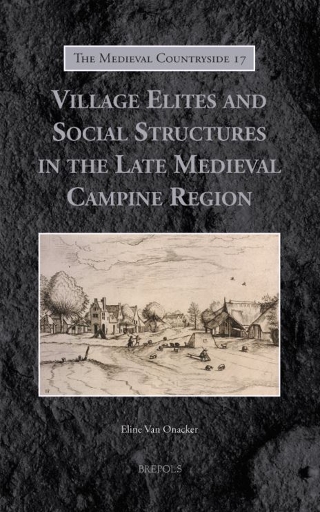
Village Elites and Social Structures in the Late Medieval Campine Region
show More to view fulltext, buy and share links for:Village Elites and Social Structures in the Late Medieval Campine Region show Less to hide fulltext, buy and share links for: Village Elites and Social Structures in the Late Medieval Campine RegionThe economy of the late medieval Low Countries is often portrayed in terms of dynamism and economic growth. However, several regions within this larger entity followed an alternate path of development. One example of this is the Campine (Kempen), a communal peasant region situated to the northeast of the sixteenth-century ‘metropolis’ of Antwerp. By contrast with other regions in the Low Countries, this area was characterised by a remarkable stability.
By focusing on ‘independent’ peasant elites, this study explores the social structures and the characteristics of inequality of this region, showing how these factors led to a different, more stable mode of economic development. Looking past standard societal measurements such as property distribution, this work combines a wide variety of sources to grasp the nuances of inequality in a communal society. It therefore takes into account other economic factors such as control over the commons, and market integration. It also focuses on political and social inequality, shedding light on aspects of inequality in village politics, social life, and poor relief.
Thus, in contrast to dominant depictions of pre-modern societies on the road to capitalism, this book provides a comprehensive portrayal of inequality and elite groups in a communal peasant society.
-