


Brepols Online Books Medieval Monographs Collection 2017 - bob2017mome

Collection Contents
26 results
-
-
Archetypal Narratives. Pattern and Parable in the Lives of Three Saints
show More to view fulltext, buy and share links for:Archetypal Narratives. Pattern and Parable in the Lives of Three Saints show Less to hide fulltext, buy and share links for: Archetypal Narratives. Pattern and Parable in the Lives of Three SaintsSaints’ Lives have been read as documentary evidence for their particular historical periods, biographies of their heroic protagonists, folklore for the entertainment of monks, or propaganda in defense of a cult. None of these readings, however, address the problem of theologically interpreting narratives that were conceived and dispersed within a Christian monastic environment. Concentrating on the earliest extant Lives of Sts Brigit, Samson, and Cuthbert, the author adopts an interpretive approach that combines close textual analysis with a theological hermeneutic to uncover the deep biblical influences within the narratives, and poses the possibility that many of the stories within them are actually parables - stories intended to be both metaphorical and illustrative, but hardly factual. Building on this foundation, each narrative is then explored for its internal structural logic, a step which is seen to identify each hagiographer’s unique skills, as well as literary and theological concerns. A theological interpretation of the narratives opens up a fresh appreciation of their religious impact, and the possibility of a widened ‘horizon of meaning’ for readers.
-
-
-
Boethius On Topical Differences
show More to view fulltext, buy and share links for:Boethius On Topical Differences show Less to hide fulltext, buy and share links for: Boethius On Topical DifferencesThis volume contains the first modern commentary to Boethius’s last logical monograph entitled De topicis differentiis, his most original work written around 522 A.D., just before the incarceration and death of the Roman philosopher. His textbook aims at providing a method for the discovery of arguments, that is an art that teaches how to solve any kind of question through the use of the topics, litteraly places of our mind able to produce arguments subsequently developed into argumentations. Boethius inherited this teaching from two different traditions, the Greek and Latin. In light of the differences found in them, the Roman scholar undertook the writing of the De topicis differentiis precisely in order to show the possible way of reconciling these two philosophical traditions. In this way Boethius was able to disseminate a unified vision of this matter to the Latin world, restoring the centrality that the Topics had in the Aristotelian Logic and restoring their noblest function, that of being instruments at the service of the search for Truth. Finally, he also provided the list of the rhetorical topics by showing the differences with dialectical topics. This study provides a full reconstruction of the structure of the Boethian work, retraces and evaluates the sources, investigates the implications, and explains why the De topicis differentiis remains a foundational work for anyone who wants to understand the development of European Logic through the Middle Ages and the Renaissance.
-
-
-
In Hebreo
show More to view fulltext, buy and share links for:In Hebreo show Less to hide fulltext, buy and share links for: In HebreoIn the twentieth century a number of scholars pointed to parallels between the in hebreo or secundum hebreos interpretations in the commentaries of Hugh and Andrew of St Victor and comments in Latin sources and in twelfth-century Jewish writers of the Northern-French school (Rashi, Joseph Qara, Rashbam, and Beckhor Shor). The scholars suggested various hypotheses on the Victorines’ direct or indirect knowledge of the Hebrew text of the Bible and the identity of the Jews on whom the Victorines reportedly drew.
Montse Leyra’s book offers a systematic work of comparative analysis between the Victorines’ in hebreo interpretations and their parallels in the Latin and Jewish sources, and between these interpretations and parallel biblical readings in the textual traditions of the Vetus Latina, the Vulgate, and the Hebrew Masoretic Text.
In her analysis, Montse Leyra discusses parallels that have gone unnoticed by previous scholars, identifies which sources were a direct source for the Victorines and which were transmitted via later, intermediary sources, and determines whether the Victorines took up textual biblical variants coming from the Vetus Latina and the Septuagint as literal translations of the Hebrew Masoretic Text or they were transmitting the Masoretic text itself. Finally, by studying the parallels of content and exegetical method between the in hebreo interpretations of the Victorines and surviving interpretations of Rashi, Rashbam, Joseph Qarah, and Bekhor Shor, she ascertains whether we can actually identify and distinguish the exegetes of the Northern-French school whose works have been transmitted to us as direct sources of Hugh and Andrew from other Jewish exegetes of their time.
-
-
-
The Dedicated Spiritual Life of Upper Rhine Noble Women
show More to view fulltext, buy and share links for:The Dedicated Spiritual Life of Upper Rhine Noble Women show Less to hide fulltext, buy and share links for: The Dedicated Spiritual Life of Upper Rhine Noble WomenLady Gertrude Rickeldey of Ortenberg (d. 1335) was a noble widow who lived a spiritual, but secular life in her own household, first in Offenburg and later in Strasbourg, the economic and cultural heart of southern Germany. Her life story was written by a lay woman from Gertrude’s entourage and was based on numerous stories told by Gertrude’s lifelong companion, Heilke of Staufenberg (d. after 1335). The biographer gives us a view of the aristocratic household, reports the many conversations that the women held with fellow believers and learned mendicants, and shows how they led a life of devotion in their own home while also being full citizens of the city, taking part in both the civic and religious politics of Strasbourg. The details of her account reveal that the women did not take vows or renounce their possessions. They did not abandon their own decision-making power. Instead, they were mistresses of their own lives and developed into ethicae of stature.
Following historical investigations into Gertrude’s and Heilke’s life (Part I) is a translation of the fourteenth-century text on which these studies are based (Part II).
-
-
-
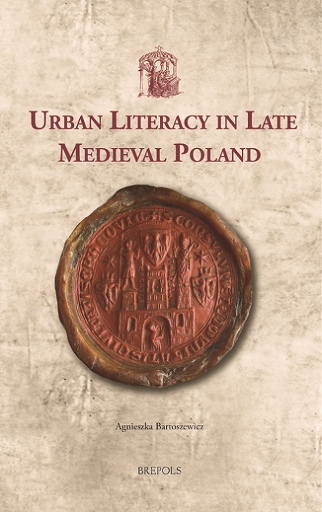
Urban Literacy in Late Medieval Poland
show More to view fulltext, buy and share links for:Urban Literacy in Late Medieval Poland show Less to hide fulltext, buy and share links for: Urban Literacy in Late Medieval PolandFrom the end of the thirteenth century onwards, European towns exhibited a significant increase in the use of writing as a tool for administrative and economic purposes, as well as for social communication. The medieval towns of Poland are no exception to this pattern.
This book surveys the development of the literacy of Polish burghers in the fourteenth and fifteenth centuries, revealing socio-economic and cultural processes that changed the life of Polish urban society. Polish urban literacy is examined according to the reception of Western European urban culture more generally. Town networks in medieval Poland are explained, and the literacy skills of the producers and users of the written word are discussed. Literacy skills differed greatly from one social group to another, it is shown, due to the variety of town dwellers (clerics and lay people, professionals of the written word, occasional users of writing, and illiterates). Other issues that are discussed include the cooperation between agents of lay and church literacy, the relationship between literacy and orality, and the difference between developing literacies in Latin and in the vernacular languages.
-
-
-
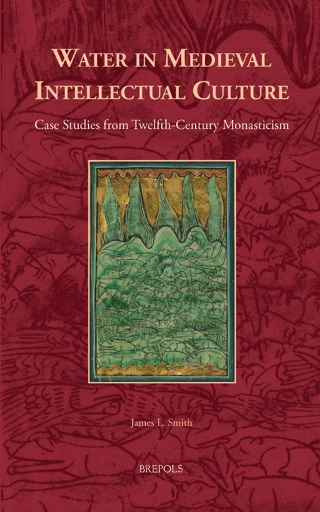
Water in Medieval Intellectual Culture
show More to view fulltext, buy and share links for:Water in Medieval Intellectual Culture show Less to hide fulltext, buy and share links for: Water in Medieval Intellectual CultureThis volume provides a new contribution to the understanding of twelfth-century monasticism and medieval intellectual culture by exploring the relationship between water and the composition of thought. It provides a fresh insight into twelfth-century monastic philosophies by studying the use of water as an abstract entity in medieval thought to frame and discuss topics such as spirituality, the natural order, knowledge visualization, and metaphysics in various high medieval texts, including Godfrey of Saint-Victor’s Fons Philosophiae, Peter of Celle’s letter corpus, and the Description of Clairvaux.
Through case studies of water in poetry, landscape narrative, and epistolary communication, this work traces the role of water as a uniquely medieval instrument of thought. Theoretical chapters of this book use water to explore the shaping of the medieval metaphor. Further case studies examine the differing and complex uses of water as a metaphor in various monastic texts. Focussing on the changeable power and material properties of water, this volume assesses the significance and deployment of environmental imagery in the composition, narration, and recollection of organized thought within the twelfth-century monastic community.
-
-
-

Alchemy, Medicine, and Commercial Book Production
show More to view fulltext, buy and share links for:Alchemy, Medicine, and Commercial Book Production show Less to hide fulltext, buy and share links for: Alchemy, Medicine, and Commercial Book ProductionThe Voigts-Sloane group of Middle English manuscripts, first described by Professor Emerita Linda Voigts in 1990, has attracted much curiosity and scholarly attention. The manuscripts exhibit a degree of uniformity that may originate from systematic copying of medical and alchemical manuscripts (possibly for speculative sale) in London or its metropolitan area in 1450s and 1460s — only decades before William Caxton established his printing press in Westminster. Some of the manuscripts share a strikingly similar mise-en-page, others present a standard anthology of medical treatises in a standard order.
This book provides a thorough re-examination of these manuscripts through a combination of codicological and linguistic methodologies. It examines different procedures which may have facilitated the production of the manuscripts, including speculative production and copying of separate booklets. The study also addresses the dialect of the manuscripts, and code-switching between Latin and Middle English. By showing that the manuscripts sharing a similar layout are also written in the same dialect, the book thus provides important new information on the dialects of medical writing, and shows that dialect is a further defining feature for this manuscript group. The book also highlights late medieval concerns over alchemy and medicine, explaining the apparent contradiction of the inclusion of alchemy (which was illegal) in commercially copied manuscripts.
This study thus provides both a comprehensive new description of these manuscripts, and sheds new light on the commercial and cultural contexts of book production in late medieval England.
-
-
-
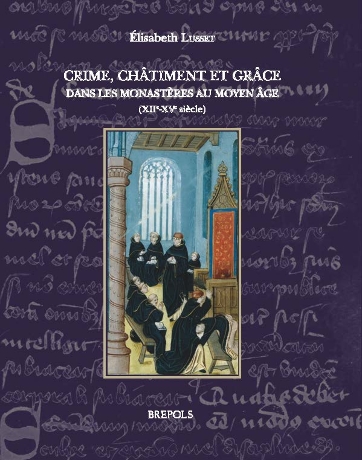
Crime, châtiment et grâce dans les monastères au Moyen Âge (XIIe-XVe siècle)
show More to view fulltext, buy and share links for:Crime, châtiment et grâce dans les monastères au Moyen Âge (XIIe-XVe siècle) show Less to hide fulltext, buy and share links for: Crime, châtiment et grâce dans les monastères au Moyen Âge (XIIe-XVe siècle)Ce livre analyse les crimes commis à l’intérieur des monastères médiévaux (violences, homicides ou encore vols) et la manière dont les religieux criminels étaient corrigés tant par les abbés, les évêques, les chapitres généraux des ordres religieux que par les organes de la curie romaine. Il compare, à l’échelle de l’Europe, les établissements de moines, chanoines réguliers et moniales, qu’ils appartiennent à un ordre (Cluny, Cîteaux, Prémontré, Grande Chartreuse) ou à une nébuleuse moins définie sur le plan juridique (abbayes et prieurés de moines bénédictins ou de chanoines réguliers). En explorant le fonctionnement de la justice claustrale, les peines prescrites ainsi que les mécanismes de réconciliation des criminels, l’ouvrage éclaire sous un angle nouveau les processus de construction institutionnelle et de réforme des ordres religieux entre les XII e et XV e siècles.
-
-
-
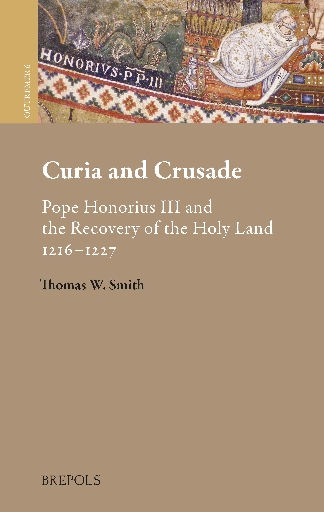
Curia and Crusade
show More to view fulltext, buy and share links for:Curia and Crusade show Less to hide fulltext, buy and share links for: Curia and CrusadeThe pontificate of Honorius III (1216-27) ranks among the most important papal reigns of the thirteenth century: the pope organised two large-scale crusades to recover the Holy Land, the second of which recovered Jerusalem for the first time since 1187; he presided over a ‘golden summer’ of papal-imperial relations with the medieval stupor mundi, Frederick II, emperor of the Romans and king of Sicily; he developed an original theological conception of his office; and he laid the foundations for a centralised papal financial machine. Yet, despite his significant impact on thirteenth-century Christendom, Honorius has often languished in the shadow of his famous predecessor, Innocent III - a balance that the present book redresses.
Grounded in extensive original research into the manuscripts of Honorius’s letter registers, this study develops a revisionist interpretation of how the curia marshalled the crusading movement to recover the Holy Land. Questioning the utility of the historiographical construct of ‘papal policy’, this book provides new insights into crusade diplomacy, papal theology, the roles of legates, and the effectiveness of crusade taxation. It also includes a comprehensive and accessible introduction to the papal chancery and its documents, which will be of particular use to students and those approaching the medieval papacy for the first time.
-
-
-
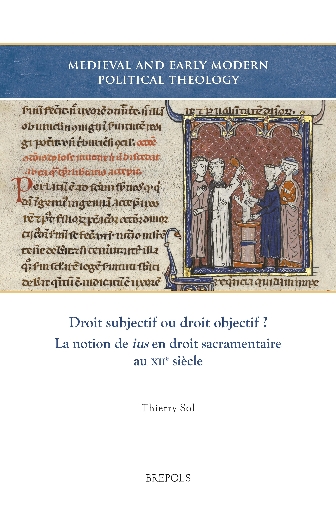
Droit subjectif ou droit objectif ? La notion de ius en droit sacramentaire au XIIe siècle
show More to view fulltext, buy and share links for:Droit subjectif ou droit objectif ? La notion de ius en droit sacramentaire au XIIe siècle show Less to hide fulltext, buy and share links for: Droit subjectif ou droit objectif ? La notion de ius en droit sacramentaire au XIIe siècleMichel Villey situait le passage d’une conception réaliste à une conception subjective du droit (le droit conçu comme pouvoir de l’individu) au xiv e siècle, lors de la controverse sur la pauvreté franciscaine et du développement de la philosophie volontariste d’Ockham. Brian Tierney remit en cause cette hypothèse et rechercha les prodromes de la notion de droits naturels (rights, par opposition au droit objectif et positif, laws) dès le xii e siècle. Michel Villey signalait lui aussi l’importance du xii e siècle, mais y voyait au contraire la renaissance de la notion réaliste de droit, à la faveur de la redécouverte du droit romain et du développement de la jurisprudence. Pour trancher cette controverse entre ces deux grands historiens et philosophes du droit, il convenait de retourner aux textes.
Peut-on trouver dès le xii e siècle les germes d’une conception subjective du droit ? En s’interrogeant sur la validité et la licéité des sacrements célébrés par les clercs hérétiques, schismatiques ou simoniaques, le cas des ordinations absolues et le pouvoir de lier et délier des prélats hérétiques, le droit sacramentaire offre un champ d’analyse privilégié. Dans ces situations se trouve problématisé le rapport entre la situation personnelle du ministre (à la fois morale et canonique) et sa fonction au service de l’Église, c’est-à-dire entre une situation subjective de « possession personnelle » du sacrement de l’ordre et une situation de distribution des sacrements au service de la communauté des fidèles.
Gratien puis Roland, Rufin, Étienne de Tournai, Jean de Faenza, Simon de Bisignano, Huguccio et les Summae (parisiensis, coloniensis, lipsiensis, etc.) utilisent certes un vocabulaire subjectivement façonné (potestas, potentia, facultas, ius dandi), mais derrière les mots se développe une conception objective du droit, seule capable de fournir des distinctions opérantes aux questions pratiques d’un siècle crucial pour le droit canonique.
-
-
-

French in Medieval Ireland, Ireland in Medieval French
show More to view fulltext, buy and share links for:French in Medieval Ireland, Ireland in Medieval French show Less to hide fulltext, buy and share links for: French in Medieval Ireland, Ireland in Medieval FrenchThis book is a ground-breaking study of the cultural and linguistic consequences of the English invasion of Ireland in 1169, and examines the ways in which the country is portrayed in French literature of the twelfth, thirteenth, and fourteenth centuries. Works such as La geste des Engleis en Yrlande and The Walling of New Ross, written in French in a multilingual Ireland, are studied in their literary and historical contexts, and the works of the Dominican friar Jofroi de Waterford (c. 1300) are shown to have been written in Ireland, rather than Paris, as has always been assumed.
After exploring how the dissemination and translation of early Latin texts of Irish origin concerning Ireland led to the country acquiring a reputation as a land of marvels, this study argues that increasing knowledge of the real Ireland did little to stymie the mirabilia hibernica in French vernacular literature. On the contrary, the image persisted to the extent of retrospectively associating central motifs and figures of Arthurian romance with Ireland. This book incorporates the results of original archival research and is characterized by close attention to linguistic details of expression and communication, as well as historical, codicological, and literary contexts.
-
-
-
Healing not Punishment
show More to view fulltext, buy and share links for:Healing not Punishment show Less to hide fulltext, buy and share links for: Healing not PunishmentThe entire conception of repentance and penance in the Oriental Church in the first six centuries is a remedial one: sin represents an ailment of the soul. The confessor is called upon to meet the confessing person as a spiritual physician or soul-friend. Penance does not mean punishment, but healing like a salutary remedy. Nevertheless the lack of privacy led to the unwanted practice of postponing repentance and even baptism to the deathbed. An alternative procedure of repentance arose from the sixth century onwards in the Irish Church as well as in the Continental Church under the influence of Irish missionaries, and in the South-West-British and later the English Church (Insular Church). In treatises about repentance, called penitentials, ecclesiastical authorities of the sixth to the eight centuries wrote down regulations on how to deal with the different capital sins and minor trespasses committed by monks, clerics and laypeople. Church-representatives like Finnian, Columbanus, the anonymous author of the Ambrosianum, Cummean and Theodore developed a new conception of repentance that protected privacy and guaranteed a discrete, affordable as well as predictable penance, the paenitentia privata. They established an astonishing network in using their mutual interrelations. Here the earlier penitentials served as source for the later ones. But it is remarkable that the authors appeared as creative revisers, who took regard of the pastoral necessities of the entrusted flock. The aim of the authors was to enable the confessors to do the healing dialogue qualitatively in a high standard. The penitents should feel themselves healed, not punished.
-
-
-

Islands in the West
show More to view fulltext, buy and share links for:Islands in the West show Less to hide fulltext, buy and share links for: Islands in the WestThis monograph traces the history of one of the most prominent types of geographical myths of the North-West Atlantic Ocean: transmarine otherworlds of blessedness and immortality. Taking the mythologization of the Viking Age discovery of North America in the earliest extant account of Vínland (‘Wine-Land’) and the Norse transmarine otherworlds of Hvítramannaland (‘The Land of White Men’) and the Ódáinsakr/Glæsisvellir (‘Field of the Not-Dead’/‘Shining Fields’) as its starting point, the book explores the historical entanglements of these imaginative places in a wider European context. It follows how these Norse otherworld myths adopt, adapt, and transform concepts from early Irish vernacular tradition and Medieval Latin geographical literature, and pursues their connection to the geographical mythology of classical antiquity. In doing so, it shows how myths as far distant in time and space as Homer’s Elysian Plain and the transmarine otherworlds of the Norse are connected by a continuous history of creative processes of adaptation and reinterpretation. Furthermore, viewing this material as a whole, the question arises as to whether the Norse mythologization of the North Atlantic might not only have accompanied the Norse westward expansion that led to the discovery of North America, but might even have been among the factors that induced it.
-
-
-
Le Livre de Thezeo. Traduction anonyme du xv e siècle du Teseida de Boccace
show More to view fulltext, buy and share links for:Le Livre de Thezeo. Traduction anonyme du xv e siècle du Teseida de Boccace show Less to hide fulltext, buy and share links for: Le Livre de Thezeo. Traduction anonyme du xv e siècle du Teseida de BoccaceLe jeune Boccace a tenté, en composant son très étrange poème Teseida delle nozze d’Emilia, de rivaliser avec les épopées antiques de Virgile ou de Stace, tant par le thème choisi (l’affrontement de héros mythiques des légendes grecques dans un monde fréquenté par les dieux) que par le volume du texte, cherchant à calquer l’Enéide pour ainsi dire au vers près, et avec de nombreux et importants emprunts à la Thébaïde de Stace.
Le Livre de Thezeo, traduction française du Teseida, est en très grande partie inédit. Il est connu surtout par les splendides enluminures du manuscrit 2617 de Vienne (W1), souvent décrites et reproduites, et la beauté du décor justifie les nombreuses études auxquelles il a donné lieu. Mais si certaines recherches mettent en parallèle - au moins sommairement - l’étude du texte et celle des illustrations, l’approche textuelle est demeurée très superficielle. Le présent travail fournit la première édition critique du Livre de Thezeo et présente une étude complète de sa tradition textuelle et du travail du traducteur français.
-
-
-
Le virus de l’erreur. La controverse carolingienne sur la double prédestination
show More to view fulltext, buy and share links for:Le virus de l’erreur. La controverse carolingienne sur la double prédestination show Less to hide fulltext, buy and share links for: Le virus de l’erreur. La controverse carolingienne sur la double prédestinationQuatre siècles après Augustin, Pélage et Julien d’Éclane, la controverse sur la double prédestination (années 840-860), provoquée par la personnalité hors-norme du moine saxon Gottschalk d’Orbais, se ressaisit des rapports entre libre-arbitre et déterminisme avec, au cœur des discussions, l’effrayante perspective d’une prédestination à l’Enfer. Tout au long de ce qui est la plus longue controverse du IX e siècle, le clergé franc multiplie les traités et libelles et, concile après concile, se répand en anathèmes réciproques avant d’enterrer brutalement ce débat sans issue. Dans l’Ecclesia carolingienne, le conflit doctrinal est inextricablement lié aux luttes de pouvoir de la cour, aux tensions entre évêques, clercs, moines et laïcs, à la psychose des falsifications... Pour le décrire, une perspective multiple s’impose : analyse des réseaux à partir des sources diplomatiques, déconstruction du discours théologique à la recherche de sa raison sociale, et finalement survey des manuscrits en quête des notes marginales, réécritures et autres florilèges rassemblés à l’ombre du cloître. On mesure alors combien la controverse est structurée par le problème du contrôle de l’information, de la publicité et de l’opinion - autant de thèmes dont on recule souvent l’apparition à l’ère grégorienne, lorsque s’allument les premiers bûchers d’hérétiques de l’histoire occidentale.
-
-
-
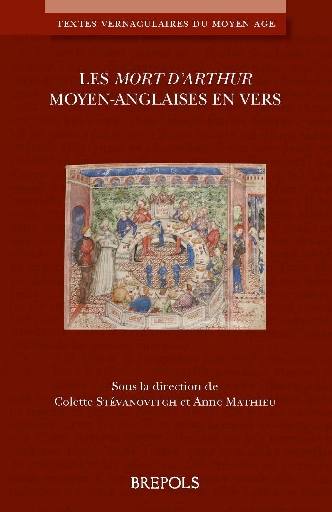
Les 'Mort d’Arthur' moyen-anglaises en vers
show More to view fulltext, buy and share links for:Les 'Mort d’Arthur' moyen-anglaises en vers show Less to hide fulltext, buy and share links for: Les 'Mort d’Arthur' moyen-anglaises en versLes deux poèmes moyen-anglais réunis ici relatent, chacun à sa manière, la mort tragique du roi Arthur. Le Stanzaic Morte Arthur donne une place prépondérante aux amours de Lancelot et Guenièvre, aux effets catastrophiques. Dans l’Alliterative Morte Arthure, par contraste, Arthur est un chef de guerre, d’abord favorisé, puis abandonné par la fortune. Les divergences entre les deux poèmes s’expliquent en grande partie par la nature de leurs sources : roman français en prose pour Le Stanzaic Morte Arthur, corpus de chroniques pour l’Alliterative Morte Arthure.
Ces deux poèmes constituent des jalons importants dans l’histoire de la geste arthurienne en raison notamment de l’infl uence qu’ils ont exercée sur Malory, auteur de la vaste compilation connue sous le nom de Morte DArthur (1485). Or celle-ci nourrit l’imaginaire arthurien depuis plus de cinq cents ans : voir Idylls of the King, de Tennyson (1859), ou le fi lm Excalibur de John Boorman (1981).
Ces deux Mort d’Arthur ont été éditées en un seul volume en 1972 (Larry Benson). Il était, de fait, utile de rassembler deux poèmes portant sur le même sujet, mais issus de traditions différentes. Cette traduction française s’inscrit dans la lignée du travail de Benson. Elle est assortie d’un ensemble de notes.
-
-
-

Les ports des mers nordiques à l’époque viking (VIIe-Xe siècle)
show More to view fulltext, buy and share links for:Les ports des mers nordiques à l’époque viking (VIIe-Xe siècle) show Less to hide fulltext, buy and share links for: Les ports des mers nordiques à l’époque viking (VIIe-Xe siècle)Marchands, pirates et autres voyageurs n’ont pas attendu le vii e siècle pour prendre la mer. Toutefois, alors que les échanges, tant commerciaux que culturels, se développent fortement et que la voile fait son apparition dans les mers nordiques, le contexte est propice à l’essor de grands ports marchands (emporia ou wics) sur leurs rives.
Les caractéristiques communes de ces établissements portuaires, lieux de rencontre et de brassage au centre des réseaux d’échanges, invitent à une approche comparative des espaces franc, anglo-saxon, scandinave et slave. Pour étudier les emporia à la lumière des recompositions politiques, économiques et sociales des vii e-x e siècles, un large éventail de sources, à la fois textuelles et archéologiques, est mobilisé, dans le cadre d’une approche interdisciplinaire, sollicitant également la géographie et l’anthropologie.
Ce livre cherche à comprendre les interactions entre ces ports et leurs arrière-pays et à mettre en lumière les réseaux dans lesquels ils s’inscrivent, en prenant en compte les différents jeux d’échelles. Il s’agit de s’interroger sur les spécificités de ces communautés portuaires émergentes, tout en reconsidérant leur place dans les réseaux économiques du premier Moyen Âge à la lumière des récentes découvertes, qui bouleversent les approches traditionnelles, en Europe et même au-delà.
-
-
-
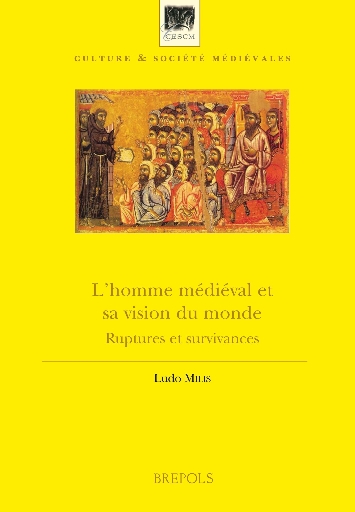
L’homme médiéval et sa vision du monde
show More to view fulltext, buy and share links for:L’homme médiéval et sa vision du monde show Less to hide fulltext, buy and share links for: L’homme médiéval et sa vision du mondeLe Moyen Age semble une période mentalement très distante de notre époque. Est-ce vrai? L’auteur plonge dans les textes médiévaux, surtout les sources narratives, pour détecter les structures profondes des pensées et des sentiments. Il se sert de citations pour faire revivre les valeurs et normes de l’époque tel que les contemporains les ont formulées. Milis explore d’abord l’attitude vis-à-vis de Dieu, d’autres divinités et religions, et les problèmes qui en sont issus au sein des sociétés et civilisations médiévales. Ensuite il traite du rôle de l’honneur et de ses valeurs apparentées (gêne, honte, infamie, scandale et culpabilité) comme base de comportements sociaux et individuels. Enfin il lie le droit, tel qu’il est vécu, au rôle d’esprits et de l’audelà dans la perception quotidienne. Il est étonnant de voir comment tant d’aspects qui semblaient à nos yeux passés pour de bon, reçoivent une nouvelle actualité et se montrent souvent reconnaissables dans la société multiculturelle qui se constitue aujourd’hui.
-
-
-

L’écriture et la sainteté dans la Serbie médiévale
show More to view fulltext, buy and share links for:L’écriture et la sainteté dans la Serbie médiévale show Less to hide fulltext, buy and share links for: L’écriture et la sainteté dans la Serbie médiévaleLe livre L’écriture et la sainteté dans la Serbie médiévale. Étude d’hagiographie porte pour l’essentiel sur un riche corpus de sources serbes, qui s’échelonnent de la fin du xii e jusqu’au xv e siècle. Il s’agit bien d’une étude d’hagiographie, dans laquelle l’auteur a eu pour ambition de montrer comment, dans les textes hagiographiques, a été construite l’image de la royauté serbe. Smilja Marjanović-Dušanić, partant de ce corpus impressionnant, décrit à la fois sa genèse et son originalité. La dette à l’égard de l’hagiographie byzantine est sensible, mais l’auteur a raison d’insister sur l’aspect profondément original de l’hagiographie royale serbe pour laquelle elle trouve des parallèles en Hongrie ou ailleurs dans l’Europe centrale.
Les analyses proposées sont indissociablement hagiographiques et politiques. L’auteur montre bien l’importance de l’écriture hagiographique dans le projet qu’ont eu les souverains serbes de sacraliser leur dynastie et leur pouvoir en organisant le culte de saints rois, en particulier celui du « couple » que forment Sava et Syméon. L’évolution idéologique peut être étudiée aisément grâce à la continuité qui s’établit entre les œuvres. L’étude des réécritures permet à l’auteur de mettre en évidence l’importance accrue des récits de miracles. Ce livre est important pour deux raisons principales. Du point de vue de l’hagiographie, il fait connaître un riche corpus de textes souvent ignorés dans le monde occidental, qui constituent un développement inattendu de l’hagiographie byzantine et un pont avec l’Europe catholique. Surtout, ce corpus est important pour comprendre comment s’est constituée, autour de la figure des saints rois et des lieux conservant leur mémoire, l’identité serbe.
-
-
-
Sins of the Tongue in the Medieval West
show More to view fulltext, buy and share links for:Sins of the Tongue in the Medieval West show Less to hide fulltext, buy and share links for: Sins of the Tongue in the Medieval WestAs modern medievalists have repeatedly established, harmful speech conduct (‘sins of the tongue’) aroused considerable interest among medieval authors. Lying, boasting, flattering, railing, backbiting, grumbling, false swearing, and garrulous and incendiary speech were but a few of the speech acts that provoked moral condemnation all over Western Europe from the thirteenth century onward.
This study examines medieval notions of harmful speech conduct as reflected in Middle Dutch ecclesiastical, secular-ethical, and legal textual sources. According to these texts, the tongue was able to ‘break bones’ and inflict considerable damage on the speaker, on listeners, and on other relevant participants in speech situations.
The book utilises two novel approaches. First, the subject is systematically explored in terms of three different types of behaviour in order to discover an overarching discourse: harmful speech as a sin, as moral misbehaviour, and as a crime. Second, ideas from modern language theory are used to analyse the textual sources. By adopting these two approaches, the book asserts that an overarching discourse of harmful speech can be found in the Middle Dutch ecclesiastical, secular-ethical, and legal domains, a discourse coined in this study as ‘the discourse of the untamed tongue’.
-
-
-
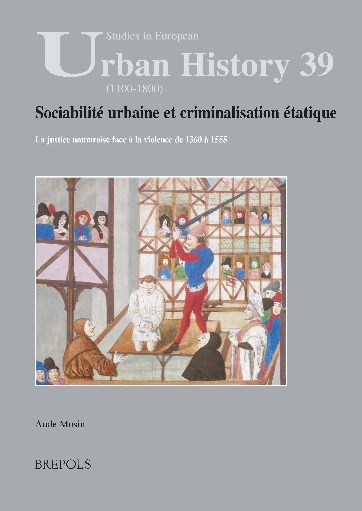
Sociabilité urbaine et criminalisation étatique
show More to view fulltext, buy and share links for:Sociabilité urbaine et criminalisation étatique show Less to hide fulltext, buy and share links for: Sociabilité urbaine et criminalisation étatiqueThe study of violence under its different forms and its regulation in a town of the Low Countries, namely Namur, between the second half of the 14th century and the first half of the 16th century provides a renewed perspective on the problematic of the transition between “urban sociability” and “state criminalisation”. Urban communities developed institutions and original methods of regulation to control aggressiveness. Violent behaviours and the safeguard of peace between their members were the main focus of these communities. Later on, central authorities, in the framework of a developing State, brought their own means of framing violence. Violence gradually became the monopoly of authorities. This “legitimate” violence of the State became a way to discriminate the violence of populations. The violence in the town and its framing is a privileged field to address the construction of the Modern State, one of the main supports of which is justice.
-
-
-
The Forge of Doctrine. The Academic Year 1330-31 and the Rise of Scotism at the University of Paris
show More to view fulltext, buy and share links for:The Forge of Doctrine. The Academic Year 1330-31 and the Rise of Scotism at the University of Paris show Less to hide fulltext, buy and share links for: The Forge of Doctrine. The Academic Year 1330-31 and the Rise of Scotism at the University of ParisA rare survival provides unmatched access to the the medieval classroom. In the academic year 1330-31, the Franciscan theologian, William of Brienne, lectured on Peter Lombard’s Sentences and disputed with the other theologians at the University of Paris. The original, official notes of these lectures and disputes survives in a manuscript codex at the National Library of the Czech Republic, and they constitute the oldest known original record of an entire university course. An analysis of this manuscript reconstructs the daily reality of the University of Paris in the fourteenth century, delineating the pace and organization of instruction within the school and the debates between the schools. The transcription made during William’s lectures and the later modifications and additions reveal how the major vehicle for Scholastic thought, the written Sentences commentary, relates to fourteenth-century teaching. As a teacher and a scholar, William of Brienne was a dedicated follower of the philosophy and theology of John Duns Scotus (+1308). He constructed Scotist doctrine for his students and defended it from his peers. This book shows concretely how scholastic thinkers made, communicated, and debated ideas at the medieval universities. Appendices document the entire process with critical editions of William’s academic debates (principia), his promotion speech, and a selection of his lectures and sources.
-
-
-
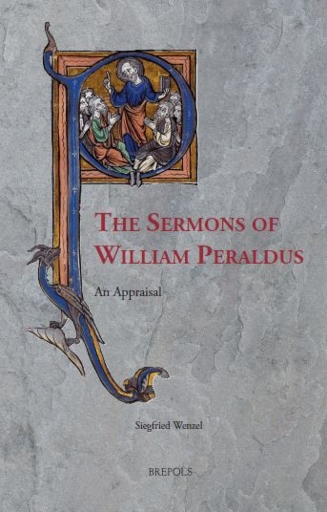
The Sermons of William Peraldus
show More to view fulltext, buy and share links for:The Sermons of William Peraldus show Less to hide fulltext, buy and share links for: The Sermons of William PeraldusThe French Dominican William Peraldus or Guillaume Peyraut (died c. 1275), well known for his long summae on the vices and virtues, also produced several cycles of sermons, of which two deal with the Epistle and the Gospel readings for the Sundays of the Church year. This study analyzes the latter in some detail and argues that, rather than collecting sermons he had preached earlier, Peraldus wrote these sermons systematically for the use of other preachers. The Epistle sermons for the first Sunday in Advent and the Gospel sermons for the third Sunday in Advent are presented in their original Latin text together with an English translation in order to demonstrate how Peraldus dealt with the biblical text as well as his moral concerns and his literary style. The selected texts are then compared with several other major cycles produced in France in Peraldus’s time. Like his summae on the vices and the virtues, Peraldus’s sermons became very popular in medieval Europe, as is witnessed by selective copying and citations that can be seen in a number of instances primarily from the sermon literature of later medieval England. One aspect of this popularity is the adaptation of his material into a genuine sermon, as it can be found in the sermons attributed to Repingdon, of which one is here examined in detail.
-
-
-
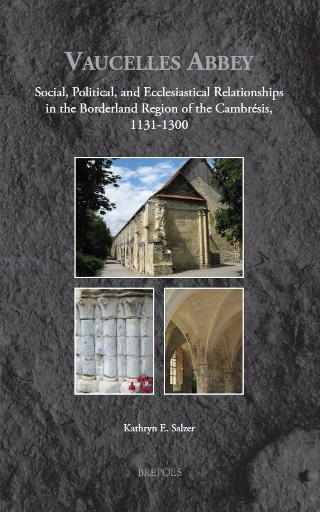
Vaucelles Abbey
show More to view fulltext, buy and share links for:Vaucelles Abbey show Less to hide fulltext, buy and share links for: Vaucelles AbbeyFounded in 1131 by the castellan of Cambrai, Vaucelles Abbey thrived in a borderland region, where German emperors, French kings, Flemish counts, bishops of Cambrai, and the Cistercian Order all had active interests. To understand how Vaucelles flourished, we must look at the relationships that the house created and fostered with various international, regional, and local individuals and institutions. Vaucelles used these connections to protect the vast patrimony that the monks created in the two centuries after its foundation.
This study asserts that three principal factors influenced the foundation and development of Vaucelles. First, the abbey was fortunate in its local support, beginning with the castellan family and expanding to include numerous regional families and the bishops of Cambrai. Second, the abbey was established in a political borderland, a geo-political situation that Vaucelles survived and actually turned into a positive feature of its development. And finally, Vaucelles was a Cistercian monastery, a direct daughter house of Clairvaux. Vaucelles’ Cistercian observance fostered relationships that were particularly significant to the abbey’s development from the late twelfth century onward. These factors offer exceptional tools for demonstrating many features of Vaucelles’ political, social, and economic life during the twelfth and thirteenth centuries.
-
-
-
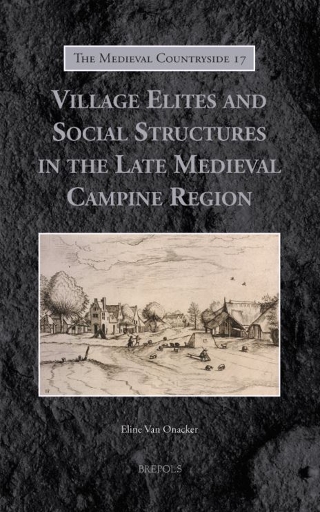
Village Elites and Social Structures in the Late Medieval Campine Region
show More to view fulltext, buy and share links for:Village Elites and Social Structures in the Late Medieval Campine Region show Less to hide fulltext, buy and share links for: Village Elites and Social Structures in the Late Medieval Campine RegionThe economy of the late medieval Low Countries is often portrayed in terms of dynamism and economic growth. However, several regions within this larger entity followed an alternate path of development. One example of this is the Campine (Kempen), a communal peasant region situated to the northeast of the sixteenth-century ‘metropolis’ of Antwerp. By contrast with other regions in the Low Countries, this area was characterised by a remarkable stability.
By focusing on ‘independent’ peasant elites, this study explores the social structures and the characteristics of inequality of this region, showing how these factors led to a different, more stable mode of economic development. Looking past standard societal measurements such as property distribution, this work combines a wide variety of sources to grasp the nuances of inequality in a communal society. It therefore takes into account other economic factors such as control over the commons, and market integration. It also focuses on political and social inequality, shedding light on aspects of inequality in village politics, social life, and poor relief.
Thus, in contrast to dominant depictions of pre-modern societies on the road to capitalism, this book provides a comprehensive portrayal of inequality and elite groups in a communal peasant society.
-
-
-
Conceptualizing the Enemy in Early Northwest Europe
show More to view fulltext, buy and share links for:Conceptualizing the Enemy in Early Northwest Europe show Less to hide fulltext, buy and share links for: Conceptualizing the Enemy in Early Northwest EuropeDespite the prominence of conflicts in all mythological and heroic literature, perceptions of these conflicts and their participants are shaped by different cultural influences. Socio-economic, political, and religious factors all influence how conflict is perceived and depicted in literary form. This volume provides the first comparative analysis to explore conceptions of conflict and otherness in the literary and cultural contexts of the early North Sea world by investigating the use of metaphor in Old English, Old Norse, and Early Irish poetry. Applying Conceptual Metaphor Theory together with literary and anthropological analysis, the study examines metaphors of conflict and alterity in a range of (pseudo-)mythological, heroic, and occasional poetry, including Beowulf, Old Norse skaldic and eddic verse, and poems from the celebrated ‘Ulster Cycle’. This unique approach not only sheds new light on a wide spectrum of metaphorical techniques, but also draws important conclusions concerning the common cultural heritage behind these three poetic corpora.
-