


Brepols Online Books Medieval Monographs Collection 2017 - bob2017mome

Collection Contents
21 - 26 of 26 results
-
-
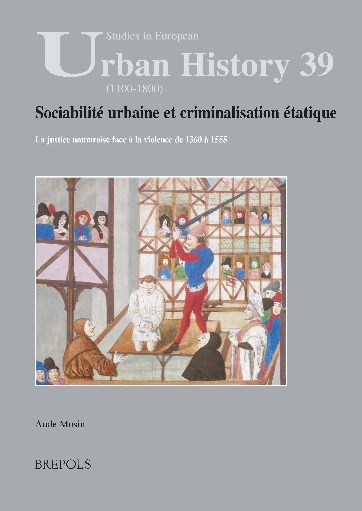
Sociabilité urbaine et criminalisation étatique
show More to view fulltext, buy and share links for:Sociabilité urbaine et criminalisation étatique show Less to hide fulltext, buy and share links for: Sociabilité urbaine et criminalisation étatiqueThe study of violence under its different forms and its regulation in a town of the Low Countries, namely Namur, between the second half of the 14th century and the first half of the 16th century provides a renewed perspective on the problematic of the transition between “urban sociability” and “state criminalisation”. Urban communities developed institutions and original methods of regulation to control aggressiveness. Violent behaviours and the safeguard of peace between their members were the main focus of these communities. Later on, central authorities, in the framework of a developing State, brought their own means of framing violence. Violence gradually became the monopoly of authorities. This “legitimate” violence of the State became a way to discriminate the violence of populations. The violence in the town and its framing is a privileged field to address the construction of the Modern State, one of the main supports of which is justice.
-
-
-
The Forge of Doctrine. The Academic Year 1330-31 and the Rise of Scotism at the University of Paris
show More to view fulltext, buy and share links for:The Forge of Doctrine. The Academic Year 1330-31 and the Rise of Scotism at the University of Paris show Less to hide fulltext, buy and share links for: The Forge of Doctrine. The Academic Year 1330-31 and the Rise of Scotism at the University of ParisA rare survival provides unmatched access to the the medieval classroom. In the academic year 1330-31, the Franciscan theologian, William of Brienne, lectured on Peter Lombard’s Sentences and disputed with the other theologians at the University of Paris. The original, official notes of these lectures and disputes survives in a manuscript codex at the National Library of the Czech Republic, and they constitute the oldest known original record of an entire university course. An analysis of this manuscript reconstructs the daily reality of the University of Paris in the fourteenth century, delineating the pace and organization of instruction within the school and the debates between the schools. The transcription made during William’s lectures and the later modifications and additions reveal how the major vehicle for Scholastic thought, the written Sentences commentary, relates to fourteenth-century teaching. As a teacher and a scholar, William of Brienne was a dedicated follower of the philosophy and theology of John Duns Scotus (+1308). He constructed Scotist doctrine for his students and defended it from his peers. This book shows concretely how scholastic thinkers made, communicated, and debated ideas at the medieval universities. Appendices document the entire process with critical editions of William’s academic debates (principia), his promotion speech, and a selection of his lectures and sources.
-
-
-
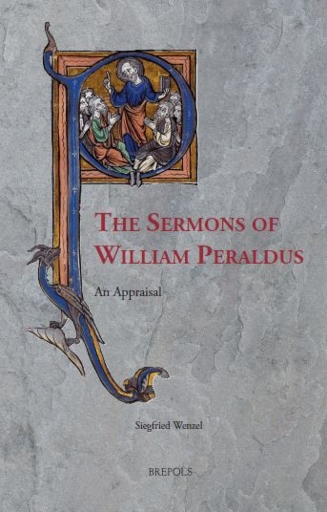
The Sermons of William Peraldus
show More to view fulltext, buy and share links for:The Sermons of William Peraldus show Less to hide fulltext, buy and share links for: The Sermons of William PeraldusThe French Dominican William Peraldus or Guillaume Peyraut (died c. 1275), well known for his long summae on the vices and virtues, also produced several cycles of sermons, of which two deal with the Epistle and the Gospel readings for the Sundays of the Church year. This study analyzes the latter in some detail and argues that, rather than collecting sermons he had preached earlier, Peraldus wrote these sermons systematically for the use of other preachers. The Epistle sermons for the first Sunday in Advent and the Gospel sermons for the third Sunday in Advent are presented in their original Latin text together with an English translation in order to demonstrate how Peraldus dealt with the biblical text as well as his moral concerns and his literary style. The selected texts are then compared with several other major cycles produced in France in Peraldus’s time. Like his summae on the vices and the virtues, Peraldus’s sermons became very popular in medieval Europe, as is witnessed by selective copying and citations that can be seen in a number of instances primarily from the sermon literature of later medieval England. One aspect of this popularity is the adaptation of his material into a genuine sermon, as it can be found in the sermons attributed to Repingdon, of which one is here examined in detail.
-
-
-
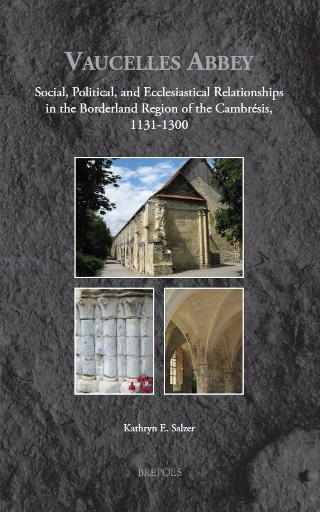
Vaucelles Abbey
show More to view fulltext, buy and share links for:Vaucelles Abbey show Less to hide fulltext, buy and share links for: Vaucelles AbbeyFounded in 1131 by the castellan of Cambrai, Vaucelles Abbey thrived in a borderland region, where German emperors, French kings, Flemish counts, bishops of Cambrai, and the Cistercian Order all had active interests. To understand how Vaucelles flourished, we must look at the relationships that the house created and fostered with various international, regional, and local individuals and institutions. Vaucelles used these connections to protect the vast patrimony that the monks created in the two centuries after its foundation.
This study asserts that three principal factors influenced the foundation and development of Vaucelles. First, the abbey was fortunate in its local support, beginning with the castellan family and expanding to include numerous regional families and the bishops of Cambrai. Second, the abbey was established in a political borderland, a geo-political situation that Vaucelles survived and actually turned into a positive feature of its development. And finally, Vaucelles was a Cistercian monastery, a direct daughter house of Clairvaux. Vaucelles’ Cistercian observance fostered relationships that were particularly significant to the abbey’s development from the late twelfth century onward. These factors offer exceptional tools for demonstrating many features of Vaucelles’ political, social, and economic life during the twelfth and thirteenth centuries.
-
-
-
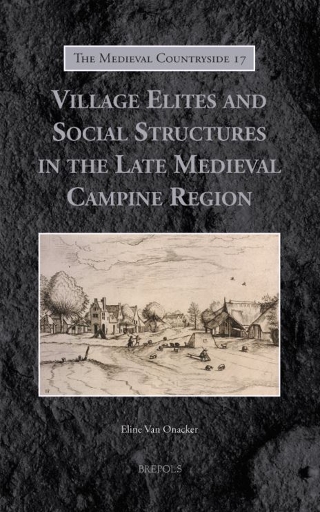
Village Elites and Social Structures in the Late Medieval Campine Region
show More to view fulltext, buy and share links for:Village Elites and Social Structures in the Late Medieval Campine Region show Less to hide fulltext, buy and share links for: Village Elites and Social Structures in the Late Medieval Campine RegionThe economy of the late medieval Low Countries is often portrayed in terms of dynamism and economic growth. However, several regions within this larger entity followed an alternate path of development. One example of this is the Campine (Kempen), a communal peasant region situated to the northeast of the sixteenth-century ‘metropolis’ of Antwerp. By contrast with other regions in the Low Countries, this area was characterised by a remarkable stability.
By focusing on ‘independent’ peasant elites, this study explores the social structures and the characteristics of inequality of this region, showing how these factors led to a different, more stable mode of economic development. Looking past standard societal measurements such as property distribution, this work combines a wide variety of sources to grasp the nuances of inequality in a communal society. It therefore takes into account other economic factors such as control over the commons, and market integration. It also focuses on political and social inequality, shedding light on aspects of inequality in village politics, social life, and poor relief.
Thus, in contrast to dominant depictions of pre-modern societies on the road to capitalism, this book provides a comprehensive portrayal of inequality and elite groups in a communal peasant society.
-
-
-
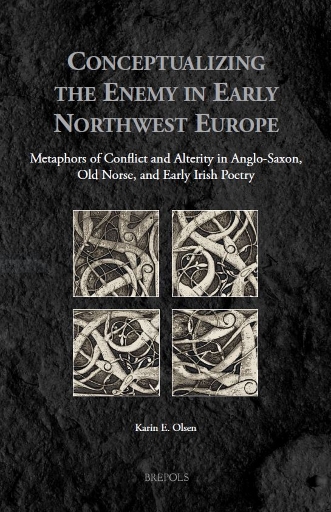
Conceptualizing the Enemy in Early Northwest Europe
show More to view fulltext, buy and share links for:Conceptualizing the Enemy in Early Northwest Europe show Less to hide fulltext, buy and share links for: Conceptualizing the Enemy in Early Northwest EuropeDespite the prominence of conflicts in all mythological and heroic literature, perceptions of these conflicts and their participants are shaped by different cultural influences. Socio-economic, political, and religious factors all influence how conflict is perceived and depicted in literary form. This volume provides the first comparative analysis to explore conceptions of conflict and otherness in the literary and cultural contexts of the early North Sea world by investigating the use of metaphor in Old English, Old Norse, and Early Irish poetry. Applying Conceptual Metaphor Theory together with literary and anthropological analysis, the study examines metaphors of conflict and alterity in a range of (pseudo-)mythological, heroic, and occasional poetry, including Beowulf, Old Norse skaldic and eddic verse, and poems from the celebrated ‘Ulster Cycle’. This unique approach not only sheds new light on a wide spectrum of metaphorical techniques, but also draws important conclusions concerning the common cultural heritage behind these three poetic corpora.
-