


Brepols Online Books Medieval Miscellanea Collection 2018 - bob2018mime

Collection Contents
2 results
-
-
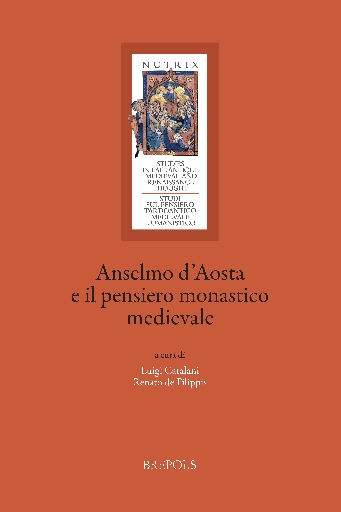
Anselmo d’Aosta e il pensiero monastico medievale
show More to view fulltext, buy and share links for:Anselmo d’Aosta e il pensiero monastico medievale show Less to hide fulltext, buy and share links for: Anselmo d’Aosta e il pensiero monastico medievaleQuesto volume raccoglie le relazioni discusse da oltre venti studiosi italiani e tedeschi al XVIII Convegno della Società Italiana per lo Studio del Pensiero Medievale (SISPM), dedicato al pensiero e all’influenza di Anselmo d’Aosta (1033-1109), una delle figure chiave della filosofia e della teologia medievali. I saggi presentano i principali aspetti della speculazione di Anselmo, con particolare attenzione alle posizioni teologiche da lui sostenute, alla sua metodologia per la costruzione di un pensiero sistematico e razionale, e ai suoi orientamenti in materia di pedagogia, politica, logica, nonché alla sua concezione della vita monastica. Molti studi sono inoltre dedicati alla diffusione e all’influsso del suo pensiero: tracce della sua speculazione sono facilmente riconoscibili nei maggiori pensatori del secolo xii (a partire da Abelardo e Ugo di San Vittore) e giungono fino a Duns Scoto e Nicolò Cusano.
Per la varietà degli approcci d’indagine, e la profondità e l’attenzione delle analisi filosofiche e teologiche dei singoli contributi, il volume si propone di offrire una completa panoramica sullo stato degli studi su Anselmo e la cultura monastica del suo tempo.
-
-
-
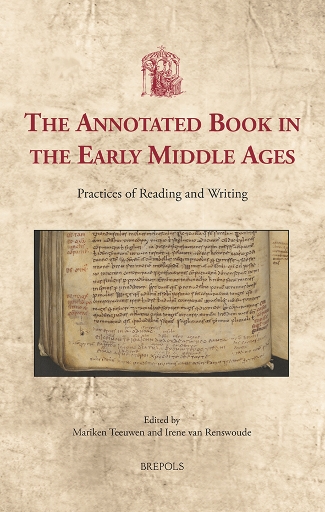
The Annotated Book in the Early Middle Ages
show More to view fulltext, buy and share links for:The Annotated Book in the Early Middle Ages show Less to hide fulltext, buy and share links for: The Annotated Book in the Early Middle AgesAnnotations in modern books are a phenomenon that often causes disapproval: we are not supposed to draw, doodle, underline, or highlight in our books. In many medieval manuscripts, however, the pages are filled with annotations around the text and in-between the lines. In some cases, a ‘white space’ around the text is even laid out to contain extra text, pricked and ruled for the purpose. Just as footnotes are an approved and standard part of the modern academic book, so the flyleaves, margins, and interlinear spaces of many medieval manuscripts are an invitation to add extra text.
This volume focuses on annotation in the early medieval period. In treating manuscripts as mirrors of the medieval minds who created them - reflecting their interests, their choices, their practices - the essays explore a number of key topics. Are there certain genres in which the making of annotations seems to be more appropriate or common than in others? Are there genres in which annotating is ‘not done’? Are there certain monastic centres in which annotating practices flourish, and from which they spread?
The volume investigates whether early medieval annotators used specific techniques, perhaps identifiable with their scribal communities or schools. It explores what annotators actually sought to accomplish with their annotations, and how the techniques of annotating developed over time and per region.
-